


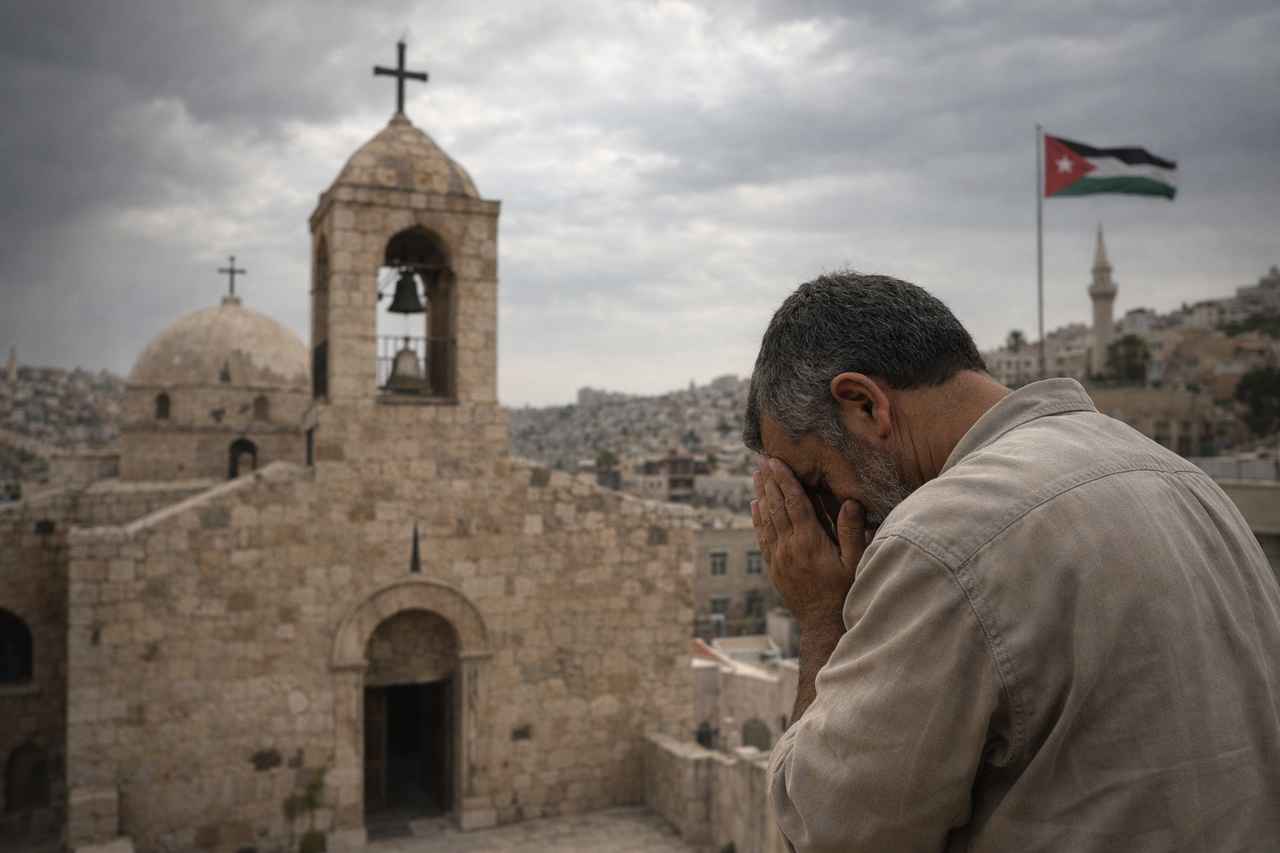
Jordan calls for thoughtful Christian prayer because the country sits under more than one burden at once. It is a place where many believers still have visible room to worship, yet not all Christians live with the same freedom. Converts from Islam can face intense family and social pressure, and the wider unrest surrounding Jordan has made the atmosphere more tense in recent months. That means prayer for Jordan should not be casual or generic. It should be steady, informed, and full of compassion for believers learning how to follow Christ in a region that feels increasingly unsettled.
1. Why This Country Needs Prayer Now
Jordan needs prayer now because older pressures and newer strains are meeting in the same place. Some of the church’s burdens are longstanding, especially for Christians from Muslim backgrounds. But Jordan is also carrying the weight of wider regional conflict, domestic security concerns, and economic strain. In early April 2026, Jordanian authorities reported intercepting missiles and drones connected to the surrounding conflict, and falling debris caused damage and at least one reported injury.
This matters for prayer because such pressures do not remain outside church life. When a country grows anxious, more watchful, and more fragile, Christians often feel that pressure in quiet ways first. Witness becomes more cautious. Social suspicion grows more easily. Small fellowships feel more exposed. What may look like regional instability on the news can become daily tension for ordinary believers trying to live faithfully, speak wisely, and keep serving Christ without fear.
2. Country Snapshot
Jordan is a Middle Eastern kingdom with a population of a little over 11.4 million. It is overwhelmingly Muslim, and its Christian community is small but longstanding. Much of that community belongs to historic churches, and Christians continue to hold a visible place in parts of public life. King Abdullah II remains the country’s ruler, and Jordan still presents itself as more stable and religiously open than some of its neighbors.
Yet that picture needs care. Jordan’s legal and social environment does not affect every Christian in the same way. State-recognized churches have more room to function, especially when they avoid proselytizing. But converts from Islam and unrecognized Christian groups remain far more vulnerable. In practice, this means the country’s Christian life is both visible and fragile at the same time.
3. Main Pressures Facing Christians
The heaviest pressure often falls on Christians who have come to faith from a Muslim background. For them, following Christ can bring sharp personal cost. Family rejection, threats, isolation, and pressure to return to Islam are all real possibilities. Some believers learn to keep part of their faith hidden simply to avoid losing relationships, safety, or a place within their community.
Other pressures are quieter, but still weighty. Open evangelism is sensitive. Unrecognized churches are monitored more closely. Christians may practice self-censorship, especially online, to avoid provoking hostility. In that kind of setting, the burden is not always open persecution in the dramatic sense. Often it is the slow pressure of caution, limitation, and being watched.
That pressure appears to have grown heavier in the current regional climate. Open Doors notes that the war in the region has contributed to stronger Islamic conservatism, greater hostility online, and a more suspicious atmosphere around Christians in some settings. The pressure is not the same everywhere, but it is real enough to shape how believers speak, gather, and bear witness.
4. What Life Is Like for Christians in Jordan
For many Christians in Jordan, daily life is a mixture of space and restraint. Historic churches can often continue worship, ministry, and community life with more visibility than Christians in several nearby countries. That is a mercy worth noticing. Yet even there, believers know there are boundaries. Public witness must often be careful. Conversations about faith can carry risks that outsiders may not immediately see.
For converts from Islam, the cost can be much more personal. Faith may need to be expressed quietly. Family life can become tense. Marriage, inheritance, and identity can all become more complicated when conversion is not treated simply as a private spiritual decision. For these believers, perseverance is not abstract. It may mean learning how to follow Christ with wisdom, patience, and courage inside the closest relationships of life.
Church life in Jordan is also shaped by the country’s wider burdens. Jordan continues to host a large refugee population, even as some Syrians have begun returning home. Many refugees still remain, and the pressure of long-term displacement has not disappeared. In such a setting, Christian faithfulness often looks ordinary and costly at once: welcoming the weary, enduring uncertainty, serving quietly, and continuing to hope in Christ in a society carrying more strain than it can easily bear.
5. Recent Developments
According to the World Watch List 2026, Jordan ranks 49th. Open Doors describes the country as one where many Christians retain a degree of freedom, especially in recognized churches, but where converts from Islam and evangelistic or unrecognized groups still face serious pressure. The same material also points to a harder social climate shaped by the regional war and rising Islamic conservatism.
A major political development came in April 2025, when Jordanian authorities announced the arrest of 16 people allegedly linked to the Muslim Brotherhood in connection with a sabotage plot involving rockets and drones. The government then outlawed the Brotherhood and seized its assets. This was not framed as a Christian issue, but it did signal a tightening national security atmosphere, and that kind of shift affects the broader climate in which Christians live and serve.
Then, in April 2026, Jordan again found itself dealing directly with regional spillover. Jordanian military statements reported missile and drone interceptions, while additional debris incidents were reported in the days that followed. These developments matter because they deepen public anxiety and remind believers that Jordan’s relative stability is not immune from the upheaval around it. Prayer for Jordan now must include not only religious-freedom concerns, but also the country’s wider burden of living under the shadow of regional escalation.
The economic and humanitarian side of the burden should also be remembered. The IMF says Jordan has remained resilient, but still faces persistent external headwinds from regional conflicts. UNHCR continues to describe the refugee situation in Jordan as significant and long-running. These pressures do not make headlines every day, but they shape the lives of churches, families, and ministries across the country.
6. How to Pray
- Pray for Christians from Muslim backgrounds, that the Lord would guard them from fear, rejection, and coercion, and give them deep assurance in Christ.
- Pray for pastors, priests, elders, and ministry workers to shepherd God’s people with wisdom, tenderness, and courage in a tense atmosphere.
- Pray for unity among Jordan’s historic churches, evangelical believers, and smaller fellowships, especially where caution and pressure could lead to isolation.
- Pray for restraint of hostility, extremism, and suspicion, and ask the Lord to preserve public peace as Jordan continues to feel the effects of regional conflict.
- Pray for believers serving refugees, struggling families, and weary communities, that their mercy would remain steady and their witness quietly fruitful.
- Pray that Jordan’s Christians would not simply endure, but grow in holiness, hope, and calm faith under pressure.
7. Give Thanks
- Give thanks that Jordan still has a visible Christian presence and that many churches continue to worship openly.
- Give thanks for believers who remain faithful under social pressure and quiet scrutiny.
- Give thanks that, even in a troubled region, Jordan has not lost every space for Christian continuity, service, and witness.
8. Last Verified
Last updated: April 9, 2026.
Next review due: June 2026, or sooner if regional tensions escalate further.
Key sources consulted: See source list below.
Last Updated note
Last updated: April 9, 2026.
Key Sources Consulted
- U.S. Department of State, 2023 Report on International Religious Freedom: Jordan and report excerpts on Jordan’s legal framework, conversion, and recognition issues.
- Open Doors, Jordan country profile and World Watch List 2026 Jordan country dossier.
- CIA World Factbook / WorldFactbook country profile, Jordan facts and population estimates.
- World Bank, Jordan MPO / outlook material on conflict-related downside risks.
- IMF, Jordan: Fourth Review Under the Extended Arrangement Under the Extended Fund Facility… (December 2025).
- UNHCR, Jordan country operation page and related 2026 operation materials.
- Reuters reporting on Jordan’s April 2025 alleged sabotage plot and subsequent ban of the Muslim Brotherhood.
- Royal Hashemite Court and Jordanian reporting on March–April 2026 regional tensions and interceptions over Jordan.


