


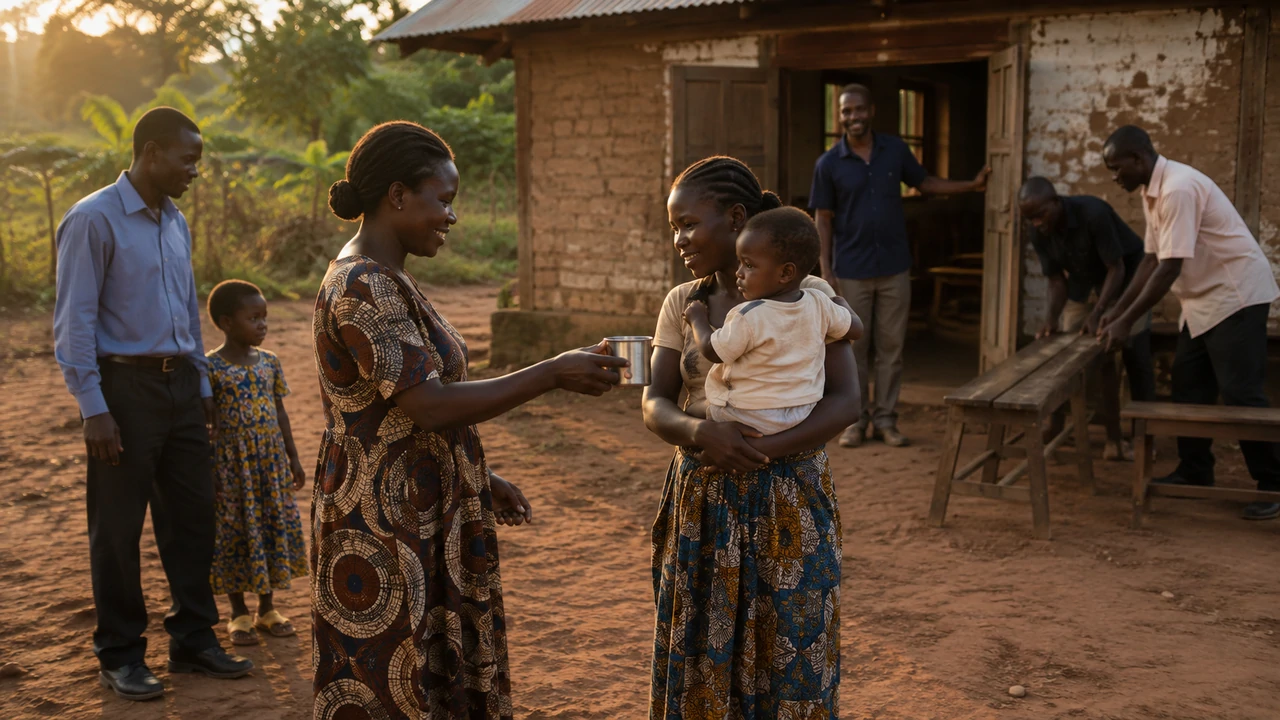
The Central African Republic has endured years of armed conflict, political upheaval, and repeated displacement. Recent elections have established a new term of government, while disarmament programmes and the return of public institutions show that conditions have improved in some areas. Yet many communities near the borders and in parts of the east and southeast still face armed attacks, abductions, trafficking, and fear.
Families have lost homes, livelihoods, and loved ones. Refugees from neighbouring Sudan have also entered a country where hunger, poverty, and weak public services already affect millions of people. Churches continue to gather for worship, proclaim Christ, care for suffering neighbours, and help communities pursue peace, sometimes at great personal risk.
Pray that God would establish justice, protect civilians, strengthen His people, help former combatants leave violence behind, and cause the gospel of Jesus Christ to bear lasting fruit.
Prayer Burden at a Glance
Pray for peace and safety in communities threatened by armed groups; protection and restoration for displaced people, refugees, women, children, and survivors of violence; honest leadership and lawful security forces; faithful pastors and churches; reconciliation that tells the truth about wrongdoing; lawful work for former combatants and vulnerable young people; and believers who endure as they pray, “Your kingdom come.”
Last verified: August 2026
Why the Central African Republic Needs Prayer Now
The country has moved away from the worst years of nationwide conflict, but elections, disarmament, and stronger institutions have not yet brought safety, justice, or reliable public services to every community.
The Central African Republic has moved away from the most intense years of nationwide conflict. Elections were held at the end of 2025, President Faustin-Archange Touadéra began a new term in March 2026, and a new government was formed in May. Some armed groups have returned to the peace process, former combatants have entered disarmament programmes, and public institutions are operating in more places.
These changes have not brought safety to every community. Armed groups, cross-border fighters, traffickers, and criminal networks remain active in parts of the northeast, east, and southeast. Violence around mining areas, livestock routes, and border regions continues to threaten civilians. The gradual transfer of responsibilities from United Nations peacekeepers to national authorities must be matched by the ability and willingness to protect local people.
The war in Sudan has increased insecurity and humanitarian need along the Central African Republic’s northeastern border. Refugees have crossed into northeastern parts of the Central African Republic, while weapons, armed activity, and insecurity have also moved across the border. Host communities are sharing limited food, water, shelter, schools, and medical care at a time when humanitarian assistance is severely underfunded.
Large numbers of Central Africans remain displaced within the country or live as refugees abroad. Returning home does not immediately restore a family’s land, house, documents, school, health care, or livelihood.
For families to live safely, the country needs justice, secure roads, trustworthy institutions, functioning schools and clinics, and opportunities for young people to build lives without joining armed groups. It also needs churches that proclaim salvation through Jesus Christ, submit to the authority of Scripture, and show patient mercy in communities marked by grief, fear, and mistrust.
Country Snapshot
A brief orientation to the country’s location, leadership, security setting, humanitarian needs, and religious context.
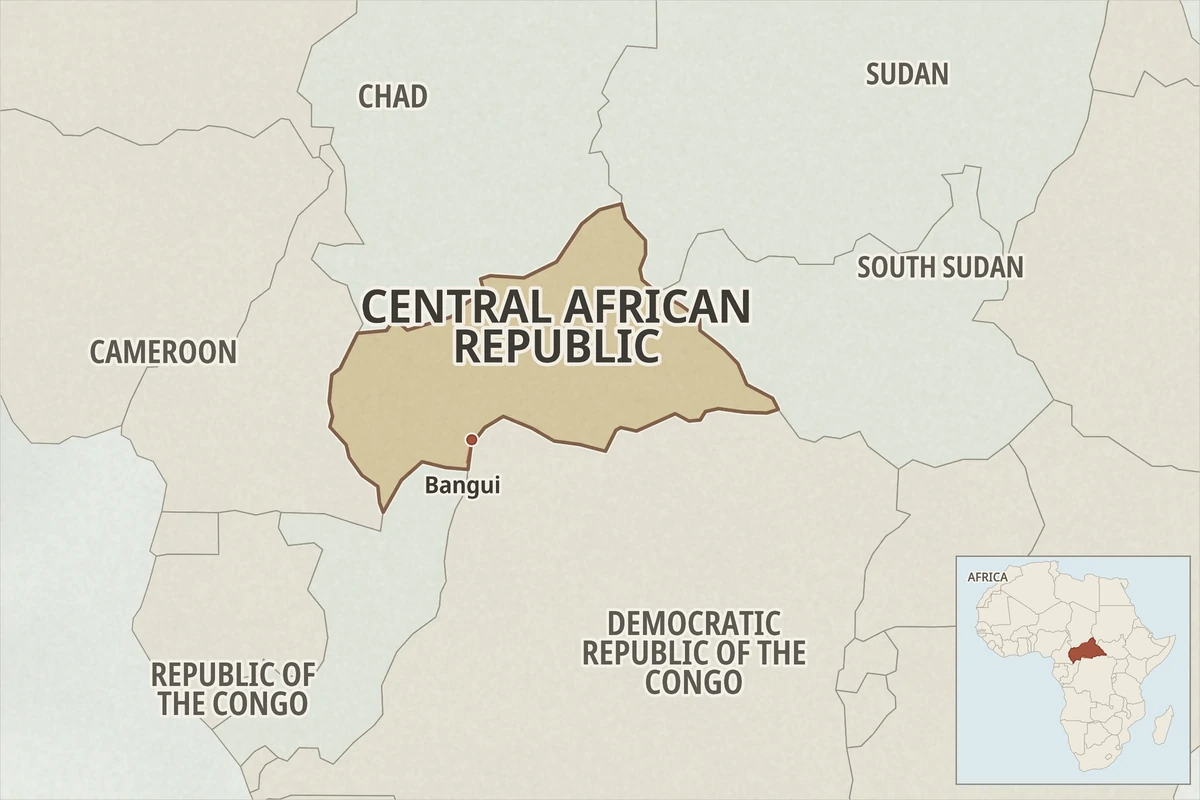
The Central African Republic is landlocked, and its border regions are affected by nearby conflicts, refugee movements, important trade routes, and cross-border insecurity across Central and northeastern Africa.
Spiritual and Practical Challenges Affecting Christians and Churches
Churches serve amid armed violence, displacement, hunger, trauma, limited pastoral training, and the difficult work of reconciliation across divided communities.
Violence and danger to ministry
Pastors, priests, evangelists, and ordinary church members may serve in areas where armed groups, criminal networks, or local militias remain active. Dangerous roads and sudden attacks can interrupt worship, pastoral visits, education, medical work, and relief ministry.
In June 2026, Father Crépin Martial Monga was killed by unidentified armed men in Zémio. He had served in parish ministry and helped coordinate a local peace and reconciliation committee. Responsibility for his death had not been conclusively established as of August 6, 2026, but his killing showed the danger faced by clergy and other local peace workers.
Pray for Christian leaders to serve with courage and wisdom without being controlled by armed groups, political interests, or fear.
Displacement, hunger, and limited resources
Churches often minister among people who have lost homes, relatives, crops, livestock, and livelihoods. Congregations may include displaced families, returnees, and refugees, while pastors carry many of the same griefs and financial pressures as the people they serve.
Food shortages, poor roads, and limited humanitarian access make practical care difficult. Churches may have few resources but still be expected to help with food, shelter, trauma, school costs, and medical expenses.
Pray that Christians would serve people in need patiently, honestly, and compassionately. Ask God to keep scarce assistance from becoming a cause of corruption, favouritism, or division.
Women, children, and survivors of violence
Years of conflict have left many people grieving and traumatized. Women and girls remain vulnerable to sexual violence, trafficking, and exploitation. Children may face abduction, abuse, or recruitment by armed groups.
Churches need wisdom to care for survivors without exposing them to shame, gossip, or further danger. Christian leaders also need clear safeguarding practices and the courage to confront abuse wherever it occurs.
Pray for justice, compassionate care, and the protection of children. Ask God to make churches safe places where suffering people are treated with dignity, patience, and truth.
Limited pastoral training and weak discipleship
Conflict, poverty, and limited education can make sustained discipleship difficult. Some churches have little access to trained pastors, faithful biblical teaching materials, or patient biblical instruction. Religious identity, baptism, or church membership must never be confused with repentance and saving faith in Christ.
Pray for pastors who teach Scripture faithfully and explain the gospel clearly. Ask God to protect churches from prosperity teaching, superstition, syncretism, political manipulation, and other distortions of Christian truth.
Pray that believers would understand salvation by grace alone through faith alone in Christ alone, and that their faith would produce holiness, mercy, courage, and perseverance.
Truthful reconciliation across divided communities
Violence in the Central African Republic is sometimes described too simply as conflict between Christians and Muslims. Armed groups may use religious names or draw support from particular communities, but political power, local grievances, ethnicity, criminal profit, control of natural resources, and cycles of retaliation also contribute to the violence.
Christian leaders are called to reject revenge, protect threatened neighbours, and speak honestly about wrongdoing. Cooperation with Muslim leaders to prevent violence or protect civilians can serve the common good where it does not require doctrinal compromise.
Pray for reconciliation that includes truth, justice, repentance, forgiveness, and the protection of those who have suffered.
Christian Life and Witness in the Central African Republic
Believers and churches continue to worship, teach, serve displaced families, care for the sick, pursue peace, and proclaim Christ despite danger and limited resources.
Churches continue to gather and serve throughout much of the Central African Republic. Believers worship and pray, teach children, visit the sick, care for displaced families, and support people whose lives have been damaged by conflict.
Christian ministry often takes place with very limited resources. In communities where schools are weak, clinics are distant, and secure employment is scarce, congregations serve by preaching, giving pastoral care, offering practical help, forgiving one another, and building honest relationships.
Catholic, Protestant, evangelical, and independent communities form part of the country’s religious life. These descriptions do not mean that every institution or person bearing a Christian name faithfully believes or proclaims the biblical gospel. Pray that every church and professing Christian community would continually examine its teaching and practice by God’s Word and correct what is unfaithful.
Pray especially for pastors and congregations that seek to preach Christ clearly, disciple believers, and resist pressure from armed actors or political interests. Ask God to keep churches from exchanging gospel faithfulness for access, protection, influence, or financial advantage.
Some Christian leaders work with Muslim leaders to prevent violence, mediate disputes, and protect civilians. Such cooperation may serve civil peace and neighbourly love where truth and conscience permit. It must not require churches to treat serious theological differences as unimportant.
Churches also have an important role in reconciliation. Biblical reconciliation does not mean pretending that crimes did not happen. It requires truth, justice, repentance, forgiveness, and the protection of those who have been harmed.
In a nation where many people have experienced fear and loss, believers can show their hope in Christ by enduring faithfully, comforting the grieving, welcoming displaced people, and calling people from every community to repentance and faith in Jesus.
Recent Developments
Recent political, security, and humanitarian developments bring both reasons for thanksgiving and urgent reasons for continued prayer.
-
December 2025–May 2026
Election, inauguration, and a new government
The presidential election was held on December 28, 2025. The Constitutional Court declared President Faustin-Archange Touadéra the winner in the first round, and he was inaugurated on March 30, 2026. A new National Assembly began its work in May, Prime Minister Félix Moloua was reappointed, and a new government was formed. Opposition leaders continued to dispute aspects of the electoral process. Women also gained a stronger presence in municipal government, including the election of a woman as mayor of Bangui.
Prayer significance: Pray that political disagreement would be handled without intimidation or violence, that public office would serve communities rather than reward loyalty, and that women in public service would lead with wisdom and integrity.
-
2025–July 2026
Disarmament continues while insecurity remains
Some major armed groups returned to the peace process, and more than a thousand former combatants were reported disarmed and demobilized from July 2025 onward. Further operations continued in July 2026, including the voluntary disarmament of 100 members of the 3R movement in Baboua. The United Nations peacekeeping mission has also closed or transferred bases in areas judged more stable while concentrating resources in more dangerous regions.
The government describes Russian security cooperation as important to restoring national stability. Independent human-rights reporting has also raised concerns about alleged abuses and security arrangements that lack public transparency.
Prayer significance: Pray for former fighters to find lawful work, for communities to receive justice and protection, for security responsibilities to be transferred only where civilians can be protected, and for every national or foreign armed actor to be accountable for the treatment of civilians.
-
June–July 2026
An attack on Am-Dafock displaces thousands
On June 30, armed groups attacked Am-Dafock, a border town in Vakaga Prefecture, and fired toward the local MINUSCA base. Homes, public buildings, and food supplies were looted, damaged, or burned. Civilians, national security personnel, and United Nations peacekeepers were among those affected.
By mid-July, more than 17,000 displaced people were sheltering near the MINUSCA base. Although the immediate fighting had eased, the risk of renewed violence remained, and families still needed food, clean water, medical care, sanitation, and protection.
Prayer significance: Pray for the people of Am-Dafock, for safe humanitarian access, for the restoration of homes and livelihoods, for armed groups to be restrained, and for border communities to receive lasting protection.
-
June 2026
A local peace worker is killed
Father Crépin Martial Monga was killed in Zémio on June 29. He had served in parish ministry and helped coordinate local reconciliation efforts. The perpetrators and motive had not been conclusively established as of August 6, 2026.
Prayer significance: Pray for those who mourn him, for the truth about his death to be established, and for clergy, community leaders, and peace workers who continue serving in dangerous areas.
How to Pray
Pray for civilian protection, just government, faithful churches, reconciliation, and gospel hope across the Central African Republic.
-
Pray for peace that protects civilians. Ask God to restrain armed groups, traffickers, and criminal networks, protect vulnerable communities, and cause peace agreements to lead to real safety for civilians.
-
Pray for just and accountable government. Pray for President Touadéra, Prime Minister Moloua, and all public authorities to reject corruption and favouritism, protect political freedom, use public resources honestly, and place the good of the nation above personal power.
-
Pray for lawful security forces. Ask that national forces, foreign personnel, peacekeepers, and every armed actor would be held accountable for abuses. Pray for transparent security agreements and for responsibilities to be transferred only when civilians can be protected.
-
Pray for former combatants and vulnerable young people. Pray that those leaving armed groups would renounce violence, find lawful work, and return peacefully to community life. Ask God to protect children and young people from recruitment, revenge, and criminal exploitation.
-
Pray for displaced people, refugees, and families facing hunger. Ask God to provide safe shelter, food, water, health care, education, legal documents, and restored livelihoods. Pray that returns would be voluntary and safe and that host communities would receive help.
-
Pray for women, children, and survivors of violence. Pray for protection from sexual violence, trafficking, and abuse. Ask for compassionate care, truthful investigations, justice, and churches that respond with wisdom rather than shame or silence.
-
Pray for pastors and churches. Ask God to raise up leaders who preach Christ faithfully, teach Scripture carefully, disciple believers patiently, and care for suffering families. Pray that churches would resist superstition, prosperity teaching, syncretism, and political manipulation.
-
Pray for the gospel to be clearly proclaimed. Pray that people would not rest in inherited religion, church membership, or public identity, but would hear the gospel, repent of sin, and trust in Christ alone for salvation.
-
Pray for peace between communities and courage to protect neighbours. Ask God to restrain revenge and communal hatred. Pray for Christians to defend threatened neighbours, seek justice, and pursue peace without hiding wrongdoing or compromising biblical truth.
-
Pray with hope in God’s kingdom. Ask God to help believers endure faithfully until Christ appears. Pray that the gospel would bear fruit among every community and that God would answer the prayer, “Your kingdom come,” through salvation, holiness, justice, mercy, and peace.
Give Thanks
Give thanks for reduced fighting in some areas, people laying down their weapons, Christians who continue serving their neighbours, wider participation by women in local leadership, and congregations where Christ is faithfully proclaimed.
-
Give thanks for reduced large-scale fighting in parts of the country. Praise God for communities where violence has lessened and public institutions have returned.
-
Give thanks for former combatants who have entered disarmament programmes. Pray that the laying down of weapons would lead to honest reintegration and lasting safety.
-
Give thanks for pastors, churches, and Christian workers who remain present in dangerous areas. Praise God for those who serve displaced people, comfort the grieving, teach Scripture, and care for communities with limited resources.
-
Give thanks for opportunities to protect neighbours and reduce violence. Praise God for Christians and Muslims who cooperate for civil peace where truth and conscience permit.
-
Give thanks for increased participation by women in local public leadership. Pray that wider participation would strengthen service, accountability, and attention to local needs.
-
Give thanks for every congregation where Christ is faithfully proclaimed. Praise God wherever Scripture is taught, believers are discipled, and mercy is shown to people in need.
-
Give thanks for Christ’s promise to build His Church. Praise God that Christ continues to build His Church amid war, poverty, injustice, and fear.
Last Verified / Update Note
This note explains when the guide was reviewed and highlights current developments that continue to shape prayer for the country.
Review Status
Reviewed for current prayer use
The review covered the December 2025 presidential election and final legal result; President Faustin-Archange Touadéra’s inauguration; the reappointment of Prime Minister Félix Moloua and formation of the new government; the government’s July 2026 programme; disarmament and reintegration efforts; MINUSCA’s changing field presence; the June 30 attack on Am-Dafock; insecurity in Vakaga and Haut-Mbomou; displacement and refugee figures; food insecurity and poverty; church ministry and peacebuilding; the killing of Father Crépin Martial Monga; and official and independent accounts of foreign security cooperation.
Current burdens include protection for civilians and border communities; food, shelter, and safe return for displaced families and refugees; just and accountable government; lawful security forces; successful reintegration of former combatants; protection for women and children; faithful preaching and discipleship; courage for pastors and local peace workers; reconciliation that includes truth and justice; and clear gospel witness among every community.
Developments to watch include security and humanitarian conditions in Am-Dafock and the wider Vakaga region; violence and displacement around Zémio and Haut-Mbomou; further effects of the war in Sudan; the reintegration of disarmed fighters; changes to MINUSCA’s field presence; humanitarian funding; political and civic conditions following the elections; investigations into attacks on clergy and civilians; and changes in the identity, command, or conduct of foreign security personnel.
This guide uses Central African official sources, local and regional reporting, United Nations and humanitarian agencies, human-rights reporting, and church and ministry sources. Government sources explain official policies and positions but are not treated as independent proof of disputed claims. Displacement and refugee figures come from different reporting dates, so they should not be read as one exact simultaneous total. Public information about Protestant and evangelical church life is limited, so no precise national statistics or broad claims about church growth are given here.
Help keep this guide accurate and current
If you noticed a possible correction, broken link, or significant country update, please contact the Nations Prayer Directory so we can review it carefully.
Key Sources Consulted
Key sources behind this guide include Central African official materials, the final election decision, United Nations reporting, humanitarian data, human-rights assessment, and church-life evidence.
Government, elections, and public policy
- Central African Republic Prime Minister’s Office. Government programme and parliamentary confidence vote, July 2, 2026. Sets out the government’s stated priorities concerning security, disarmament, justice, public finance, infrastructure, education, health, and youth employment.
- Central African Republic Prime Minister’s Office. Reappointment and installation of Prime Minister Félix Moloua. Confirms Félix Moloua’s reappointment and current role as prime minister.
- Constitutional Court Decision No. 001 of January 19, 2026. Final presidential-election result. Establishes the final legal result of the December 2025 presidential election.
- Associated Press. Constitutional Council confirmation of the election result and opposition objections. Reports the confirmation of the election result, opposition objections, and the court’s treatment of the challenge.
Peace, security, and human rights
- MINUSCA. Statement to the United Nations Security Council, June 23, 2026. Summarises national political and security developments, the peace process, and MINUSCA’s changing field presence.
- MINUSCA. Attack on Am-Dafock, June 30, 2026. Reports the June 30 attack, MINUSCA’s attribution, and the danger to civilians, national forces, and peacekeepers.
- MINUSCA. Protection and humanitarian conditions in Am-Dafock, July 16, 2026. Reports displacement, civilian-protection efforts, humanitarian needs, and the continuing fragility of the area.
- MINUSCA. Further disarmament of 3R combatants in Baboua, July 27, 2026. Confirms continued disarmament activity, including the voluntary disarmament of 3R combatants in Baboua.
- Human Rights Watch. World Report 2026: Central African Republic. Provides independent reporting on armed-group activity, abuses against civilians, child recruitment, sexual violence, humanitarian access, and foreign security involvement.
- TASS interview with President Touadéra. Official position on Russian security cooperation. Presents President Touadéra’s official explanation that Russian instructors entered lawfully and with government authorization.
Displacement, hunger, and public services
- UNHCR. Central African Republic country data. Provides data on internally displaced people, refugees hosted within the country, and the Sudanese refugee population.
- UNHCR. Central African Republic regional displacement situation. Provides data on Central African refugees and asylum-seekers living outside the country.
- World Food Programme. Central African Republic. Provides information on food insecurity, access difficulties, inflation, and the effects of displacement on vulnerable communities.
- World Bank. Central African Republic public-finance review, July 2026. Provides analysis of public-finance constraints, limited domestic revenue, pressure on education and health spending, and the need for transparent and accountable resource management.
Church life, ministry, and peacebuilding
- Agenzia Fides. Killing of Father Crépin Martial Monga. Reports Father Crépin Martial Monga’s death, his ministry in Zémio, and his role in the Local Committee for Peace and Reconciliation.
- CAMECO. Faith-based partners and church peacebuilding in the Central African Republic. Describes the Evangelical Lutheran Church’s humanitarian and peacebuilding work and its participation in the Platform of Religious Confessions.
- Vatican News. Central African bishops’ appeal for peace, justice, and responsible government. Reports local bishops’ concerns about corruption, abuse of power, impunity, political hostility, and reconciliation.
Source Context
How to understand the sources behind this guide in a country affected by conflict, political dispute, humanitarian need, and religious diversity.
Source Context
- Source mix. This guide draws on Central African government material, a locally published court decision, African and international reporting, United Nations agencies, humanitarian organisations, human-rights reporting, and church sources. Together, these sources provide official positions, independent reporting, humanitarian data, human-rights assessment, and evidence about church life and ministry.
- Official and outside assessments. Government sources explain national policies and official positions. MINUSCA, humanitarian agencies, human-rights organisations, and reputable news reporting provide independent reporting and assessment. An official statement is not treated as independent proof of a disputed claim.
- Election evidence. The Constitutional Court’s published decision establishes the final legal result. Opposition allegations and concerns about the political environment remain contested rather than settled.
- Security cooperation. The government describes Russian personnel as lawful instructors and partners in restoring security. Independent reporting and human-rights sources have raised concerns about abuses, commercial interests, and unclear command arrangements. Public reporting uses several terms for Russian-linked personnel and security arrangements. The available sources do not establish that “Russian instructors,” “Wagner,” and “Africa Corps” always refer to the same personnel or command structure.
- Am-Dafock. MINUSCA attributed the June 30 attack to elements affiliated with named armed groups and other unidentified fighters. The available evidence does not support assigning responsibility beyond the fighters identified by MINUSCA.
- Father Crépin Martial Monga. His killing and peacebuilding role are confirmed. The perpetrators and motive had not been conclusively established as of August 6, 2026.
- Displacement figures. UNHCR’s figures for internally displaced people, refugees within the country, and Central African refugees abroad use different reporting dates, so they should not be read as one exact simultaneous count.
- Church-life evidence. Church and ministry sources document worship, humanitarian care, peacebuilding, and local service. They do not prove the spiritual condition of every participant or support precise national claims about evangelical numbers, attendance, or church growth.
- Religious composition. Estimates of Christian, Muslim, and traditional religious identification vary by source and may describe inherited or social identity rather than personal belief. A Christian label should therefore not be taken as evidence of repentance or saving faith.
A Closing Prayer for the Central African Republic
A concise prayer bringing the country’s present needs before the Lord.


