


A new year often brings fresh energy to the life of a church. Calendars open. Plans are reviewed. Meetings are scheduled. Hopes are renewed. Leaders begin thinking about what should be strengthened, corrected, or expanded, and ministry teams start asking what the coming months might hold.
None of that is wrong. Planning has its place. Stewardship matters. Thoughtfulness matters. Faithfulness is not opposed to preparation.
But there is a danger at the start of a new year. The church can begin to act as though its greatest need is clearer strategy, better organisation, stronger creativity, or greater momentum. Without saying so outright, we can start treating ministry as though it rises or falls on human energy.
Scripture teaches us to think differently. The church does not belong to us. Christ purchased her with his own blood, rules her by his Word, and sustains her by his Spirit. Every ministry in the church, whether public or quiet, visible or hidden, depends utterly on him.
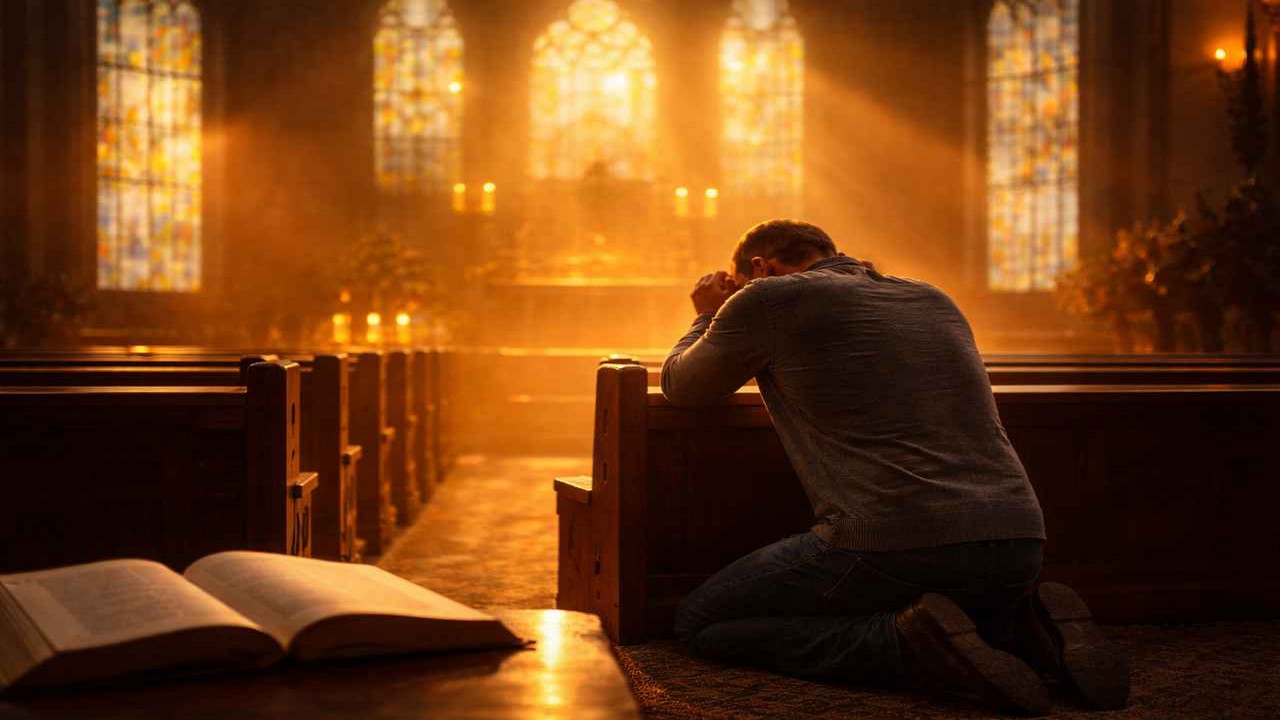
That is why the beginning of a new year is not merely a time to plan. It is a time to pray.
We Must Begin with Gratitude Before We Ask for Growth
One of the healthiest ways to enter a new year is with thanksgiving. Before we speak about vision, goals, and impact, we should pause and remember the Lord’s mercy.
Every faithful sermon preached, every song sung in truth, every child taught, every weary saint encouraged, every unbeliever engaged, every quiet act of service, every moment of preservation through hardship and weakness — all of it has come from God’s gracious hand.
That matters because gratitude protects the church from pride. It reminds us that ministry is not a monument to our effort. It is a testimony to divine mercy. We are not self-sustaining people offering God our excellence. We are needy people upheld by grace.
And that changes the tone of our praying. We do not come into a new year trying to persuade God to help us. We come as those who have already been helped, already been carried, already been shown mercy in Christ. We ask him to continue what he alone can begin.
Every Ministry Needs More Than Activity
Churches often speak of ministries as separate lanes: worship ministry, teaching ministry, evangelism ministry, discipleship ministry, fellowship ministry, outreach ministry, and many more. That language can be useful, but only if we remember that these are not disconnected programs. They are expressions of one body under one Head.
And because they belong to Christ, each one needs more than productivity. Each one needs spiritual life.
The worship ministry does not merely need musical skill. It needs reverence, truth, humility, and joy in God. It is possible to have polished sound and poor worship. It is possible to create an impressive atmosphere while hearts remain untouched by the majesty of Christ. So we should pray not simply for talented singers or competent musicians, but for worship that is sincere, biblically shaped, and full of gospel beauty.
The teaching ministry does not merely need information. It needs faithfulness, clarity, wisdom, and spiritual weight. Teachers do more than pass on content. They open the truth of God before the minds and hearts of others. That requires more than intelligence. It requires dependence. We should pray that those who teach would handle God’s Word carefully, speak it clearly, and live in a way that does not undermine what they proclaim.
The evangelism ministry does not merely need methods. It needs love, courage, patience, and a clear gospel. Churches can speak often about “impact” and “reaching people,” but unless Christ crucified and risen stands at the centre, our message becomes thin. We are not sent merely to increase attendance or improve behaviour. We are sent to bear witness to the Savior. So we pray for open doors, bold speech, compassionate hearts, and quiet confidence that God still saves sinners through the gospel.
The discipleship ministry does not merely need structure. It needs truth applied in love. Real discipleship is not the production of outward conformity. It is the patient formation of believers into maturity in Christ. That means walking together through suffering, temptation, repentance, growth, confusion, and hope. We should pray for churches in which older believers lovingly strengthen younger believers, where correction is gentle, accountability is real, and grace is never confused with indifference.
The fellowship ministry does not merely need gatherings. It needs genuine spiritual affection. Shared meals, warm greetings, and joyful events are good gifts, but Christian fellowship is more than social closeness. It is life together in Christ. It is the bearing of burdens, the sharing of sorrows, the strengthening of weak hands, and the mutual encouragement of saints on the road to glory. We should pray that our churches would not merely be friendly, but deeply loving.
The outreach ministry does not merely need creativity. It needs mercy shaped by truth. It is right for the church to care for the hurting, the marginalised, the burdened, and the overlooked. Yet Christian compassion is never detached from the person and work of Jesus. We do not serve others in order to advertise ourselves as caring people. We serve because Christ has loved us, and we long for others to know both his kindness and his saving reign.
We Should Pray Especially for Ministries That Form the Next Generation
Where a church has a school ministry, or any ministry that touches children, students, teachers, and families, it carries a particularly weighty stewardship.
To pray for such a ministry is not merely to ask for academic progress or administrative order. It is to ask God to preserve and shape souls.
Students need more than grades. They need wisdom, resilience, humility, teachability, and moral seriousness. They need protection in temptation, steadiness in confusion, and hearts awakened to the fear of the Lord. A good school ministry does not despise learning; it places learning in its proper place. Knowledge is a gift, but character matters more than achievement, and knowing many things is no substitute for knowing the Lord.
Teachers also need more than stamina. They need patience, discernment, compassion, courage, and deep reserves of grace. Anyone who teaches the young knows the temptation to discouragement. The work can be repetitive, exhausting, and slow to show visible fruit. Yet the Lord often does some of his quietest and most lasting work through ordinary faithfulness repeated over time.
Administrators, staff, parents, and volunteers also need prayer. Decisions must be made. Resources must be stewarded. Conflicts must be handled. Vision must be clarified. It is easy in such settings to become driven by pressure, comparison, or fear. But Christian leadership must be governed by wisdom from above, not merely urgency from below.
And where the school ministry belongs to the life of the church, it should be prayed for not as a side project but as part of the church’s witness. Students are not merely attendees. They are image-bearers being shaped for lives of responsibility, service, and truth.
What Should We Really Ask God to Do?
When churches pray for a new year, they often ask for fruitfulness, effectiveness, creativity, and growth. Those are not wrong requests. They can be good and necessary.
But we need to define those words carefully.
Fruitfulness is not the same as visibility. Effectiveness is not the same as popularity. Growth is not the same as numbers. Creativity is not the same as faithfulness.
A ministry may be small and deeply faithful. Another may be busy and spiritually thin. One church may see many visible conversions in a season. Another may labour in tears for years with little outward encouragement. The Lord alone knows the full measure of what he is doing.
That is why our deepest prayer should not be, “Lord, make us impressive.” It should be, “Lord, make us faithful.”
We should ask him to purify our motives, deepen our love, steady our doctrine, strengthen our endurance, and keep us near Christ. We should ask him to make our worship truthful, our teaching sound, our witness courageous, our fellowship sincere, our mercy tangible, and our discipleship patient and grace-filled.
In other words, we should ask him to make every ministry more clearly Christian.
Christ Is the True Hope of the Church’s Ministries
At the centre of all this is not ministry itself, but Christ.
He is the one who gathers his people. He is the one who gives shepherds, teachers, and servants to the church. He is the one who receives imperfect offerings from imperfect saints and, by his grace, uses them for holy ends. He is the one who forgives our pride, our coldness, our self-reliance, and our ministry vanity. He is the one who keeps his lampstands burning.
That means the hope of the church in the new year is not that we will finally get everything right. Our hope is that Christ remains faithful.
He is not weary of his church. He is not confused about her future. He is not dependent on our brilliance. He calls us to pray, labour, love, serve, and persevere — not because the outcome rests on our shoulders, but because he delights to work through dependent people.
So let us pray for every ministry. Let us pray with seriousness and expectation. Let us ask God to do more than refine our plans. Let us ask him to renew our hearts.
And as we do, let us remember this: the church’s confidence in the coming year does not rest in new strategies, renewed energy, or improved structures. It rests in the crucified and risen Christ, who loved his church, dwells with his people, and will not fail to complete his work.


