

Cameroon is facing armed conflict, displacement, hunger, and uncertainty over presidential succession at the same time. Armed conflict continues to harm communities in the North-West and South-West. In the Far North, attacks connected with the Lake Chad Basin insurgency still threaten villages and force families from their homes. Displaced people, refugees, and struggling host communities face hunger, interrupted education, and uncertain access to essential care. Yet churches continue to worship, teach, care for displaced families, and appeal for peace. Cameroon needs prayer for an end to violence and suffering, but also for truthful leadership, justice, repentance, faithful gospel preaching, and reconciliation rooted in Christ.
Prayer Burden at a Glance
Pray for an end to violence in the North-West, South-West, and Far North; for displaced families, refugees, and host communities facing hunger and trauma; for children whose safety and education have been damaged by conflict; for truthful and accountable government; and for churches to remain faithful to Scripture, care wisely for those who suffer, and proclaim Christ clearly.
Last verified: 7 August 2026
Why Cameroon Needs Prayer Now
Cameroon’s churches serve while the country faces conflict, displacement, hunger, interrupted education, and uncertainty over presidential succession.
Cameroon’s crises reinforce one another. Conflict forces families from their homes. Displacement increases hunger and places additional pressure on schools, clinics, and host communities. Insecurity restricts farming, trade, travel, education, worship, and humanitarian access. Political distrust makes national reconciliation more difficult.
By the middle of 2026, Cameroon’s wider displacement situation involved more than 2.2 million internally displaced people, refugees, and asylum seekers. UNICEF estimated that 2.9 million people, including 1.5 million children, would need humanitarian assistance during the year.
In the North-West and South-West, years of conflict have exposed civilians to killings, kidnappings, intimidation, destruction of property, and repeated displacement. Schools and businesses have been disrupted, and many families have lived for years without knowing when it will be safe to return home.
In the Far North, armed attacks continue to threaten villages and destroy livelihoods. In early 2026, attacks around Darak forced more than 18,000 people to flee toward Blangloua. Many arrived without enough food, shelter, or safe water, and child malnutrition became an urgent concern.
Hunger is worsening in several parts of the country. Millions of people were expected to face serious food insecurity during the 2026 lean season, while funding shortages threatened assistance for refugees, displaced families, and vulnerable host communities.
Cameroon’s political situation has added another source of concern. The disputed presidential election of October 2025 was followed by protests, deaths, and widespread arrests. In April 2026, a constitutional amendment restored the office of vice president and changed the arrangements for presidential succession. As of 7 August 2026, the office had not been filled, and President Paul Biya had not publicly returned from the private European stay announced by the Presidency on 7 June.
Prayer for Cameroon must therefore be specific. People need protection, food, education, restored livelihoods, impartial justice, and institutions that serve the public good. They also need the deeper work of the gospel: sinners brought to repentance and faith in Christ, believers rooted in Scripture, and churches strengthened to live with holiness, courage, and love.
Country Snapshot
A brief orientation to Cameroon’s location, people, government, religious setting, and present prayer burdens.
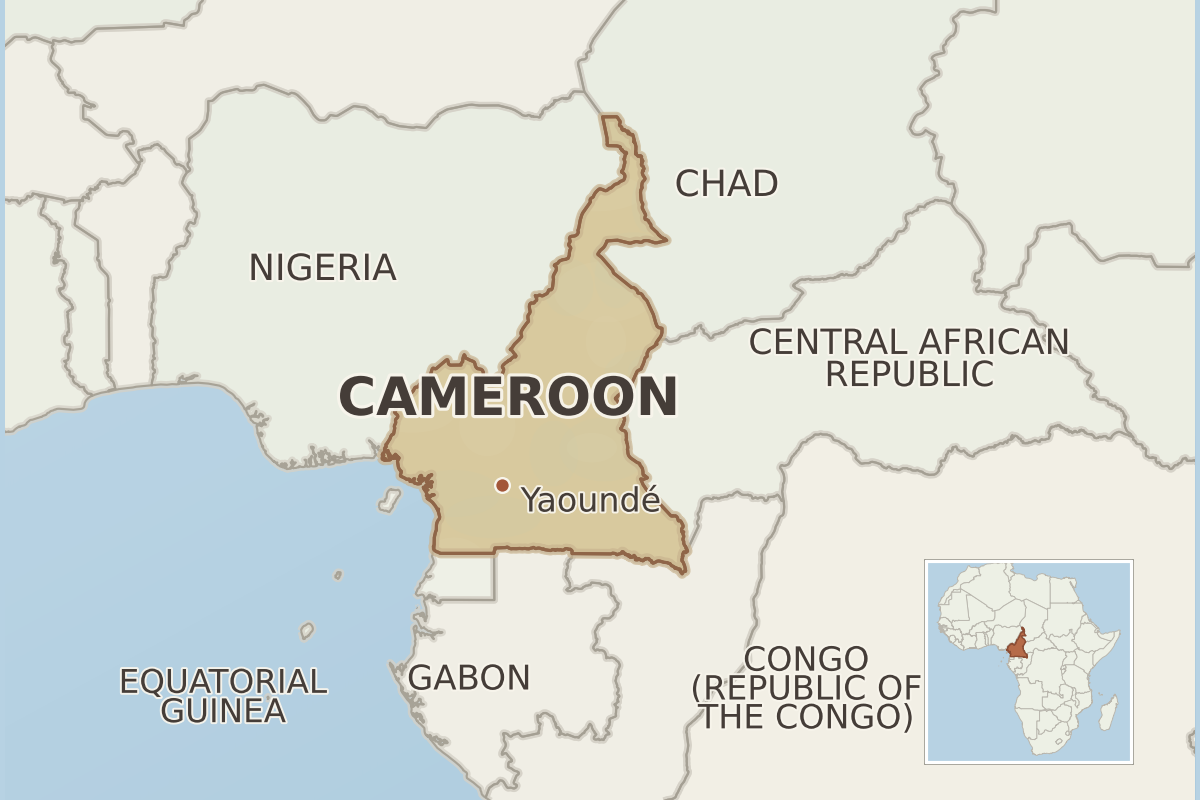
Cameroon’s religious composition is often described through broad Catholic, Protestant, Muslim, Indigenous, and other categories. These labels describe how people identify publicly or are counted in religious statistics. They do not measure personal repentance, regeneration, active discipleship, or saving faith in Christ.
Spiritual and Practical Challenges Affecting Christians and Churches
Christians and churches serve amid armed conflict, displacement, hunger, interrupted education, and political distrust, while caring for people who are grieving or living with trauma.
Conflict in the North-West and South-West
Years of conflict in Cameroon’s English-speaking regions have disrupted daily life and displaced many families. Civilians have faced kidnapping, intimidation, restrictions on movement, destruction of property, and violence from different armed actors. Many families have been displaced more than once. Pastors may minister to bereaved families, displaced people, government workers, young people vulnerable to recruitment, and people who have suffered at the hands of separatist groups or security forces. Churches need wisdom to speak truthfully without becoming instruments of political propaganda, to resist ethnic and political hatred, and to call for justice and reconciliation without excusing violence or hiding wrongdoing.
Violence and insecurity in the Far North
Communities in the Far North continue to face attacks, abductions, and displacement connected with Boko Haram, Islamic State-linked groups, and the wider Lake Chad Basin crisis. Christians, Muslims, and followers of traditional religions all live under this threat. Insecurity interrupts farming, trade, schooling, travel, and worship. Christians serving in this region need courage and discernment. They should care for frightened people, support survivors, and refuse to treat Muslim neighbours as responsible for extremist violence.
Displacement, hunger, and pressure on host communities
Many displaced families live outside formal camps. Some stay with relatives, rent overcrowded rooms, or depend on communities that have few resources of their own. Cameroon also hosts refugees from neighbouring countries, especially the Central African Republic and Nigeria. This places pressure on food supplies, schools, health services, water systems, and employment. Churches can provide food, shelter, education, livelihood support, pastoral care, and friendship, but congregations with limited resources cannot meet all these needs on their own.
Children living with conflict and interrupted education
Many children have lost parents, homes, schooling, or a sense of safety. Conflict increases the risk of abduction, recruitment into armed groups, exploitation, early marriage, substance abuse, and separation from caregivers. Even children who escape direct violence may continue to suffer from deep grief and trauma. Churches can provide safe teaching, family support, careful pastoral care, and patient discipleship. They must take child protection seriously and ensure that ministry settings are safe from abuse.
Political distrust and uncertainty over succession
The disputed 2025 election, the constitutional changes of April 2026, and the President’s prolonged absence have raised clear questions about governance, succession, and public trust. Christians may disagree strongly about political parties and leaders. Churches should not demand political uniformity from their members or confuse loyalty to a party with faithfulness to Christ. Believers need courage to reject corruption, manipulation, inflammatory rumours, and ethnic hostility while seeking truth, justice, lawful government, and respect for human dignity.
Christian Life and Witness in Cameroon
Cameroon has a large professing Christian population, but faithful witness requires clear gospel preaching, sound discipleship, integrity, mercy, and peace pursued without hiding the truth.
Cameroon has a large and visible professing Christian population. Roman Catholic, Protestant, Anglican, evangelical, Pentecostal, and independent communities have contributed to education, health care, relief work, and public life.
This public Christian identity must not be confused with saving faith. Baptism, confirmation, church membership, inherited religion, or participation in Christian ceremonies does not prove that a person has been born again or is trusting in Christ.
Cameroon therefore needs more than a larger number of people identifying as Christian. It needs the clear preaching of the gospel: that sinners are saved by grace alone, through faith alone, in Christ alone; that repentance and regeneration are necessary; and that Scripture is the final authority for the faith and life of the church.
Serving people who are suffering
Congregations in conflict-affected areas often care for people who are grieving, hungry, displaced, or living with trauma. Churches and Christian organisations operate schools, clinics, relief ministries, and local support networks. Such service can display the mercy of Christ when it is offered with humility, honesty, and careful protection of vulnerable people. Assistance should never be used to manipulate those in need or to conceal corruption, exploitation, or false teaching.
Guarding the truth of the gospel
Cameroon needs pastors who handle Scripture faithfully and refuse to make wealth, success, or extraordinary experiences the centre of Christianity. Believers need sound discipleship that helps them distinguish biblical Christianity from prosperity teaching, superstition, syncretism, spiritual manipulation, and inherited religious custom. Churches should teach people to trust the finished work of Christ rather than ceremonies, religious performance, or promises of material blessing.
Seeking peace without hiding the truth
Church leaders have taken part in public appeals for peace and dialogue. During a visit in April 2026, Pope Leo XIV held a meeting for peace in Bamenda. A short period of calm followed, but violence later resumed. Public religious appeals can create space for dialogue, but statements and ceremonies cannot by themselves bring lasting reconciliation. Peace requires honest acknowledgment of wrongdoing, protection of civilians, impartial justice, repentance, and patient work across divided communities.
Christians from different traditions may cooperate in protecting civilians, helping displaced families, and pursuing peace without treating important doctrinal differences as unimportant or compromising biblical convictions.
Using legal freedom faithfully
In January 2026, the government granted legal recognition to eight religious associations, including several professing Christian bodies. This was significant because some religious communities had waited many years for formal authorisation. Christians may give thanks for greater freedom to organise and worship while praying that religious laws will be fair, clear, and consistently applied. Legal freedom should be used for faithful worship, sound teaching, discipleship, mercy, and service rather than the pursuit of status or institutional power.
Recent Developments
The election aftermath, constitutional changes, new displacement, public peace efforts, and the President’s prolonged absence all give Christians specific reasons to pray for Cameroon now.
-
October 2025
Disputed presidential election
The Constitutional Council declared President Paul Biya the winner of the 12 October 2025 election. The leading opposition candidate rejected the result, and protests were followed by deaths, injuries, and widespread arrests.
Prayer significance: Pray for truthful institutions, lawful treatment of detainees, restraint among political leaders, and peaceful ways for citizens to seek justice.
-
January 2026
Religious associations receive legal recognition
The government authorised eight religious associations, including several professing Christian bodies, after a long period in which some religious communities had operated without full legal recognition.
Prayer significance: Give thanks for greater freedom to organise and worship. Pray that churches will use this freedom for faithful teaching, discipleship, mercy, and clear gospel witness.
-
Early 2026
New displacement in the Far North
Attacks around Darak forced more than 18,000 people to flee toward Blangloua. Many arrived without adequate food, shelter, or water, and children faced serious risks of malnutrition.
Prayer significance: Pray for protection, sufficient relief, restored livelihoods, and safe return when conditions allow.
-
April 2026
Presidential succession arrangements changed
A constitutional amendment restored the office of vice president and changed the process of presidential succession. Supporters described the amendment as a way to protect institutional continuity, while critics raised concerns about concentrated executive power and democratic accountability.
Prayer significance: Pray for a peaceful and lawful future, truthful public communication, and leaders who treat authority as a responsibility to serve the people.
-
April 2026
Public appeals for peace
A papal visit included a meeting for peace in Bamenda and renewed calls for dialogue and reconciliation. A temporary period of calm followed, but violence resumed.
Prayer significance: Pray that future peace efforts will protect civilians, confront wrongdoing honestly, and lead to justice and lasting reconciliation.
-
June-August 2026
President remains abroad and vice-presidential office remains unfilled
The Presidency announced that President Paul Biya left Yaoundé on 7 June for a private stay in Europe. As of 7 August, no public return had been announced, and the vice-presidential office created through the April constitutional amendment remained unfilled. Reports or rumours concerning the President’s health have not been independently verified and are not presented as fact.
Prayer significance: Pray for truthful public communication, stable administration, wise leadership, and a peaceful, lawful transfer of authority whenever succession becomes necessary.
How to Pray
Pray for peace, protection, truthful leadership, care for displaced people, faithful churches, and clear gospel witness in Cameroon.
Pray for peace in the North-West and South-West. Ask God to restrain killing, kidnapping, intimidation, and retaliation. Pray for dialogue that faces the truth, protects civilians, and makes room for justice, repentance, forgiveness, and lasting peace.
Pray for protection in the Far North. Pray that attacks will be prevented, abducted people will be released, and armed groups will lose their power to recruit and terrorise communities. Ask that security forces will act lawfully and protect civilian life.
Pray for displaced families, refugees, and host communities. Ask God to provide safe shelter, food, clean water, medical care, education, and opportunities to rebuild livelihoods. Pray for families and churches welcoming displaced people while facing poverty themselves.
Pray for children affected by conflict. Pray for children who have lost family members, homes, schooling, or a sense of safety. Ask God to protect them from recruitment, trafficking, abuse, early marriage, and exploitation.
Pray for women and girls facing violence. Ask God to protect those at risk of sexual violence and economic exploitation. Pray for justice, safe care, healing, and churches that respond to survivors with wisdom and compassion.
Pray for Cameroon’s leaders and institutions. Pray for truthful public communication, accountable government, impartial courts, and peaceful constitutional succession. Ask God to restrain corruption, manipulation, and political violence.
Pray for pastors and church leaders. Ask God to give them humility, courage, and faithfulness to Scripture. Pray that they will reject corruption, ethnic favouritism, political manipulation, prosperity teaching, and abuse of spiritual authority.
Pray for clear gospel preaching and genuine conversion. Pray that people will not rest in inherited religion, ceremonies, or church membership, but will repent and trust in Christ. Ask God to build churches marked by sound doctrine, holiness, prayer, and love.
Pray for Christians to pursue peace faithfully. Pray that believers will resist hatred, rumours, and revenge. Ask God to help them protect the vulnerable, serve across political and ethnic divisions, and pursue reconciliation without hiding the truth or compromising the gospel.
Pray with biblical hope. Ask that God’s kingdom would come and that the gospel would bear fruit throughout Cameroon. Pray that believers will endure suffering with hope, live in holiness, and remain faithful as they await Christ’s appearing.
Give Thanks
Cameroon’s needs are severe, yet Christians can still thank God for acts of service, hospitality, courage, and faithful witness.
Give thanks for pastors, believers, and congregations that continue to worship, teach, and serve despite insecurity and hardship.
Give thanks for humanitarian workers, health workers, teachers, and community volunteers caring for displaced and vulnerable people.
Give thanks for programmes helping conflict-affected children return to learning and receive protection and emotional support.
Give thanks for Cameroonian families and communities that welcome refugees and displaced people despite limited resources.
Give thanks for the greater legal recognition granted to eight religious associations in January 2026.
Give thanks for Christians who protect civilians, comfort grieving families, resist hatred, and work for peace.
Give thanks for churches that proclaim Christ faithfully, teach Scripture clearly, and care for suffering people with humility and integrity.
Last Verified / Update Note
This note explains when the guide was reviewed and which developments may affect how readers use it for prayer.
Review Status
Reviewed for current prayer use
This guide was reviewed against current information concerning Cameroon’s national leadership, the October 2025 election and its aftermath, the April 2026 constitutional amendment, conflict in the North-West and South-West, insecurity in the Far North, displacement, hunger, child protection, religious recognition, and Christian peace efforts.
The most pressing matters for prayer remain an end to violence, protection of civilians, care for displaced families and refugees, food and education for vulnerable children, truthful and accountable government, peaceful presidential succession, and faithful gospel witness by Cameroon’s churches.
Important developments include President Paul Biya’s return or any new official communication concerning his duties, any appointment to the office of vice president, changes in the North-West and South-West conflict, attacks and displacement in the Far North, and the effect of humanitarian funding shortages on food, health, and protection services.
Official Cameroonian sources were used for office-holders, laws, decrees, and the government’s stated position. African regional institutions, United Nations agencies, national reporting, and independent international sources were used to assess humanitarian conditions, disputed political developments, and outside concerns. Claims that remain contested or change quickly are dated, attributed, or excluded rather than presented as settled fact.
Help keep this guide accurate and current
If you noticed a possible correction, broken link, or significant country update, please contact the Nations Prayer Directory so we can review it carefully.
Key Sources Consulted
This guide draws on official Cameroonian materials, African regional assessments, humanitarian data, church-life and religious-freedom sources, and independent reporting.
Cameroon government and national sources
- Presidency of the Republic of Cameroon. “The President.” Used to confirm the official identification of Paul Biya as President of the Republic.
- Presidency of the Republic of Cameroon. “The Head of State on a Brief Private Stay to Europe.” Used for the official statement that the President left Yaoundé on 7 June 2026 for a private stay in Europe.
- Prime Minister’s Office. “The Prime Minister and His Collaborators.” Used to confirm Joseph Dion Ngute as Prime Minister and Head of Government.
- Presidency of the Republic of Cameroon. “Law No. 2026/002 of 14 April 2026.” Used for the constitutional amendment restoring the office of vice president and changing presidential-succession arrangements.
- Presidency of the Republic of Cameroon. “Eight Religious Associations Authorised in Cameroon.” Used to confirm the legal recognition granted to eight religious associations on 23 January 2026.
- Cameroon Tribune. “Presidential Election: Paul Biya Triumphs.” Used for the nationally reported official Constitutional Council result of the October 2025 presidential election.
- Cameroon Tribune. “Alleged Presidential Decree: Government Clears Ambiguity.” Used to confirm that a circulated vice-presidential appointment decree was not authentic.
African and regional sources
- African Union Commission. Statement on President Paul Biya’s re-election. Used for the African Union’s recognition of the officially proclaimed result and its call for restraint, inclusive dialogue, and social cohesion.
- African Commission on Human and Peoples’ Rights. Statement on the human-rights situation in Cameroon. Used for regional concern regarding deaths, excessive force, arrests, and internet restrictions during the post-election period.
Humanitarian and displacement sources
- UNHCR Operational Data Portal. “Cameroon.” Used for displacement figures last updated on 30 June 2026, including internally displaced people, refugees, asylum seekers, and returnees.
- UNICEF. “Humanitarian Action for Children: Cameroon.” Used for the estimate that 2.9 million people, including 1.5 million children, would require humanitarian assistance in 2026 and for the principal risks facing children.
- UNICEF Cameroon. “Baria and Her 6,300 Peers Deprived of Emotional Safety in Blangoua.” Used for information about displacement from Darak to Blangloua and the effects of hunger, unsafe water, malnutrition, and emotional distress on children.
- World Food Programme. “Cameroon.” Used for food-insecurity projections, humanitarian needs, displacement pressures, and the effect of insecurity on livelihoods and basic services.
- UNFPA. “Situation Report: Cameroon, April 2026.” Used for protection risks affecting women and girls, renewed violence after the temporary ceasefire, and continuing needs for reproductive-health and gender-based-violence services.
Church life and religious-freedom sources
- Holy See. “Meeting for Peace with the Community of Bamenda.” Used for the April 2026 peace meeting and the involvement of Christian and Muslim leaders in efforts to mediate between opposing sides.
- 2023 International Religious Freedom Report: Cameroon. Used as background for the legal registration process, administrative tolerance of unregistered groups, and practical difficulties faced by religious bodies without formal recognition.
Independent reporting and human-rights assessment
- Associated Press. Report on President Biya’s prolonged stay abroad. Used for the dated 6 August 2026 report that President Biya had been outside Cameroon for two months and that the vice-presidential office remained vacant.
- Human Rights Watch. “Cameroon: Killings, Mass Arrests Follow Disputed Elections.” Used for outside assessment of lethal force, arrests, detention concerns, and disputed casualty totals after the October 2025 election.
Source Context
How to understand the limits and differences in sources about Cameroon’s conflict, disputed political developments, and rapidly changing humanitarian needs.
Source Context
- Leadership and succession. The President’s departure on 7 June 2026 is confirmed by the Presidency. His continued absence as of 6 August was reported by Associated Press. No official return date had been announced as of 7 August 2026, so this guide states the President’s location only as of that date.
- Presidential health. Public discussion includes speculation about the President’s health, but no reliable public source cited in this guide establishes a verified diagnosis or official medical condition. This guide therefore makes no claim about his health.
- Vice-presidential appointment. The constitutional office exists, but no valid appointment had been announced as of 7 August 2026. Several false decrees have circulated, so this guide relies on official Cameroonian announcements when identifying any appointment to the office.
- Election and post-election violence. The Constitutional Council’s declaration is the official result under Cameroonian law. Opposition figures disputed it, while African and international human-rights sources raised concerns about deaths, force, and arrests. Reported death totals differ, so the guide does not use one definitive casualty number.
- Conflict reporting. Access to parts of the North-West, South-West, and Far North is limited, and government, separatist, humanitarian, and human-rights sources may describe the same events differently. The guide avoids assigning responsibility for individual incidents unless the evidence is sufficiently clear.
- Humanitarian figures. Displacement, hunger, and aid figures change frequently. The principal displacement figures in this guide are dated 30 June 2026, while food-security and humanitarian-need estimates cover defined periods during 2026.
- Religious composition. Detailed religious percentages come from different years and methodologies. They describe public or sociological religious identification and do not measure personal repentance, regeneration, or saving faith.
- Church life. Public information is more readily available for nationally visible church institutions and major peace initiatives than for congregations in remote or conflict-affected communities. The guide therefore avoids claiming that one institution or denomination represents every Christian in Cameroon.
- Legal recognition. The January 2026 decrees confirm the recognition of eight religious associations. They do not prove that every longstanding registration problem has been resolved or that every recognised body is doctrinally faithful.
A Closing Prayer for Cameroon
A concise prayer gathering Cameroon’s present burdens before the Lord.


