


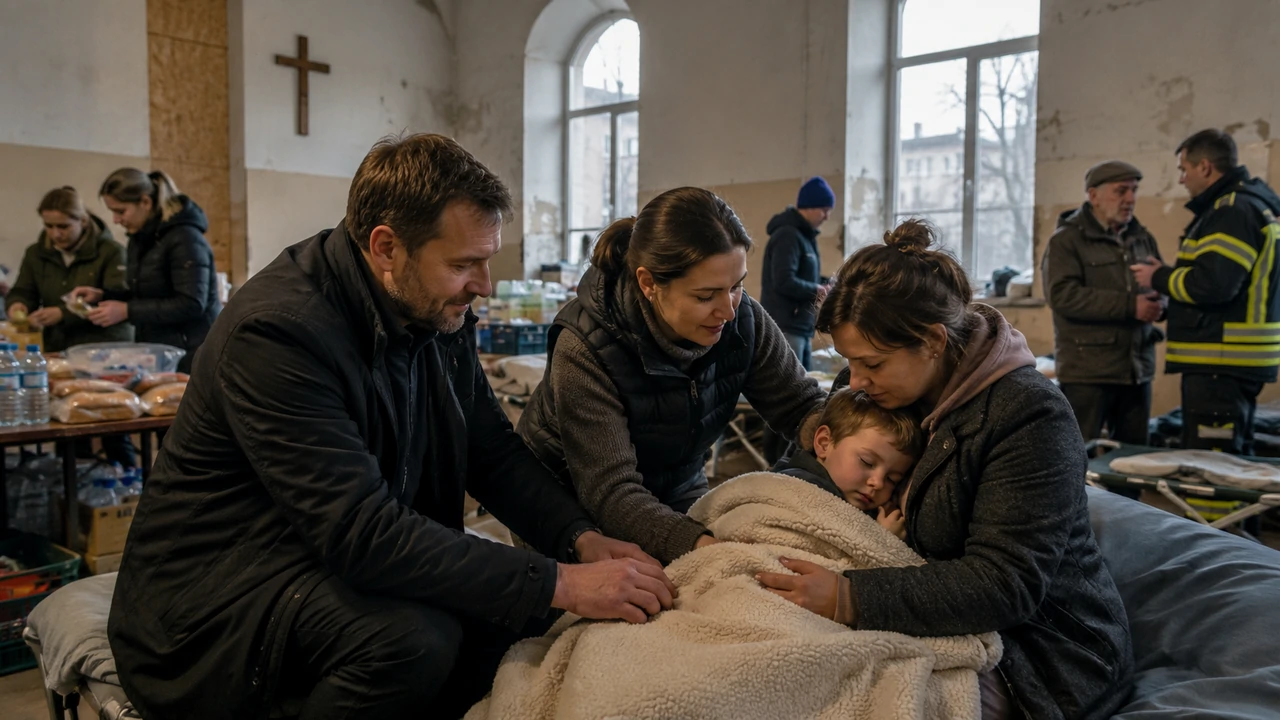
War continues to affect nearly every part of ordinary life in Ukraine. Homes, hospitals, schools, energy systems, military units, churches, shelters for displaced people, and cemeteries all show the damage, disruption, and loss caused by the war. Pastors comfort bereaved families. Chaplains pray with exhausted soldiers. Congregations help displaced people. Christians near the front and in territories under Russian control live with danger, loss, restrictions, and uncertainty.
The danger became especially clear again on July 30, 2026, when Russia launched a large missile-and-drone attack across Ukraine. Ukrainian officials reported more than seventy missiles and over 280 attack drones. The Associated Press reported that at least ten civilians were killed and more than fifty injured, including children. During the attack, a missile entered Polish airspace and fell in a rural part of Lublin province. Early Polish examination of recovered fragments pointed to a Russian Kh-101 cruise missile, although Poland said there was no reason to believe the country had been deliberately targeted.
Prayer for Ukraine should remember civilians under attack, grieving and displaced families, churches serving exhausted communities, believers living under Russian control, and neighboring countries exposed to cross-border danger. Christians should also pray that God would keep His people from hatred, despair, falsehood, and revenge, and help them speak truthfully about Christ and serve their neighbors with mercy during the war.
Pray for civilians facing repeated missile and drone attacks, families sheltering through the night, and churches, chaplains, medical workers, rescuers, and volunteers serving the wounded and bereaved. Pray for believers near the front and in territories under Russian control. Ask God to give wisdom and restraint to national and international leaders, prevent mistaken decisions from widening the war, protect freedom of worship, and help Ukrainian Christians speak truth, show mercy, and continue trusting and obeying Christ.
Last verified: July 31, 2026
Why Ukraine Needs Prayer Now
War continues to threaten civilian life, displace families, strain churches, and test the consciences of believers.
Ukraine needs prayer because the war still disrupts family life, church life, public services, and the daily routines of millions of people. Missile and drone attacks kill and injure civilians, damage homes, disrupt electricity and transport, and force people into shelters.
Civilian deaths and injuries had risen sharply even before the July 30 attack. The UN Human Rights Monitoring Mission recorded at least 293 civilians killed and 1,990 injured during June 2026, the highest combined monthly total since April 2022. In the first six months of 2026, civilian casualties were 37% higher than during the same period in 2025. Long-range missiles and drones caused 45% of June’s casualties, including many in cities far from active ground fighting.
The humanitarian need also remains severe. UNHCR estimated in February 2026 that 10.8 million people inside Ukraine needed humanitarian assistance and that 3.7 million were internally displaced. Repeated attacks on housing, energy systems, and essential services have made safe return and lasting recovery difficult for many families.
For Christians, the war requires churches to care for people in need while believers also face fear, anger, guilt, and exhaustion. Churches care for displaced people, bereaved families, wounded soldiers, older people, children, and traumatized communities. Pastors and chaplains help people face death, fear, anger, guilt, and exhaustion.
Believers need grace to name evil truthfully without becoming cruel, to seek justice without living for revenge, and to hold fast to Christ without pretending that the suffering is small. Prayer should therefore ask for civilian safety, honest and wise leadership, mercy for the wounded and displaced, perseverance for churches, and a just end to the violence.
Country Snapshot
A concise view of Ukraine’s government, humanitarian needs, religious landscape, and church life during the war.
Ukraine’s government continues to operate under martial law while managing the military, humanitarian, economic, and public-service demands of a major war. The new government identified defense, energy reliability, preparation for winter, support for front-line communities, economic resilience, and European integration among its priorities.
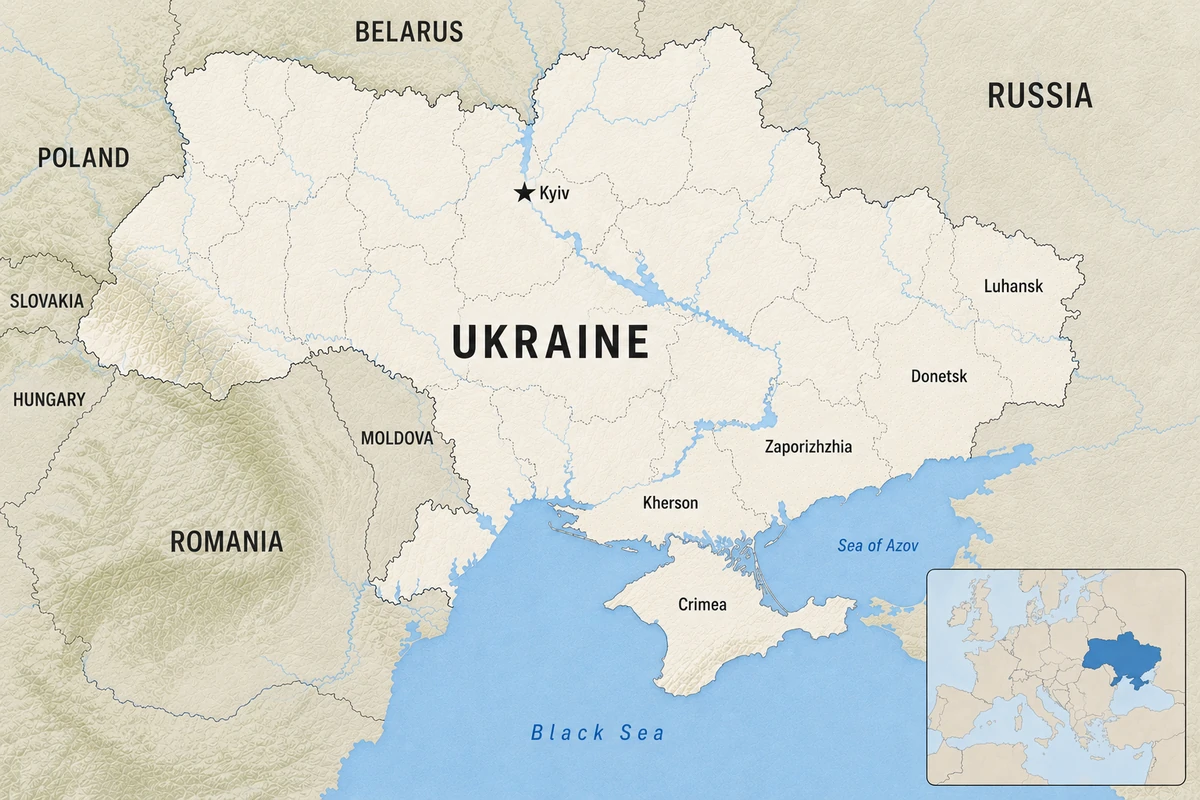
Ukraine’s churches and professing Christian communities belong to several traditions and institutions. Many Ukrainians identify with Orthodox Christianity, but Orthodox Christians belong to different church bodies with different institutional ties and histories. Greek Catholic, Roman Catholic, Protestant, evangelical, and other congregations also worship and serve throughout the country.
Readers should not assume that everyone associated with a church has personal faith in Christ. Nor should ordinary worshippers be held responsible for every political or institutional action connected with their denomination.
The distinction between government-controlled and Russian-controlled areas is important. In government-controlled Ukraine, prayer should address the hardships of war, displacement, pastoral fatigue, efforts to prevent hostile Russian influence, and the need to preserve freedom of worship. In Crimea and other territories under Russian control, believers may also face surveillance, compulsory registration, seizure or closure of churches, restrictions on worship, and threats or other restrictions affecting clergy and active members.
Spiritual and Practical Challenges Affecting Christians and Churches
Churches must serve during repeated attacks and displacement while believers face restrictions on worship, temptations toward hatred and revenge, and the danger of a wider regional war.
Serving during repeated attacks
Christians in Ukraine are worshipping and serving in wartime conditions. Congregations care for people who have lost relatives, homes, health, employment, or the ordinary routines and security of daily life. Pastors may preach on Sunday and then spend the following days burying the dead, visiting the wounded, helping families find shelter, or caring for church members who have scattered across the country and abroad.
Repeated air-raid warnings exhaust families even when their homes are not directly struck. Families may spend hours in basements, metro stations, or other shelters. More than 56,000 people reportedly sheltered in Kyiv’s metro stations during the July 30 attack. Children learn to recognize the sounds of drones and explosions. Even households that are not directly struck can experience fear, broken sleep, anger, numbness, and renewed memories of earlier attacks.
Displacement and long-term need
Refugees outside Ukraine and internally displaced people inside the country may face uncertain housing, interrupted education, language barriers, financial hardship, separation from relatives, and grief over homes or communities they may never see again.
The needs do not end when a family first reaches safety. People may require continuing help with housing, schooling, work, legal documents, bereavement, trauma, and rebuilding community. Churches receiving displaced families need wise leaders, willing volunteers, financial resources, and patience for service that may continue for years.
Life near the front and under Russian control
Believers in front-line communities may face shelling, damaged homes and church buildings, unreliable water and electricity, restricted movement, limited medical care, and difficulty gathering safely.
In Crimea and other territories of Ukraine controlled by Russia, some religious communities face monitoring, compulsory registration under Russian rules, seizure or closure of church buildings, restrictions on worship, and threats or other restrictions affecting clergy and active members. These conditions should not be confused with those in government-controlled Ukraine.
The effect of years of war on conscience and character
Years of violence can make hatred seem normal, revenge seem just, and hopelessness seem reasonable. People are also exposed to propaganda, altered images, rumors, and competing accounts that are often difficult to verify.
Ukrainian Christians need prayer not only for physical survival but also for obedience to Christ. They need grace to reject lies without becoming careless with the truth, to oppose wrongdoing without despising whole peoples, and to seek justice without allowing revenge to govern them.
Danger reaching neighboring countries
During the July 30 attack, a missile entered Polish airspace, disappeared from radar, and fell in an agricultural area in Lublin province. Poland and NATO activated aircraft and ground defenses. No injuries or damage to buildings were reported at the impact site.
Early Polish examination of recovered fragments pointed to a Russian Kh-101 cruise missile. Poland said there was no reason to believe the country had been deliberately targeted. The incident does not prove that Russia intentionally attacked Poland or that the war formally expanded into NATO territory. It does show how an incorrect assessment or an impulsive military response could place more people and countries in danger.
Preventing hostile influence while protecting worshippers
Ukraine’s action against religious organizations linked to the Russian Orthodox Church raises difficult questions about national security, evidence, due process, and freedom of worship. Ukrainian authorities say that some religious organizations may be used to spread Russian influence or assist hostile activity during the war. Critics warn that broad enforcement could wrongly affect peaceful congregations and treat whole communities as guilty because of institutional ties.
Christians should pray that genuine wrongdoing will be uncovered and addressed through reliable evidence. They should also pray for fair hearings, clear laws, honest public explanations, and protection for peaceful worshippers who have committed no crime.
Christian Life and Witness in Ukraine
Worship, pastoral care, military chaplaincy, hospitality, and practical help continue while civilians and soldiers endure severe suffering.
Worship joined with practical care
For many Christians in Ukraine, church life includes both worship and emergency care. Congregations gather to pray, sing, hear Scripture, and receive the sacraments or ordinances according to their church tradition. The same churches may then organize food, temporary housing, evacuation help, repairs, support for children, bereavement care, or assistance for military families.
Pastors serving scattered and grieving congregations
Pastors serve congregations that may include military families, displaced people, refugees living abroad, people returning from captivity, people who lived under Russian control, and households trying to rebuild after attacks. They need wisdom to preach Christ without turning sermons into political slogans and to help people lament honestly without allowing grief to become hopelessness.
Chaplains close to suffering
Military chaplains serve soldiers facing fear, guilt, bereavement, difficult questions of conscience, and the exhaustion of combat. Their work places them close to death and suffering, and many chaplains carry emotional and spiritual wounds of their own.
Believers under Russian control
Christians in territories under Russian control face different restrictions. Some cannot gather freely, speak openly, or maintain normal ties with churches in government-controlled Ukraine. Clergy and active members may face surveillance, compulsory registration, or loss of buildings and ministries.
Families carrying the war in daily life
Some families are divided across borders. Some have loved ones serving in the military. Some are grieving the dead or caring for the wounded. Children may grow up with air-raid warnings, disrupted schooling, absent parents, damaged homes, and nights spent in shelters.
Christian witness through mercy and truth
Although no specific church or Christian ministry was reported among the sites struck on July 30, the attack increased the needs churches were already trying to meet. Families affected across several regions may need help with funerals, temporary shelter, repairs, care for frightened children, and pastoral help with fear, anger, and despair.
Christian witness continues through preaching, prayer, hospitality, practical help, forgiveness, and care for people in distress. These acts do not lessen the horror of war. They show that war has not silenced every confession of Christ or ended every act of neighborly love.
Recent Developments
These developments directly affect how Christians should pray for Ukraine’s civilians, churches, leaders, and neighboring countries.
-
June 2026
Civilian deaths and injuries rose sharply
The UN Human Rights Monitoring Mission reported at least 293 civilians killed and 1,990 injured during June. This was the highest combined monthly total since April 2022. Long-range missiles and drones caused 45% of the casualties, many in cities far from active ground fighting.
Prayer significance: Pray for civilians far from the front, for effective warnings and shelter, and for those responding to deaths, injuries, and damaged homes.
-
June-July 2026
Enforcement of the religion law continued
Ukraine’s State Service for Ethnic Policy and Freedom of Conscience updated its list of religious organizations that it regards as connected to a prohibited foreign religious body, opened further inquiries, and approved procedures requiring organizations to correct violations identified by the authorities. The government presents these measures as protection against Russian institutional influence during war. Critics warn that the law may be applied too broadly and harm peaceful congregations or worshippers.
Prayer significance: Pray for genuine wrongdoing to be addressed through sound evidence and fair proceedings while peaceful worshippers retain freedom to gather, pray, preach, and serve.
-
July 16, 2026
A new government began work
The Verkhovna Rada appointed Sergii Koretskyi prime minister. The new government identified defense, energy reliability, winter preparation, support for front-line communities, economic resilience, and European integration among its priorities.
Prayer significance: Pray for honest and competent decisions about electricity, heating, emergency planning, public administration, military support, and social assistance.
-
July 22, 2026
Senior military leadership changed
Major General Mykhailo Drapatyi was appointed commander-in-chief of Ukraine’s Armed Forces and formally assumed his duties.
Prayer significance: Pray for military leaders to act competently, tell the truth, value the lives of those under their authority, and remain accountable for their decisions.
-
July 30, 2026
A large missile-and-drone attack struck Ukraine
Russia launched a large attack across Ukraine during the night of July 29-30. Ukrainian officials reported more than seventy missiles and over 280 attack drones. The Associated Press reported at least ten civilians killed and more than fifty injured, including children. Homes, businesses, infrastructure, warehouses, and other sites were damaged in several regions.
Russia’s Defense Ministry said that the intended targets included air bases, weapons factories, military communications, logistics sites, drone facilities, and other defense-related infrastructure. This is Russia’s stated account of the operation, but civilian deaths and damage to civilian sites were also confirmed.
Prayer significance: Pray for the bereaved and wounded, for those sheltering through attacks, and for churches, rescuers, and medical workers caring for affected communities.
-
July 30, 2026
A missile entered Polish airspace
During the same attack, a missile entered Polish airspace and fell in an agricultural area in Lublin province. Polish and allied aircraft were activated, along with ground defenses. Early Polish examination of recovered fragments pointed to a Russian Kh-101 cruise missile, but Polish authorities had not yet published a final forensic conclusion as of July 31, 2026. Poland said there was no reason to believe it had been deliberately targeted.
Prayer significance: Pray for careful investigation, accurate public statements, and restraint among leaders so that mistaken judgments do not draw more countries into the war.
How to Pray
Bring Ukraine’s civilians, churches, displaced families, leaders, and neighboring countries before the Lord.
-
Pray for civilians under attack. Ask God to preserve the lives of children, older people, families, medical patients, and those living near damaged homes or infrastructure. Pray for effective warnings, safe shelters, air defense, rescue work, and medical care.
-
Pray for families living with repeated fear and disruption. Ask the Lord to comfort frightened children, sustain exhausted parents, and help people whose sleep, schooling, work, housing, and family relationships have been repeatedly disturbed.
-
Pray for churches serving wounded communities. Ask God to give pastors, elders, deacons, chaplains, ministry workers, and volunteers the wisdom, compassion, resources, and rest they need as they preach, counsel, shelter, feed, repair, and comfort.
-
Pray for displaced families, refugees, and returnees. Ask the Lord to provide safe housing, education, work, trustworthy fellowship, protection from exploitation, and patient long-term help from churches and host communities.
-
Pray for believers near the front and in territories controlled by Russia. Ask God to uphold Christians facing shelling, surveillance, restrictions on worship, church closures, seizure of church property, or compulsory registration. Pray for safe fellowship, courage, wise decisions, and the comfort of Christ.
-
Pray for Ukrainian Christians facing anger and despair. Ask God to keep His people truthful about evil without becoming cruel, courageous without becoming proud, and committed to justice without living for revenge.
-
Pray for freedom of worship and fair legal proceedings. Ask God to expose genuine wrongdoing and any attempt to use religious organizations for hostile purposes, protect Ukraine from hostile interference, prevent whole congregations from being treated as guilty without evidence, and preserve freedom for peaceful worship and ministry.
-
Pray for Poland and Ukraine’s other neighbors. Ask God to keep civilians safe, guide military and political leaders, and prevent falling weapons, false alarms, fear, retaliation, or hasty decisions from drawing more countries into the war.
-
Pray for rulers and all who exercise authority. Pray for Ukrainian, Russian, and Polish leaders, as well as leaders within NATO, the European Union, and other international bodies. Ask God to restrain falsehood, cruelty, pride, corruption, and reckless decisions and to give them wisdom, self-control, clear communication, and concern for civilian life.
-
Pray for a just end to the war and for Christian hope. Ask God to bring honest negotiations, release of prisoners, protection for vulnerable people, accountability for wrongdoing, and an end to attacks and occupation. Pray that churches will proclaim Christ clearly, serve their neighbors with mercy, and wait in hope for the day when His kingdom comes in its fullness.
Give Thanks
Give thanks for specific mercies that remain visible amid war and displacement.
-
Churches continue to worship and serve. Give thanks for congregations that continue to preach, pray, shelter people, and care for their neighbors while the war continues.
-
Pastors, rescuers, medical workers, and volunteers continue to serve. Give thanks for pastors, chaplains, rescuers, medical workers, volunteers, and local officials who respond during and after attacks, care for the wounded, support grieving families, and help damaged communities recover.
-
Warnings, shelters, medical care, evacuation, and rescue efforts preserve lives. Give thanks for every life preserved through warning systems, shelters, intercepted missiles or drones, emergency medicine, evacuation, and rescue from damaged buildings.
-
Displaced people continue to receive help. Give thanks for humanitarian agencies, Christian ministries, host families, and local communities supporting refugees, internally displaced people, children, older people, and people returning home.
-
No injuries were reported at the Polish impact site. Give thanks that no injuries were reported where the missile fell in Poland. Pray that such an incident will not be repeated or lead to a wider conflict.
-
Christ continues to build His church. Give thanks that even when buildings are damaged, families are scattered, and believers are exhausted, they continue to confess Christ through worship, prayer, mercy, and service.
Last Verified / Update Note
This section records when the guide was last checked and highlights developments that may change how Christians pray for Ukraine.
Review Status
Guide reviewed and updated
The July 30 mass missile-and-drone attack; the sharp increase in civilian casualties during June; the missile that entered Poland; the danger to neighboring countries; humanitarian need and displacement; church, chaplaincy, and pastoral care; the July appointment of a new prime minister and commander-in-chief; implementation of Ukraine’s religion law; and conditions affecting religious communities in territories under Russian control.
Civilian safety; care for people who are frightened, wounded, grieving, displaced, or traumatized; help for churches, pastors, chaplains, rescuers, and medical workers; freedom of worship and fair legal proceedings; wisdom and restraint among leaders; protection of neighboring countries; prevention of a wider war; and help for Christians to speak truthfully, show mercy, and resist hatred and despair.
Changes to the reported death and injury totals from the July 30 attack; the final Polish investigation into the missile found in Lublin province; any direct NATO or Russian statement that adds important information; further large-scale attacks; Ukraine’s air-defense capacity; attacks on energy and civilian infrastructure; humanitarian and displacement trends; negotiations or ceasefire efforts; enforcement of the religion law; and new reporting about churches or believers in territories under Russian control.
Casualty totals from the July 30 attack and the Polish missile investigation were still developing on July 31, 2026, so figures and conclusions are dated and attributed. Early Polish examination pointed to a Russian Kh-101 missile, but Polish authorities had not yet published a final forensic conclusion. Poland said there was no reason to believe it had been deliberately targeted. The account of the Polish and NATO response comes from reputable reporting that directly quotes the responsible officials and commands.
Help keep this guide accurate and current
If you noticed a possible correction, broken link, or significant country update, please contact the Nations Prayer Directory so we can review it carefully.
Key Sources Consulted
These sources provide the current conflict, humanitarian, leadership, church-life, religious-freedom, and territorial information summarized in this guide.
July 30 attack and Polish airspace incident
- Associated Press — “Russian Strikes Across Ukraine Kill 10 and NATO Scrambles Jets After a Missile Falls in Poland,” July 30, 2026. Reports the scale of the attack, initial casualty figures, Ukrainian weapon counts, Poland’s military response, the missile incident, NATO comments, and Russia’s account of its intended targets.
- The Guardian — “Russia Accused of Violating Polish Airspace After Missile Explosion Near Village,” July 30, 2026. Provides additional reporting on Poland’s preliminary examination of fragments, European responses, later casualty figures, and the continuing investigation.
Civilian harm
- UN Human Rights Monitoring Mission in Ukraine — “Protection of Civilians in Armed Conflict — June 2026,” July 14, 2026. Provides independently verified civilian casualty figures and analysis of harm caused by long-range missiles and drones.
Humanitarian need and displacement
- UNHCR — “After a Brutal Winter, Millions of Ukrainians Face Deepening Displacement and Uncertainty,” February 24, 2026. Provides February 2026 estimates of humanitarian need and internal displacement.
Government and military leadership
- Verkhovna Rada of Ukraine — Resolution No. 4941-IX appointing Sergii Koretskyi prime minister, July 16, 2026.
- President of Ukraine — “Whatever the Scenario, Ukraine Must Be Fully Prepared to Protect Lives and Its People and Ensure That We Make It Through the Winter,” July 16, 2026. Sets out the new government’s stated priorities.
- Ministry of Defence of Ukraine — “Commander-in-Chief of the Armed Forces of Ukraine: Mykhailo Drapatyi”. Confirms Mykhailo Drapatyi’s appointment and current office.
Church life and chaplaincy
- Le Monde — “Ukraine’s Military Chaplains Bear Witness to the Hell of the Front Lines: ‘Everyone Started to Believe in God After the First Bombing,’” April 22, 2026. Reports on military chaplaincy, soldiers’ moral and spiritual needs, and the burdens carried by chaplains.
Religious freedom and Ukraine’s religion law
- State Service of Ukraine for Ethnic Policy and Freedom of Conscience — updated list of affiliated religious organizations, June 10, 2026.
- State Service of Ukraine for Ethnic Policy and Freedom of Conscience — inquiry concerning the Pochaiv Lavra, June 22, 2026.
- State Service of Ukraine for Ethnic Policy and Freedom of Conscience — official June-July 2026 notices and updates.
- Associated Press — “Ukraine Moves to Ban an Orthodox Church It Says Is Linked With Pro-War Moscow Church,” September 5, 2025. Presents the Ukrainian government’s position, the Ukrainian Orthodox Church’s response, the legal process, and outside religious-freedom concerns.
- UN Human Rights Monitoring Mission in Ukraine — “Ukraine: Human Rights Situation Remains Bleak Three Years After Russia’s Full-Scale Armed Attack,” February 2025. Provides the UN assessment of concerns about Ukraine’s religion law and restrictions imposed by Russia in territories under its control.
Territories under Russian control
- UN Human Rights Monitoring Mission in Ukraine — “Situation of Human Rights in the Temporarily Occupied Territories of Ukraine, Including Crimea and Sevastopol, 1 July-31 December 2025,” June 26, 2026. Explains the legal status and human-rights conditions in territories of Ukraine under Russian control.
- U.S. Commission on International Religious Freedom — “Russia’s Religious Freedom Violations in Ukraine”. Provides additional reporting on religious-freedom violations in territories under Russian control.
Source Context
These notes explain where information remains uncertain and how to understand fast-changing or contested claims.
Source Context
- July 30 casualty figures: The Associated Press reported at least ten people killed and more than fifty injured. Some later reporting gave a death toll of thirteen. No consolidated official total was publicly available as of July 31, 2026, so the figure is stated cautiously as “at least ten.”
- The missile found in Poland: A missile entered Polish airspace and fell in Lublin province. Early examination of fragments pointed to a Russian Kh-101, but Polish authorities had not yet published a final forensic conclusion as of July 31, 2026. Poland said there was no reason to believe it had been deliberately targeted.
- Polish and NATO sources: The account of the Polish and NATO response comes from Associated Press reporting that directly quotes Poland’s prime minister, Polish military authorities, NATO’s secretary-general, and NATO military command.
- Russia’s position: Russia’s Defense Ministry said that the July 30 attack targeted military, logistical, and defense-industrial facilities in Ukraine. Russia had not publicly explained the missile’s entry into Poland as of July 31, 2026, so that question remains open.
- Humanitarian estimates: UNHCR figures may refer to different dates or planning periods. The figures cited here come from one clearly dated estimate; figures covering different populations or periods are not combined.
- Religious-freedom questions: Ukraine’s action against Russia-linked religious organizations involves genuine concerns about hostile influence and genuine risks to freedom of worship. Ukrainian Orthodox Church believers should not be treated collectively as collaborators, while documented concerns about Russian religious and political structures supporting the war should not be ignored.
- Territories under Russian control: Conditions in Crimea and other parts of Ukraine controlled by Russia are harder to verify independently. Because independent access is limited, descriptions of religious restrictions are tied to specific locations and clearly distinguished from conditions in government-controlled Ukraine.
A Closing Prayer for Ukraine
Pray for Ukraine’s civilians, churches, leaders, and neighboring countries.


