


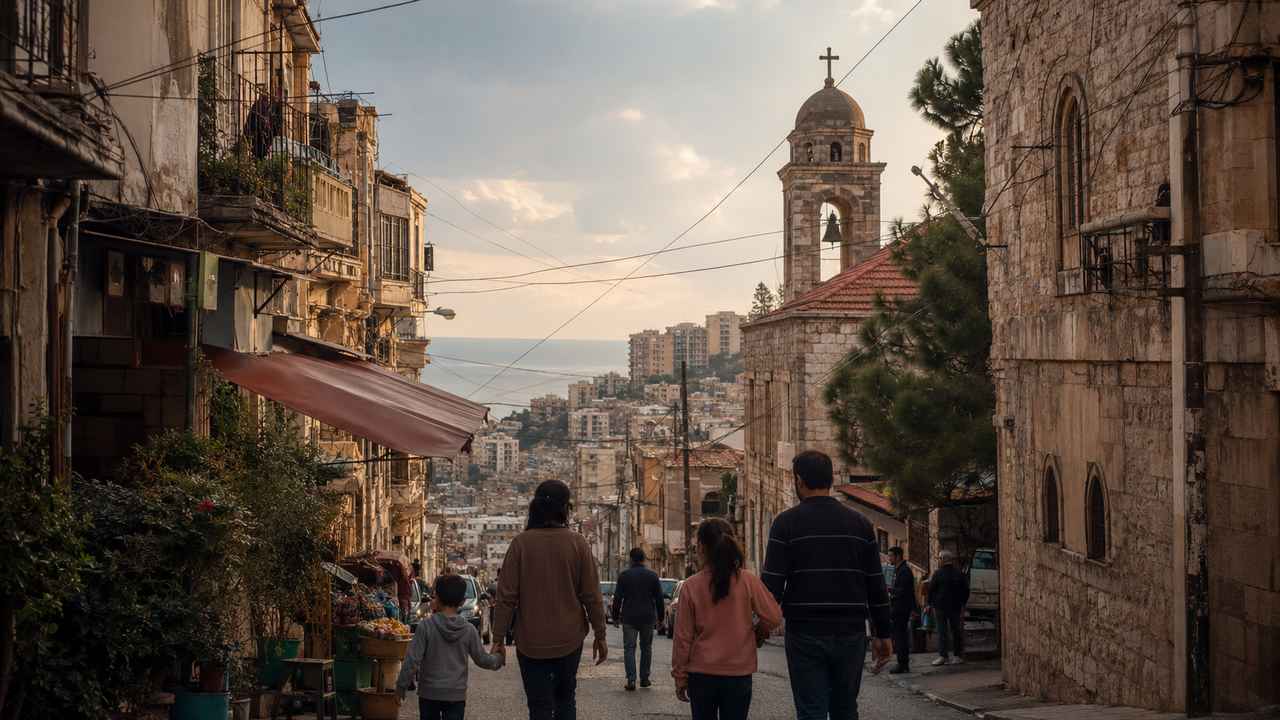
Families across Lebanon are carrying burdens that cannot be understood only through military developments or political negotiations. Some have fled their homes more than once. Others have returned to villages where houses, roads, schools, clinics, farms, water systems, and livelihoods have been damaged. Children have lived with fear and interrupted education. Workers have lost jobs and income. Pastors, teachers, doctors, relief workers, and ordinary neighbours are trying to help others while carrying grief and uncertainty of their own.
A framework agreed on June 26, 2026, began to be implemented on a limited basis in July. Lebanese Army units deployed in several southern areas. Yet these steps did not amount to a complete Israeli withdrawal, a final peace settlement, or an agreement over Hezbollah’s weapons. Lebanon’s government calls for complete withdrawal and says weapons should come under state control. Israel ties further withdrawal and peace to security arrangements and Hezbollah’s disarmament. Hezbollah rejects that sequence and says withdrawal must come first.
This guide is meant to help Christians pray without reducing Lebanon to a political argument. Pray for displaced and returning families, grieving communities, struggling workers, vulnerable children, exhausted caregivers, public leaders, churches serving under pressure, and believers who face family or community opposition. Pray for mercy, justice, restraint, and for many people to turn to Jesus Christ in repentance and faith.
Prayer Burden at a Glance
Pray for Lebanon as limited steps begin toward Israeli withdrawal, Lebanese Army deployment, civilian return, and stronger state authority. These steps are unfolding amid unresolved conflict, disagreement over weapons, continuing displacement, lost livelihoods, damaged public services, and immense rebuilding needs.
Ask the Lord to protect civilians, restrain violence, give wisdom and courage to Lebanon’s leaders, enable displaced families to return safely and with dignity, restore work and essential services, and strengthen churches to serve without being ruled by sectarian pride, political loyalty, or fear. Pray that many who carry the Christian name would come to personal repentance and saving faith in Christ.
Last verified: August 1, 2026
Why Lebanon Needs Prayer Now
Lebanon needs prayer as families face unresolved conflict, displacement, unsafe return, lost work, damaged services, and the long work of rebuilding.
Lebanon has entered a fragile period between destruction and uncertain recovery. The June 26 framework created a possible path toward Israeli withdrawal from identified areas, Lebanese Army deployment, civilian return, and stronger state control in the south. During July, the Lebanese Army began deploying in several communities. Lebanese leaders described these deployments as an important beginning, not as proof that withdrawal, peace, or safe return had been completed.
The central disputes remain unresolved. Lebanon’s government says that decisions about war and peace, together with the possession of weapons, should come under state authority. Israel says further withdrawal and a lasting settlement depend on security guarantees and Hezbollah’s disarmament. Hezbollah rejects the proposed order and says withdrawal must happen first. The parties have not agreed on a settled peace process.
The suffering of ordinary people remains severe. As of July 22, the International Organization for Migration recorded 375,090 internally displaced people. It also reported that more than 753,000 previously displaced people had begun returning. Yet beginning to return does not mean that families have regained safety or stability. Some are returning to damaged houses, unreliable water and electricity, limited access to essential services, nearby military activity, or land affected by unexploded ordnance.
The conflict has also deepened Lebanon’s long economic hardship. An International Labour Organization survey released in July found that one in three surveyed private-sector workers was no longer working. Families already weakened by years of financial collapse are now facing lost wages, damaged businesses, disrupted farming, displacement costs, debt, and greater dependence on relatives or humanitarian aid.
Children, parents, teachers, and healthcare workers are also living with serious disruption. Hundreds of schools have been damaged, placing at least 100,000 children at risk of missing the coming school year without urgent repairs. Hospitals and primary healthcare centres in southern areas have also been damaged or closed.
Lebanon therefore needs more than a pause in fighting. Families need secure homes, honest rebuilding, restored work, functioning schools and health services, protection from further violence, and public institutions that serve the people. Churches need grace to speak truth, show mercy, resist factionalism, and point people to the lasting hope found in Christ.
Country Snapshot
A brief orientation to Lebanon’s location, leadership, religious setting, and current prayer concerns.
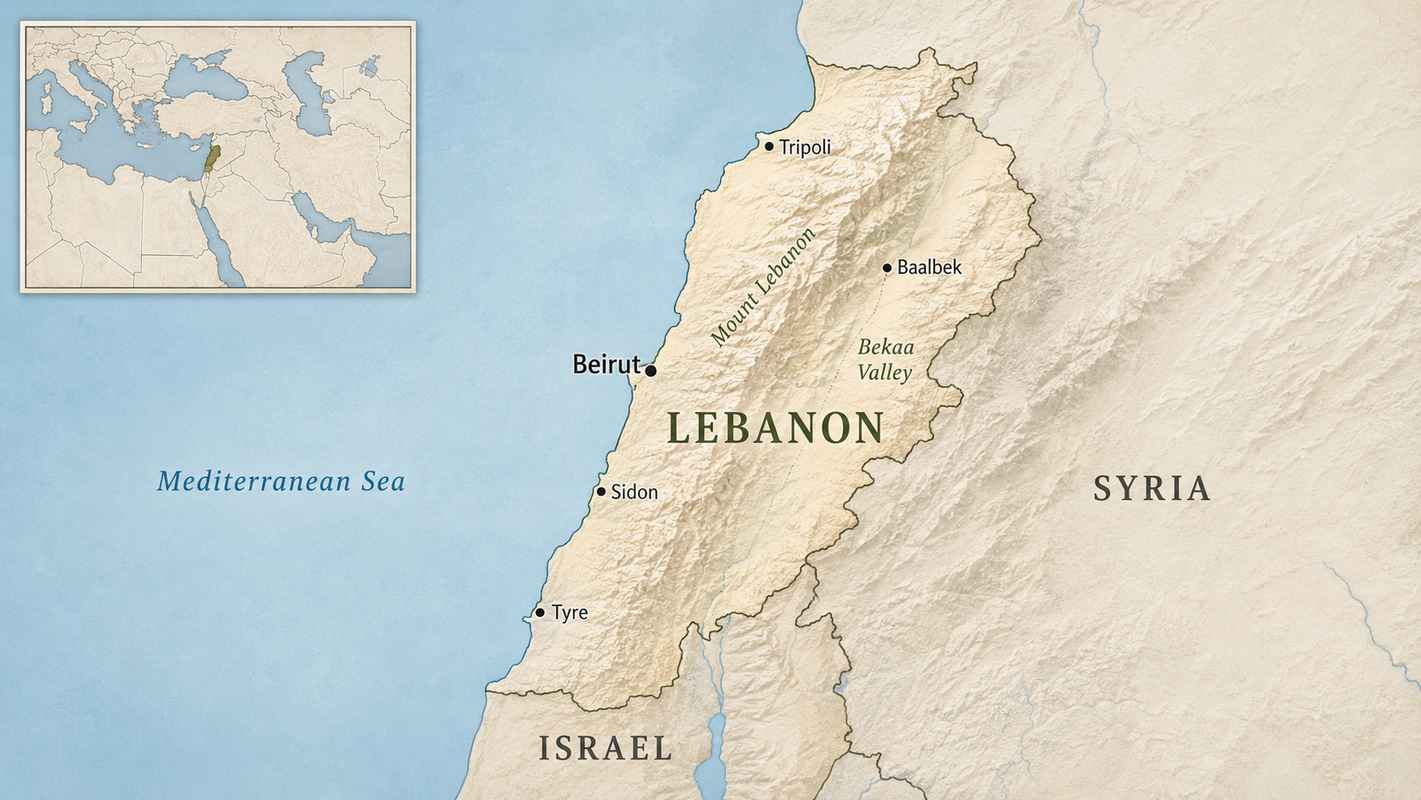
Lebanon’s political system assigns major public offices according to long-standing religious arrangements. This provides representation to different communities, but it also ties political power closely to inherited religious identity and can deepen sectarian loyalties.
Lebanon has many people and institutions that identify as Christian. Among them are believers who genuinely trust Christ and seek to live under the authority of Scripture. At the same time, carrying the Christian name, belonging to a church, being baptised, or growing up in a Christian family does not by itself prove that a person has been born again.
Pray that the gospel of salvation by grace alone, through faith alone, in Christ alone would be proclaimed clearly. Ask that churches and professing Christian communities would be continually brought under the authority of God’s Word, and that many people would move beyond family tradition or cultural identity into repentance, personal trust in Christ, holiness, and faithful discipleship.
Spiritual and Practical Challenges Affecting Christians and Churches
Churches and believers face practical hardship, sectarian pressure, temptations toward fear and compromise, and costly responsibilities to show mercy and bear witness to Christ.
Starting again after displacement
Congregations in affected areas may include people who have fled, returned to damaged homes, lost relatives, or exhausted their savings. A family may be back in its village while still lacking secure housing, electricity, water, healthcare, transport, schooling, income, or confidence that it will not have to flee again.
Churches serving such families need patience and wisdom. Rebuilding involves more than repairing walls. People are also carrying grief, trauma, family strain, lost work, interrupted education, and the slow task of rebuilding trust and community life.
Lost work and pressure on families
Renewed conflict has left many people without work, damaged small businesses, disrupted farming, and reduced household income. Pastors and congregations may face growing requests for food, rent, medicine, transport, school costs, shelter, and home repairs.
These pressures can exhaust church leaders. They can also create temptations to favour certain families, use relief for political influence, distribute help dishonestly, or care only for members of one religious community. Churches need adequate resources, transparent leadership, and integrity so that aid is given fairly and without manipulation.
Damaged schools, healthcare, and essential services
Children are facing interrupted schooling, repeated displacement, bereavement, and fear. Teachers and parents must help them continue learning while also caring for their emotional needs. Christian schools share in this wider national burden, but their circumstances and responses differ from place to place.
Hospitals, clinics, doctors, nurses, ambulance workers, counsellors, and volunteers are also serving under great pressure. Some are caring for wounded or displaced people while worrying about their own homes and families.
Sectarian fear and political loyalties
Lebanon’s communities have often looked to political alliances, foreign patrons, communal influence, or armed protection for security. In times of danger, these loyalties can feel necessary. Yet churches must not allow party, militia, denomination, ethnicity, or community identity to take the place that belongs to Christ.
Believers need courage to oppose injustice without hatred, care for their own communities without despising others, and speak truth without becoming instruments of political propaganda.
The Christian name without living faith
Lebanon’s visible Christian history is significant, and true believers are found within its various communities. Yet a Christian label does not guarantee that a person has been regenerated by the Holy Spirit. Some may understand Christianity mainly as ancestry, ceremony, community identity, or political belonging.
Pray for clear preaching about human sin, God’s holiness, Christ’s finished work, repentance, justification by faith, the new birth, and obedience to Scripture. Ask that people would not rest their hope in religious heritage, church membership, sacramental participation, or moral respectability, but in Christ alone.
Converts and believers facing hidden pressure
Believers from Muslim or Druze backgrounds may face rejection from family, social isolation, threats, economic loss, or pressure to conceal or abandon their faith. Some may struggle to find safe fellowship and sustained biblical teaching.
Pray for their protection, courage, material provision, wise pastoral care, mature discipleship, and churches willing to receive them with both compassion and biblical faithfulness.
Christian Life and Witness in Lebanon
Believers are being called to follow Christ faithfully in homes, congregations, schools, hospitals, relief work, and everyday care for their neighbours.
Christian life in Lebanon is lived in many different settings. Some people worship in historic churches that have shaped their communities for centuries. Others gather in evangelical, Protestant, independent, or less visible congregations. Some believers serve through schools, hospitals, relief ministries, counselling, charities, or quiet acts of hospitality. Others live more cautiously because openly professing faith in Christ may bring opposition from family or community.
The present crisis makes Christian witness deeply practical. A pastor may be preparing a sermon while members of the congregation are deciding whether it is safe to return home. A church may be helping a family whose house still stands but whose water, electricity, income, and sense of security are gone. A teacher may be caring for frightened children while wondering whether the school can reopen. A Christian doctor or nurse may be serving long hours while carrying personal grief.
These circumstances create two dangers. One is withdrawing into self-protection and serving only people who share the same religious or political identity. The other is offering practical help while becoming silent or unclear about sin, repentance, Christ’s atoning work, and the need for personal faith.
Faithful witness holds truth and mercy together. Churches should serve suffering neighbours without manipulation, resist sectarian hatred, distribute help honestly, and cooperate in limited areas where Scripture and conscience permit. They should also proclaim clearly that reconciliation with God is found in Jesus Christ, not in ancestry, ceremony, political loyalty, or human merit.
Pray especially for churches ministering among displaced and returning families. Ask God to give pastors and congregations endurance, wisdom, material provision, integrity in handling aid and money, and the courage to offer honest hope rather than shallow promises. Pray that Lebanon’s suffering would reveal the emptiness of trusting in political power, communal identity, wealth, or human strength, and lead many people to seek the mercy of God in Christ.
Recent Developments
These dated developments explain why prayer must remain specific, compassionate, and cautious.
-
June 26-July 22, 2026
Limited implementation of the withdrawal and deployment framework
A framework supported by the United States began a process involving Israeli withdrawal from identified southern areas, deployment of the Lebanese Army, civilian return, and the removal of nonstate weapons from pilot areas. During July, the Lebanese Army deployed in several communities, including Froun, Srifa, and Zawtar al-Gharbiyeh.
The process remained disputed. Lebanon’s government called for complete withdrawal and state control of weapons. Israel tied further withdrawal to security arrangements and Hezbollah’s disarmament. Hezbollah rejected that sequence.
Prayer significance: Pray that these limited steps would lead to real protection for civilians, stronger public institutions, and peace rather than renewed violence, internal bloodshed, coercion, or delay.
-
July 2-10, 2026
Schools and healthcare remained badly damaged
A national assessment supported by UNICEF found that hundreds of schools had been damaged, placing at least 100,000 children at risk of missing the coming school year without urgent repairs. A United Nations briefing also reported that hospitals and primary healthcare centres in southern areas remained damaged or closed.
Prayer significance: Pray for classrooms and clinics to be repaired, children to be protected, teachers to be strengthened, medicines to be available, and families to regain access to ordinary healthcare.
-
July 7, 2026
Conflict deepened the livelihood crisis
The International Labour Organization reported that one in three surveyed private-sector workers was no longer working. The effects were especially severe among displaced workers and people living in conflict-affected southern areas.
Prayer significance: Pray for workers, small businesses, farmers, young adults, women, refugees, people with disabilities, and families whose income no longer covers basic needs.
-
July 22-23, 2026
More people returned, but mass displacement and danger remained
IOM recorded 375,090 internally displaced people and reported that more than 753,000 previously displaced people had begun returning. Some return areas still had damaged housing, interrupted services, continued military activity or other security risks, and explosive hazards.
Prayer significance: Pray for safe and voluntary return, suitable shelter for those who cannot yet go home, repaired housing, restored services, trauma care, and the careful clearing of roads, farms, schools, and residential areas.
-
Late July 2026
Civilian-protection and accountability concerns continued
Lebanese authorities accused Israeli forces of continuing demolitions and military activity that hindered civilian return and Lebanese Army deployment. Israel said its operations were directed against Hezbollah infrastructure and were necessary for security.
The UN High Commissioner for Human Rights warned that some reported conduct might amount to war crimes. This was a serious warning from the UN’s human rights chief, not a final ruling by a court.
Prayer significance: Pray for civilians to be protected, conflicting claims to be investigated truthfully, wrongdoing to be judged justly, and accountability to be pursued without hatred or vengeance against whole communities.
How to Pray
Pray for Lebanon with compassion, clarity, biblical seriousness, and confidence in God’s mercy.
-
Pray for civilians and for an end to further violence. Ask God to restrain military action, retaliation, provocation, and political decisions that place families in greater danger.
-
Pray about the unresolved decisions concerning withdrawal, Army deployment, and weapons. Ask that decisions about Israeli withdrawal, Lebanese Army deployment, Hezbollah’s weapons, and civilian return would not lead to deception, humiliation, internal fighting, or another war.
-
Pray for Lebanon’s leaders and public servants. Ask God to give national leaders, soldiers, judges, civil servants, and local authorities wisdom, courage, honesty, and concern for the people rather than for sectarian or foreign interests.
-
Pray for displaced and returning families. Ask for safe shelter, food, medicine, schooling, trauma care, repaired homes, and protection from pressure to return before roads, land, and communities are safe.
-
Pray for rebuilding and the return of basic services. Ask that rubble and explosive hazards would be cleared, water and electricity restored, roads reopened, aid distributed honestly, and rebuilding protected from corruption and favouritism.
-
Pray for workers and families under financial pressure. Ask God to provide employment, fair wages, functioning businesses, support for farmers, and protection from hunger, crushing debt, exploitation, and despair.
-
Pray for children, schools, and teachers. Ask the Lord to restore safe classrooms, strengthen parents and teachers, and care for children affected by fear, grief, displacement, and lost learning.
-
Pray for hospitals and healthcare workers. Ask for damaged facilities to reopen, medicines and equipment to be supplied, and doctors, nurses, ambulance workers, counsellors, and volunteers to be protected and strengthened.
-
Pray for truth, justice, and accountability. Ask God to expose falsehood, protect witnesses, restrain revenge, and bring justice for wrongdoing without allowing whole communities to be treated as enemies.
-
Pray for refugees, migrant workers, and other vulnerable noncitizens. Ask that return decisions would be informed and voluntary, and that those remaining in Lebanon would receive lawful protection, dignity, and practical care.
-
Pray for churches, pastors, converts, and gospel renewal. Ask God to provide wisdom, courage, integrity, and resources for churches serving displaced, returning, grieving, and impoverished people. Pray for believers facing family or community opposition. Ask that people would not rest in cultural Christianity or ceremony but would repent and trust in Christ alone. Pray that Christ would build His church, save the lost, keep believers faithful in suffering, and teach His people to pray,
Your kingdom come
, while continuing to love and serve their neighbours.
Give Thanks
Give thanks for specific mercies God continues to show amid suffering, uncertainty, and the work of rebuilding.
-
Give thanks for every life protected. Thank God for every family brought to safety, every violent act restrained, and every moment of relief given to people living under fear.
-
Give thanks for people who continue to care for others. Thank God for doctors, nurses, teachers, relief workers, responsible public servants, pastors, church members, neighbours, and relatives who keep helping people despite their own weariness.
-
Give thanks for every honest step toward restoring ordinary life. Thank God for roads reopened, rubble cleared, services restored, classrooms repaired, clinics supported, and homes made safer.
-
Give thanks for every place where Christ is faithfully proclaimed. Thank God wherever Scripture is taught, believers are strengthened, the gospel is preached clearly, and mercy is shown to people in need.
-
Give thanks for mercy shown across religious and political divides. Thank God whenever people care for their neighbours without first asking about denomination, sect, nationality, or political loyalty.
-
Give thanks for believers who continue to hold fast to Christ. Thank God for pastors who keep preaching, families who keep praying, converts who endure opposition, and Christians who refuse hatred, corruption, revenge, and despair.
Last Verified / Update Note
This note explains when the guide was reviewed and which developments may change the situation.
Review Status
Reviewed through August 1, 2026
This guide was reviewed through August 1, 2026. The review covered limited implementation of the June 26 framework, Lebanese Army deployments in southern communities, disagreements over Israeli withdrawal and Hezbollah’s weapons, displacement and return, lost work and income, damaged schools and health services, rebuilding needs, explosive hazards, civilian protection, accountability concerns, and the ministry of churches under pressure.
The main prayer burdens are the protection of civilians, restraint of further violence, stronger Lebanese public institutions, safe and dignified return for displaced families, honest rebuilding, restored livelihoods, functioning schools and healthcare, justice without vengeance, protection for refugees and other vulnerable noncitizens, faithful churches, support for believers facing opposition, and gospel renewal.
Important developments to watch include major changes in Israeli withdrawal, Lebanese Army deployment, negotiations over the June framework, Hezbollah’s position or actions concerning weapons, internal displacement and return, military activity in the south, reconstruction, school and healthcare restoration, refugee-return arrangements, explosive-hazard clearance, or formal accountability findings.
Conflict, withdrawal, disarmament, displacement, return, destruction, and accountability claims can change quickly. Dated figures are therefore presented as snapshots rather than permanent totals. Lebanese, Israeli, and Hezbollah positions are identified separately, and official statements are not treated as independent proof of disputed claims. Human-rights warnings and investigations are not presented as final judicial rulings.
Help keep this guide accurate and current
If you noticed a possible correction, broken link, or significant country update, please contact the Nations Prayer Directory so we can review it carefully.
Key Sources Consulted
Lebanese official statements, international institutions, humanitarian reporting, regional sources, and independent reporting that materially informed this guide.
Lebanese official positions and implementation
-
Used for Lebanon’s official position on ending hostilities, Israeli withdrawal, Lebanese state authority, the transfer of weapons to the Army, border issues, and reconstruction.
-
Lebanese Council of Ministers – State authority over war, peace, and Hezbollah’s weapons
Used for the government’s formal position that military and security activity should occur only through state institutions and that Hezbollah should surrender its weapons to the state.
-
Lebanese Prime Minister’s Office – Address from Zawtar al-Gharbiyeh, July 22, 2026
Used for the description of the July movement as the beginning, not the completion, of withdrawal and for government commitments concerning roads, rubble, water, electricity, communications, temporary housing, and dignified return.
-
Lebanese Army – Missions in Froun and Srifa and planned deployment in Zawtar al-Gharbiyeh
Used to verify Lebanese Army activity in the identified southern communities and the safety warning issued to residents.
-
Lebanese Army – Deployment begins in Zawtar al-Gharbiyeh
Used to confirm the July 21 deployment and its coordination through the Military Coordination Group for Lebanon.
-
Lebanese Army – Continuing alleged attacks, demolitions, and obstacles to return
Provides the Lebanese Army’s July 26 account of military activity, demolitions, infrastructure damage, agricultural fires, and obstacles to Army deployment and civilian return. These claims are presented as the Lebanese Army’s account rather than as independently established facts.
Displacement, livelihoods, education, health, and return
-
IOM Displacement Tracking Matrix – Lebanon Mobility Snapshot, Round 109
Used for the dated July 22 displacement and return figures and for the distinction between people still displaced and those who had begun returning.
-
International Labour Organization / United Nations in Lebanon – Private-sector livelihood losses
Used for the finding that one in three surveyed workers was no longer working and for the estimated fall in average labour income when job losses and lower earnings were combined.
-
UNICEF Lebanon – Damage to schools and risk to the coming academic year
Used for the assessment of damaged and destroyed schools and the warning that at least 100,000 children could miss the coming school year without urgent repairs.
-
United Nations – Lebanon humanitarian briefing, July 10, 2026
Used for continuing risks affecting return, damaged health infrastructure, closed hospitals and primary healthcare centres, and the needs of women, pregnant women, and returning families.
-
UNIFIL – Explosive-hazard clearance as communities return
Used for the continuing danger from explosive remnants and the work of explosive-ordnance specialists in southern Lebanon.
-
UNHCR Lebanon – Voluntary return programme information
Explains the principles of voluntary return, protection from coercion, and the programme’s stated July 30 end date. The page does not establish that the programme continued after that date.
Political, economic, civil-liberties, and religious background
-
Freedom House – Freedom in the World 2026: Lebanon
Used for Lebanon’s confessional political system, corruption and rule-of-law weaknesses, public religious practice, Hezbollah’s influence, physical-security concerns, and the vulnerability of refugees and migrant workers.
-
World Bank Group – Lebanon country overview
Used for the continuing effects of Lebanon’s post-2019 financial collapse, pressure on public services, reconstruction challenges, displacement, inflation risk, and the effect of conflict on the country’s fragile economic recovery.
Competing positions and independent reporting
-
Reuters via L’Orient Today – Rome talks on pilot-zone implementation
Provides Reuters reporting on the July negotiations, the pilot-zone concept, Lebanese Army deployment, disarmament provisions, and progressive Israeli withdrawal.
-
Al Jazeera – Reporting quoting Hezbollah leader Naim Qassem’s rejection of the framework
Reports Hezbollah leader Naim Qassem’s position that Israeli withdrawal should precede disarmament. The article quotes Hezbollah’s leader directly but is a regional news report rather than a Hezbollah publication.
-
Government of Israel – Official account of the July 21 Zawtar incident
Records Israel’s official account that warning shots were fired after Lebanese personnel entered outside the agreed pilot area. This source presents Israel’s position and does not independently establish what occurred.
-
Used for independent reporting on Volker Turk’s July visit, civilian-return concerns, house demolitions, and possible international-law violations.
Source Context
These notes explain how to read the guide’s official statements, estimates, reporting, and church-life claims with care.
Source Context
- Source mix. This guide uses Lebanese official statements, Israeli official statements, United Nations and humanitarian sources, Lebanese and regional reporting, and independent international reporting. Each source is used within the limits of what it can establish.
- Official positions. Government and military statements explain what Lebanese or Israeli authorities say and intend. They do not automatically prove disputed accounts of particular incidents, military purposes, legal responsibility, or compliance with agreements.
- Hezbollah’s position. A stable direct Hezbollah source was not available, so the guide relies on regional reporting that quotes its leader. Readers should understand this as a reported Hezbollah position rather than as a direct party publication.
- Changing displacement figures. IOM figures are dated operational snapshots. A person recorded as having begun returning has not necessarily reached a safe, repaired, or permanent home, and later reports may record different totals.
- Accountability language. The UN human rights chief warned that some recorded conduct might amount to war crimes and announced an assessment mission. This is a serious human-rights finding and investigative step, but it is not a final judgment by a court.
- Economic evidence. The ILO findings cover the surveyed private-sector workforce and do not represent every worker or household in Lebanon.
- Church-life limits. Public reporting on the daily work and spiritual condition of churches across Lebanon is uneven. Conditions should therefore not be assumed to be identical across all congregations.
- Earlier reconstruction estimates. World Bank estimates from earlier periods of conflict do not measure the full impact of the 2026 war. Here they provide background on Lebanon’s longer economic crisis and reconstruction needs.
A Closing Prayer for Lebanon
A prayer for civilians, displaced families, leaders, churches, and gospel hope in Lebanon.


