

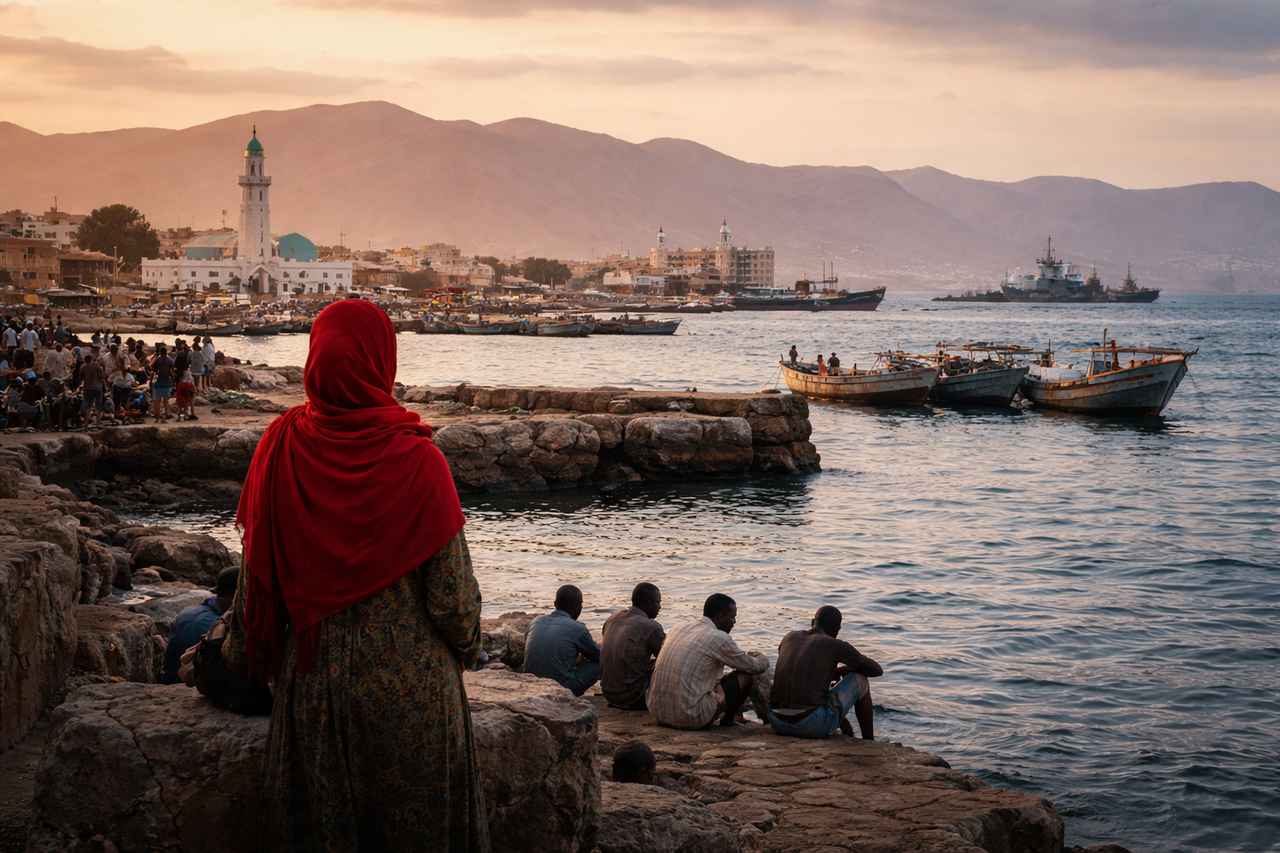
Djibouti can look quiet from a distance. It is small, strategic, and often described as more stable than several of its neighbors. Yet that calm surface hides a heavier burden. The country is moving through a presidential election season under a ruler who has been in office since 1999. At the same time, the church remains tiny, public witness is constrained, and many believers from Muslim backgrounds pay a deep social price for following Christ. Djibouti also carries the pressures of a fragile region, living close to the strains of the Red Sea and hosting refugees from nearby crises. All of that makes this a country that calls for informed, steady prayer now.
1. Why This Country Needs Prayer Now
Djibouti needs prayer now because several burdens meet in one place.
One is political. The country is approaching a presidential election on April 10, 2026, and President Ismaïl Omar Guelleh is again on the ballot. He has ruled since 1999, and recent analysis suggests this is unlikely to be a genuinely competitive contest. That does not make the moment unimportant. It means the nation is passing through another season in which power, public life, and civic space remain tightly controlled.
Another burden is religious. Djibouti’s constitution speaks of equality before the law, and registered non-Islamic churches do continue to function. Yet Islam remains the state religion, religious groups must register, and public proselytizing is prohibited. For Christians, especially those who come from Muslim backgrounds, the pressure is not only legal. It can also come through family expectations, community suspicion, and the quiet fear of being cut off from one’s own people.
Then there is the wider setting. Djibouti sits at a major maritime chokepoint near the Bab al-Mandab Strait. Red Sea disruption has brought mixed effects: stronger port activity on one side, but rising freight and insurance costs on the other. The country also continues to host refugees and asylum-seekers from neighboring crises. These pressures are not separate from the church’s life. They shape the atmosphere in which believers worship, endure, and bear witness.
2. Country Snapshot
- Region: Horn of Africa, on the Gulf of Aden and the Red Sea near the Bab al-Mandab Strait.
- Population: about 1.17 million, based on recent World Bank data.
- Religious makeup: about 94% Sunni Muslim, with smaller communities including Catholics, Protestants, Ethiopian Orthodox, Greek Orthodox, and others.
- Government context: a presidential republic led by Ismaïl Omar Guelleh, with a presidential election scheduled for April 10, 2026.
- Broad note on the church: the Christian community is small, and pressure falls most heavily on believers from Muslim backgrounds.
3. Main Pressures Facing Christians
The pressures facing Christians in Djibouti are real, but they are not all the same.
For registered churches, the challenge is often one of limitation and oversight. Catholic, Protestant, Greek Orthodox, and Ethiopian Orthodox communities have some room to function, yet the wider system clearly favors Islam. Religious groups must register. Foreign workers need official approval. Background checks can delay or block recognition. Public evangelism is not permitted. So while Christian life is not erased from public view, it is closely bounded.
For believers from Muslim backgrounds, the pressure is often more personal. Open Doors describes a setting in which converts may face rejection from family, loss of inheritance, and pressure to hide their faith. In a communal society, that can be crushing. The suffering is not always dramatic or visible. Often it is quiet: loneliness, fear, and the feeling that faithfulness to Christ may cost a person the relationships they depend on most.
There is also the pressure of living in a tightly managed public environment. Recent U.S. human rights reporting describes harassment and occasional detention of journalists, reprisals against critics, and widespread self-censorship. Christians are not always singled out in those reports for faith-related reasons, but the wider climate still matters. It shapes how openly people speak, how cautiously communities live, and how carefully churches navigate public life.
4. What Life Is Like for Christians in Djibouti
For many Christians in Djibouti, ordinary faithfulness is quiet and careful.
Believers in registered churches may gather openly. Clergy and missionaries linked to recognized groups may receive permission to stay and serve. Christian literature can still circulate in limited ways. These are real mercies, and they should not be overlooked. Yet even where worship is possible, witness remains delicate, especially when it touches Muslims who may be drawn to Christ.
That means Christian life can feel divided between what is legally possible and what is socially safe. A church building may stand. A service may go ahead. Yet a convert may still fear rejection at home. A Christian worker may still sense that trust is fragile. A local believer may still feel the need to speak carefully, move slowly, and depend deeply on a few trusted relationships. In practice, endurance and wisdom are part of daily discipleship.
Even so, Djibouti’s setting also creates openings for mercy. The country has welcomed refugees for decades and continues to host people displaced from nearby conflicts. That means Christians live among visible need. In such a place, patient love, hospitality, and practical compassion can become part of the church’s witness, even where public speech is limited.
5. Recent Developments
The clearest current development is the 2026 presidential election. The Ministry of Interior announced the vote for April 10, 2026, and later published the official candidate list naming Ismaïl Omar Guelleh and Mohamed Farah Samatar. This follows a 2025 constitutional change that removed the upper age limit for presidential candidates, allowing Guelleh to run again.
Recent analysis suggests that this election is unlikely to open the political space in any major way. Reporting continues to describe a heavily managed environment, weak opposition, and long-standing concerns about the fairness of the broader political system. For prayer, that matters not because elections are everything, but because public life in Djibouti remains closely tied to a narrow center of power.
Djibouti’s wider regional setting remains important as well. The World Bank has noted that Red Sea disruption has boosted some port activity while also increasing freight costs and insurance premiums, which can raise prices for ordinary people. At the same time, Djibouti continues to carry the burden of hosting refugees and asylum-seekers from the region. So even a country that appears relatively steady can still feel the strain of a troubled neighborhood.
6. How to Pray
- Pray that the small church in Djibouti would be rooted in courage, wisdom, and holiness, especially believers from Muslim backgrounds who may face rejection from family or clan networks.
- Pray for pastors, priests, elders, and quiet disciplers to shepherd believers faithfully in a setting where trust is precious and public witness must often be careful.
- Pray that the April 2026 election season would not deepen fear, repression, or injustice, but that God would restrain evil and overrule political life for the good of the people.
- Pray for open doors for the gospel that are wise, patient, and loving, especially where public evangelism is restricted and believers must live out their faith with quiet steadiness.
- Pray for refugees, asylum-seekers, and vulnerable families in Djibouti, and ask that Christians would reflect the compassion of Christ in practical ways.
- Pray that the space still available to registered churches would be used faithfully for worship, Scripture ministry, discipleship, and enduring gospel witness.
7. Give Thanks
- Give thanks that registered non-Islamic churches continue to operate in Djibouti, even within a heavily regulated environment.
- Give thanks that there is still some room for Christian literature and for recognized foreign Christian workers to serve in the country.
- Give thanks that Djibouti has continued to shelter large numbers of refugees and asylum-seekers from neighboring crises.
8. Last Verified
Last updated: April 8, 2026.
Next review due: immediately after the April 10, 2026 presidential election, or sooner if there is a significant political, legal, or security development.
Key Sources Consulted
- Djibouti Ministry of Interior, “Élections Présidentielles 2026 — Communiqué Officiel” (official notice setting the presidential election timeline for April 10, 2026).
- Djibouti Ministry of Interior, official publication of the March 2026 candidate list for the presidential election.
- Presidency of the Republic of Djibouti (official presidency site confirming Ismaïl Omar Guelleh as current president).
- U.S. Department of State, 2023 International Religious Freedom Report: Djibouti (religious demographics, registration rules, church operating space, and restrictions affecting public witness).
- U.S. Department of State, 2024 Human Rights Report: Djibouti (restrictions on expression, arbitrary arrests, and civic-space concerns).
- Open Doors, Djibouti: WWL 2024 Full Country Dossier / background materials (pressure on converts, inheritance loss risk, clan/community pressure, and church vulnerability).
- Open Doors UK, “Which countries are outside the World Watch List 2026 top 50?” (Djibouti listed at rank 58 in WWL 2026, with an increased persecution score).
- World Bank Data: Djibouti (population and current macro indicators).
- World Bank / Djibouti macroeconomic material on Red Sea disruption and consumer-price pressure.
- UNHCR country and operational data for Djibouti (refugee and asylum-seeker burden).
- Africa Center, “Djibouti: An Uncontested Election Masks a Sea of Instability” (current election context and strategic environment).
- Africanews, “Djibouti’s Guelleh faces only low-profile rival in presidential ballot” (current campaign context).


