


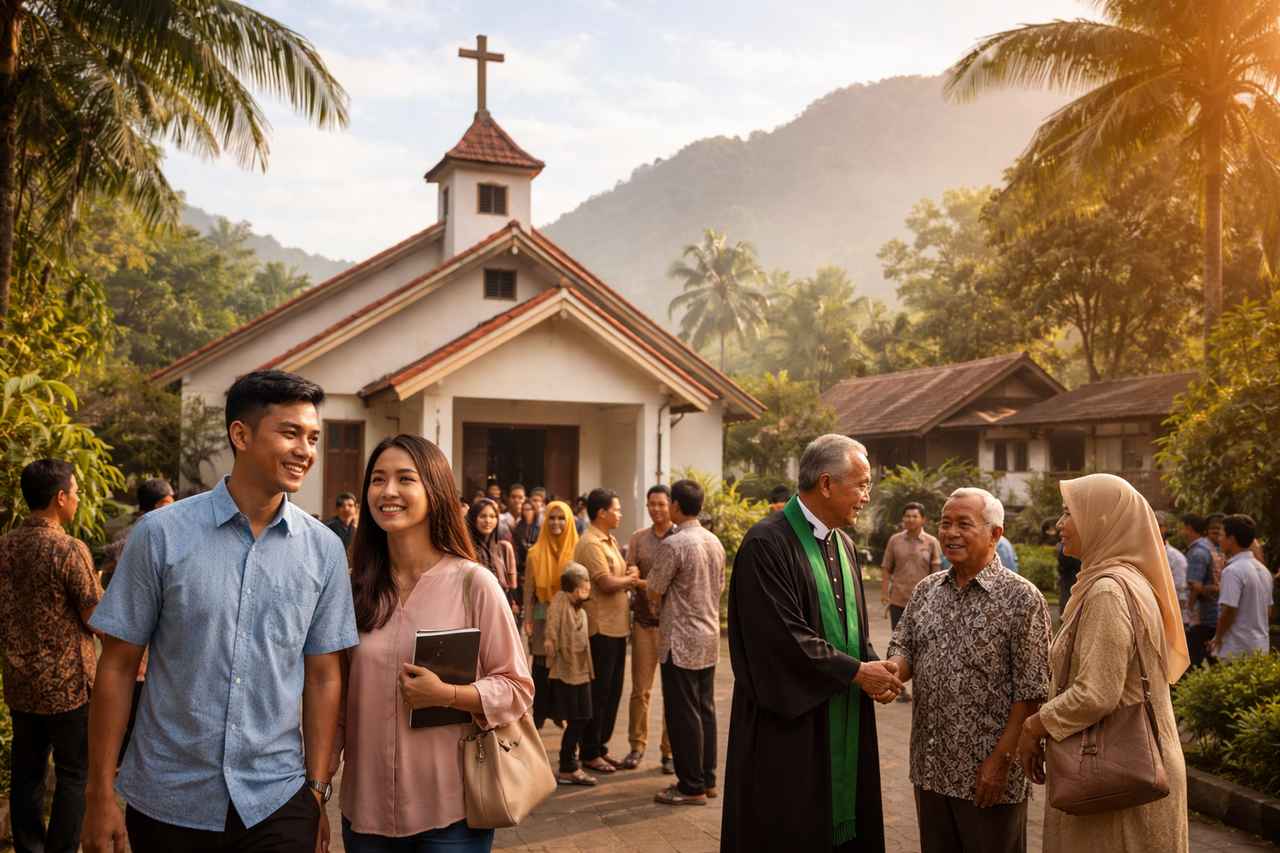
Indonesia is a vast and influential nation with a long public story of pluralism and coexistence. Yet that hopeful story now sits alongside deeper strains. A new penal code has come into force, blasphemy provisions remain powerful, church-building disputes still burden minorities, and Christians in several regions continue to live carefully under social and legal pressure.
This is not a country that calls for alarmist prayer. It calls for sober, informed, and hopeful intercession. Indonesia’s pressures are real, but so are the signs of God’s preserving mercy. That is why Christians should pray for this nation with both gravity and confidence in the Lord’s sovereign care.
Why This Country Needs Prayer Now
Indonesia needs prayer now because its official commitment to religious harmony has not removed the real pressures many believers still face. The U.S. Commission on International Religious Freedom says Indonesia’s religious-freedom conditions remain poor and that the criminal code and other laws continue to restrict worship and burden minorities such as Protestants and Catholics.
At the same time, the burden is not the same everywhere. Many Christians in Indonesia worship openly, serve faithfully, and take part meaningfully in national life. Yet converts from Islam, along with some evangelical and Pentecostal congregations, often face sharper pressure from relatives, neighbors, local officials, and hard-line groups. Indonesia is not a uniformly closed country, but neither is it a place where Christian freedom can be taken for granted.
Broader national tensions also shape the atmosphere in which believers live and bear witness. The new penal code took effect in January 2026, and late 2025 saw nationwide protests over police brutality and lawmakers’ benefits. These are not merely background political matters. They affect the public mood, local trust, and the conditions in which Christians gather, speak, and seek to live quietly faithful lives.
Country Snapshot
Indonesia is the world’s largest Muslim-majority nation and a vast Southeast Asian archipelago of nearly 280 million people. Pew Research, drawing on 2022 Ministry of Religious Affairs data, says the country is about 87% Muslim and 11% Christian.
Politically, Indonesia is a presidential republic led by President Prabowo Subianto. The country’s official ideology, Pancasila, presents a public framework of belief in God, national unity, and social justice, and Indonesia often speaks of religious moderation and coexistence. Yet in practice, legal and local mechanisms still allow serious discrimination against minority communities.
The church in Indonesia is not small or invisible. Christians are spread across the country, with especially strong presence in parts of eastern Indonesia and in several provinces where they form local majorities. Even so, the experience of church life varies sharply by region, denomination, and background.
Main Pressures Facing Christians
One major pressure comes through law and regulation. USCIRF says the government continues to use the criminal code, blasphemy provisions, and related legal frameworks to regulate religion and restrict freedom of belief and expression. The newer code, now in force, has heightened concern because it broadens the legal definition of blasphemy and leaves minorities exposed to misuse of the law.
Another major pressure is the long struggle over places of worship. Christians in some areas still face obstruction, delay, or disruption when seeking permission to build or use church buildings. Human Rights Watch and USCIRF both describe how the 2006 houses-of-worship framework and local permitting practices have often worked against minority communities.
Converts from Muslim and Hindu backgrounds often carry the heaviest personal cost. Open Doors’ persecution-dynamics reporting says that in several hotspot areas they may be watched closely, pressured to return to their former religion, or cut off from family support, inheritance, marriage prospects, or even child custody. Their suffering is not always dramatic enough to make headlines, but it can be relentless in daily life.
Christian children and students can also face pressure. USCIRF’s Indonesia update says that in some locales the education system and local expectations still impose burdens, including pressure around religious clothing for non-Muslim girls. These pressures can weigh heavily on families trying to raise children in the faith.
What Life Is Like for Christians in Indonesia
For many Indonesian Christians, ordinary faithfulness means learning the shape of local reality. In some cities and provinces, believers worship openly, work freely, and enjoy more room than Christians do in many other countries. But in places such as Aceh, parts of West Java, Banten, and other hotspot areas, the cost of open Christian witness can rise quickly.
That often leads to a quieter, more careful pattern of discipleship. Open Doors says some believers, especially converts, avoid displaying visible Christian symbols, speak cautiously about their faith, and keep baptisms or fellowship gatherings low-profile because even ordinary public expressions of faith can invite ridicule, harassment, or worse.
Churches also learn to live with caution. Some congregations are quickly accused of improper proselytism, and some fellowships hesitate to welcome converts too visibly for fear of community backlash. Yet this does not mean the church is defeated. It means many believers are trying to walk wisely, courageously, and patiently in places where tolerance can be real one day and fragile the next.
Recent Developments
One of the most important recent developments is legal. Indonesia began enforcing its new penal code in January 2026. The government has presented the code as a modern post-colonial legal system shaped by Indonesian values, but critics warn that it threatens civil liberties and freedom of expression. For Christians and other minorities, the concern is especially serious because the code retains and expands provisions that matter directly for religious life, including blasphemy-related penalties.
Religious-freedom monitors remain concerned. USCIRF’s current country materials say that although the state has taken some steps to promote tolerance and reduce terrorism, it still uses legal frameworks to regulate religion and criminalize blasphemy, while minority communities continue to face discrimination in recognition, worship, and construction of houses of worship. USCIRF continues to recommend Indonesia for the U.S. State Department’s Special Watch List.
Local incidents also show how fragile Christian worship can remain. USCIRF’s 2026 annual report chapter on Indonesia describes attacks or disruptions involving prayer houses and churches in places such as Padang, Kediri City, and Purbayani Village, while continuing pressure over permits and peaceful gatherings persisted through 2025.
Yet there are also genuine signs of common grace. Pope Francis’ September 2024 visit included an interreligious meeting at Jakarta’s Istiqlal Mosque and the signing of the Joint Declaration of Istiqlal 2024, which called for friendship, peace, and resistance to religiously fueled violence. In 2025, there were also notable church-building breakthroughs in places such as Bogor and Lebak, showing that local officials, religious leaders, and communities can still choose a more generous path.
How to Pray
- Pray that God would give Indonesia’s rulers, judges, police, and local officials justice, restraint, and wisdom as the new criminal code is enforced, and that blasphemy-related provisions would not be used to punish peaceful worship, Christian witness, or freedom of conscience.
- Pray for believers who have turned to Christ from Muslim or Hindu backgrounds, especially where family pressure, isolation, or threats make open discipleship costly, that the Lord would keep them steadfast in faith and surround them with wise, loving fellowship.
- Pray for congregations that face obstruction, delay, or intimidation when seeking permission to build or use places of worship, that God would open lawful doors, restrain local hostility, and move officials toward fairness rather than fear or favoritism.
- Pray for Christian children and students in places where school expectations, religious-dress pressure, or weak access to fair Christian instruction make faith difficult, that Christ would preserve them from shame, strengthen their parents, and help churches disciple them patiently and well.
- Pray for pastors, elders, and church workers to preach Scripture faithfully and shepherd with courage and gentleness, especially in regions where local suspicion or accusations of proselytizing can quickly bring trouble to a congregation.
- Pray for wider public peace and accountability in Indonesia, so that corruption, civic frustration, and harsh policing would not deepen fear and cynicism, but that truth, justice, and neighbor-love would grow in public life and create better conditions for quiet, faithful Christian witness.
Give Thanks
- Give thanks that the Lord continues to preserve a large and living church across Indonesia, and that many believers still worship, disciple, and bear witness to Christ across this vast archipelago.
- Give thanks for concrete signs of common grace and restraint, including recent breakthroughs for some churches that waited many years for building approval.
- Give thanks for visible efforts toward interfaith peace in Indonesia, including the Joint Declaration of Istiqlal 2024 and public calls to resist religiously inspired violence and indifference.
- Give thanks that, even where pressure remains serious, God has not left His people without courage, fellowship, and perseverance, but continues to sustain converts, pastors, and ordinary congregations in daily faithfulness.
Last Verified
This article was freshly checked against current reporting and monitoring available through April 18, 2026, with special attention to the 2026 penal-code change, current USCIRF materials, recent reporting on civic unrest, and current documentation on church-permit and minority-religion pressures.
Last Updated note
Last updated: April 18, 2026.
Next review due: July 2026, or sooner if penal-code enforcement, church-closure incidents, or wider national unrest materially reshape the prayer burden.
Key Sources Consulted
- U.S. Commission on International Religious Freedom, “Religious Freedom Conditions in Indonesia” current country page.
- U.S. Commission on International Religious Freedom, 2026 Annual Report: Indonesia chapter.
- U.S. Commission on International Religious Freedom, “Indonesia Country Update” and related September 5, 2025 release.
- Associated Press, “Indonesia’s new penal code takes effect, marking historic break with colonial law.”
- Associated Press, “Tensions soar in Indonesia as protests over police brutality and lawmakers’ allowances continue.”
- Associated Press, “Riot police clash with students protesting lawmakers’ allowances in Indonesia.”
- Associated Press, “Indonesian leader pledges to revoke lawmakers’ perks after protests leave 6 dead.”
- Pew Research Center, “5 facts about Muslims and Christians in Indonesia.”
- Open Doors, “Indonesia: Persecution Dynamics — February 2025.”
- Human Rights Watch, “Religious Intolerance, Discriminatory Regulations Against Minorities in Indonesia.”
- Human Rights Watch, “New churches show path to religious tolerance.”
- Voice of the Martyrs Australia, “Indonesia: Church Received Building Permit After 23-Year Wait.”
- Vatican News / Holy See Press Office, coverage of the Istiqlal interreligious meeting and the Joint Declaration of Istiqlal 2024.


