

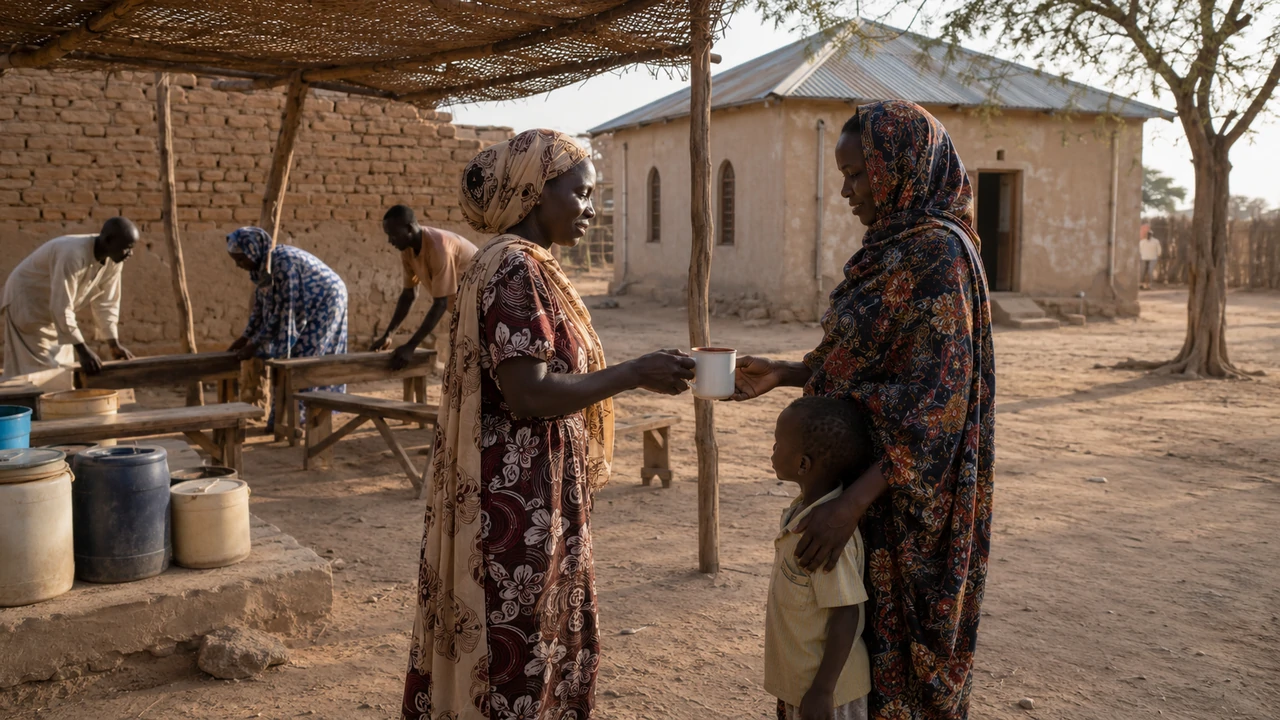
Chad faces war-related displacement, armed violence, hunger, malnutrition, flooding, drought and severe pressure on public services. War in neighbouring Sudan has driven hundreds of thousands of refugees across Chad’s eastern border, while Boko Haram-linked groups continue to threaten communities around Lake Chad. By the end of June 2026, Chad was hosting approximately 2.26 million forcibly displaced people. The World Food Programme projected that three million people could face acute hunger during the June–August 2026 lean season.
Prayer Burden at a Glance
Pray for churches throughout Chad to proclaim Christ faithfully and teach Scripture clearly. Ask God to protect people affected by violence, displacement and hunger; strengthen refugees and the communities receiving them; and give justice, humility and integrity to national leaders, courts and security forces. Pray for pastors to disciple believers well, care for vulnerable people and resist corruption and false teaching. Ask God to help Christians pursue peace without hiding injustice, serve their neighbours without favouritism and remain steadfast in their hope in Christ.
Last verified: 6 August 2026
Why Chad Needs Prayer Now
Chad needs prayer for faithful churches, protection amid violence and displacement, relief from hunger, just government and peace across divided communities.
These pressures are part of the daily life of Chad’s churches. Congregations may serve families struggling to find food, believers living near insecure borders, displaced people carrying grief and trauma, and communities divided by political, ethnic, religious or resource-related conflict. Pray that churches will remain faithful to Scripture, proclaim salvation through Jesus Christ clearly and care for suffering neighbours without favouritism. Ask God to protect them from fear, corruption, false teaching and dependence on political favour.
President Mahamat Idriss Déby Itno leads the country, with Allah Maye Halina serving as Prime Minister. Constitutional changes adopted in October 2025 extended the presidential term from five to seven years and removed the previous limit on presidential terms. Several prominent opposition figures have also received lengthy prison sentences. Pray for leaders who govern justly, courts that act impartially and peaceful public life in which authority is used for the good of the people.
Chad has a Muslim-majority population alongside substantial Catholic, Protestant and evangelical communities. The most widely cited religious-demographic figures still rely on older census data, so precise current percentages should be treated cautiously. Religious identity, baptism, church membership or participation in Christian ceremonies cannot prove that a person has been born again or is trusting in Christ alone. Pray that people in every community will hear the biblical gospel, turn from sin and place their faith in Jesus Christ.
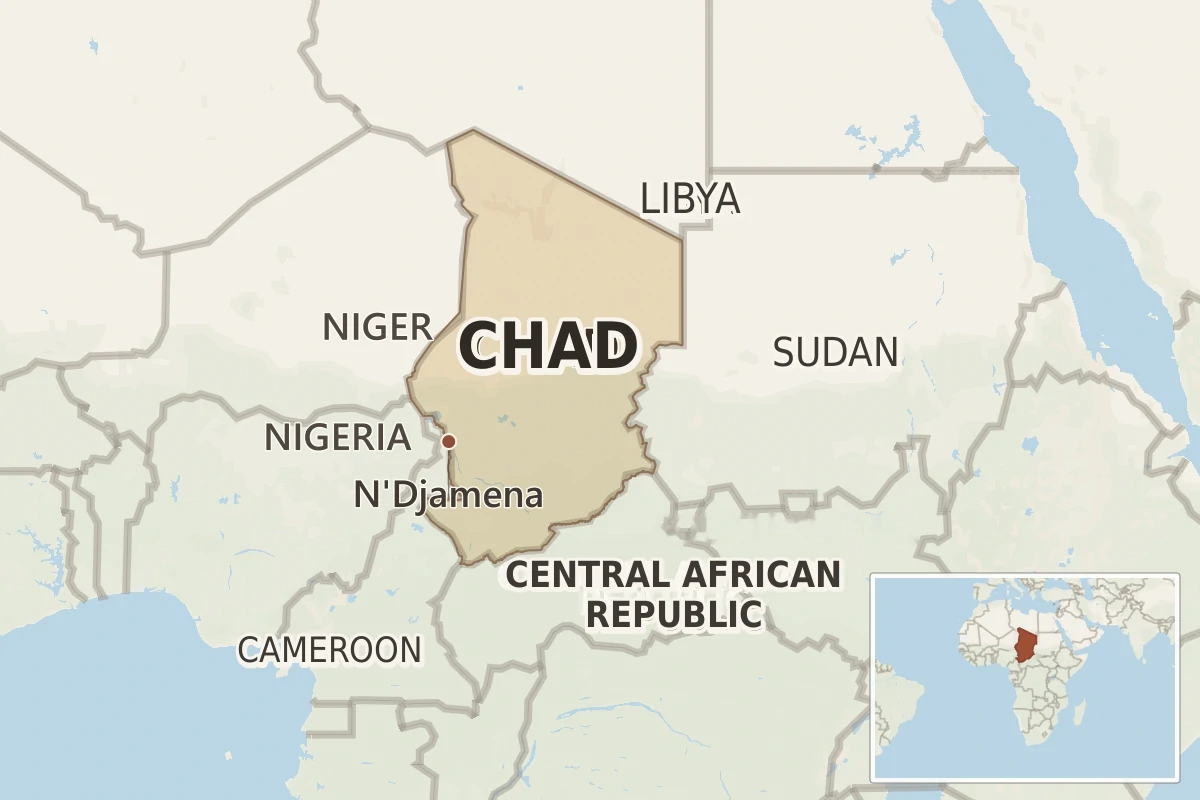
Country Snapshot
A brief orientation to Chad’s geography, government, displacement burden, food insecurity and religious context.
Spiritual and Practical Challenges Affecting Christians and Churches
Churches in Chad need faithful teaching, wisdom in caring for vulnerable believers, courage amid violence, strength to serve displaced families and integrity in communities marked by poverty and division.
Faithful teaching and care for vulnerable believers
Churches must explain clearly that sinners are reconciled to God through Christ’s finished work, not through inherited identity, religious ceremony, moral effort or membership in a church. Pastors need courage to teach the whole counsel of God and patience to disciple believers whose knowledge of Scripture may be limited.
Some people face family rejection, social pressure or threats after becoming Christians. They need safe fellowship, wise pastoral care and help to respond without fear, pride or retaliation. Churches must protect vulnerable believers and avoid putting them at unnecessary risk.
Pray for pastors who are humble, biblically grounded and willing to serve without using ministry for money, power or political access. Ask God to protect churches from prosperity teaching, the mixing of Christian teaching with incompatible religious beliefs or practices, manipulation and abuse of authority.
Ministry amid armed violence
Armed violence remains a serious danger around Lake Chad. On 4 May 2026, A Boko Haram-linked group attacked a Chadian security position on Barka Tolorom island. The United Nations reported that 23 soldiers and civilians were killed and 26 were injured.
Violence affects Muslims, Christians and other communities. Churches in insecure areas may be displaced, lose members and livelihoods, or be unable to gather safely. Grieving families need comfort, survivors need care, and young people need protection from recruitment by armed groups.
Military operations may be necessary to protect communities, but civilians can suffer when security forces act without sufficient discipline or accountability. Pray for armed groups to lose their ability to attack and recruit. Ask God to protect civilians and give security forces courage, justice and restraint.
Refugees and host communities
Eastern Chad has received hundreds of thousands of people fleeing Sudan. In February 2026, Chad officially closed the Sudanese border after armed incursions connected with the war. Controlled humanitarian passage remained possible, and refugees continued to need protection and assistance.
Refugees and Chadian host communities often depend on the same limited water sources, farmland, schools, clinics and food supplies. Many families arriving from Sudan have experienced violence, separation, bereavement and the loss of their homes. Women and children face particular dangers, including exploitation, trafficking and abuse.
Pray for churches to welcome strangers wisely, protect children and vulnerable adults, and minister across ethnic and religious boundaries. Ask God to provide pastors, medical workers, teachers, translators and relief workers who can offer practical help while speaking openly about Christ, without pressure or manipulation.
Hunger, poverty and limited public services
Many Chadian families face severe food insecurity, malnutrition and limited access to health care, education and clean water. The 2026 lean-season projection estimated that three million people would face crisis or emergency levels of hunger.
Pastors and church members face these same hardships. Families may struggle to travel to worship, obtain Bibles, support church workers or continue theological training. Christian ministries may be asked to meet needs far beyond their available staff and resources.
An evangelical health network reports operating six hospitals, two eye clinics and more than 124 health centres. Such work provides valuable care in underserved communities, but it also requires professional competence, honest stewardship and service offered without favouritism.
Pray for effective health care, reliable harvests, stronger local food production and protection for children. Ask God to keep poverty from being exploited by corrupt officials, violent groups, deceptive preachers or anyone who uses assistance to manipulate vulnerable people.
Peace and reconciliation in divided communities
Disputes over land, water, livestock, political authority, ethnic identity and religion can reinforce one another. A conflict between communities identified as Muslim and Christian should not automatically be described as a purely religious conflict.
Christians need wisdom to pursue peace without minimizing injustice or pretending that serious theological differences do not matter. Pray that churches will reject communal hatred, revenge and political manipulation. Ask God to help believers protect life and serve their neighbours wherever they can do so without compromising biblical truth or conscience, while remaining faithful to Christ and His Word.
Christian Life and Witness in Chad
Christian witness in Chad includes worship, Scripture teaching, pastoral training, health care, relief work, peacebuilding and service among communities affected by poverty, displacement and violence.
Christian communities have a long public presence in Chad. In January 2026, the Evangelical Church of Chad marked one hundred years of existence. The Chadian government publicly recognized its contribution to peace, social cohesion and service to the country. This gives reason to thank God for every congregation where Christ is faithfully proclaimed, Scripture is taught, believers pray and people in need receive compassionate care. It does not prove that every congregation, institution or person connected with the church is spiritually faithful.
Some believers worship in major towns, while others gather in rural areas, refugee-hosting communities or places affected by violence. Churches may be involved in worship, pastoral training, education, health care, relief work and peacebuilding. These ministries can provide practical help and create opportunities to speak about Christ. They can also face temptations involving institutional pride, dependence on outside funding and political patronage.
Christian health ministries provide one visible form of service. The evangelical health network reports that its facilities serve communities across the country and that it is working to improve medical care. Pray that these ministries will remain competent, accountable and shaped by love for God and neighbour.
In June 2026, Muslim, Catholic and evangelical representatives formally established a platform intended to promote peace and social cohesion. Christians may thank God for efforts that restrain violence and protect neighbours. Such cooperation does not mean that the participating faiths proclaim the same truth or offer the same way of salvation. Pray that Christians will treat people of other faiths with love without compromising the truth of the gospel. Ask God to protect freedom of conscience and build genuine Christian unity around the gospel.
Chad’s ethnic and linguistic diversity gives churches opportunities to cross barriers that often divide society. Pray that tribal identity, regional loyalty, social position and political allegiance will not govern Christian fellowship. Ask God to raise up churches where believers bear one another’s burdens, teach children, care for displaced families, welcome strangers and show that their deepest loyalty is to Christ.
Recent Developments
Constitutional change, opposition imprisonment, Sudan-border insecurity, violence around Lake Chad, withdrawal from the International Criminal Court and severe humanitarian need are important reasons to pray for Chad now.
-
October 2025–May 2026
Constitutional change and opposition imprisonment
The constitutional revision adopted in October 2025 extended the presidential term to seven years and removed the previous two-term limit.
In May 2026, eight leaders of an opposition coalition known as GCAP were sentenced to eight years in prison after the Supreme Court dissolved the organization. Former prime minister and opposition leader Succès Masra was already serving a 20-year sentence. On 21 May 2026, the Supreme Court rejected his appeal and upheld the conviction. Judicial authorities treated these cases as lawful prosecutions, while defence lawyers and human-rights organizations alleged that political opposition was being suppressed.
Prayer significance: Pray for authority to be exercised with humility and restraint. Ask God for impartial courts, reliable evidence, honest testimony, peaceful political participation and protection from violence, revenge and fabricated accusations.
-
23 February–20 July 2026
Sudan-border insecurity and displacement
On 23 February 2026, Chad announced the closure of its border with Sudan following armed incursions connected with the Sudan war. The government said the measure was intended to protect Chad and prevent the conflict from spreading. Humanitarian crossings remained possible under controlled arrangements.
The refugee emergency continued. By 20 July, more than 938,000 Sudanese refugees had crossed into Chad since April 2023.
Prayer significance: Pray for peace in Sudan, protection for border communities and safe humanitarian access. Ask God to give Chadian authorities wisdom as they seek to protect the country while receiving people fleeing violence.
-
4 May 2026
Violence around Lake Chad
The attack on Barka Tolorom showed that Boko Haram-linked violence remains an active threat. Soldiers and civilians were among those killed and injured.
Prayer significance: Pray for armed networks to be exposed and weakened, for young people to resist recruitment and for perpetrators to repent. Ask God to protect civilians and help security forces act with courage, truth and restraint.
-
27 July 2026
Announced withdrawal from the International Criminal Court
Chad announced that it had formally notified the United Nations Secretary-General of its decision to withdraw from the International Criminal Court. The government said that the Court had been ineffective and had focused unfairly on African countries. It also stated that Chad remained committed to prosecuting serious crimes through its national courts and African institutions.
Under Article 127 of the Rome Statute, withdrawal takes effect one year after the UN Secretary-General receives the notification unless the notice specifies a later date. Chad therefore remained a State Party on 6 August 2026, when this guide was last verified.
Prayer significance: Pray for justice for victims of grave crimes, fair treatment of African countries and national courts willing to hold powerful people accountable. Ask God to prevent legitimate criticism of international institutions from being used to excuse impunity.
-
2026
Hunger and humanitarian need
Chad’s humanitarian crisis is driven by conflict, displacement, hunger, malnutrition, disease and extreme weather. The United Nations launched a 2026 response plan intended to assist 3.4 million people, but available resources remained far below the level of need.
Prayer significance: Pray that aid will reach those who need it most, that resources will not be stolen or diverted and that communities will receive lasting support rather than only short-term emergency assistance.
How to Pray for Chad
Pray for salvation, faithful churches, just government, protection for displaced families, peace, provision, reconciliation and hope in Christ that endures through suffering.
-
Pray for salvation and clear gospel proclamation. Ask God to bring people from Muslim, Christian and traditional religious backgrounds to repentance and faith in Jesus Christ. Pray that no one will rest in inherited religion, ceremony, moral effort or church membership, but in Christ alone.
-
Pray for faithful pastors, churches and vulnerable believers. Pray for pastors to teach Scripture accurately, live with integrity and disciple believers patiently. Remember Christians who face rejection or threats because of their faith, and ask God to provide safe fellowship and wise pastoral care.
-
Pray for national leaders, courts and peaceful public life. Pray for President Mahamat Idriss Déby Itno, Prime Minister Allah Maye Halina and all who exercise authority. Ask God to give them wisdom, humility and justice. Pray also for impartial judges, honest lawyers, courageous journalists and public servants who resist corruption and political revenge.
-
Pray for refugees and host communities. Ask God to provide food, shelter, water, health care, education and protection for displaced families. Pray for Chadian communities sharing scarce resources with refugees, and for churches and relief workers serving across ethnic and religious boundaries.
-
Pray for peace along the Sudan border and around Lake Chad. Pray that Sudan’s war will not spread further into Chad and that Boko Haram-linked groups will lose their ability to recruit, attack and terrorize communities. Ask God to protect civilians and give discipline and restraint to security forces.
-
Pray for children, families and people facing hunger. Remember children affected by malnutrition, illness, interrupted education, displacement and exploitation. Pray for rain in proper measure, successful harvests, clean water, effective health care and honest distribution of aid.
-
Pray for reconciliation and faithful Christian witness. Ask God to restrain ethnic hatred, revenge and conflict over land, water and livestock. Pray that Christians will speak truth, defend vulnerable people, serve their neighbours without favouritism and work for peace without compromising the gospel.
-
Pray for gospel hope. Pray that believers will endure suffering with holiness, courage and compassion. Ask God to make the gospel fruitful among Chad’s peoples and languages, save the lost and teach His churches to pray with confidence, “Your kingdom come.”
Give Thanks
Give thanks for faithful gospel ministry, compassionate service, communities receiving refugees, efforts to make peace and the Evangelical Church of Chad’s centenary.
-
Thank God for every place in Chad where Christ is faithfully proclaimed. Give thanks where Scripture is taught and believers gather for worship and prayer.
-
Thank God for pastors, health workers, teachers, relief workers and church members. Give thanks for those serving people facing illness, hunger, violence and displacement.
-
Thank God for Chadian communities that have received refugees. Give thanks for those sharing limited land, water, food, schools and health services with families fleeing war.
-
Thank God for efforts that restrain religious violence and protect neighbours. Give thanks for peacebuilding that does not require Christians to compromise the truth of the gospel.
-
Thank God that the Evangelical Church of Chad has marked one hundred years of existence. Give thanks for every congregation that continues to teach Scripture, pray, care for suffering people and bear witness to Christ.
Last Verified / Update Note
This note explains when the guide was reviewed, what was checked and which developments readers may need to keep watching and praying about.
Review Status
Reviewed for current prayer use
Chad’s current national leadership; the October 2025 constitutional revision; the imprisonment of Succès Masra and leaders of the opposition coalition known as GCAP; security around Lake Chad; the February 2026 closure of the Sudan border and humanitarian exceptions; refugee and displacement figures; hunger, malnutrition and child-protection needs; the 2026 population census; religious-freedom conditions; evangelical church, health and peacebuilding activity; and Chad’s July 2026 notification of withdrawal from the International Criminal Court.
Faithful gospel proclamation and biblical discipleship; protection and care for vulnerable believers; just government and impartial courts; peace along the Sudan border and around Lake Chad; care for refugees and host communities; food, water, health care and education for vulnerable families; integrity in church and humanitarian ministries; and reconciliation across ethnic, regional, political and religious divisions.
Any leadership or constitutional change; the status of imprisoned opposition figures and any further appeal, release or pardon; changes to Sudan-border restrictions and humanitarian access; new displacement figures from UNHCR, the UN refugee agency; further attacks around Lake Chad; publication of final results from the 2026 population census; changes in hunger, flooding, disease or humanitarian funding; any United Nations confirmation of the notification and the date Chad’s withdrawal from the International Criminal Court takes effect; and significant changes affecting freedom of worship, church registration or Christian ministry.
Humanitarian figures change as people cross borders, register, relocate or return home. This guide therefore dates major displacement and hunger estimates. Religious-composition figures still depend largely on Chad’s 2009 census, so the guide avoids presenting them as precise current measurements. Political prosecutions and constitutional changes are described using both reported official or judicial positions and outside criticism. Church and ministry sources establish their stated activities, but they do not prove the spiritual condition of everyone involved or support nationwide claims about church growth.
Help keep this guide accurate and current
If you notice a possible correction, broken link, or significant change in Chad, please contact the Nations Prayer Directory so we can review it carefully.
Key Sources Consulted
Selected public sources used to verify Chad’s government, law, humanitarian conditions, regional security, political developments, religious freedom and documented Christian ministry and service.
Government, law and public institutions
- Primature du Tchad — Current government leadership and official activity
- Library of Congress, Global Legal Monitor — October 2025 constitutional changes
- Primature du Tchad and INSEED — Chad’s third general population and housing census
- Primature du Tchad — Seasonal flooding preparations in N’Djamena
- United Nations — Rome Statute of the International Criminal Court, Article 127
- Xinhua reporting on Chad’s Foreign Ministry statement — ICC withdrawal notification and official rationale
Refugees, hunger and humanitarian conditions
- UNHCR Chad — Forcibly Displaced Persons, June 2026
- UNHCR Chad — Sudan Emergency Situation, 20 July 2026
- World Food Programme — Chad country overview and 2026 hunger projection
- UNICEF — Humanitarian Action for Children: Chad, 2026
- United Nations in Chad and the Government of Chad — 2026 Humanitarian Response Plan
Security and regional conflict
- United Nations in Chad — The 4 May 2026 attack on Barka Tolorom
- Xinhua reporting on the Chadian government statement — Closure of the Sudan border
- UNHCR — Chad Border Monitoring, June 2026
Politics, courts and civic life
- Tchadinfos — Sentencing of eight former GCAP leaders
- Tchadinfos — Supreme Court rejection of Succès Masra’s appeal
- Human Rights Watch — World Report 2026: Chad
- Africanews — Regional reporting on the Masra appeal decision
Religious freedom, churches and Christian service
- U.S. Department of State — 2023 Report on International Religious Freedom: Chad, archived by ecoi.net
- U.S. Commission on International Religious Freedom — Freedom of religion or belief in Sahelian countries
- Primature du Tchad — Centenary of the Evangelical Church of Chad
- Association Évangélique pour la Santé au Tchad — Evangelical health network
- Agenzia Fides — Interconfessional platform for peace and social cohesion
Source Context
How to read the sources behind this guide in light of contested political claims, changing humanitarian figures, older religious data and limited nationwide church reporting.
Source Context
- Official and outside assessments. Chadian government sources are used to identify office-holders, public policies, official actions and the government’s stated position. They are not treated as independent proof that disputed actions are lawful, effective or widely accepted. Local, regional, UN and human-rights sources provide additional evidence and criticism.
- Political prosecutions. Court judgments and sentences are confirmed through Chadian and regional reporting. Claims that prosecutions were politically motivated remain attributed to defence lawyers, opposition representatives or human-rights organizations rather than presented as proven judicial fact.
- Refugee figures. UNHCR, the UN refugee agency, reported approximately 2.26 million forcibly displaced people in Chad at the end of June 2026. The separate figure of more than 938,000 Sudanese refugee arrivals was reported on 20 July 2026. These figures measure different populations and dates and should not be treated as interchangeable.
- Sudan-border status. Chad announced a general border closure on 23 February 2026 while allowing limited humanitarian exceptions. Humanitarian arrivals and aid movements continued under controlled arrangements. The opening of the Adré crossing for aid entering Sudan does not by itself mean that Chad’s general border restrictions were fully lifted.
- ICC withdrawal. Chad reported that it notified the UN Secretary-General on 27 July 2026. As of 6 August 2026, the publicly available United Nations Treaty Collection material predated that notification. Because the publicly available Treaty Collection material predated the notification, this guide relies on reporting that directly cites the Chadian Foreign Ministry for the notification date and on the Rome Statute for the legal timing of withdrawal.
- Religious figures. The most detailed publicly available religious-demographic breakdown still draws on the 2009 census. It is useful for broad historical patterns but not for precise claims about Chad’s present population or the number of genuine believers.
- Religious-freedom reporting. The U.S. State Department report covers 2023, while the U.S. Commission on International Religious Freedom’s Sahel report was published in 2025. They help establish legal structures and recurring risks, but neither provides a complete account of every province or congregation in 2026.
- Church and ministry sources. Sources on the Evangelical Church centenary, evangelical health network and interconfessional platform document the activities and institutional presence described in this guide. Their public statements are not treated as independent evidence of nationwide spiritual growth, doctrinal faithfulness or the condition of individual hearts.
- Humanitarian projections. World Food Programme and UNICEF estimates describe needs during defined planning periods. Hunger, displacement, malnutrition and funding conditions may change after the guide’s verification date, so major figures remain dated and rounded.
A Closing Prayer for Chad
A concise prayer for Chad’s churches, people, leaders, displaced families, peace and the spread of the gospel.


