

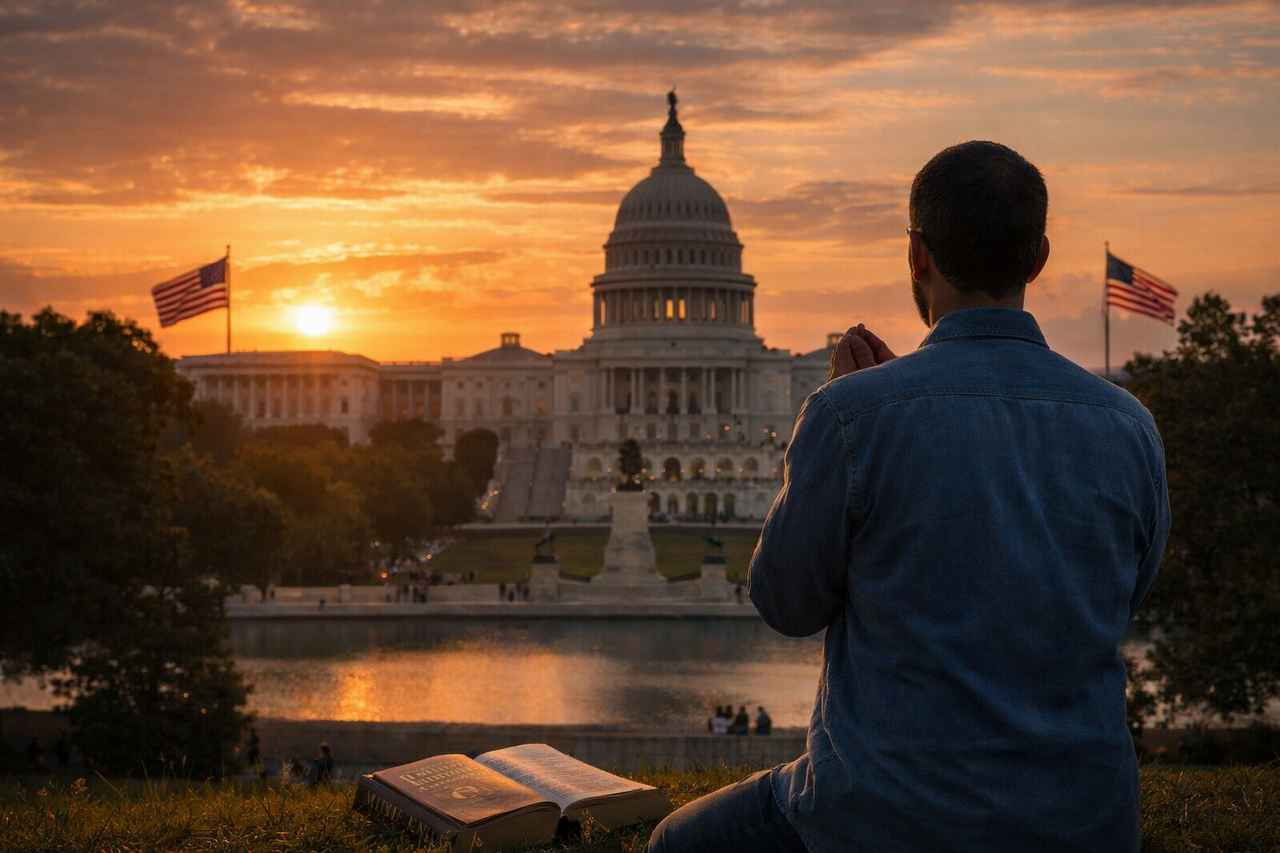
The United States is home to one of the largest Christian populations in the world. It has broad legal freedom for worship, many ministry resources, and churches of many kinds spread across the country. Yet it is also marked by moral confusion, political strain, weakening public trust, and fierce arguments about the place of faith in public life. As of June 2026, that strain is especially serious because the United States remains entangled in a dangerous war with Iran. Recent reporting describes fresh U.S.-Iran clashes near the Strait of Hormuz, stalled peace talks, and a conflict that continues to threaten civilians, mariners, service members, poorer nations, fuel-importing countries, and ordinary households affected by rising energy costs.
This is not only a foreign-policy crisis. It is a moment that tests how a powerful nation speaks about war, truth, restraint, justice, human dignity, and the use of force. It also tests the church’s witness. Christians in the United States need grace to resist fear, pride, partisan captivity, and moral carelessness, and to pray with humility, repentance, courage, and dependence on God.
Pray for the United States to respond to spiritual confusion, political division, public disputes over faith and conscience, and the dangerous U.S.-Iran crisis with repentance, truth, restraint, justice, humility, protection of life, and faithful Christian witness.
Why the United States Needs Prayer Now
Christianity remains deeply present in American life, but visible religious identity does not remove the need for repentance, faithful witness, and prayer.
The United States needs prayer now because several pressures are converging at once. Christianity remains deeply present in American life. Pew Research Center’s 2023–24 Religious Landscape Study found that 62% of U.S. adults describe themselves as Christians, including 40% Protestant, 19% Catholic, and 3% other Christians. Pew also found that 29% of U.S. adults are religiously unaffiliated.
Those numbers show both presence and strain. The United States is not a country where Christianity has disappeared from public memory. Churches, Christian schools, ministries, publishers, charities, mission agencies, seminaries, and local congregations remain highly visible. Yet Christian identification is not the same as living faith, repentance, discipleship, or public witness shaped by Scripture. The country still needs prayer because religious language can remain strong while obedience to Christ grows weak.
The need for prayer is larger than secularization. Americans remain divided over religion’s public role. Pew reports that large majorities say religious organizations help strengthen community bonds and serve the poor, while many also think religious organizations are too concerned with money and power, too focused on rules, or too involved with politics. That tension matters because the church’s public witness is both needed and mistrusted. Christians must learn to speak truthfully without harshness, act publicly without confusing Christ’s kingdom with party identity, and repent where the church has weakened its own credibility.
The U.S.-Iran crisis has sharpened that concern further. Axios reports that U.S. and Iranian forces exchanged strikes on June 3, 2026, while peace talks remained stalled, with U.S. forces intercepting Iranian missiles and drones and striking targets near the Strait of Hormuz. The Guardian also reported fresh U.S.-Iran exchanges, a deadly Iranian strike at Kuwait International Airport, and continuing uncertainty around ceasefire talks. These developments should lead Christians to pray not only for foreign policy outcomes, but for truth, restraint, protection of life, and humility in a nation whose decisions can affect millions far beyond its borders.
Country Snapshot
A brief country context to help readers pray with clearer understanding.
The United States is a large federal republic in North America. As of June 2026, the White House identifies Donald J. Trump as the 45th and 47th president of the United States. The U.S. Census Bureau’s world population clock lists the United States as the world’s third most populous country, with a projected population of 342,620,143 for July 1, 2026.
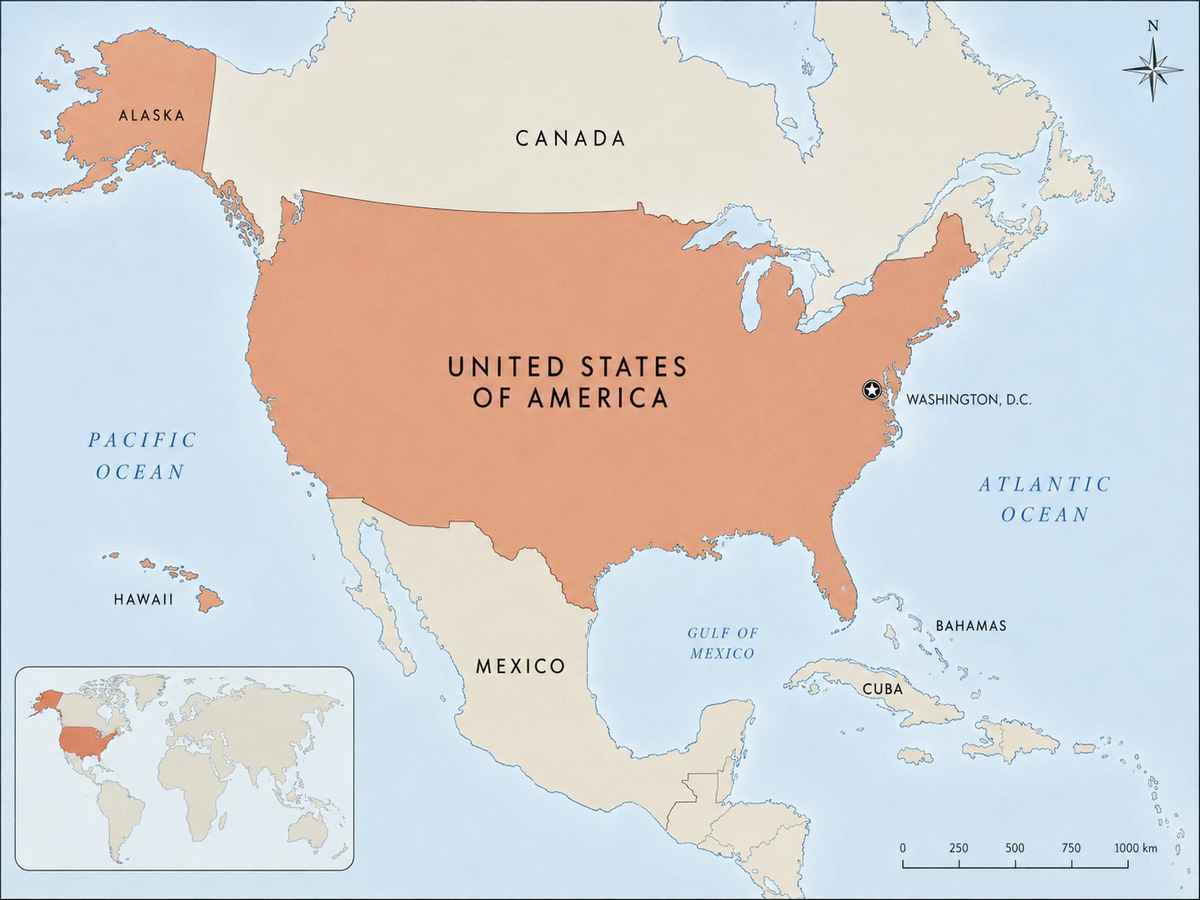
Religiously, the country is still majority Christian, but the church is broad and varied: evangelical, Catholic, mainline Protestant, Orthodox, historically Black churches, immigrant congregations, campus ministries, rural churches, urban networks, and many smaller fellowships. This variety is a mercy and a challenge. The United States has exceptional access to Scripture, Christian publishing, theological education, discipleship resources, and global mission networks. Yet the church also lives with fragmentation, politicization, uneven spiritual health, and cultural pressures around public trust, political identity, sexuality, family life, and conscience.
Restrictions and Opposition Facing Christians
Specific restrictions, opposition, hostility, or vulnerabilities that materially affect Christians in the United States.
Secularization
For most Christians in the United States, the hardest tests are not imprisonment or formal bans on worship. They are quieter, but still serious. One test is secularization. Many believers are trying to remain faithful in a society where Christian conviction is often treated as outdated, narrow, politically suspect, or merely private.
Confusion about truth and conscience
A second pressure is confusion about truth, morality, authority, sexuality, family life, and conscience. These questions are not distant cultural debates. They reach into schools, workplaces, churches, homes, and friendships. Parents are trying to raise children with biblical conviction. Pastors are trying to disciple congregations across political and cultural divides. Students and workers often face pressure to stay silent about beliefs others may ridicule or misunderstand.
Politicization
A third pressure is politicization. Christians are tempted to tie the name of Christ too closely to national identity, party loyalty, grievance, or ideological struggle. That temptation distorts public witness and weakens the church from within. The issue is not whether Christians should care about public life. The danger is that public life can train believers to speak with anger, fear, slogans, and suspicion rather than with truth, courage, repentance, and love of neighbor.
Uneven vulnerability
A fourth pressure is uneven vulnerability. Some churches, especially immigrant congregations, face fears that many other congregations do not. In February 2025, more than two dozen Christian and Jewish groups sued over a Trump administration policy giving immigration agents greater leeway to make arrests at houses of worship; the plaintiffs argued that the policy spread fear and disrupted worship and ministry. Later that month, a federal judge blocked enforcement for certain religious plaintiffs, while a separate April 2025 ruling in Washington, D.C., allowed enforcement to continue for the time being in another case. These mixed legal outcomes show why the issue remains pastorally serious and legally unsettled.
Christian Life and Witness in the United States
How churches and believers in the United States worship, serve, endure, and bear witness in the country’s actual setting.
For many believers in the United States, daily Christian life still includes remarkable freedom. Churches can gather openly. Pastors can preach without state censorship. Bibles and Christian books are widely available. Ministries can be built, Christian schools can be founded, and missionaries can be sent. These are real mercies, and they should not be treated lightly.
Yet ordinary faithfulness can feel harder than the country’s legal freedoms might suggest. A Christian may worship freely on Sunday and still feel pressure on Monday to keep faith private. A pastor may preach openly and still shepherd people whose political loyalties run deeper than shared discipleship. Parents may have many resources and still struggle to form children in a culture that often treats Christian moral conviction as strange or harmful.
For immigrant congregations, the strain can be more immediate. Associated Press reporting from October 2025 described a Catholic parish in Washington, D.C., where church leaders said more than 40 parishioners had been detained, deported, or both, and many worshippers became afraid to attend Mass, buy food, or seek medical care. That does not describe every church in the United States. But it shows how national policy can become a pastoral burden inside local congregations.
Even so, there are clear reasons for thanksgiving. Pew reports that 80% of Americans agree that churches and other religious organizations bring people together and strengthen community bonds, while 78% say they play an important role in helping the poor and needy. In a divided society, many churches are still quietly serving neighbors, teaching Scripture, caring for vulnerable people, discipling children, supporting families, and bearing faithful witness in ordinary places.
Recent Developments
Several recent developments shape how Christians should pray for the United States now.
-
June 2026
Fresh U.S.-Iran clashes deepened danger around the Strait of Hormuz
The most urgent recent development is the continuing U.S.-Iran crisis and the worsening danger around the Strait of Hormuz, the narrow waterway linking the Persian Gulf to the Gulf of Oman and carrying major energy shipments. Axios reported on June 3, 2026, that U.S. and Iranian forces exchanged strikes as peace talks stalled, with U.S. forces intercepting Iranian ballistic missiles and drones and carrying out strikes on Qeshm Island near the strait. Axios also reported that Iran’s Islamic Revolutionary Guard Corps claimed its actions were retaliation for earlier U.S. action involving a tanker.
Those claims should be read with care. Iran describes its actions as retaliation, while U.S. officials describe American actions as defensive responses. What is clear enough for prayer is that the ceasefire has not become settled peace, the military danger remains real, and the conflict continues to threaten life, shipping, and regional stability. Christians should therefore pray for truth, restraint, protection of life, and wisdom for leaders, without letting either side’s official language determine how they understand the crisis.
Prayer significance: Pray for truth, restraint, protection of life, and wise leadership as the conflict remains dangerous and contested.
-
June 2026
Regional spillover and economic pressure widened the human cost
The Guardian reported that Iranian strikes hit a terminal at Kuwait International Airport, killing at least one person and wounding 63, and that the U.S. and Iran exchanged further missile and drone strikes while talks remained uncertain. These events matter for Christians in the United States because they push prayer beyond national interest alone. Believers should pray for civilians, service members, mariners, regional communities, and all who may suffer from escalation.
The economic concern is also serious. Associated Press reported on June 3 that the Organization for Economic Cooperation and Development warned a prolonged disruption of Middle East energy supplies from the Iran war and Strait of Hormuz closure could damage the global economy, raise inflation and unemployment, and hit Asian economies and poorer fuel-importing countries especially hard. That means the prayer concern is not only about diplomacy or military restraint. It also includes ordinary households, poor nations, food and fuel costs, and governments that may struggle to protect vulnerable people.
Prayer significance: Pray for civilians, mariners, vulnerable economies, and ordinary households affected by conflict, energy disruption, and rising costs.
-
February-April 2025
Immigration enforcement disputes affected some houses of worship
Another important development is the legal and pastoral fallout from immigration enforcement around places of worship. The February 2025 lawsuit by Christian and Jewish groups, the Maryland injunction for certain plaintiffs, and the separate Washington, D.C., ruling allowing enforcement to continue in another case together show a legally mixed and pastorally unsettled situation. This matters because some congregations now carry fear into worship, ministry, and ordinary church life.
Prayer significance: Pray for immigrant congregations, vulnerable families, pastors, and churches caring for people who carry fear into worship and ordinary life.
-
June 2025
Mahmoud v. Taylor highlighted conflicts over conscience and education
A further development came in Mahmoud v. Taylor, decided by the Supreme Court of the United States on June 27, 2025. The case arose after the Montgomery County Board of Education in Maryland introduced “LGBTQ+-inclusive” storybooks into the curriculum and later withdrew notice and opt-outs for parents. The Court held that the parents had shown they were entitled to a preliminary injunction. The decision does not resolve every dispute about schools, parents, religion, and public education. But it does show how serious the country’s conflicts over conscience, religious exercise, and moral formation have become.
Prayer significance: Pray for parents, teachers, pastors, school leaders, and public officials as disputes over conscience, religious exercise, and moral formation continue.
How to Pray
Pray for faithful Christian witness, wise public leadership, protection of life, and spiritual renewal.
-
Pray for Christ-centered love and public speech. Pray that Christians in the United States would love Christ more than party, tribe, ideology, comfort, reputation, or national identity, and that their public speech would be marked by truth, humility, repentance, patience, and neighbor love.
-
Pray for leaders and public officials. Pray for the President, military commanders, diplomats, judges, lawmakers, and other public officials, that God would restrain evil, expose falsehood, humble the proud, and grant wisdom, justice, courage, and self-restraint in decisions that affect lives far beyond the country’s borders.
-
Pray for peace and restraint in the U.S.-Iran crisis. Pray for peace, restraint, and truthful judgment as the U.S.-Iran crisis remains dangerous, military exchanges continue near the Strait of Hormuz, the narrow waterway linking the Persian Gulf to the Gulf of Oman, and diplomacy remains uncertain.
-
Pray for those harmed by conflict and economic disruption. Pray for civilians, mariners, service members, chaplains, aid workers, poorer nations, fuel-importing countries, and vulnerable households affected by the wider conflict, that God would protect life, comfort the fearful, limit further destruction, and provide for those facing rising costs or disrupted supplies.
-
Pray for immigrant congregations and vulnerable families. Pray for immigrant congregations and vulnerable families in the United States, that they would be able to worship without fear, receive wise pastoral care and practical help from the church, and remain faithful to Christ under legal, social, or family strain.
-
Pray for pastors, parents, teachers, and ministry leaders. Pray for pastors, elders, parents, teachers, and ministry leaders, that they would disciple believers with courage, holiness, patience, and clear biblical conviction as they face confusion about conscience, public witness, family life, education, and moral formation.
-
Pray for spiritual renewal. Pray for spiritual renewal across the country, not merely for stronger religious identity, but for repentance, deeper faith in Christ, faithful preaching of Scripture, renewed prayer, genuine conversion, and churches that bear credible witness in both public and private life.
Give Thanks
Give thanks for real mercies that continue even amid public strain and conflict.
-
Give thanks for religious freedom. Give thanks that the United States still has broad legal freedom for Christian worship, preaching, discipleship, publishing, education, mercy ministry, and gospel mission.
-
Give thanks for the Lord’s preservation of His church. Give thanks that the Lord continues to preserve His church across the country in many congregations, traditions, regions, and communities, even in a time of confusion, division, and public mistrust.
-
Give thanks for quiet, faithful witness. Give thanks for churches, ministries, families, and ordinary believers who continue to strengthen neighborhoods, care for the poor, support vulnerable people, teach Scripture, disciple children, and bear quiet, credible witness to Christ in daily life.
Last Verified / Update Note
This note helps readers understand when the guide was reviewed and which developments may affect future prayer use.
Review Status
Reviewed for current prayer use
Religious composition and public-life data, current national leadership and population, the U.S.-Iran conflict and Strait of Hormuz developments, immigration-enforcement litigation affecting houses of worship, and Mahmoud v. Taylor.
U.S.-Iran talks, further military action near the Strait of Hormuz, regional spillover affecting civilians or neighboring countries, energy disruption affecting vulnerable economies, immigration-enforcement cases involving houses of worship, and legal or policy developments affecting conscience, religious exercise, and public education.
Key Sources Consulted
Reader-facing source documentation for the main facts, claims, and current developments used in this guide.
Government, population, and public context
- The White House. “Donald J. Trump.” Official administration page.
- U.S. Census Bureau. “U.S. and World Population Clock.” Current population projection. Used for the population and global-rank reference.
Religious composition and public-life context
- Pew Research Center. “2023–24 Religious Landscape Study: Executive summary.” Published February 26, 2025. Used for U.S. Christian identification, Protestant / Catholic / other Christian composition, and religiously unaffiliated figures.
- Pew Research Center. “Views of separation of church & state, and religion’s role in public life.” Published February 26, 2025. Used for public attitudes toward religious organizations, politics, community bonds, and care for the poor.
Church-life, immigration-enforcement, and congregational pressure
- Associated Press. “Trump won’t block immigration arrests in houses of worship. Now these 27 religious groups are suing.” Published February 11, 2025. Used for the legal challenge brought by Christian and Jewish groups over immigration enforcement around houses of worship.
- Associated Press. “Judge blocks Trump immigration policy allowing arrests in churches for some religious groups.” Published February 24, 2025. Used for the Maryland injunction involving certain plaintiff groups.
- Associated Press. “Federal judge sides with Trump in allowing immigration enforcement in houses of worship.” Published April 11, 2025. Used to show the legally mixed status of the issue.
- Associated Press. “Immigration crackdown stokes fear and solidarity at a Catholic church in DC.” Published October 27, 2025. Used for congregation-level reporting on fear, attendance, detention, deportation, and pastoral disruption.
Conscience, education, and religious-exercise context
- Supreme Court of the United States. “Mahmoud et al. v. Taylor et al., No. 24-297.” Slip opinion and syllabus materials, decided June 27, 2025. Used for the Supreme Court’s ruling on notice, opt-outs, parental claims, and religious exercise in public education.
U.S.-Iran conflict and Strait of Hormuz developments
- Axios. Rebecca Falconer, “U.S. and Iran in fresh clashes as peace talks stall.” Published June 3, 2026. Used for the fresh U.S.-Iran clashes, reported U.S. interceptions and strikes, Iranian retaliation claims, and stalled talks.
- The Guardian. Lorenzo Tondo, Andrew Roth, and Graham Russell, “One killed and 63 hurt in Iran attack on Kuwait airport as Trump says ceasefire talks ongoing.” Published June 3, 2026. Used for additional reporting on regional spillover and continuing military exchanges.
- Associated Press. David McHugh, “Report: Disruption of Mideast energy supplies into next year would slam global economy.” Published June 3, 2026. Used for the global economic-risk framing tied to prolonged Middle East energy disruption and the Strait of Hormuz.
Source Context
Notes on how to read the sources behind this guide.
- U.S.-Iran conflict reporting: The U.S.-Iran material is highly time-sensitive. This guide uses current reporting from Axios, The Guardian, and Associated Press to identify the June 2026 prayer concern, but military and diplomatic claims may change quickly. Where sources report official claims from the United States or Iran, the article attributes those claims instead of treating either side’s interpretation as settled.
- Religious composition and public-life data: The religious-composition and public-life material relies primarily on Pew Research Center’s 2023–24 Religious Landscape Study.
- Legal and congregational context: The immigration-enforcement material is older than the current war reporting, but it remains relevant because the article still discusses the pastoral concern some congregations carry around worship, fear, and legal uncertainty. The Mahmoud v. Taylor material relies on the Supreme Court’s own opinion and syllabus materials.
A Closing Prayer for the United States
Gathering this prayer guide into one focused prayer before God.


