


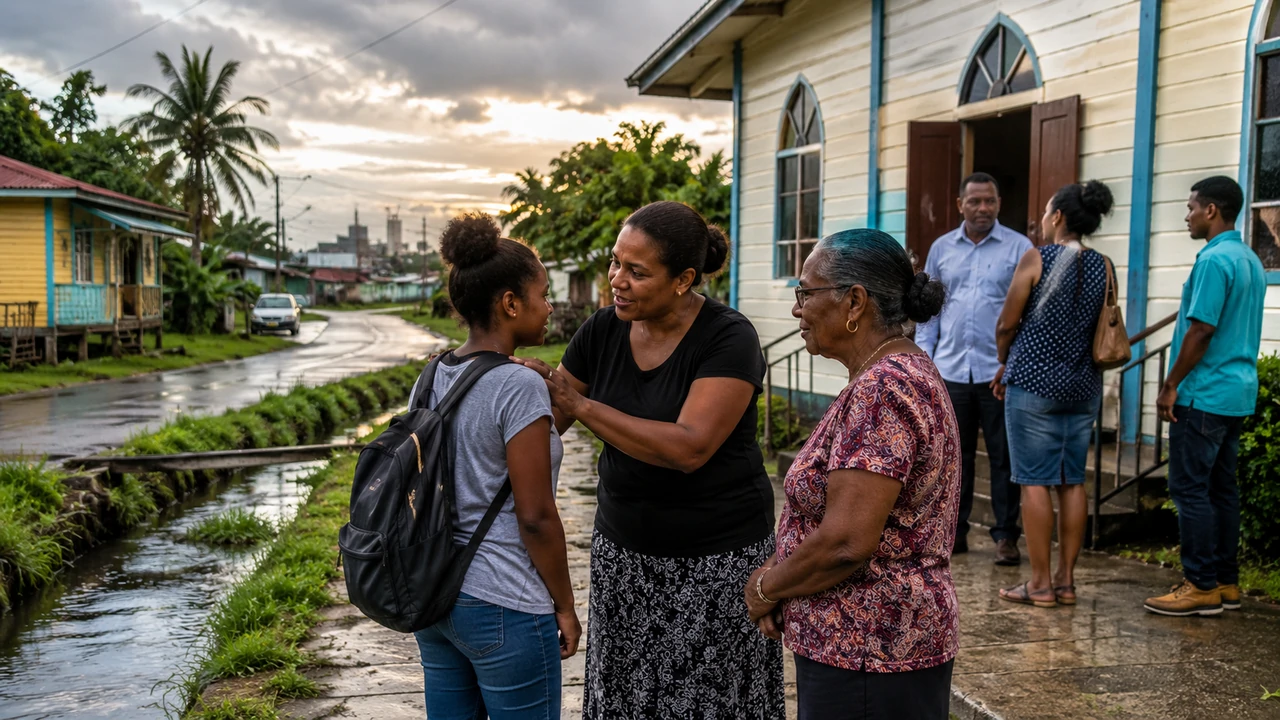
Guyana is changing quickly. Offshore oil has brought remarkable economic growth and the possibility of better health care, education, housing, transport, drainage, and other public services. Yet rapid growth also places great responsibility on the country’s leaders and institutions. Guyana needs honest government, transparent decisions, careful use of public money, and policies that serve the whole population rather than a small number of powerful people.
Yet wealth cannot resolve many of Guyana’s deepest needs. Families are grieving after the July 2026 sinking of the MV Barima. Suicide and mental distress remain serious concerns. Coastal and hinterland communities face flooding, transport difficulties, and unequal access to essential services. The territorial dispute with Venezuela remains before the International Court of Justice. Leaders on both sides need to act with restraint and pursue a peaceful, lawful resolution.
Guyana has broad freedom of worship and an active religious life. Many people identify as Christian, while substantial Hindu and Muslim communities also form part of the country. Yet Christian identity by family, culture, or denomination is not the same as repentance and saving faith in Jesus Christ. Guyana needs churches that preach the gospel clearly, teach Scripture carefully, disciple believers, care for suffering neighbours, and show through their conduct that the gospel changes every part of life.
Prayer Burden at a Glance
Pray that Guyana’s growing national wealth will be managed honestly and used for the lasting good of ordinary people, including families in remote and underserved communities. Pray for comfort, a thorough and impartial investigation, and just accountability after the MV Barima tragedy, peace in the territorial dispute with Venezuela, compassionate care for people facing mental distress, and protection from flooding and severe weather. Pray especially for churches to proclaim salvation through Christ alone, resist materialism and political control, form mature disciples, speak clearly about Christ, and live with integrity among people from different ethnic, social, and religious backgrounds.
Last verified: August 2026
Why Guyana Needs Prayer Now
Rapid oil wealth, national grief, unequal access to essential services, territorial tension, and the need for clear gospel preaching are among the main reasons Guyana needs prayer now.
Rapid oil wealth and public responsibility
Guyana’s expanding oil industry has transformed the national economy. Revenue from this growth could strengthen schools, hospitals, housing, roads, drainage, electricity, communications, and other services. It could also help the country prepare responsibly for future generations and reduce long-standing inequalities.
Sudden wealth can also increase corruption, political patronage, greed, waste, and rivalry. Public officials may face pressure from powerful political or commercial interests. National economic figures may rise while many households still struggle to obtain dependable services.
Guyana therefore needs prayer not only for economic growth but for honest and wise government. National resources should be managed transparently, shared fairly, and invested for the long-term good of the whole population.
Unequal access for hinterland and Indigenous communities
The benefits of national development are not experienced equally. Coastal communities contain most of the population and economic activity. People in the hinterland often face longer journeys, weaker infrastructure, and more limited access to health care, education, transport, employment, and communications.
Indigenous communities should not be treated merely as symbols of national culture or as people who must accept decisions made elsewhere. Their dignity, community leadership, local knowledge, livelihoods, land concerns, and practical needs should be taken seriously.
Pray that public investment will reach communities that have often remained far from the country’s main centres of wealth and political power.
Grief and unanswered questions after the MV Barima tragedy
The sinking of the MV Barima in July 2026 brought grief to many families and raised serious questions about maritime safety, oversight, emergency response, and accountability. A Commission of Inquiry was appointed, but the final cause and responsibility had not been established as of August 2026.
Bereaved families need sustained practical support, truthful answers, and a fair investigation. Survivors may carry lasting physical and emotional wounds. Communities that depend on river and coastal transport need authorities to identify failures and improve safety.
Christians should pray for comfort without claiming to know what the inquiry will find. Ask God to bring the truth to light, guide the investigators, strengthen affected families, and protect others from similar loss.
The territorial dispute with Venezuela
Guyana administers the territory west of the Essequibo River, while Venezuela continues to claim it. Guyana maintains that the 1899 Arbitral Award established the international boundary and has asked the International Court of Justice to confirm the award’s validity. Venezuela disputes that position and argues that the 1966 Geneva Agreement provides the proper basis for resolving the controversy.
The case remained before the Court in August 2026, and its final outcome should not be predicted.
The dispute can stir fear, anger, national pride, and hostility toward ordinary Venezuelans. Christians should pray for their country without treating Venezuelan people as enemies. Pray for truthful diplomacy, lawful resolution, restraint among political and military leaders, and protection for people living in the affected territory.
Religious freedom and the need for clear gospel preaching
Guyana’s broad freedom of worship is a mercy. Churches can gather openly, teach Scripture, conduct evangelism, publish Christian material, serve communities, and take part in public life.
Yet freedom and religious visibility do not necessarily mean that churches are spiritually healthy or that everyone who identifies as Christian understands the gospel. People may carry a Christian identity through family background, baptism, denomination, or social custom without personally trusting in Christ.
Guyana’s deepest need is not simply for stronger religious institutions. It is for sinners to hear the gospel clearly, repent, believe in Jesus Christ, and become part of churches that submit their teaching and life to the Word of God.
Country Snapshot
A brief orientation to Guyana’s location, people, government, religious setting, and national geography.
Most Guyanese live in the low-lying coastal regions. A smaller but significant part of the population lives in the vast and sparsely populated hinterland, where distance and limited infrastructure can make health care, education, transport, and other services harder to reach.
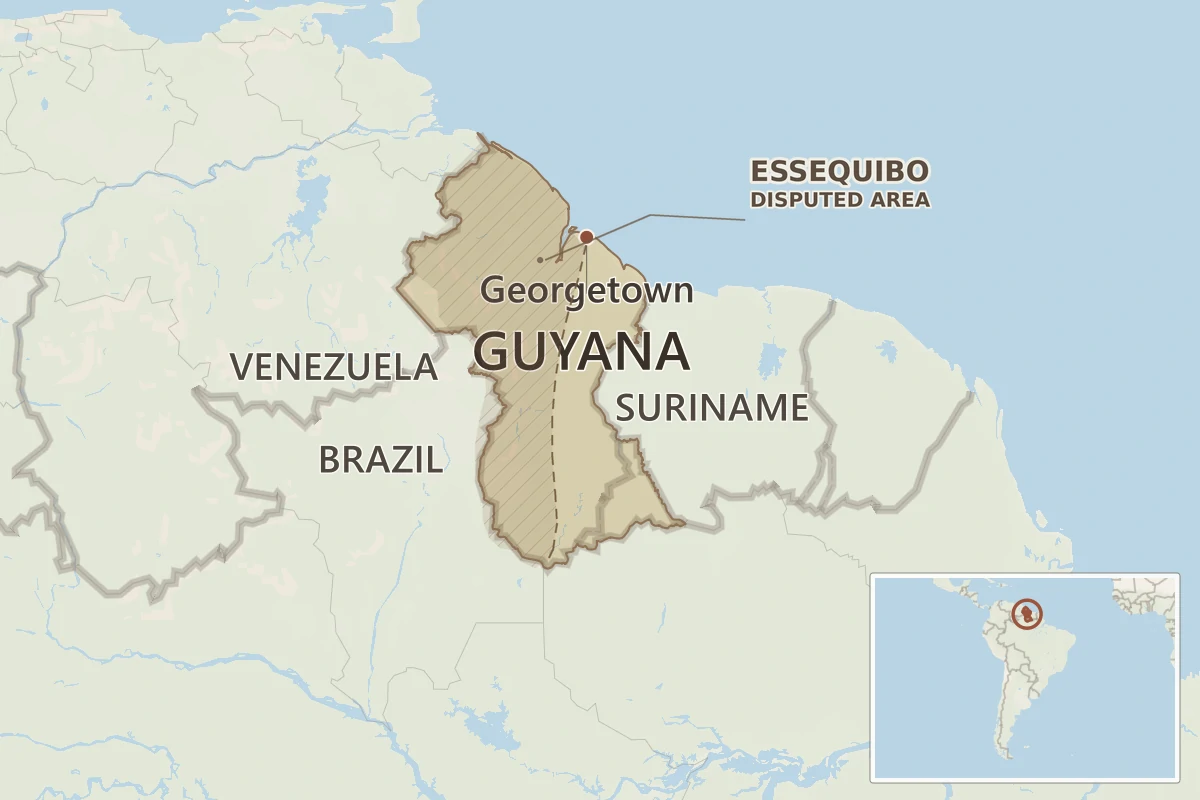
Guyana is the only English-speaking country on the South American mainland. Its national life reflects Indigenous, African, Indian, European, Chinese, Portuguese, and mixed cultural influences. This diversity can be seen in its communities, politics, food, festivals, languages, and religious life.
The country has extensive forests, rivers, mineral resources, agricultural land, wildlife, and offshore oil reserves. These resources can support national development, but they also raise serious questions about environmental care, the rights and livelihoods of Indigenous communities, public accountability, and the needs of future generations.
Article 145 of Guyana’s Constitution protects freedom of thought and religion, including the freedom to change one’s religion or belief and to manifest and propagate it through public or private worship, teaching, practice, and observance. This legal protection does not establish the spiritual health of churches or mean that every local religious concern is absent.
Spiritual and Practical Challenges Affecting Christians and Churches
Guyana’s churches minister during rapid economic change while the country faces risks of corruption, mental distress, flooding, political and ethnic mistrust, and tension over the territorial dispute.
Prosperity, materialism, and the church’s witness
Economic growth can bring real relief and useful opportunities. It can also encourage materialism, envy, pride, consumerism, and the belief that wealth is the measure of a successful life. Churches must not allow national prosperity to turn the gospel into a promise of financial advancement. They should teach believers to receive material blessings with gratitude while remembering that wealth cannot forgive sin, reconcile people to God, or provide lasting hope.
Integrity in public and economic life
Oil revenues, public contracts, and large infrastructure projects make transparent government, competent administration, independent oversight, and honest business practices especially important. Christians serving in government, law, business, engineering, media, education, public administration, and the energy sector may face pressure to remain silent, show favouritism, misuse influence, or accept dishonest practices.
Mental distress, suicide, and family strain
Suicide and mental distress remain serious public-health concerns in Guyana. National health authorities and international partners have expanded surveillance, health-worker training, adolescent services, and community-based care. Many people, however, still struggle with grief, trauma, depression, addiction, loneliness, family conflict, or hopelessness. Churches should respond with compassion and should not shame people for seeking competent medical or psychological help.
Flooding and vulnerable livelihoods
Guyana’s low-lying coast and extensive river systems make many communities vulnerable to heavy rainfall, flooding, drainage failures, and severe weather. These events can damage homes, roads, farms, small businesses, and public infrastructure, placing particular strain on families whose livelihoods depend on agriculture, fishing, transport, or small-scale trade.
Political and ethnic mistrust
Guyana’s cultural and ethnic diversity is a national strength, but political loyalties have sometimes deepened suspicion and division between communities. Churches should not become religious branches of political parties or ethnic groups. Believers should speak honestly about injustice without excusing wrongdoing by the leaders they support or treating political opponents as enemies.
Territorial tension and the treatment of Venezuelans
The dispute over the Essequibo territory affects national security, diplomacy, and public attitudes. It also unfolds alongside the presence of Venezuelan migrants and families whose lives cross national borders. Political disagreement must not become contempt for an entire people. Churches should reject reckless language, false information, and hostility toward vulnerable migrants.
Christian Life and Witness in Guyana
Religious freedom gives churches wide opportunities, but faithful witness still requires clear gospel preaching, mature discipleship, public integrity, neighbour-love, and hope centred on Christ.
Using religious freedom well
Guyana’s freedom of worship gives churches wide opportunities to preach, teach, evangelise, disciple believers, serve communities, and speak about public concerns. This freedom should not be taken for granted or used carelessly. A church can remain legally free while becoming doctrinally weak, spiritually complacent, divided, worldly, or too dependent on political influence.
Proclaiming the gospel beyond inherited identity
Many people identify as Christian because of family history, community background, baptism, or denominational affiliation. These things may describe a person’s religious setting, but they do not prove regeneration or saving faith.
People are not reconciled to God through church membership, religious ceremonies, moral respectability, or cultural identity. Sinners are saved by God’s grace through faith in the finished work of Jesus Christ.
Discipling believers in a changing society
Rapid economic and social change brings new opportunities, pressures, ambitions, and temptations. Believers need more than occasional religious events. They need careful teaching in Scripture, Christian doctrine, prayer, holiness, work, marriage, family life, generosity, forgiveness, suffering, and perseverance.
Young Christians especially need help responding to materialism, sexual temptation, online deception, political manipulation, addiction, and the promise that financial advancement will solve life’s deepest problems.
Caring for suffering neighbours
The MV Barima tragedy, flooding, mental distress, family strain, and unequal access to services all give churches opportunities to show the mercy of Christ. Christian service should not be used to gain political favour, improve a church’s reputation, or pressure vulnerable people. Churches should serve because every person bears God’s image and because Christ commands His people to love their neighbours.
Witnessing in a religiously diverse society
Christians live alongside Hindu, Muslim, Rastafarian, secular, and other neighbours, including people from Indigenous communities. Faithful witness requires both clear conviction and genuine love. Christians should not suggest that every religion teaches the same truth or provides the same way to God. They must also reject contempt, coercion, dishonesty, and needless offence.
Serving with integrity in daily work
Christians contribute to Guyana’s national life as public servants, teachers, health workers, business owners, farmers, journalists, lawyers, engineers, transport workers, parents, and community leaders. Their conduct should show that Christian faith shapes ordinary work and public responsibility. Churches weaken their witness when corruption, dishonesty, exploitation, or political favouritism is excused among their own members.
Hope that does not depend on national wealth
Guyana’s new wealth may encourage hope for a better future. Christians can welcome better services and living conditions and thank God when economic growth benefits ordinary people. Yet economic growth cannot redeem a nation.
Oil wealth cannot forgive sin, conquer death, heal every family, or establish lasting righteousness. Guyana’s ultimate need is the saving mercy of God in Jesus Christ.
Pray that believers will serve their country faithfully without making prosperity, political power, or national achievement their highest hope. Ask God to make His churches holy, steadfast in faith and obedience, and ready for Christ’s appearing.
Recent Developments
These dated developments help Christians understand what has changed and pray more specifically for Guyana now.
-
July 2026
The sinking of the MV Barima
The sinking caused a heavy loss of life and widespread grief. It also raised serious questions about maritime safety, oversight, emergency response, and responsibility. A Commission of Inquiry was appointed, and the investigation remained active in August 2026.
Prayer significance: Pray for bereaved families, survivors, investigators, maritime workers, and communities that depend on river and coastal transport. Ask God to bring the truth to light and to improve safety without allowing unproven accusations to take the place of evidence.
-
May 2026
International Court of Justice hearings
The International Court of Justice held public hearings on the territorial case between Guyana and Venezuela. Guyana asked the Court to uphold the validity of the 1899 Arbitral Award. Venezuela continued to dispute the award and argued for resolution according to its understanding of the 1966 Geneva Agreement. The Court’s judgment remained pending.
Prayer significance: Pray that evidence and law will be presented honestly and carefully, for peaceful relations, restraint among leaders, protection of communities in the affected territory, and acceptance of a lawful resolution without violence.
-
March-May 2026
Flooding and heavy rainfall
Sustained rainfall caused flooding in several coastal and hinterland communities. Homes, roads, drainage systems, agricultural land, and access routes were affected. Emergency agencies and regional authorities responded.
Prayer significance: Pray for affected families, farmers, small businesses, emergency workers, and those responsible for drainage, infrastructure, and long-term flood protection.
-
2025-2026
Mental-health reforms
Guyana expanded suicide surveillance, health-worker training, adolescent services, and efforts to include mental-health support in community and primary health care.
Prayer significance: Pray that competent care will reach people before despair becomes fatal, including those living in remote communities. Pray for reduced stigma, patient support from families, and wise cooperation between churches and health professionals.
-
September 2025
General and regional elections
The Guyana Elections Commission declared the governing PPP/C the winner and Mohamed Irfaan Ali elected president for a second term. Independent observers described the peaceful voting process as evidence of democratic resilience while recommending reforms to strengthen transparency, public trust, campaign finance, constitutional accountability, and civil-society participation.
Prayer significance: Pray for just government, responsible opposition, fair institutions, truthful public information, peace between ethnic communities, and leaders who recognise authority as a responsibility entrusted to them by God.
How to Pray
Pray for clear preaching of salvation through Christ, faithful churches, honest public life, peace, mercy, and hope centred on Christ.
Pray for the clear preaching of the gospel. Ask God to raise up churches that proclaim salvation by grace alone, through faith alone, in Christ alone. Pray that inherited religious identity will not replace repentance and personal trust in Christ.
Pray for faithful pastors and church leaders. Ask God to protect them from pride, greed, sexual sin, doctrinal compromise, political manipulation, and misuse of spiritual authority. Pray for humility, biblical wisdom, courage, and accountability.
Pray for wise use of oil wealth. Pray that Guyana’s resources will be managed transparently and invested for the lasting good of the whole country, including future generations and communities that have long lacked dependable services.
Pray against corruption and favouritism. Ask God to strengthen public servants, business leaders, lawyers, journalists, engineers, and citizens who refuse bribery, exploitation, deceptive accounting, political favouritism, and misuse of public money.
Pray for families affected by the MV Barima tragedy. Ask God to comfort those who lost loved ones, sustain survivors, guide investigators, establish the truth, and bring just accountability without false accusation.
Pray for peace with Venezuela. Ask God to prevent military escalation, protect communities in the affected territory, guide legal and diplomatic leaders, and keep national concern from becoming hatred toward Venezuelan people.
Pray for people experiencing mental distress. Ask God to preserve life, strengthen families, equip health workers and pastors, reduce stigma, and help churches respond with compassion, prayer, practical support, and connect people with qualified medical or psychological care when needed.
Pray for hinterland and Indigenous communities. Pray for reliable transport, improved health and education services, responsible development, competent local leadership, and respect for their dignity, livelihoods, land concerns, and voices in decisions that affect them.
Pray for protection from flooding and severe weather. Ask God to protect vulnerable households, farmers, and small businesses. Pray for effective drainage, sound infrastructure, wise environmental care, and compassionate emergency response.
Pray for peace between political and ethnic communities. Ask God to weaken racial suspicion, political idolatry, revenge, dishonest rumours, and the manipulation of community loyalties. Pray for leaders who seek justice for the whole population.
Pray for Christian witness in a diverse society. Ask God to help believers speak truthfully about Christ, love their neighbours, defend freedom of conscience, reject coercion, and serve people from every religious and cultural background with dignity.
Pray for children and young people. Pray for protection from violence, addiction, exploitation, despair, materialism, and false teaching. Ask God to bring many to repentance and faith and to teach them to know, believe, and obey Scripture.
Pray for churches that care for suffering people. Ask God to strengthen congregations serving bereaved families, flood-affected communities, people facing mental distress, migrants, children, and households struggling to obtain essential services.
Pray for hope centred on Christ. Ask that Guyanese Christians will not place their final confidence in oil, wealth, political power, or national achievement. Pray that the gospel will bear fruit, believers will endure faithfully, and churches will continue to pray, “Your kingdom come.”
Give Thanks
Guyana’s needs are serious, but there are also real mercies for which Christians can thank God.
Give thanks for the broad freedom to worship, preach, gather, evangelise, publish, and serve.
Give thanks for every congregation where Christ is faithfully proclaimed, Scripture is taught, believers are discipled, and people in need are cared for.
Give thanks for the peaceful conduct of the September 2025 elections and the continued work of constitutional institutions.
Give thanks for the possibility of using national wealth to improve health care, education, housing, transport, drainage, and other public services.
Give thanks for health workers, counsellors, teachers, pastors, and community leaders working to prevent suicide and support people facing mental distress.
Give thanks for emergency workers, neighbours, churches, and community organisations that assist families affected by disaster, flooding, grief, and hardship.
Give thanks for Christians seeking to act honestly in government, business, education, health care, law, media, engineering, transport, and community service.
Give thanks for Guyana’s forests, rivers, agricultural land, wildlife, and other natural resources, and for those working to care for them responsibly.
Give thanks for opportunities to share the gospel openly among Guyana’s diverse peoples.
Give thanks for every sign of repentance, faith, Christian courage, mercy, faithful teaching, and love for neighbour.
Give thanks for the promise that Christ is gathering His people from every tribe, language, people, and nation.
Last Verified / Update Note
This note explains when the guide was reviewed and which developments may affect how readers pray for Guyana.
Review Status
Reviewed for current prayer use
National leadership following the September 2025 elections; oil-driven economic change; population and religious context; religious freedom; mental-health and suicide-prevention work; flooding and climate vulnerability; the territorial case between Guyana and Venezuela; and the July 2026 MV Barima disaster.
Clear gospel preaching; wise and just use of national wealth; comfort and accountability after the MV Barima sinking; peace in the territorial dispute; mental-health care; protection from flooding; support for hinterland communities; public integrity; and peace between ethnic and political communities.
The findings of the MV Barima Commission of Inquiry; any confirmed changes to casualty figures or the investigation; the International Court of Justice’s eventual judgment; flood recovery and long-term protection work; the distribution and management of oil revenues; and the publication of fuller, more recent religious-composition data.
Detailed religious percentages still rely mainly on the 2012 census and should be understood as historical figures rather than a current measurement. Recent poverty information remains limited. The MV Barima investigation and the Guyana-Venezuela case remain active, and this guide does not predict their outcomes.
Help keep this guide accurate and current
If you noticed a possible correction, broken link, or significant country update, please contact the Nations Prayer Directory so we can review it carefully.
Key Sources Consulted
The main sources used to prepare this Guyana prayer guide include official records, independent observation, regional statements, international institutions, and local reporting.
Population, government, elections, and religious freedom
- Guyana Bureau of Statistics. “2022 Census Preliminary Findings.” Provides Guyana’s official 2022 population count, a later official population estimate, and information about the distribution of the population between coastal and hinterland regions.
- Guyana Bureau of Statistics. “Census and Statistical Publications.” Identifies the official 2012 Census Population Composition report, which remains the principal detailed public source for Guyana’s religious composition.
- Parliament of Guyana. “Constitution of the Co-operative Republic of Guyana.” Sets out Guyana’s constitutional structure and its legal protections for freedom of conscience, religion, worship, teaching, practice, and observance.
- Constitute Project. “Guyana’s Constitution of 1980 with Amendments through 2016.” Provides an accessible text of Article 145 concerning freedom of thought and religion.
- Guyana Elections Commission. “Declaration of the 2025 General and Regional Elections.” Records the official election result and the declaration of Mohamed Irfaan Ali as president.
- The Carter Center. “Final Report on Guyana’s 2025 General and Regional Elections.” Provides independent observation of the election and recommendations concerning electoral trust, transparency, campaign finance, constitutional accountability, and civil-society participation.
Economy, inequality, health, and environmental pressures
- International Monetary Fund. “2025 Article IV Consultation with Guyana.” Describes Guyana’s oil-driven economic growth, the expansion of the non-oil economy, the favourable economic outlook, and the need to manage national wealth carefully so that growth benefits the wider population and can be sustained.
- World Bank. “Guyana Country Overview.” Provides context on limited poverty data, unequal access to services, social exclusion in hinterland regions, environmental pressures, and risks connected with rapid oil-led growth.
- Pan American Health Organization. “Guyana Country Annual Report 2025.” Reports on suicide-prevention work, the national surveillance system for suicide and attempted suicide, mental-health training, adolescent services, and the expansion of community and primary-care support.
- Guyana Department of Public Information. “Flood Update and Continuing Response Measures.” Reports on the March 2026 flooding, its effects on coastal communities and agricultural land, and the response by the Civil Defence Commission and other public agencies.
The Guyana-Venezuela territorial controversy
- International Court of Justice. “Arbitral Award of 3 October 1899, Guyana v. Venezuela.” Provides the judicial record of the case, including the Court’s jurisdiction, provisional measures, and continuing legal proceedings.
- Guyana Ministry of Foreign Affairs. “May 2026 Oral Hearings on the Merits.” Sets out Guyana’s official account of the May 2026 hearings and its position that the 1899 Arbitral Award legally settled the land boundary.
- Venezuela Ministry of Foreign Affairs. “Official Statement on the 1966 Geneva Agreement.” Sets out Venezuela’s official position that the Geneva Agreement provides the binding framework for a negotiated settlement and that the 1899 Award is invalid.
- Caribbean Community. “Statement of 28 April 2026.” Sets out CARICOM’s regional position supporting peaceful resolution through the International Court of Justice, international law, good neighbourly relations, and Guyana’s territorial integrity.
The MV Barima tragedy
- Office of the President of Guyana. “July 2026 Statements and Commission of Inquiry Announcement.” Records the appointment of the five-member Commission of Inquiry, its broad purpose, and government measures to support survivors and bereaved families.
- News Room Guyana. “Commissioners Appointed to Investigate the MV Barima Tragedy.” Reports the membership and stated terms of reference of the Commission of Inquiry.
- News Room Guyana. “Joint Opposition Statement on the Commission of Inquiry.” Sets out the joint opposition’s concerns about transparency, consultation, technical investigation, institutional responsibility, and confidence in the inquiry.
Source Context
How to read the sources behind this guide while the territorial case and maritime inquiry remain active, the economy changes rapidly, and the most detailed religious-composition data still come from 2012.
Source Context
- Review date. This guide was reviewed in August 2026. The territorial case and the MV Barima investigation were still active, so later judgments, inquiry findings, court proceedings, or confirmed casualty information may change how these matters should be understood.
- Source mix. The guide uses Guyanese government records, Venezuela’s direct official statement, the International Court of Justice, CARICOM, local Guyanese reporting, independent election observation, and international economic and health institutions. Official statements establish what a government or institution says; they do not by themselves prove every disputed claim.
- Territorial controversy. Guyana and Venezuela hold opposing legal and historical positions concerning the territory west of the Essequibo River. This guide does not present either government’s claim as though it were the Court’s final judgment. It distinguishes Guyana’s administration of the territory, the positions advanced by both countries, and the still-pending judicial process.
- Regional perspective. CARICOM supports Guyana’s territorial integrity and the peaceful resolution of the controversy through the International Court of Justice. Its statements provide an important Caribbean regional perspective, but they should not be mistaken for a neutral judicial ruling.
- MV Barima investigation. The sinking, the loss of life, the appointment of a Commission of Inquiry, and related legal action are established public facts. Exact passenger, death, survivor, and missing-person totals changed during the response. The cause of the sinking and the full responsibility of individuals or institutions had not been finally determined as of August 2026. The guide therefore avoids an exact casualty figure and does not state an unproven cause.
- Population information. The 2022 census population count is preliminary but official. The larger end-of-2024 figure is an official estimate that accounts for natural growth and migration; it is not a second census count.
- Religious composition. The most detailed official religious percentages still come from the 2012 census. They are useful for understanding Guyana’s broad religious landscape but should not be read as a precise measurement of religious affiliation in 2026.
- Christian identity. Census categories describe how people identify themselves. They do not establish personal repentance, regeneration, doctrinal faithfulness, or saving faith in Jesus Christ. The guide’s prayers for gospel clarity and faithful discipleship are theological and pastoral judgments rather than conclusions drawn from census labels.
- Church-life reporting. Reliable nationwide public information about the present spiritual health, doctrine, leadership, discipleship, and ministry of Guyana’s churches is limited. The guide therefore avoids claiming that all churches share the same strengths or weaknesses. It instead identifies temptations and responsibilities connected to Guyana’s economic, political, and religious circumstances and to biblical teaching.
- Religious freedom. Guyana’s Constitution gives broad legal protection to freedom of conscience and religion, including public and private worship, teaching, practice, and observance. Constitutional protection should not be taken to mean that every local difficulty, disagreement, or administrative concern is absent.
- Economic figures. Guyana’s economy is changing unusually quickly. Growth rates, production forecasts, public spending, and oil projections may be revised. The guide uses them to explain the scale of national change, not to predict assured prosperity.
- Poverty and inequality. Recent national poverty data remain limited. The guide therefore does not present older poverty percentages as a current measurement. It focuses instead on documented differences in access to services, particularly in hinterland communities.
- Prayer and interpretation. Sources establish public facts, institutional findings, and stated positions. The guide’s prayer requests are based on those facts and on biblical teaching about justice, mercy, truth, peace, stewardship, repentance, and faithful Christian witness.
A Closing Prayer for Guyana
A concise prayer bringing Guyana’s present needs before the Lord.


