


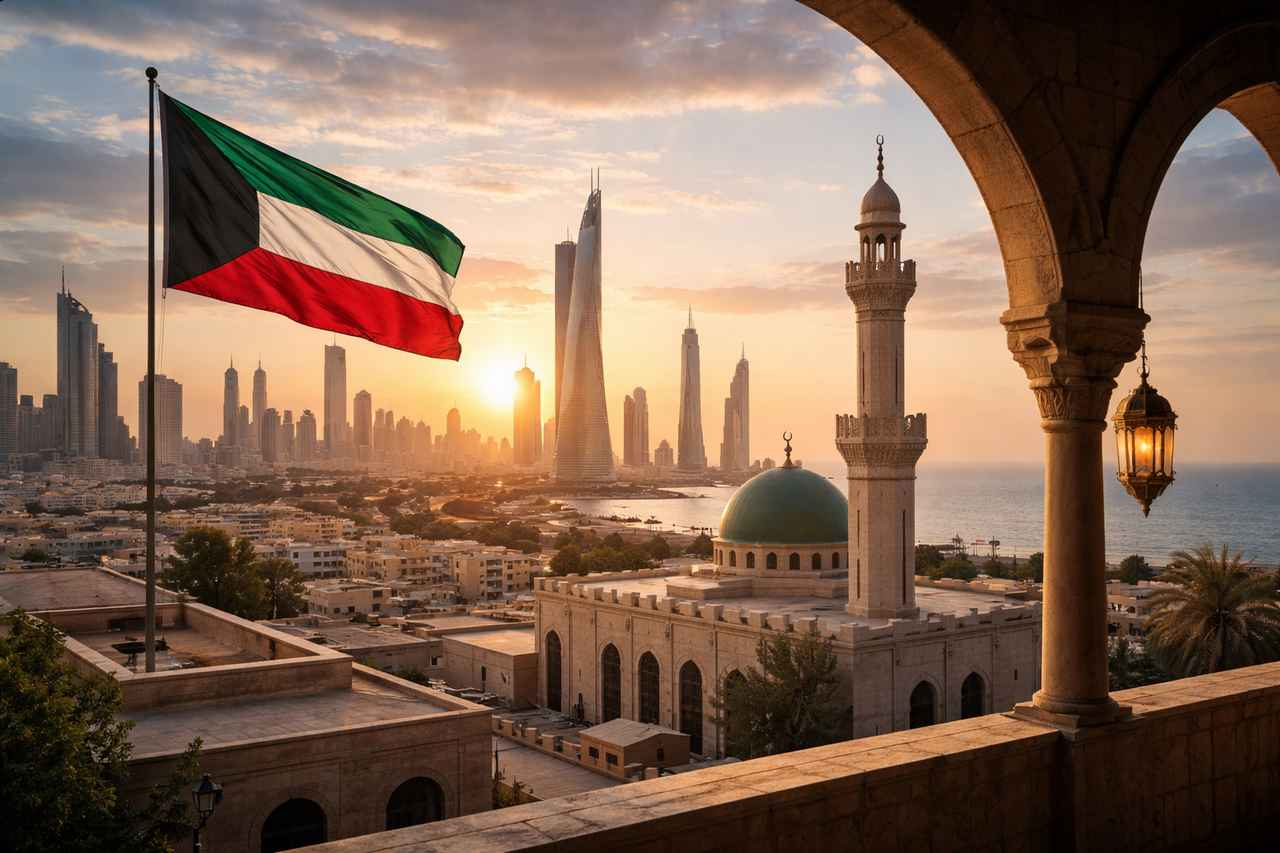
Kuwait calls for informed Christian prayer not because it is marked by dramatic, headline-grabbing church violence, but because many believers live within a narrow and carefully bounded religious space. The country still allows recognized church life in limited ways. Yet converts from Islam, poorer expatriate workers, and Christians who speak too openly about their faith can face real pressure.
At the same time, Kuwait is passing through a broader season of constitutional and legal tightening. That wider national setting should not be ignored. It shapes the atmosphere in which believers worship, work, witness, and endure. So prayer for Kuwait should rise not only for the church’s perseverance, but also for wisdom, justice, mercy, and truth in public life.
Why This Country Needs Prayer Now
Kuwait’s present burden is shaped by two realities at once.
First, Christians already live with meaningful constraints. Minority communities continue to report too little worship space, difficulty obtaining permission for new facilities, and problems securing enough visas for clergy and visiting Christian workers. Converts from Islam often bear the heaviest cost. Their danger usually does not come through public mob violence, but through family rejection, loss of status, job insecurity, and complications tied to marriage, children, or personal standing.
Second, the wider political setting has become more restrictive. In May 2024, the emir dissolved the National Assembly, Kuwait’s elected parliament, and suspended key constitutional provisions for up to four years. That move concentrated legislative authority more heavily in the ruler. The same season has continued with major citizenship-law revisions published in April 2026. Those changes should not be presented carelessly as direct anti-Christian policy. Still, they do point to a national atmosphere in which law, identity, and public authority are being tightened from above.
That matters for prayer. Believers in Kuwait do not live in isolation from the country around them. They live, worship, and bear witness within this broader civic climate. So Christians should pray not only for private endurance, but also for rulers, conscience, fairness, and the quiet faithfulness needed when public life grows tighter.
Country Snapshot
Kuwait is a small Gulf state on the Arabian Peninsula with a population of about 4.97 million in 2024. A large share of that population consists of expatriates.
According to U.S. State Department material citing official population data, about 16.6 percent of citizens and noncitizens are Christian. Even so, the overwhelming majority of citizens are Muslim, and only a very small number of citizens are Christian. Kuwait is a hereditary emirate, and since May 2024 it has been governed within a more centralized constitutional arrangement after the suspension of parliament and several constitutional provisions.
Main Pressures Facing Christians
The pressures Christians face in Kuwait are not the same for everyone.
Some Western expatriate Christians have more room to worship quietly, especially through recognized churches, so long as they stay within accepted limits and avoid public evangelism. But non-Western expatriates, especially poorer workers, often face sharper vulnerability. Open Doors notes that female domestic workers are particularly exposed to abuse, and many of them are Christian. For such believers, hardship may come not only from religious pressure, but also from economic dependence, weak protection, and social isolation.
For converts from Islam, the pressure is often more severe and more personal. Conversion away from Islam is not officially recognized, and converts may face interrogation, threats to employment and housing, family expulsion, custody problems, and deep social shame. Some expatriate Christians have also been warned not to share their faith, questioned by authorities, or expelled without due process in recent years.
Administrative pressure is another real burden. The most recent accessible U.S. religious-freedom reporting says minority communities continued to report shortages of worship facilities, difficulty obtaining permission for new sites, and insufficient visas for clergy and visiting religious workers. So even where Christian worship is not entirely hidden, it remains restricted, fragile, and heavily dependent on state discretion.
What Life Is Like for Christians in Kuwait
For many expatriate believers, daily Christian life in Kuwait is marked by caution, gratitude, and restraint. They may gather for worship, serve in their churches, and enjoy some recognized space for Christian practice. But they also learn quickly where the written and unwritten boundaries lie. The pressure is not always dramatic, but it is real.
For Kuwaiti converts from Islam, the burden is often even more intimate. Their hardest trials may come through family honor, tribal expectations, fear of exposure, and the possibility of losing home, work, or even access to their children. In such a setting, Christian faithfulness can look quiet and costly: meeting carefully, speaking wisely, enduring misunderstanding, and clinging to Christ without much visible support.
For poorer migrant believers, the burden can be doubled. Some already live in dependent labor arrangements that leave them vulnerable to humiliation, abuse, or deportation. Their Christian identity is not always the only cause of hardship, but it can deepen both their vulnerability and their loneliness. That is why prayer for Kuwait must include not only citizens and converts, but also the many ordinary workers who need protection, justice, fellowship, and faithful shepherding.
Recent Developments
A major turning point came on May 10, 2024, when Kuwait’s emir dissolved the National Assembly and suspended several provisions of the 1962 constitution for up to four years. The Library of Congress notes that this shifted legislative authority more heavily toward the ruler, and arrests followed in some cases after public criticism. AP likewise described the move as a response to political deadlock in a country long known for having one of the Gulf’s more assertive parliaments.
More recently, Kuwait’s Official Gazette published Decree-Law No. 52 of 2026 on April 13, 2026, amending the citizenship law. The government says the purpose is to revise the legislative framework in a way that protects the national fabric while setting clearer rules for how nationality may be granted, lost, withdrawn, or revoked. Because the long-term effects are still unfolding, it is wiser not to overstate what this means for Christians specifically. Even so, it fits a broader pattern of centralizing authority and tightening the legal environment.
According to the 2023 U.S. International Religious Freedom Report for Kuwait, the religious-freedom picture remained mixed at the time of that reporting. Public officials had spoken about tolerance and dignity for all residents and had discussed a dedicated administrative department for minority faith groups. Yet minority communities also continued to report shortages of worship space, problems securing visas for clergy, and other administrative barriers. That dated but still useful reporting should be read carefully, yet it continues to illuminate a central feature of Kuwait’s prayer burden: partial openness alongside continuing restraint.
How to Pray
- Pray that Kuwaiti men and women who have trusted in Christ from Muslim backgrounds would be kept steadfast in faith, guarded from fear, and strengthened to follow Him with wisdom, humility, and perseverance when family pressure or social shame grows heavy.
- Pray for expatriate churches in Kuwait to remain faithful under pressure: sound in doctrine, warm in love, and bold in witness, yet wise and peaceable in a setting where public evangelism and church life remain tightly bounded.
- Pray especially for vulnerable migrant believers, including domestic workers and other low-paid laborers, that the Lord would protect them from abuse, exploitation, loneliness, and despair, and provide them with Christian fellowship, practical help, and faithful pastoral care.
- Pray that congregations facing shortages of worship space, limits on church expansion, and difficulties related to visas for clergy and Christian workers would receive what is needed for orderly worship, discipleship, and shepherding.
- Pray that Kuwait’s rulers would exercise authority with justice, restraint, and honesty during this season of legal and constitutional tightening, and that decisions affecting public life would not deepen fear, arbitrariness, or pressure on conscience.
- Pray that the gospel would quietly bear fruit in homes, friendships, and workplaces across Kuwait, and that believers would reflect the beauty of Christ through patience, holiness, truthfulness, and courageous ordinary faithfulness.
Give Thanks
- Give thanks for God’s preserving grace in Kuwait, where Christian worship still has recognized space and where churches, though limited, continue to gather, serve, and bear witness.
- Give thanks that the Christian presence in Kuwait includes both expatriate believers and a very small local Christian community, reminding us that the Lord has not left Himself without a witness there.
- Give thanks for every sign of restraint and common grace that remains in public life, including the continued visibility of some Christian holy days and the fact that direct violence against Christians is lower than in many harsher settings, even though pressure remains real.
Last Verified
Last updated: April 18, 2026.
Next review due: July 2026, or sooner if Kuwait’s constitutional or citizenship framework changes further, or if stronger 2024–2025 religious-freedom reporting becomes available.
Key Sources Consulted
- U.S. Department of State, 2023 International Religious Freedom Report: Kuwait — for religious demography, worship-space constraints, clergy-visa issues, and official claims about tolerance.
- Open Doors, 2025 World Watch List persecution dynamics for Kuwait — for pressure patterns affecting expatriates, converts from Islam, migrant workers, and the broader Christian environment.
- Library of Congress, “Kuwait: Royal Order Dissolves Parliament and Suspends Constitutional Provisions” — for the constitutional shift of May 2024 and its legal implications.
- Kuwait Government Online, “Kuwait’s Official Gazette publishes decree-law amending citizenship law” — for the April 2026 citizenship-law amendments and the government’s stated rationale.
- AP reporting on Kuwait’s 2024 parliament suspension — for a concise current-affairs summary of the political shift.
- World Bank data for Kuwait — for current population background.