


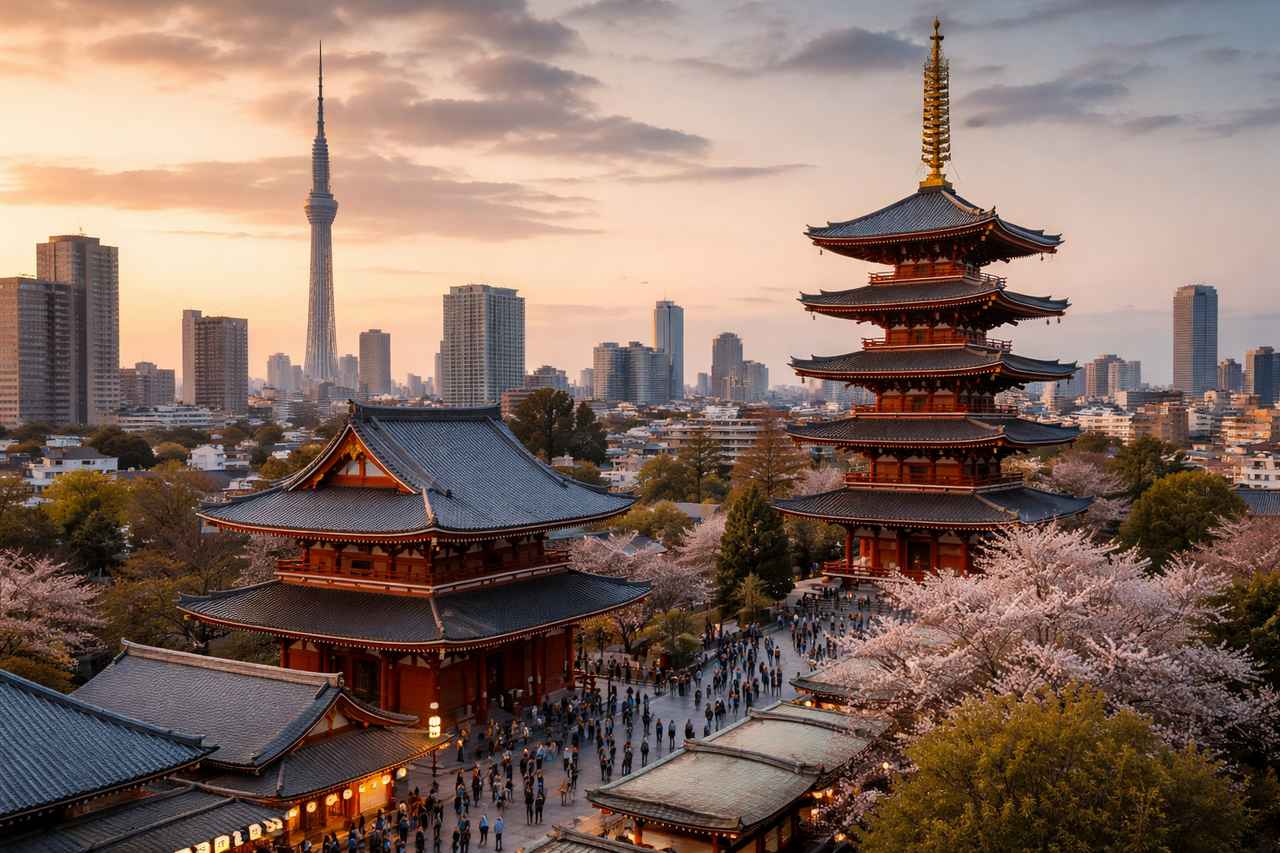
Japan is one of the world’s most influential nations, yet it is also a country of deep spiritual need. Christians remain a small minority in a society where religious practice is often blended, public reserve runs deep, and life in 2026 is being shaped by security anxiety, demographic decline, and growing concern over loneliness and youth distress. Japan does not chiefly call for prayer because of overt state persecution. It calls for prayer because millions live amid order, prosperity, and cultural achievement while remaining far from Christ, and because the church is called to bear patient, faithful witness in a highly developed society that often feels spiritually distant and quietly burdened.
1. Why This Country Needs Prayer Now
Japan needs prayer now because several pressures are meeting at the same time. The country entered fiscal year 2026 with a record defense budget of more than 9 trillion yen, reflecting a more anxious regional-security climate. At the same time, Japan’s demographic decline continues to deepen: AP reported that only 686,061 babies were born in 2024, the lowest number since records began in 1899, while the fertility rate fell to 1.15. Alongside this, the government continues to treat loneliness and isolation as serious national concerns, and the 2025 White Paper on Suicide Countermeasures says that although overall suicides in 2024 declined, suicides among young people remain a major concern. These realities do not mean Japan is collapsing. They do mean that the nation’s present burden is not merely economic or geopolitical. It is also moral, relational, and spiritual.
2. Country Snapshot
Japan is an island nation in East Asia, with a population of 123,975,371 in 2024 according to World Bank data. Official Japanese government pages in April 2026 identify Prime Minister Sanae Takaichi. Religious life in Japan is complex. The U.S. State Department’s 2023 International Religious Freedom Report says that official affiliation figures overlap because many people participate in both Shinto and Buddhist rites. That report lists 87.2 million Shinto adherents, 83.2 million Buddhists, and about 1.9 million Christians, or 1.1% of the population. These figures help explain why Christian witness in Japan often takes place in a setting where religion is present in cultural life, yet the gospel remains unfamiliar or distant to many.
3. Main Pressures Facing Christians
In Japan, the main pressures facing Christians are usually quiet rather than violent. According to the U.S. State Department’s 2023 International Religious Freedom Report, Japan’s constitution protects freedom of religion, and religious corporations may register and operate within a legal framework set out in law. Yet legal space does not remove deeper challenges. Recent missiological research describes Japan as a setting marked by secularization, aging congregations, and cultural barriers to Christianity. Reporting in Christianity Today likewise highlights the strain of endurance, small congregations, and long-term survival in many churches. So the main burden is often not raids, prison, or public violence. It is weariness, small numbers, weak succession, and the slow, demanding labor of witness in a society where Christianity may be seen as marginal, foreign, or simply unnecessary.
4. What Life Is Like for Christians in Japan
For many believers in Japan, faithful Christian life means steady, ordinary perseverance. Churches may be free to gather, teach Scripture, and serve openly, yet evangelism can feel slow and socially awkward in a culture where direct religious claims are often met with reserve. Some congregations are small and elderly. Some pastors carry heavy responsibility because there are too few younger leaders ready to take their place. Christians who want to disciple their children, welcome seekers, or plant churches often do so in a setting where open hostility may be limited, but spiritual indifference is strong. In such a setting, Christian faithfulness often looks less like dramatic survival and more like humble endurance: patient preaching, neighbor love, quiet hospitality, earnest prayer, and long obedience where visible fruit may come slowly.
5. Recent Developments
One major current development is Japan’s sharper security posture. AP reported that the Cabinet approved a record fiscal year 2026 defense budget, continuing a plan to raise defense spending to 2% of gross domestic product, with long-range missiles and unmanned systems among the priorities. Official Japanese foreign-ministry pages in April 2026 also show Japan actively engaged in security diplomacy related to NATO, Ukraine, the Middle East, and wider regional stability. This matters for prayer because a more anxious security climate can shape public imagination, national priorities, and the moral atmosphere in which the church lives and witnesses.
Another important development is the government’s continuing response to loneliness, isolation, and youth distress. The Cabinet Office’s English materials say the government has a Priority Plan to Facilitate the Promotion of the Policies Regarding Measures to Address Loneliness and Isolation 2025, and the Ministry of Health, Labour and Welfare’s 2025 suicide white paper keeps national attention on the continuing seriousness of youth suicide. This is deeply relevant for prayer. The church in Japan is called not only to speak truth clearly, but also to show the compassion of Christ in a society where many people carry quiet emotional pain.
A further religious-life development came in March 2025, when a Tokyo court ordered the dissolution of the Japanese branch of the Unification Church after government allegations of manipulative fundraising and harmful recruitment tactics. The group said the ruling was unjust and a threat to religious freedom. This case should be handled carefully. It does not by itself show broad repression of ordinary Christian churches. It does, however, remind readers that questions of accountability, state power, victim protection, and religious liberty can meet in morally complex ways. Christians should pray for truth, justice, and fairness in such matters without collapsing them into easy slogans.
6. How to Pray
- Pray that the Lord would bring many in Japan from spiritual indifference to repentance and faith in Jesus Christ, and that the gospel would be heard not as a foreign curiosity but as the power of God for salvation.
- Pray for pastors, elders, evangelists, and ordinary church members serving in small, aging, or weary congregations, that God would preserve them in holiness, courage, and joy, and raise up younger laborers who will preach the Word faithfully and shepherd Christ’s people well.
- Pray that Christian families, churches, and campus ministries would know how to love those struggling with loneliness, isolation, anxiety, and despair, especially young people, and that many would find in Christ both truth and living hope.
- Pray for patient, fruitful evangelism in neighborhoods, workplaces, and schools, that believers would not lose heart where visible fruit seems slow, but would keep bearing quiet, truthful, gracious witness.
- Pray for wisdom, restraint, and justice for Japan’s national and local leaders as they make decisions in a tense regional environment, and ask the Lord to preserve peace, restrain fear, and keep the church from being shaped more by national anxiety than by the kingdom of Christ.
- Pray that the Lord would strengthen theological training, discipleship, and church planting in Japan, so that the next generation of believers would be rooted in Scripture, steadfast in prayer, and bold in gospel witness.
7. Give Thanks
- Give thanks that Japan still provides broad legal space for churches to gather, preach, disciple, and serve openly, even though Christians remain a small minority.
- Give thanks for every faithful church, pastor, and believer who continues to labor quietly and steadily in a difficult field, trusting the Lord for fruit in His time.
- Give thanks for signs of common grace in the country’s growing public concern for loneliness, isolation, and suicide prevention, and for efforts to care for people who are quietly suffering.
- Give thanks that, even amid demographic decline and social strain, the Lord has not left Himself without witness in Japan, and that Christ continues to sustain His church there by His ordinary preserving grace.
8. Last Verified
Last updated: April 18, 2026
Next review due: October 2026, or sooner if there is a major security escalation, a significant legal change affecting religion, or a major national disaster.
Last Updated note
This draft was prepared on April 18, 2026, using current official and high-trust sources available at that date.
Key Sources Consulted
- U.S. Department of State, 2023 Report on International Religious Freedom: Japan.
- World Bank, Japan | Data and Population, total – Japan.
- Prime Minister’s Office of Japan, List of Ministers and Designation of the Prime Minister.
- AP News, Japan’s Cabinet OKs record defense budget that aims to deter China.
- AP News, Annual births fall to another record low in Japan as its population emergency deepens.
- Cabinet Office of Japan, Measures to Address Loneliness and Isolation.
- Ministry of Health, Labour and Welfare, The 2025 White Paper on Suicide Countermeasures [Summary].
- Ministry of Foreign Affairs of Japan, North Atlantic Treaty Organization (NATO); Exchange of views between Vice Minister for Foreign Affairs FUNAKOSHI and NATO Permanent Representatives; Courtesy call on Minister for Foreign Affairs MOTEGI by NATO Permanent Representatives.
- Stéphan van der Watt, Understanding missiology in Japan: Considering current trends in global mission, Transformation (2025).
- Sophia Lee, Growth Is Good. Survival Is, Too., Christianity Today (March/April 2025).


