


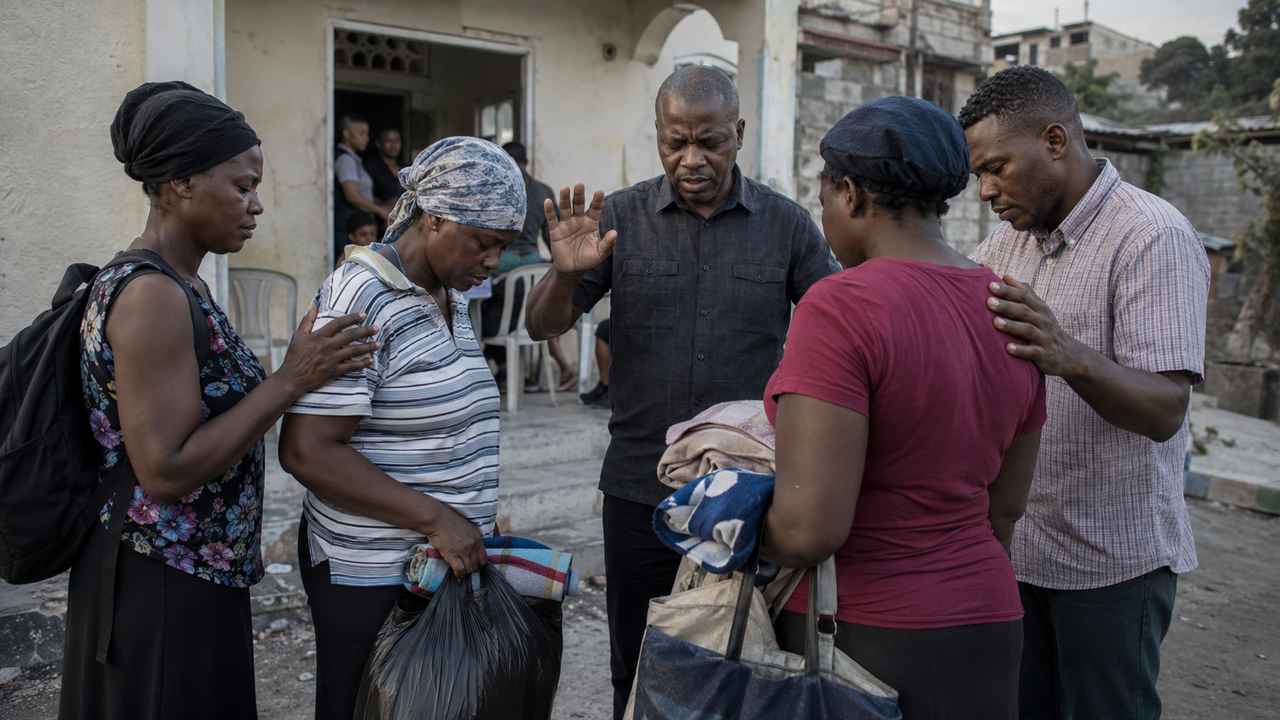
Haiti’s streets, churches, schools, and homes carry a burden that no ordinary country profile can hold. Families have fled burning neighborhoods with almost nothing. Pastors and church leaders are trying to shepherd people when roads are blocked, hospitals are under threat, and whole communities live under the shadow of kidnapping, hunger, and fear.
Yet Haiti should not be reduced to its worst headlines. This is a nation of real people made in the image of God, with churches still serving, believers still praying, families still caring for one another, and servants of Christ still trying to hold out mercy where daily life has become dangerous. To pray for Haiti is to ask the Lord to preserve life, restrain violence, strengthen His church, purify gospel witness, and give Haitians hope deeper than the fear around them.
Pray for believers in Haiti to remain faithful amid gang violence, displacement, hunger, and political uncertainty. Ask God to protect vulnerable families, sustain pastors and churches serving overwhelmed communities, restrain evil, and make the gospel of Christ shine with courage, mercy, and truth.
Last verified: May 2026
Why Haiti Needs Prayer Now
Haiti’s present burden touches security, family life, church ministry, humanitarian need, public trust, and gospel witness.
Haiti needs prayer because public life has become dangerous for ordinary families in ways that reach nearly every part of national life. Armed gangs control large parts of Port-au-Prince and key routes, while insecurity has spread beyond the capital. In May 2026, the Associated Press reported a new wave of gang violence in Port-au-Prince that forced families from their homes and left some sheltering near the road to Haiti’s main airport. The same reporting said gangs had overtaken more than 70% of the capital and that police described gang activity expanding into the countryside through looting, kidnapping, sexual assault, and rape. Associated Press
This is not only a security crisis. It is also a humanitarian crisis, a church-life crisis, a family crisis, and a crisis of public trust. The United Nations in Haiti reported that violence by armed groups had forced 1.4 million people, about 12% of the population, from their homes, while 5.7 million people were suffering severe food insecurity. Basic services, including health and education, have also come under regular attack and continued to shut down. United Nations in Haiti
For Christians, the burden is not merely that the country is suffering in general. Churches are trying to worship, disciple, teach, care for displaced families, and bear witness in a setting where kidnapping, extortion, road insecurity, poverty, and grief shape daily life. Religious-freedom and church-focused sources have described churches, religious leaders, schools, and ministry institutions as vulnerable to kidnapping, looting, forced evacuation, and ministry disruption. Aid to the Church in Need
Haiti also needs prayer because suffering can distort hope. In a nation where many people identify with Christianity while also living in a complex religious landscape, churches need clarity, humility, courage, and deep dependence on Scripture. The answer is not a thin moralism, a political slogan, or shallow optimism. Haiti needs the mercy of God, the restraining grace of God, wise and just leadership, faithful churches, and the saving hope of Jesus Christ.
Country Snapshot
A brief orientation to Haiti’s setting, people, and present prayer context.
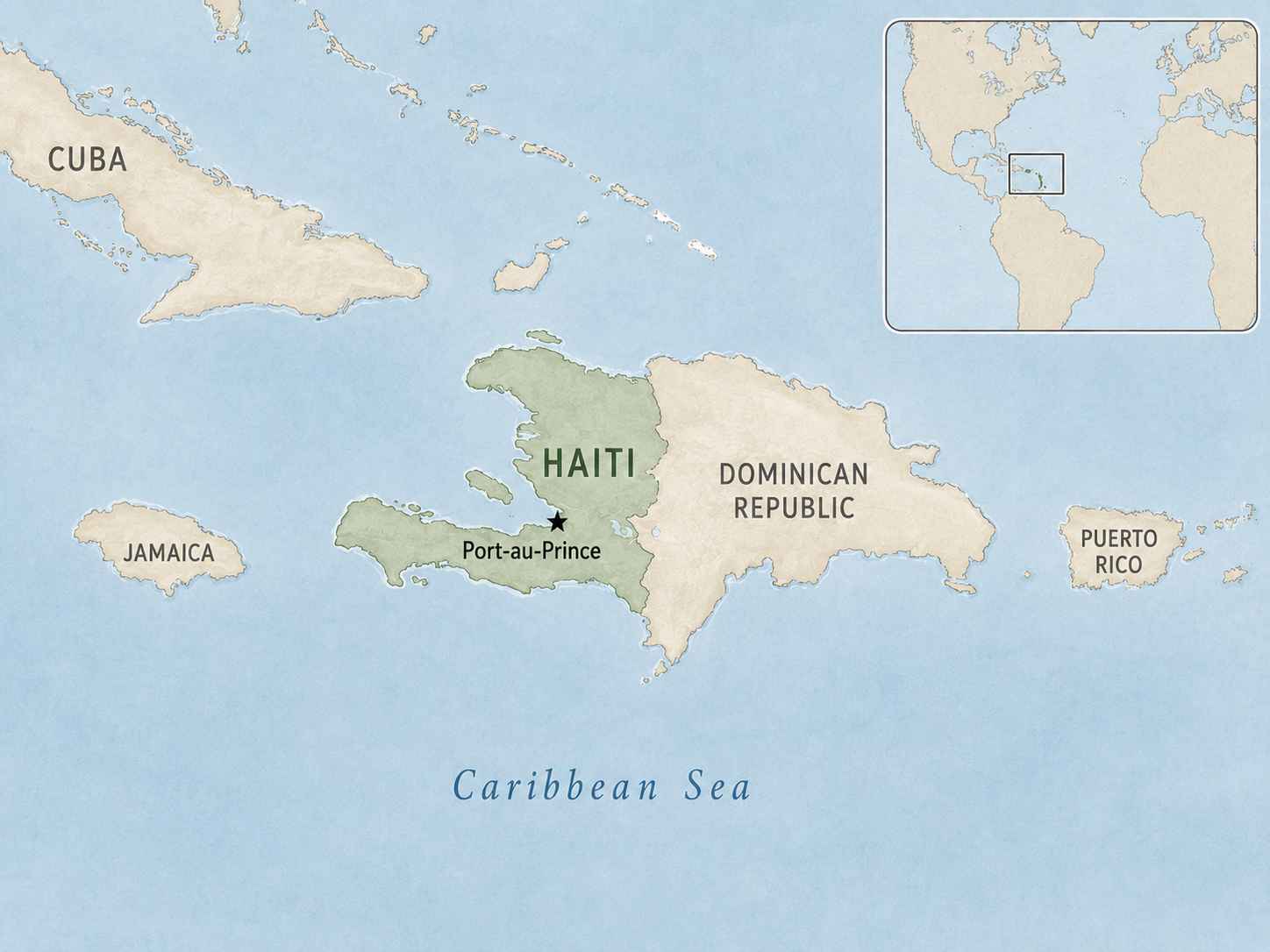
Haiti occupies the western third of the island of Hispaniola in the Caribbean, sharing the island with the Dominican Republic. The World Factbook lists Haiti’s religious composition as approximately Catholic 55%, Protestant 29%, Vodou 2.1%, other 4.6%, and none 10%, based on 2018 estimates. Haiti is formally a semi-presidential republic, but the country’s political institutions remain severely strained after years of delayed elections, gang violence, and transitional governance. The World Factbook
Haiti’s geography matters for prayer because the capital, roads, ports, and rural departments are not merely background facts. Control of routes and neighborhoods affects worship, trade, food access, medical care, school life, humanitarian response, and whether families can safely flee or return.
Main Pressures Facing Christians
The pressures facing Christians in Haiti are shaped less by formal anti-Christian law and more by violent disorder, displacement, hunger, and ministry disruption.
Gang violence and the danger of ordinary movement
For many Christians in Haiti, faithfulness now requires courage in ordinary actions: traveling to worship, visiting the sick, taking children to school, opening a church building, buying food, or trying to reach a displaced family. Roadblocks, territorial control, kidnappings, and fear can turn basic ministry into a dangerous act of love.
This pressure is not aimed only at Christians, but Christians are deeply affected by it. Religious leaders and institutions across Haiti’s religious communities have been targeted for kidnapping, extortion, intimidation, and violence. Churches, schools, hospitals, and religious houses have been looted, vandalized, forced to evacuate, or disrupted because of insecurity. Aid to the Church in Need
Displacement and pastoral overload
When families flee violence, they do not only lose shelter. They lose church routines, school access, work, neighbors, documents, medicine, and the ordinary stability that helps families endure. Churches outside the most dangerous areas may suddenly find displaced people arriving with deep material and spiritual needs.
Mission Network News reported in May 2026 that churches outside Port-au-Prince were receiving people fleeing gang-controlled areas, while some ministry activity had been disrupted by expanding violence. These churches need grace not only to give food or shelter, but also to carry grief, trauma, discipleship burdens, and gospel witness with patience. Mission Network News
Hunger and the daily strain of survival
Haiti’s food crisis now shapes prayer for families and churches. The United Nations in Haiti reported that 5.7 million people suffer severe food insecurity, placing Haiti among the world’s major hunger hotspots. Hunger affects children, pastors, teachers, widows, displaced families, and church workers. It also increases vulnerability to exploitation, gang recruitment, forced migration, and despair. United Nations in Haiti
Disrupted worship, schools, and mercy ministries
Churches in Haiti are not only places of worship. Many are connected to schools, clinics, orphan-care work, food aid, pastoral counseling, and community support. When violence shuts down schools, blocks roads, or forces hospitals and church compounds to evacuate, the damage spreads through the whole community.
Doctors Without Borders, the medical charity widely known by its French initials MSF, evacuated its Cité Soleil hospital after intense clashes in May 2026, after treating more than 40 gunshot victims in 12 hours and sheltering hundreds of fleeing people. Such disruptions show how quickly violence can affect care for the wounded, the displaced, and the most vulnerable. Associated Press
Spiritual confusion, fear, and false hopes
When fear becomes daily life, people look for protection wherever they can find it. Haiti’s Christian churches need gospel clarity, not contempt for their neighbors. They need to preach Christ crucified and risen with humility and courage, to shepherd people away from fear-driven superstition, prosperity promises, vengeance, despair, and syncretism, and to call people to repentance, faith, holiness, and hope in the living God.
What Life Is Like for Christians in Haiti
Christian faithfulness in Haiti often means worship, service, and witness under fear, instability, and heavy pastoral strain.
Christian life in Haiti is not the same in every place. Some churches continue to gather with relative regularity. Others face serious disruption because of road insecurity, territorial gang control, fear of kidnapping, or displacement. In the worst-affected areas, even a normal Sunday service can become complicated by curfews, threats, sudden clashes, or the need to protect vulnerable worshippers.
Pastors may carry burdens that are difficult for outsiders to imagine. They may be asked to comfort families who have fled with nothing, counsel people traumatized by violence, help youth resist gang recruitment, care for widows and orphans, and keep preaching when their own households are afraid. Some cannot easily visit members because roads are unsafe. Some churches cannot function in their old neighborhoods. Some believers must worship in homes, temporary spaces, or crowded communities where displacement has changed everything.
Yet the Lord is not absent. Churches have continued to receive displaced families, share relief, and hold out spiritual hope. Mission Network News described churches in rural Haiti seeing displaced people arrive and join fellowships, even while the crisis increases pressure on small towns and local pastors. Mission Network News
Christians outside Haiti should pray with humility. Haitian believers do not need distant observers to speak as though they are helpless objects of pity. They need brothers and sisters to intercede for them as members of Christ’s body: asking the Lord to preserve their faith, purify their churches, strengthen their leaders, provide for their needs, protect the vulnerable, and make their witness fruitful in a dark hour.
Recent Developments
These developments are time-sensitive and will be rechecked regularly because Haiti’s situation is highly volatile.
-
May 2026
New violence and displacement in Port-au-Prince
Renewed gang violence in Port-au-Prince forced families from their homes, with some taking refuge along the road near Haiti’s main airport. The Associated Press described families fleeing after armed men burned houses and reported that Doctors Without Borders evacuated its Cité Soleil hospital after intense clashes. Associated Press
Prayer significance: Pray for displaced families, overwhelmed churches, protection for the vulnerable, and mercy for communities where violence can scatter households overnight.
-
May 2026
Elections and political transition remain uncertain
Haiti’s political transition remains fragile. In May 2026, Prime Minister Alix Didier Fils-Aimé said security conditions were not sufficient for planned August elections, while expressing hope that elections could still happen before the end of the year and that a new president could take office in early 2027. WLRN
Prayer significance: Pray for wise and just leadership, lawful protection of civilians, truthfulness in public life, and a path toward peace that does not deepen fear or violence.
-
2026 humanitarian outlook
Humanitarian needs remain severe
The 2026 Humanitarian Response Plan for Haiti aims to assist 4.2 million vulnerable people. The United Nations in Haiti reported that 6.4 million people would require emergency humanitarian assistance in 2026, while violence-related displacement had doubled compared with the same period the previous year. United Nations Office for the Coordination of Humanitarian Affairs
Prayer significance: Pray that food, shelter, medicine, schooling, and safe humanitarian access would reach families in need, and that churches serving the hungry and displaced would be strengthened rather than crushed.
-
March 2026
Human-rights risks come from more than one direction
The United Nations Human Rights Office reported in March 2026 that Haiti’s violence involves gangs, security forces, private security contractors, and self-defense groups. It described the expanding reach of gangs, including control over key sea and road routes, while also warning that abuses are not limited to one actor. United Nations Human Rights Office
Prayer significance: Pray not only for violence to be restrained, but for security responses to be lawful, accountable, protective of civilians, and marked by justice rather than vengeance.
Churches Serving the Displaced
Churches receiving displaced families need both practical supply and spiritual endurance.
One of the most important prayer burdens in Haiti is the role of churches serving displaced families. When people flee with only what they can carry, they need food, shelter, clothing, safety, and medical care. But they also need prayer, Scripture, wise counsel, trustworthy community, and hope that is not destroyed by the loss of home.
Some churches are receiving people from gang-affected areas. Some are growing because displaced people are searching for safety and hope. Some pastors are carrying heavy leadership burdens as local congregations become places of refuge. Mission Network News
This is an opportunity for mercy and gospel witness, but it is not romantic. Displacement strains already poor communities. It tests the patience of pastors. It exposes churches to new needs, conflicts, trauma, and financial pressure. Pray that Haitian churches will not be crushed by the needs before them, but strengthened by the Spirit to serve with wisdom, courage, holiness, and love.
How to Pray
Use these prayer points to intercede for Haiti with compassion, biblical hope, and attention to the country’s present burden.
-
Pray for God to restrain violence and protect vulnerable people. Ask the Lord to restrain gangs, kidnappers, extortion networks, and every form of predatory violence. Pray for families trapped in unsafe neighborhoods, for women and children exposed to abuse, for the elderly and sick who cannot easily flee, and for those displaced from their homes with little protection.
-
Pray for pastors, churches, and Christian leaders to endure faithfully. Ask God to strengthen Haitian pastors with courage, wisdom, holiness, and perseverance as they shepherd fearful congregations, comfort grieving families, and serve people whose lives have been violently uprooted. Pray that churches would remain anchored in Scripture, prayer, faithful preaching, and love when ordinary ministry becomes costly.
-
Pray for displaced families and overwhelmed host communities. Ask the Lord to provide shelter, food, medicine, safety, and stable fellowship for those forced from their homes. Pray especially for churches and communities receiving displaced people, that they would be supplied with practical resources and spiritual endurance rather than crushed by needs beyond their strength.
-
Pray for gospel clarity amid fear, grief, and spiritual confusion. Ask God to make the hope of Christ clear in Haiti—not as a slogan or quick escape, but as the true refuge for sinners and sufferers. Pray that believers would resist despair, vengeance, false spiritual promises, and fear-driven compromise, and that churches would call people to repentance, faith, holiness, and hope in the risen Lord.
-
Pray for children and young people. Ask the Lord to protect children from hunger, trauma, exploitation, interrupted schooling, and recruitment into violence. Pray for Christian families, schools, youth ministries, and church leaders trying to disciple the next generation in a setting where fear and instability can shape a child’s whole imagination.
-
Pray for justice, truth, and wise public leadership. Ask God to raise up leaders, judges, police, civil servants, and community figures who will seek truth, resist corruption, protect civilians, and pursue justice with restraint. Pray that efforts to restore security would not become lawless, vengeful, or abusive, but would protect life and serve the common good.
-
Pray for mercy ministries and gospel witness to bear fruit. Ask God to protect medical workers, aid workers, church volunteers, missionaries, teachers, and local believers serving in dangerous conditions. Pray that food, clean water, medical care, and safe access would reach those most in need, and that works of mercy would open doors for faithful, humble, Christ-centered witness.
Give Thanks
Even in a grievous national crisis, there are real signs of God’s preserving mercy, common grace, and faithfulness among His people.
- Give thanks for Haitian churches that continue to serve under pressure. Even while violence and displacement strain local communities, some churches are receiving families, sharing practical help, and offering spiritual care. Thank God for every congregation that remains a place of prayer, refuge, truth, and mercy.
- Give thanks for believers who continue to worship and endure. In a setting where travel, safety, food, and daily stability can no longer be assumed, the perseverance of ordinary Christians is a real mercy. Thank God for pastors, families, and congregations who continue seeking Him when fear presses hard.
- Give thanks for those preserving life and serving the vulnerable. Thank God for medical workers, teachers, humanitarian workers, church servants, and community members who continue to care for the wounded, displaced, hungry, and afraid. Their service is a sign of God’s common grace and preserving mercy in a deeply troubled time.
- Give thanks for every truthful effort toward mercy, justice, and civic repair. Even amid severe disorder, there remain people seeking dialogue, protection of life, relief for the suffering, and a more peaceful public life. Thank God for every act of courage, neighbor love, honest service, and restraint that keeps Haiti from being described only by its darkest realities.
Last Verified / Update Note
This guide will be rechecked soon because Haiti’s security, humanitarian, and political conditions remain highly volatile.
Last verified: May 2026.
This Haiti prayer guide was prepared with current attention to Haiti’s May 2026 security situation, displacement, food insecurity, political uncertainty, church vulnerability, and humanitarian needs. Because Haiti’s conditions are changing rapidly, this post will be rechecked within 30–45 days, especially for changes in Port-au-Prince security, displacement levels, election timing, food-security projections, humanitarian access, and reports affecting churches or religious leaders.
The most volatile sections are: Why Haiti Needs Prayer Now, Recent Developments, How to Pray, Give Thanks, and Key Sources Consulted.
Key Sources Consulted
These sources materially informed the current version of this prayer guide.
- Associated Press, May 2026 reporting on renewed gang violence in Port-au-Prince — informed the current security update, displacement language, gang-control wording, Cité Soleil hospital evacuation, and airport-access concerns. Read source
- United Nations in Haiti, 2026 Humanitarian Response Plan launch — informed displacement, severe food insecurity, basic-service disruption, and humanitarian-response framing. Read source
- United Nations Office for the Coordination of Humanitarian Affairs, 2026 Haiti Humanitarian Needs and Response Plan executive summary — informed the broader 2026 humanitarian-needs framing, including the number of people expected to require emergency assistance. Read source
- United Nations Human Rights Office, March 2026 Haiti report coverage — informed the human-rights caution about abuses involving gangs, security forces, private security contractors, and self-defense groups. Read source
- WLRN / Reuters-connected May 2026 reporting on Haiti’s election timetable — informed the political-transition and August election uncertainty section. Read source
- Mission Network News, May 2026 report on churches receiving fleeing families — informed the “Churches Serving the Displaced” section and thanksgiving items about local church mercy ministry. Read source
- Aid to the Church in Need, 2025 Haiti religious-freedom material — informed church vulnerability, religious-worker danger, and the need for careful religious-freedom framing. Read source
- The World Factbook Haiti profile — informed stable country snapshot details, including capital, population estimate, location, official languages, religious composition, and basic government context. Read source
A Closing Prayer for Haiti
A prayer for mercy, protection, endurance, justice, and gospel hope in Haiti.


