

Iraq is home to ancient cities and communities with long histories. Its people have endured dictatorship, invasion, terrorism, sectarian violence, mass displacement, economic disruption, and foreign interference. Many towns and public institutions have been rebuilt, but families still live with damaged homes, weak services, insecure work, political division, and armed groups that operate partly outside state control.
Iraq’s Christian population is much smaller than it was before 2003. No recent census gives a reliable religious count, but widely cited estimates suggest that only a small part of the former Christian population remains. Families have left because of war, extremist violence, church attacks, stolen or disputed property, poor economic prospects, and concern for their children’s safety.
Churches nevertheless continue to gather. Believers worship, teach Scripture, care for vulnerable neighbours, and confess Christ in difficult circumstances. Some displaced families have returned. Churches, schools, homes, and historic landmarks destroyed during the Islamic State occupation have been rebuilt. These recoveries do not undo the suffering, but they give real reasons for thanksgiving.
Prayer Burden at a Glance
Pray for Iraq to be protected from deeper regional war, terrorism, corruption, sectarian hatred, and violence by armed factions. Pray for rulers to govern justly, for displaced families to find secure homes and livelihoods, and for water, electricity, education, health care, and employment to improve. Pray especially for believers to remain faithful to Christ, for churches to proclaim salvation clearly, for converts and other vulnerable believers to be protected, and for the gospel to bear lasting fruit among all Iraq’s peoples.
Last verified: August 6, 2026
Why Iraq Needs Prayer Now
Iraq needs prayer for peace, accountable government, protection of vulnerable communities, faithful churches, and the rebuilding of homes, livelihoods, and public services after war and displacement.
Iraq’s national leadership changed in 2026. Parliament elected Nizar Muhammad Said Amedi as president in April and granted confidence to Prime Minister Ali Faleh al-Zaidi and fourteen ministers in May. The government has publicly promised institutional reform, better services, stronger state authority, economic development, and action against corruption.
The government also faces armed groups that operate partly outside effective state control. Iraqi officials have repeatedly rejected the use of the country’s territory or airspace for attacks against neighbouring states. They have also said that weapons should be brought under the authority of the state. The challenge is to bring weapons under lawful state authority without provoking further violence.
Regional conflict makes this concern more urgent. Foreign strikes, cross-border attacks, accusations against Iraq-based factions, and retaliation against armed formations have affected Iraqi territory. Responsibility for particular attacks is sometimes disputed, but the danger to civilians and Iraqi sovereignty is clear.
These dangers affect people who are still recovering from earlier wars. About one million Iraqis remain internally displaced. Many others have returned to communities where homes are damaged, work is scarce, legal documents are missing, and schools, health facilities, water systems, or electricity remain inadequate.
Christians and other religious minorities face these national dangers alongside legal restrictions, unequal treatment, property disputes, and threats linked to their religious identity. Iraq’s constitution recognises freedom of belief and worship, but legal recognition does not always result in equal treatment, freedom to change religion, secure property rights, or practical protection. Converts from Islam may face threats from relatives, tribes, extremists, or other actors, while their change of faith is not recognised in official personal records.
Prayer for Iraq should therefore be specific. Pray for peace without overlooking injustice, for stronger state institutions without endorsing oppression, for the protection of vulnerable people, and for churches that remain faithful to Christ amid fear, emigration, and uncertainty.
Country Snapshot
A brief orientation to Iraq’s location, people, government, and religious context.
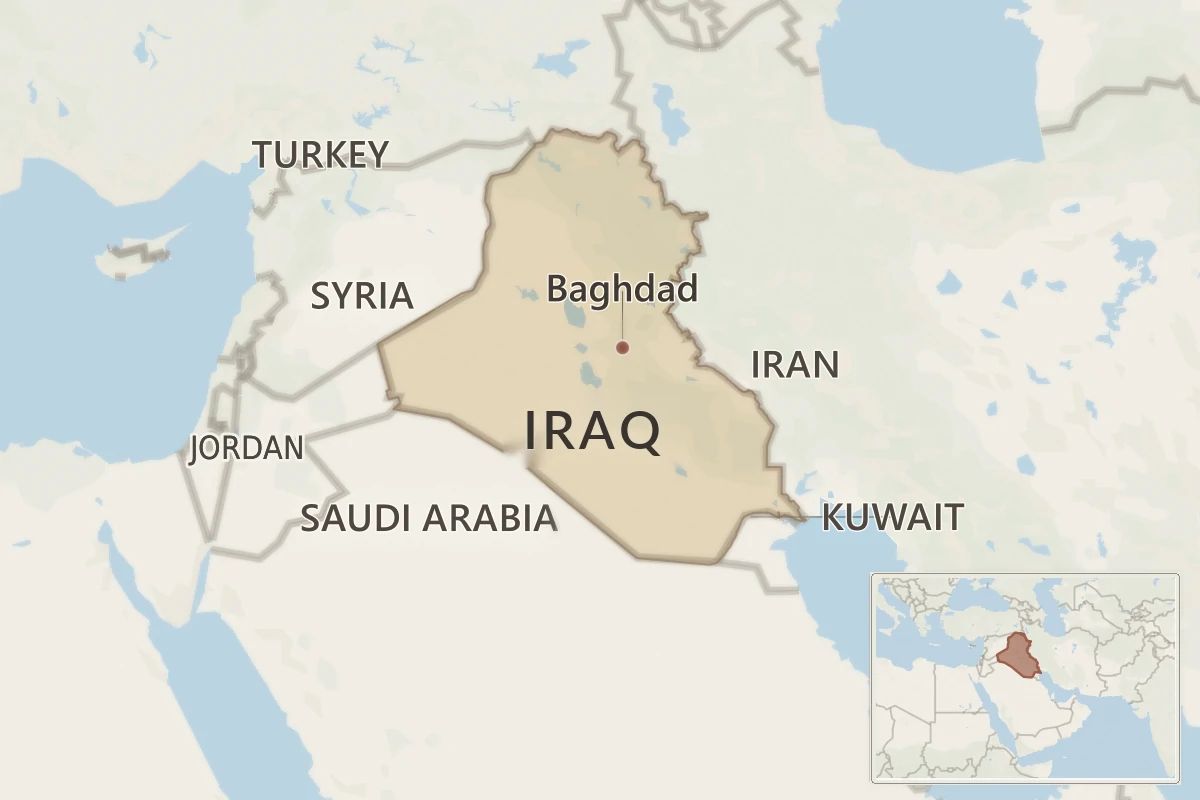
Iraq borders Türkiye, Iran, Kuwait, Saudi Arabia, Jordan, and Syria. The Tigris and Euphrates rivers have shaped its cities, agriculture, and history. Its location also places it at the centre of regional trade, security disputes, and competing foreign interests.
The Ministry of Planning announced a final census population of 46,118,793 in November 2025. Much of Iraq’s population is young. This could become a great national strength, but young people need sound education, honest institutions, meaningful employment, and confidence that they can build their future at home.
Iraq’s constitution describes the country as one of several nationalities, religions, and sects. It recognises Islam as the official religion while protecting religious belief and practice for communities including Christians, Yazidis, and Sabean-Mandaeans. These protections matter, but they do not by themselves guarantee personal safety, equal treatment, or freedom of conscience.
Relations between the federal government in Baghdad and the Kurdistan Regional Government in Erbil also affect daily life. Disputes over oil, salaries, public revenue, security, and constitutional authority can interrupt services and leave families uncertain about their income. These disputes are especially important for Christians and displaced people living in the Kurdistan Region, Nineveh, and other northern areas.
Spiritual and Practical Challenges Affecting Christians and Churches
Christians and churches face the effects of emigration, regional conflict, terrorism, legal restrictions, displacement, economic pressure, and water scarcity.
A much smaller Christian population and continued emigration
Iraq’s Christian population has fallen sharply since 2003. War, extremist violence, church attacks, abductions, political marginalisation, unemployment, and destruction by the Islamic State group have persuaded many families to leave.
Those who remain may wonder whether their children can build safe and stable lives in Iraq. Continued emigration separates extended families, weakens congregations, reduces the number of trained leaders, and places the future of some historic Christian communities in doubt.
Prayer must go further than preserving population numbers or historic buildings. Believers need faithful teaching and encouragement to keep following Christ. Children and young adults need clear biblical teaching and practical help to grow in faith and obedience. Churches need pastors who teach Scripture faithfully, and Christian families need freedom to live and serve without fear.
Regional conflict and armed groups outside full state control
Iraq remains exposed to conflict involving neighbouring states, foreign powers, and armed groups operating within or around its territory. The federal government has called for diplomacy, respect for Iraqi sovereignty, and state control of weapons. Armed factions and foreign military action nevertheless continue to create fear and uncertainty.
Churches must serve without becoming instruments of rival political or military powers. Believers need wisdom to seek peace, care for victims, reject sectarian hatred, and speak truth without being drawn into factional loyalties.
Continuing terrorism and insecurity
The Islamic State group no longer controls large areas of Iraq, but its remaining networks continue to pose a threat. Instability in neighbouring Syria may also create opportunities for recruitment, infiltration, or renewed attacks.
Security forces need wisdom and courage to protect communities. They also need accountability so that necessary operations do not lead to abuse, revenge, or collective punishment.
Pressure on converts and freedom of conscience
A person registered as Muslim cannot easily change their official religious identity to Christianity. Converts may face rejection, threats, broken family relationships, legal difficulties involving marriage or children, and danger from relatives, tribes, extremists, or other actors.
Many converts cannot speak openly about their faith. Their number and circumstances are therefore difficult to document. Churches need great wisdom to provide fellowship, biblical teaching, and practical care without exposing vulnerable believers to unnecessary danger.
Displacement, property disputes, and difficult returns
Returning to one’s town does not always end displacement. Some families return to damaged homes, weak services, unemployment, disputed property, or communities where several armed or security forces exercise authority. Others remain in camps or informal settlements because return is not yet safe.
Christian families may also face unresolved claims over houses, farms, businesses, or other property. Pray for fair courts, legal documentation, secure housing, livelihoods, schools, health care, trauma support, and reconciliation between returning families and their neighbours.
Economic pressure and limited opportunity
Iraq’s economy remains heavily dependent on oil and vulnerable to regional conflict and changes in revenue. Water and electricity shortages hinder farming, business, education, health care, and family life.
Many young people complete their education but struggle to find work outside government employment or politically connected networks. This can deepen frustration, encourage emigration, and make families more vulnerable to exploitation or political patronage.
Water scarcity and environmental strain
Iraq faces a serious water shortage. Drought, declining river flows, pollution, salinity, damaged infrastructure, and regional water disputes affect drinking water, farming, health, and migration.
Water shortages can increase inequality and competition between communities. Churches need wisdom to serve affected families, encourage responsible care for resources, and provide practical help without allowing material assistance to replace the preaching and discipleship of the church.
Christian Life and Witness in Iraq
Iraq’s churches have long histories, but their present calling is to proclaim Christ faithfully, teach Scripture clearly, disciple believers, and serve neighbours with courage and love.
Christianity has been present in the lands of present-day Iraq since the earliest centuries of the church. Iraq’s Christian communities include Chaldean, Assyrian, Syriac, Armenian, Protestant, evangelical, and other traditions.
These names describe real communities and histories. They do not prove that every person who identifies as Christian has been regenerated or clearly understands the gospel. The survival of Christian institutions and buildings is not enough. Churches need to proclaim Christ faithfully, teach Scripture clearly, call sinners to repentance and faith, and help believers grow in holiness and obedience.
Some Christians worship publicly in established churches, attend Christian schools, and belong to recognised community institutions. Others – especially converts or believers from restrictive family backgrounds – must follow Christ with great discretion.
Many congregations serve people affected by displacement, poverty, trauma, and war. They care for widows, children, people with disabilities, returning families, and neighbours from different religious backgrounds. Such service can show Christ’s compassion, but churches also need faithful leadership and sound teaching so that practical care remains joined to clear teaching about Christ and the gospel.
Young Christians face difficult choices. Some are grateful for their family history but uncertain whether Iraq offers them safety, work, marriage prospects, or a future for their children. Some inherit a Christian identity without being clearly taught the gospel. Others sincerely trust Christ but feel isolated because relatives and church members have emigrated or because mature discipleship is difficult to find.
In April 2026, the Chaldean synod elected Archbishop Amel Nona as Patriarch Paul III Nona following the retirement of Cardinal Louis Raphaël Sako. He took up this responsibility during a period of regional conflict, continued Christian emigration, and uncertainty about the future of Iraq’s largest professing Christian body.
Pray that he and other church leaders would shepherd people wisely, submit their teaching and practice to Scripture, proclaim Christ clearly, and care faithfully for congregations facing fear, poverty, displacement, and emigration.
The rebuilding of churches and other historic sites in Mosul also gives reason for thanksgiving. UNESCO completed work on Al-Tahera Church, Our Lady of the Hour Convent, Al-Nouri Mosque, schools, and historic homes. The programme also provided employment and trained young Iraqis in restoration work.
Reconstructed buildings can reopen places of worship, education, and community life. They cannot, by themselves, restore trust or produce spiritual renewal. Pray that returning communities would find safety and that reopened churches would become places where Scripture is taught, Christ is proclaimed, and believers are strengthened.
Pray that professing Christian communities would not depend merely on ancestry, ceremony, or institutional continuity. Pray for every place where the biblical gospel is faithfully proclaimed, children are discipled, believers are strengthened, and mercy is shown to neighbours.
Christians from different traditions may cooperate in humanitarian service or in defending religious freedom. Pray that such cooperation would remain honest and limited to areas where Scripture and conscience permit. True Christian unity must rest on Christ and the truth of the gospel, not on pretending that serious doctrinal differences do not matter.
Recent Developments
These dated developments help readers pray about changes that have affected Iraq since late 2025.
-
September 2025
Mosul landmarks reopened
Iraq inaugurated restored landmarks in Mosul, including Al-Tahera Church, Our Lady of the Hour Convent, and the Al-Nouri Mosque complex. The wider reconstruction programme also restored homes and schools and provided employment and practical training.
Prayer focus: Pray that families would be able to return safely, that local communities would rebuild trust, and that reopened churches would strengthen worship, biblical teaching, discipleship, and service.
-
November 2025
Final census results released
The Ministry of Planning announced a national population of 46,118,793. The census gives the government better information for national planning, but it does not provide a reliable count of Christians or other religious minorities.
Prayer focus: Pray that public information would be used honestly to improve services, distribute resources fairly, and protect communities that are easily overlooked.
-
April-May 2026
New president and government
Parliament elected Nizar Muhammad Said Amedi as president and granted confidence to Prime Minister Ali Faleh al-Zaidi and fourteen ministers. The new leadership began its work amid corruption concerns, economic pressure, political division, and regional conflict.
Prayer focus: Pray for competent appointments, public accountability, freedom from intimidation or control by political factions, and leaders who serve ordinary people rather than political networks.
-
April-May 2026
Chaldean leadership transition
Archbishop Amel Nona was elected Patriarch Paul III Nona and later assumed his responsibilities in Iraq.
Prayer focus: Pray for faithful teaching, wise pastoral care, humility, courage, and serious attention to congregations and families considering emigration.
-
May-August 2026
Regional attacks and violations of Iraqi sovereignty
Iraq condemned attacks against neighbouring countries, investigated allegations that drones had been launched from Iraqi territory, and condemned attacks on Iraqi security formations. Other incidents showed how easily regional rivalries and armed factions can endanger Iraq.
Responsibility for some attacks remains disputed or under investigation.
Prayer focus: Pray for civilian protection, honest and thorough investigations, restraint among leaders, respect for Iraqi sovereignty, and the prevention of a wider war.
-
July 2026
Cabinet approved activation of the Iraq-Türkiye water framework
The Council of Ministers voted to activate an Iraq-Türkiye framework agreement on water resources. A project-financing mechanism was scheduled to begin in September 2026.
The agreement may help, but it has not yet solved Iraq’s water shortage.
Prayer focus: Pray for transparent implementation, fair cooperation between the two countries, repaired water systems, and practical relief for families and farmers.
How to Pray
Pray for peace, justice, faithful churches, protection of vulnerable people, practical provision, and the salvation of Iraq’s peoples.
For protection from regional war. Pray that Iraq would not become a battlefield for foreign powers or armed factions. Ask God to restrain retaliation, protect civilians in Iraq and neighbouring countries, and prevent any nuclear or radiological disaster.
For just and accountable leadership. Pray for the president, prime minister, parliament, judges, ministers, regional leaders, and local officials. Ask God to expose corruption and raise up leaders who protect the weak, tell the truth, and serve the public rather than political or personal interests.
For lawful authority over weapons. Pray that armed groups would not intimidate communities, act outside accountable authority, or draw Iraq into wider conflict. Ask for institutions that uphold justice and protect citizens without oppression or revenge.
For faithful churches and clear gospel preaching. Pray that churches would submit their teaching and practice to Scripture. Ask God to raise up pastors who proclaim salvation by grace alone, through faith alone, in Christ alone, and who shepherd people with courage and humility.
For converts and believers who cannot live openly. Pray for protection from family violence, social rejection, legal disadvantage, and extremist threats. Ask God to provide trustworthy fellowship, access to Scripture, sound teaching, and wise pastoral care.
For Christian children and young adults. Pray that inherited identity would not replace repentance and personal faith in Christ. Ask God to provide clear biblical teaching, mature believers who can help them grow in faith, meaningful work, godly marriages, and courage to serve faithfully in Iraq.
For displaced and returning families. Pray for secure homes, restored property, legal documents, employment, schools, health care, trauma support, and reconciliation. Pray that no family would be pressured to return to a place that remains unsafe.
For cooperation between Baghdad and Erbil. Pray for lawful agreements over salaries, public revenue, security, and services. Ask that political disputes would not leave ordinary families, displaced people, or minority communities without support.
For water, livelihoods, and public services. Pray for rain, fair regional water agreements, repaired infrastructure, reliable electricity, sustainable farming, honest management of oil revenue, and stable employment.
For mercy and reconciliation. Pray that Iraqis would reject sectarian hatred, revenge, ethnic prejudice, and language that treats other people as enemies rather than neighbours. Ask God to strengthen those who care for widows, children, displaced families, trauma survivors, and people with disabilities.
For the salvation of Iraq’s peoples. Pray that Muslims, Yazidis, Sabean-Mandaeans, secular Iraqis, and people from every ethnic and religious background would hear the gospel clearly. Ask God to grant repentance and faith in Jesus Christ.
For enduring Christian hope. Pray that believers would remain holy, steadfast, compassionate, and ready for Christ’s appearing. Ask that God’s kingdom would come, His Church would be preserved, and the gospel would continue to be proclaimed amid suffering and uncertainty.
Give Thanks
Iraq’s suffering is real, but there are also real reasons for thanksgiving: believers and congregations continue to gather, Christians serve neighbours, some families have returned safely, and damaged communities are rebuilding.
Give thanks for Iraqi believers who continue to worship Christ, teach Scripture, serve neighbours, and confess their faith despite insecurity and uncertainty.
Give thanks for congregations where the gospel is clearly proclaimed and people are called beyond inherited identity or ceremony to repentance and faith in Christ.
Give thanks for Christians who care for displaced families, children, widows, people with disabilities, the poor, and neighbours from other religious communities.
Give thanks that churches, schools, homes, and historic landmarks in Mosul have been rebuilt after destruction by the Islamic State group.
Give thanks for displaced families who have returned safely, recovered legal documents, rebuilt homes, or regained access to education and public services.
Give thanks when public leaders recognise that Christians are an indigenous part of Iraq. Pray that such statements would be followed by equal citizenship, secure property rights, and practical protection.
Give thanks for Iraqis who reject sectarian hatred, rebuild damaged communities, pursue reconciliation, and care for neighbours across religious and ethnic divisions.
Give thanks that churches continue to gather and believers continue to serve despite violence, emigration, and limited political influence. Pray that God would preserve His people, save the lost, reform churches through His Word, and make the hope of Christ visible through faithful lives.
Last Verified / Update Note
This note shows when the guide was last reviewed and highlights developments that could affect how readers pray for Iraq.
Review Status
Reviewed for accuracy and current conditions
Iraq’s 2026 political transition; the government’s stated priorities; regional drone and missile incidents; Iraqi sovereignty and state control of weapons; continuing Islamic State activity; displacement and return conditions; water scarcity and economic pressure; religious-freedom law and practice; the situation of converts and religious minorities; the Chaldean patriarchal transition; and reconstruction in Mosul.
Protection from regional war and terrorism; just and accountable government; lawful authority over weapons; protection for converts and religious minorities; faithful churches and clear gospel preaching; safe and sustainable return for displaced families; water, electricity, employment, education, and health services; and mercy and reconciliation across divided communities.
Further attacks involving Iraqi territory or airspace; implementation of measures to place weapons under state authority; any later cabinet appointments or leadership changes; the Iraq-Türkiye water-financing mechanism scheduled to begin in September 2026; changes in displacement and camp policy; religious-freedom legislation and property disputes; and any new nuclear or radiological safety concern affecting Iraq or neighbouring countries.
This guide draws on Iraqi federal and parliamentary records, Kurdistan Regional Government sources, Iraqi and regional reporting, United Nations agencies, church sources, and independent international assessments. Official records provide laws, appointments, policy statements, and government positions. Disputed security and religious-freedom questions are considered alongside independent reporting and international assessments.
Help keep this guide accurate and current
Conditions in Iraq can change quickly. Readers with reliable first-hand knowledge, corrections to public information, or updated church and community information are invited to contact the Nations Prayer Directory so the information can be checked and, where necessary, corrected.
Key Sources Consulted
These sources provide information on Iraq’s political transition, population, displacement, religious freedom, church life, reconstruction, security, water, and economic conditions.
Iraqi constitutional, parliamentary, and government sources
- Iraqi Council of Representatives – Constitution of the Republic of Iraq. Used for Iraq’s federal structure, recognition of Islam as the official religion, and constitutional protections relating to religious belief and practice.
- Iraqi Council of Representatives – Election of Nizar Muhammad Said Amedi as President of the Republic. Used to verify the 2026 presidential transition.
- Iraqi Council of Representatives – Confidence vote for Prime Minister Ali Faleh al-Zaidi and fourteen ministers. Documents the May 14 confidence vote for Prime Minister Ali Faleh al-Zaidi and fourteen ministers, including what Parliament formally approved on that date.
- Iraq Ministry of Planning – Final General Population Census Results. Used for the final census population of 46,118,793, announced on November 26, 2025.
- Iraqi News Agency – Iraqi government statement on attacks against neighbouring states and the use of Iraqi territory. Used for Iraq’s official position rejecting attacks launched from its territory and its commitment to investigate disputed incidents.
- Iraqi News Agency – Measures to place weapons under state control. Describes the government’s stated policy and first reported implementation steps; it does not establish that all armed factions have disarmed.
- Iraqi News Agency – Iraq-Türkiye water framework. Used for the July 2026 decision to activate the framework and the scheduled September 1 financing mechanism.
Kurdistan Region and closer regional perspectives
- Kurdistan Regional Government – Ethnic and Religious Minorities in the Kurdistan Region. Used for the KRG’s official description of recognised communities, Syriac-language education, minority institutions, and Christian religious sites. These figures and assessments are presented as KRG reporting.
- Presidency of the Kurdistan Region – Meeting with Christian parliamentarians. Used for the regional government’s stated position that Christians are an indigenous part of Iraq and the Kurdistan Region and should receive constitutional rights and protection.
- Republic of Türkiye Ministry of Foreign Affairs – Formation of Iraq’s 2026 government. Provides a neighbouring government’s public account of Iraq’s 2026 political transition.
Displacement, humanitarian conditions, and public services
- International Organization for Migration – Iraq Crisis Response Plan 2026. Used for displacement, difficult return conditions, damaged housing, documentation and property barriers, climate-related displacement, fragmented security institutions, and incidents connected to regional escalation.
- UNHCR Iraq – Internally Displaced People. Used for the approximate number of displaced people, camp conditions, and barriers involving insecurity, livelihoods, finances, and damaged housing.
- UNICEF Iraq – Water crisis and children. Used for the severity of Iraq’s water shortage and its effects on household water access, health, education, and children’s futures.
- World Bank – Iraq country economic overview. Used for Iraq’s dependence on oil, exposure to regional conflict, electricity and water constraints, and the difficulty of creating sufficient employment for young people.
Religious freedom and Christian life
- European Union Agency for Asylum – Iraq Country Focus, December 2025. Used for the constitutional and legal framework, restrictions involving conversion from Islam, personal-status records, blasphemy law, interfaith marriage, and the legal treatment of converts.
- United States Commission on International Religious Freedom – Iraq country update. Used as an independent assessment of sectarianism, religious-freedom restrictions, militia influence, personal-status legislation, and continuing risks to minority communities.
- Vatican News – Election of Patriarch Paul III Nona. Documents the April 2026 Chaldean patriarchal transition. The event is reported here as an institutional fact; questions of doctrine and teaching remain subject to Scripture.
- Associated Press – Inauguration of Patriarch Polis III Nona. Used for the May 2026 assumption of office and the widely cited estimate that Iraq’s Christian population has fallen from about 1.5 million before 2003 to roughly 150,000. Because no recent census provides a reliable religious total, that figure should be read as an estimate rather than an exact national count.
Reconstruction, security, and nuclear-safety context
- UNESCO – Revive the Spirit of Mosul. Used for the restoration of Al-Tahera Church, Our Lady of the Hour Convent, Al-Nouri Mosque, schools, and historic houses, as well as employment and training associated with the reconstruction programme.
- Iraqi News Agency – Security reporting on continuing Islamic State networks. Used to establish that Islamic State no longer holds its former territorial position but that Iraqi forces continue to arrest members, dismantle cells, and pursue remaining networks.
- International Atomic Energy Agency – Emergency event notice. Provides nuclear-safety context concerning events at nuclear-related sites in neighbouring Iran.
Source Context
These notes explain where figures remain uncertain, how official statements should be read, and where the available evidence is limited or disputed.
Source Context
- How the sources fit together. This guide draws on Iraqi federal and parliamentary sources, Kurdistan Regional Government sources, Iraqi and regional reporting, United Nations agencies, church institutions, and independent international assessments. Official records are especially useful for laws, appointments, and government positions, while humanitarian, church, regional, and independent sources provide additional context.
- Official positions. Iraqi and Kurdistan government sources show how those authorities describe their laws, policies, security actions, minority protections, and regional relationships. These statements describe the authorities’ own positions and should be read alongside independent reporting and assessment.
- Political transition. Iraqi parliamentary records confirm the president, prime minister, and fourteen ministers. As of August 6, 2026, the parliamentary record cited here did not clearly establish that every remaining ministerial portfolio had been filled.
- Security incidents. Attribution for some drone, missile, and cross-border attacks remains disputed or under investigation. Where responsibility remains unresolved, disputed attribution is not presented as settled fact.
- Christian population. Current estimates vary, and the national census does not provide a dependable religious breakdown. The exact current Christian population is therefore uncertain, although the severe long-term decline since 2003 is well established.
- Christian identity. Government, census, church, and news sources often use Christian as a demographic or institutional description. Such a label, inherited identity, baptism, ceremony, or church membership does not by itself show repentance, regeneration, or saving faith.
- Converts and less visible believers. Public reporting about converts from Islam, discreet fellowships, and believers in restrictive family settings is necessarily incomplete. The legal and social risks are documented more clearly than the number and circumstances of these less visible believers.
- Kurdistan Region reporting. KRG figures on recognised communities, schools, religious sites, and minority protection are useful official information. They remain government self-reporting and do not by themselves resolve outside concerns about discrimination, political influence, property, or security.
- Religious-freedom assessments. EUAA and USCIRF provide independent legal and religious-freedom analysis. Their assessments should be read alongside Iraq’s constitutional protections and official statements; no single public federal response cited here addresses all of their latest criticisms.
- Displacement data. Displacement and return figures change as families move, camps close, and records are updated. Approximate figures are therefore more reliable than a fixed total, while IOM and UNHCR continue to document barriers to safe and sustainable return.
- Water agreement. Iraq approved activation of the water framework and scheduled a financing mechanism to begin in September 2026. As of August 6, 2026, the agreement had not yet been shown to increase river flows or resolve Iraq’s water shortage.
- Nuclear and radiological risk. Attacks affected nuclear-related sites in neighbouring Iran, and Iraq activated radiological monitoring. As of August 6, 2026, no reliable evidence cited here established radioactive contamination in Iraq or an imminent nuclear war.
- Time-sensitive information. Political appointments, regional attacks, militia policy, water implementation, displacement totals, and radiological conditions may change quickly. These points reflect information available through August 6, 2026 and may change as new official information becomes available.
A Closing Prayer for Iraq
A concise prayer gathering Iraq’s present burdens before the Lord.


