


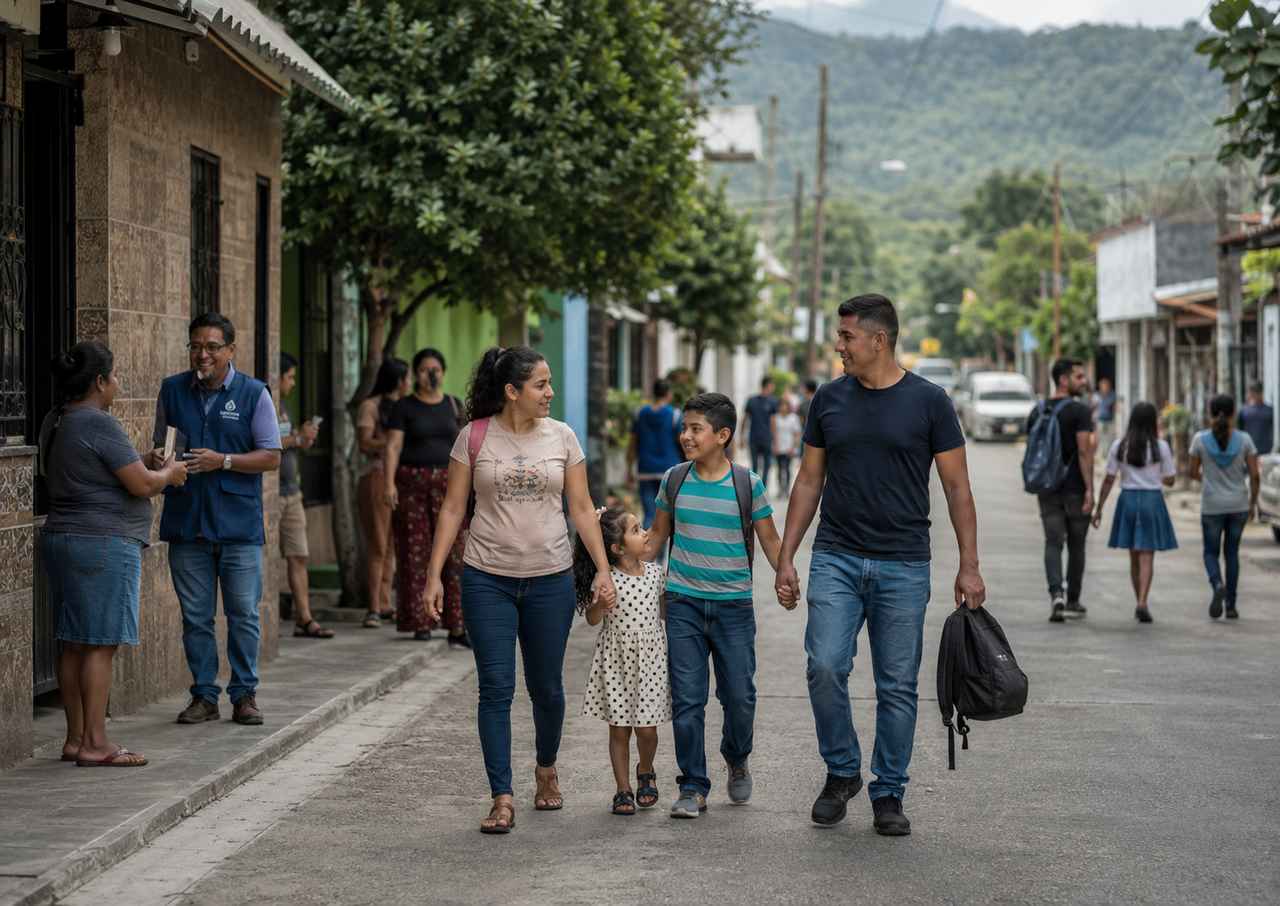
For years, many Salvadoran families lived with gang threats, extortion, murder, forced recruitment, migration-related strain, and fear about going to work, school, church, markets, or relatives’ homes. In recent years, many people have experienced a striking change as homicide levels have fallen and some communities have become safer. Families who once lived under threats, extortion, and territorial control have felt real relief.
Yet the same security model has also raised serious questions about justice, due process, prison conditions, civil society, and the treatment of people detained or accused under the country’s long-running state of exception. Churches in El Salvador are not generally hidden or banned. Many believers worship openly. But they are called to serve Christ in a nation where public peace is now closely tied to courts, prisons, fear, punishment, rehabilitation, mercy, and the use of government power.
This guide is written to help believers pray for El Salvador with gratitude, seriousness, and compassion.
Prayer Burden at a Glance
Pray for El Salvador to know safer communities without hidden injustice, truthful courts, wise leadership, comfort and justice for victims, lawful treatment for detainees, mercy for affected families, youth discipleship, and churches that preach Christ beyond cultural religion.
Last verified: June 20, 2026
Why El Salvador Needs Prayer Now
El Salvador needs prayer because many people are thankful for safer streets while serious questions remain about justice, detention, prisons, public truth, and the use of power.
For many years, Salvadoran families lived with the daily weight of gang violence. Families, shopkeepers, pastors, young people, and entire neighborhoods were affected by extortion, recruitment, threats, disappearances, murder, and fear. In some communities, the simple acts of traveling, working, attending school, opening a small business, or visiting relatives could carry danger.
In recent years, the government’s hardline security campaign has changed daily life for many people. Homicides have dropped sharply. Some neighborhoods are no longer controlled by gangs in the same open way. Associated Press reporting has described El Salvador’s record-low homicide figures while also noting the continuing debate over security gains and rights concerns. Many families have been thankful to live with less fear.
That relief is not small. Christians should not ignore it.
At the same time, El Salvador’s state of exception has suspended some legal protections and led to mass detentions. Human Rights Watch’s World Report 2025 and international news coverage have raised concerns about arbitrary arrests, weak due process, prison deaths, harsh prison conditions, and the danger that innocent people may be punished along with the guilty.
This creates a serious prayer burden. El Salvador needs safety, but public safety must not be separated from truthful courts, lawful treatment, and protection for the innocent. It needs justice for victims, but justice must not lose sight of the innocent. It needs protection from violence, but also mercy, lawful judgment, repentance, rehabilitation, and public accountability.
The churches of El Salvador are called to minister in the middle of this reality. They must comfort families who have suffered under gangs, serve communities rebuilding after fear, pray for those in prison, care for families of detainees, disciple young people, and speak of Christ in a society where many people identify as Christian but still need repentance, forgiveness, integrity, and hope.
Country Snapshot
A brief orientation to El Salvador’s location, people, leadership, economy, and church context.
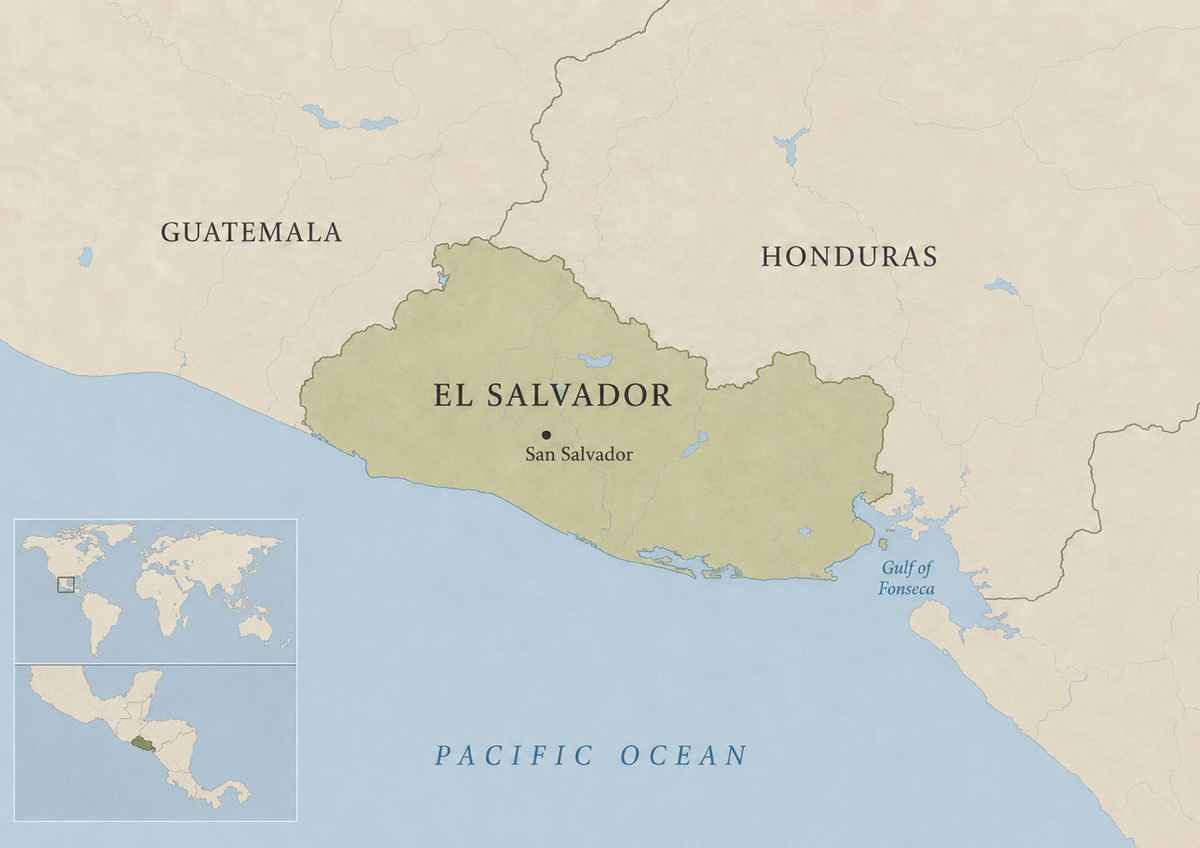
El Salvador is the smallest country in mainland Central America, yet it is one of the most densely populated countries in the region. It borders Guatemala, Honduras, and the Pacific Ocean. Its capital is San Salvador.
The World Bank’s El Salvador overview describes the country as a small, dollarized economy with close ties to the United States through trade and remittances. Many Salvadoran families depend on money sent by relatives abroad, and migration has shaped family life, church life, and the hopes of many young people.
The country’s recent history includes civil war, political polarization, gang violence, poverty, migration, and deep social wounds. For decades, many families lived with the effects of violence and insecurity. Churches have often served in communities marked by trauma, fear, family separation, and limited opportunity.
El Salvador is led by President Nayib Bukele. The official Presidency of El Salvador profile identifies Nayib Armando Bukele Ortez as President of the Republic. His administration is known internationally for its security campaign against gangs, the long-running state of exception, mass detentions, and major changes to the country’s political system. The government presents its security model as a necessary response to gang terror and points to sharply reduced homicide levels. Critics warn that the same model has weakened legal safeguards and concentrated power.
Religiously, El Salvador remains strongly Christian in public identity. Catholic and evangelical churches are both highly visible, and many people identify with Christianity in some form. This means the main spiritual concern is not usually that Christians cannot gather or worship openly. The deeper concern is whether churches will faithfully preach Christ, disciple believers, serve suffering people, resist fear and corruption, and show mercy and truth in a society still carrying the wounds of violence.
Spiritual and Practical Challenges Affecting Christians and Churches
Churches in El Salvador serve in a setting shaped by real safety gains, serious justice concerns, prison burdens, youth vulnerability, truthful public speech, and the need for living discipleship beyond cultural Christianity.
Public security and justice
Many Salvadorans are thankful for safer streets. Many have lost relatives to gang violence or lived under years of intimidation. For them, reduced violence is a mercy. Churches should be able to give thanks for lives preserved, families freed from terror, and communities no longer ruled by criminal groups. At the same time, Christians must also pray for justice to remain truthful and lawful.
Detention, prison care, and rehabilitation
El Salvador now holds a very large number of detainees and convicted prisoners. Some are accused of serious crimes. Some may be guilty of grave violence. Others may have been wrongly detained or swept up under broad enforcement. Prisoners need lawful treatment, repentance where there is guilt, protection from abuse, and access to the gospel where possible. Families of prisoners also need pastoral care, especially mothers, wives, children, and relatives carrying shame, grief, uncertainty, or anger.
Youth vulnerability
Many young Salvadorans have grown up under the shadow of gangs, poverty, broken families, migration-related strain, and limited economic opportunity. The government’s 2026 reforms allowing life sentences for people as young as 12 in severe crimes show how serious youth crime, punishment, mercy, and rehabilitation have become for the country’s public life and for the church’s prayer. Churches need grace to disciple children and teenagers before they are pulled into violence, despair, prison, or hopelessness.
Truthful public speech
In a highly charged national atmosphere, people may feel pulled to speak only in praise of the government or only in condemnation of it. Churches need a better path. Christians can give thanks where public safety has improved, grieve where people have suffered injustice, pray for rulers without flattering them, and defend truth without turning the pulpit into political argument.
Cultural Christianity and living discipleship
El Salvador has many visible churches and many people who identify as Christian, yet public Christian identity does not automatically mean active discipleship. The nation needs churches that call people to repentance and faith in Christ, teach Scripture clearly, strengthen families in honesty, repentance, forgiveness, and faithful discipleship, train young people, care for the poor, and show the difference between cultural religion and living faith.
Christian Life and Witness in El Salvador
Christian worship is generally public and visible, but churches still need wisdom to serve families, youth, prisoners, victims, and communities affected by violence and detention.
Churches in El Salvador can generally gather, preach, worship, serve communities, and take part in the country’s social life. This freedom is a reason for thanksgiving.
Yet public visibility does not make ministry easy. Many congregations serve people shaped by fear, grief, poverty, migration, family separation, gang violence, imprisonment, and distrust. Some members may have suffered because of gangs. Others may have relatives in prison. Some young people may be tempted by violence, quick money, or despair. Some families may feel torn between relief that dangerous gangs have been weakened and fear that justice may not always be careful or fair.
Pastors and church leaders need wisdom. They must teach believers to pray for governing authorities, seek justice for victims, care for the vulnerable, and refuse hatred. They must help Christians avoid revenge, cynicism, fear, shallow nationalism, and silence in the face of suffering.
Churches also have a special opportunity. In communities where gang control has weakened, churches may have new space to visit, teach, counsel, evangelize, and serve. Youth ministries, family discipleship, counseling, mercy work, and community care may be especially important in places where fear once kept people apart.
El Salvador needs churches that can say clearly: Christ is Lord over rulers and citizens, judges and prisoners, victims and offenders, families and communities. Churches must preach that sinners need repentance and forgiveness, that victims need comfort and justice, that the guilty can be saved by grace, and that new life in Christ changes how people live.
Recent Developments
Recent developments in El Salvador shape how believers should pray for public safety, justice, prisoners, youth, civil society, families, and churches.
-
2022–2026
State of exception and security campaign
El Salvador remains shaped by a long-running state of exception that began in 2022 after a deadly surge of gang violence. The measure has allowed expanded police powers and the suspension of some constitutional protections. Tens of thousands of people have been detained. The government says the campaign has been necessary to defeat gangs and protect the public. Human Rights Watch reporting says many people have been arbitrarily detained, denied due process, or held in harsh conditions.
Prayer significance: Pray for public safety to be joined with justice, lawful treatment, truth in courts, mercy for families, and protection for the innocent.
-
2024–2026
Lower homicide levels and safer daily life
El Salvador has seen a dramatic reduction in homicide and gang control. Associated Press reporting described the country’s record-low 2024 homicide figures while also noting the continuing state-of-exception context and rights concerns. Many Salvadorans have experienced safer streets and more freedom in daily life.
Prayer significance: Give thanks for lives preserved and families freed from fear, while praying that public peace would not be separated from truth and justice.
-
2025
Constitutional reforms
In 2025, El Salvador approved constitutional reforms allowing indefinite presidential reelection, extending presidential terms from five to six years, and eliminating the runoff election. Associated Press reporting described the reforms and the concern that they could concentrate power and weaken democratic accountability.
Prayer significance: Pray for leaders to act with humility, restraint, truth, and concern for the common good, and for churches to pray for rulers without flattery or fear.
-
2025
Foreign Agents Law and restrictions on civil society
Also in 2025, El Salvador passed a Foreign Agents Law requiring foreign-funded organizations to register and imposing a tax on foreign-source donations. Associated Press reporting described a legal challenge to the law and concerns from civil-society groups. Available reporting does not show churches as the direct target of this law, but the law still raises prayer concerns about honest public speech, legal advocacy, independent reporting, and the freedom of people to serve vulnerable communities.
Prayer significance: Pray for truthfulness, lawful public life, protection for vulnerable people, and courage for Christians who serve families affected by detention, poverty, fear, or disputed legal action.
-
April 2026
Youth-sentencing reforms
In April 2026, El Salvador signed reforms allowing life prison sentences for people as young as 12 if convicted of severe crimes such as homicide, femicide, rape, or gang membership. Associated Press reporting described the reform as part of the government’s hardline approach to crime.
Prayer significance: Pray for children and young people to be protected from violence, crime, despair, and prison, and for justice to include truth, mercy, and wise rehabilitation.
-
2026
Mass trial of alleged MS-13 members
In 2026, nearly 500 alleged MS-13 members were placed on a mass trial linked to thousands of serious crimes committed over many years. Associated Press reporting described prosecutors’ claims and human rights concerns about the mass-trial format.
Prayer significance: Pray for judges, prosecutors, defenders, victims’ families, and defendants, asking God for truth, individual justice, repentance where there is guilt, and protection from wrongful punishment.
-
Ongoing
Economic strain, remittances, and family separation
Many Salvadorans continue to face poverty, migration-related strain, dependence on remittances, and limited opportunity. The World Bank notes that poverty, jobs, growth, resilience, and human capital remain important development concerns. Even where public safety has improved, families still need work, wisdom, stability, and hope.
Prayer significance: Pray for families separated by migration, young people seeking work, churches serving poor communities, and leaders making decisions that affect vulnerable households.
How to Pray
Pray for El Salvador with gratitude for safer communities and with serious concern for justice, mercy, lawful treatment, family healing, youth discipleship, and faithful church witness.
-
Pray for peace with justice. Ask God to preserve the real gains in public safety and to protect families from gang violence, extortion, recruitment, and fear. Pray that public peace would not be built on false accusations, cruelty, corruption, or hidden injustice, but on truth, lawful judgment, and protection for both victims and the innocent.
-
Pray for rulers, judges, police, prosecutors, and prison officials. Pray that those in authority would act with humility, restraint, courage, and fear of God. Ask the Lord to give wisdom to officials who must confront violent crime, protect communities, and uphold justice. Pray that judges and prosecutors would distinguish guilt from suspicion and that police and prison officials would treat people lawfully.
-
Pray for victims of gang violence and their families. Pray for those who lost loved ones, lived under threats, paid extortion, fled neighborhoods, or carried years of fear. Ask God to comfort grieving families, heal trauma, and help churches walk patiently with people whose lives were damaged by violence.
-
Pray for detainees, prisoners, and their families. Pray for all who are imprisoned: for true repentance where there is guilt, protection from abuse, lawful treatment, access to pastoral care where possible, and genuine rehabilitation. Pray also for families of detainees who live with uncertainty, grief, shame, anger, or fear.
-
Pray for children and young people. Pray for boys and girls growing up in communities shaped by gang history, poverty, broken families, migration, and fear. Ask God to protect them from violence, recruitment, despair, and prison. Pray for churches to disciple the young with patience, Scripture, wise mentors, and a clear call to follow Christ.
-
Pray for churches to preach Christ clearly. Pray that churches in El Salvador would not settle for cultural Christianity, political slogans, or shallow religion. Ask God to raise up pastors who preach repentance, forgiveness, holiness, mercy, truth, and the hope of new life in Christ. Pray that believers would show the gospel in their homes, workplaces, neighborhoods, and prisons.
-
Pray for churches serving vulnerable people. Pray for Christians who help poor families, counsel grieving people, support children and youth, visit prisoners where possible, serve families affected by detention, and speak truth carefully in public life. Ask God to protect them from fear, bitterness, flattery, and silence.
Give Thanks
El Salvador’s needs are real, but so are the mercies God has preserved there.
-
Give thanks for every life preserved as violence has fallen and many communities have become safer. Praise God for families who now live with less fear than they once knew under gang threats, extortion, and territorial control.
-
Give thanks for restored daily movement, work, school, business, and worship. Thank God for places where people can travel, work, attend school, open businesses, and gather for worship with less fear than they once knew under gang control.
-
Give thanks for churches that continue to worship openly and serve their communities. Praise God for congregations that preach Scripture, disciple believers, care for the poor, and serve communities affected by fear and violence.
-
Give thanks for believers who minister patiently to families affected by violence, imprisonment, poverty, migration, grief, or fear. Thank God for pastors, counselors, youth workers, prison visitors where access is possible, and church members serving those families with patience and mercy.
-
Give thanks that Christ is able to save, comfort, strengthen, and build his church. Praise him because he can save guilty people, comfort grieving families, strengthen tired believers, and build his church in communities still healing from fear, violence, and mistrust.
Last Verified / Update Note
This note helps readers understand when the guide was reviewed and which developments may affect how they use it for prayer.
Review Status
Reviewed for current prayer use
This guide reflects a June 20, 2026 review of El Salvador’s current leadership, public-security changes, the ongoing state of exception, mass detentions, due-process concerns, prison-condition reporting, April 2026 youth-sentencing reforms, the 2026 mass trial of alleged MS-13 members, 2025 constitutional reforms, the 2025 Foreign Agents Law, religious-freedom context, church life, poverty, remittances, migration-related strain, and family strain.
The main prayer burdens are safer communities without hidden injustice, truthful courts, wise leadership, lawful treatment for detainees and prisoners, mercy for victims and families, protection and discipleship for children and young people, care for families affected by violence or detention, and churches that preach Christ clearly beyond cultural religion, political fear, flattery, or silence.
Developments to watch include whether the state of exception remains in force, updated detention and release figures, prison-condition reporting, outcomes of mass trials, the practical effects of youth-sentencing reforms, civil-society restrictions, religious-freedom reporting, and whether churches or Christian ministries face any direct restrictions.
El Salvador’s public-security context must be read carefully. The guide gives thanks for real safety gains and reduced fear, while also taking seriously concerns about due process, prison conditions, mass detentions, and concentration of power. The available public evidence does not point to El Salvador as a country where Christians are generally banned from worship or forced underground. Churches are generally visible and active, so this guide encourages prayer for faithful witness, careful public truth, family healing, lawful prison care where possible, and clear preaching of Christ in a society still carrying the wounds of violence.
Key Sources Consulted
Sources that materially informed this El Salvador prayer guide, including official leadership context, economic background, public-security reporting, human-rights concerns, legal developments, and religious-freedom context.
Official leadership and country context sources
- Presidency of the Republic of El Salvador. “President of the Republic.” Used for current leadership and the government’s public presentation of President Nayib Bukele’s administration.
- World Bank. “The World Bank in El Salvador.” Used for country background, population context, economic conditions, poverty, remittances, development concerns, and the relationship between public security and economic opportunity.
Current developments and public-security sources
- Associated Press. “El Salvador closes 2024 with a record low number of homicides.” Used for public-security changes, lower homicide levels, the state-of-exception context, arrests, releases, and public debate around security gains and rights concerns.
- Associated Press. “Nearly 500 alleged MS-13 members are on a mass trial in El Salvador.” Used for the 2026 mass trial, state-of-exception context, detention figures, prosecutorial claims, and due-process concerns.
- Associated Press. “El Salvador’s Bukele signs reforms allowing life prison sentences for people as young as 12.” Used for April 2026 youth-sentencing reforms and related prayer concerns about youth, justice, punishment, mercy, and rehabilitation.
- Associated Press. “El Salvador approves indefinite presidential reelection and extends terms to 6 years.” Used for 2025 constitutional reforms, six-year presidential terms, indefinite reelection, and public-accountability concerns.
- Associated Press. “A labor rights group in El Salvador challenges the country’s foreign agents law.” Used for the 2025 Foreign Agents Law, registration requirements, foreign-donation tax reporting, civil-society concerns, and prayer concerns about honest public speech.
Human rights, due process, and prison-condition source
- Human Rights Watch. “World Report 2025: El Salvador.” Used for concerns about the state of emergency, due process, arbitrary-detention allegations, prison conditions, judicial independence, freedom of expression, freedom of association, and the wider human-rights context.
Religious freedom, religious composition, and church-life context
- U.S. Department of State. “2023 Report on International Religious Freedom: El Salvador.” Used for religious-freedom context, public-worship background, legal-recognition context for religious groups, and the judgment that El Salvador should not be described chiefly as a country where Christians are broadly banned from worship or forced underground.
- CIA World Factbook. “El Salvador.” Used as supporting background for broad religious-composition context and the decision to describe El Salvador as a strongly Christian country with large Catholic and evangelical communities without relying heavily on one exact percentage.
Source Context
How to read the sources behind this guide in a contested public-security, justice, and religious-freedom context.
Source Context
- Security gains and justice concerns. El Salvador is a country where sources must be read carefully. The government presents its security campaign as a necessary response to years of gang terror and points to sharply reduced homicide levels and safer communities. Many Salvadorans have experienced real relief as gang control has weakened. This guide gives thanks for that mercy.
- Official-position note. The Salvadoran government presents its security campaign as a necessary response to years of gang control and violence. This guide considers that stated rationale while also weighing independent human-rights concerns about due process, prison conditions, mass detentions, and concentration of power. Where direct official legal pages are not included in the source list, the government’s position is represented mainly through reputable reporting that summarizes official claims.
- Human-rights reporting. At the same time, international reporting and human rights organizations have raised serious concerns about the state of exception, mass detentions, due process, prison conditions, deaths in custody, judicial independence, restrictions on civil society, and concentration of power. This guide does not treat those concerns as a reason to ignore the relief many families have experienced. It also does not treat security gains as a reason to ignore justice, truth, lawful treatment, or mercy.
- Religious-freedom context. The available public evidence does not point to El Salvador as a country where Christians are generally banned from worship or forced underground. Christian churches are visible and active. The deeper prayer concern is for churches to preach Christ clearly, disciple believers patiently, care for families affected by violence or detention, serve prisoners where possible, and speak truthfully without fear or flattery.
- Religious-composition estimates. Religious-composition estimates vary by source and survey. For that reason, this guide describes El Salvador broadly as a strongly Christian country with large Catholic and evangelical communities rather than relying heavily on one exact percentage.
- Prison access and pastoral care. Public information on present church or pastoral access to prisons is limited. For that reason, this guide uses cautious language such as “where possible” when encouraging prayer for prisoners, detainees, and their families.
A Closing Prayer for El Salvador
A prayer for justice, mercy, lawful treatment, family healing, faithful witness, and hope in Christ.