


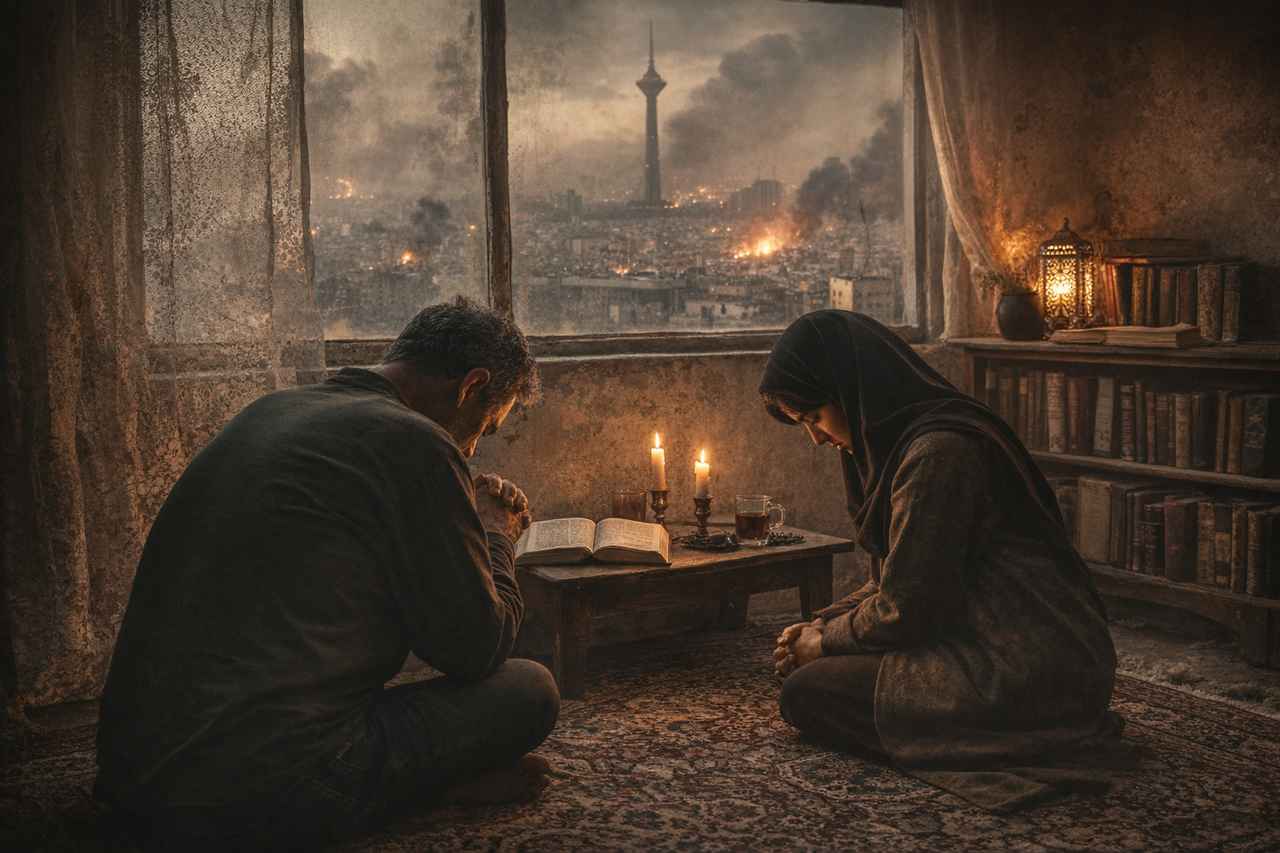
Christians in Iran live under sharply different conditions. Converts from Islam, Persian-speaking evangelical believers, house churches, prisoners, and their families face the greatest danger, while historic Armenian and Assyrian communities worship within a restricted legal space. War, imprisonment, disrupted communication, state suspicion, the seizure of church property, and restrictions on Christian media have made it even harder for believers to gather, communicate, and follow Christ openly. Iran needs prayer for believers to remain faithful to Christ, for rulers and military leaders to act with restraint, for civilians to be protected, and for more Iranians to hear and believe the gospel despite fear and uncertainty.
Prayer Burden at a Glance
Pray for Christians in Iran—especially converts from Islam, prisoners, vulnerable families, house churches, the St Peter’s congregation, and historic Armenian and Assyrian communities—to endure faithfully, gather wisely, receive protection and justice, and bear witness to Christ with courage and love. Pray also for civilians, shipping crews, neighbouring peoples, and those responsible for military and nuclear-safety decisions.
Last verified: July 31, 2026
Why Iran Needs Prayer Now
Believers face long-standing restrictions that have become more serious amid war, heightened security measures, disrupted communication, and renewed suspicion toward peaceful Christian activity.
Iran needs prayer because following Christ can carry serious personal, legal, and social cost. Converts from Islam remain especially exposed. House churches and small fellowships may face monitoring, raids, arrest, interrogation, imprisonment, and pressure to identify other believers. Christian prisoners and their families can be cut off from visits, medical care, reliable communication, and ordinary support.
The wider national situation also affects Christian life. Conflict, sanctions, attacks around the Persian Gulf, danger to shipping through the Strait of Hormuz, and internet restrictions have increased fear and uncertainty in public life. Together, these conditions add to the long-standing burdens facing believers: they can force Christians to communicate more cautiously, worsen prison conditions, increase public suspicion, and lead authorities to treat peaceful worship and discipleship as security threats.
Prayer for Iran should therefore remain specific. Christians should remember believers who meet quietly, families divided by conversion, prisoners who may be isolated from support, pastors and disciplers who must serve discreetly, historic churches facing restricted freedom, congregations displaced from church property, civilians exposed to military escalation, and rulers whose decisions can either restrain harm or deepen suffering.
Country Snapshot
A brief orientation to Iran’s region, population, government, religious setting, and the conditions facing Christians.
Iran is a large and influential country in the Middle East and Western Asia. Its religious and political system gives Shi’a Islam a privileged public role, while some historic religious minorities have limited legal recognition. That recognition matters, but it does not provide broad freedom for Christian conversion, Persian-language evangelism, independent church life, or public witness.
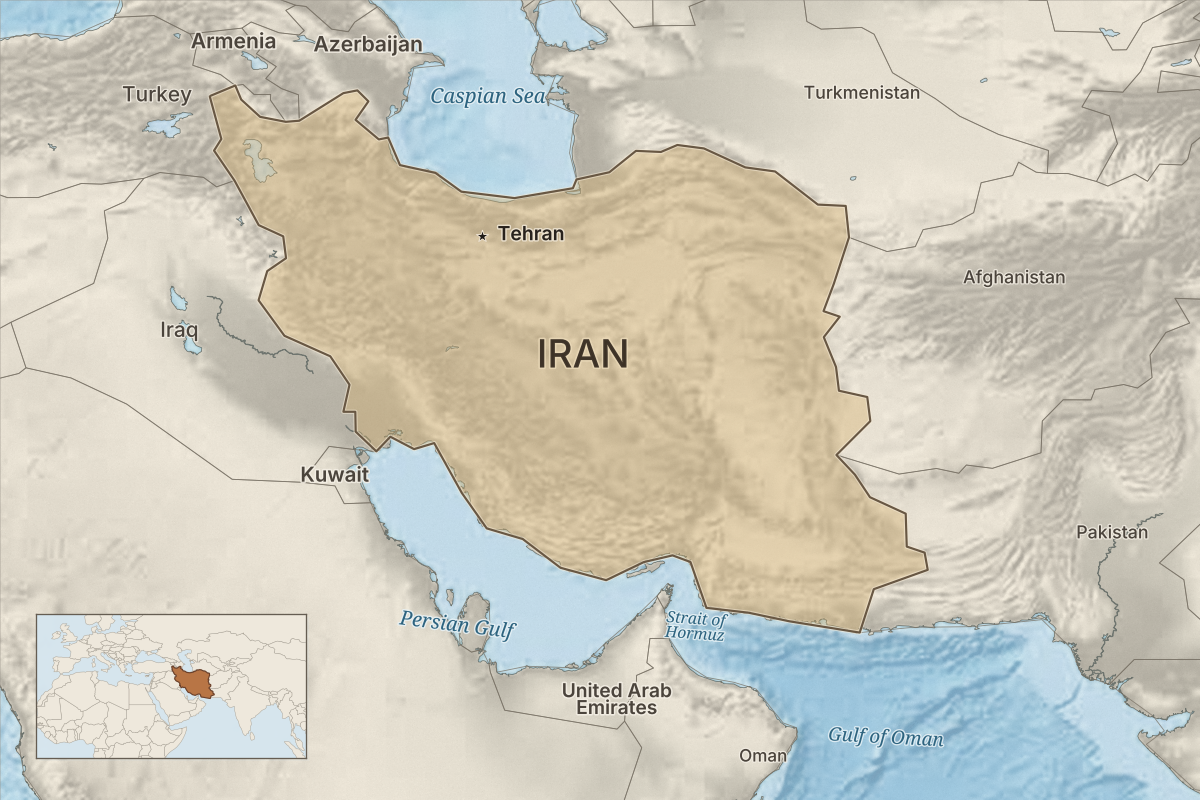
Historic Armenian and Assyrian Christian communities have limited legal recognition but still face restrictions. Converts from Islam and Persian-speaking evangelical believers face much greater danger. Christians in Iran do not all experience restrictions in the same way, and prayer should recognise these differences rather than reducing every community to one pattern.
Spiritual and Practical Challenges Affecting Christians and Churches
The greatest burdens fall on converts, house churches, prisoners, families divided by conversion, Persian-speaking ministries, and churches serving within narrow legal limits.
Conversion and house-church danger
Converts from Islam and Christians connected to house churches or informal fellowships face the greatest risk. Peaceful worship, Bible study, baptism, prayer, communion, and ordinary discipleship may be treated as evidence of prohibited religious activity or a security offence.
Arrest, prosecution, and imprisonment
Believers may face raids, interrogation, travel restrictions, large bail demands, imprisonment, exile conditions after release, and pressure to provide information about other Christians. Prisoners and their families may also struggle with restricted visits, inadequate medical care, poor food, uncertainty, and financial strain.
State-security accusations
Iranian authorities and state-aligned media have sometimes described evangelical Christians, converts, and Christian broadcasters as security threats, foreign collaborators, or hostile elements. Christian-rights monitors report that many cases instead concern peaceful worship, Bible distribution, fellowship, baptism, prayer, or Christian teaching. An official accusation does not by itself prove that a believer has committed a crime.
Family and social strain
Conversion may bring rejection, shame, suspicion, loss of employment, economic hardship, or pressure from relatives. Believers need wisdom and gentleness toward family members who misunderstand or oppose them, while remaining faithful to Christ without bitterness or fear.
Restricted space for historic churches
Historic Armenian and Assyrian communities face a different pattern of restriction. They may worship within legally recognised churches, yet they face restrictions on Persian-language ministry, ministry among Persian speakers, access to property, and public Christian witness. Their situation is not identical to that of converts, but they still need courage, pastoral wisdom, and protection.
Christian Life and Witness in Iran
Many believers follow Christ through trusted relationships, quiet worship, careful communication, patient discipleship, and hope in Him because open Christian activity carries unusual risk.
For many Christians in Iran, following Christ requires courage and careful judgment about whom to trust. Believers may worship in small gatherings and private homes, rely on trusted friendships, speak cautiously, and communicate discreetly. The danger is not limited to dramatic moments such as arrest or sentencing. It is also present in daily choices about who can be trusted, how openly someone can speak, where believers can gather, and how relatives may respond to conversion.
For converts, practices that are ordinary in much of the world—Bible study, baptism, communion, Christmas observance, prayer, and home fellowship—can become grounds for suspicion or prosecution. Even ordinary acts of Christian obedience can therefore require great courage and perseverance. Believers need sound teaching, wise pastors, faithful friendships, secure access to Scripture, and confidence that Christ does not abandon His people.
Prisoners and their families need sustained prayer. Detention can separate believers from medical care, legal help, Christian fellowship, and family support. Relatives may carry fear, financial pressure, and uncertainty while having little reliable information. Prayer should therefore ask not only for release, but also for bodily strength, medical care, truthful legal proceedings, comfort for families, and steadfast faith.
Historic Armenian and Assyrian congregations face different restrictions from converts and house churches. Their continued worship and visible presence matter, yet legal recognition does not mean complete freedom. They need prayer to remain faithful to Christ and Scripture, care for their people, and bear witness wisely despite the restrictions they face.
Recent Developments
Leadership change, renewed military exchanges, severe disruption in the Strait of Hormuz, restricted internet access, prison concerns, and pressure on Christian property and media give Christians specific reasons to pray for Iran now.
-
March–April 2026
Leadership changed during the conflict
Associated Press reporting identified Mojtaba Khamenei as Iran’s supreme leader after the death of Ali Khamenei. Later reporting described the Supreme National Security Council as unusually central in wartime decisions and negotiations. The transition brought uncertainty at a time of war, which may increase public fear and lead to harsher security measures.
Prayer significance: Pray for rulers and senior officials to be restrained from cruelty, deception, pride, and reckless escalation, and for decisions that protect life and allow peaceful Christian witness.
-
July 30, 2026
The pause in attacks did not become a lasting ceasefire
The United States and Iran resumed major attacks after several quieter days. Kuwait reported severe damage to a building belonging to a Chinese firm and the death of one worker. Iran’s official IRNA news agency reported that a strike on Qeshm Island killed three people and wounded two.
Prayer significance: Pray for the protection of civilians, restraint among military leaders, truthful reporting, care for the wounded and bereaved, and a durable end to hostilities.
-
July 31, 2026
Iranian attacks continued and maritime danger increased
No new United States strikes inside Iran were reported overnight, but the conflict remained active. Kuwait said it intercepted Iranian drones aimed at military facilities; falling fragments caused material damage but no reported casualties. Iran’s Revolutionary Guard also claimed that it struck two oil tankers attempting to pass through the Strait of Hormuz and that four other tankers turned back. Public reporting did not establish the tankers’ ownership, the full extent of damage, or whether anyone aboard was harmed.
Prayer significance: Pray for shipping crews, coastal communities, neighbouring countries, and families whose safety and livelihoods depend on restraint and safer navigation.
-
Through July 31, 2026
The Strait of Hormuz remained severely disrupted
The strait was not operating normally or safely for international shipping, although limited or authorised passage may still have occurred. The tanker claims reinforced the danger to crews, regional communities, energy supplies, and countries whose economies depend on the strait.
Prayer significance: Pray for protection at sea, truthful communication, practical cooperation, and decisions that reduce danger rather than widen the conflict.
-
June–July 2026
Mediation continued without a new comprehensive settlement
Pakistan, Qatar, Oman, and other regional actors continued efforts to preserve negotiating channels, reduce attacks, and restore safer navigation. No new high-level negotiating session or comprehensive direct settlement was publicly confirmed by July 31.
Prayer significance: Pray for honest mediation, humility among negotiators, protection from manipulation and delay, and agreements that genuinely preserve life and justice.
-
May–July 2026
Nationwide internet access remained restricted and uneven
Internet access partially returned in late May after a prolonged national shutdown, but it remained restricted, uneven, and subject to state control. Publicly available nationwide data through July 31 did not establish either full restoration or a renewed nationwide blackout.
Prayer significance: Pray that families, prisoners, churches, and ministries can communicate safely, receive reliable information, and maintain fellowship without exposing vulnerable believers.
-
July 2026
A Christian prisoner faced violence, and pressure on Christian media increased
Specialist Christian sources reported that Christian convert Ghazal Marzban faced violence and injury in Evin Prison. They also reported that Iranian intelligence authorities had classified Christian broadcasters as hostile entities, which may increase the danger for people who work with Persian-language Christian media. Public reporting available through July 31 did not confirm a new nationwide wave of Christian arrests.
Prayer significance: Pray for prisoners to receive protection, medical care, justice, and Christian encouragement, and for Christian media ministries to serve Iranians wisely without exposing believers unnecessarily.
-
July 2026
St Peter’s compound was seized and residents displaced
The St Peter’s Evangelical Church compound in Tehran was seized, residents were evicted, and worship was disrupted. No restoration, demolition, reopening, or return of property had been confirmed by July 31.
Prayer significance: Pray for the congregation and displaced residents to receive shelter, fellowship, pastoral care, justice, and a safe place for worship.
-
Through July 31, 2026
No newer public nuclear-safety notice was available
No Iranian regulator notice dated July 30 or 31 appeared in the IAEA-hosted international event database, and no separate public notice from the Iran Nuclear Regulatory Authority was available. The latest public entries for Iran concerned earlier incidents and did not report an off-site radiological release. This does not show that no military activity occurred near nuclear-related sites; it means that no newer public regulator notice was available by July 31.
Prayer significance: Pray for nuclear facilities and surrounding communities to be protected from attack, accident, miscalculation, and catastrophe.
How to Pray
Pray for faithful endurance, protection, justice, restrained leadership, civilian safety, and gospel fruit among Iranians.
Pray for converts to stand firm in Christ. Ask God to strengthen believers from Muslim backgrounds with courage, wisdom, holiness, and assurance of His fatherly care when they face family rejection, legal danger, social suspicion, or pressure to turn away from Christ.
Pray for house churches and small fellowships. Ask the Lord to protect believers who gather quietly for worship, prayer, Scripture, baptism, communion, and discipleship. Pray that they would be wise without being ruled by fear and faithful without unnecessary exposure.
Pray for prisoners and those under investigation. Ask God to sustain Christian prisoners in body and soul, provide medical care, comfort their families, expose false accusations, and bring justice, relief, and release according to His wise will.
Pray for families strained or divided by conversion. Ask the Lord to give believers patience, courage, wisdom, and gentleness toward relatives who misunderstand or oppose them, and let faithful conduct bear witness to the gospel without bitterness or fear.
Pray for historic Armenian and Assyrian churches. Ask God to preserve their worship, strengthen pastors and congregations, and keep them faithful to Christ and Scripture amid the legal restrictions they face.
Pray for the St Peter’s congregation and displaced residents. Ask God to provide shelter, pastoral care, Christian fellowship, justice, and a safe place where the congregation may worship and serve.
Pray for pastors, disciplers, translators, and Christian media ministries. Ask the Lord to give them discernment, endurance, protection, truthful speech, and opportunities to teach and encourage Iranians without exposing vulnerable believers.
Pray for civilians, shipping crews, and neighbouring peoples. Ask God to restrain further attacks, protect those travelling or working near the Strait of Hormuz, preserve nuclear facilities and surrounding communities, and prevent accident, miscalculation, and wider catastrophe.
Pray for rulers and those with authority. Ask God to restrain cruelty, falsehood, pride, and reckless escalation among rulers, judges, prison officials, security authorities, and military decision-makers. Pray for decisions that protect the innocent, uphold justice, show mercy to the vulnerable, and permit peaceful Christian witness.
Give Thanks
Iran’s burdens are severe, but God continues to preserve believers, sustain quiet ministry, and show mercy by limiting further harm.
Give thanks for the perseverance of Iranian believers. Even under surveillance, social strain, legal risk, and fear, Christians continue to gather, worship, pray, encourage one another, and confess Christ. Their endurance displays God’s preserving grace.
Give thanks that prisoners and vulnerable churches are not forgotten. Christian-rights monitors, advocacy organisations, churches, and reporters continue to document arrests, prosecutions, prison conditions, property seizures, and restrictions affecting converts and congregations.
Give thanks for quiet ministry to Iranians. Believers are being strengthened through discipleship, pastoral care, trauma support, translation, broadcasting, and online ministry carried out with patience and caution.
Give thanks for every mercy that limits further suffering. Every life preserved, line of communication kept open, act of mediation, community protected, and decision that prevents further violence is a reason to thank God.
Last Verified / Update Note
This note explains when the guide was reviewed, what was checked, and which developments may affect how readers use it for prayer.
Review Status
Reviewed in light of current developments
The review covered whether United States–Iran attacks had resumed or paused; casualty and damage reports from July 30–31; diplomatic and mediation efforts; navigation and tanker incidents in the Strait of Hormuz; nationwide internet access; Christian arrests, prosecutions, imprisonment, and media restrictions; the St Peter’s Evangelical Church compound; and public notices from the IAEA or Iran’s nuclear regulator.
Pray for civilians and military personnel exposed to renewed attacks; for restraint among leaders and armed forces; for shipping crews and communities around the Strait of Hormuz; for truthful diplomacy and a durable end to hostilities; for Christians facing imprisonment, surveillance, and restricted access to Christian teaching; for the congregation and displaced residents of St Peter’s; and for nuclear facilities and surrounding communities to be protected from attack, accident, and miscalculation.
Developments to watch include any renewed United States or Iranian strike; a verified ceasefire or substantial diplomatic agreement; further attacks on commercial vessels; a meaningful reopening or further closure of the Strait of Hormuz; a new nationwide internet shutdown or measurable restoration; new Christian arrests, sentences, releases, or prison abuses; any restoration, demolition, or changed worship access at St Peter’s; and any new IAEA or Iranian nuclear-regulator safety notice.
Military and maritime reporting remains fast-moving and partly dependent on claims by the parties to the conflict. Iranian official or state-aligned statements are included to represent Iran’s stated position but are not treated as independent verification. Casualty, damage, and tanker claims remain attributed where independent confirmation or sufficient detail was unavailable.
Help keep this guide accurate and current
If you noticed a possible correction, broken link, or significant country update, please contact the Nations Prayer Directory so we can review it carefully.
Key Sources Consulted
Sources used for this guide’s coverage of Christian life, religious freedom, conflict, shipping, diplomacy, internet access, and nuclear safety.
Current conflict and Strait of Hormuz
- Associated Press. “US and Iran trade missile barrages as hopes dim for a quick resolution to the five-month conflict.” Used for the end of the operational pause, July 30 exchanges, casualty reporting in Kuwait and Qeshm, mediator comments, and wartime shipping levels.
- Associated Press. “Hamas says a deal has been reached in Gaza, and other developments in the Middle East.” Used for July 31 reporting on the absence of new United States strikes overnight, Iranian drone attacks on Kuwait, claimed tanker attacks, and continuing disruption in the Strait of Hormuz.
Negotiations and mediation
- Qatar Ministry of Foreign Affairs and Pakistan Ministry of Foreign Affairs. “Joint Statement following the Lake Lucerne Summit.” Used for the formal negotiating mechanism, technical working groups, and mediator role.
- Qatar Ministry of Foreign Affairs. “Iran-US Technical Meetings Continue Without High-Level Talks.” Used to distinguish continuing technical contacts from a new high-level settlement.
Christian life, persecution, imprisonment, and church property
- U.S. Commission on International Religious Freedom. “Iran.” Used for religious-freedom conditions, arrests, court cases, prosecutions, and the Country of Particular Concern recommendation.
- Open Doors US. “Iran.” Used for convert vulnerability, house-church risk, historic Christian-community restrictions, and World Watch List context.
- Article18. Iran news archive. Used to check current arrest, prosecution, prison, media, and St Peter’s developments.
- Open Doors UK & Ireland. “Update: protests and violence against Christian convert in Evin Prison.” Reports on the July 2026 concern for Christian convert Ghazal Marzban after violence and injury in Evin Prison.
- Article18. “UN rapporteurs condemn confiscation of Tehran church, eviction of residents.” Used for the seizure and eviction position at St Peter’s and the absence of any established restoration.
Internet access
- Cloudflare. “Iran’s Internet is partially restored, Cloudflare Radar data shows.” Provides nationwide data showing the partial restoration of internet access in late May 2026.
Population and background
- World Bank. “Iran, Islamic Rep.” Used for population background.
Nuclear-safety reporting
- IAEA-hosted International Nuclear and Radiological Event Scale news database. Public database of international nuclear and radiological event notices; no newer Iranian regulator notice was available there through July 31, 2026.
Source Context
How to read the sources behind this guide in a fast-changing conflict, religious-freedom, internet-access, and nuclear-safety setting.
Source Context
- Conflict reporting. Associated Press reporting provides the main public account used here for the July 30–31 military developments. Claims made by Iran’s Revolutionary Guard or Iranian state media remain clearly attributed where ownership, casualties, or the full extent of damage could not be independently established.
- Iranian position. Iran’s official and state-aligned reporting presents its maritime and military actions as responses to United States aggression and violations of negotiated understandings. These statements explain Iran’s stated rationale but do not provide independent verification of the disputed claims. No single detailed Iranian government source was publicly available for all the July 31 tanker claims.
- Diplomacy. Qatar and Pakistan’s official statements describe the continuing negotiating structure and technical-level mechanism. Official statements available through July 31 did not announce a new high-level agreement or a comprehensive resumption of direct negotiations.
- Internet access. Cloudflare’s May 27 report was the most recent publicly available nationwide measurement and confirmed a partial restoration of access. No comparable nationwide data published by July 31 showed either full access or a renewed nationwide shutdown.
- Christian developments. Article18, Open Doors, and related specialist sources reported on arrests, prosecutions, prison conditions, media restrictions, and changes at St Peter’s. Public reporting available through July 31 did not confirm a material change beyond the July developments described in this guide. A lack of newer reporting should not be read as evidence that conditions improved.
- Nuclear safety. The IAEA-hosted international event database contained no Iranian regulator notice dated July 30 or 31. Reporting delays remain possible, so the absence of a newer public notice should not be taken as proof that no incident or military activity occurred.
A Closing Prayer for Iran
A prayer for Iran’s persecuted Christians, prisoners, civilians, rulers, and people affected by conflict.


