

North Korea is difficult to see clearly. Independent access is severely limited, information is tightly controlled, and much of daily life cannot be assessed through normal public reporting.
Yet North Koreans must not become distant figures hidden behind political arguments, military tensions, or statistics. They are men, women, and children made in the image of God. They belong to families and communities that need truth, mercy, justice, peace, and the saving hope of Jesus Christ.
This guide therefore calls Christians to pray with compassion and careful judgment. We should not repeat dramatic claims that cannot be verified. But uncertainty should not make our prayers vague. We can intercede specifically for hidden believers, prisoners, vulnerable households, separated families, people facing danger near the borders, leaders with grave responsibilities, and those who have little opportunity to hear the gospel.
Prayer Burden at a Glance
Pray for hidden believers and Christian families to be protected, grounded in Scripture, and kept faithful to Christ; for prisoners, detainees, and people compelled into harsh labour; for children and vulnerable households facing inadequate food, medicine, or healthcare; for people at risk of trafficking, detention, or forced return; for leaders to act justly; for peace and restraint on the Korean Peninsula; and for the gospel to bear fruit as North Koreans repent and trust in Jesus Christ.
Last verified: August 1, 2026
Why North Korea Needs Prayer
Severe restrictions on independent Christian life, limited access to reliable information, long-standing food, health, and economic hardship affecting households, and regional military tensions call for careful, compassionate, and specific prayer.
Independent Christian life remains severely restricted. Assessments by the United Nations and the United States Commission on International Religious Freedom describe deep limits on religion, expression, information, and movement. Because direct access to the country is so limited, much of what is known about Christian life comes from institutional investigations, public records, and testimony from people who have left North Korea.
These sources cannot show us everything. Even so, they point to serious danger for people who practise Christianity or share their faith outside tightly controlled state structures. Reliable information about hidden churches, individual believers, and detention conditions remains incomplete. We must therefore speak clearly without claiming more than the evidence supports.
North Korean families also face long-standing food insecurity, limited healthcare, and economic hardship. Children, pregnant women, nursing mothers, rural households, prisoners, and people with few resources may be especially vulnerable. Restricted international access makes it difficult to measure current conditions across the whole country.
Military and nuclear policies add another serious burden. North Korea presents its nuclear deterrent and military development as necessary for sovereignty and national security. Japan, South Korea, the United States, and other governments regard the programmes and related missile launches as grave regional and international security concerns. Christian prayer should not become an argument for one political side. It should seek peace and civilian protection, asking God to restrain pride, fear-driven decisions, retaliation, and dangerous miscalculation.
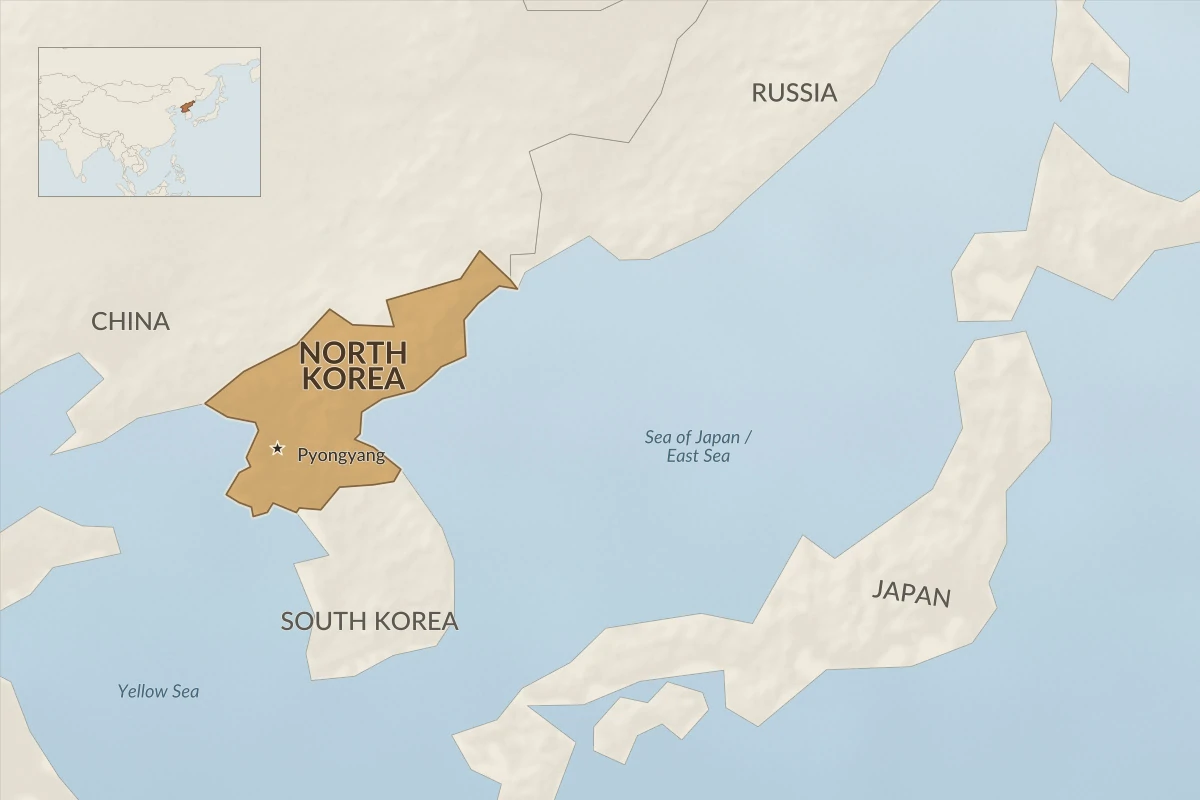
Country Snapshot
A brief orientation to North Korea’s formal name, location, population, leadership, and the distinction between its people and its governing institutions.
The population figure is a United Nations estimate. Current Chinese official reporting identifies Kim Jong Un in the senior party and state roles listed above.
The North Korean people are not interchangeable with the government, the Workers’ Party, the military, the security services, or official ideology. Many have little influence over national policy. We should speak truthfully about state actions without showing contempt for the population as a whole.
Spiritual and Practical Challenges Affecting Christians and Churches
Independent Christian life is severely restricted, while detention, compulsory labour, controlled information, food and health needs among vulnerable households, limited humanitarian access, and border dangers affect many people and families.
Christian faith under severe restriction
Available evidence indicates that independent Christian worship, discipleship, evangelism, and possession of Christian materials can expose people to grave danger. Believers may be unable to gather openly, identify themselves safely, or receive normal pastoral care. We cannot know with confidence how many believers there are, where they live, or how they gather for worship and fellowship.
State-recognized religious activity should not be taken as proof that independent churches enjoy broad freedom. At the same time, we should not claim to know the hearts or eternal state of people connected with officially recognized religious institutions. The central question is whether people are free to believe, worship, gather, and witness according to conscience.
Detention and compulsory labour
United Nations reporting has documented extensive compulsory labour in prisons, state workplaces, military service, public mobilizations, schools, overseas employment, and other settings. Exact numbers and conditions are difficult to establish, but the evidence is serious enough to call Christians to remember prisoners, labourers, their families, and the officials responsible for these systems.
Those who suffer in detention must not become anonymous symbols. Each person has a name, a history, and relationships that may be hidden from the outside world. Bring before God those who need protection from abuse, adequate food, medical care, and just treatment. Remember families who do not know what has happened to someone they love.
Isolation, restricted information, and divided families
United Nations assessments continue to describe severe limits on expression, information, and movement. These controls can cut people off from outside news, Christian teaching, relatives, and opportunities to seek help. Even ordinary communication may carry danger.
Ask God to bring truthful information and Christian teaching to people without exposing them recklessly to harm. Those serving North Koreans through broadcasting, digital communication, Scripture distribution, personal relationships, and ministry outside the country need humility, courage, and wisdom.
Restrictions on movement and communication also deepen the pain of divided families. Some relatives have lived apart for decades. Others may not know whether family members who were detained, disappeared, or crossed a border are still alive.
Food, health, and household vulnerability
North Korea has limited arable land and remains vulnerable to shortages of agricultural equipment and fertilizer, as well as floods, droughts, heatwaves, and other weather shocks. Yet food production is only one part of the problem. National supply, local distribution, household income, market access, and nutritional quality all affect whether families have enough nutritious food.
The World Food Programme continues to describe serious undernourishment and particular risks for children, pregnant women, and nursing mothers. Its prominent national estimate is based on the 2022 edition of The State of Food Security and Nutrition in the World, not a new nationwide survey completed in 2026. Present conditions must therefore be described cautiously.
FAO reported favourable conditions for the 2025 main crops and a promising beginning to the 2025–26 winter cereal season. This is encouraging, but good weather does not mean that every household has enough food or that nutritional needs are being met.
The pandemic also disrupted routine vaccination. In September 2024, the government launched a large catch-up campaign with UNICEF support for children and pregnant women. WHO continued providing remote technical cooperation in vaccination surveillance, health-emergency coordination, and digital health during 2025 and 2026.
These programmes show that some channels of cooperation remain open. They do not show that international health workers have unrestricted access throughout the country.
Bring before God farmers, doctors, nurses, community health workers, and families seeking care. Ask for favourable weather, fair distribution, accurate diagnosis, available medicines and vaccines, clean water, sanitation, and compassionate treatment.
Humanitarian access
As of August 1, 2026, normal international humanitarian access remained restricted, although limited contact with United Nations bodies continued. The UN Country Team described a prolonged absence from the country alongside some signs of renewed engagement.
Humanitarian exemptions were also approved for projects involving health, nutrition, agriculture, water, sanitation, and emergency assistance. An approved exemption allows proposed assistance to proceed through sanctions controls. It does not prove that every approved item was delivered, distributed, or independently monitored.
Intercede for wider, responsibly managed humanitarian access. May assistance reach people according to need, humanitarian workers be able to assess conditions accurately, and political interests not prevent vulnerable communities from receiving help.
Border danger, trafficking, and forced return
North Koreans who leave the country may face trafficking, exploitation, detention, or forced return. The United Nations has warned that people forcibly repatriated may suffer serious violations and prolonged detention. Specific cases and totals are difficult to verify, and not every allegation can be treated as settled fact.
South Korean statistics record North Korean arrivals in South Korea, but those figures do not represent everyone crossing borders, living in other countries, or being returned.
Remember those forced to make difficult choices under dangerous conditions, especially women and children vulnerable to trafficking. Ask that governments would treat them humanely and protect them from being returned to serious danger.
North Koreans rebuilding their lives elsewhere also need prayer. Greater freedom may come with grief, trauma, distrust, disorientation, and fear for relatives left behind.
Christian Life and Witness in North Korea
Because the church cannot be observed openly, Christians should pray with humility for hidden believers, families under pressure, faithful discipleship, and gospel witness inside and outside the country.
We cannot see the church in North Korea in the way we can see churches in more open societies. That lack of visibility should make us humble, not silent. We should not claim to know how many believers there are, how they are organized, or what every Christian experiences.
Religious-freedom investigations and testimony collected from North Korean escapees include accounts of people who continued to believe in Christ or practise their faith despite severe restrictions. Such testimony is important, but it is not a statistically representative picture of the entire country.
Some believers may have little or no regular fellowship. Intercede for them to know God through His Word, to be guarded from error, and to remain firm in faith. May they remember that they belong to the one church of Jesus Christ even when they cannot see or communicate with other Christians.
Christian parents and relatives may have to consider whether speaking about their faith could endanger children or extended family. Ask God to give them wisdom. We should not condemn believers whose circumstances require great caution. Faithfulness under such pressure may look very different from public Christian life in a freer country.
North Koreans also need access to trustworthy Scripture and sound teaching. Christian material entering the country can place recipients in danger. Churches and ministries seeking to help therefore need humility, patience, and good judgment. Their work should serve North Koreans rather than turn suffering into publicity, fundraising, or dramatic storytelling.
North Koreans living in South Korea, China, Russia, and other countries may encounter the gospel with greater freedom. Yet they may also carry trauma, loneliness, suspicion, and fear for relatives. Churches serving them should offer clear biblical teaching, patient friendship, and practical care without manipulation.
Remember especially those who are detained or isolated because of Christian belief or association. May Christ sustain them when they have no access to a pastor, congregation, or Bible. May other believers remember them faithfully before God.
Above all, ask that North Koreans would hear the good news that sinners are reconciled to God by grace alone, through faith alone, in Jesus Christ alone. Seek genuine repentance and regeneration, not merely the adoption of a religious label or outward identity.
Recent Developments
Leadership priorities, regional partnerships, missile and nuclear tensions, limited international engagement, and continued religious restrictions affect how Christians can pray for North Korea now.
-
February 2026
Leadership priorities after the Ninth Workers’ Party Congress
The Ninth Congress of the Workers’ Party of Korea retained Kim Jong Un as the party’s senior leader and set priorities for a new governing period. Official messaging emphasized economic development while maintaining a strong focus on military and nuclear capability.
The United Nations High Commissioner for Human Rights warned that placing greater emphasis on military strength could draw resources and attention away from people’s welfare. That is a UN assessment, not the North Korean government’s stated interpretation of its policy.
Prayer significance: Intercede for leaders to value human life, pursue justice, and direct national resources toward the real needs of ordinary people.
-
June–July 2026
Relations with China and continuing cooperation with Russia
Chinese President Xi Jinping visited Pyongyang on June 8–9, 2026 and held talks with Kim Jong Un. Chinese official reporting presented the visit as an effort to strengthen bilateral relations and contribute to regional peace, stability, and development.
North Korean and Russian foreign ministers held their third strategic dialogue on July 20, 2026. North Korean official reporting described the meeting as part of efforts to strengthen their comprehensive strategic partnership and broaden cooperation. The precise military consequences of the relationship remain contested, and many reported personnel, weapons-transfer, and casualty figures remain unverified.
Prayer significance: Bring these relationships before God. May cooperation among these governments serve peace and human welfare rather than deepen confrontation or widen suffering.
-
2026
Missile and nuclear tensions
North Korea continued missile activity during 2026 and maintained its commitment to nuclear and military development. It presents these programmes as necessary for national defence and the preservation of sovereignty. Japan, South Korea, the United States, and other governments regard them as threats to regional and international security and as contrary to relevant Security Council resolutions.
Prayer significance: Ask for sober judgment, truthful communication, and restraint among everyone with authority over military and nuclear decisions. May civilians be protected and provocation, retaliation, and catastrophic miscalculation be prevented.
-
2025–2026
Limited international engagement and continuing humanitarian restrictions
The United Nations entered 2026 after a prolonged lack of normal access to North Korea. Limited signs of renewed engagement included North Korean participation in international meetings and contact with United Nations bodies. These contacts did not amount to a verified restoration of normal humanitarian operations inside the country.
Humanitarian exemptions continued to preserve possible channels for health, agriculture, water, and emergency assistance. FAO reported favourable recent crop conditions, while UNICEF and WHO continued limited cooperation on health and vaccination.
Prayer significance: Give thanks for these limited openings while praying for wider access, trustworthy monitoring, fair distribution, and lasting improvements in food and healthcare.
-
As of August 1, 2026
No verified broad change in religious freedom
No reliable evidence was found of a broad opening for independent Christian worship, discipleship, or witness. Recent USCIRF and UN assessments continued to describe severe restrictions on religious freedom and other basic liberties.
Prayer significance: Ask that believers would be preserved and strengthened, unjust restrictions removed, and people given freedom to hear, believe, and live according to the truth.
How to Pray for North Korea
Pray for hidden believers, vulnerable people, truthful and humane leadership, peace on the Korean Peninsula, and gospel fruit that endures.
-
Pray for hidden believers and Christian families. Bring before God Christians living with fear, isolation, and uncertainty. May they grow in faith, holiness, wisdom, and love. Ask Christ to sustain those who cannot gather openly. Remember families in which speaking about faith may endanger children or relatives. Seek wisdom, protection, and faithful endurance for them.
-
Pray for Scripture and sound discipleship. Ask that North Koreans would encounter the Bible and trustworthy Christian teaching. May believers be protected from false teaching, and may those sharing Christian materials, communicating with North Koreans, or providing discipleship act with courage and care.
-
Pray for prisoners, detainees, and forced labourers. Remember those in prisons, detention facilities, labour systems, and other harsh conditions. Bring before God their need for food, medical care, humane treatment, and justice. Do not forget isolated believers or families who do not know what has happened to someone they love.
-
Pray for children and vulnerable households. Intercede for children to receive nutritious food, vaccination, medical treatment, clean water, and loving care. Include pregnant women, nursing mothers, older people, people with disabilities, rural households, and families living far from places where food, medical care, and other essential services are more available.
-
Pray for farmers, health workers, and humanitarian access. Ask God to strengthen farmers, doctors, nurses, community health workers, and labourers. Pray for favourable weather, productive harvests, fair distribution, available medicines, and wider access for responsible humanitarian assistance. May help genuinely reach those in need.
-
Pray for people near and beyond the borders. Remember those exposed to trafficking, exploitation, detention, and forced return, especially women and children. Bring before God North Koreans rebuilding their lives elsewhere. May churches offer them patient friendship, faithful biblical teaching, and compassionate practical care.
-
Pray for truth and freedom from fear. Ask that North Koreans would gain access to truthful information without being recklessly exposed to danger. May lies, propaganda, and fear lose their hold. May people grow in courage, wisdom, and discernment.
-
Pray for leaders and officials. Intercede for government leaders, party officials, military commanders, security officers, judges, and local authorities. May they act justly, show mercy, and recognize the dignity of every person affected by their decisions and under their authority. Ask God to restrain cruelty, corruption, pride, and indifference to suffering.
-
Pray for peace and nuclear restraint. Bring before God the relationships between North Korea, South Korea, China, Russia, Japan, and the United States. Ask for wise, honest communication. Ask that provocation, retaliation, misunderstanding, and war would be prevented. May those who control weapons and make security decisions act with humility and restraint, and may civilians be protected from nuclear catastrophe.
-
Pray for separated families. Remember families divided by borders, migration, detention, disappearance, or decades of political separation. Ask for comfort, truthful information, and opportunities for safe contact or reunion where possible.
-
Pray for repentance, saving faith, faithful witness, and hope in Christ. Ask that North Koreans would hear of Christ and be brought to repentance and saving faith. May God raise up faithful witnesses who handle His Word truthfully and live with courage, wisdom, and love. Intercede for believers to endure as they wait for Christ, and for churches to remain holy, watchful, and hopeful. Pray, “Your kingdom come.” May this hope strengthen believers to obey Christ now, witness courageously, and serve others with compassion.
Give Thanks
North Korea’s needs are grave, but limited openings in health, food production, international contact, and Christian witness give Christians real, though limited, reasons for gratitude.
-
Give thanks for the vaccination campaign launched with UNICEF support. Give thanks also for the health workers trained to serve children and pregnant women.
-
Give thanks for continuing WHO technical cooperation. This has included work in vaccination surveillance, emergency readiness, and health-system development.
-
Give thanks for favourable crop conditions reported by FAO. The assessment covered the 2025 main season and the beginning of the 2025–26 winter season. Continue to pray for fair distribution and adequate nutrition in every household.
-
Give thanks for limited renewed contact between North Korean officials and United Nations bodies. Pray that such contact would grow into responsible cooperation that serves vulnerable people.
-
Give thanks for humanitarian exemptions that keep open possible channels for assistance. These channels include health, agriculture, water, and emergency aid, while authorization itself does not prove successful delivery.
-
Give thanks for credible testimony about North Koreans who sought to follow Christ despite severe restrictions. Praise God for His preserving grace. Ask that Christian service among and for North Koreans remain truthful, humble, and free from manipulation.
Last Verified / Update Note
This section records when the guide was last checked, the main concerns shaping prayer, and developments that may require renewed attention.
Review Status
Information current as of August 1, 2026
This guide was reviewed for current leadership, Christian and religious-freedom conditions, detention and compulsory labour, information and movement restrictions, food and health pressures, humanitarian access, border dangers, regional diplomacy, missile and nuclear tensions, and recent developments affecting prayer.
The central burdens remain hidden believers and Christian families, prisoners and forced labourers, vulnerable households, people at risk near the borders, access to Scripture and the gospel, humane leadership, humanitarian access, and peace on the Korean Peninsula.
Leadership roles, missile and nuclear activity, North Korea’s relations with China and Russia, international humanitarian access, food conditions, aid delivery, and the treatment of people returned across borders may change and deserve renewed attention over time.
North Korea permits very limited independent access. Government sources help identify official positions. United Nations, regional, humanitarian, religious-freedom, and testimony-based sources help assess conditions, though each source type has limits explained below.
Help Keep This Guide Accurate and Current
Reliable information about North Korea is difficult to obtain, and conditions may change. Readers who identify a credible correction or a significant new development may contact the Nations Prayer Directory.
Key Sources Consulted
Official, regional, United Nations, humanitarian, religious-freedom, population, and supporting sources consulted in preparing this guide.
Official and Regional Sources
- Statement by DPRK Vice-Minister for Foreign Affairs Kim Son Gyong to the 80th United Nations General Assembly. Used for North Korea’s official position on sovereignty, military alliances, sanctions, and nuclear deterrence.
- KCNA text mirrored by KCNA Watch: Closing Address at the Ninth Workers’ Party Congress. Used for the congress and its official policy emphasis.
- Ministry of Foreign Affairs of China: Xi Jinping’s Talks with Kim Jong Un. Used for the June 2026 China–North Korea summit and China’s official account.
- Republic of Korea Ministry of Unification: North Korean Defector Statistics. Used for arrivals in South Korea and the limits of those statistics.
- Korea Institute for National Unification: White Paper on Human Rights in North Korea 2025. Used as a regional human-rights and testimony-based source.
- Ministry of Foreign Affairs of Japan: Response to North Korean Missile Launches, April 19, 2026. Used for Japan’s official position on missile activity.
- Ministry of Foreign Affairs of Japan: Japan–United States–Republic of Korea Consultations, June 12, 2026. Used for regional concerns about nuclear, missile, and North Korea–Russia cooperation.
United Nations and Humanitarian Sources
- OHCHR Seoul: 2026 Report of the Special Rapporteur on Human Rights in the DPRK. Used for current human-rights conditions and source limitations.
- OHCHR: Forced Labour by the Democratic People’s Republic of Korea. Used for compulsory-labour patterns.
- United Nations Country Team in the DPRK: Frequently Asked Questions. Used for the status and limitations of UN access.
- FAO GIEWS: Democratic People’s Republic of Korea Country Brief. Used for the March 2026 crop outlook.
- World Food Programme: Democratic People’s Republic of Korea. Used for food and nutrition concerns and the date of the standing estimate.
- UNICEF: Catch-up Vaccination Campaign for Children and Pregnant Women. Used for the vaccination programme.
- World Health Organization: Digital Health Cooperation with the DPRK, April 2026. Used for current technical health cooperation.
- UN Security Council Committee: Humanitarian Exemption Requests. Used for approved humanitarian exemptions, not as proof of delivery.
Religious-Freedom and Church-Life Sources
- USCIRF: North Korea Country Update. Used for current religious-freedom conditions and for USCIRF’s description of its research methods.
- USCIRF: Organized Persecution—Documenting Religious-Freedom Violations in North Korea. Used for testimony-based evidence and enforcement patterns.
- USCIRF Annual Report. Used for the commission’s current country assessment and recommendations.
- Korea Institute for National Unification: White Paper on Human Rights in North Korea 2025. Used for regional research and escapee testimony.
Population and Supporting Sources
- United Nations Data: Democratic People’s Republic of Korea. Used for population, capital, and regional information.
- UNFPA World Population Dashboard: Democratic People’s Republic of Korea. Used to cross-check the population estimate.
- Yonhap News Agency: Third North Korea–Russia Strategic Dialogue, July 20, 2026. Used as reputable regional reporting on the meeting announced by KCNA.
Source Context
How to read official, regional, United Nations, humanitarian, religious-freedom, and testimony-based sources in a country where independent access is severely limited.
Source Context
- Restricted independent access. International organizations, journalists, and independent researchers do not have normal nationwide access to North Korea. Some current conditions cannot be directly observed, checked, or compared through independent fieldwork.
- Official sources. North Korean, Chinese, South Korean, Japanese, and other government sources help establish each government’s stated position. They do not independently verify the accuracy of every claim made by that government.
- Regional and outside assessments. South Korean institutions, neighbouring governments, and international organizations often have greater access to escapees, satellite information, or regional security data. They also bring their own institutional and political perspectives and must be read critically.
- Testimony and interviews. Testimony from escapees, former officials, and witnesses can reveal conditions hidden from public view. It may be limited by memory, location, time period, personal experience, and the difficulty of independent corroboration. Individual testimony should not automatically be generalized to the whole country.
- Christian population figures. Reliable nationwide figures for hidden believers, underground churches, or Christians in detention are not available. Such estimates should therefore not be treated as established fact.
- Detention and punishment claims. Broad patterns are supported by UN and institutional investigations, but exact prison populations, execution totals, and the outcomes of individual cases are often impossible to confirm publicly.
- Food and nutrition figures. Crop production, national availability, distribution, household access, and nutrition are different questions. The WFP figure commonly cited for undernourishment is based on earlier modelling, while FAO’s March 2026 assessment concerns crop conditions rather than household food access.
- Humanitarian exemptions. Approval under the UN sanctions system permits a proposed humanitarian project or shipment to proceed. It does not by itself prove that goods were delivered, distributed as intended, or independently monitored.
- Border and forced-return information. Current totals are difficult to establish. South Korean arrival statistics cover entry into South Korea only and do not measure all border crossings, people living elsewhere, or people returned to North Korea.
- Military and nuclear developments. Missile activity, military cooperation, and nuclear policy can change quickly and are often described differently by the governments involved. The discussion therefore remains broad and avoids technical speculation, disputed totals, and claims that war is imminent.
- Reading the guide. The purpose of these cautions is not to weaken prayer. It is to help readers pray truthfully, compassionately, and without turning uncertain or contested information into settled fact.
A Closing Prayer for North Korea
A concise prayer for North Korea’s believers, vulnerable families, leaders, humanitarian needs, gospel witness, and peace.


