

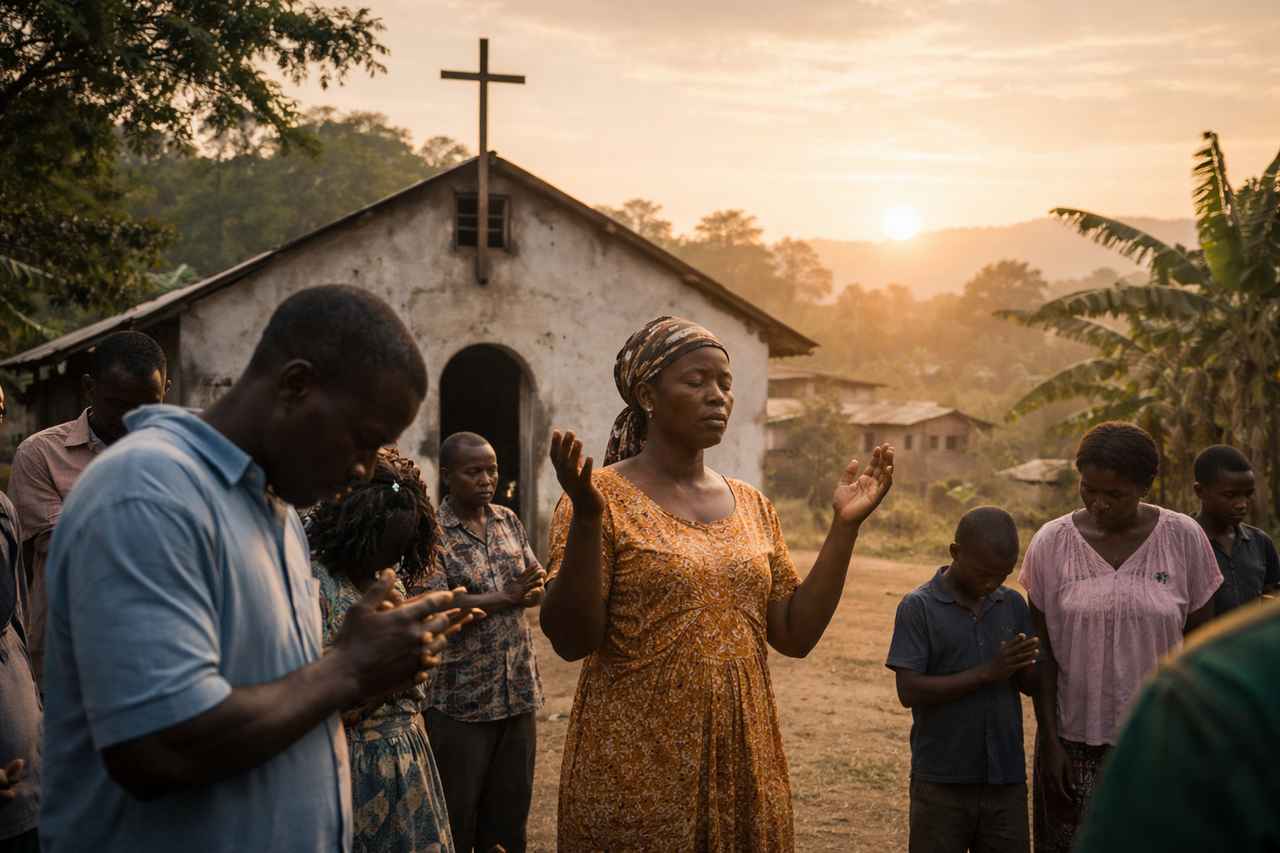
In Uganda, Christian faith is not hidden from public life. Churches gather openly, Christian institutions are visible, and the memory of the Uganda Martyrs still holds deep national meaning. Yet a visible church is not automatically a faithful church. Uganda needs believers who will follow Christ with courage, holiness, truthfulness, mercy, and humility as the country faces concerns about justice, detention, public speech, refugee care, regional insecurity, and continued vigilance against Ebola near the Democratic Republic of the Congo border.
Prayer Burden at a Glance
Pray for Uganda’s churches to bear faithful public witness amid concerns about justice, the treatment and medical care of detainees, and freedom of expression. Pray also for compassionate service to more than two million refugees and asylum seekers, protection from ADF-linked violence in eastern Democratic Republic of the Congo, and continued vigilance after Uganda declared its 2026 Ebola outbreak over.
Last verified: August 2026
Why Uganda Needs Prayer Now
Uganda needs prayer for faithful Christian witness as the country faces concerns about justice, detention, freedom of expression, refugee care, regional insecurity, and continued vigilance against Ebola near the Democratic Republic of the Congo border.
President Yoweri Museveni began a seventh term after the contested January 2026 election. The election period and its aftermath raised continuing concerns about the treatment of political opponents, journalists, civic organizations, and people who speak critically about public affairs. Christians serving in churches, schools, media, law, medicine, and public institutions need wisdom to seek truth and justice without being governed by fear, pride, ethnic loyalty, or party loyalty.
On 29 July 2026, opposition leader Kizza Besigye collapsed in court during his treason trial, and proceedings were postponed. Associated Press reported on 30 July that his wife said he was unconscious in intensive care at Mulago Hospital. AP also reported that his personal physician was eventually allowed to see him. By 1 August, no official statement cited in this guide had confirmed his exact medical condition, custody location, access arrangements, or the next date for the treason trial. His lead lawyer, Erias Lukwago, had been arrested and charged in June, adding to concerns about access to preferred legal counsel and the fair conduct of the trial.
Concerns about freedom of expression also increased during June and July. On 28 June, Uganda’s military chief ordered the closure of Nation Media Group outlets in Uganda, including the Daily Monitor and NTV. Human Rights Watch later reported a wider pattern of military detentions involving government critics, lawyers, journalists, and opposition figures. These developments should lead Christians to pray for truthful reporting, impartial courts, humane treatment of detainees, public authorities who act lawfully, and courage among church leaders.
Uganda’s Protection of Sovereignty Bill became law after presidential assent on 17 May 2026. The government says the law is intended to protect national decision-making and regulate people and organizations acting on behalf of foreign entities or receiving foreign funding. Opposition and civil-society voices have warned that it may restrict legitimate public, humanitarian, media, or civic activity. Its practical effects remain important to watch as the law is implemented.
Uganda also carries a large mercy burden. The United Nations High Commissioner for Refugees reported 2,031,697 refugees and asylum seekers in the country as of 30 June 2026. This need reaches into schools, clinics, churches, host communities, local government, and families already facing economic strain.
Regional insecurity remains a concern. The Allied Democratic Forces is a Ugandan-origin armed group now active mainly in eastern Democratic Republic of the Congo. Its violence there continues to affect civilians, displaced communities, border security, and Uganda’s wider regional setting. Most of the ADF-linked violence discussed here occurred in eastern Congo rather than inside Uganda.
There is also reason for thanksgiving. Uganda’s Ministry of Health declared the country’s 2026 Ebola outbreak over on 28 July after the required monitoring period passed without another confirmed case. Continued vigilance remains important in border districts while the health response continues in eastern Congo.
Uganda’s central prayer need is therefore not simply protection from persecution. It is that a publicly visible church would become a deeply faithful church: truthful in public life, compassionate toward vulnerable people, courageous without becoming partisan, holy in discipleship, and confident in Christ.
Country Snapshot
A concise orientation to Uganda’s setting, church context, and present prayer burden.
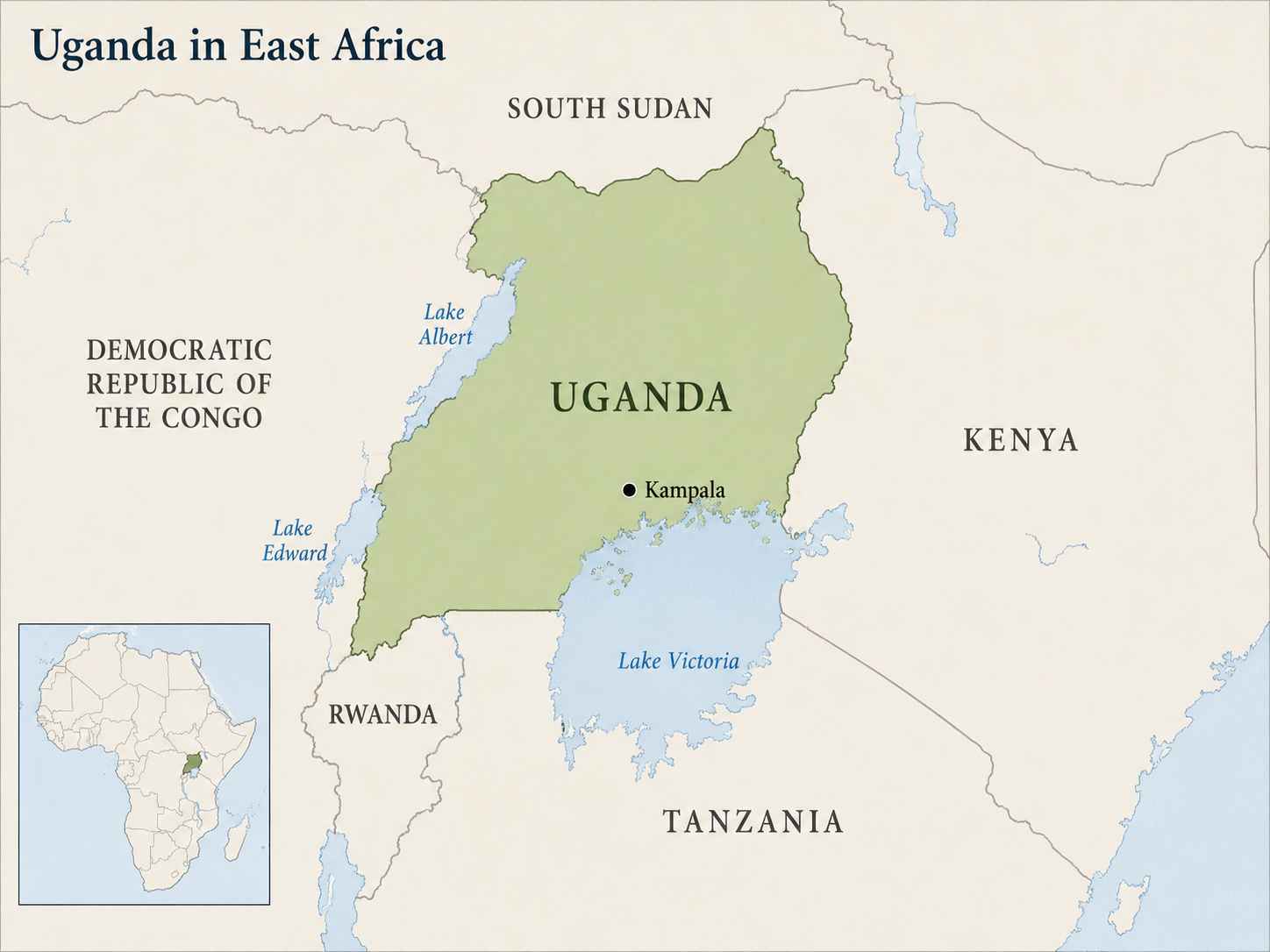
Uganda is a landlocked East African country bordered by South Sudan, Kenya, Tanzania, Rwanda, and the Democratic Republic of the Congo. Its geography matters for prayer because its western border lies close to eastern Congo’s long-running insecurity, displacement, and public-health concerns.
The country’s Christian presence is broad and public. Roman Catholic, Anglican / Church of Uganda, Pentecostal / Evangelical, Seventh-day Adventist, Orthodox, and other professing Christian communities all have visible life in the country. That visibility gives churches a serious responsibility: to disciple people deeply, proclaim Christ clearly, and avoid treating a Christian social identity as proof of saving faith.
Spiritual and Practical Challenges Affecting Christians and Churches
Uganda’s churches do not face one uniform national pattern of persecution. Their challenges include the danger of relying on Christian identity without living faith, political fear, concerns about justice and freedom of expression, localized hostility toward some converts, regional insecurity, and the strain of serving vulnerable communities.
Speaking truth without serving a political party
Uganda’s political climate can make truthful speech costly. Pastors and Christian leaders need wisdom to avoid reckless political language, but they also need courage to resist flattery, intimidation, corruption, and silence when justice and human dignity are at stake. Their first loyalty must remain with Christ and Scripture rather than any party, leader, or political movement.
Justice, detention, and medical care
The collapse of Kizza Besigye during his treason trial renewed concern about detention conditions, medical care, access to counsel, and the fair administration of justice. Churches should not presume guilt, innocence, or political motive without evidence. They can still pray for truth, due process, humane treatment, appropriate medical care, and protection for prisoners, families, lawyers, doctors, judges, and court officials.
Freedom of expression and civic organizations
The June closure order against major Nation Media Group outlets, arrests involving critics and lawyers, and the enactment of the Protection of Sovereignty Act have raised concerns about freedom of expression and the work of civic organizations. Christians serving in journalism, law, education, government, and civil society need integrity, courage, humility, and protection from intimidation and partisan manipulation.
Security risks around Christian gatherings
The Allied Democratic Forces has roots in Uganda and operates mainly in eastern Democratic Republic of the Congo. Its violence and the fear surrounding it still affect Uganda’s regional security. The suspected threat near Munyonyo Martyrs’ Shrine before Martyrs’ Day in June 2025 also showed why major Christian gatherings require wise and proportionate protection.
Localized hostility toward some converts
In parts of eastern Uganda, some people who leave Islam to follow Christ may face rejection, expulsion from the family home, isolation, intimidation, or violence. This does not describe the experience of all Ugandan Christians, but it shows that a Christian-majority country can still contain places where following Christ carries a serious personal cost.
Serving refugees with limited resources
Uganda hosts more than two million refugees and asylum seekers. Churches, schools, clinics, host communities, aid workers, and public servants often serve families facing displacement, trauma, poverty, and uncertainty while working with limited resources. Christian compassion requires endurance, accountability, wise stewardship, and patient care.
Pastoral care in morally charged debates
Churches must also serve people faithfully in morally and politically charged debates. They need conviction governed by Scripture, compassion for people who are vulnerable or wounded, careful public speech, and the humility to distinguish Christian faithfulness from political hostility or cultural pride.
Christian Life and Witness in Uganda
For many believers, Christian life is public and ordinary, but that visibility brings both blessing and responsibility.
For many Christians in Uganda, ordinary church life is public. Believers gather for worship, children may grow up around Christian schools or church institutions, and Christian language is familiar in national life. That can be a blessing. It can also become a danger if Christian identity becomes more social than spiritual.
In practice, some Ugandan believers may need courage to resist political flattery, corruption, ethnic favoritism, or silence in the face of injustice. Others may need endurance in communities serving refugees, where many people need help and churches, schools, clinics, and aid workers often have limited resources. Pastors may also be called to care for detainees’ families, counsel people frightened by public conflict, support lawyers and medical workers carrying difficult responsibilities, and help congregations respond to disputed claims without becoming captive to fear or party loyalty.
For converts from Islam in some eastern communities, Christian life can be far more costly. Faithfulness may mean family rejection, loss of shelter, or isolation. Those believers need protection, wise discipleship, and local churches that do not leave them to suffer alone.
For Christian parents, teachers, and youth leaders, Uganda’s young population makes discipleship especially urgent. A country with many churches still needs the next generation to know the gospel clearly, not merely inherit church language. Pray that children and young adults would hear Christ preached plainly and see faith lived with integrity.
Recent Developments
These developments help Christians understand how to pray for Uganda now.
-
3 April 2024
Constitutional Court ruling on the Anti-Homosexuality Act, 2023
Uganda’s Constitutional Court largely upheld the Anti-Homosexuality Act, 2023, while striking some provisions. The decision remains part of Uganda’s morally charged legal setting and continues to require biblical conviction, pastoral care, and careful public speech from churches.
Prayer significance: Pray for churches to speak truthfully, treat people with dignity, care for vulnerable people, and remain faithful to Scripture without cruelty, fear, or political manipulation.
-
31 December 2024
National census report published
The Uganda Bureau of Statistics published the National Population and Housing Census 2024 Final Report, which provides national figures for population and religious composition. It records a population of 45,905,417 and a large Christian-identifying majority.
Prayer significance: Pray that widespread Christian identity would deepen into repentance, living faith, faithful discipleship, and obedience to Christ.
-
3 June 2025
Security concern before Martyrs’ Day
Ugandan authorities said two armed suspects linked to the Allied Democratic Forces were intercepted near Munyonyo Martyrs’ Shrine before Martyrs’ Day celebrations.
Prayer significance: Pray for protection around Christian gatherings and for security responses that preserve life without spreading unnecessary fear.
-
17 January 2026
Presidential election result announced
Uganda’s Electoral Commission declared President Museveni the winner of the January 2026 presidential election. Associated Press reported that the election period included an internet shutdown and that opposition leader Bobi Wine rejected the result.
Prayer significance: Pray for truthfulness, restraint, justice, peace, and courageous Christian witness in public life.
-
5–17 May 2026
Protection of Sovereignty Act passed and signed into law
Parliament passed the Protection of Sovereignty Bill on 5 May after adopting amendments that narrowed parts of its scope. President Museveni assented to it on 17 May, formally making it law. The government says the law protects national sovereignty and regulates people or organizations acting on behalf of foreign entities, including some activities supported by foreign funding. Opposition and civil-society voices have warned that it could restrict legitimate public and civic activity.
Prayer significance: Pray for laws and public institutions to protect peace, justice, lawful service, national responsibility, and the good of ordinary people.
-
28 June 2026
Military chief orders closure of major media outlets
Associated Press reported that Uganda’s military chief ordered the closure of Nation Media Group operations in Uganda, including the Daily Monitor and NTV. Soldiers were deployed at the company’s Kampala offices, and media organizations warned about the effects on independent journalism.
Prayer significance: Pray for truthful journalism, lawful public authority, protection from intimidation, and wisdom for Christians working in media and public communication.
-
30 June 2026
Refugee and asylum-seeker population exceeds 2.03 million
The United Nations High Commissioner for Refugees and Uganda’s Office of the Prime Minister reported 2,031,697 refugees and asylum seekers in Uganda as of 30 June 2026.
Prayer significance: Pray for refugees, host communities, churches, schools, clinics, aid workers, and public servants to receive strength, protection, wisdom, and practical provision.
-
28 July 2026
Uganda declares Ebola outbreak over
Uganda’s Ministry of Health declared the 2026 Ebola outbreak over after the required monitoring period passed without a new confirmed case. The ministry reported 20 confirmed cases, 18 recoveries, and two deaths, while emphasizing continued surveillance in border districts because the outbreak in Democratic Republic of the Congo remained active.
Prayer significance: Give thanks for containment, recovered patients, health workers, community cooperation, and public-health service. Continue praying for grieving families, border vigilance, and the health response in eastern Congo.
-
29–30 July 2026
Kizza Besigye collapses during treason trial
Opposition leader Kizza Besigye collapsed in court on 29 July during his treason trial, and proceedings were postponed. Associated Press reported on 30 July that his wife said he was unconscious in intensive care at Mulago Hospital. AP also reported that his personal physician was eventually allowed to see him. By 1 August, no official statement cited in this guide had confirmed his exact medical condition, custody location, access arrangements, or the next date for the treason trial. His lead lawyer, Erias Lukwago, had been arrested and charged in June, adding to concerns about access to preferred legal counsel.
Prayer significance: Pray for Besigye’s life and health, for appropriate medical care, for comfort and access for his family, and for integrity among prison officials, doctors, lawyers, prosecutors, and judges. Pray that disputed claims would be tested truthfully and that churches would seek justice without becoming partisan.
How to Pray
Pray for Uganda’s visible church to become a faithful, courageous, merciful, and Christ-centered church.
-
Pray for living faith. Pray that Uganda’s churches would not rest in inherited religion, church membership, or being regarded as Christian by society, but would grow in repentance, living faith, holiness, obedience to Scripture, and confidence in Christ.
-
Pray for courageous and humble church leadership. Pray for pastors, elders, teachers, and Christian leaders to speak truth with courage and wisdom without being captured by party loyalty, fear, ethnic favoritism, political flattery, or pride.
-
Pray for justice and humane care. Pray for prisoners and detainees to receive appropriate medical care, lawful treatment, access to counsel, and protection from cruelty. Pray for families, doctors, lawyers, prison officials, prosecutors, and judges to act with truthfulness, compassion, courage, and integrity.
-
Pray for integrity in public speech. Pray for Christians working in journalism, law, education, civil society, government, and local communities to resist intimidation, corruption, falsehood, and partisan manipulation. Pray that they would bear witness to Christ with conviction and gentleness.
-
Pray for the next generation. Pray for faithful discipleship among children, teenagers, and young adults. Ask the Lord to raise a generation that knows the gospel clearly, loves Scripture, rejects corruption and violence, and follows Christ above social or political pressure.
-
Pray for believers facing hostility and for protection around Christian gatherings. Pray for converts from Islam in parts of eastern Uganda who face rejection, isolation, or violence. Pray also for protection around churches, Christian schools, worshipers, and major Christian gatherings where security concerns remain.
-
Pray for refugees and those who serve them. Pray for refugees, asylum seekers, host communities, churches, clinics, schools, aid workers, and public servants to receive strength, mercy, protection, wise stewardship, and practical provision as they respond to displacement, trauma, crowded services, and daily needs.
-
Pray for health, border communities, and regional peace. Give thanks that Uganda’s Ebola outbreak has ended, and pray for continued vigilance, honest public-health communication, protection for health workers, and mercy for communities affected by Ebola and Allied Democratic Forces violence in eastern Democratic Republic of the Congo.
Give Thanks
Give thanks for real mercies in Uganda’s public church life, religious freedom, care for displaced people, protection from violence, and public-health service.
-
Give thanks for the public freedom to worship. Give thanks that churches can generally gather openly and that Christian worship, schools, ministries, and service institutions remain publicly visible.
-
Give thanks for formal religious-freedom protections. Give thanks that Uganda’s constitution does not establish a state religion and formally protects freedom of thought, conscience, belief, and religious practice.
-
Give thanks for the enduring witness associated with the Uganda Martyrs. Give thanks for the historical witness associated with the Uganda Martyrs, and pray that this memory would lead people beyond inherited identity into repentance and living faith in Christ.
-
Give thanks for mercy shown to refugees. Give thanks for Uganda’s long record of receiving displaced people and for churches, families, host communities, public servants, health workers, teachers, and humanitarian workers who continue to serve them.
-
Give thanks for protection from violence. Give thanks for occasions when authorities and communities have prevented suspected threats from causing harm. Pray that security measures would protect people without spreading unnecessary fear or treating communities unjustly.
-
Give thanks that Uganda’s 2026 Ebola outbreak has ended. Give thanks for recovered patients, health workers, contact-tracing teams, local communities, researchers, public servants, and partners whose work helped contain the outbreak. Pray for comfort for bereaved families and continued vigilance in border districts.
Last Verified / Update Note
This note helps readers understand when the guide was reviewed and which developments may affect how they use it for prayer.
Review Status
Reviewed and updated for readers
This August 2026 update reviewed Uganda’s public Christian context, the aftermath of the January election, the treatment of political opponents and government critics, Kizza Besigye’s treason trial and 29 July collapse, access to legal counsel and medical care, media-freedom concerns, the Protection of Sovereignty Act, refugee-hosting pressures, ADF-linked regional insecurity, and the end of Uganda’s 2026 Ebola outbreak.
Current prayer burdens include faithful Christian witness in a politically tense setting, truth and justice in courts and detention, humane medical care, integrity in public speech, and protection for journalists and civic actors. They also include mercy for more than two million refugees and asylum seekers, security near the Democratic Republic of the Congo border, and continued public-health vigilance.
Watch for verified updates on Kizza Besigye’s medical condition, custody status, access to family, doctors and preferred legal counsel, and the next stage of his trial. Also watch the operation of affected media outlets, implementation and legal challenge of the Protection of Sovereignty Act, updated refugee totals, ADF-linked violence in eastern Congo, and continued Ebola preparedness in Uganda’s border districts.
Besigye’s collapse in court and subsequent hospitalization were confirmed in dated reporting. Associated Press reported on 30 July that his wife said he was unconscious in intensive care and that his personal physician was eventually allowed to see him. By 1 August, no official statement cited in this guide had confirmed his exact medical condition, custody location, access arrangements, or the next date for the treason trial. These categories should be read carefully: confirmed events, official positions, prosecution allegations, family and defence claims, human-rights assessments, and independent reporting are not the same kind of evidence.
Help Keep This Guide Accurate and Current
If you noticed a possible correction, broken link, or significant country update, please contact the Nations Prayer Directory so we can review it carefully.
Key Sources Consulted
The following sources provide the main factual and contextual basis for this Uganda prayer guide, including official Ugandan materials, national reporting, humanitarian data, church context, regional reporting, and independent human-rights assessment.
Official Ugandan and institutional sources
- Uganda Bureau of Statistics. National Population and Housing Census 2024: Final Report, Volume I. It provides Uganda’s population and religious-composition figures.
- State House Uganda. “President Museveni Assents To Protection Of Sovereignty Bill, 2026 Into Law.” It records presidential assent and the government’s stated purpose.
- Parliament of Uganda. “Parliament passes Sovereignty Bill.” It records the bill’s parliamentary passage and amendments.
- Parliament of Uganda. “Opposition calls Sovereignty Protection Bill, redundant and unconstitutional.” It presents the parliamentary opposition’s stated concerns.
- Uganda Ministry of Health through Uganda Media Centre. “Uganda Declares the End of the 2026 Ebola Disease Outbreak.” It gives the official 28 July end-of-outbreak declaration and case totals.
- UNHCR and Uganda’s Office of the Prime Minister. Uganda Country Data Portal. It provides the refugee and asylum-seeker total reported on 30 June 2026.
Election, Besigye trial, health, and legal-access sources
- Associated Press. “Uganda’s Museveni wins 7th term in election hit by fraud claims, internet shutdown.” It reports on election-period conditions and the opposition’s rejection of the result.
- Associated Press. “Ugandan opposition figure Besigye collapses in the dock during treason trial.” It reports Besigye’s 29 July collapse and the postponement of proceedings.
- Associated Press. “Ugandan opposition leader Besigye is unconscious in hospital after collapsing in court, wife says.” It reports the dated family account, hospitalization, and personal-doctor access.
- Associated Press. “Uganda court charges lawyer for jailed Ugandan opposition leader with concealing treason.” It reports the charge against Besigye’s lawyer and the related legal-access concerns.
- Uganda Radio Network. “Judge Orders State Brief Lawyers in Besigye, Lutale Treason Case.” It records court directions concerning disclosure and legal representation.
- Uganda Radio Network. “High Court Gives Besigye Two Weeks to Choose New Lawyers.” It reports the period given to Besigye to choose new lawyers.
- Uganda Radio Network. “Prisons Rejects Phones, Internet for Besigye’s Defence Consultations.” It records the prison authority’s stated arrangements for defence consultations.
- New Vision. “Besigye legal representation case allocated to new judge.” It reports the separate timetable for the legal-representation case.
Civic space, media, and human-rights sources
- Associated Press. “Ugandan army chief orders the closure of a major news platform.” It reports the 28 June media-closure order.
- Committee to Protect Journalists. “Uganda military chief orders Nation Media Group shutdowns, threatens Managing Director Susan Nsibirwa.” It provides press-freedom context concerning the shutdowns.
- Human Rights Watch. “Uganda: Military Seizing Government Critics.” It offers an external human-rights assessment of detentions involving government critics.
- Amnesty International. “Uganda: Authorities must investigate unlawful detention and deportation of Kenyan human rights lawyer.” It presents Amnesty International’s assessment of legal-access and defence-team concerns.
- Freedom House. Freedom in the World 2026: Uganda. It provides broader context concerning civic space, media freedom, religious freedom, and the rule of law.
- Africanews. “Press freedom under threat in Uganda as military chief orders closures.” It provides regional reporting on the media-closure development.
Church, Christian-life, and regional-security sources
- Parliament of Uganda. “Church to MPs: Uphold the truth.” It records one specific example of Christian public witness concerning truth and integrity.
- The Guardian. “Rebel attacks in eastern DRC kill 30 people and hamper Ebola response.” It reports ADF-linked violence in eastern Democratic Republic of the Congo and its effect on the Ebola response.
- Associated Press reporting on the June 2025 suspected ADF-linked threat near Munyonyo Martyrs’ Shrine. It reports the suspected ADF-linked threat near Munyonyo Martyrs’ Shrine in June 2025.
- Open Doors. “Uganda: Converts killed by Muslim relatives.” It provides older illustrative background on localized hostility toward some converts in eastern Uganda; it is not presented as a current nationwide prevalence estimate.
Source Context
How to read the sources behind this guide in a politically sensitive, humanitarian, regional-security, and public-health setting.
Source Context
- Religious composition. Uganda’s 2024 census provides the main national baseline for population and religious identity. These figures describe reported religious affiliation and should not be treated as proof of regeneration, saving faith, or faithfulness to Christ.
- Besigye’s health and trial. Kizza Besigye’s collapse in court and hospitalization were reported on 29–30 July 2026. The statement that he was unconscious in intensive care came from his wife through Associated Press reporting. AP also reported that his personal physician was eventually allowed to see him. By 1 August, no official statement cited in this guide had confirmed his exact medical condition, custody location, access arrangements, or the next date for the treason trial.
- Legal and civic context. The Protection of Sovereignty Act became law on 17 May 2026. Government sources describe it as a safeguard for national sovereignty and a means of regulating agents of foreign entities and foreign funding. Opposition and human-rights sources warn that it may restrict legitimate civic, media, humanitarian, or public activity. The law’s practical effects are still becoming clear. Readers should therefore distinguish between the government’s stated purpose and concerns raised by its critics.
- Media and human-rights reporting. Reports about media closures, military detentions, legal access, and treatment of critics come from a mixture of Ugandan reporting, regional reporting, press-freedom organizations, international human-rights groups, and independent news agencies. These sources serve different purposes and should be read with those differences in mind.
- Refugee and public-health data. Refugee totals are dated figures that may change monthly. Uganda reported 2,031,697 refugees and asylum seekers as of 30 June 2026. The Ministry of Health declared Uganda’s Ebola outbreak over on 28 July while emphasizing continued surveillance and preparedness, particularly in border districts.
- Regional security. Much of the ADF-linked violence discussed in this guide occurred in eastern Democratic Republic of the Congo rather than inside Uganda. It remains relevant because it affects civilians, displaced communities, humanitarian work, border security, public fear, and Uganda’s wider regional setting.
- Source mix. Official Ugandan sources provide laws, government positions, health information, and statistics; Ugandan reporting provides court and legal-process detail; church and regional sources add closer context; and international reporting and human-rights sources provide corroboration and outside assessment. By 1 August, the cited sources did not include an official post-collapse medical or custody statement concerning Besigye, so his condition is described only through dated and attributed reporting.
A Closing Prayer for Uganda
A concise prayer gathering Uganda’s present burden before the Lord.


Thanks for guidance in a suitable way as we consider praying for various prayer points that concern us. It’s helpful as we don’t just bit around the air of what we may think as focus for the different nation needs. Thanks for this initiative and I am glad to have the access to this information as I become more focused in praying Mr. Justus