

On the eastern side of Hispaniola, the Dominican Republic carries a prayer burden that is not simple. Churches can gather openly, Christian language is familiar, and public life is still shaped by long Catholic memory. Yet the country also stands beside a suffering Haiti, wrestles with hard migration questions, and needs churches marked not merely by visible religion, but by living faith, gospel depth, mercy, and truth.
Pray for believers in the Dominican Republic to grow in gospel depth where Christianity is publicly familiar, for churches to serve vulnerable neighbors with courage and wisdom, and for faithful Christian witness amid Haiti-related migration pressure, legal inequality, and recent weather disruption.
Last verified: May 2026
Why the Dominican Republic Needs Prayer Now
The nation has real religious openness, but it also carries spiritual, social, and neighbor-love burdens that Christians should bring before God with care.
The Dominican Republic needs prayer because public Christianity is visible there, but visible religion is never the same as spiritual life. The constitution protects freedom of religion and belief, and many churches can worship openly. Yet a 1954 concordat with the Holy See — the central governing authority of the Roman Catholic Church — gives the Catholic Church official status and privileges not granted equally to other religious groups. The U.S. Department of State’s 2023 International Religious Freedom report notes that non-Catholic churches have continued to raise concerns about unequal recognition, limited legal protection beyond the constitution, and being treated in law as nongovernmental organizations rather than as religious bodies in their own right.
The country also needs prayer because its life is deeply affected by Haiti’s suffering. The Dominican Republic and Haiti share the island of Hispaniola, but they do not share the same language, history, economy, or present stability. Haiti’s violence and institutional breakdown have intensified Dominican concerns about migration, border control, public services, and national security. At the same time, human-rights reporting on the Dominican Republic has documented serious concerns affecting Haitians, stateless persons, and Dominicans of Haitian descent.
This is more than a political issue. It reaches the conscience of the church. Christians in the Dominican Republic need wisdom to honor lawful order without hardening their hearts, to love vulnerable neighbors without naivety, and to speak truth without contempt. They need churches that are not merely culturally Christian, but genuinely shaped by repentance, faith, holiness, mercy, and the gospel of Jesus Christ.
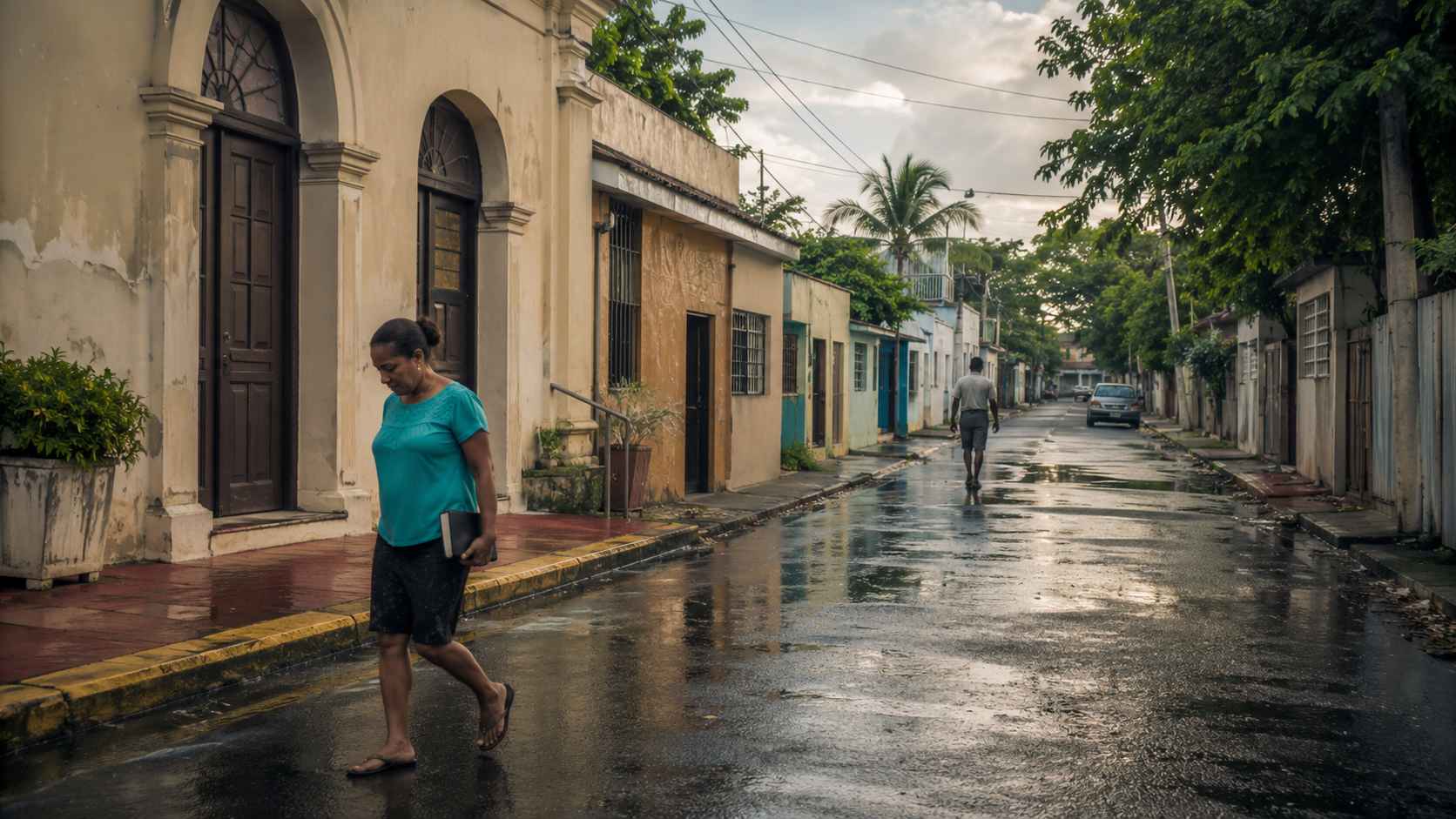
Recent weather disruption has added another burden. In April 2026, heavy rains killed a toddler, damaged more than 1,000 homes, caused power and water outages, and forced evacuations. Such events test the compassion and endurance of families, local authorities, and congregations alike.
Country Snapshot
The Dominican Republic occupies eastern Hispaniola and sits at the center of a Caribbean setting where geography, faith, migration, and public life are closely intertwined.
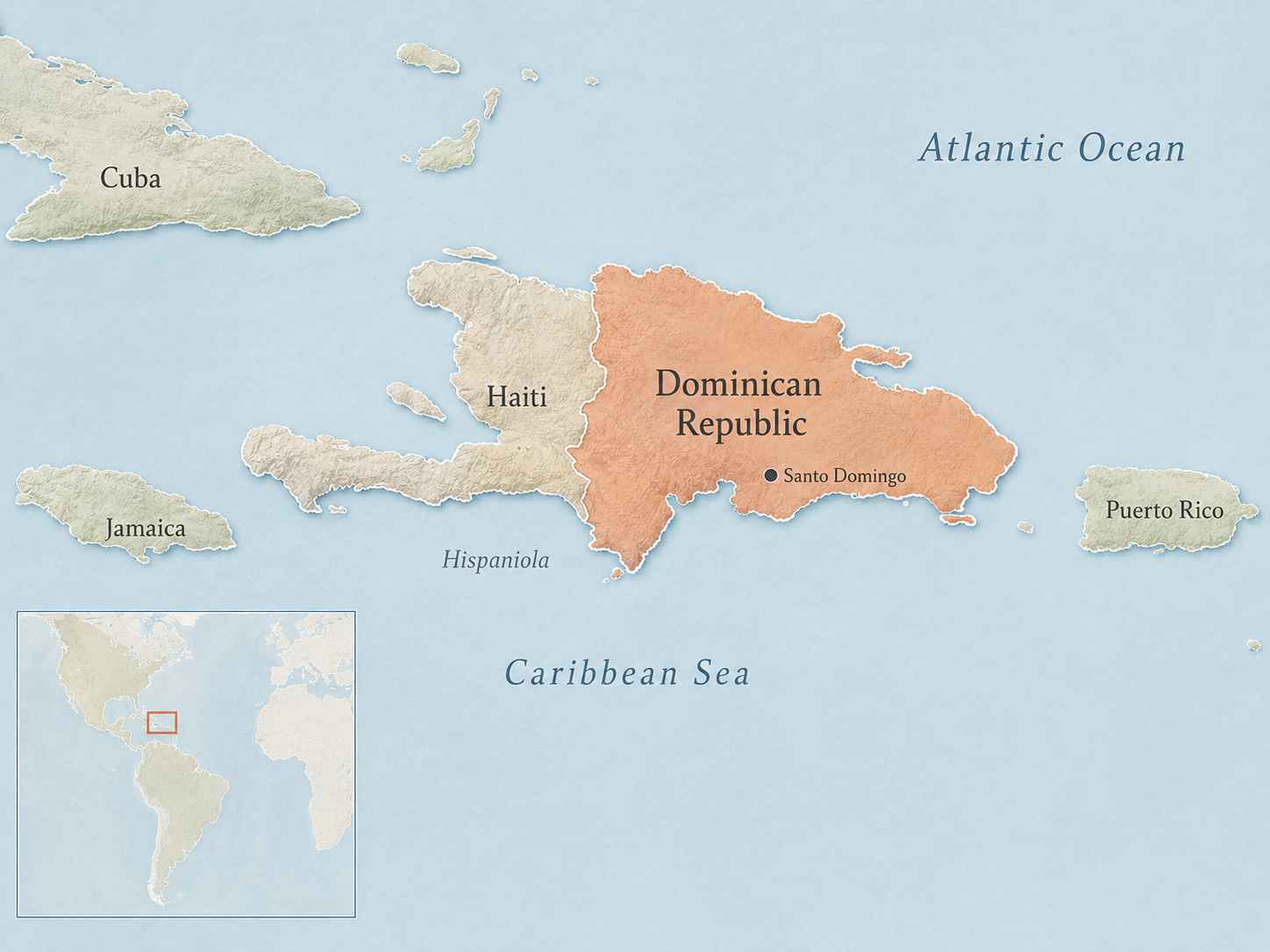
The Dominican Republic occupies the eastern part of Hispaniola, while Haiti occupies the western part of the island. Its capital, Santo Domingo, is one of the Caribbean’s most important cities, and World Bank country data places the population at about 11.4 million. Still, economic capacity and public visibility do not remove the need for prayer over public trust, vulnerable communities, migration pressure, church faithfulness, and the deeper spiritual needs of ordinary people.
The country’s religious landscape is majority Christian and historically Catholic, with a significant evangelical Protestant presence and a growing share of people who report no declared religion. The U.S. Department of State’s 2023 International Religious Freedom report describes Catholicism as still deeply intertwined with culture, government, education, family life, and public holidays, while also noting the visible growth and contribution of non-Catholic churches.
Main Pressures Facing Christians
The main burdens are not a national ban on Christian worship, but gospel depth, legal inequality, public brokenness, and costly neighbor-love.
Public Christianity without automatic gospel depth
Many Dominicans live in a society where Christian language, Catholic holidays, church buildings, and religious customs are familiar. That can be a mercy. It can also become spiritually dangerous when inherited religion is mistaken for repentance, faith, holiness, and life in Christ. Churches need the Lord to deepen biblical preaching, serious discipleship, prayer, family holiness, and evangelism that does more than echo the country’s religious vocabulary.
Unequal legal treatment among religious groups
The Catholic Church retains special legal privileges through the concordat with the Holy See, while non-Catholic groups have continued to call for more equal treatment. The issue is not that evangelical Protestants cannot worship; it is that some churches must navigate legal and administrative burdens that Catholic institutions do not face in the same way. This calls for prayer that is principled, patient, and charitable.
Migration pressure and neighbor-love
Haiti’s suffering has crossed the border in human form: workers, mothers, children, families, deportees, undocumented migrants, and people of uncertain legal status. The Dominican government faces real questions of border management and public capacity. Yet the treatment of vulnerable people also raises moral concerns, especially where people are exposed to abuse, family separation, racial contempt, or lack of due process.
Social vulnerability and public trust
Reports of police abuse, corruption, harsh prison and detention conditions, trafficking, gender-based violence, and discrimination against people of Haitian descent point to public wounds that Christians should bring before God. Churches need integrity in such a setting: not merely borrowing the nation’s assumptions, but teaching believers to fear God, tell the truth, care for the vulnerable, resist corruption, and remember that every person bears the image of God.
What Life Is Like for Christians in the Dominican Republic
Many believers worship openly, yet ordinary faithfulness still requires courage, clarity, and mercy.
For many Christians in the Dominican Republic, daily church life is outwardly open. Congregations can meet. Worship is public. Evangelical churches, Catholic parishes, and other Christian communities have visible space in national life. This is a real mercy, and it should not be minimized.
Yet openness can hide deeper needs. A believer may attend church in a society full of religious language and still face pressure to separate Sunday worship from Monday obedience. A young Christian may be surrounded by Christian symbols yet rarely hear careful biblical teaching. A pastor may preach to people who respect religion but resist repentance. A church may have freedom to gather while still needing courage to confront greed, sexual sin, prejudice, family breakdown, empty formalism, or indifference to the poor.
For Christians serving vulnerable migrants or Haitian-descended communities, the cost can be more concrete. Ministry may mean helping families who fear detention, assisting people with documentation confusion, sharing food after displacement, or offering pastoral care to people treated with suspicion. The Interfaith Dialogue Coalition, made up of major Protestant church councils, has assisted vulnerable communities including Haitian migrants, and the Catholic Church has also provided help for migrants and marginalized communities.
That kind of service gives churches a visible opportunity to adorn the gospel. In a tense public atmosphere, ordinary mercy can become a strong witness: a meal given, a child protected, a family helped, a pastor speaking calmly where others speak with contempt, and a congregation praying for rulers and strangers in the same breath.
Recent Developments
Recent developments sharpen prayer for relief, justice, neighbor-love, and wise public leadership.
-
April 2026
Heavy rains brought death, damage, and disruption.
Associated Press reporting said heavy rainfall killed a toddler, damaged more than 1,000 homes, caused power and water outages, and forced more than 5,000 people to evacuate. This sharpens prayer for affected families, local relief, wise public response, and churches near damaged communities.
-
April–May 2026
Dominican Republic and Haiti agreed to reopen airspace.
Associated Press reported that the Dominican Republic and Haiti announced plans to restore flights between the two countries in May 2026 after more than two years. The step does not remove deeper tensions, but it does represent communication and practical cooperation between strained neighbors.
-
Since October 2024
Deportation policy remains a serious contested burden.
Associated Press reported that the Dominican Republic announced plans in October 2024 to deport up to 10,000 Haitians a week, with officials citing migration pressure and Haiti’s instability. Activists and human-rights observers have criticized abuses affecting Haitians and people of Haitian descent, while Dominican authorities have defended the need for stronger border control. This remains one of the most prayer-relevant public issues because it touches law, mercy, race, nationality, poverty, and the safety of vulnerable people.
-
Ongoing
Legal and religious-freedom concerns remain slower-moving but important.
The U.S. Department of State’s religious-freedom reporting notes that the country continues to provide broad space for worship, but non-Catholic religious groups have raised concerns about unequal treatment under the existing legal framework. This calls for prayer for fair laws, charitable Christian witness, and gospel renewal across all communities that name Christ.
How to Pray
Pray for the Dominican Republic with concern for churches, ordinary believers, vulnerable neighbors, and public leaders.
-
Pray for true gospel depth where Christianity is publicly familiar. Ask the Lord to awaken living faith in the Dominican Republic so that visible religion, church attendance, and Christian language would not become substitutes for repentance, trust in Christ, holiness, and obedience to Scripture.
-
Pray for pastors, church leaders, and ordinary believers. Ask God to strengthen churches in faithful preaching, serious discipleship, prayer, family holiness, evangelism, and patient love, especially where cultural Christianity can make spiritual need harder to see.
-
Pray for humility, truth, and charity among Christian communities. Pray that Roman Catholic, evangelical Protestant, and other Christian communities would not be marked by rivalry, nominalism, or institutional pride, but by reverence for God’s Word, repentance, gospel clarity, and love for neighbor.
-
Pray for just and merciful treatment of vulnerable migrants and families. Ask the Lord to protect Haitians, Dominicans of Haitian descent, undocumented migrants, and stateless persons — people not legally recognized as citizens by any country — from abuse, racial contempt, family separation, and unjust treatment.
-
Pray for President Luis Abinader, migration officials, police, judges, and local authorities. Pray that those who govern would seek public order with justice, enforce laws without cruelty or partiality, resist corruption, and remember that every person under their authority bears the image of God.
-
Pray for churches serving amid Haiti-related pressure and border tension. Ask God to give believers wisdom to love vulnerable neighbors without naivety, speak truth without bitterness, and serve Haitian and Dominican communities with courage, restraint, and compassion.
-
Pray for families affected by flooding, damaged homes, and public disruption. Ask the Lord to provide shelter, clean water, repair, wise relief, and steady local churches that can become places of practical mercy, prayer, and hope in Christ.
Give Thanks
Even where serious burdens remain, Christians can thank God for real mercies and signs of common grace.
-
Give thanks for real public space for worship and Christian service. The Dominican Republic is not a closed country for Christian worship, and many churches can gather, preach, disciple, evangelize, and serve openly.
-
Give thanks for churches and faith communities that care for vulnerable people. Praise God for every congregation, ministry, and Christian leader serving migrants, poor families, storm-affected communities, and those who might otherwise be forgotten.
-
Give thanks for signs of common grace in national stability and resilience. Even with serious burdens, the country has institutions, churches, families, and communities through which God restrains disorder, provides help, and preserves space for gospel witness.
-
Give thanks for every step toward practical cooperation between the Dominican Republic and Haiti. Where communication, trade, humanitarian access, or travel connections are restored, thank God for small mercies that can reduce isolation and create room for neighborly wisdom.
Last Verified / Update Note
This prayer guide is intended to remain living, accurate, and prayer-serving.
Last verified: May 2026. This Dominican Republic prayer guide reflects a May 2026 review of religious-freedom background, human-rights reporting, Haiti-related migration pressure, and recent weather disruption. The most time-sensitive areas are Dominican–Haitian relations, deportation practices, migration enforcement, and recovery from recent flooding. Religious-demography background and the broad legal framework are slower-changing, but the public burdens affecting migrants, border communities, and relief response may change more quickly.
Key Sources Consulted
These sources materially informed the current version of this prayer guide.
- U.S. Department of State, “2023 Report on International Religious Freedom: Dominican Republic.” Used for religious-freedom background, the Catholic concordat, legal treatment of non-Catholic groups, religious demography, and interfaith service to vulnerable communities.
- U.S. Department of State, “2023 Country Report on Human Rights Practices: Dominican Republic.” Used for human-rights concerns involving Haitians, stateless persons, detention and deportation practices, public-security abuses, and vulnerability of people of Haitian descent.
- World Bank, “Dominican Republic Data.” Used for population and development background.
- Associated Press, “Heavy rains kill a child in the Dominican Republic, damage more than 1,000 homes.” Used for April 2026 flood-related developments.
- Associated Press, “Dominican Republic and Haiti to reopen airspace in May, restoring flights after more than 2 years.” Used for the April 2026 Dominican Republic–Haiti airspace reopening development.
- Associated Press, “Dominican Republic will deport up to 10,000 Haitians a week, citing an ‘excess’ of immigrants.” Used for the government’s stated migration policy rationale and outside criticism of deportation measures.
A Closing Prayer for the Dominican Republic
Bring the nation’s burdens before the Lord with faith, humility, and hope in Christ.


