


Many families in Nepal are still grieving those killed during the violence of 2025, while injured survivors continue to recover. After the 2026 election, many citizens—especially young people—are looking for honest government, meaningful work, and public institutions they can trust.
Christians serve within a religiously diverse society. Nepal’s Constitution protects religious practice, but it also prohibits converting another person. Churches therefore need courage, wisdom, and integrity as they preach Christ, disciple believers, and care for their neighbours.
Pray for leaders who govern justly, churches that remain faithful to Scripture, families affected by migration and disaster, and people from every community to hear the gospel and trust in Jesus Christ.
Prayer Burden at a Glance
Pray for people from every community to repent and trust in Christ; for churches to grow in maturity and unity; for Christians to be free to speak peacefully about their faith; for honest government and impartial justice after the September 2025 violence; and for practical care for families affected by migration, earthquake recovery, floods, and landslides.
Last verified: July 24, 2026
Country Snapshot
A brief orientation to Nepal’s location, government, religious setting, and church context.
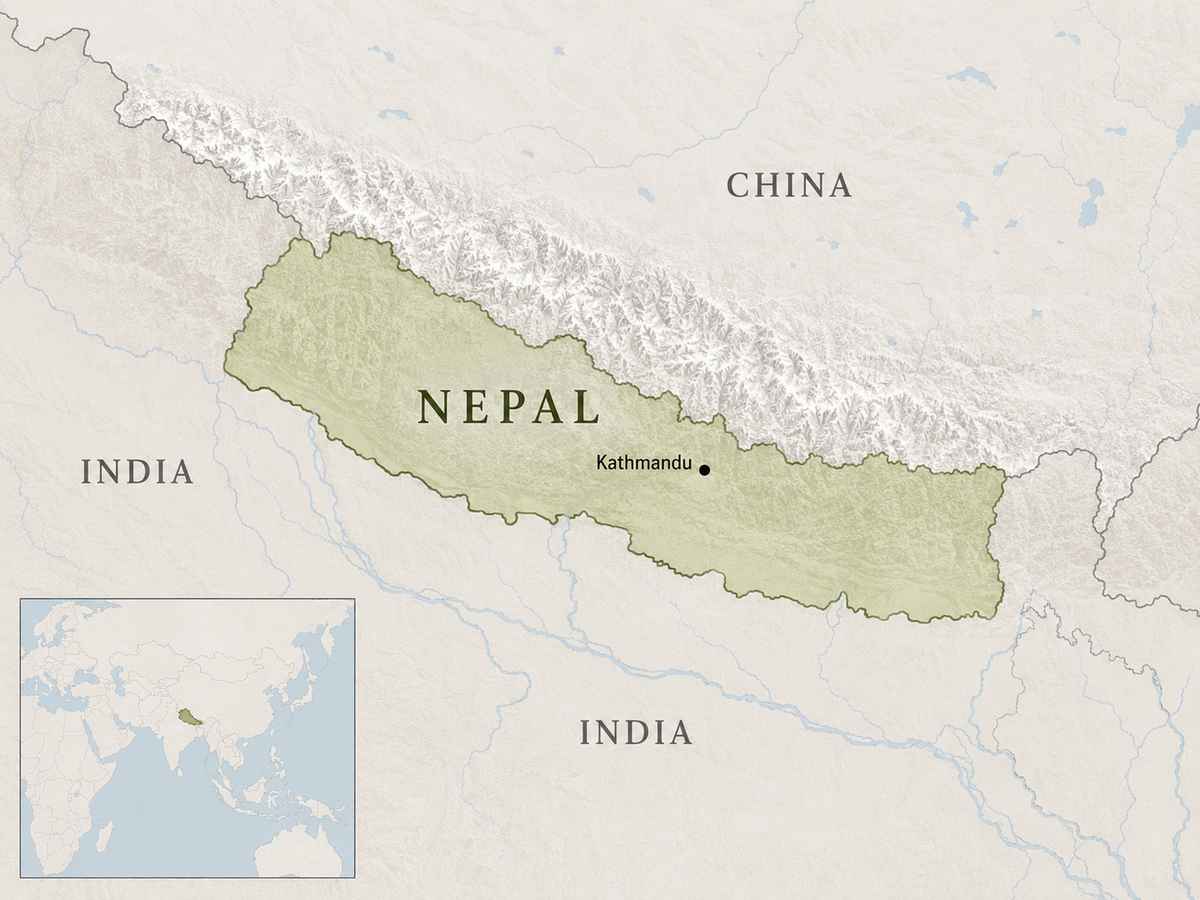
Nepal’s mountains, hills, and southern plains make travel and public services difficult in some areas. Remote communities may have limited access to healthcare, education, markets, disaster assistance, and regular church fellowship.
Why Nepal Needs Prayer Now
Nepal needs prayer for honest government, impartial justice after political violence, freedom for Christians to speak and serve without coercion, dignified work, and practical help for families affected by migration and disaster.
Many families in Nepal are still grieving those killed during the violence of 2025, while injured survivors continue to recover. The September protests began after restrictions on major social-media platforms and widened into anger over corruption, unemployment, political privilege, and frustration with established leaders. Security forces used lethal force, while the wider unrest also included attacks, arson, and serious destruction. Later national reporting recorded 76 deaths and more than 2,000 injuries connected with the unrest and its aftermath.
Nepal has since returned to elected government under Prime Minister Balendra Shah. That peaceful transfer matters, but new leadership alone cannot answer the grievances that drove the protests. The country still needs leaders who resist corruption, improve public services, create conditions for dignified work, and serve people in poor and remote communities.
Justice for the violence of 2025 remains unresolved. Investigations and legal challenges continue, with no final conviction or settled prosecution outcome established as of July 24, 2026. Pray for courts and investigators to follow the evidence, protect witnesses, uphold due process, and refuse both political favouritism and revenge.
Religious freedom also requires prayer. Nepal’s laws are intended, in part, to prevent coercive conversion, improper inducement, religious conflict, and misuse of immigration status. Christian leaders and religious-freedom monitors are concerned that broad wording can also lead to accusations against peaceful preaching, prayer, charitable service, or people who freely choose to become Christians.
Many families face scarce employment, migration-related debt, earthquake recovery, floods, and landslides. Limited work leads many young adults to seek employment abroad, where some encounter fraud, trafficking, unsafe labour, or heavy recruitment debt. Floods and landslides can isolate villages and destroy homes, roads, farms, and livelihoods.
Prayer for Nepal should also include thanksgiving. Churches continue to worship and serve, communities rebuild after disaster, constitutional institutions remain active, and many people care for neighbours in need. Christians can pray honestly about suffering while thanking God for these mercies and asking Him to sustain them.
Spiritual and Practical Challenges Affecting Christians and Churches
Pray for Nepal’s churches to speak openly about Christ without coercion, care patiently for converts and families, teach Scripture faithfully, work together across divisions, and serve communities affected by poverty and disaster.
Religious freedom and faithful witness
Christians in Nepal can gather for worship, form congregations, and practise their faith. Evangelism, however, takes place under laws that prohibit converting another person and penalize some forms of proselytism.
This can create uncertainty when Christians preach, distribute literature, offer prayer, provide charitable help, or speak with people who later choose to follow Christ. Foreign Christians may also face questions about whether their activities comply with immigration and visa conditions.
The differences between these situations matter. Peaceful witness is not coercion. A person’s voluntary decision to follow Christ is not the same as exploiting poverty or offering material help in exchange for religious allegiance. A visa violation does not by itself prove forced conversion, and an accusation does not establish guilt.
Christians should be free to speak openly about their faith. Churches must also reject coercion, manipulation, and promises of material help in exchange for religious allegiance. They should speak truthfully about Christ, give people freedom to respond, and serve without hidden conditions.
Converts, families and community relationships
Some people who leave Hindu, Buddhist, or other religious backgrounds to follow Christ may face pressure from relatives or neighbours. They may be urged to return to former religious practices or excluded from family and community occasions.
These experiences are not the same everywhere. Many Nepalese Christians do not face severe hostility, but those who do need courage, patient pastoral care, and support from the church.
Christians also need grace in their relationships with non-Christian relatives. Following Christ should not lead believers to treat their families or neighbours with contempt. They are called to remain clear about the gospel while showing honour, patience, and love.
Church leadership, discipleship and unity
Church growth is a reason for thanksgiving, but growing numbers do not necessarily mean that believers are being taught and cared for well. Congregations need pastors and elders who handle Scripture faithfully, resist financial misuse, protect vulnerable people, and teach Christians how to obey Christ in everyday life.
Churches also need unity across denominational, ethnic, linguistic, caste, and regional differences. Rivalry between leaders, competition for outside support, and dependence on influential personalities can weaken Christian fellowship and public trust.
Christian representatives have asked for clearer arrangements concerning church registration, property, and burial. Nepalese investigative reporting has also documented property disputes where church assets were held in private names. Current public information does not show how widespread these problems are, and conditions may differ from place to place. Churches nevertheless need lawful and peaceful ways to organize, hold property, care for members, and bury the dead.
Disaster, work and family separation
Earthquakes, floods, landslides, and damaged roads affect churches as well as the wider community. Believers may be separated from fellowship, and families may struggle to reach healthcare, schools, or markets.
Churches can offer food, shelter, prayer, and practical care during such times. That help should always be given freely. Human suffering must never be used to pressure someone to change religion.
Labour migration brings a different kind of strain. Young adults may leave Nepal for years, parents may be separated from their children, and congregations may lose members who could have served as leaders. Some workers face recruitment debt, fraudulent employment, unsafe conditions, or trafficking.
Churches need wisdom to prepare people who leave, support families who remain at home, and welcome back those who return with debt, trauma, or deep disappointment.
National identity, neighbours and vulnerable communities
Groups calling for the restoration of Nepal’s monarchy and its former identity as a Hindu state remain active. These movements are contested. They do not represent current government policy, and no such constitutional change had taken place as of July 24, 2026.
Christians can pray for peaceful public debate and equal citizenship without treating Hindu neighbours or supporters of monarchy as enemies. Political or religious disagreement should not be used to stir hatred or intimidate minority communities.
Nepal must also manage sensitive relationships with India and China. Nepal maintains claims concerning Limpiyadhura, Lipulekh, and Kalapani. India rejects those claims, while China has generally described the dispute as a matter for Nepal and India.
Nepal also follows a one-China and non-interference policy. Outside observers have raised concerns about documentation, cultural freedom, and surveillance affecting Tibetan refugees and long-resident Tibetan communities. Public information does not give a complete picture of current government policy toward undocumented Tibetan residents.
Pray for peaceful relations with neighbouring countries and for vulnerable people to be treated with dignity and fairness.
Christian Life and Witness in Nepal
Pray for Nepalese Christians to worship freely, understand Scripture, grow in obedience, receive trustworthy pastoral care, serve honestly, and remain united in Christ.
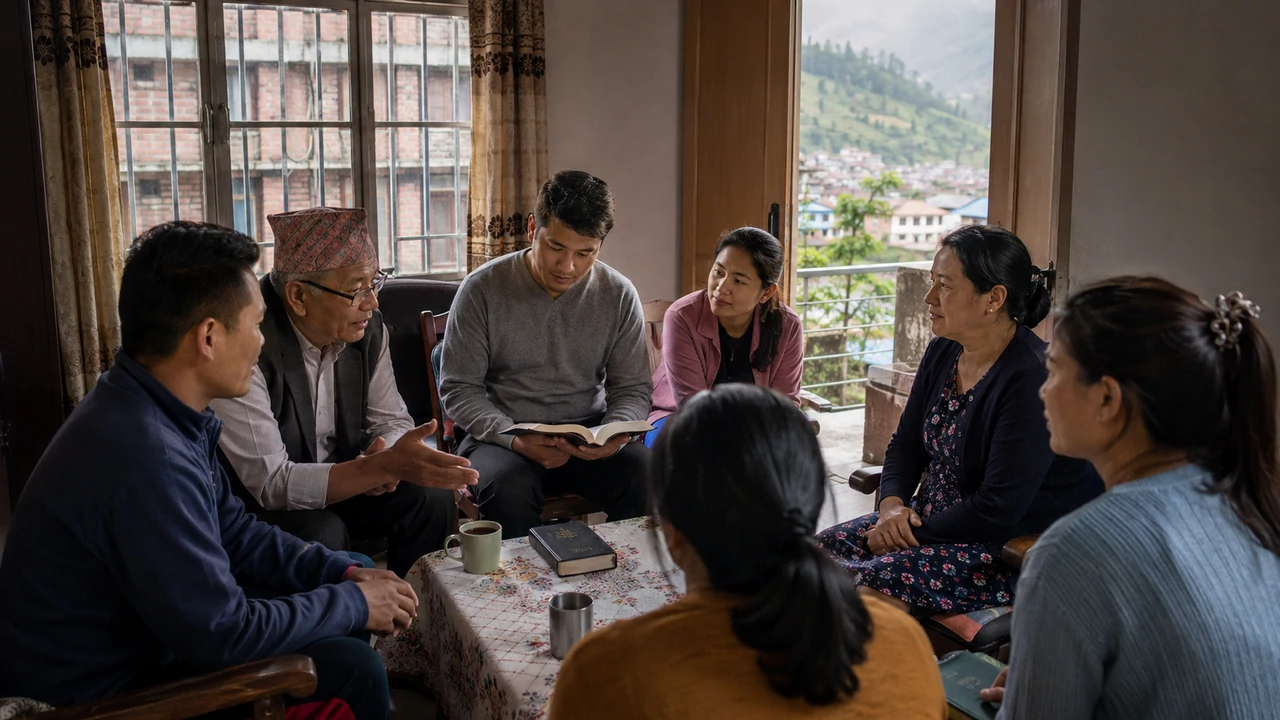
Nepal’s Christians should not be seen only through laws, accusations, or court cases. Believers gather for worship in cities, towns, villages, and remote mountain areas. Some meet in church buildings, while others gather in rented rooms or homes.
There are reasons to thank God for people who have heard the gospel, trusted in Christ, and joined local churches. Yet the church’s calling is not simply to grow in number. Believers need to understand Scripture, grow in prayer, turn from sin, love their families, and serve their neighbours.
Pastors and elders may care for people facing sickness, economic hardship, disaster, or long family separations while also teaching the Bible and helping new Christians understand their faith. They need sound training, wise accountability, and fellowship with other faithful leaders.
Children and young people also need careful discipleship. Churches can help them understand the gospel, avoid treating Christian identity or church activity as a substitute for repentance and faith, and live faithfully within families and communities where Christian belief may be unfamiliar or misunderstood.
Christian witness should be both courageous and humble. Christians believe that salvation is found in Jesus Christ and should not be ashamed to speak about Him. At the same time, people from Hindu, Buddhist, Muslim, Kirat, and other backgrounds are neighbours to be heard, respected, and loved—not people to be pressured.
Christian discipleship should also shape ordinary work. Christian teachers, health workers, farmers, business owners, civil servants, and migrant workers can honour Christ through honesty, mercy, and diligent service. Churches can care for families affected by disaster, migrants, trafficking survivors, people with disabilities, and others who are easily overlooked.
Such care should be given because Christians love Christ and love people made in God’s image. Help should never depend on someone attending Christian worship or changing religion.
Churches also need unity and trustworthiness. Transparent leadership, protection from abuse, responsible use of money, and cooperation between congregations can strengthen both discipleship and public witness.
The future of the church in Nepal does not rest on political favour, foreign influence, or numerical strength. Christ builds His church through His Word and Spirit. Nepalese believers can therefore pray for people to repent and believe, serve their neighbours patiently, and continue in worship, obedience, and hope as they await Christ’s appearing and the fullness of His kingdom.
Recent Developments
These developments should guide prayer for Nepal’s government, public trust, justice, and constitutional life.
-
September 2025
Protests, violence and an interim administration
Restrictions on major social-media platforms helped trigger youth-led protests that broadened into anger over corruption, unemployment, and political privilege.
Security forces used lethal force during the first demonstrations. The wider unrest also included attacks, arson, and serious destruction. Later national reporting recorded 76 deaths linked to the wider unrest and its aftermath, with more than 2,000 people injured. Earlier figures differed because authorities and news organizations counted different incidents and later deaths.
Prime Minister K. P. Sharma Oli resigned. An interim administration led by Sushila Karki then took responsibility for restoring order and preparing a national election.
Prayer significance: Pray for bereaved and injured families, truthful investigation, renewed public trust, and restraint by both authorities and demonstrators.
-
March 2026
Election and new national leadership
Nepal held its House of Representatives election on March 5, 2026. The Rastriya Swatantra Party emerged as the dominant force in Parliament, and Balendra Shah was sworn in as prime minister on March 27.
The result marked a major political and generational change after widespread dissatisfaction with established parties. It did not guarantee that corruption, unemployment, or weak public services would be solved quickly.
Prayer significance: Pray that Nepal’s leaders will use authority to serve the country rather than for personal or party advantage.
-
2026
Accountability remains unsettled
An inquiry commission and the National Human Rights Commission examined the violence of September 2025. Former prime minister K. P. Sharma Oli and former home minister Ramesh Lekhak were arrested in March and released in April after the Supreme Court ruled that custody was not required for the continuing investigation.
In July, Oli and Lekhak challenged recommendations by the National Human Rights Commission concerning possible prosecution. No final conviction or settled prosecution outcome had been established as of July 24, 2026.
Prayer significance: Pray for investigators and courts to follow evidence, protect due process, and resist both political revenge and favouritism.
-
July 2026
Constitutional discussion continues
On July 16, 2026, a government-appointed task force submitted a discussion paper containing public suggestions concerning Nepal’s Constitution. The subjects discussed included government, elections, federalism, citizenship, fundamental rights, and secularism.
No constitutional amendment had been adopted as of July 24, 2026. The discussion paper did not itself change Nepal’s republican, federal, or secular constitutional order.
Prayer significance: Pray for peaceful and honest debate that protects the rights of all Nepal’s communities.
How to Pray for Nepal
Pray for people to trust in Christ, for churches to teach Scripture and care for believers, for honest government and impartial justice, for protection during disasters, and for Christians to endure with hope.
-
Pray for the gospel to bear fruit. Ask God to bring people from every community to repentance and faith in Jesus Christ. Pray that the Holy Spirit would use Scripture to bring genuine repentance and faith, rather than professions produced by coercion, manipulation, or material inducement.
-
Pray for faithful churches. Pray for pastors and elders to teach the Bible clearly, guard congregations from false teaching and financial misuse, protect vulnerable people, and help believers obey Christ in everyday life.
-
Pray for freedom and integrity in Christian witness. Ask that Nepal’s laws and courts would distinguish peaceful witness and voluntary religious change from genuine coercion or exploitation. Pray for Christians to speak courageously and serve others honestly.
-
Pray for converts and their families. Remember believers who face rejection or pressure from relatives and neighbours. Ask God to give them courage, patience, and support from the church, and to bring peace within divided families.
-
Pray for Nepal’s leaders. Pray for President Ramchandra Paudel, Prime Minister Balendra Shah, Parliament, courts, police, civil servants, and local authorities. Ask God to give them humility, wisdom, and a desire to serve, especially in poor and remote communities.
-
Pray for justice after the violence of September 2025. Pray for truthful investigation, protection of witnesses, impartial courts, and reform where authorities acted unlawfully. Ask God to comfort bereaved and injured families and to prevent justice from becoming revenge.
-
Pray for young people, migrant workers and separated families. Ask God to open opportunities for dignified work within Nepal. Pray for migrant workers to be protected from debt, trafficking, fraud, and dangerous conditions, and for churches to care for their families.
-
Pray for communities affected by disaster. Pray for families rebuilding after the Jajarkot earthquake and for people threatened by floods, landslides, and damaged roads. Ask for reliable warnings, honest reconstruction, safe water, accessible healthcare, and compassionate local service.
-
Pray for peace between communities and neighbouring countries. Ask God to restrain religious hatred, political violence, and inflammatory nationalism. Pray for peaceful relations with India and China and for refugees and minority communities to be treated with dignity.
-
Pray for enduring Christian hope. Ask God to keep Nepal’s believers holy, watchful, and faithful as they await Christ’s appearing. Pray that they would serve their country patiently and continue to pray, “Your kingdom come.”
Give Thanks
Christians can also thank God for these mercies in Nepal.
-
Give thanks that the March 2026 election was completed and that power passed from the interim administration to an elected government.
-
Give thanks for Christians who gather for worship, learn from Scripture, and care for one another.
-
Give thanks for pastors and ordinary believers who continue to teach, serve families, and speak about Christ with courage and humility.
-
Give thanks for people rebuilding homes, water systems, public buildings, and livelihoods after the Jajarkot earthquake.
-
Give thanks for those who warn, rescue, and care for communities during floods, landslides, and other emergencies.
-
Give thanks for efforts to rescue exploited migrants and trafficking victims, while continuing to pray for stronger prevention and long-term care.
Last Verified / Update Note
This note records when the guide was reviewed, what was checked, and which developments may change the situation described here.
Review Status
Reviewed for current prayer use
Nepal’s current national leadership; the September 2025 protests and change of government; the March 2026 election; continuing accountability proceedings; the constitutional discussion paper submitted in July 2026; religious-freedom and conversion law; Christian-life concerns; official religious-demography data; Jajarkot earthquake recovery; monsoon preparedness; labour migration; and Nepal’s relationships with India and China.
Churches that teach Scripture faithfully, disciple believers, use money responsibly, protect vulnerable people, and work together; freedom for peaceful worship and Christian witness; justice for those killed or injured during the September 2025 unrest; wise and honest government; dignified work for young people; protection of migrant workers; continued disaster recovery; and compassionate care for converts, families, and vulnerable communities.
The continuing legal and human-rights proceedings concerning the September 2025 violence; any formal bill or adopted amendment arising from the constitutional discussion; new arrests, court decisions, laws, or administrative actions affecting churches, converts, or religious freedom; and major changes in monsoon or disaster conditions.
Current national reporting records 76 deaths linked to the wider September 2025 unrest and more than 2,000 injuries, although earlier totals differed because reports counted different incidents and later deaths. The 2021 census remains the official religious-demography baseline. Public information remains limited or disputed concerning individual conversion cases, how widely churches face registration and burial difficulties, what may follow the constitutional discussion paper, and the documentation status of some Tibetan refugees.
Help Keep This Guide Accurate and Current
Country conditions can change quickly. If you know of a significant correction, an important recent development, or reliable local information that could improve this guide, please contact the Nations Prayer Directory.
Key Sources Consulted
These sources provide further information about Nepal’s government, religious setting, recent political developments, Christian life, migration, disaster recovery, and regional relationships.
Government, Law and Public Institutions
- Office of the President of Nepal — current president Provides official information about Nepal’s current president.
- Office of the Prime Minister and Council of Ministers — current prime minister Provides official information about Nepal’s current prime minister and government.
- Election Commission Nepal — completed March 2026 election count Reports the completed count and official result of the March 2026 national election.
- Nepal Law Commission — Constitution of Nepal Sets out Nepal’s constitutional protections for religious practice and its restriction concerning the conversion of another person.
- Nepal Law Commission — National Penal Code Sets out the criminal-law provisions concerning religious offences, conversion, and proselytism.
- National Statistics Office of Nepal — “Religions in Nepal” (NPHC 2021 thematic report) Presents the official 2021 census figures for Nepal’s religious communities, including 512,313 Christians, approximately 1.76 percent of the population.
Political Transition and Accountability
- The Kathmandu Post — “Nepal’s peace score takes historic hit after Gen Z unrest” Reports the later national total of 76 deaths and more than 2,000 injuries connected with the September 2025 unrest and its aftermath.
- The Kathmandu Post — Supreme Court orders completion of the Oli-Lekhak probe or release Reports the Supreme Court’s directions concerning the investigation and the subsequent release of the former officials.
- The Kathmandu Post — Oli and Lekhak challenge National Human Rights Commission recommendations Reports the July 2026 legal challenge concerning recommendations for possible prosecution.
- Public Service Broadcasting, Radio Nepal — Constitution amendment task force submits report to the prime minister Reports the submission and stated purpose of the July 2026 Constitution Amendment Discussion Paper.
Religious Freedom and Christian Life
- The Kathmandu Post — “333 foreign nationals arrested in six months for illegal activities in Nepal” Distinguishes broader immigration and visa enforcement from the smaller number of cases involving alleged religious proselytism.
- UCA News — “Nepali Christians urge repeal of laws against conversion, proselytism” Describes concerns and reform proposals presented by Nepalese Christian representatives during the 2026 constitutional discussion.
- Centre for Investigative Journalism Nepal — “Nepal’s Churches Grapple with Property Disputes” Documents church-registration and property disputes involving church assets held in private names.
- United States Commission on International Religious Freedom — “Religious Freedom Conditions in Nepal” Provides an external institutional assessment of Nepal’s laws concerning conversion, religious offences, and minority rights.
Disaster, Migration and Social Conditions
- United Nations Development Programme Nepal — national workshop on Jajarkot earthquake recovery Describes continuing recovery, restoration of services, and resilience work in Jajarkot and Rukum West.
- Department of Hydrology and Meteorology, Government of Nepal — Seasonal Outlook Provides the Government of Nepal’s official 2026 monsoon seasonal outlook.
- International Labour Organization — “The Cost of Labour Migration in Nepal” Presents nationally representative evidence concerning recruitment costs, debt, and vulnerability among Nepalese migrant workers.
- World Bank — Nepal Development Update Examines Nepal’s economic conditions, employment constraints, remittance dependence, and the effects of the September 2025 disruption.
Regional Relations and Refugee Concerns
- Ministry of Foreign Affairs of Nepal — Nepal-China foreign ministers’ meeting, June 2026 States Nepal’s commitment to the One China Principle and its policy that Nepalese territory will not be used for activities against China.
- Public Service Broadcasting, Radio Nepal — Nepal reaffirms its position on Lipulekh States Nepal’s official position concerning Limpiyadhura, Lipulekh, and Kalapani.
- The Kathmandu Post — Nepal-India relations and the boundary disagreement Describes India’s rejection of Nepal’s claim and the continuing diplomatic disagreement.
- Associated Press — “Tibetan refugees in Nepal under expanding surveillance” Reports concerns concerning surveillance, documentation, and freedom of expression among Tibetan refugees and long-resident Tibetan communities in Nepal.
Source Context
These notes explain how to understand figures, legal processes, official positions, and reported experiences that differ by source or may change over time.
Source Context
- September 2025 deaths and injuries. Earlier reports counted deaths from the first day or from particular incidents. Later national reporting records 76 deaths linked to the wider unrest and its aftermath, with more than 2,000 injuries. The difference reflects the incidents, later deaths, and classifications included in each report.
- Accountability proceedings. Arrest, release, investigation, a recommendation for prosecution, a formal criminal charge, and a conviction are different legal stages. Former officials were arrested and later released, but no final conviction or settled prosecution outcome had been established by July 24, 2026.
- Constitutional discussion. The task force submitted a discussion paper in July 2026. That document gathered proposals and public suggestions; it did not itself amend the Constitution or end Nepal’s republican, federal, or secular constitutional order.
- Religious composition. The 2021 national census provides the official demographic baseline. Some Christian organizations publish higher estimates, but these have not been established as official national totals.
- Conversion law and individual cases. Nepal’s official legal texts establish what the law says. Government and immigration sources describe enforcement in terms of coercion, religious harmony, unlawful activity, and visa compliance. Christian and religious-freedom sources raise concerns about peaceful witness and voluntary conversion. An allegation is not the same as a court finding, and statements from advocacy organizations present their assessment rather than a legal judgment.
- Church registration, property and burial. Nepalese investigative reporting and Christian representatives have described practical difficulties, but available information does not show that every church or region is affected in the same way.
- Disaster conditions. Jajarkot recovery remained active in July 2026, while floods and landslides continued to pose seasonal risks. Daily disaster totals can change quickly, so continuing recovery and seasonal risk provide a more reliable picture than a single short-lived incident count.
- Tibetan communities. Nepal’s One China position is clearly stated in official sources. Outside reporting raises concerns about refugee documentation, surveillance, and restrictions on peaceful cultural or political activity. Publicly available official information does not fully explain the current documentation policy, so these concerns are presented as attributed reports rather than as facts confirmed by the official record.
Closing Prayer for Nepal
A concise prayer for Nepal’s churches, leaders, families, workers, and vulnerable communities.


