


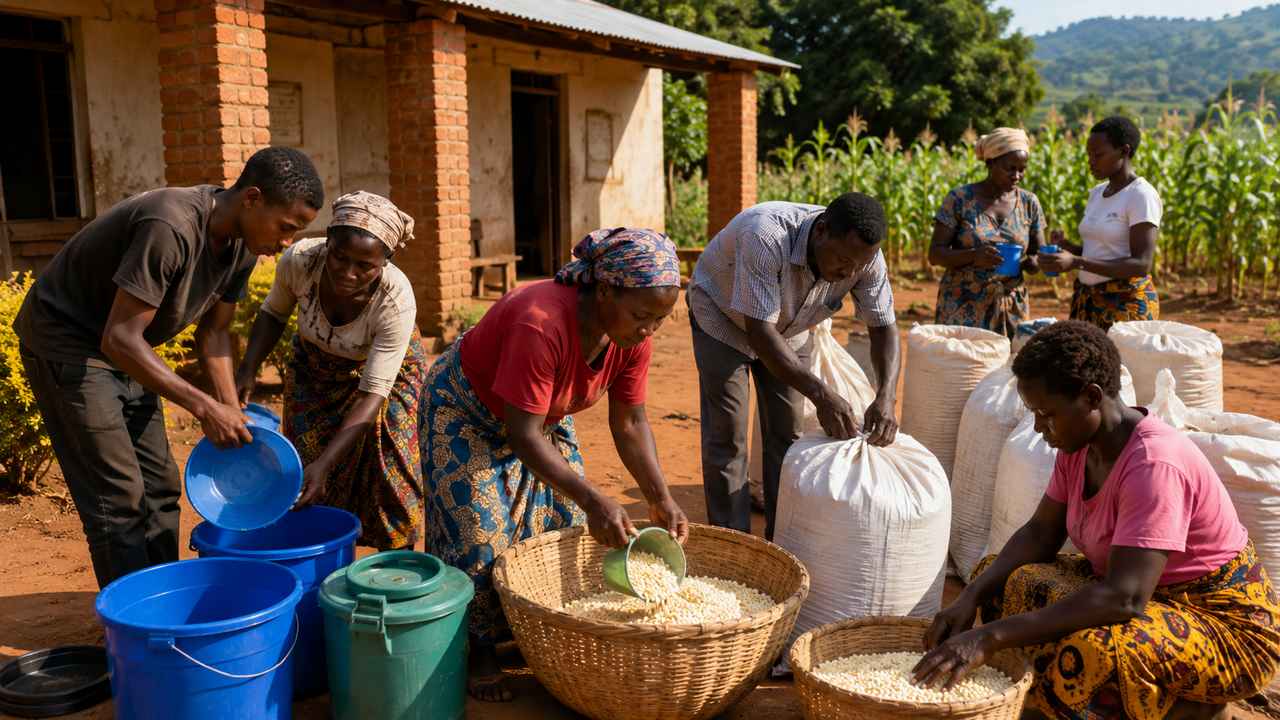
Malawi’s churches have broad freedom to worship, proclaim the gospel, train believers and serve their communities. They serve among families facing high prices, too few jobs, food insecurity, disease outbreaks, floods and overstretched public services. Malawi’s Constitution protects freedom of conscience and religion. An independent assessment also reports that people are generally free to practise their religion.
The country entered a new political period after the September 2025 general election. Former president Arthur Peter Mutharika returned to office, and the peaceful transfer of power in October gave Malawians genuine reason for thanksgiving. At the same time, the new administration inherited heavy public debt, high inflation, shortages of the foreign currency needed to pay for imports, concern about corruption, and widespread economic hardship.
Pray that Malawi’s political peace will be followed by honest government and wise economic decisions, and that churches will remain faithful, protect people at risk of violence, exclusion or neglect, speak truth, live holy lives, serve with compassion and hold firmly to hope in Christ.
Prayer Burden at a Glance
Pray for leaders who govern wisely and honestly; for families struggling with high prices, too few jobs and food shortages; for farmers to receive suitable weather, seed and fair markets; for safe water, protection from cholera and stronger health services; for preaching that is faithful to Scripture, careful discipleship and compassionate ministry; and for children, women and girls, refugees, people with disabilities and people with albinism to receive safety, dignity, justice and practical care.
Last verified: July 19, 2026
Why Malawi Needs Prayer Now
Malawi’s peaceful political transition deserves thanksgiving, yet families, churches and public institutions still face severe economic hardship, food insecurity, disaster risks and public-health needs.
A peaceful transfer of power and the need for honest government
Malawi held general elections on September 16, 2025. Peter Mutharika won the presidential contest and was sworn into office on October 4 after the defeated president accepted the result. SADC described the election and the period after it as broadly peaceful and orderly. Malawi’s government identifies Mutharika as the current president, while independent assessments also regarded the peaceful handover as a positive sign for Malawi’s democracy. Government of Malawi
This peaceful transfer of power deserves thanksgiving. It also gives Christians reason to pray that political leaders will govern the whole country rather than reward allies, punish opponents or misuse public institutions. Malawi needs leaders who will respect the Constitution, strengthen public trust and place the needs of ordinary citizens above personal or party interests.
Economic pressure affecting homes, churches and public services
The new administration inherited severe economic difficulties. Malawi has faced high inflation, heavy public debt, shortages of foreign currency, expensive imports, pressure on fuel supplies and prices, weak economic growth and too few formal jobs. The World Bank reported that about 270,000 young people enter the labour market each year while only around 40,000 formal jobs are created. It placed public debt near 90 percent of GDP and described Malawi as remaining in external debt distress. World Bank
Official statistics showed headline inflation falling to 21.1 percent in June 2026. That was an improvement, but prices were still rising much faster than many household incomes. The African Development Bank likewise described continued inflationary pressure, debt problems and the need for stronger economic stability. National Statistical Office of Malawi
These pressures shape everyday Christian life. Church members may struggle to afford food, transport, school expenses, medical care, farming supplies or housing. Congregations are often called upon to assist neighbours while their own members and leaders experience the same hardship.
A better harvest that has not ended food insecurity
Around four million people were projected to experience food insecurity classified as Crisis level or worse during the October 2025–March 2026 lean season. The estimate particularly concerned poorer rural households and urban families dependent on markets while prices were high. Integrated Food Security Phase Classification
The 2026 harvest improved food availability in much of Malawi, but the improvement was not equal everywhere. Some communities in southern and central Malawi experienced poor harvests, flood damage, fewer opportunities for farm work and incomes too low to meet basic needs. FEWS NET estimated that between 1.5 million and 1.99 million people might need food assistance between October 2026 and January 2027. FEWS NET
Christians can therefore give thanks for better harvests in many areas while continuing to remember households whose food supplies may run out before the next harvest.
Continuing danger from floods, disease and weak services
Heavy rain and flooding from March 15–18, 2026 affected communities across 23 local authorities. Malawian national media, citing DoDMA, reported deaths, injuries, damaged homes and crops, and more than 26,000 households displaced to temporary camps. The response plan also faced a major funding gap. Nation Online
Cyclone Freddy still shows how vulnerable Malawi is to destructive storms, although it was an earlier catastrophe rather than a new emergency in 2026.
Cholera also remained a serious concern. By July 5, Malawi’s national surveillance system had recorded 3,009 suspected cases since the 2025/26 season began, including 779 confirmed or epidemiologically linked cases and five confirmed deaths. New weekly cases had fallen sharply by late June, but 26 of Malawi’s 29 districts had reported at least one suspected case. Public Health Institute of Malawi
Unsafe water, poor sanitation, flooding, displacement, malnutrition and limited access to healthcare can all allow preventable disease to spread. Government agencies and partners have supported vaccination, disease monitoring, nutrition care and improvements to water and sanitation, but many communities still need reliable clinics, safe water, trained health workers and rapid help during emergencies. UNICEF Malawi
These conditions call Christians to pray for honest government, for communities to recover from disaster and hardship, for churches to serve with compassion, and for people most at risk from hunger, disease and displacement to receive practical help.
Country Snapshot
A brief orientation to Malawi’s location, government, economy, religious setting and present prayer context.
Because exact religious-composition figures vary by source and year, this guide does not give a single Christian population percentage.

Spiritual and Practical Challenges Affecting Christians and Churches
Malawi’s churches serve amid financial hardship, hunger, flooding, disease, the harm caused by corruption, and the duty to protect neighbours at risk of violence, exclusion or neglect.
Serving while church members are under financial pressure
Churches minister among people whose incomes often do not cover the rising cost of food, transport, education, healthcare and farming supplies. Pastors, Christian workers, students and ministry volunteers face many of the same pressures as the communities they serve. Malawi’s combination of high inflation, weak employment growth and scarce foreign currency continues to strain household budgets and public services. World Bank
Congregations need wisdom as they use limited resources. They must help people without humiliating them, avoid favouritism, protect church funds from misuse, and resist making promises they cannot fulfil.
Financial hardship may also place strain on marriages, families, young adults and church leaders. Churches can respond through truthful teaching, patient pastoral care, practical help and a community in which poorer members are treated with honour rather than embarrassment.
Responding to hunger, floods and disease
When crops fail or storms destroy homes, local churches may become gathering places for displaced families, centres for relief distribution, sources of food and shelter, and places of comfort for people who are grieving.
Cholera and other preventable diseases also call for practical Christian care. Churches can share accurate health information, encourage people to seek treatment early, support clean-water and sanitation work, and care for sick families.
They should do this without blaming those who become ill or treating sickness as proof of personal spiritual failure.
Living with integrity in church and public life
The government made use of the Malawi National Electronic Procurement System mandatory for public institutions from April 1, 2026. It presented the system as a way to improve oversight, transparency and control over public spending. Public Procurement and Disposal of Assets Authority
Early implementation was uneven. Nation Online reported on May 1 that only one of 175 public entities had made substantial progress in migrating to the system. PPDA later said the platform was functioning and listed hundreds of active tenders. The reform’s true value will therefore depend on consistent use, enforcement and independent scrutiny rather than announcements alone. Nation Online
Christians working in government, business, education, healthcare, law, policing, journalism and civil society need courage to reject bribery, theft, favouritism, dishonest contracts and abuse of office.
Churches should help believers understand that corruption is not merely a distant political problem. It takes money away from medicines, schools, roads, clean water, farming support and assistance for families in need.
Protecting neighbours who are easily harmed or forgotten
Women and girls face particular pressures. UNICEF reported in June 2026 that 38 percent of girls in Malawi marry before age 18. Early marriage may interrupt education, expose girls to abuse and early pregnancy, and leave them more economically dependent. The government and UNICEF have launched a five-year programme covering ten districts with high levels of child marriage. UNICEF Malawi
People with albinism continue to face dangerous myths, discrimination, barriers to healthcare and sun protection, and threats to their safety. In June 2026, the United Nations in Malawi called for stronger protection, better investigation of crimes, improved access to healthcare and direct action against harmful misinformation. United Nations in Malawi
Malawi also hosts refugees and asylum-seekers, many of whom live at the overcrowded Dzaleka camp. UNHCR’s publicly displayed end-of-2024 figures placed more than 52,000 people in a camp designed for 12,000, with serious pressure on food, shelter, education, employment and essential services. These figures should be read as dated evidence of long-standing overcrowding rather than as an exact July 2026 total. UNHCR
People with disabilities may face discrimination, poverty, services they cannot easily use, and neglect during emergencies. A 2025 national situational analysis found progress in disability rights and advocacy, but continuing weaknesses in coordination, data, referrals and access to basic services. United Nations in Malawi
Churches should work to make worship, fellowship, relief work, education and pastoral care accessible rather than treating vulnerable people as an afterthought.
Christian Life and Witness in Malawi
Malawi’s religious freedom allows churches to preach, teach and disciple believers, train leaders and serve their communities. It also calls them to use that freedom with humility, integrity and practical love.
Malawi’s constitutional freedoms allow churches to meet publicly, preach the gospel, teach Scripture, train leaders, operate schools and ministries, and serve their communities. This freedom is both an important gift and a serious responsibility. MalawiLII
Christians bear witness through local congregations, historic denominations, independent ministries, schools, clinics, student fellowships, theological-training programmes, relief work, counselling and quiet acts of mercy.
Discipling students and young adults
The Student Christian Organisation of Malawi describes itself as an indigenous interdenominational movement founded in 1961. It reports more than 500 branches and about 30,000 student members in secondary schools, colleges and universities.
Its work includes evangelism, Bible study, prayer, discipleship, counselling and leadership development. These figures are the organisation’s own account, but they provide credible reason to thank God for ministry among young people and to pray that students will develop lasting faith, godly character and wisdom for adult life. Student Christian Organisation of Malawi
Equipping pastors and church leaders
Theological-training ministries are working to deepen biblical understanding and strengthen pastoral leadership. Logos Ministries Malawi describes its work as providing grassroots theological and pastoral training, particularly for lay leaders and rural congregations, within the Reformed tradition. Logos Ministries Malawi
This example does not describe the condition of every church in Malawi. It does, however, show that Christians are investing in biblical education, pastoral formation and stronger local leadership.
Showing Christian mercy through practical care
Christian witness is also seen when believers care for people facing hunger, illness, bereavement, flooding, disability, displacement, family breakdown or financial hardship.
Churches can help families find food, shelter, counselling, healthcare, education and trustworthy information. They can protect children, support refugees, welcome people with disabilities, defend people with albinism, and stand beside families who are easily ignored.
Such ministry should protect people’s dignity. Those receiving help should not be treated merely as projects, statistics or opportunities for publicity.
Serving the public without serving a political party
The peaceful political transition gives churches an opportunity to show how Christians can speak truthfully in public life without becoming servants of a political party.
Christian leaders can pray for those in authority without giving them uncritical support. They can oppose corruption without becoming instruments of political revenge. They can help citizens disagree without hatred and remind believers that political opponents are still neighbours made in the image of God.
Churches should use Malawi’s religious freedom to preach Christ clearly, disciple believers carefully, care for neighbours in practical ways, protect people at risk, and teach Christians to honour Christ in public and private life.
Recent Developments
Political transition, economic hardship, food insecurity, floods, cholera, child marriage, refugee needs, disability inclusion and threats facing people with albinism are among the main reasons Malawi needs prayer now.
-
September–October 2025
Election and peaceful transfer of power
Malawi held general elections on September 16, 2025. Peter Mutharika won the presidential contest and was sworn into office on October 4 after the defeated president accepted the result. SADC described the process as broadly peaceful and orderly. Government of Malawi
Prayer significance: Give thanks for peace, and pray for honest government, respect for constitutional limits, capable institutions and continued peaceful political competition.
-
Late 2025–2026
Economic crisis and promised reforms
The new administration took office amid high inflation, public debt, shortages of foreign currency, expensive imports, pressure on fuel supplies and prices, weak growth and too few jobs. World Bank and African Development Bank assessments indicate that these are deep structural problems rather than pressures that can be removed quickly. World Bank
The government has introduced mandatory electronic procurement and promised stronger controls over public contracts. These commitments may be helpful, but implementation has been uneven, and the reform cannot yet be regarded as a completed success. Public Procurement and Disposal of Assets Authority
Prayer significance: Pray for wise economic decisions, honest use of public money, strong accountability and relief for households under sustained pressure.
-
October 2025–January 2027
Food insecurity, a better harvest and continuing local need
Around four million people were projected to face Crisis-level or worse food insecurity during the October 2025–March 2026 lean season. Integrated Food Security Phase Classification
The 2026 harvest improved food availability across much of Malawi, but some districts in the south and centre continued to face poor harvests, flood damage, high prices and household incomes too low to cover basic needs. Between 1.5 million and 1.99 million people may need assistance during the October 2026–January 2027 period. FEWS NET
Prayer significance: Thank God for improved harvests while praying for farmers, fair markets and timely help for communities that still face serious shortages.
-
January–July 2026
Floods, storms and cholera
Floods and severe storms damaged homes, crops, roads and livelihoods. DoDMA information reported through Malawian media described deaths, injuries and widespread displacement, while the national response plan faced a large funding gap. Nation Online
By July 5, Malawi’s national tracker had recorded 3,009 suspected cholera cases during the 2025/26 season, including 779 confirmed or epidemiologically linked cases and five confirmed deaths. Weekly case numbers had fallen substantially by late June, but continued vigilance, safe water and sanitation remained necessary. Public Health Institute of Malawi
Prayer significance: Pray for displaced families, effective relief, safe water, strong health services and protection from preventable disease.
-
June 2026
New efforts to reduce child marriage and protect people with albinism
The government and UNICEF launched a five-year programme intended to reduce child marriage through education, prevention, accountability and community action. UNICEF Malawi
The United Nations also called for stronger protection of people with albinism, better investigation of crimes, improved healthcare and sun protection, and direct action against dangerous myths and discrimination. United Nations in Malawi
These initiatives give cautious reason for thanksgiving. Their value, however, will depend on whether promises lead to lasting protection in local communities.
Prayer significance: Pray that public commitments will bring real safety, justice, education and dignity to those who are most at risk.
How to Pray
Pray for honest leadership, mercy for struggling households, faithful churches, protection for vulnerable neighbours, and lasting gospel fruit in Malawi.
-
For Malawi’s leaders and democratic institutions. Pray that President Peter Mutharika, government ministers, members of Parliament, judges, civil servants and local officials will govern with wisdom, humility, truthfulness and concern for the whole population. Ask God to preserve peaceful political competition and keep public institutions from being used for personal or party interests.
-
For honest use of public money and authority. Ask God to guide decisions about debt, public spending, foreign currency, fuel, trade and investment. Pray that corruption will be exposed, that institutions responsible for investigating and preventing it will be strengthened, and that public resources will be directed towards schools, clinics, farms, roads and clean-water systems.
-
For households and young people seeking work. Remember families struggling to afford food, transport, education, healthcare, farming supplies and housing. Pray for productive work, honest businesses and useful training, and ask God to keep young adults from despair as they enter a labour market with too few jobs.
-
For farmers and communities facing food insecurity. Ask for well-timed rain, protection from floods and dry spells, access to seed and fertiliser, fair markets, safe food storage, and timely help for households whose food may run out before the next harvest.
-
For clean water and effective healthcare. Pray for protection from cholera and other preventable diseases. Remember health workers, clinics, laboratories, community volunteers, vaccination programmes, sanitation projects, and efforts to bring safe water to vulnerable communities.
-
For faithful preaching, discipleship and pastoral leadership. Ask God to raise up pastors and teachers who handle Scripture carefully, proclaim Christ clearly, live with integrity, and prepare believers for lives marked by holiness, love and service to others. Remember theological colleges, local training ministries, student fellowships, children’s ministries and Christian families.
-
For churches serving amid poverty and disaster. Pray that congregations will care wisely for people affected by hunger, floods, illness, bereavement, disability and displacement. Ask God to protect Christian ministries from favouritism, exploitation, dishonesty and waste, and to provide the people and resources they need.
-
For women, girls and children. Pray for an end to child marriage, abuse, exploitation and violence. Ask that girls will remain in school, receive the healthcare they need, and grow up in families, churches and communities that protect their dignity and encourage their gifts.
-
For refugees and others who are easily excluded. Remember refugees, people with disabilities and people with albinism. Pray for safety, justice, healthcare, education, accessible services, opportunities to work and genuine welcome. Ask God to replace harmful myths with truth and bring those who commit violent crimes to justice.
-
For people to know Christ and for churches to live in hope. Pray that many people will repent and trust in Jesus Christ. Ask God to make Malawi’s churches holy, loving, watchful and faithful in hardship. May believers serve their neighbours with hope as they wait for Christ and pray, “Your kingdom come.”
Give Thanks
Malawi’s needs are serious, but there are also real mercies, freedoms and faithful acts of service for which Christians can thank God.
Thank God for the peaceful transfer of presidential power after the September 2025 election. Southern African Development Community
Give thanks for constitutional freedom of religion, conscience, association, expression and peaceful assembly. MalawiLII
Thank God that churches and Christian organisations can worship, evangelise, disciple believers, train leaders and serve communities openly. Freedom House
Give thanks for student ministries helping young people study Scripture, follow Christ and prepare for lives of faithful service. Student Christian Organisation of Malawi
Thank God for ministries that are equipping pastors and local church leaders. Logos Ministries Malawi
Give thanks for health workers, community volunteers and organisations caring for people affected by cholera, malnutrition, flooding and displacement. UNICEF Malawi
Thank God for the improved 2026 harvest in many areas, while continuing to remember communities where food needs remain serious. FEWS NET
Give thanks for efforts to protect girls from child marriage and for those defending the dignity and safety of people with albinism. UNICEF Malawi
Thank God for Malawians who continue to pursue peace, honest work, neighbourly care and faithful public service despite economic hardship, food insecurity, floods and disease outbreaks.
Last Verified / Update Note
This note explains when the guide was reviewed, what it covers, and which developments may change how readers pray for Malawi.
Review Status
Reviewed for current prayer use
Malawi’s September 2025 election and October transfer of power; current national leadership; inflation, debt, shortages of foreign currency, fuel supplies and prices, and employment conditions; government purchasing and anti-corruption commitments; food-security assessments; the 2026 harvest; floods and storms; cholera and disease monitoring; religious freedom; Christian ministry and theological training; child marriage; refugees; disability inclusion; and the protection of people with albinism.
Honest leadership, wise economic decisions, families’ ability to earn a living, food security, clean water, public health, preparation for disasters, faithful churches, biblical discipleship, employment for young people, protection of girls and children, care for refugees, inclusion of people with disabilities, and justice for people with albinism.
Food conditions during the October 2026–January 2027 lean season; inflation and the availability of foreign currency; fuel supplies; whether government purchasing and anti-corruption reforms are carried out effectively; cholera and other disease outbreaks; flood and drought risks; current conditions for refugees; whether new programmes reduce child marriage; and whether protection for people with albinism improves in local communities.
Government sources explain official leadership, policies, statistics and constitutional protections. Malawian reporting, regional African assessments, United Nations and humanitarian evidence, economic and legal analysis, and Christian ministry sources add context beyond official statements. Government promises describe intended action and should not be read as proof that the promised changes have already taken place. Forecasts and older humanitarian figures are dated so readers can distinguish projections and earlier conditions from current facts.
Help keep this guide accurate and current
Conditions in Malawi can change, and trustworthy local knowledge can help us keep this guide useful. If you notice a significant change, a factual correction, or a reliable source that should be considered, please contact the Nations Prayer Directory.
Key Sources Consulted
These sources provide the main evidence used in this Malawi prayer guide, including official information, Malawian reporting, regional analysis, humanitarian and economic data, Christian ministry accounts and information about religious freedom.
Malawi government and public institutions
- Government of Malawi — The Executive
- Malawi Electoral Commission — Presidential Election Results
- Malawi Electoral Commission — MEC Hands Over 2025 Polling Records to Parliament
- National Statistical Office of Malawi — Consumer Price Index, June 2026
- Ministry of Finance, Economic Planning and Decentralization — Budget Statements
- Public Procurement and Disposal of Assets Authority — Mandatory Use of MANePS
- Public Health Institute of Malawi — July 2026 Weekly Surveillance Bulletins
- MalawiLII — Constitution of the Republic of Malawi
Malawian, church and regional sources
- Nation Online — E-procurement in Slow Motion
- Nation Online — Flood Response Plan Faces a K46.17 Billion Deficit
- Student Christian Organisation of Malawi
- Logos Ministries Malawi
- Southern African Development Community — Statement on Malawi’s 2025 General Election
- African Development Bank — Malawi Economic Outlook
International and specialist sources
- World Bank — Malawi Economic Monitor: Stabilizing the Economy to Unlock Private Investment and Create Jobs
- Integrated Food Security Phase Classification — Malawi Acute Food Insecurity Analysis
- FEWS NET — Malawi Food Security Outlook, June 2026
- World Health Organization — Weekly Epidemiological Record, Issue 26 of 2026
- UNICEF Malawi — Protecting Girls, Transforming Futures
- UNICEF Malawi — Emergency Health, Nutrition and WASH Initiative
- United Nations in Malawi — International Albinism Awareness Day 2026 Statement
- United Nations in Malawi — Situational Analysis on the Rights of Persons with Disabilities
- UNHCR — Malawi Country Profile
- Freedom House — Malawi: Freedom in the World 2026
- Associated Press — Former President Mutharika Wins Malawi Election
Source Context
These notes explain how to understand the figures, forecasts, official statements and ministry descriptions used in this guide.
Source Context
- Religious composition. Malawi has a strong Christian presence, but exact religious-composition figures vary by source and year. This guide therefore does not give a single Christian population percentage.
- Church life. Christian ministry sources provide useful examples of evangelism, discipleship, theological training and mercy work. They describe their own ministries and do not represent independent surveys of every church in Malawi.
- Election and government. Official government sources identify the current leadership and present the government’s account of the transfer of power. SADC, Freedom House and independent reporting provide additional perspectives on the election and political transition.
- Economic reforms. Government and PPDA statements explain what the administration intends to do. World Bank, African Development Bank and Malawian reporting help assess the scale of the economic problems and whether implementation is progressing.
- Food security. Conditions vary between districts and seasons. A better national harvest does not mean every household has enough food. Figures for late 2026 and early 2027 are projections, not reports of what has already happened. IPC records that another analysis was conducted in June 2026, but its final findings were not publicly available when this guide was last verified. Integrated Food Security Phase Classification
- Cholera figures. Malawi’s national tracker and WHO’s regional table use different reporting periods and case classifications. PHIM recorded 3,009 suspected cases in the 2025/26 season, including 779 confirmed or epidemiologically linked cases and five confirmed deaths by July 5. WHO’s broader table recorded 3,088 cholera or acute watery diarrhoea cases and 30 deaths for January 1–May 31. WHO cautions that country figures assembled through different surveillance systems are not always directly comparable. Public Health Institute of Malawi
- Refugees. The most detailed population figures displayed on UNHCR’s Malawi profile are dated to the end of 2024. They demonstrate long-standing overcrowding at Dzaleka but should not be read as an exact July 2026 count. UNHCR
- Disasters. Some 2026 flood figures come from Malawian media reports citing DoDMA’s response plan because the complete official report was not publicly accessible when this guide was last verified. Totals changed as assessments continued, so any single interim figure should be read with caution. Nation Online
A Closing Prayer for Malawi
A prayer asking God for mercy, justice, faithful churches and practical help for people facing hardship in Malawi.


