

Madagascar is living under military-led transitional authorities after the October 2025 change of power. At the same time, communities are rebuilding after Cyclones Fytia and Gezani, health workers are responding to continuing mpox transmission, and severe food insecurity and child malnutrition are harming families in parts of the south and east.
Christians can pray for leaders who govern justly, damaged communities to recover, families to receive food and health care, children to be protected, and churches to preach Christ and care for their neighbours without becoming tied to political power.
Prayer Burden at a Glance
Pray that Madagascar’s change of government will lead to peaceful consultation, just constitutional arrangements, and credible elections. Pray for communities recovering from cyclones, for the containment of mpox, and for families who need food, health care, education, and secure livelihoods.
Pray also for churches to teach Scripture clearly, call people to repentance and faith in Christ, nurture believers in holiness, and care for those in distress without political control, religious manipulation, or doctrinal compromise.
Last verified: July 28, 2026
Why Madagascar Needs Prayer Now
Madagascar is facing political change, disaster recovery, disease, hunger, weak public services, and a continuing need for clear gospel teaching.
In October 2025, Madagascar’s armed forces took power following widespread public demonstrations. Colonel Michaël Randrianirina now serves as President, and Mamitiana Jeannot Ruffin Rajaonarison was appointed Prime Minister in March 2026.
The authorities describe the present process as a national Refoundation that should include public consultation, institutional reform, and future elections. Regional African bodies have also called for inclusive dialogue, credible elections, and dependable constitutional government.
As of July 28, 2026, no final timetable for national consultation, constitutional reform, or elections had been verified. The current officeholders are known, but the later political outcome remains unsettled and should not be predicted.
For ordinary people, the consequences are practical. Families need leaders and institutions that uphold justice and provide dependable electricity, water, health care, schools, roads, and opportunities to earn a living. Madagascar continues to face deep poverty, limited infrastructure, governance weaknesses, and restricted access to reliable electricity.
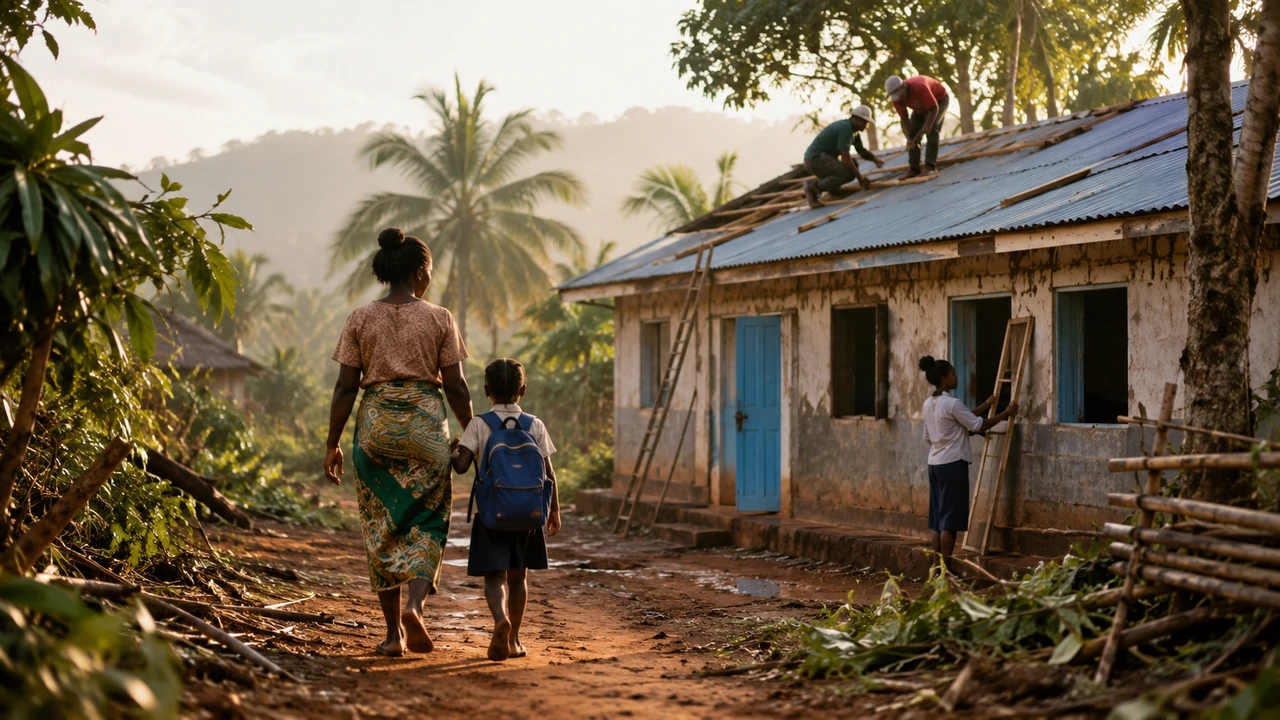
Communities are also recovering from Cyclones Fytia and Gezani. The storms damaged homes, schools, clinics, roads, electricity networks, water systems, and livelihoods. Early recovery and reconstruction have begun, but displacement, damaged services, and economic losses continue to affect many families.
Mpox has placed further strain on health services. The World Health Organization reported sustained community transmission at the end of June 2026 and warned that under-detection remained possible. Because totals have continued to change, this guide does not present one fixed case or death figure.
Serious food shortages and acute malnutrition also threaten many families. A July 2026 analysis projected that about 2.12 million people would face Crisis-level or worse food insecurity between June and September 2026. A separate analysis projected acute malnutrition among about 502,000 children under five in the areas studied between May 2026 and April 2027.
Madagascar also needs clear gospel teaching. Large numbers of people identify with historic Christian traditions, and churches have a strong presence in public life. Yet church membership, baptism, family background, or participation in religious ceremonies does not by itself show that a person has repented and trusted in Christ.
The country needs churches that preach Christ plainly, teach Scripture carefully, train trustworthy leaders, nurture believers in holiness, and show the mercy of Christ to people in distress.
Christians can therefore pray with sorrow over Madagascar’s suffering, gratitude for the freedom many churches still have, and confidence that God is able to save sinners, strengthen His people, restrain evil, and bring lasting fruit through His Word and Spirit.
Country Snapshot
A brief orientation to Madagascar’s location, people, government, religious setting, and church context.
Madagascar is one of the world’s largest island nations. Its people live in crowded cities, farming communities, coastal settlements, and remote areas where transport, electricity, clean water, schools, and health services can be difficult to reach.

Many households depend on agriculture and informal work. Drought, cyclones, crop failure, illness, rising prices, and poor infrastructure can quickly damage already insecure livelihoods.
Religious figures also require careful interpretation. The size of a church or denomination does not reveal how many people trust in Christ, learn Scripture, worship regularly, or seek to obey Him. Madagascar’s visible church presence therefore gives Christians both reasons for thanksgiving and reasons for earnest prayer.
Spiritual and Practical Challenges Affecting Christians and Churches
Madagascar’s churches minister among political change, unreliable public services, disaster damage, disease, hunger, child vulnerability, and a widespread need for deeper discipleship.
Public institutions and essential services
The October 2025 change of power has raised serious questions about constitutional order, public trust, justice, and the responsible use of authority. Corruption and weak institutions can affect access to electricity, clean water, health care, education, roads, employment, and legal protection. When these services fail, poor families and remote communities often suffer most.
Churches should pray for those in authority, speak truth when leaders act unjustly, and avoid becoming the religious voice of any political camp. Christian leaders need wisdom to seek peace without hiding wrongdoing and to defend the good of ordinary people without pursuing political favour.
Climate shocks and livelihoods at risk
Cyclones, drought, and irregular rainfall can destroy crops, fishing income, homes, schools, roads, and clinics. Poor households often have little money, secure shelter, or stored food with which to begin again.
Local congregations may be called to share food, shelter displaced families, comfort those who mourn, and help communities rebuild. They need wisdom to distribute help without favouritism, protect people’s dignity, and make no promises they cannot keep.
Health, hunger, and child nutrition
The continuing mpox outbreak is affecting a health system already burdened by poverty, distance, damaged facilities, and limited resources. Patients need care without shame or rejection. Health workers need protection, supplies, reliable information, and the cooperation of local communities.
Food insecurity and acute malnutrition place particular strain on children, pregnant women, poor households, and people whose livelihoods depend on farming or fishing. Hunger weakens the body, interrupts education, increases family stress, and may force people into harmful choices simply to survive.
Churches should care for people in need without using food, medicine, or other assistance to pressure them into religious activity. Christian mercy should protect human dignity and arise from sincere love for God and neighbour.
Children, education, and protection
Many children face interrupted schooling, limited learning resources, child labour, early marriage, violent discipline, malnutrition, and inadequate protection. Poverty, disaster, illness, and displacement can deepen these dangers.
Parents, teachers, churches, health workers, and community leaders need wisdom to protect children, reject abuse, and create safe places in which young people can learn and grow. Children are not merely the country’s future. They are neighbours made in the image of God who need justice, instruction, protection, and loving care now.
The need for clear gospel discipleship
Madagascar’s strong Christian heritage can sometimes make spiritual need less visible. A person may grow up in a Christian family, attend church, receive baptism, or take part in religious practices without understanding the gospel or showing the fruit of repentance and faith.
The answer is not contempt for professing Christians or for people from different church traditions. It is clear, patient, and courageous teaching from Scripture.
Churches need leaders who explain that sinners are reconciled to God by grace through faith in Christ, not through religious identity, sacramental participation, human merit, or moral effort. They must also help believers grow in prayer, biblical knowledge, holiness, love, and daily obedience.
Christian Life and Witness in Madagascar
Churches have meaningful freedom and public influence, but they need biblical faithfulness, humility, courage, and wisdom in how they teach, serve, and take part in national life.
Christians in Madagascar generally have substantial freedom to gather, worship, teach, publish, and minister in their communities. This freedom is both a mercy and a responsibility.
Large Malagasy-led church bodies maintain congregations, theological schools, educational ministries, health services, evangelistic work, and programmes for communities in need. These activities can educate children, care for the sick, respond to disasters, and bring practical help to poor or isolated areas.
These institutions may accomplish genuine good, but their size and activity do not by themselves prove doctrinal faithfulness or spiritual health. Social action does not replace repentance, faith, worship, or the preaching of Christ crucified and risen.
Christian witness is often expressed through ordinary obedience: a pastor carefully explaining a Bible passage, a health worker caring for a sick neighbour, a teacher protecting a child, a family sharing food after a storm, a believer refusing a bribe, or a congregation helping families repair damaged homes.
Such actions reflect Christ most clearly when they grow from trust in Him, submission to Scripture, and genuine love for others.
Churches also carry a serious responsibility during the present change in government. Malagasy church leaders and the Council of Christian Churches have been involved at different times in national dialogue and mediation. Current local reporting indicates that church representatives have again been given a role in consultation discussions. That involvement should be understood as a public responsibility, not as proof that every political proposal or church institution should receive theological endorsement.
Christian leaders need wisdom to speak honestly without becoming partisan, to seek peace without overlooking wrongdoing, and to cooperate with others only in areas where truth and conscience do not require compromise.
Madagascar needs churches whose ministry grows from biblical conviction rather than a desire for prestige or political access. It needs pastors who preach the finished work of Christ, training institutions that prepare trustworthy servants, congregations that protect people at risk, and believers whose integrity can be seen in both public and private life.
Madagascar’s hardships do not place it beyond the reach of God’s grace. He is able to preserve His people, raise up sound teachers, bring sinners to repentance and faith, strengthen Christians to endure, and use ordinary obedience to produce lasting gospel fruit.
Recent Developments
Five related developments require particular prayer without turning the guide into a political or humanitarian news report.
-
October 2025
Madagascar’s armed forces took power
Madagascar’s armed forces took control after widespread demonstrations. Colonel Michaël Randrianirina was subsequently sworn in as President. Regional and outside sources commonly describe the event as a military seizure of power or coup, while the authorities describe the new order through the language of national Refoundation.
Prayer significance: Pray that authority will not be used for personal or factional power. Ask God to restrain violence, revenge, corruption, and the suppression of legitimate public concerns.
-
March–July 2026
A new government is serving, but the national timetable remains unsettled
Mamitiana Jeannot Ruffin Rajaonarison was appointed Prime Minister on March 15, 2026. The government says it intends to stabilise the country, reform institutions, and prepare credible and inclusive elections.
Electoral-reform discussions and consultations have continued. The Southern African Development Community has supported national reconciliation and constitutional government, but no final consultation, constitutional, or election timetable had been verified by July 28, 2026.
Prayer significance: Pray for peaceful and honest consultation, just constitutional arrangements, credible elections, and leaders who place the good of the people above personal or factional interests.
-
January–February 2026
Cyclones Fytia and Gezani caused widespread damage
Cyclone Fytia struck north-western Madagascar at the end of January 2026. Cyclone Gezani struck the east coast in February, severely affecting Toamasina and surrounding areas.
The storms damaged homes, schools, clinics, roads, electricity networks, water systems, and livelihoods. Relief and rebuilding have continued, but many families entered the disasters with few resources and limited capacity to recover.
Prayer significance: Pray for families who need shelter and renewed livelihoods, for damaged schools and health facilities to reopen, for assistance to reach people honestly and fairly, and for communities to be better prepared for future storms.
-
December 2025–July 2026
Mpox remained a serious health concern
Madagascar has experienced sustained community transmission of mpox since late 2025. Vaccination, testing, disease surveillance, and treatment have expanded, but the World Health Organization reported that the outbreak was not yet under control at the end of June 2026.
Because case and death totals can change quickly, this guide does not give a fixed total here.
Prayer significance: Pray for the protection of health workers, sufficient vaccines and treatment, clear health information, effective prevention, and compassionate care for patients without fear or stigma.
-
July 2026 analysis
Severe food insecurity and acute malnutrition remained widespread
A July 2026 analysis projected that about 2.12 million people would face serious food insecurity, classified as Crisis level or worse, between June and September 2026. More than 183,000 of them were projected to face Emergency conditions.
A separate analysis projected acute malnutrition among about 502,000 children under five in the areas studied between May 2026 and April 2027.
The burden was especially serious in parts of southern and eastern Madagascar. Conditions may change with harvests, food prices, weather, disease, humanitarian funding, and access to affected communities.
Prayer significance: Pray for food, nutrition treatment, productive harvests, functioning markets, secure livelihoods, honest assistance, and protection for children whose health and development are threatened by hunger.
How to Pray
Pray for the gospel to bear fruit, for churches to remain true to Scripture, and for God’s mercy to reach people facing political upheaval, disaster, disease, and hunger.
Pray for people to repent and trust in Jesus Christ. Ask God to save those who may be familiar with Christianity but do not yet know Christ, and to lead them to rest in Christ alone rather than in family background, church membership, religious observance, or human merit.
Pray for pastors, Bible teachers, theological students, and congregations. Ask God to give them sound doctrine, humility, courage, patience, and freedom from corruption, spiritual manipulation, false teaching, and the pursuit of status.
Pray for believers to obey Scripture and endure hardship. Ask God to keep Christians from despair, compromise, and spiritual carelessness. May they remain watchful as they await Christ, bear witness with courage, and pray with hope, “Your kingdom come.”
Pray for the country’s leaders and for Christians involved in national life. Ask God to restrain violence, revenge, corruption, pride, and the misuse of authority. Pray for honest consultation, just constitutional arrangements, credible elections, and Christian leaders who seek peace without hiding wrongdoing or surrendering biblical conviction.
Pray for communities recovering from Cyclones Fytia and Gezani. Ask God to provide shelter, clean water, restored schools and clinics, repaired roads and electricity, renewed livelihoods, and wise preparation for future storms.
Pray for the containment of mpox and for health workers. Pray for sufficient testing, vaccination, treatment, supplies, trained staff, clear communication, and care for patients without fear or stigma.
Pray for families facing hunger and for children suffering from malnutrition. Ask God to provide food, rain, productive harvests, functioning markets, nutrition treatment, and honest assistance that reaches those in greatest need.
Pray for children, schools, and families. Pray against child labour, early marriage, abuse, violent discipline, neglect, and exploitation. Ask God to strengthen parents, teachers, churches, health workers, and public institutions that protect children and help them learn.
Pray for dependable services and secure livelihoods. Ask for progress in electricity, water, sanitation, roads, health care, education, agriculture, and employment so that families can live and work with greater security.
Pray that churches will use their freedom well. Ask God to help them teach Scripture, proclaim Christ, disciple believers, defend people at risk, and care for the sick, hungry, displaced, and poor without favouritism, coercion, political control, or doctrinal compromise.
Give Thanks
Madagascar’s needs are serious, but there are also real mercies for which Christians can thank God.
Give thanks for the freedom many churches have to gather, worship, teach, evangelise, and minister openly. This gives believers meaningful opportunities to proclaim Christ, train leaders, disciple Christians, and care for their communities.
Give thanks for every place where Christ is clearly proclaimed, Scripture is taught, believers are strengthened, and people in need receive genuine care. Pray that all professing Christian communities will be brought into greater faithfulness to Christ and His Word.
Give thanks for health workers, teachers, families, churches, public agencies, and humanitarian organisations providing care after cyclones, during the mpox outbreak, and amid hunger and malnutrition. Their work remains incomplete, but it has brought real help to people in need.
Give thanks for believers seeking to obey Christ in ordinary life. Praise God for honest work, generous giving, patient teaching, courageous witness, care for neighbours, and every refusal to take part in corruption or abuse.
Last Verified / Update Note
This note explains when the guide was reviewed and which developments may change how it is used for prayer.
Review Status
Reviewed for current prayer use
This guide was reviewed in light of Madagascar’s October 2025 military-led change of power, current President and Prime Minister, the unsettled consultation and election process, cyclone recovery, continuing mpox transmission, food insecurity, child malnutrition, essential services, education, child protection, religious freedom, and church life.
Pray especially for peaceful and accountable government, recovery after Cyclones Fytia and Gezani, containment of mpox, food and nutrition for families in need, protection and education for children, dependable public services, clear gospel preaching, mature discipleship, Christian care for suffering communities, and wise church involvement in national life.
Important developments include the timetable for national consultation and elections, proposed constitutional reforms, any change in national leadership, updated mpox information, cyclone recovery, new food-security and malnutrition findings, humanitarian access, restoration of public services, religious-freedom conditions, and changes affecting churches or Christian witness.
Some parts of Madagascar’s situation may change quickly. The present political authorities are known, but the timetable and outcome of the wider national process remain unsettled. Mpox figures can change from week to week. Cyclone estimates developed as assessments continued. Food-security and malnutrition figures are projections for specified periods rather than permanent totals.
Sources also use different terms for the October 2025 change of power. Madagascar’s authorities speak of national Refoundation, while regional and independent assessments describe a military seizure of power or coup. This guide names the established events without treating either official language or outside criticism as sufficient by itself.
Religious and church statistics also require care. They can describe broad identity or institutional presence, but they cannot show how many people have saving faith, worship regularly, hold sound doctrine, or live as active disciples of Christ.
Help keep this guide accurate and current
If you noticed a possible correction, broken link, or significant country update, please contact the Nations Prayer Directory so we can review it carefully.
Key Sources Consulted
Sources that materially informed this Madagascar prayer guide, including official government and electoral material, regional African assessments, humanitarian and health reporting, development data, religious-freedom context, and church profiles.
Government and political process
- Office of the Prime Minister of Madagascar — current government and appointment of Prime Minister Mamitiana Jeannot Ruffin Rajaonarison. Used to verify the current head of government, appointment date, and the authorities’ stated Refoundation programme.
- Independent National Electoral Commission of Madagascar — electoral-reform and consultation activity. Used to verify that preparatory electoral work was continuing without presenting a future election date as settled.
- Madagascar Tribune — local reporting on national consultation and the role of church representatives. Used cautiously for local context and not as sole verification of the national process.
Regional constitutional and human-rights assessment
- Southern African Development Community — Madagascar summit decisions and mediation updates. Used for regional calls for reconciliation, constitutional government, dialogue, and credible elections.
- African Commission on Human and Peoples’ Rights — October 2025 statement on the change of power. Used to verify the military seizure of power and regional concern about constitutional order.
Humanitarian, health, and disaster conditions
- World Health Organization — Madagascar mpox epidemiological update. Used to verify sustained community transmission, continuing public-health concern, and the need to treat exact totals as fast-changing.
- UNICEF Madagascar — Cyclones Fytia and Gezani flash updates and response plan. Used for the storms’ effects on homes, schools, health facilities, water, electricity, displacement, and recovery needs.
- Integrated Food Security Phase Classification — Madagascar food-insecurity analysis. Used for the June–September 2026 food-insecurity projection.
- Integrated Food Security Phase Classification — Madagascar acute-malnutrition analysis. Used for the May 2026–April 2027 child-malnutrition projection.
Poverty, services, education, and child protection
- World Bank — Madagascar country overview and development data. Used for population, poverty, infrastructure, climate vulnerability, electricity access, and continuing cyclone recovery.
- International Monetary Fund — Madagascar governance and corruption diagnostic. Used for the description of governance, public-finance, rule-of-law, and corruption vulnerabilities.
- UNICEF Madagascar — child protection and education profiles. Used for child labour, early marriage, violent discipline, school completion, and educational-access concerns.
Religious freedom and church context
- Freedom House — Freedom in the World 2026: Madagascar. Used cautiously for current political-rights and broad religious-freedom context.
- World Council of Churches — profiles of Malagasy church bodies and church life in Madagascar. Used only to describe institutional ministries such as theological education, schools, health work, rural development, and public involvement. Institutional membership figures are not treated as evidence of regeneration or doctrinal faithfulness.
Source Context
How to read the sources behind this guide in a politically unsettled, disaster-affected, health-sensitive, and projection-dependent setting.
Source Context
- Political terminology. Madagascar’s authorities describe the present order as a national Refoundation. Regional and independent sources often describe the October 2025 event as a military seizure of power or coup. The guide distinguishes these perspectives and does not treat official terminology as independent verification.
- Unsettled political timetable. Electoral preparation and consultation activity are documented, but no final timetable for national consultation, constitutional reform, or elections had been publicly verified by July 28, 2026. The guide therefore does not predict a date or political outcome.
- Fast-changing health information. Mpox totals have changed repeatedly. The World Health Organization provides the strongest directly available epidemiological assessment, while later totals have appeared through reporting that cites national authorities. The guide therefore describes the outbreak without fixing one rapidly ageing number in the main text.
- Cyclone figures. Damage and displacement estimates developed across successive assessments. The guide names the principal effects and continuing recovery needs without presenting early figures as permanent final totals.
- Food and malnutrition projections. The food-security and child-malnutrition figures cover specified future periods and may change with harvests, prices, weather, disease, funding, and humanitarian access. They should be read as dated projections, not permanent population counts.
- Religious composition. Religious-demographic figures vary by source and year. Broad labels such as Christian, Catholic, Protestant, or independent describe identity or affiliation; they do not establish saving faith or doctrinal faithfulness.
- Church profiles. Public institutional profiles help show the educational, health, development, and public work of church bodies. They often reflect information supplied by the institutions themselves and cannot measure the spiritual condition of every congregation or member.
- Religious freedom. Current evidence supports a cautious statement that churches generally retain substantial room to worship and minister. Detailed recent public reporting is limited, so the guide does not claim that conditions are identical throughout the country or that no local difficulties exist.
A Closing Prayer for Madagascar
A concise prayer gathering Madagascar’s present burdens before the Lord.


