

Malta’s Christian inheritance is visible across the islands. Churches stand near the centre of towns and villages. Parish worship and festivals continue to shape many communities, and Catholic faith has deeply influenced the country’s history, education, institutions, and national identity.
This inheritance is a real gift, but no one becomes a disciple of Christ through culture or family history alone. Malta needs prayer that people would not know Christianity only through public symbols, ceremonies, or tradition. Pray that they would hear the gospel clearly, turn to Christ in faith, grow through God’s Word, worship with His people, and serve their neighbours in love.
Malta is also changing quickly. Economic growth and migration have brought people from many nations to live and work on the islands. They have enriched Malta’s communities and churches, while adding strain to housing, transport, public services, and the natural environment.
Christians in Malta do not face widespread state persecution. Churches are generally free to worship, teach, serve, and speak in public life. The central need is for that freedom—and Malta’s Christian inheritance—to be used well: to make Christ known, form mature believers, welcome newcomers, protect the vulnerable, and serve the country with honesty and mercy.
Prayer Burden at a Glance
Pray that Malta’s Christian inheritance would lead people to genuine faith in Christ and a life shaped by Scripture, worship, prayer, and obedience. Pray for churches to strengthen families, receive believers from many nations, care for people in need, protect children and vulnerable adults, and support survivors of abuse. Pray also for honest government, fair treatment of workers, and wise decisions about Malta’s fast-changing population, economy, communities, and environment.
Last verified: July 2026
Why Malta Needs Prayer Now
Malta’s Christian inheritance remains visible and valuable, but the country needs churches that lead people beyond religious familiarity into living faith, biblical discipleship, and loving service.
Malta’s churches, Christian traditions, and public symbols can remind people of the gospel and of the faith of earlier generations. Yet knowing Christian language or taking part in religious customs is not the same as following Christ.
Malta’s deepest spiritual need is therefore greater than the preservation of its religious culture. Churches must preach Christ clearly, call people to turn from sin and trust Him, teach the Bible faithfully, and help believers live out their faith at home, at work, in church, and in their communities.
Changes in Malta’s population bring fresh opportunities. Migrant Christians are becoming part of the country’s church life. People from other religions, or from no religious background, may encounter Christian teaching and worship in Malta for the first time. Churches need grace to welcome newcomers, learn from believers who have arrived from other countries, and speak about Christ with conviction and kindness.
Economic expansion has brought jobs and resources, but it has also made daily life harder for some people. Housing and public services are under strain. Some foreign workers live with insecure employment or accommodation. Public institutions also face continuing questions about justice, corruption, accountability, and trust.
These concerns do not mean that Malta is collapsing. It remains peaceful, democratic, economically active, and generally respectful of religious freedom. They do show why the country needs prayer: for spiritual renewal, wise leadership, fair treatment of people, strong churches, and development that serves communities rather than wearing them down.
Country Snapshot
A brief orientation to Malta’s location, people, government, and religious setting.
Malta is a small island country south of Sicily and north of Libya. Its inhabited islands include Malta, Gozo, and Comino. Its location has long connected Europe, North Africa, and the wider Mediterranean, shaping its culture, economy, migration, and international relationships.

The 2021 census reported that 82.6 percent of residents aged fifteen and over identified as Roman Catholic. It also recorded Orthodox Christians, Muslims, members of other religious communities, and people with no religious affiliation.
These figures describe religious identity, not the depth of personal belief or participation in church life. The latest substantial national study of Catholic Mass attendance located during research dates from 2017, so it cannot be presented as a current measure.
Malta’s Constitution recognises Roman Catholicism as the country’s religion while protecting freedom of conscience and worship. Catholic religious teaching has a recognised place in state education, together with protections for those who object to receiving it.
Much of Malta’s recent population growth has come through migration. The people involved include labour migrants, European and other long-term residents, refugees, asylum seekers, and a smaller number of people arriving by boat. They have different experiences, legal circumstances, and needs, and should not be spoken about as though they form one group.
Spiritual and Practical Challenges Affecting Christians and Churches
Malta’s churches minister amid inherited Christian identity, social change, migration, pressure on daily life, questions of public trust, difficult moral debates, and the continuing need for safeguarding.
When Christian identity is inherited
Malta’s Christian traditions can lead people toward Christ. They can also give the impression that belonging to a Christian culture is enough, even where prayer, worship, biblical understanding, and obedience are weak.
Churches need wisdom to help people move from familiarity with Christianity to a living trust in Christ. This includes teaching people to pray, read Scripture, worship regularly, confess sin, forgive others, and serve their neighbours.
The answer is not to despise Malta’s heritage. Parish festivals, Christian art, schools, family customs, and public symbols can open conversations about God, sin, grace, Christ’s death and resurrection, forgiveness, and eternal hope. The challenge is to ensure that the customs point people beyond themselves to Christ.
Growth that places pressure on daily life
Population and economic growth have brought new skills, cultures, businesses, and communities to Malta. They have also placed more pressure on housing, roads, schools, health services, energy supplies, waste systems, and public spaces.
Young adults and families may find it difficult to secure suitable housing. Some foreign workers live in crowded or uncertain conditions. Rapid construction also raises questions about neighbourhood life, care for the land, and what kind of Malta will be passed to future generations.
Churches can respond by caring for people under strain, strengthening families, encouraging neighbourly responsibility, and speaking wisely about how growth affects ordinary life.
Migrant workers, refugees, and belonging
Malta depends heavily on workers from other countries in tourism, construction, health care, hospitality, gaming, professional services, and other parts of the economy.
Some migrant workers have described unpaid or withheld wages, unsafe workplaces, discrimination, poor housing, or heavy dependence on an employer. Such accounts do not describe every foreign worker’s experience, but they reveal real situations in which people can be mistreated or left without help.
Labour migrants and long-term foreign residents may need fair contracts, safe housing, friendship, language support, and a genuine place in community life.
Refugees and asylum seekers may carry the effects of war, persecution, dangerous journeys, detention, or separation from family. They need fair hearings, protection from abuse, and neighbours who recognise their dignity.
People arriving by boat form only one part of Malta’s much wider migration story. Their situation should neither be ignored nor used to define every migrant in the country.
Churches should also remember that many newcomers are fellow Christians. They bring faith, experience, courage, prayer, and gifts that can strengthen Malta’s congregations. They should be welcomed not merely as people needing help, but as brothers and sisters who can serve alongside Maltese believers.
Honest government and public trust
The Maltese government has reported greater spending on the justice system, more specialised courts, added resources for police and prosecutors, digital improvements, stronger whistleblowing measures, and other changes intended to improve public institutions.
European bodies and Maltese civil-society groups continue to point to unfinished work. Their concerns include delays in the courts, incomplete anti-corruption measures, protection for journalists, opportunities for citizens to take part in lawmaking, and whether serious wrongdoing is investigated and judged without favour.
Both parts of this picture matter. Reform efforts should be recognised, but official accounts of progress do not prove that every problem has been solved. Continuing criticism also does not mean that the whole system is broken.
Christians should pray for politicians, judges, police officers, prosecutors, civil servants, journalists, and citizens to act honestly and fairly. Churches must seek the same standards in their own life by rejecting favouritism, misuse of power, hidden wrongdoing, and concern for reputation at the expense of truth.
Serious illness, conscience, and care
Malta continues to discuss difficult questions about terminal illness, medical treatment, personal choice, conscience, palliative care, and the protection of vulnerable life.
In 2025, the government held a public consultation on assisted voluntary euthanasia for certain terminally ill adults. Catholic bishops opposed euthanasia and called for patients to be accompanied with compassion through suffering and death. As of July 27, 2026, the public consultation had closed, but Malta had not enacted a law legalising euthanasia, and no referendum date had been formally announced.
Parliament separately passed a law concerning advance medical directives in April 2026. This law concerns decisions that people may make about future medical treatment. It is not a law legalising euthanasia.
People facing severe pain, disability, loneliness, fear, or pressure from others need more than political arguments. They need clear medical guidance, strong palliative care, spiritual support, practical help, and people who will remain beside them.
Christians should uphold the dignity of human life while listening patiently to those who suffer and caring for them with tenderness and courage.
Safeguarding and care for survivors
The Church’s witness is deeply harmed when abuse is concealed, survivors are neglected, or an institution protects its name instead of protecting people.
Church safeguarding bodies in Malta reported substantiated cases during 2025, including historical sexual-abuse cases. The available reporting also showed that restrictions were imposed where wrongdoing had been established.
These cases do not define all Christian life in Malta, and not every allegation was substantiated. Even so, they require serious prayer for children and vulnerable adults to be protected, allegations to be examined properly, wrongdoing to be brought into the light, survivors to receive trustworthy care, and church leaders to respond openly and justly.
Christian Life and Witness in Malta
Christian life in Malta is expressed through worship, family discipleship, diverse congregations, migrant participation, practical mercy, and public witness.
Christian life in Malta is found not only in historic churches and public festivals, but in parish worship, congregational fellowship, Christian schools, chaplaincies, religious communities, voluntary organisations, and the daily faithfulness of believers at home and at work.
Parish and congregational life
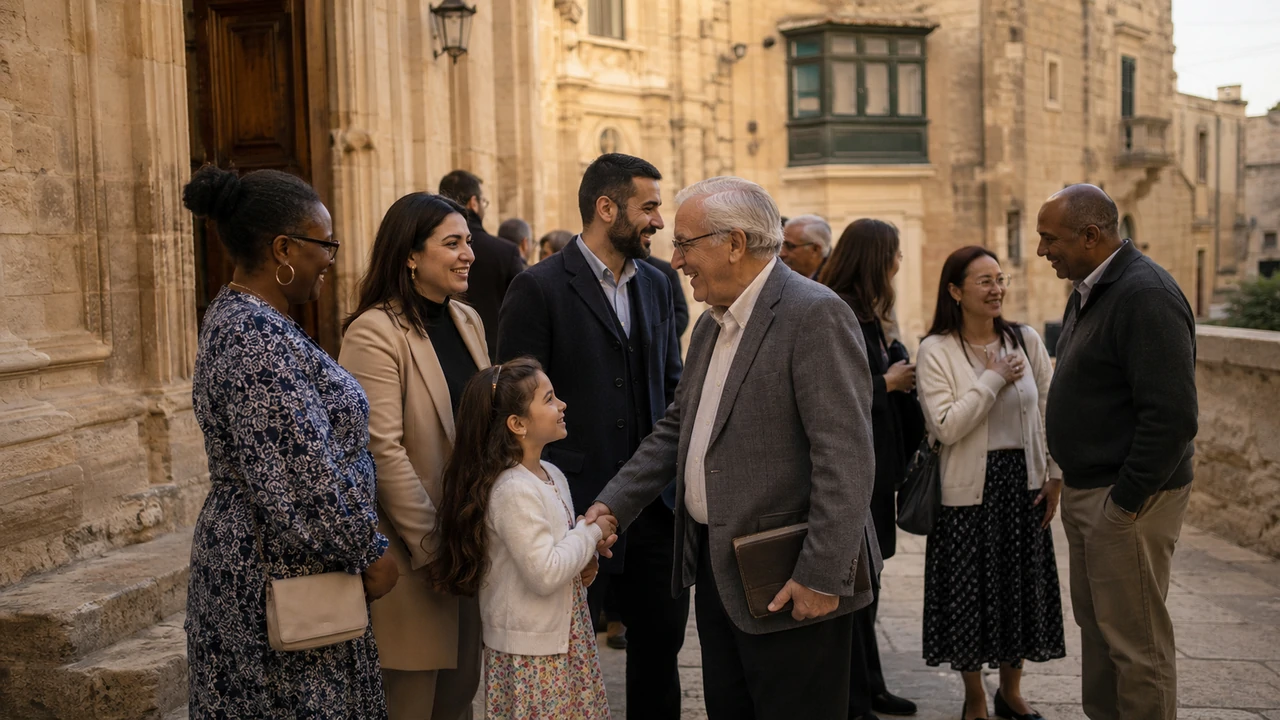
Catholic parishes remain important centres of worship and community life in many Maltese towns and villages. Other churches also gather across Malta and Gozo, including Orthodox, Anglican, Lutheran, evangelical, Greek Catholic, African, Asian, and other migrant congregations.
These communities differ in doctrine, worship, history, and leadership. Yet there are opportunities to pray, serve neighbours, defend freedom of worship, and speak about Christ together where conscience and biblical conviction allow.
Christian cooperation should be honest about real differences. It should also be marked by humility, charity, and a desire to honour Christ rather than compete for influence.
Adults, children, and family discipleship
At the Easter Vigil in April 2026, 36 adults from eleven countries received the Sacraments of Christian Initiation in Malta. This does not prove a nationwide revival, but it gives reason to thank God for adults choosing to profess the Christian faith for themselves.
Families have a vital part in passing on the faith. Children need more than ceremonies or religious instruction. They need to see adults pray, read the Bible, worship with the Church, admit wrongdoing, forgive one another, and care for neighbours.
Young people need congregations where they can ask hard questions without ridicule and receive thoughtful, biblical answers. They should not be made to choose between religion that feels empty and a culture that assumes faith has nothing meaningful to say.
Migrant Christians sharing in church life
Some people who arrive in Malta are already Christians and are looking for a sound church and a stable community. They may bring experience of evangelism, suffering, perseverance, prayer, music, teaching, and ministry that can strengthen established congregations.
Migrant believers should not be welcomed only as recipients of charity. They are members of Christ’s body who can pray, lead, teach, encourage, and serve.
Maltese Christians can offer friendship, local knowledge, stability, hospitality, and access to long-established ministries. As believers serve one another, Malta’s churches can show something of the unity Christ gives to people from many nations and languages.
Mercy expressed through practical service
Churches and Christian organisations in Malta serve families in need, migrants, survivors of abuse, people affected by addiction, people with disabilities, and those facing poverty or social isolation.
This work can make Christian love visible in everyday life. It must be carried out with sound safeguarding, honest use of money, humility, doctrinal faithfulness, and respect for each person’s dignity.
Christian service should never use another person’s weakness to gain control or influence. It should point to Christ through truthful words, patient friendship, practical help, and responsible care.
Freedom used with courage and gentleness
Malta’s freedom of worship gives churches room to gather, teach, publish, educate, serve, and speak about public questions.
Pray that churches would use this freedom with courage and gentleness. May they proclaim Christ without contempt, defend Christian conviction without cruelty, care for people who disagree, and refuse to become instruments of political parties.
Their common life should show how the gospel forms people who seek holiness, tell the truth, show mercy, pursue justice, welcome strangers, and live with hope.
Recent Developments
A small number of recent political, legal, migration, moral-policy, and diplomatic developments help sharpen prayer for Malta.
-
April–June 2026
Malta held a general election
President Myriam Spiteri Debono dissolved Parliament on April 27, 2026, and the general election was held on May 30. The Labour Party received 51.77 percent of first-count votes, while the Nationalist Party received 44.68 percent. The opposition accepted the result, and Robert Abela was appointed prime minister again on June 1.
The election renewed Labour’s mandate while showing a closer contest than at the previous election.
Prayer significance: Pray that the government would use its authority responsibly, that the opposition would examine its decisions carefully, and that both would put the good of the country before party interest.
-
2025–July 2026
Changes to the justice system remained under examination
During 2025 and 2026, the government reported increased spending on justice, more court capacity, additional resources for police and prosecutors, and measures concerning whistleblowing, access to information, and the media.
European institutions and Maltese civil-society groups continued to identify areas where more work was needed. These included delays in the courts, anti-corruption recommendations that had not been fully carried out, protection for journalists, public involvement in lawmaking, and accountability in serious cases.
A bill to establish a National Commission for Human Rights and Equality remained before Parliament in July 2026. It should not yet be described as an established commission.
Prayer significance: Pray for honest public service, fair and timely justice, protection for responsible journalists and whistleblowers, and leaders who accept proper scrutiny.
-
October 2025
Rules for recruiting foreign workers were tightened
Malta introduced measures intended to improve the recruitment of workers from outside the European Union, place more responsibility on employers, and give foreign workers greater protection.
The changes reflect both Malta’s dependence on foreign labour and the danger that arises when a person’s job, housing, and right to remain in the country depend heavily on one employer.
Prayer significance: Pray that the rules would be applied fairly, that employers who mistreat workers would be held responsible, and that workers would be able to report abuse without immediately losing their income, home, or permission to remain.
-
May 2025–July 2026
Assisted dying remained under public discussion
The government’s 2025 consultation on assisted voluntary euthanasia brought questions of suffering, human choice, medical ethics, palliative care, and the protection of vulnerable people into public discussion.
Christian leaders opposed euthanasia while calling for stronger care and companionship for people facing terminal illness. As of July 27, 2026, the public consultation had closed, but Malta had not enacted a law legalising euthanasia, and no referendum date had been formally announced.
Prayer significance: Pray for honest discussion, skilled and compassionate medical care, protection of conscience, and faithful support for patients and families.
-
September 2025
Malta recognised the State of Palestine
Malta formally recognised Palestinian statehood as part of its support for Palestinian self-determination and a two-state solution.
The Maltese government also condemned the October 7 attacks, called for the release of hostages, supported humanitarian relief, and said that Hamas should have no future role in a Palestinian state.
Prayer significance: Pray that Malta’s leaders would work wisely for peace, defend civilian life consistently, and support humanitarian help without ignoring suffering on any side.
How to Pray for Malta
Bring Malta’s spiritual, church, social, public, and international burdens before the Lord.
-
Pray for people to know and follow Christ. Father, bring people in Malta beyond familiarity with Christianity into genuine faith in Christ. Use the country’s churches, traditions, families, and public Christian symbols to lead people toward the gospel rather than giving them confidence in culture alone. Cause Your Word to bear fruit. Draw the lost to repentance and faith, and help believers grow in prayer, worship, obedience, and love.
-
Pray for churches and Christian leaders. Strengthen priests, pastors, elders, teachers, chaplains, religious communities, and ministry leaders. Help them teach the Bible clearly, proclaim Christ without fear, care for people patiently, and admit their own failures honestly. Guard churches from political control, moral compromise, rivalry, misuse of influence, and concern for reputation above faithfulness to Christ.
-
Pray for children, young people, and families. Give parents and churches wisdom to teach children through both words and example. Draw young people to Christ. Give them mature Christian friends and leaders, and provide churches where difficult questions can be asked and answered with patience. Strengthen marriages and households in prayer, forgiveness, steadfast love, and care for one another.
-
Pray for people who have made Malta their home. Protect labour migrants from dishonest recruitment, withheld wages, dangerous work, and poor housing. Help long-term foreign residents build friendships, understand Maltese life, and contribute their gifts to the country. Show mercy to refugees and asylum seekers who carry the effects of war, persecution, dangerous journeys, detention, or separation from loved ones. Give officials wisdom to hear their cases fairly and protect those who are vulnerable. Lead migrant Christians to sound churches. Help Maltese believers receive them not as outsiders or projects, but as brothers and sisters who can strengthen the Church.
-
Pray for honest leadership and equal justice. Give wisdom to the president, prime minister, cabinet, Parliament, opposition, judges, police, prosecutors, civil servants, journalists, and local leaders. Restrain corruption and favouritism. Bring hidden wrongdoing into the light, protect journalists and whistleblowers who act responsibly, and help courts administer justice without needless delay. Keep political disagreement from becoming hatred. Teach leaders and citizens to value truth and the good of their neighbours above loyalty to a party.
-
Pray for people who are suffering or vulnerable. Draw near to people facing terminal illness, severe pain, disability, addiction, poverty, loneliness, or pressure from others. Strengthen doctors, nurses, carers, chaplains, social workers, and all who provide palliative or practical care. Protect children and vulnerable adults in churches, schools, homes, workplaces, and public institutions. Give survivors of abuse safe and trustworthy support. Lead churches and other institutions to tell the truth, seek justice, repent where they have failed, and make lasting changes.
-
Pray for wise development and care for Malta. Thank God for jobs, skills, enterprise, and the resources available in Malta. Pray for housing that ordinary families and workers can afford, dependable transport and energy, responsible construction, strong public services, and wise preparation for extreme heat. Help leaders and communities care for Malta’s land, coast, towns, villages, and future generations.
-
Pray for peace, gospel fruit, and lasting hope. Guide Malta’s leaders as they take part in Mediterranean and European affairs. Help them support peace, defend civilians, encourage honest dialogue, and provide humanitarian help. Make Malta’s churches places of prayer, holiness, mercy, welcome, and clear teaching about Christ. May Your kingdom come. Let the gospel bear fruit among Maltese people and those who have come from many other nations. Save the lost, strengthen believers, and help Your people live faithfully, hopefully, and watchfully as they await Christ.
Give Thanks
Malta’s needs are real, but so are the gifts and mercies for which Christians can thank God.
-
Give thanks for peace and freedom of worship. Thank God that Malta is peaceful and that Christian communities are generally free to gather, teach, serve, and take part in public life. Thank Him that the 2026 election took place without violence or a disputed transfer of authority, and that the opposition accepted the result.
-
Give thanks for people choosing to follow Christ. Thank God for adults preparing for baptism, confirmation, or other steps of Christian initiation. Thank Him for believers who worship, pray, raise children in the faith, serve their neighbours, and follow Christ in ordinary life.
-
Give thanks for Christian communities across Malta and Gozo. Thank God for Catholic, Orthodox, Protestant, evangelical, migrant, and other Christian congregations. Thank Him for opportunities to pray together, encourage one another, defend freedom of worship, and serve neighbours where this can be done with honesty and faithfulness.
-
Give thanks for mercy shown in practical ways. Thank God for churches and Christian organisations that support migrants, families in need, survivors of abuse, people affected by addiction, people with disabilities, and those who are isolated or poor. Thank Him for carers, medical workers, safeguarding staff, social workers, journalists, public servants, advocates, and volunteers who protect people and pursue what is right.
-
Give thanks for work, skills, and resources. Thank God for employment, enterprise, professional skills, tourism, and the resources available to support families and help those in need. Thank Him for every person who uses prosperity generously and responsibly rather than living only for personal gain.
-
Give thanks for the nations gathered in Malta. Thank God for people from many countries who now live, work, worship, and raise families in Malta. Thank Him for the faith and gifts that migrant believers bring. Pray that Malta’s growing diversity would lead to lasting friendships, mutual service, stronger churches, and opportunities to make Christ known among many peoples.
Last Verified / Update Note
This note shows when the guide was reviewed, its main prayer burdens, and the developments readers should continue to watch.
Review Status
Reviewed for current prayer use
This guide was reviewed through July 27, 2026. The review covered Malta’s current leadership, the 2026 general election, justice and public-trust concerns, population and migration, foreign-worker protections, economic and infrastructure pressures, religious life, church ministry and safeguarding, the assisted-dying debate, and Malta’s Mediterranean diplomacy.
Pray for the gospel to lead people beyond inherited Christian identity into living faith in Christ; for churches to teach Scripture, strengthen families, welcome believers from many nations, and care for vulnerable people; for migrants and workers to be treated fairly; for public leaders and institutions to act honestly; and for Malta’s growth to serve its people without overwhelming communities or the environment.
Continue watching the parliamentary progress of the National Commission for Human Rights and Equality Bill; any formal proposal, legislation, or referendum decision following the assisted-dying consultation; the implementation of justice and anti-corruption reforms; foreign-worker protections; housing and infrastructure pressures; and any change in national leadership.
Official Maltese records were used for office-holders, election results, laws, policies, and national statistics. Government accounts of reform are distinguished from European and Maltese civil-society assessments. Church-life reporting comes mainly from Maltese Catholic sources, while reliable current participation data and detailed figures for smaller Christian communities remain limited.
Help keep this guide accurate and current
If you noticed a possible correction, broken link, or significant country update, please contact the Nations Prayer Directory so we can review it carefully.
Key Sources Consulted
Official Maltese records, national reporting, church and civil-society sources, and European and international assessments that materially informed this guide.
Maltese government, law, elections, and statistics
- Office of the President — Dissolution of Parliament and announcement of the May 30, 2026 election
- Electoral Commission of Malta — 2026 general-election first-count results
- Government Gazette — Appointment of Robert Abela as Prime Minister
- Parliament of Malta — National Commission for Human Rights and Equality Bill
- Parliament of Malta — Advance Medical Directives Act, 2026
- Constitution of Malta — Roman Catholic religion and religious teaching
- Constitution of Malta — Freedom of conscience and worship
- National Statistics Office — Population and migration, 2025
- National Statistics Office — Refugees, boat arrivals, asylum, and protection, 2025
- National Statistics Office — 2021 Census: population, migration, and social characteristics
- Identità — Second phase of Malta’s Labour Migration Policy
- Government of Malta — Response to the 2026 EU Rule of Law Report
- Government of Malta — Recognition of the State of Palestine
Maltese church and Christian sources
- Archdiocese of Malta — Adult Christian initiation at Easter 2026
- Archdiocese of Malta — Week of Prayer for Christian Unity 2026
- Archdiocese of Malta — Six safeguarding cases substantiated in 2025
- Archdiocese of Malta — Financial and social-service reporting for 2024
- Archdiocese of Malta — 2017 Mass-attendance study, published in 2018
- Maltese Episcopal Conference — Compassion and care until the end
European and international institutions
- European Commission — 2026 Rule of Law Report and country chapters
- Council of Europe GRECO — Malta anti-corruption compliance assessment
- Council of Europe GRETA — Fourth evaluation report on trafficking in Malta
- International Monetary Fund — 2025 Article IV consultation with Malta
Maltese national and civil-society sources
- The Malta Independent — Opposition concession after the 2026 election
- The Malta Independent — Repubblika’s response to the 2026 Rule of Law Report
- Jesuit Refugee Service — Forced to Hide: migrant-worker experiences in Malta
Perspective-widening source
Source Context
How to read the sources behind this guide, including the limits of religious-participation data, church-community figures, policy claims, and migrant testimony.
Source Context
- Religious identity and participation. Census figures describe how people identify religiously. They do not show the depth of personal faith, regularity of worship, or active Christian discipleship.
- Older attendance evidence. The latest substantial national Catholic Mass-attendance study located for this guide was conducted in 2017 and published in 2018. It provides historical context but is not presented as Malta’s current attendance rate.
- Smaller Christian communities. Orthodox, Protestant, evangelical, migrant, and other Christian communities are visibly present in Malta, but reliable current figures for their congregations and active participation are limited. This guide therefore avoids unsupported national estimates.
- Government and outside assessment. Maltese government sources describe reforms and official policy. European institutions, Maltese civil-society organisations, and reputable national reporting provide separate assessments of how fully reforms have been carried out. Neither perspective is presented as the whole picture by itself.
- Migration evidence. Official statistics distinguish labour migration, long-term residence, asylum applications, protection decisions, and maritime arrivals. Testimony collected from migrant workers identifies serious risks and experiences, but it does not establish how common every form of mistreatment is across the whole migrant population.
- Source mix. This guide uses official Maltese records, Maltese national reporting, Maltese church and civil-society sources, European and international institutions, and a Palestinian source where Malta’s recognition of Palestine is discussed. Each source is used according to what it can responsibly establish.
A Closing Prayer for Malta
A concise prayer gathering Malta’s present burden before the Lord.


