

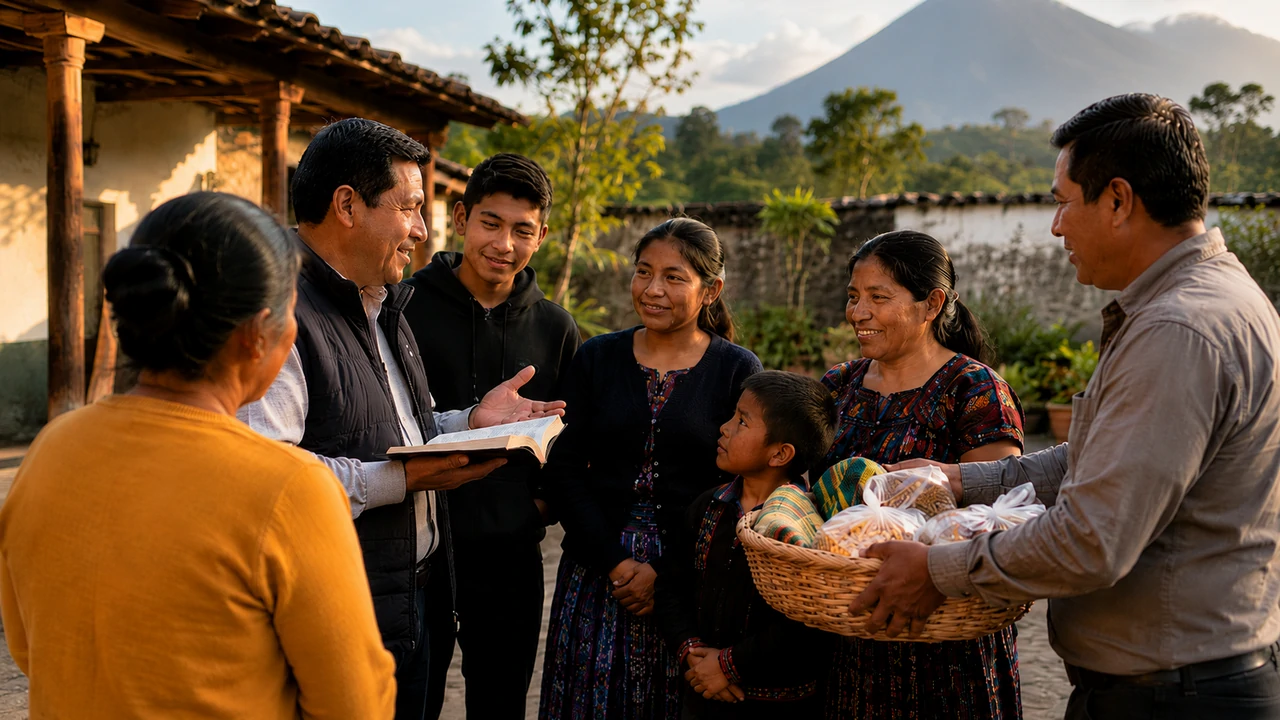
Christian worship is widespread in Guatemala. Churches gather openly, believers serve in cities and rural communities, and Christian ministries have many opportunities to teach Scripture, care for neighbours, and make Christ known.
Yet calling oneself Christian is not the same as repenting of sin, trusting in Christ, joining faithfully in church life, and learning to obey Him. Guatemala needs churches that preach the gospel clearly, train believers patiently, handle money honestly, reject political manipulation, and care for people facing hunger, violence, migration, illness, or disaster.
Many children live with chronic malnutrition. Families may face insecure work, extortion, separation through migration, weak access to health care, or the loss of homes and crops during storms and landslides. Indigenous communities continue to seek fair treatment, access to services in their own languages, and protection from discrimination. Confidence in courts and prosecutors has also been damaged by prolonged conflict over elections, criminal proceedings, and the independence of public institutions.
These burdens should lead us to pray for real people: parents trying to feed their children, young people at risk of gang recruitment, migrants returning to uncertain work, Indigenous families seeking equal justice, health workers serving remote communities, and Christians learning to speak truthfully and show Christ’s mercy in daily life.
Pray that many Guatemalans will turn to Christ and grow as His disciples. Ask God to raise pastors who teach Scripture faithfully, believers who live holy and merciful lives, and public servants who tell the truth and refuse corruption. Pray that churches across Guatemala’s many peoples and languages will welcome people, help reconcile divided communities, care for those in need, and obey Christ even when it is costly.
Prayer Burden at a Glance
Pray that people from every community and language in Guatemala will repent of sin, trust in Jesus Christ, and grow as faithful members of His church. Ask God to strengthen pastors, parents, teachers, and older believers as they teach Scripture and help younger Christians obey it in family life, work, relationships, money, and service.
Remember children affected by malnutrition, families threatened by extortion or divided by migration, Indigenous communities seeking fair treatment, people returning after deportation, and communities facing disease and natural disasters.
Pray that churches will reject corruption, prejudice, political control, shallow teaching, and the misuse of spiritual authority. Ask God to make them churches that tell the truth, pursue holiness, care for people in need, help reconcile divided communities, and remain ready for Christ’s return.
Last verified: July 27, 2026
Why Guatemala Needs Prayer Now
Guatemala’s churches serve people who need the gospel while many families face unequal access to food and health care, criminal violence, migration and deportation, and prolonged conflict over the independence of justice institutions.
Guatemala’s economy has remained relatively stable, but many households have not shared equally in that stability. Rural and Indigenous families are especially likely to face chronic malnutrition, limited health care, poor access to clean water, insecure work, and losses caused by drought, storms, or failed harvests.
Violence and extortion also shape daily life. Transport workers, shopkeepers, market vendors, families, police officers, and witnesses may receive threats from organized criminal groups. In communities where schools, jobs, and safe public spaces are limited, young people may be more vulnerable to gang recruitment or dangerous migration.
Confidence in Guatemala’s courts, prosecutors, and election institutions has also been weakened. President Bernardo Arévalo’s government has described some legal actions against the government and the result of the 2023 election as attempts to overturn the voters’ decision. Regional and international institutions have separately raised concerns about interference with constitutional government and judicial independence.
Those statements do not prove every accusation. They do show why Guatemala needs prosecutors who follow evidence, judges who apply the law impartially, and officials who respect the limits of their offices.
Gabriel Estuardo García Luna took office as attorney general on May 17, 2026. By early July, he had begun replacing senior personnel, reviewing cases associated with alleged political criminalization, and publicly stating that the Public Ministry should not serve as a political weapon. These actions have begun, and the attorney general has publicly stated his intentions, but it is too early to know whether lasting institutional reform will follow.
Guatemala’s churches therefore serve in communities where gospel ministry and practical care are closely connected. They are called to preach Christ, make disciples, care for suffering neighbours, refuse corruption, and build relationships across ethnic and political divisions.
Country Snapshot
A brief orientation to Guatemala’s location, peoples, government, languages, church context, and principal prayer concerns.
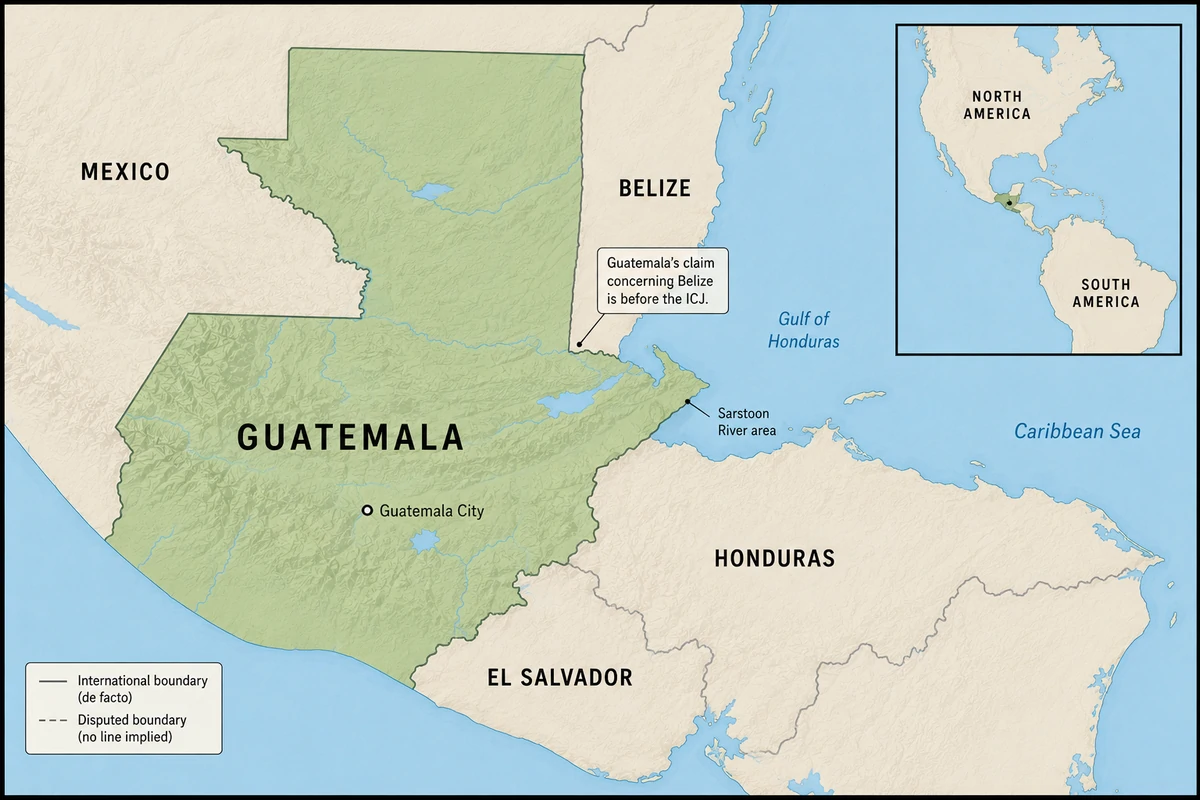
Guatemala lies between Mexico, Belize, Honduras, and El Salvador. It has coastlines on the Pacific Ocean and the Caribbean Sea. Its mountains, volcanoes, forests, farms, and coastal areas give the country great natural richness, but they also leave many communities exposed to earthquakes, volcanic hazards, storms, drought, flooding, and landslides.
The population includes many distinct Maya peoples as well as Ladino, Xinka, Garifuna, and other communities. A person’s language, ethnicity, location, income, and access to land can affect whether that person can obtain education, medical care, legal help, or public information. In some areas, people must seek essential services in a language they do not speak comfortably.
Agriculture, trade, exports, tourism, and money sent home by Guatemalans living abroad all support the economy. These remittances help many families buy food, pay school costs, and meet other daily needs. They also show how strongly some communities depend on relatives leaving the country because good local employment is scarce.
Spiritual and Practical Challenges Affecting Christians and Churches
Guatemala’s churches need prayer for genuine discipleship, integrity in leadership, practical mercy, protection of vulnerable people, and reconciliation across ethnic and social divisions.
Christian identity and genuine discipleship
Guatemala’s many churches are a reason for gratitude. Yet a large Christian presence can make it easy to assume that most people understand the gospel and are growing in obedience to Christ.
Someone may call himself or herself Catholic, evangelical, or Christian without understanding salvation by grace, taking part faithfully in a congregation, or allowing Scripture to guide daily decisions. Churches therefore need pastors and teachers who explain the Bible carefully, proclaim Christ rather than themselves, and show believers how faith affects family life, work, money, sexuality, forgiveness, and care for neighbours.
Christian leaders also need accountability. The desire for wealth, fame, personal control, or political influence can damage congregations and discredit the gospel. Churches need leaders who are willing to answer honest questions, share responsibility, report openly on money, and submit their conduct to Scripture.
Churches also weaken their message when they become closely tied to a politician, party, or campaign. Christians should care about justice and public affairs, but the pulpit should not become a tool for winning political loyalty. Believers must learn to oppose wrongdoing even when it is committed by people they support.
Hunger, malnutrition, and unequal access to care
Chronic child malnutrition remains one of Guatemala’s deepest needs. Indigenous and rural children are especially affected. The causes include poverty, poor maternal health, unsafe water, inadequate sanitation, weak local health services, insecure farming, and the difficulty of reaching remote communities.
Churches often meet these needs within their own congregations. A church may include mothers who cannot obtain medical care, farmers whose crops have failed, or children whose growth has been harmed by poor nutrition.
Faithful Christian care requires more than occasional gifts. Churches and ministries need to build lasting relationships, use money honestly, work respectfully with local communities, and avoid using vulnerable people to advertise their work.
Material help cannot replace the gospel. At the same time, churches cannot claim to love their neighbours while ignoring hunger, sickness, and suffering that could be prevented. Christians are called both to speak about Christ and to serve people in practical ways.
Violence, extortion, and vulnerable young people
Organized criminal groups and gangs have harmed communities through extortion, threats, trafficking, prison violence, murder, and the recruitment of young people. Fear may affect when people travel, whether businesses remain open, and whether victims feel safe reporting a crime.
Churches in affected areas may offer pastoral care, youth ministry, prison ministry, help for victims, and support for threatened families. Such work requires wisdom. Careless publicity can expose victims or church workers to greater danger, while silence can leave suffering families feeling abandoned.
Young people need more than warnings about gangs. They need adults who know them, listen to them, help them remain in school, show them what honest and dependable work looks like, and give them real responsibilities in the church and community. Churches can help young people understand that belonging to Christ gives them an identity and a community that criminal groups cannot provide.
Indigenous communities, language, and reconciliation
Indigenous peoples have preserved their languages, communities, leadership structures, and cultural traditions despite long histories of violence and exclusion. Many still have less access to land, education, health care, legal protection, and political influence than other Guatemalans.
Christian ministry among Indigenous communities must be humble and respectful. Following Christ does not require a person to despise his or her language or ethnic identity. Every human tradition—Indigenous, Ladino, Western, or associated with the church itself—must be examined in the light of Scripture.
Churches should reject racial prejudice and the belief that outside leaders always know what is best for a local community. Where Christian people or institutions have taken part in discrimination, political violence, cultural contempt, or the misuse of authority, repentance must include truthful confession and changed conduct.
Scripture and theological teaching should be available in the languages people use at home. Churches should also respect each person’s freedom to hear the gospel, consider its claims, and respond without manipulation or coercion.
Migration, deportation, and divided families
Migration affects many Guatemalan families. People may leave because of poverty, debt, violence, limited work, or the hope of giving their children a safer future. Money sent home may support a household, but long separation can place heavy strain on marriages, children, and older relatives.
Large numbers of Guatemalans continued to return through deportation and other forms of repatriation during 2025 and 2026.
Official reporting on July 23, 2026, said that the Plan Retorno al Hogar had assisted 82,138 repatriated migrants since it began in March 2025. Of these, 35,805 had voluntarily entered the reintegration process and 1,690 had entered the labour market.
These figures show the scale of reception, referral, and employment assistance. They do not establish that most returnees have found stable work, repaired family relationships, or completed successful long-term reintegration.
Churches can welcome returnees without treating them as failures or using them to make a political point. They can listen, support families, provide wise pastoral care, and help people find work and rebuild relationships.
Christian Life and Witness in Guatemala
Guatemala’s churches have broad freedom and many opportunities to serve. To use that freedom well, they need biblical teaching, accountable leaders, respectful ministry across cultures, and integrity in daily life.
Christian life in Guatemala includes Roman Catholic, evangelical, Pentecostal, historic Protestant, independent, and Indigenous-language congregations. These churches differ in theology, worship, ministry practice, and their relationships with local communities. No single description represents them all.
Churches generally have broad legal freedom to worship, preach, evangelize, establish congregations, train leaders, and serve the public. The state is not carrying out a nationwide campaign against Christians. The central question is whether churches use this freedom to preach Christ clearly, disciple believers, and serve their neighbours with integrity.
Many congregations and Christian organizations serve through schools, clinics, nutrition programmes, farming projects, disaster relief, prison ministry, migrant assistance, and pastoral care. Some ministries also teach the Bible and Christian doctrine in Indigenous languages. This helps people hear and discuss Scripture in the language most closely connected to family and community life.
Christian service is most trustworthy when ministries explain their work honestly, answer to local communities, and treat the people they serve with dignity. Their work is weakened by exaggerated reports, competition, financial secrecy, disrespect for local leaders, or assistance offered mainly to gain influence.
Pastors outside the largest cities may have limited access to strong theological education. Churches need training that is faithful to Scripture, affordable, and available in different regions and languages. Congregations also need teaching that helps believers recognise prosperity teaching, spiritual manipulation, domestic violence, corruption, and religious activity that continues without repentance or obedience to Christ.
Young Christians need older believers who show them how to pray, work faithfully, handle conflict, care for family members, resist sexual sin, use money wisely, and persevere through hardship. They need churches that do more than organize public events. They need congregations where people know their names, listen to their struggles, teach them patiently, and invite them into meaningful service.
Christians will show what they believe by how they treat neighbours when fear and political division are strong. Churches can honour Christ by refusing bribes, protecting vulnerable people, caring for prisoners without excusing crime, welcoming returning migrants, respecting Indigenous neighbours, and telling the truth even when it exposes wrongdoing by people they support.
Recent Developments Shaping Prayer
These developments affect justice, safety, health, family life, and the work of churches. They deserve prayer, but they do not define the whole country.
-
May–July 2026
Conflict over justice institutions and new leadership
Guatemala has continued to face conflict over the conduct and independence of prosecutors, courts, election authorities, and other public institutions. President Arévalo’s government has described some legal actions as attempts to reverse or weaken the result of the 2023 election. Regional diplomatic and human-rights institutions have separately raised concerns about political interference and the use of criminal proceedings against opponents or public-interest figures.
The government’s allegations and the concerns raised by outside institutions are separate claims, and neither settles every individual accusation. Gabriel Estuardo García Luna took office as attorney general on May 17, 2026. By early July, he had begun replacing senior personnel, reviewing cases associated with alleged political criminalization, and publicly stating that the Public Ministry should not serve as a political weapon. These actions have begun, and the attorney general has publicly stated his intentions, but it is too early to know whether lasting institutional reform will follow.
Prayer significance: Pray for prosecutors to follow evidence, judges to apply the law fairly, and every public official to respect both the law and the limits of his or her office.
-
As of July 27, 2026
Proceedings involving Indigenous leaders
Indigenous leaders Luis Pacheco and Héctor Chaclán remained in pretrial detention. An appeals court had authorized their detention through September 23, and an intermediate-stage hearing was scheduled for August 4 to consider whether the case should proceed toward trial.
Prosecutors accuse the men of serious offences connected with the 2023 demonstrations, including terrorism and obstruction-related conduct. The Guatemalan government, Indigenous organizations, and Amnesty International have separately argued that the prosecution is unjust, politically motivated, or marked by serious due-process failures. These positions remain contested. Their guilt or innocence has not been established and should be determined through a fair process based on reliable evidence.
Prayer significance: Pray for reliable evidence, prompt and fair proceedings, freedom from political retaliation, accountability if crimes are proved, and care for their families and communities.
-
January 2026
Organized crime and the national security emergency
Guatemala strengthened its anti-gang law in late 2025. In January 2026, prison disturbances, the taking of hostages, and deadly attacks on police officers led the government to declare a 30-day nationwide state of siege.
Authorities said the emergency powers were necessary to regain control of prisons and protect the public. Security forces later retook the affected prisons, and the nationwide state of siege ended. The crisis exposed serious problems involving prison control, corruption, organized crime, and extortion. It also raised questions about due process and the proper limits of emergency powers.
Prayer significance: Pray for security measures that protect victims and communities without allowing arbitrary detention, corruption, cruelty, or making emergency powers permanent or routine.
-
Through July 14, 2026
Measles outbreak and vaccination response
A major measles outbreak that began in late 2025 remained active during 2026. The official MSPAS measles portal reported 28,543 confirmed cases and 28 deaths through July 14, 2026.
Of the confirmed cases, 7,621 were confirmed through laboratory testing, 3,213 through an epidemiological link to another confirmed case, and 17,709 through clinical criteria in areas where the virus was circulating.
The Health Ministry reported that the number of cases identified each week had fallen substantially from the earlier peak. This is encouraging, but it does not mean that the outbreak is over. The ministry continued to describe the outbreak as active, while vaccination, surveillance, case investigation, and local containment work continued.
Because the cumulative figures include several methods of confirmation and are updated as surveillance records are reviewed, they should be understood as a dated official count rather than a final total.
Prayer significance: Pray for children and vulnerable adults to be protected, for health workers and vaccination teams to be strengthened, and for vaccines and trustworthy information to reach remote communities in languages people understand.
-
July 23, 2026 reporting
Return and reintegration of migrants
Large numbers of Guatemalans continued to return through deportation and other forms of repatriation during 2025 and 2026. Official reporting on July 23, 2026, said that the Plan Retorno al Hogar had assisted 82,138 repatriated migrants since it began in March 2025. Of these, 35,805 had voluntarily entered the reintegration process and 1,690 had entered the labour market.
These figures show the scale of reception, referral, and employment assistance. They do not establish that most returnees have found stable work, repaired family relationships, or completed successful long-term reintegration.
Prayer significance: Pray for returnees to be received with dignity and for churches and communities to offer friendship, practical help, employment support, and patient pastoral care.
-
July 17, 2026
Rain, landslides, and a regional earthquake sequence
Hundreds of emergencies caused by heavy rain had been reported during the 2026 rainy season by early July. Floods and landslides can damage homes and crops, close roads, isolate villages, and interrupt schooling and medical care.
A powerful sequence of earthquakes was felt in Guatemala on July 17, 2026. CONRED reported preliminary façade damage in San Marcos and continued assessments, while outside seismic reporting found no severe damage or deaths in Guatemala during the early response.
Because official bulletins reported different preliminary magnitudes for closely timed seismic events, the earthquake sequence is described without giving it one definitive magnitude. Early damage assessments may also change as field inspections continue.
Prayer significance: Give thanks for the lives known to have been preserved. Pray for accurate assessments, safe buildings, dependable roads and schools, equipped first responders, and fair distribution of help.
-
September 2025–July 2026
Peaceful resolution of the Guatemala–Belize dispute
Guatemala and Belize hold different territorial, insular, and maritime claims. Their wider dispute remains before the International Court of Justice, and both governments have committed themselves to a peaceful legal process.
The two countries gave opposing accounts of incidents in the Sarstoon River area in September 2025. Belize said Guatemalan personnel entered Belizean territory and acted aggressively. Guatemala said Belizean forces entered territory claimed by Guatemala and that Guatemalan troops responded prudently and with restraint.
The two governments did not agree on what happened, so neither account is treated here as settled fact. Later public statements have continued to emphasize dialogue, international law, steps to reduce tension, and the avoidance of force.
Prayer significance: Pray for the safety of border communities, disciplined conduct by security forces, truthful legal arguments, continued dialogue, and peaceful acceptance of the Court’s eventual decision.
Hope for Guatemala in Christ
Guatemala’s deepest hope is found in Jesus Christ, who saves sinners, builds His church, and teaches His people to serve faithfully while they wait for His appearing.
Guatemala’s deepest hope does not rest in economic growth, a new attorney general, a court judgment, a security operation, or the ability of churches to meet every social need. These things matter, but none can forgive sin, reconcile people to God, or change the human heart.
Jesus Christ rules over every nation. He saves sinners through the gospel and gathers His people into a church made up of different peoples and languages. Because He reigns, Christians can continue telling the truth when lies appear powerful, showing mercy when fear encourages self-protection, and serving faithfully when change is slow.
Pray that Christ will bring many Guatemalans to repentance and faith. Ask Him to restore people who have wandered from the church, purify congregations, strengthen believers who are tired, discouraged, or suffering, and raise Christians who obey Him in private and in public.
Christians also wait for Christ’s return. That waiting should not draw them away from present responsibilities. It should lead them to repent quickly, pursue holiness, care for suffering neighbours, endure hardship, and remain faithful to the work God has given them.
Pray that Guatemala’s churches will be ready for Christ’s appearing by trusting His promises, obeying His Word, making the gospel known, and serving their neighbours until He comes.
How to Pray
Pray for salvation, faithful churches, mercy toward vulnerable people, honest justice, public health, peace, and endurance in Christ.
Pray for people to come to Christ. Ask God to bring people from every community and language to repentance and faith in Jesus. Pray that those who call themselves Christian will understand the gospel and grow in obedience.
Pray for pastors and churches. Ask God to raise leaders who teach Scripture carefully, live holy lives, handle money openly, and resist political control, prosperity teaching, and spiritual abuse.
Pray for children affected by malnutrition. Pray for nourishing food, clean water, maternal care, sanitation, local clinics, and help for farming families, especially in rural and Indigenous communities.
Pray for Indigenous communities. Ask God to protect people from discrimination, improve access to services in their own languages, and help churches listen humbly, reject prejudice, and serve respectfully.
Pray for people threatened by gangs and extortion. Remember transport workers, market vendors, small-business owners, police officers, witnesses, and families living under threat. Pray that young people will be protected from criminal recruitment.
Pray for honest policing and fair courts. Ask God to give police, investigators, prosecutors, judges, and prison officials courage to reject bribery, cruelty, political interference, and abuse of power.
Pray for unresolved legal proceedings. Pray for reliable evidence, prompt and fair hearings, accountability where crimes are proved, and protection from criminal charges being used for political revenge.
Pray for migrants, returnees, and separated families. Ask God to provide safe return, stable work, counselling, restored relationships, protection from trafficking, and churches that welcome returnees without treating them as failures.
Pray for the response to measles. Ask God to protect children and vulnerable adults from infection and serious illness, strengthen health workers and vaccination teams, and help accurate information reach remote communities.
Pray for communities facing natural disasters. Ask God to protect people during earthquakes, storms, floods, landslides, volcanic hazards, drought, and crop failure. Pray for wise preparation and for aid to reach affected families without favouritism.
Pray for peace between Guatemala and Belize. Ask God to protect border communities, restrain confrontation, guide the legal process, and help both countries accept a peaceful resolution.
Pray for churches to be ready for Christ’s return. Ask God to save the lost, strengthen believers through hardship, purify churches, and help Christians obey His Word, care for neighbours, speak of Christ, and endure until He comes.
Give Thanks
Guatemala’s burdens are serious, but God has preserved real freedoms, faithful service, and reasons for grateful prayer.
Give thanks for freedom to worship and serve. Churches can preach, evangelize, establish congregations, and serve openly.
Give thanks for faithful Christian workers. Praise God for pastors, teachers, Bible translators, missionaries, and local believers serving in Spanish and Indigenous languages.
Give thanks for practical Christian mercy. Churches and ministries care for people through nutrition programmes, clinics, education, farming projects, disaster relief, prison ministry, and migrant assistance.
Give thanks for Indigenous resilience. Indigenous families, teachers, and community leaders have preserved their languages and passed them to younger generations.
Give thanks for health workers and vaccination teams. Many continue serving communities during the measles outbreak.
Give thanks for disaster responders. First responders, community volunteers, and churches help families affected by storms, landslides, earthquakes, and other disasters.
Give thanks for efforts to receive returning migrants. Public programmes and community workers have provided documents, temporary help, training, and employment connections, even though long-term reintegration remains difficult.
Give thanks for peaceful legal engagement between Guatemala and Belize. Both countries continue to pursue their wider dispute through legal and diplomatic means rather than armed conflict.
Give thanks for Guatemala’s relative economic stability. Pray that the country’s resources will strengthen health care, schools, nutrition, employment, and public infrastructure through wise and fair use.
Give thanks above all for Jesus Christ. He forgives sinners, reconciles people to God, builds His church, and gives His people hope that suffering and injustice cannot take away.
Last Verified / Update Note
This note explains when the guide was reviewed, the principal concerns shaping prayer, and the developments readers may wish to follow.
Review Status
Reviewed for current prayer use
This guide was reviewed for Guatemala’s current national leadership, justice institutions, security situation, migration and return, malnutrition and economic conditions, measles outbreak, rainy-season and earthquake effects, relationship with Belize, religious freedom, and Christian life and ministry.
Continue praying for people to come to Christ; for churches to teach Scripture faithfully and live with holiness and mercy; for children affected by malnutrition; for families facing extortion or migration; for Indigenous communities seeking fair treatment; and for honest courts, public-health workers, first responders, and public officials.
The legal proceedings involving Luis Pacheco and Héctor Chaclán remain unresolved, with a hearing scheduled for August 4, 2026. The measles outbreak also remains active. The Health Ministry reports that weekly cases have fallen substantially from the earlier peak, but readers should continue to watch whether infections keep declining, vaccination reaches vulnerable communities, and case and death totals change. Guatemala is also assessing the July earthquake sequence and continuing rainy-season emergencies. The new attorney general’s personnel changes and case reviews, together with the continuing Guatemala–Belize legal process, also deserve continued attention and prayer.
This guide uses a mixture of Guatemalan government and institutional sources, Guatemalan national and local reporting, regional and international institutions, independent reporting, human-rights assessments, and church or ministry sources. Official statements are used to identify official positions, not automatically to prove contested claims. Where governments, advocates, or institutions disagree, their positions are identified separately.
Help keep this guide accurate and current
If you notice a possible correction, broken link, or significant country update, please contact the Nations Prayer Directory so we can review it carefully.
Key Sources Consulted
Sources that materially informed this Guatemala prayer guide, including official Guatemalan materials, regional institutions, national and independent reporting, humanitarian and economic analysis, and Christian ministry sources.
Government and Guatemalan institutional sources
- President Arévalo swears in Gabriel Estuardo García Luna as attorney general — Presidency of Guatemala Provides the official account of the appointment and transition.
- Government statement concerning Luis Pacheco and Héctor Chaclán — Government of Guatemala States the Guatemalan government’s position on the proceedings involving Luis Pacheco and Héctor Chaclán.
- Decree 11-2025, law concerning gangs and transnational criminal organizations — Congress of Guatemala Provides the text and legal context of Guatemala’s anti-gang legislation.
- CONRED verifies possible damage after the July 17 earthquake Reports preliminary earthquake effects and the official damage-assessment response.
- CONRED reports more than 640 emergencies during the 2026 rainy season Reports official emergency-response figures and current rainy-season conditions.
- Plan Retorno al Hogar — Guatemalan Migration Institute Describes migrant reception, referral, and reintegration services.
- Guatemala describes the Belize process as peaceful dispute resolution — Ministry of Foreign Affairs States Guatemala’s official legal and diplomatic position on the dispute with Belize.
- Guatemala’s statement on the September 2025 Sarstoon incidents — Government of Guatemala Presents Guatemala’s account of the September 2025 Sarstoon incidents.
- Sarampión Guatemala: Síntomas, Vacuna y Datos — MSPAS Provides the July 14, 2026 cumulative measles total, confirmation-method breakdown, death count, and official outbreak status.
Regional and international institutions
- OAS Special Mission welcomes the new attorney general and calls for verifiable institutional action Sets out regional institutional expectations for the new Public Ministry leadership.
- IACHR calls for independent and transparent selection of Guatemala’s justice officials Addresses due process, judicial independence, and the selection of justice officials.
- Situation Report #7: Measles in the Americas Region. 17 July 2026 — PAHO/WHO Provides regional measles outbreak and surveillance context.
- Guatemala extiende la campaña de contención de vacunación contra el sarampión al nororiente del departamento de Guatemala — OPS/OMS Describes vaccination and containment efforts in Guatemala.
- Guatemala Country Strategic Plan 2026–2030 — World Food Programme Provides food-security, malnutrition, and vulnerability context.
- Guatemala: 2026 Article IV Mission concluding statement — International Monetary Fund Provides economic-stability, inequality, and public-policy context.
- Guatemala’s Territorial, Insular and Maritime Claim — International Court of Justice Provides the official case record for the pending dispute between Guatemala and Belize.
- CARICOM statement presenting Belize’s account of the Sarstoon incidents Presents Belize’s account of the Sarstoon incidents through a regional body.
Guatemalan, local, and independent reporting
- Pretrial detention of Pacheco and Chaclán extended to September 2026 — Prensa Libre Reports the detention status and current procedural timeline.
- August 4 hearing scheduled for Pacheco and Chaclán — La Voz de Xela Reports the August 4 intermediate-stage hearing schedule.
- Amnesty International statement concerning Pacheco and Chaclán Presents Amnesty International’s human-rights assessment of the proceedings.
- New attorney general begins personnel and case reviews — Associated Press Reports the attorney general’s early personnel changes and case reviews.
- Guatemala ends the January security emergency after one month — Associated Press Reports the duration and conclusion of the nationwide security emergency.
- July 17 regional earthquake and initial Guatemala assessments — Associated Press Provides outside reporting on the earthquake’s early effects in Guatemala.
- Current assistance figures for returned migrants — Diario de Centro América Reports the July 23 figures for assistance provided to returning migrants.
- Guatemala: Freedom in the World 2026 — Freedom House Provides broader context on institutions, political rights, and public freedoms.
Christian life and ministry
- Christian partnership, multilingual presbyteries, theological education, health, agriculture, and disaster ministry in Guatemala — Presbyterian Church (U.S.A.) Describes specific examples of church partnership, theological education, health, agriculture, and disaster ministry.
- Church-linked disaster-resilience project serving communities in 12 departments — CONRED Reports a church-linked community-resilience project serving 12 departments.
- Intercultural Christian mission and Indigenous communities in Guatemala — Inter-American Division Describes a specific example of intercultural Christian ministry among Indigenous communities.
Source Context
How to read the sources behind this guide in a setting shaped by contested legal claims, changing health data, migration outcomes, disaster assessments, and differing territorial accounts.
Source Context
- Contested legal proceedings. The charges against Luis Pacheco and Héctor Chaclán, the government’s criticism of the case, and Amnesty International’s assessment come from parties with different roles. Together, they do not settle guilt or innocence, which remains before the courts.
- Changing measles data. The official MSPAS portal reported 28,543 confirmed cases and 28 deaths through July 14, 2026. The cumulative total includes 7,621 cases confirmed through laboratory testing, 3,213 through epidemiological links, and 17,709 through clinical criteria. The Health Ministry also reported that weekly cases had fallen substantially from the earlier peak, but the outbreak remained active. These are dated official figures and may change as surveillance records, deaths, and case classifications are reviewed.
- Earthquake reporting. Because closely timed official bulletins gave different preliminary magnitudes for the July 17 seismic events, the earthquake sequence is described without giving it one definitive magnitude.
- Migration figures. Official statistics record reception, referral, shelter, training, and labour-market services. They do not by themselves show that returnees have achieved stable, long-term reintegration.
- Security statistics. Government reports describe declines in homicide and extortion complaints. Exact percentages are not included here because sufficiently comparable independent data were unavailable.
- Territorial dispute. Guatemala and Belize gave opposing accounts of the September 2025 Sarstoon incidents. Because the accounts conflict, neither is treated as settled fact, and no territorial claim is endorsed here.
- Religious and church information. Religious-composition estimates vary by survey and year, so the guide does not rely on one exact percentage. The church examples show real forms of ministry but should not be treated as a complete description of every Christian community in Guatemala.
A Closing Prayer for Guatemala
A concise prayer for Guatemala’s churches, families, public institutions, health needs, and hope in Christ.


