


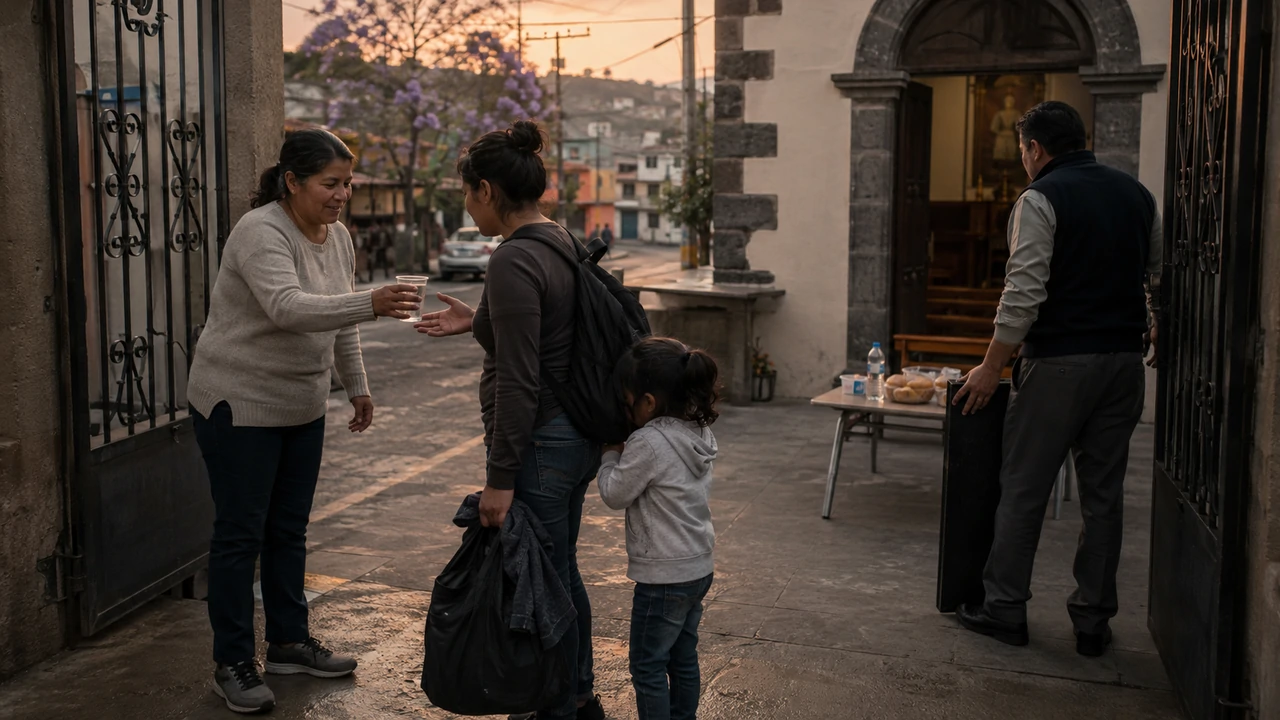
Mexico is home to many people and communities that identify as Christian, and most churches can worship openly. Yet a Christian label, family tradition, baptism, church membership, or religious practice cannot replace repentance and faith in Jesus Christ. Mexico needs churches that proclaim the biblical gospel clearly and help people follow Christ in everyday life.
Many communities in Mexico also live with severe violence and grief. Organized crime has brought murder, disappearance, extortion, trafficking, forced recruitment, and displacement into many communities. Families search for missing loved ones, migrants face exploitation and danger, and some pastors and Christian workers serve in places where caring for victims or resisting criminal demands can put them at risk.
Mexico therefore needs prayer that gives thanks for real freedoms and courageous service while taking spiritual need, violence, grief, and injustice seriously.
Prayer Burden at a Glance
Pray that many people in Mexico would turn from relying on inherited or cultural Christianity and come to repentance and saving faith in Jesus Christ. Ask God to strengthen churches to teach Scripture faithfully, make disciples, speak about Christ with courage, and serve their neighbours with compassion. Pray for protection from criminal violence, justice for missing people and their families, mercy for migrants and displaced communities, freedom of conscience in every locality, and integrity among those entrusted with public authority.
Last verified: 7 August 2026
Why Mexico Needs Prayer Now
Mexico needs prayer for clear gospel preaching, protection from criminal violence, truth and justice for missing people, freedom of conscience, and churches able to serve with courage and mercy.
Most Mexicans identify with the Roman Catholic tradition, while millions of others identify with evangelical, Pentecostal, Protestant, independent, and other religious communities. These descriptions help us understand the country’s religious landscape, but they do not tell us who has been born again, trusts in Christ alone for salvation, lives under the authority of Scripture, or belongs faithfully to a local church.
Mexico’s deepest spiritual need is for sinners to hear the gospel clearly, repent, trust in the finished work of Christ, and grow as His disciples. Churches and professing Christian communities need faithful preaching, godly leadership, careful discipleship, and continual correction by the Word of God.
Violence also shapes life in many parts of the country. Organized criminal groups use murder, kidnapping, extortion, trafficking, threats, and forced recruitment to control people and territory. Conditions vary greatly from one region to another. In badly affected areas, fear influences where families travel, whether businesses can operate safely, whether people remain in their homes, and how openly churches can serve their communities.
The disappearance of more than 130,000 people has caused lasting grief. Families may spend years searching for loved ones, asking authorities for answers, examining records, and seeking the identification of human remains. Some searchers have been threatened because their work exposes violence or official failure.
Mexico’s religious-freedom situation also requires careful prayer. National law protects religion and conscience, and ordinary worship is generally free. Yet these protections are not honoured equally everywhere. In some communities, religious minorities have reportedly faced pressure to make payments or join religious activities against their conscience. Others have experienced denial of services, detention, threats, violence, or displacement.
Criminal groups may also threaten pastors and Christian workers who care for victims, assist migrants, speak against violence, or refuse to submit to criminal control.
Mexico has real religious freedom, but it also has serious spiritual need, deep grief among families searching for missing people, abuses in some communities, and many places where serving Christ faithfully requires courage.
Country Snapshot
A brief orientation to Mexico’s location, government, population, religious setting, and social diversity.
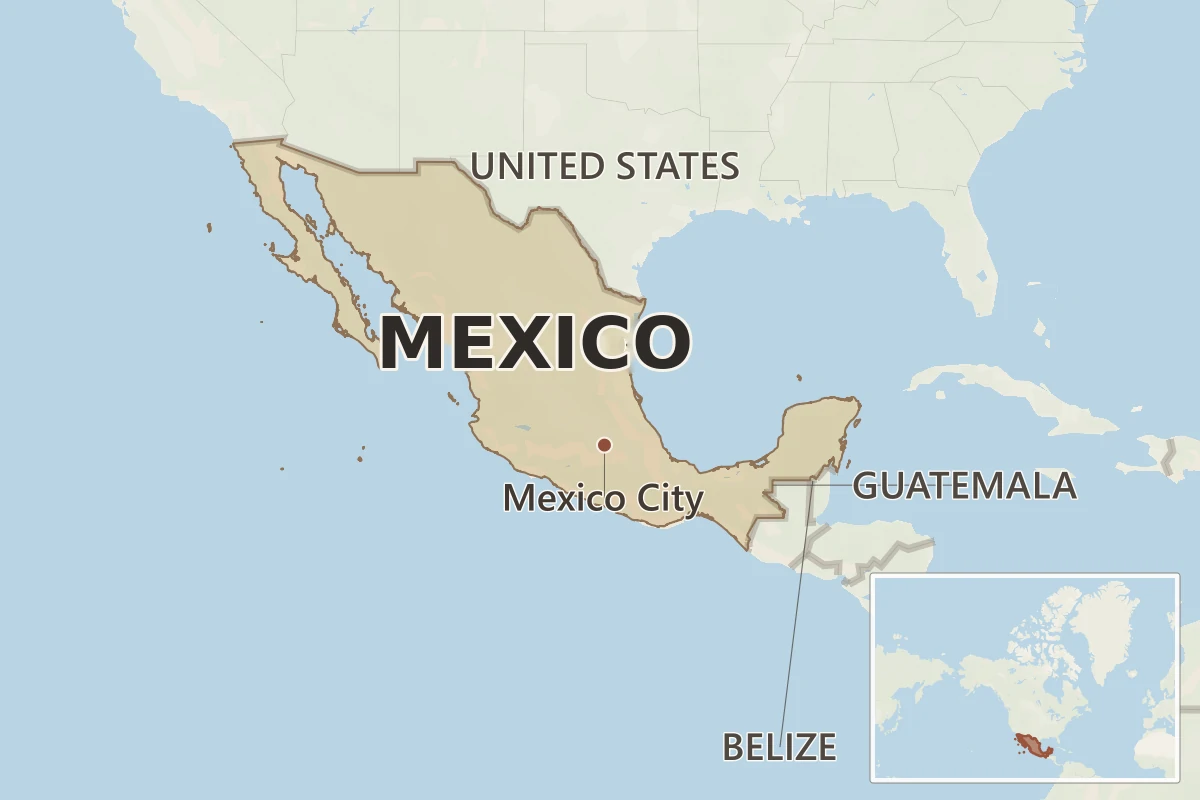
Mexico is a federal republic composed of thirty-one states and Mexico City. It shares borders with the United States, Guatemala, and Belize and has long coastlines on the Pacific Ocean, the Gulf of Mexico, and the Caribbean Sea. Its location places it along major trade and migration routes connecting North America, Central America, and the Caribbean.
Mexico has one of the world’s largest economies, supported by manufacturing, agriculture, tourism, services, and international trade. The benefits are unevenly shared. Poverty, informal employment, weak public services, rural disadvantage, displacement, and insecurity continue to affect many families.
The country includes many Indigenous peoples, languages, and regional cultures. Churches should therefore avoid treating Mexico as one uniform society. Christian ministry requires respect for human dignity, patient listening, faithful teaching, and a refusal to confuse the gospel with political, ethnic, or cultural control.
Religious statistics also need careful interpretation. Census terms such as Catholic, evangelical, Pentecostal, Protestant, or Christian record how people describe themselves. They do not prove personal conversion, sound doctrine, or faithful discipleship.
Spiritual and Practical Challenges Affecting Christians and Churches
Churches in Mexico serve amid criminal violence, unresolved disappearances, uneven protection of conscience, inherited religious identity, migration, displacement, and economic hardship.
Criminal violence and control
In areas where organized criminal groups hold substantial power, churches may serve communities affected by killings, extortion, kidnapping, disappearances, trafficking, forced recruitment, and threats.
Pastors and Christian workers can become targets when they shelter vulnerable people, help victims, refuse criminal demands, or speak openly about violence. Congregations may include families whose businesses, homes, or relatives are under threat.
Churches need courage, wisdom, and protection. They also need freedom from criminal influence, political manipulation, and the temptation either to act recklessly or to remain silent when vulnerable people need help.
Missing people and grieving families
The disappearance crisis has left many families living with uncertainty. Parents, spouses, children, and friends may not know whether a missing person is alive, imprisoned, trafficked, or dead.
Some relatives have become searchers themselves. They look for official records, witnesses, graves, and human remains while urging authorities to investigate. Churches can accompany these families through prayer, practical care, trauma support, and a commitment to keep seeking the truth with them.
Pray for missing people to be found. Pray also for accurate records, competent investigations, honest forensic work, the prosecution of offenders, and compassionate care for families.
Uneven protection of conscience
Most people in Mexico can worship openly, but national protections are not always upheld in every locality. In some Indigenous communities, customary authority, community membership, political power, and majority religious practice are closely connected.
Indigenous peoples have a right to dignity, cultural respect, and legitimate self-government. Individual people also have a right to believe, worship, change religion, or decline religious participation without coercion.
No one should be forced to fund or join religious practices, lose essential services, be detained, attacked, or driven from home because of conscience. Authorities need wisdom to protect both community dignity and fundamental human rights.
Religious identity without personal faith
Christian symbols, holidays, family traditions, ceremonies, and religious language are familiar throughout Mexico. This familiarity can create opportunities to speak about Christ. It can also lead people to assume that cultural identity, baptism, church membership, moral effort, or participation in religious rites is enough to make them right with God.
Churches must teach clearly that sinners are reconciled to God by grace alone, through faith alone, in Christ alone. People need to hear the call to repent, trust in Christ’s finished work, submit to Scripture, and take part faithfully in the life of the church.
Christians should speak about this need with honesty and humility. We should not assume that every person within a historic Christian tradition lacks genuine faith. We should also never treat an institutional or family label as proof that someone has been born again.
Migration, displacement, and economic hardship
Mexico is a country of origin, transit, return, refuge, and destination. Migrants, refugees, asylum-seekers, and deported people may face robbery, trafficking, exploitation, family separation, legal uncertainty, homelessness, and violence.
Churches and Christian ministries often meet people who need food, shelter, friendship, legal assistance, trauma care, and protection. Those serving them need compassion, accountability, wisdom, and perseverance.
Economic hardship also affects rural communities, informal workers, Indigenous families, migrants, young adults, and churches serving poorer areas. A lack of safe work and educational opportunities can make young people more vulnerable to criminal recruitment and force families to leave their homes.
Christian Life and Witness in Mexico
Christian witness in Mexico includes public worship, patient discipleship, courageous service in violent communities, care for migrants and victims, and clear gospel preaching across many cultures and languages.
Most churches in Mexico can meet openly, teach, publish Christian material, train leaders, serve communities, and speak publicly about their beliefs. These freedoms are a great mercy and should not be taken for granted.
Daily Christian life differs greatly across the country. In large cities, believers may face indifference, materialism, political division, family pressure, or the belief that serious faith is unnecessary. In areas affected by organized crime, Christians may make ordinary decisions while facing the threat of violence. Along migration routes, churches may receive people who are hungry, exhausted, traumatized, or in danger of exploitation.
In some Indigenous communities, believers seek to honour their neighbours and cultural setting while remaining faithful to Christ when religious participation is forced upon them. They need wisdom to reject coercion without speaking contemptuously about local people or culture.
Mexico needs churches that preach the whole counsel of God, teach the authority and sufficiency of Scripture, make disciples patiently, and proclaim salvation through Christ’s finished work.
Pastors and teachers need courage to address superstition, prosperity teaching, moralism, syncretism, religious formalism, and confidence in inherited identity. They must do this accurately and lovingly, without caricaturing people or claiming to know the condition of every individual heart.
Clear gospel preaching should be accompanied by visible love of neighbour. Churches can serve migrants, victims of violence, grieving families, prisoners, children, poor communities, and people living under threat. Acts of mercy do not replace the call to repentance and faith. They show that Christian witness concerns both the truth people need to hear and the neighbours believers are commanded to love.
Churches from different backgrounds may sometimes work together to defend freedom of conscience, assist victims, protect vulnerable people, or pursue peace. Such cooperation should remain within the limits of Scripture and conscience. Christians should not hide serious doctrinal differences for the sake of visible unity. True Christian unity is created by the Holy Spirit and grounded in the truth of the gospel.
Children and young adults require particular prayer. Criminal groups and some online influences can offer a sense of belonging or false promises, while addiction, economic insecurity, family breakdown, and spiritual confusion can leave young people more vulnerable. Younger people need more than religious familiarity. They need faithful teaching, godly examples, meaningful fellowship, wise pastoral care, and a clear understanding of life under the lordship of Christ.
Recent Developments
Changes in the judiciary, reported security improvements, continuing disagreement over missing-person records, a Supreme Court ruling on religious freedom, peacebuilding efforts, and refugee needs all affect how Christians can pray for Mexico now.
-
June 2025
Federal judicial transition
Mexico completed its first federal election of Supreme Court justices and other judicial officers. This was a major change in the country’s judicial system.
Prayer significance: Pray that judges and other public officials will act impartially, resist corruption, protect fundamental rights, and administer justice without fear or favour.
-
14 July 2026
Official report of fewer intentional homicides
Federal security authorities reported that the national average of intentional homicides had fallen by 48 percent between September 2024 and June 2026, representing 41 fewer homicides per day. This figure is the federal government’s own measurement of the national trend.
The reported decline gives reason for cautious thanksgiving, but it does not mean that violence has ended. Extortion, disappearances, criminal recruitment, impunity, and criminal control remain serious in parts of the country.
Prayer significance: Pray for any genuine improvement to continue and for people who still live under threat to receive protection and justice.
-
2026
Disagreement over missing-person records
Government officials said that administrative records suggested some listed people might still be alive. Families and search organizations warned that reviewing the data must not weaken investigations or make the crisis appear smaller than it is.
The totals and classifications may continue to change. The central need is clear: records must remain honest, searches must continue, evidence must be protected, and families must not be abandoned.
Prayer significance: Pray for truth, diligent searches, honest records, competent investigations, protection for families and searchers, and justice for victims.
-
July 2026
Supreme Court affirmation of religious liberty
Mexico’s Supreme Court affirmed that a secular state must remain neutral toward religion without becoming hostile or indifferent. The state has a duty to protect freedom of religion, conscience, and ethical conviction.
Prayer significance: Pray that this protection will be honoured in states, municipalities, Indigenous communities, schools, prisons, public offices, and other local settings.
-
February 2026
Peacebuilding and care for victims
The Second National Dialogue for Peace concluded after gathering religious, civic, educational, business, governmental, and community representatives. Discussions focused on victims, truth, justice, reparation, reconciliation, and practical efforts to build peace in local communities.
Those present came from many backgrounds and did not necessarily share the same beliefs. Even so, Christians can give thanks for people who refuse to accept violence as normal and who seek to protect communities and care for victims.
Prayer significance: Pray for peacebuilding marked by truth, justice, protection of victims, repentance, and practical care for communities harmed by violence.
-
31 December 2025
Refugees and asylum-seekers
Mexico hosted more than 150,000 refugees and over 170,000 asylum-seekers. Mexico is therefore not only a country people pass through. It is also a place where many seek safety and a new beginning.
Prayer significance: Pray for churches providing shelter, food, friendship, legal assistance, and pastoral care, and for public authorities to administer fair procedures and protect vulnerable people from trafficking, exploitation, and violence.
How to Pray
Pray for salvation, faithful churches, protection from violence, justice for the missing, freedom of conscience, mercy for migrants, and public leadership marked by integrity.
-
Pray for repentance and faith in Christ. Ask God to bring many people beyond inherited identity, religious ceremony, superstition, and cultural familiarity to repentance and saving faith in Jesus Christ. Pray that they would understand the gospel of grace, rest in Christ’s finished work, and grow as faithful disciples.
-
Pray for churches that obey Scripture. Pray for pastors, elders, teachers, evangelists, missionaries, and ordinary believers to remain under the authority of God’s Word. Ask God to protect churches from false teaching, prosperity promises, moralism, syncretism, political control, criminal influence, and dependence upon tradition without biblical truth.
-
Pray for communities threatened by criminal groups. Ask God to restrain murder, extortion, kidnapping, trafficking, forced recruitment, and territorial control. Pray for the protection of families, churches, schools, businesses, journalists, public servants, and whole communities living under threat. Pray especially for children and young people, that criminal groups, addiction, violence, and despair would not claim their lives.
-
Pray for missing people and their families. Pray that missing people would be found and that evidence would not be hidden or destroyed. Ask God to strengthen grieving families, protect those who search, guide investigators and forensic workers, and bring offenders to justice.
-
Pray for honest public leadership. Pray for the president, legislators, governors, judges, prosecutors, police, military personnel, local officials, and civil servants. Ask God to expose corruption, prevent cooperation with criminal groups, strengthen impartial justice, and give leaders wisdom, humility, courage, and restraint.
-
Pray for freedom of religion and conscience. Pray that constitutional protections will be honoured in every state and municipality. Ask God to protect people who face coercion, exclusion, detention, violence, loss of services, or displacement because of their beliefs. Pray that Indigenous and local authorities will uphold cultural dignity while also protecting the conscience and basic rights of individuals and minority communities.
-
Pray for migrants, refugees, and displaced people. Pray for safe shelter, fair hearings, protection from trafficking, family reunification, honest legal procedures, and compassionate treatment. Ask God to strengthen churches and ministries serving migrants and to keep their work wise, transparent, and free from exploitation.
-
Pray for pastors and Christian workers. Ask God to protect those serving in violent, isolated, or poor communities. Pray that they will act courageously without taking needless risks, show compassion without compromising biblical truth, teach sound doctrine, build trustworthy relationships within the church, and care wisely for frightened or grieving congregations.
-
Pray for peace shaped by truth and justice. Pray for crimes to be exposed, victims to receive justice, stolen goods or land to be restored where possible, and enemies to repent. Ask God to bless acts of mercy and cooperation that do not require doctrinal compromise. Pray for true Christian unity grounded in Christ and the biblical gospel.
-
Pray, “Your kingdom come.” Ask God to sustain believers in holiness, courage, and hope as they wait for Christ. Pray that the gospel will bear fruit throughout Mexico, that the lost will be saved, and that churches will remain faithful. Ask God to restrain evil, uphold justice, and prepare His people for the day when Christ will return and make all things new.
Give Thanks
Mexico’s needs are serious, but God has preserved real freedoms, courageous service, acts of mercy, and many opportunities for churches to proclaim Christ and serve their neighbours.
-
Give thanks for constitutional protection of religion and conscience. Thank God for the Supreme Court’s affirmation that these freedoms must be actively protected.
-
Give thanks for freedom to gather and serve. Many churches can meet publicly, teach Scripture, train leaders, serve neighbours, and proclaim Christ without national prohibition.
-
Give thanks for specific gospel fruit. Praise God wherever the biblical gospel is proclaimed clearly, believers are discipled, children are taught God’s Word, and vulnerable people receive faithful care.
-
Give thanks for those who care for vulnerable people. Thank God for Christians and others who assist migrants, accompany victims, comfort bereaved families, defend freedom of conscience, search for missing people, and work for truth and justice.
-
Give thanks for people who refuse to accept violence as normal. Praise God for communities seeking practical ways to protect victims and build peace.
-
Give cautious thanks for reported reductions in intentional homicides. Continue praying for honest measurement and lasting safety in communities where murder, disappearance, and extortion remain common.
-
Give thanks for courageous truth-seeking. Thank God for families searching for missing loved ones and for investigators, forensic workers, pastors, journalists, advocates, and neighbours who continue to pursue the truth despite danger.
-
Give thanks for Christ’s saving and preserving work. Crime, corruption, inherited religion, and human weakness cannot defeat Him. Christ continues to save sinners, build His Church, strengthen His people, and call believers to faithful witness.
Last Verified / Update Note
This note explains when the guide was reviewed, what was checked, and which developments may change how Christians pray for Mexico.
Review Status
Reviewed for current prayer use
Mexico’s current national leadership; population and religious-composition figures; national religious-freedom protections; reported local violations of freedom of religion or belief; organized-crime violence affecting churches and communities; the official security trend through June 2026; the national disappearance register and the debate surrounding its interpretation; the federal judicial transition; refugee and asylum-seeker figures; church and civil-society peacebuilding; and the main current prayer burdens affecting Christian witness.
Clear gospel preaching beyond inherited religious identity; churches governed by Scripture; protection for communities living under criminal violence; truth and justice for missing people and their families; freedom of religion and conscience in every locality; mercy for migrants, refugees, and displaced people; integrity in public authority; protection and wisdom for pastors and Christian workers; and faithful discipleship of children and young adults.
New national security figures and whether reported reductions in homicide lead to lasting safety; changes in the number and classification of missing people; the work of search commissions, investigators, and forensic services; implementation of the Supreme Court’s religious-freedom precedent; serious local violations involving religious minorities; migration and asylum-policy changes; the effects of the federal judicial transition; and major changes affecting churches serving in areas controlled by criminal groups.
This guide uses a combination of Mexican government and judicial sources, official statistics, United Nations and World Bank data, Mexican church and civic material, religious-freedom research, and independent reporting. Government sources establish official positions and statistics but do not by themselves prove that policies are effective in every locality. Outside assessments and church reporting help document conditions that national figures may not show. Contested claims are identified rather than presented as settled fact.
Help keep this guide accurate and current
Country conditions and public data can change. If you know of a reliable correction or a significant development that should be reviewed, please contact the Nations Prayer Directory.
Key Sources Consulted
Sources used in preparing this Mexico prayer guide include Mexican government and judicial materials, official statistics, international humanitarian data, church and civic sources, religious-freedom research, and independent reporting.
Mexican government, courts, elections, and statistics
- Presidency of the Republic. Official communications of President Claudia Sheinbaum Pardo. Used to confirm the current president and official presidential communications.
- National Institute of Statistics and Geography. “Religions in Mexico.” Used for the 2020 census religious-composition baseline and its descriptive categories.
- Secretariat of Security and Citizen Protection. National Security Strategy report through June 2026. Used for the official 48 percent reduction in the average daily number of intentional homicides and the caution that this is a government measurement.
- Secretariat of the Interior. Strategy for searching for and locating missing people. Used for the government’s official approach to searching for missing people and managing the national register.
- National Electoral Institute. Final count and declaration of validity for the election of Supreme Court justices. Used for the June 2025 federal judicial-election result and institutional transition.
- Supreme Court of Justice of the Nation. Amparo en revisión 499/2024. Used for the 2026 precedent concerning the secular state and freedom of religion, conscience, and ethical conviction.
- Secretariat of the Interior. Meeting with religious associations. Used for the government’s stated duty to guarantee religious freedom and its engagement with religious associations.
- Secretariat of the Interior. Registration of religious associations. Used for the legal and administrative setting in which religious associations receive public recognition.
International, humanitarian, and development sources
- UNHCR. Refugees and asylum-seekers in Mexico. Used for refugee and asylum-seeker totals dated 31 December 2025.
- World Bank. Mexico country data. Used for current population context and internationally comparable development data.
- World Bank. Mexico country overview. Used for Mexico’s economic scale and broader development conditions.
Mexican church, civic, and peacebuilding sources
- National Dialogue for Peace. Final statement of the Second National Dialogue for Peace. Used for the February 2026 peacebuilding gathering, its emphasis on victims, and locally rooted work toward truth, justice, reparation, reconciliation, and peace.
- Vatican News. Mexican priests and pastoral workers targeted by criminal violence. Used for risks faced by clergy and pastoral workers in areas affected by organized crime.
Religious-freedom research and independent reporting
- Christian Solidarity Worldwide. “Protection on Paper: The Situation of Freedom of Religion or Belief in Mexico.” Used for reported local violations involving coerced payments or participation, denial of services, detention, threats, violence, and displacement.
- Associated Press. Mexico’s official missing-person review and criticism from families and search groups. Used to present both the government’s interpretation of the register and concerns raised by families and search organizations.
Source Context
How to read the sources behind this guide in a country where national protections, local experience, official statistics, humanitarian data, and contested public claims must be kept distinct.
Source Context
- Religious identity. The religious-composition figures come from Mexico’s 2020 census, the latest authoritative national census figures currently available. Census categories describe how people identify themselves. They do not establish personal conversion, sound doctrine, regular worship, or faithful discipleship.
- National freedom and local experience. Mexico’s Constitution, federal authorities, and Supreme Court affirm strong protection for religion and conscience. Those national protections do not show how the law is applied in every community. Religious-freedom research documents serious abuses in some localities, especially where customary authority, majority religious practice, weak access to justice, and organized criminal influence overlap.
- Indigenous communities. Indigenous self-government and individual freedom of conscience both matter. Indigenous peoples have a right to dignity, cultural integrity, and legitimate self-government, while individuals and minority communities must be protected from compulsory religious payments, forced participation, detention, denial of services, violence, or displacement because of conscience.
- Security figures. The July 2026 homicide figure is an official federal-government measurement. It is useful for identifying a national trend, but it does not prove that every state or community has become safer. The reported decline is therefore a reason for cautious thanksgiving, while severe violence still affects some regions.
- Missing people. Mexico’s official register changes as people are reported, located, reclassified, or added from earlier cases. Government authorities and families searching for missing people disagree about how parts of the register should be interpreted. Because the register continues to change and some classifications are disputed, the figure is given as “more than 130,000 people.”
- Refugees and asylum-seekers. UNHCR recorded 152,002 refugees and 173,532 asylum-seekers in Mexico as of 31 December 2025. These figures are dated because migration and asylum totals change over time.
- Church-life reporting. Recent nationwide reporting is stronger for Roman Catholic institutions, documented religious-freedom cases, and formal religious associations than it is for the size, condition, and activity of evangelical, Protestant, Pentecostal, and independent churches across the whole country. Nationwide evidence is not strong enough to support broad claims about church growth, decline, attendance, or spiritual health across Mexico.
- Violence against Christian workers. Reporting about attacks upon priests, pastoral workers, worship sites, and church institutions helps establish that Christian service can become dangerous in some areas. This reporting does not show that Mexico has a nationwide state campaign to prohibit Christianity.
- Official and outside perspectives. Government sources explain official law, policy, statistics, and institutional action. Mexican civic and church sources describe local service, peacebuilding, and pastoral experience. United Nations and development sources supply internationally comparable data. Independent and specialist sources help compare official accounts with conditions reported elsewhere and document issues that may receive limited attention.
- Date of information. The information in this guide was checked through 7 August 2026. Later developments may change some time-sensitive details, especially security figures, missing-person records, migration data, and legal developments.
A Closing Prayer for Mexico
A concise prayer gathering Mexico’s present burdens before the Lord.


