


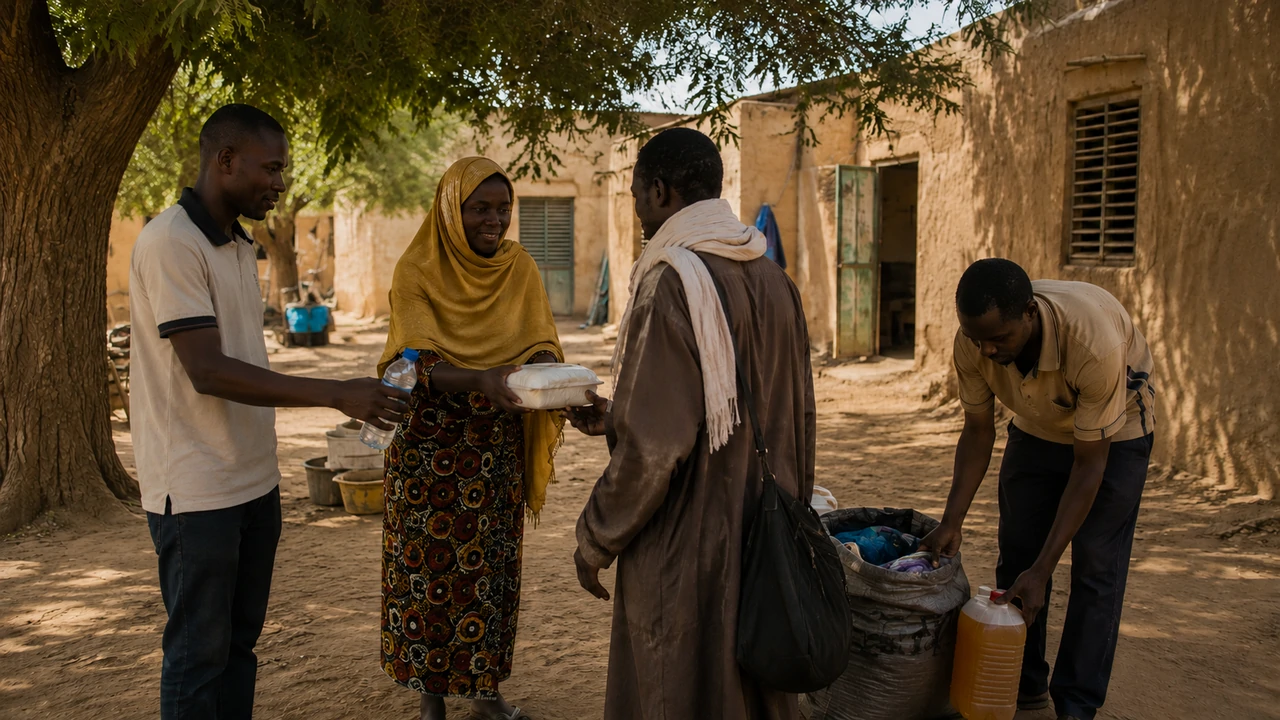
Niger faces armed attacks, displacement, hunger, climate shocks, and uncertainty under military-led government. Its small Christian community also needs prayer for safety, faithful teaching, wise care for converts, and a courageous witness among suffering neighbours.
Prayer Burden at a Glance
Pray for the people of Niger as armed attacks, displacement, hunger, and military-led government bring fear and uncertainty to many communities. Ask God to protect civilians, restrain violent groups, and give the people of Niger leaders who act justly and genuinely care for those they govern. Pray especially for Niger’s small Christian community: for believers living in dangerous areas, converts who may face rejection from their families or neighbours, and churches seeking to teach Scripture clearly, care for suffering people, and speak of Christ with courage and humility.
Last verified: 7 August 2026
Why Niger Needs Prayer Now
Niger needs prayer today because of armed violence, displacement, hunger, military-led government with no certain timetable for a return to elected civilian rule, and the needs of its small Christian community.
Niger lies in the central Sahel, where militant violence, poverty, climate shocks, and limited public services have placed millions of people at risk. Families have been driven from their homes, lost their livelihoods, or found themselves without reliable access to food, schools, and healthcare. Refugees from neighbouring countries have also sought safety within Niger.
The country has remained under military-led government since President Mohamed Bazoum was overthrown in July 2023. General Abdourahamane Tiani continues to lead Niger under a political framework known as the Refoundation. The framework established a 60-month period beginning on March 26, 2025, but its duration may be adjusted according to security conditions, the Refoundation programme, and the wider regional agenda. Niger therefore has no certain timetable for a return to elected civilian government.
The authorities say the Refoundation is intended to recover national sovereignty, strengthen institutions, and improve security. Human Rights Watch and Amnesty International have raised concerns about political detention, restrictions on journalists and opponents, weakened civic freedoms, and limited public accountability.
Christians do not need to take sides in every political dispute to pray wisely. They can ask God to expose falsehood, restrain injustice, protect people from arbitrary power, and raise up leaders who serve the population rather than themselves.
Niger also faces armed groups associated with al-Qaeda and Islamic State. Communities in the west of the country have suffered repeated attacks, and militants have twice struck the airport and military complex in the capital during 2026. Civilians, soldiers, aid workers, and people of different faiths all suffer from this violence.
Niger’s Christians form a very small minority within the wider population. Some believers in conflict-affected areas face attack, abduction, or displacement. Converts from Islam may be rejected by their families, threatened, or denied financial support. Churches need grace to remain courageous without becoming reckless, and compassionate without allowing fear or bitterness to separate them from their neighbours.
Country Snapshot
A brief orientation to Niger’s geography, people, government, economy, and religious setting.
Niger is a vast, landlocked country bordered by Algeria, Libya, Chad, Nigeria, Benin, Burkina Faso, and Mali. Much of the country is desert or semi-desert. Agriculture and livestock are essential to many families, but irregular rainfall, drought, flooding, desertification, and damaged soils make it difficult to maintain secure livelihoods.
Niger also has oil and other natural resources. IMF staff projected strong economic growth for 2026, but national growth does not guarantee that poor families will have enough food, work, healthcare, or education. Insecurity, climate shocks, corruption, and unequal access to resources can prevent economic gains from reaching those who need them most.
Niger is overwhelmingly Muslim. Reliable information about local church life is limited in some areas, especially where violence restricts travel and public reporting. Estimates of the number of Christians and recorded incidents of persecution should therefore be read as informed estimates rather than complete national totals.
Spiritual and Practical Challenges Affecting Christians and Churches
Insecurity, displacement, family rejection of converts, poverty, and the need for clear biblical teaching affect church life and ministry in Niger.
Insecurity, displacement, and broken fellowship
Believers living in areas affected by armed violence may be unable to travel safely, meet regularly for worship, or receive consistent pastoral care. Families who flee their homes can lose contact with their congregation, livelihood, and support network. Churches receiving displaced people may have little food, money, or space to meet the needs before them.
Christians are not the only people suffering. Armed groups have also killed Muslim worshippers and attacked predominantly Muslim communities. Churches should pray for their own protection while grieving every unjust death and caring for suffering neighbours without discrimination.
Family rejection and threats against converts
Nigeriens who turn from Islam to Christ may face rejection, threats, loss of family support, or demands that they hide their faith. Not every convert has the same experience, but those who leave Islam are among the believers most likely to become isolated.
They need safe Christian fellowship, careful pastoral support, and patient teaching from Scripture. Churches also need wisdom to help them without drawing unnecessary attention that could place them in further danger.
Poverty and limited resources for churches
Many churches serve communities affected by hunger, unemployment, displacement, and limited public services. Pastors and church members may be enduring the same hardships as the families they are trying to help.
They need strength to continue serving without neglecting their own families or becoming overwhelmed. They also need honesty and discernment when receiving or distributing aid, working with outside organizations, and deciding which needs they can responsibly meet.
Clear teaching and mature discipleship
Niger’s small Christian community needs pastors who understand Scripture and teach it faithfully. Believers must hear clearly that sinners are saved by God’s grace through faith in Jesus Christ, not through family background, church membership, religious ceremonies, or good works.
Pray that churches would identify and reject false teaching, superstition, and practices that mix Christianity with beliefs that contradict Scripture. Ask God to help believers obey Christ even when doing so brings social rejection, financial loss, or danger.
Christian Life and Witness in Niger
Believers need courage, wisdom, biblical fellowship, and love for their neighbours as they follow Christ within an overwhelmingly Muslim society.
Christians in Niger live among overwhelmingly Muslim neighbours. Following Christ may involve gathering for worship, teaching children the Bible, caring for displaced families, serving people in need, and explaining the gospel patiently to those who ask about their faith.
In insecure regions, these normal parts of Christian life can carry great risk. Travelling to worship may be dangerous. A visible Christian gathering may attract unwanted attention. Receiving a convert into the church may require discretion and courage. Pastors may need to care for believers who are frightened, displaced, or separated from their families.
Militant violence can tempt Christians to withdraw from Muslim neighbours or to treat whole communities as responsible for the actions of extremists. Most Muslims are not militants, and many have lost relatives, homes, and livelihoods in the same attacks. Christians need wisdom to recognize genuine danger without assuming that every neighbour is an enemy.
They are called to seek justice without hatred, show mercy without hiding the gospel, and refuse retaliation even when they have suffered deeply.
Open Doors reports that Christian partners are providing discipleship, practical help, and preparation for believers facing persecution or displacement. Pray that this assistance would strengthen local churches rather than make them dependent, that resources would be handled honestly, and that pastors would remain closely involved in caring for their people.
Churches also need genuine unity in Christ. This does not mean ignoring serious doctrinal differences. It means that believers who trust Christ and submit to Scripture should love one another, refuse ethnic or regional division, and cooperate in mercy and public witness where they can do so without compromising biblical truth.
Recent Developments
Niger’s military-led transition, attacks in Niamey, allegations of civilian harm, rising displacement, new regional alliances, and economic growth that has not ended widespread hardship all give Christians specific reasons to pray.
-
26 March 2026
The Refoundation entered its second year
March 26, 2026, marked one year since Niger’s Charter of the Refoundation was promulgated. The charter gives extensive authority to the President and provides for a 60-month political period that may be adjusted.
Former President Mohamed Bazoum also remained detained with his wife three years after the July 2023 coup, according to independent reporting. His continued detention remains one of the unresolved questions surrounding political authority, justice, and human rights in Niger.
Prayer significance: Pray for leaders who govern justly, for fair treatment of detainees, and for a peaceful and credible political future.
-
January and 18 June 2026
Armed groups again attacked the capital
Militants attacked the airport and adjoining military facilities in Niamey in January and again on June 18, 2026. Nigerien authorities reported that the June assault killed 11 members of the security forces and two civilians. It was the second attack on the complex within five months.
Armed groups also continued attacking villages, security forces, and places of worship in western Niger.
Prayer significance: Pray for protection, the prevention of planned attacks, and the weakening of violent networks without indiscriminate retaliation.
-
6 January 2026
Questions remained about civilian deaths during military operations
Human Rights Watch reported that an apparent military drone strike on a market in Kokoloko killed civilians as well as alleged militants. The organization called for an independent investigation.
This report is a serious allegation, not a final ruling by a court. It nevertheless gives Christians reason to pray that military operations would protect civilians, that credible allegations would be investigated, and that those responsible for unlawful deaths would be held accountable.
Prayer significance: Pray for lawful security operations, truthful investigation, protection of civilians, and justice without revenge.
-
30 June 2026
More than one million people were displaced
Government and UNHCR figures recorded more than one million forcibly displaced people in Niger. This total included refugees, asylum seekers, and more than half a million Nigeriens displaced within their own country.
UNICEF estimated that 3.9 million people, including 2.6 million children, would need urgent humanitarian help during 2026. Many communities continued to face hunger, malnutrition, closed or disrupted schools, and limited access to healthcare.
Prayer significance: Pray for safe shelter, food, clean water, healthcare, education, safe access for humanitarian workers, and honest distribution of aid.
-
Since 29 January 2025
Niger continued to reshape its regional alliances
Niger formally left the Economic Community of West African States alongside Mali and Burkina Faso. The three governments have since strengthened security and diplomatic cooperation through the Alliance of Sahel States.
These decisions affect trade, travel, military cooperation, and relationships with neighbouring countries. It is still unclear whether the new arrangements will bring greater security and economic opportunity to ordinary people.
Prayer significance: Pray that regional cooperation would protect communities, preserve peaceful relations, and serve the public rather than deepen isolation or conflict.
-
2026 projection
Economic growth did not remove widespread hardship
IMF staff projected economic growth of around seven percent for 2026, supported by agriculture, oil, and other industries. Conflict, climate shocks, financial pressures, and unequal access to opportunity could still prevent many families from benefiting.
Prayer significance: Pray that national resources would provide work, education, healthcare, and stronger communities rather than feed corruption or conflict.
How to Pray
Pray for protection, justice, mercy, faithful churches, peace between neighbours, and enduring hope in Christ.
Pray for protection from armed attacks. Ask God to protect civilians, churches, mosques, schools, markets, aid workers, and members of the security forces. Pray that planned attacks would be discovered and stopped before people are harmed.
Pray for violent groups to lose their power. Ask God to disrupt their recruitment, finances, and supply of weapons. Pray that those involved in extremist movements would turn from violence, and that some would repent and believe in Jesus Christ.
Pray for justice in military operations. Pray that Niger’s armed forces would protect civilians, obey the law, and refuse corruption, cruelty, and indiscriminate retaliation. Ask for truthful investigations when civilians are killed or injured.
Pray for leaders who serve the population. Ask God to give Niger leaders who listen to honest counsel, uphold justice, and work toward peaceful and credible government. Pray for the fair treatment of detainees, journalists, political opponents, and civic leaders.
Pray for displaced and hungry families. Ask God to provide safe shelter, sufficient food, clean water, healthcare, and schooling. Pray that aid workers would reach dangerous areas and that assistance would be distributed honestly.
Pray for Christians living in insecure areas. Ask the Lord to preserve congregations, pastors, and families threatened by violence or displacement. Pray that fear would not silence their worship, destroy their fellowship, or make them hate their neighbours.
Pray for converts from Islam. Ask God to give them safe Christian fellowship, wise pastoral care, and courage to remain faithful. Pray that churches would support them carefully and that hostile relatives would be restrained.
Pray for pastors and churches to teach Scripture clearly. Ask that Christ would be faithfully proclaimed, false teaching exposed, and believers helped to grow in repentance, faith, holiness, love, and obedience.
Pray for peace between neighbours. Ask God to restrain revenge, suspicion, and the blaming of whole communities for the crimes of extremists. Pray that Christians would serve Muslim neighbours sincerely and explain the gospel without fear or hostility.
Pray that Niger’s resources would serve its people. Ask that farming, oil income, and other national resources would provide work, schools, healthcare, and stronger communities. Pray that corruption and conflict would not consume what should be used for the public good.
Pray for believers to endure in hope. Ask the Lord to keep His people faithful as they wait for the return of Jesus Christ and the full coming of His righteous kingdom. Pray that this hope would lead them to courage, holiness, mercy, and patient service now.
Give Thanks
Give thanks for believers who persevere, ministries that serve suffering people, and Niger’s land, agriculture, and natural resources.
Give thanks for believers who continue to follow Christ and gather for worship. Thank God for their perseverance amid violence, displacement, and social rejection.
Thank God for pastors, Christian workers, and families who teach Scripture. Give thanks for those who care for people in need and help younger believers continue in the faith.
Give thanks for Christian ministries providing discipleship and practical help. Thank God for care offered to people affected by persecution or displacement.
Thank God for humanitarian workers, local partners, and communities. Give thanks for those providing food, healthcare, schooling, protection, and shelter under dangerous conditions.
Give thanks for Christian leaders who call for justice and peace. Thank God for public appeals for national peace and peaceful relationships with Muslim neighbours.
Thank God for Niger’s land, agriculture, livestock, oil, and other natural resources. Give thanks for the ways these resources can support families and livelihoods.
Last Verified / Update Note
This note shows when the guide was reviewed, what was checked, and which developments readers may wish to follow in prayer.
Review Status
Guide reviewed and updated
Niger’s current national leadership; the Charter of the Refoundation and political-transition framework; armed attacks in Niamey and Tillabéri; allegations of civilian harm during military operations; forced displacement and humanitarian need; food insecurity and economic projections; Niger’s withdrawal from ECOWAS and cooperation through the Alliance of Sahel States; civic freedoms; and the reported situation of Christians, churches, and converts from Islam.
Protection of civilians from armed violence; justice and restraint during security operations; wise and accountable government; care for displaced, hungry, and malnourished families; faithful pastoral care and biblical teaching; protection and support for converts; peaceful relationships between Christian and Muslim neighbours; and honest stewardship of Niger’s land, agriculture, oil income, and public resources.
Changes in national leadership or the political timetable; the detention and legal position of former President Mohamed Bazoum and other detainees; attacks in Tillabéri, Niamey, and other affected regions; allegations concerning civilian casualties; displacement and humanitarian-funding figures; relations within the Alliance of Sahel States and with ECOWAS neighbours; border and trade arrangements; and any significant change affecting religious freedom, Christian worship, or church ministry.
This guide draws on official Nigerien statements, Nigerien reporting, African regional institutions, United Nations agencies, humanitarian and economic organizations, independent human-rights reporting, and Christian ministry sources. Government sources are used for official positions and decisions, not as independent proof of every claim. Allegations and disputed matters are attributed to the organizations reporting them.
Help keep this guide accurate and current
If you noticed a possible correction, broken link, or significant country update, please contact the Nations Prayer Directory so we can review it carefully.
Key Sources Consulted
Selected public sources used to verify Niger’s government, security, humanitarian conditions, economic outlook, human-rights concerns, and Christian context.
Government, political framework, and national reporting
- Government of Niger — Official portal and government leadership reporting
- Government of Niger — One Year of the Refoundation and its institutional framework
- Agence Nigérienne de Presse — Official account of the June 18, 2026 airport attack
- Agence Nigérienne de Presse — AES security, diplomatic, and development cooperation
- Studio Kalangou — Nigerien reporting on the June 2026 Niamey airport attack
Regional relations and security
- ECOWAS — Statement on the effective withdrawal of Niger, Mali, and Burkina Faso
- African Commission on Human and Peoples’ Rights — Deadly attacks in Tillabéri, March 2026
- African Union — Statement on the January 2026 airport and Bosiye attacks
Displacement, hunger, children, and the economy
- Government of Niger and UNHCR — Niger displacement data portal
- UNICEF — Niger Humanitarian Action for Children Appeal 2026
- World Food Programme — Niger country overview
- International Monetary Fund — June 2026 staff-level agreement and economic outlook
Human rights and civilian protection
- Human Rights Watch — Three Years of Military Rule Deepens the Human Rights Crisis
- Human Rights Watch — Report on the January 2026 Kokoloko drone strike
- Amnesty International — Current Niger human-rights overview
- Amnesty International — Submission for Niger’s 2026 Universal Periodic Review
Christian life and persecution
Source Context
How to read official statements, external assessments, changing humanitarian figures, and limited church data behind this guide.
Source Context
- Political transition. Niger’s authorities describe the present period as a national Refoundation intended to restore sovereignty and strengthen institutions. Human Rights Watch and Amnesty International describe the same period as one of entrenched military rule and reduced civic freedom. The guide distinguishes those perspectives instead of treating either one as complete proof by itself.
- Transition timetable. The Charter of the Refoundation established a 60-month period beginning on March 26, 2025, but permits its duration to be adjusted. No fixed national election date should be inferred from the charter.
- Security reporting. Casualty figures from armed attacks often begin as provisional government totals and may later change. The guide uses dated figures and, where possible, checks Nigerien official reporting against local, regional, or independent reporting.
- Civilian-harm allegation. Human Rights Watch reported that an apparent Nigerien military drone strike killed civilians at Kokoloko in January 2026. Human Rights Watch said it sought a response from the authorities but had received none when its report was published. As of 7 August 2026, the sources consulted for this guide did not include a sufficiently detailed subsequent official response or a completed public investigation. The guide therefore presents this as an attributed allegation, not a final judicial finding.
- Displacement figures. UNHCR’s Niger portal combines data supplied by the Government of Niger and UNHCR. Displacement totals change frequently and should always be read with their stated date.
- Humanitarian estimates. UNICEF and WFP figures describe estimated need and planned humanitarian response. Different organizations may use different dates, definitions, and population estimates, so their totals are not always directly interchangeable.
- Economic outlook. The IMF’s 2026 growth figure is a staff projection based largely on agriculture and extractive activity. It does not mean that poor households are already experiencing greater food security, employment, or access to public services.
- Christian population. Recent public data on Niger’s Christian population and local church life are limited. Open Doors provides valuable church-network and persecution reporting, but it is a Christian advocacy ministry rather than a national census authority. Its ranking, incident reports, and population estimates should be read according to its stated methodology.
- Security and Christian suffering. Some attacks specifically expose Christians and converts to heightened danger, but militant violence in Niger has also killed many Muslims and affected entire communities. The guide therefore notes the dangers faced by Christians and converts without suggesting that they are the only victims.
A Closing Prayer for Niger
A prayer for Niger’s people, leaders, churches, converts, and communities affected by violence and displacement.


