

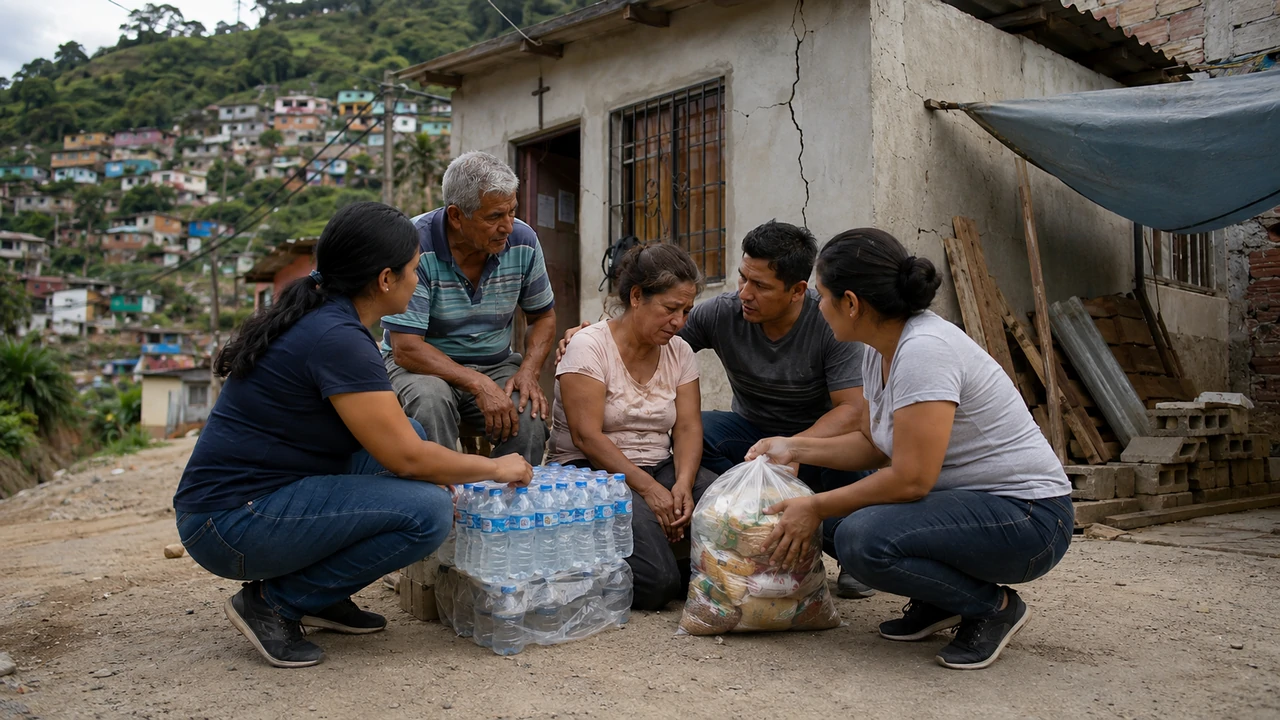
Venezuela is mourning after two powerful earthquakes struck the north-central part of the country on June 24, 2026. Reported at magnitudes 7.2 and 7.5, the earthquakes killed and injured thousands of people, destroyed homes, damaged health facilities, and left many families facing a long and uncertain rebuilding process.
This disaster came after years of political conflict, economic hardship, migration, weakened public services, and deep public distrust. Venezuelans are also living with disputed political authority, continuing political detention, very high inflation, weakened health services, family separation across borders, and tension with Guyana over Essequibo.
Across the country, neighbours are caring for one another, churches are helping displaced families, and believers are seeking to follow Christ amid grief and uncertainty. Pray that God would comfort those who mourn, protect people in danger, restrain injustice, guide the rebuilding of damaged communities, strengthen churches, save the lost, and give Venezuelan Christians steadfast hope in Christ.
Prayer Burden at a Glance
Pray for families grieving after the June earthquakes, for the injured and traumatised, and for people who need safe shelter, clean water, medical care, restored livelihoods, and permanent homes. Ask God to guide the long work of rebuilding homes and neighbourhoods and restoring hospitals, schools, and essential services.
Pray also for just and honest government, political reforms that uphold the law and protect citizens, mercy and due process for prisoners, protection for migrants and returnees, and peace with Guyana. Ask God to help churches resist political manipulation, handle relief with integrity, preach Christ clearly, and strengthen believers to live with courage, compassion, holiness, and hope.
Last verified: August 1, 2026
Why Venezuela Needs Prayer Now
Venezuelan families are facing earthquake losses alongside political conflict, economic hardship, displacement, and weakened public services.
The June earthquakes brought widespread death, injury, homelessness, fear, and destruction. The first rescue phase has passed, but the emergency is not over. Families are grieving. Injured people need continuing treatment. Displaced people are living in temporary accommodation, and many communities still need clean water, sanitation, health care, and safe housing.
The country must restore more than damaged buildings. Hospitals and patient-referral systems need to function again. People with chronic illnesses need uninterrupted treatment. Children need stable family life and a return to school. Survivors may require long-term rehabilitation, counselling, pastoral care, and help with trauma. Damaged water systems, overcrowded shelters, unsafe sanitation, and hazardous rubble also create serious health risks. The available evidence, however, does not establish a nationwide post-earthquake epidemic.
Rebuilding will take years and require substantial national and international support. Venezuelan authorities have announced housing targets, international technical cooperation, and a national reconstruction programme. The real test will be whether families receive safe homes, essential services are restored, resources are used honestly, and help reaches affected communities without political favouritism.
The earthquakes struck during an already disputed political transition. Delcy Rodríguez is serving as acting president, and the International Monetary Fund and World Bank have resumed dealing with her administration. The legality and political consequences of Nicolás Maduro’s capture by United States forces in January 2026 remain disputed. Venezuela needs government that is lawful, accountable, honest, and concerned for the good of its people.
Political detention is another continuing concern. Many prisoners have been released during 2026, bringing real relief to individuals and families. Others remain imprisoned or under legal restrictions. Christians can thank God for every genuine release without pretending that political imprisonment, intimidation, or failures of due process have ended.
Many households also face very high inflation, weak purchasing power, unreliable services, and difficulty paying for food, medicine, transport, schooling, and secure housing. Millions of Venezuelans remain outside the country. Some are returning, but they may encounter unemployment, weak public services, housing shortages, and difficulty rebuilding family life. The earthquakes have added internal displacement to this long migration crisis.
Churches are caring for people affected by grief, displacement, economic hardship, and weak public services. Many congregations can gather and worship openly, but pastors and churches may face political suspicion, retaliation, demands to remain silent, or attempts to use them for political purposes. They need courage to speak without hatred, wisdom to distribute help fairly, and conviction to keep preaching salvation through Jesus Christ.
These needs belong together. Venezuela requires prayer for grieving families, rebuilding, justice, prisoners, migrants, struggling households, Christian witness, and the salvation of the lost. No political upheaval, prison wall, migration route, economic failure, or natural disaster places Venezuela beyond God’s rule or mercy.
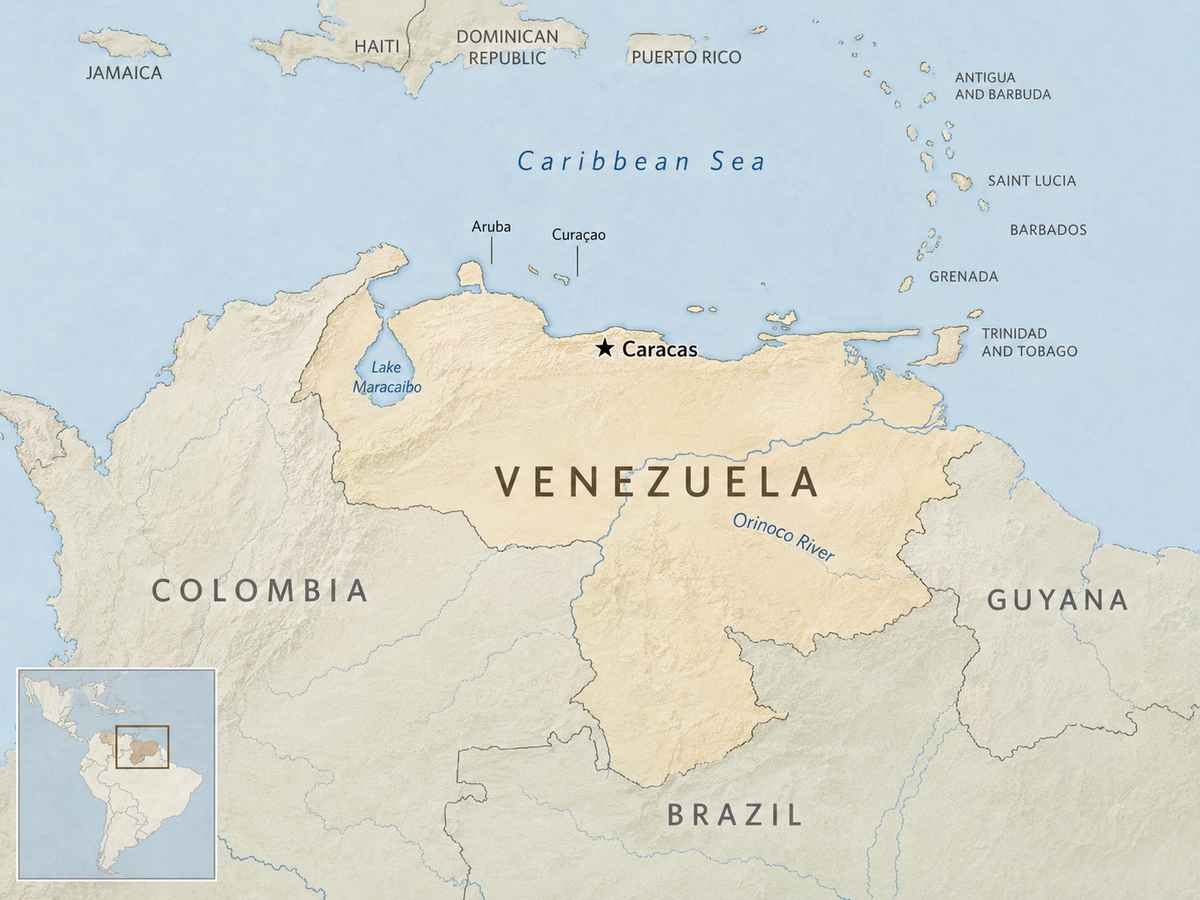
Country Snapshot
A brief orientation to Venezuela’s location, leadership, church context, religious freedom, and main prayer needs.
Many Venezuelans identify as Christian. The country includes large Roman Catholic communities and many evangelical and Pentecostal congregations. An inherited identity, denominational label, baptism, or church membership should not be confused with regeneration or saving faith. Pray for repentance, genuine faith in Jesus Christ, sound preaching, biblical discipleship, and holy living.
Many Christians worship openly, so severe persecution is not the ordinary experience of every church or believer. Some pastors and congregations nevertheless face intimidation, retaliation, demands to support political leaders or remain silent about wrongdoing, and attempts to use churches for political purposes.
Spiritual and Practical Challenges Affecting Christians and Churches
Churches are serving families affected by grief, damaged public services, separation across borders, and years of economic hardship, while some pastors also face political suspicion or manipulation.
Grief, trauma, and years of rebuilding
Thousands of families are mourning relatives, caring for injured loved ones, or facing the loss of homes and livelihoods. Survivors may fear further tremors, worry about the safety of damaged buildings, or struggle to imagine a secure future.
Churches need pastors, counsellors, mature believers, and trained workers who will listen patiently and remain present after the first emergency response has ended.
Health care, clean water, and people at greater risk
Damaged health facilities and water systems make it harder to treat injuries, continue care for chronic illnesses, protect mothers and children, and prevent disease.
Life in temporary shelters may be especially difficult for children, older people, pregnant women, people with disabilities, and those who have no relatives nearby. Churches and relief workers need wisdom to notice people whose needs might otherwise be missed.
Household hardship, migration, and displacement
Very high inflation and weak purchasing power make food, medicine, transport, rent, and schooling difficult for many families.
Migration has separated husbands and wives, parents and children, siblings, and older relatives. Those returning to Venezuela may find limited employment, scarce housing, and health care and other public services that remain weak or difficult to access. Some families now face both cross-border separation and displacement caused by the earthquakes.
Political pressure and Christian witness
Disputed government authority can expose churches to demands that they support political leaders, align with opposition movements, repeat official claims, or remain silent about wrongdoing.
Christian leaders need courage to tell the truth without cruelty, pray for rulers without excusing sin, reject revenge, and remember that the church belongs to Christ rather than to any political party or movement.
Relief work and pressure on churches
Churches may receive growing requests for food, medicine, shelter, counselling, and financial help while their own members and leaders are also struggling.
They need honesty in handling aid, fairness in deciding whom to help, protection against misuse, and wisdom to care for physical needs without neglecting worship, Scripture teaching, discipleship, and pastoral ministry.
Perseverance and discipleship
Years of hardship can weaken prayer, generosity, patience, marriages, family relationships, church participation, and confidence in God’s promises. Some may begin to treat political change or material relief as their only hope.
Churches must continue preaching the whole counsel of God, calling people to repentance and faith in Christ, and teaching believers to practise honesty, forgiveness, courage, purity, generosity, and patient trust in God.
Christian Life and Witness in Venezuela
Believers are worshipping, mourning, helping displaced families, caring for the sick, and bearing witness to Christ amid prolonged hardship.
Venezuelan Christians worship and serve in homes, church buildings, hospitals, shelters, temporary camps, prisons, neighbourhoods, and migrant communities. They care for relatives, welcome displaced families, visit the sick, distribute necessities, pray with frightened neighbours, and help people rebuild daily life after loss.
After the earthquakes, parish facilities and other church buildings were used as shelters. Cáritas networks reported distributing food, water, medicine, and hygiene supplies. Adventist volunteers and medical workers reported providing food, health care, hygiene materials, and spiritual support. Salvation Army teams also described practical, emotional, and spiritual care for affected families.
These reports describe real acts of mercy in sheltering, treating, feeding, comforting, and protecting people. They do not settle doctrinal questions, prove the spiritual condition of everyone involved, or establish that every participating institution is sound in doctrine and practice. A Christian label, church membership, baptism, inherited religion, or participation in relief work is not proof of regeneration or saving faith.
Venezuela needs churches that preach salvation by grace through faith in Jesus Christ, teach Scripture carefully, call people to repentance, and help believers grow in obedience.
Pastoral care will continue after public attention turns elsewhere. Families may need help with funerals and bereavement, trauma care, long-term support for people left with disabilities, care for widows and children, marriage and family counselling, and practical help after losing work or housing. Churches should be honest about what they can provide, but they should not abandon people when their suffering is no longer widely reported.
The political situation also tests Christian witness. Some congregations may be tempted to link the gospel too closely with government power. Others may begin to treat opposition politics as though it were God’s kingdom. Churches should pray for leaders, defend the dignity of victims, speak against injustice, reject violence and revenge, and refuse to become tools of political factions.
Venezuela needs believers whose trust in Christ can be seen in honest speech, financial and sexual integrity, compassion for prisoners and migrants, care for the poor, and love for neighbours with different political views. It needs pastors who preach Christ rather than themselves, congregations that handle relief honestly, and Christians whose hope leads them to obey God in the present.
Homes, hospitals, roads, schools, and livelihoods matter greatly, and Christians should pray for them to be restored. But reconstruction cannot reconcile sinners to God. Pray that the Lord would use clear gospel preaching, Christian mercy, patient endurance, and everyday witness to bring many Venezuelans to repentance and faith in Christ.
Recent Developments
These developments help readers pray about Venezuela’s present disaster recovery, public life, prisoners, and regional relations.
-
July 2024 onward
Disputed election and continuing repression concerns
Authorities declared Nicolás Maduro the winner of Venezuela’s July 2024 presidential election. Opposition leaders and many outside observers disputed the result. Protests, arrests, restrictions on expression, and deeper mistrust followed.
Prayer direction: Pray for the truth to be established, for people to be protected from repression and violence, and for political disputes to be addressed lawfully and peacefully.
-
January 2026
Nicolás Maduro captured and Delcy Rodríguez assumes acting authority
United States forces captured Nicolás Maduro in January 2026. Delcy Rodríguez later began serving as acting president. Maduro and his supporters dispute the legality of his capture and removal. Questions concerning sovereignty, constitutional authority, and foreign intervention remain unresolved.
The International Monetary Fund and World Bank have resumed dealings with the Rodríguez administration. That engagement reflects her administration’s present governing role but does not settle every legal, political, or moral question surrounding the transition.
Prayer direction: Pray for lawful government, honesty in public life, restraint among Venezuelan and foreign powers, protection for civilians, and leaders who place the good of the people above personal or political interests.
-
2026
Prisoner releases continue while detention concerns remain
Venezuelan authorities announced amnesty measures and released many detainees. Foro Penal documented numerous releases, giving families real reason for gratitude. The organisation nevertheless reported 379 political prisoners as of July 27, while more than 11,380 other people remained under continuing legal restrictions.
Prayer direction: Thank God for genuine releases. Pray for those still imprisoned or restricted, for due process, protection from abuse, and healing for former prisoners and their families.
-
May 2026
The Essequibo dispute remains before the International Court of Justice
The International Court of Justice completed hearings on the Guyana–Venezuela territorial dispute, and the case remains pending. Venezuela continued to reject the Court’s approach and called for a negotiated settlement. Guyana maintained that the eventual judgment would be binding. A border incident in late May produced opposing accounts and showed that the dispute still carries a risk of escalation.
Prayer direction: Pray for restraint, honest diplomacy, protection for border and Indigenous communities, and a peaceful settlement that does not depend on threats or violence.
-
June 24–July 2026
Earthquake response moves into recovery and reconstruction
Two earthquakes, reported at magnitudes 7.2 and 7.5, struck north-central Venezuela on June 24. By July 25, Venezuelan authorities were reporting 5,546 deaths, 16,740 injuries, and 17,907 people who had lost their homes. These figures were current on that reporting date and may later be revised.
The Pan American Health Organization reported on July 14 that 38 health facilities had been damaged. Recovery must restore emergency and injury care, maternal health services, treatment for chronic illnesses, vaccination, patient referrals, rehabilitation, disease monitoring, clean water, sanitation, and mental-health support.
By July 24, the United Nations and humanitarian partners reported that more than 117,000 affected people had received food, health care, water and sanitation support, protection, temporary shelter, education, nutrition, or mental-health and social support. Serious needs nevertheless remained, and the wider response was still underfunded.
The World Bank’s preliminary assessment estimated $19.6 billion in direct physical damage. The Venezuelan government announced the Gran Misión Venezuela Renace reconstruction programme, housing targets, and international technical cooperation. International organisations were also preparing a joint Post-Disaster Needs Assessment to guide longer-term recovery.
Reports indicated that more than 240 families had received the first government-provided homes. This was a meaningful beginning, but it did not show that the wider housing need or announced reconstruction targets had been met. Progress should be judged by how many safe homes are completed, whether public services are restored, whether construction is sound, and whether resources are used honestly.
Prayer direction: Pray for those who mourn, the injured, displaced families, health workers, safe shelter, clean water, honest rebuilding, and fair distribution of help.
-
August 1, 2026
Political negotiations scheduled amid continuing distrust
A political negotiation process was scheduled to begin on August 1. Discussions were expected to address electoral institutions, political participation, and a possible path toward future elections. As of August 1, 2026, no verified outcome was available.
Important opposition figures were not participating, and some groups connected with the former governing movement also criticised the process.
Prayer direction: Pray that the negotiations would not become political theatre. Ask that legitimate concerns would be heard, that truth would not be sacrificed for temporary advantage, and that any agreement would protect citizens and advance real justice.
How to Pray
Use these prayer directions to intercede for people facing grief, displacement, injustice, hardship, and spiritual need.
Pray for grieving and injured people. Ask the Lord to comfort families who have lost loved ones, strengthen those facing injury or disability, and provide skilled medical, pastoral, and family care for traumatised survivors.
Pray for safe homes and restored services. Ask God to provide secure shelter, clean water, sanitation, functioning hospitals and schools, and permanent homes. Pray that rebuilding would be safe, honest, and guided by need rather than political favour.
Pray for people who may be overlooked. Remember children, older people, pregnant women, people with disabilities, those living alone, and families at risk of neglect, exploitation, or abuse.
Pray for just government and genuine reform. Ask God to give Venezuela leaders who tell the truth, uphold justice, protect human dignity, and use authority for the public good. Pray that political negotiations and reforms would produce more than speeches or promises.
Pray for prisoners and former detainees. Thank God for those who have been released. Pray for people still imprisoned or restricted: ask for fair legal treatment, protection from mistreatment, reunion with their families, and healing after detention.
Pray for struggling families, migrants, and returnees. Ask God to provide food, medicine, employment, transport, housing, and education. Pray for Venezuelans abroad, divided families, those returning home, and people displaced within the country.
Pray for churches and Christian relief workers. Ask God to keep pastors and congregations governed by Scripture, compassionate toward suffering people, honest in handling aid, courageous when threatened or manipulated, and unwilling to become tools of political factions.
Pray for repentance, faith, and discipleship. Ask the Holy Spirit to bring many Venezuelans to repentance and genuine faith in Jesus Christ. Pray for clear gospel preaching, sound doctrine, holy living, and believers who obey Christ in everyday life.
Pray for peace with Guyana. Ask God to restrain threats and violence, protect border and Indigenous communities, and guide both countries toward a peaceful and honest settlement of the Essequibo dispute.
Pray for endurance and hope in Christ. Ask God to keep Venezuelan believers from despair. Pray that they would continue trusting and obeying Christ in suffering, serve their neighbours, and keep praying, “Your kingdom come,” as they wait for the restoration God has promised in Christ.
Give Thanks
Give thanks for specific acts of mercy, courage, hospitality, release, and Christian witness.
Give thanks for rescuers, medical workers, engineers, volunteers, neighbours, and public servants who have saved lives and helped affected communities.
Give thanks wherever displaced families have received food, clean water, medicine, shelter, protection, or help toward safer housing.
Give thanks for practical care provided through parish networks, Cáritas workers, Adventist volunteers, Salvation Army teams, local congregations, and other community groups. Thank God for each honest act of mercy without treating institutional identity as proof of sound doctrine or saving faith.
Give thanks for every genuine prisoner release and every family reunion. Continue remembering those who remain imprisoned or restricted.
Give thanks for countries, churches, communities, and families that welcome Venezuelan migrants, and for Venezuelans who continue caring for relatives across borders.
Give thanks for believers who continue to worship, pray, teach their children, help their neighbours, and bear witness to Christ. Earthquakes, political upheaval, imprisonment, migration, and economic hardship cannot overturn the rule of God or make His promises fail.
Last Verified / Update Note
Several developments remain fast-changing or disputed, so the dates and source limits below are important.
Review Status
Last verified
August 1, 2026
This guide was reviewed after the June 24 earthquakes and the movement from rescue into early and long-term recovery. The review considered the latest available national reports on deaths, injuries, and housing loss; damage to health facilities; public-health risks; humanitarian assistance; the World Bank’s preliminary damage assessment; initial housing delivery; and national and international reconstruction plans. It also considered Nicolás Maduro’s January 2026 capture, Delcy Rodríguez’s acting presidency, the political negotiations scheduled for August 1, Foro Penal’s July 27 political-prisoner figures, prisoner releases and continuing detention, household hardship, migration and return movements, religious freedom, church-state relations, Christian relief work, and the Essequibo dispute.
Pray for those who mourn, the injured, displaced families, safe housing, clean water, restored health services, honest rebuilding, just government, prisoners, migrants and returnees, struggling households, peace with Guyana, and churches that show mercy while remaining governed by Scripture and centred on the gospel.
Earthquake casualty, housing, and temporary-shelter figures may change. Damage to health facilities, unsafe water, poor sanitation, and interrupted treatment may continue to threaten health. Reconstruction promises need to be compared with homes completed and services restored. The direction and credibility of the political negotiations remain unsettled. Political-prisoner figures, releases, legal restrictions, international dealings with the acting administration, humanitarian funding, and the International Court of Justice’s consideration of the Essequibo case may also change as new official or independently documented information becomes available.
Several developments remain fast-changing or disputed. Earthquake totals are attributed to Venezuelan authorities, were reported on July 25, and may later be revised. Foro Penal’s political-prisoner and restrictive-measures figures were current on July 27. No dependable, current official total for missing people was found, so no exact figure is included. Government announcements describe plans and reported actions but do not by themselves prove that every promise has been fulfilled. The World Bank’s $19.6 billion figure is an early physical-damage estimate rather than a final reconstruction cost. Statements about the political transition identify which claims come from Venezuelan authorities, international institutions, or independent reporting. Disputed legal questions and unknown outcomes are not presented as settled facts.
Help keep this guide accurate and current
If you notice a possible correction, broken link, or important change in Venezuela, please contact the Nations Prayer Directory so we can review it carefully.
Key Sources Consulted
These sources support the guide’s disaster, political, humanitarian, migration, church-life, and regional context.
Earthquakes, Humanitarian Conditions, and Reconstruction
- EFE — Venezuelan authorities’ earthquake totals, displacement and initial housing delivery, July 25, 2026
- Pan American Health Organization — Situation Report No. 5 on the 2026 Venezuela earthquakes
- United Nations in Venezuela — More than 117,000 affected people assisted during the first month
- World Bank — Early assessment of direct physical damage from the Venezuela earthquakes
- UNDP Venezuela — Recovery, reconstruction and Post-Disaster Needs Assessment planning
- Venezuelan Ministry of Foreign Affairs — Gran Misión Venezuela Renace and technical reconstruction planning
- Associated Press — Continuing environmental and public-health risks after the earthquakes
Government, Political Transition, and Human Rights
- Venezuelan Ministry of Foreign Affairs — Delcy Rodríguez assumes the acting presidency
- International Monetary Fund — Resumption of dealings with Venezuela under acting President Delcy Rodríguez
- World Bank — Resumption of dealings with Venezuela
- EFE — Working agenda for the political dialogue scheduled for August 1
- Foro Penal — Political imprisonment, releases and restrictive measures, updated July 27, 2026
Migration, Religious Freedom, and Church Response
- International Organization for Migration — Venezuela Crisis Response Plan 2026
- UNHCR — Venezuela refugee and migrant situation
- Freedom House — Venezuela: Freedom in the World 2026
- Vatican News — Cáritas earthquake-relief reporting
- Inter-American Division — Adventist earthquake-relief activity in Venezuela
- Salvation Army World Service Office — Venezuela earthquake response
Essequibo and Regional Peace
Source Context
These notes explain how this guide uses dated figures, disputed claims, official statements, institutional reports, and ministry accounts.
How to read these sources
- Dated disaster figures. The earthquake totals in this guide are attributed to Venezuelan authorities and were current on July 25, 2026. Disaster figures can change as records are reconciled. No dependable current official missing-person total was found, so no exact figure is included.
- Health conditions. PAHO and humanitarian reports describe damaged health facilities, unsafe water, poor sanitation, interrupted care, trauma, and increased disease risk. The available evidence does not support describing a confirmed nationwide post-earthquake epidemic.
- Damage and reconstruction. The World Bank’s $19.6 billion figure is an early estimate of direct physical damage, not a final recovery cost. Venezuelan government sources describe reconstruction plans and targets. Together, these sources distinguish announced commitments and early delivery from the wider work that remains incomplete.
- Political transition. Venezuelan authorities describe Delcy Rodríguez as acting president and dispute the legality of Nicolás Maduro’s capture. The IMF and World Bank have resumed dealings with her administration, but that institutional engagement does not settle every constitutional, political, or moral dispute surrounding the transition.
- Political negotiations. A negotiation process was scheduled for August 1. As of August 1, 2026, no verified outcome was available. This guide therefore does not assume that the process will produce an agreement, credible elections, or meaningful reform.
- Political-prisoner figures. The total of 379 political prisoners and the figure of more than 11,380 people under restrictive measures are attributed to Foro Penal and were current on July 27, 2026. Government amnesty announcements and releases are acknowledged, but they are not treated as evidence that political detention or restrictive legal measures have ended.
- Church and ministry reporting. Cáritas, Adventist, and Salvation Army sources describe their own relief work. These reports provide specific examples of service; they are not independent national totals and do not amount to blanket endorsement of every institution, doctrine, practice, or person involved.
- Source mix and limitations. This guide uses Venezuelan official statements, Venezuelan civil-society reporting, regional sources, international institutions, church and ministry reports, and reputable outside reporting. Independent local reporting can be constrained, and some official information appears in statements or social-media posts rather than regular statistical publications. Contested claims are attributed to their sources rather than presented as settled fact.
A Closing Prayer for Venezuela
Bring Venezuela’s grief, public life, churches, and gospel need before the Lord.


