


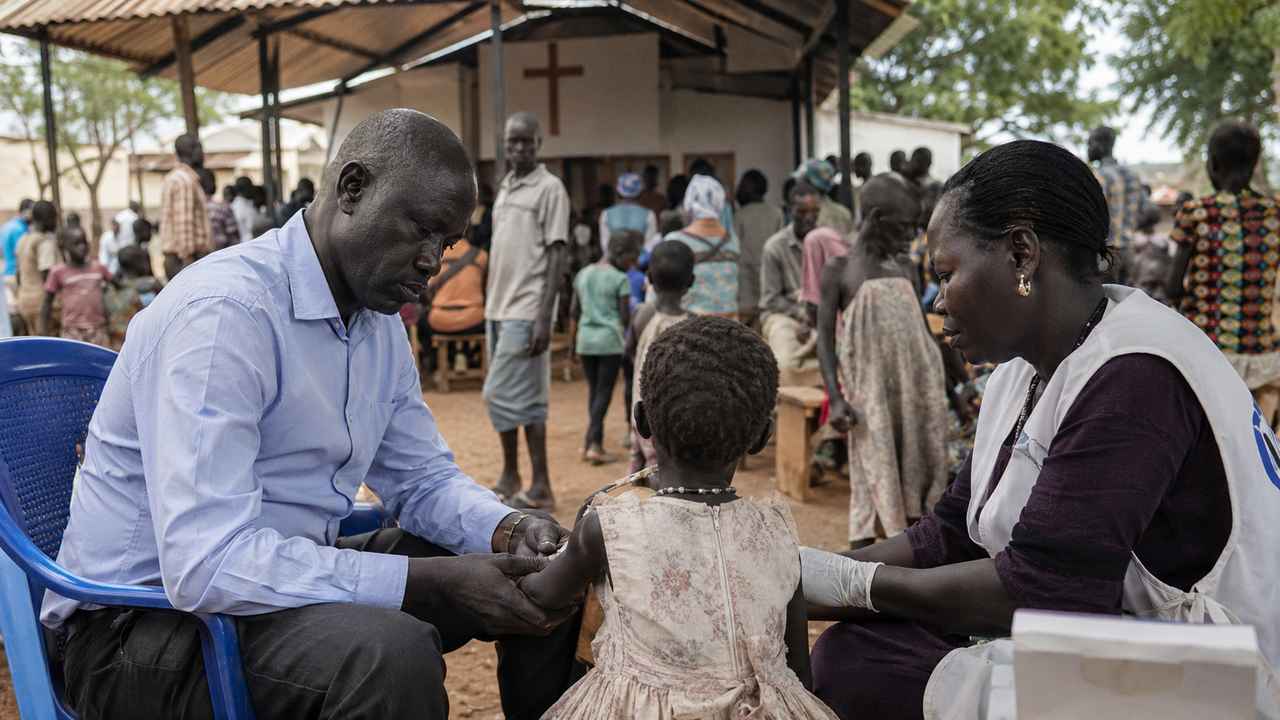
South Sudan is the world’s youngest country, born in 2011 after decades of war and sacrifice. Many of its people longed for peace, dignity, and a future after independence. Yet the nation has continued to suffer from armed conflict, political rivalry, ethnic division, hunger, displacement, weak public services, and repeated trauma.
South Sudan needs prayer not only because of renewed violence and humanitarian suffering, but because ordinary families face suffering no people should have to face without help: hunger, fear, flight from home, the loss of loved ones, ruined health services, interrupted schooling, and uncertainty about tomorrow. Churches also need prayer as they worship, serve, teach, comfort, reconcile, and bear witness to Christ in communities marked by grief, displacement, and pressure to take sides.
Prayer Burden at a Glance
Pray for peace and the protection of civilians. Ask God to provide food and medical care for displaced families, wisdom and restraint among leaders and armed actors, healing for traumatized communities, and churches that remain faithful to Christ as peacemakers, servants of mercy, and witnesses to repentance, forgiveness, justice, and hope.
Last verified: June 2026
Why South Sudan Needs Prayer Now
South Sudan needs prayer for fragile peace, the protection of civilians, mercy for displaced and hungry families, and churches that remain faithful to Christ amid grief, trauma, and pressure to take sides.
South Sudan needs prayer because fragile peace is under renewed strain. Recent fighting, especially in Jonglei State and around Akobo, has raised serious fears that the country could move back toward wider war. Available reporting describes evacuation orders, civilian flight, clashes between government and opposition forces, warnings from UNMISS, and major displacement.
It would be premature to say that full civil war has returned unless stronger sources confirm it. What can be said responsibly is that renewed violence has made South Sudan’s prayer burden urgent.
South Sudan also needs prayer because conflict and humanitarian suffering are deeply connected. Families flee not only bullets and armed groups, but also hunger, disease, lost harvests, closed clinics, unsafe roads, and the collapse of ordinary life. When health facilities are bombed, looted, closed, or abandoned, the consequences are felt by the wounded, pregnant women, children, elderly people, malnourished patients, and families already far from home.
South Sudan’s suffering must not be reduced to politics or statistics. Behind every displacement number is a family unsure where it will sleep safely. Behind every food-insecurity figure is a child whose body needs nourishment. Peace-agreement warnings matter because churches, pastors, families, young people, and whole communities may be left wondering whether tomorrow will bring safety or more fear.
For Christian prayer, South Sudan’s need is also spiritual. The country has a strong public Christian identity, and many churches and Christian leaders have served courageously through war, displacement, and peacebuilding efforts. Yet Christian identity must not be treated as the same thing as living discipleship. South Sudan needs churches that preach Christ clearly, resist ethnic hatred, teach forgiveness without denying justice, comfort the traumatized, serve the vulnerable, and call people to repentance, reconciliation, mercy, and hope in God.
Country Snapshot
A brief orientation to South Sudan’s location, people, recent national story, and church context.
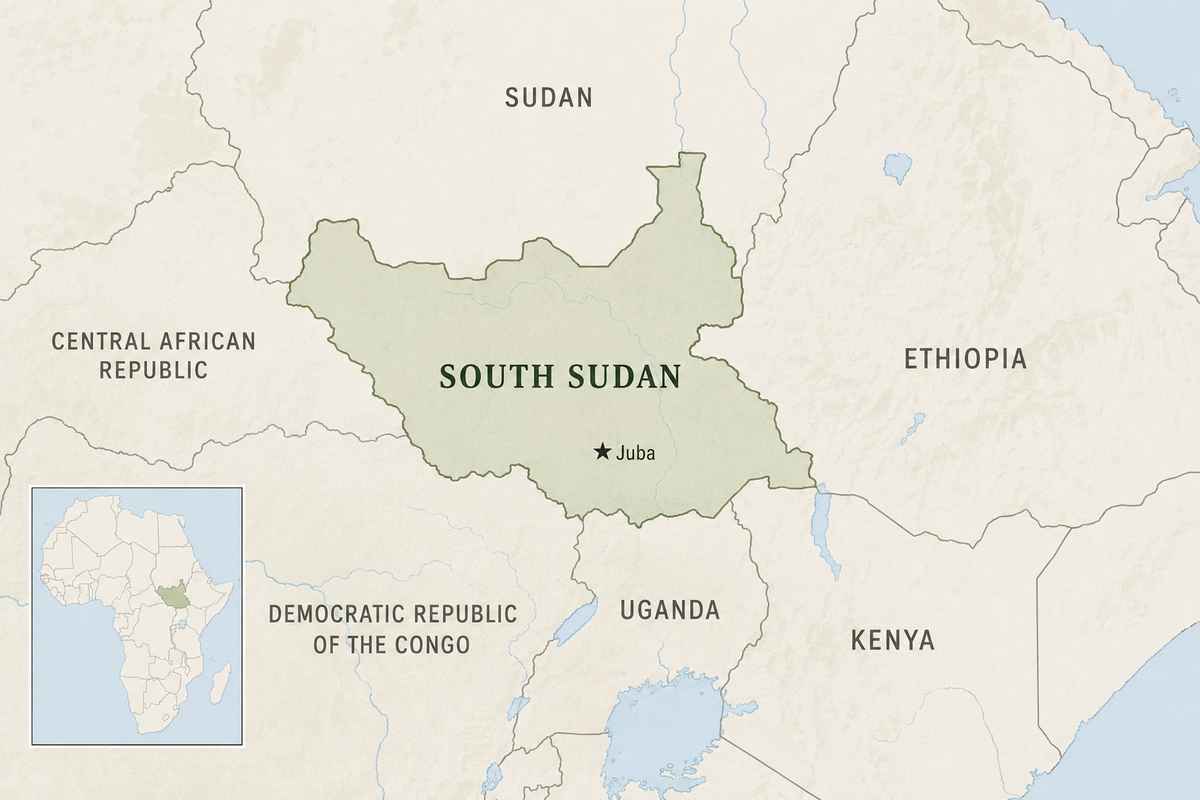
South Sudan is a landlocked country in East-Central Africa. It became independent from Sudan in 2011 after a long struggle and a referendum in which the south voted overwhelmingly for independence. Its capital is Juba.
The country is rich in land, rivers, livestock traditions, cultural diversity, and natural resources, including oil. Yet independence did not bring the peace many had hoped for. Civil war broke out in 2013, and although a peace agreement was signed in 2018, political trust, security-sector reform, unity of forces, local reconciliation, and civilian protection remain fragile.
South Sudan’s population is young and diverse. Many communities are rural, and cattle, farming, family networks, and local identity remain important in daily life. The country also hosts people returning or fleeing from Sudan’s war, while many South Sudanese themselves remain displaced inside the country or as refugees in neighboring countries.
Christianity is widely professed in South Sudan, with Catholic, Episcopal/Anglican, Presbyterian, Pentecostal, evangelical, African Inland, Sudan Interior, and other churches present. Traditional religious practices and Islam are also part of the religious landscape. Exact religious-composition figures should be treated cautiously because displacement, mobility, weak census data, and overlapping religious practice make precise figures difficult.
South Sudan’s church life is highly visible, and many churches minister under severe strain. Churches may gather in towns, villages, camps, and displaced communities. Pastors and lay leaders often serve people who are hungry, traumatized, bereaved, and afraid. The country’s Christian identity gives the church an important public role, but also a serious responsibility: to make Christ known not only in words and symbols, but in truth, mercy, repentance, courage, and love.
Spiritual and Practical Challenges Affecting Christians and Churches
Churches in South Sudan minister in communities marked by armed conflict, trauma, poverty, hunger, weak services, and the spiritual danger of treating Christian identity as public language rather than living faith.
Christians and churches in South Sudan face challenges that are both spiritual and practical.
One major challenge is the way armed conflict can pull Christians toward fear, revenge, ethnic loyalty, and political suspicion. In communities shaped by fear, revenge, ethnic loyalty, political suspicion, and grief, believers may be tempted to see neighbors first through the lens of group identity rather than through the commands of Christ. Churches need grace to teach forgiveness without excusing injustice, to call for peace without becoming naïve about evil, and to care for victims without inflaming hatred.
A second challenge is trauma. Many South Sudanese have lived through repeated cycles of war, displacement, hunger, loss, and uncertainty. Trauma affects worship, family life, discipleship, trust, leadership, and hope. Some people have lost homes more than once. Some children have grown up knowing more about flight than stability. Churches need spiritual wisdom, pastoral tenderness, and practical help to care for wounded hearts and weary communities.
A third challenge is the burden of poverty, hunger, and weak services. Churches may be asked to serve people whose needs are far larger than their resources. Congregations themselves may include displaced families, widows, orphans, sick people, hungry children, and pastors with little support. In such conditions, Christian mercy can become costly and exhausting.
A fourth challenge is the danger of reducing Christianity to public identity. South Sudan’s visible Christian heritage is a mercy, but public Christian language cannot replace repentance, faith in Christ, faithful worship, biblical teaching, and daily discipleship. Pray that churches would not only be socially important, but spiritually alive, Scripture-governed, and centered on Christ.
A fifth challenge is leadership. Churches need pastors, elders, catechists, evangelists, women’s ministry leaders, youth leaders, and peacebuilders who are mature, courageous, and humble. In a country where public trust has often been damaged, Christian leaders must serve in ways that are truthful, patient, accountable, and free from ethnic favoritism or political capture.
Christian Life and Witness in South Sudan
Christian witness in South Sudan is lived through worship, pastoral care, mercy, reconciliation, and faithful discipleship amid suffering.
Christian life in South Sudan is often lived close to suffering, but it is not defined by suffering alone. Churches may gather in towns affected by insecurity, in villages where families are hungry, near displaced communities, or among people returning to damaged homes. In such places, ordinary Christian faithfulness may look like worship under strain, pastors comforting grieving families, believers sharing limited food, mothers bringing children to church, and congregations praying for peace while carrying their own wounds.
The church’s witness in South Sudan is especially important because many people look to religious leaders for moral direction, community care, and peacebuilding. Churches and Christian organizations have often helped provide shelter, relief, reconciliation work, education, pastoral care, and public appeals for peace. This is a gift to thank God for.
Yet the church’s public role also brings temptation. Christian leaders may face pressure to align with political or ethnic interests. Congregations may be divided by local conflict. Believers may carry anger, fear, suspicion, and grief into church life. The gospel must speak deeply into these realities. Christ calls His people to truth, repentance, forgiveness, justice, mercy, love for enemies, and hope that does not depend on political stability.
Pray for churches to be places where the Word of God is taught clearly, where displaced people are welcomed, where children hear the hope of Christ, where grieving families are comforted, where ethnic hatred is resisted, where women and vulnerable people are protected, and where leaders point people beyond revenge to the righteousness and mercy of God.
South Sudan also needs faithful Christian witness among young people. Many young South Sudanese have known instability for most of their lives. Some may be drawn toward armed groups, anger, despair, or survival at any cost. Pray that churches would disciple the young with patience, teach them Scripture, train them for peace, and show them that courage in Christ is not the same as violence or revenge.
Recent Developments
These developments shape prayer for peace, protection, mercy, health access, and church endurance.
Recent developments in South Sudan are volatile and contested, so they should be read with care.
-
March 2026
Akobo evacuation order and civilian-protection concern
Available reporting described an army evacuation order around Akobo before a planned military operation, followed by civilian flight, humanitarian worker evacuation, and UNMISS concern for civilian protection.
Prayer significance: Pray for civilians to be protected, for leaders and armed actors to exercise restraint, and for communities caught near fighting to receive mercy and help.
-
April 2026
Opposition recapture of Akobo reported
Available reporting later described opposition forces retaking Akobo, UNMISS appeals for calm, and worsening humanitarian conditions.
Prayer significance: Pray for fragile peace, truthfulness, restraint, and protection for displaced families and communities under pressure.
-
April–May 2026
Lankien hospital and health-care disruption
MSF reported serious damage and disruption connected to Lankien hospital; other reporting described looting, closure, and the effect on communities with limited medical access.
Prayer significance: Pray for wounded people, malnourished children, pregnant women, patients needing medicines, health workers, and communities left without nearby care.
-
June 2026 review
Humanitarian suffering remains severe
South Sudan continues to face displacement, hunger, disease risk, aid-access challenges, and added pressure from people crossing into South Sudan because of the war in neighboring Sudan.
Prayer significance: Pray for food, shelter, medical care, safe humanitarian access, and gospel-shaped hope for families carrying grief and uncertainty.
Together, these developments show why prayer for South Sudan should include peace, justice, protection for civilians, mercy for suffering families, endurance for churches, and reconciliation shaped by the gospel.
How to Pray
Use these prayer points to pray for South Sudan with compassion, restraint, and biblical hope.
-
Pray for God to restrain violence and protect civilians. Ask Him to preserve communities from wider war, shield families caught between armed actors, and bring peace that is not merely temporary quiet but a real turning from revenge, fear, and violence.
-
Pray for wise and just leadership. Ask God to give national, military, opposition, local, and community leaders humility, courage, restraint, truthfulness, and a genuine desire to protect the people rather than use them.
-
Pray for displaced families. Ask God to provide safe shelter, food, clean water, medical care, and protection for those who have fled fighting, flooding, hunger, or insecurity. Pray especially for children, mothers, elderly people, people with disabilities, and families separated by flight.
-
Pray for hungry communities and malnourished children. Ask God to open access for food aid, strengthen local harvests where possible, protect farmers and herders, and provide for households facing severe food insecurity.
-
Pray for health workers and patients. Ask God to protect hospitals, clinics, medical stores, ambulances, and humanitarian staff. Pray for the wounded, malnourished children, pregnant women, patients needing surgery or medicines, and communities left without nearby care.
-
Pray for churches to remain faithful to Christ. Ask God to strengthen pastors, elders, evangelists, women’s leaders, youth leaders, and ordinary believers with courage, humility, endurance, and love. Pray that churches would preach the gospel clearly and serve suffering communities without becoming captive to ethnic or political loyalties.
-
Pray for healing, repentance, and reconciliation. Ask God to comfort those who have lost family members, homes, safety, and hope. Pray that He would expose sin, restrain revenge, heal ethnic hatred, and raise up peacemakers who seek justice without bitterness and mercy without denying the truth.
-
Pray for children, young people, humanitarian workers, and church relief workers. Ask God to protect the young from recruitment, violence, despair, hunger, and interrupted schooling. Pray also for humanitarian workers, church relief ministries, and local servants of mercy to be protected, supplied, and sustained when needs are overwhelming.
Give Thanks
Even amid deep suffering, give thanks for worship, mercy, endurance, and faithful witness that continue by God’s grace.
-
Give thanks that churches continue to worship and serve. Praise God that congregations in South Sudan still gather, pray, teach, and show mercy despite hardship, displacement, insecurity, and limited resources.
-
Give thanks for faithful Christian servants. Thank God for pastors, catechists, evangelists, women’s ministry workers, youth leaders, and ordinary believers who continue to comfort, teach, disciple, and serve in difficult places.
-
Give thanks for efforts toward peace and reconciliation. Praise God for church leaders and Christian communities seeking mercy, truth, repentance, and reconciliation across ethnic and political divisions.
-
Give thanks for humanitarian workers and local people serving suffering neighbors. Thank God for medical staff, local volunteers, relief workers, and church relief ministries serving hungry, wounded, displaced, and vulnerable people at great personal cost.
-
Give thanks that Christ’s kingdom is not built by violence, revenge, or fear. Praise God that even in deep suffering, His church can still bear witness to mercy, forgiveness, courage, and hope in Christ.
Review Status / Update Note
This review note explains what was checked and what may need fresh review as South Sudan’s situation changes.
Review Status
Reviewed for current prayer use
This South Sudan prayer guide was reviewed with attention to renewed conflict risk, civilian protection, displacement, severe food insecurity, acute malnutrition, health-care disruption, church witness, and careful source handling where claims are contested or fast-moving.
Current sources support prayer for fragile peace and renewed violence; protection of civilians; families displaced by conflict and insecurity; hunger and acute malnutrition; damaged, closed, or inaccessible health services; children, mothers, elderly people, and wounded civilians; and churches serving as witnesses to Christ, peacemakers, and servants of mercy.
South Sudan’s situation can change quickly. Readers should treat conflict developments, displacement figures, food-insecurity projections, famine-risk wording, official government or army positions, health-access details, and church or humanitarian statements as time-sensitive.
Conflict responsibility, official positions, humanitarian access, food-insecurity projections, health-care damage, religious-composition estimates, and church-life details require careful handling, especially if stronger direct sources become available after this review.
Key Sources Consulted
Sources used to shape this guide’s prayer focus and public source notes, grouped by topic.
The sources below were used to shape this guide’s prayer focus and source notes. They are grouped by the main areas of concern so readers can see how the guide was informed.
Food insecurity, malnutrition, and famine-risk context
- Integrated Food Security Phase Classification (IPC). “South Sudan: Acute Food Insecurity Projection Update for April–July 2026.” Used for acute food insecurity projections, IPC Phase 3 or above figures, Catastrophe-level conditions, famine-risk wording, acute malnutrition, and counties facing extremely critical nutrition conditions.
- FAO, WFP, and UNICEF. “Hunger intensifies in South Sudan as 7.8 million people face high acute food insecurity and 2.2 million children suffer acute malnutrition.” April 28, 2026. Used for the public humanitarian framing of hunger, malnutrition, child vulnerability, humanitarian access, and the need for urgent food, nutrition, water, sanitation, and health support.
Health care, hospital closure, and attacks on medical care
- Médecins Sans Frontières / Doctors Without Borders. “Bombarded, looted, vandalised: MSF forced to close Lankien hospital after 31 years.” April 29, 2026. Used for the Lankien hospital closure, the attack on MSF’s hospital warehouse, loss of medical supplies, MSF’s caution about what it could and could not confirm, the closure of multiple MSF-supported hospitals, and the wider pattern of violence affecting health care in South Sudan.
- Associated Press. “South Sudan hospital hit by government airstrike, Doctors Without Borders says.” February 2026. Used as corroborating current reporting on MSF’s Lankien claims, the reported government/army non-response in that article, and the wider effect on health-care access.
- The Guardian. “On Monday morning it was a busy South Sudan hospital. By Tuesday night it was a bombed-out shell.” May 2026. Used as field and corroborating reporting on the condition of the Lankien hospital, the impact on nearby communities, and the OCHA-attributed health-facility disruption in Jonglei.
Conflict, civilian protection, Akobo, and official-position reporting
- Associated Press. “UN peacekeepers defy South Sudan military’s order to leave opposition-held town.” March 2026. Used for the Akobo evacuation order, UNMISS refusal to leave, civilian-protection concern, humanitarian worker evacuation, displacement caused by renewed fighting, and reported army/government position.
- Associated Press. “UN concerned as opposition retakes a strategic town in South Sudan.” April 2026. Used for the report that opposition forces retook Akobo, the UNMISS call for calm, worsening humanitarian conditions, and reported official or official-adjacent statements.
- Associated Press. “Thousands of civilians in South Sudan flee opposition-held town after army’s evacuation order.” March 2026. Used for civilian flight from Akobo, the army’s evacuation order, the stated rationale of avoiding collateral damage, and the impact on women, children, elderly people, humanitarian workers, and displaced communities.
- The Guardian. “South Sudan risks return to civil war as violence escalates.” March 2026. Used as corroborating current reporting on fears that renewed violence could widen and place the 2018 peace framework under greater strain.
Church life, Christian witness, peacebuilding, and mercy ministry
- The guide’s church-life section is shaped by the known public role of churches in South Sudan, including worship, pastoral care, mercy ministry, peacebuilding, reconciliation, and community support. Because current direct church-source material is limited, this guide describes church life in broad terms rather than making detailed claims about every region or denomination.
Religious composition and religious-freedom context
- Religious-composition language in this guide is intentionally cautious. The guide avoids exact percentages and uses broader wording such as “widely Christian in public identity” because religious-composition data in South Sudan can be difficult to measure precisely.
Sources not treated as support
- Wikipedia and general secondary summaries were not relied on as source support for this guide. They may help identify background terms or source leads, but the guide’s claims should rest on direct humanitarian, UN, church, official, or reputable reporting sources.
Source Context
These notes help readers understand how to read the sources behind this guide with care.
Source Context
- Source purpose. South Sudan’s situation is serious, fast-moving, and often contested. Readers should understand this guide as a prayer-serving summary, not a complete conflict record, political argument, or humanitarian dashboard.
- Conflict claims. Reports about military operations, opposition activity, looting, attacks on health facilities, civilian harm, and humanitarian access may involve disputed or incomplete information. Where official government or army positions are unavailable, indirect, or reported through media, the guide should not treat every claim as settled.
- Humanitarian figures. Food insecurity, malnutrition, displacement, refugee and returnee movements, health access, and aid-access conditions can change quickly. Current food-security and malnutrition figures should be read in light of IPC and FAO/WFP/UNICEF sources, while other humanitarian figures remain time-sensitive and may change as newer OCHA, UNHCR, IOM, WFP, UNICEF, WHO, MSF, UNMISS, or ReliefWeb material becomes available.
- Health-care claims. Health-care reporting should distinguish between bombardment, looting, closure, access restriction, and wider health-system strain. MSF’s own wording is especially important where MSF states what it can and cannot confirm, and reports about facility damage or closure should be read with attention to what each source can verify.
- Religious composition. Religious-composition figures should be treated as estimates. South Sudan is widely Christian in public identity, but displacement, mobility, weak census data, and overlap between Christian identity and traditional religious practice make exact figures difficult. The guide should not assume that Christian identity automatically means active discipleship, biblical faithfulness, or reconciled community life.
- Church-life information. South Sudan’s churches have an important role in worship, mercy ministry, reconciliation, pastoral care, and peacebuilding. Specific current details may vary by region, denomination, and available church-source reporting, so the church-life descriptions remain broad where direct current reporting is limited.
- Sudan / South Sudan distinction. South Sudan should not be confused with Sudan. The war in Sudan affects South Sudan through returnees, refugees, economic pressure, and regional instability, but claims about Sudan’s war must not be imported into South Sudan’s internal situation without clear distinction.
A Closing Prayer for South Sudan
A prayer for peace, protection, mercy, faithful churches, and hope in Christ.