


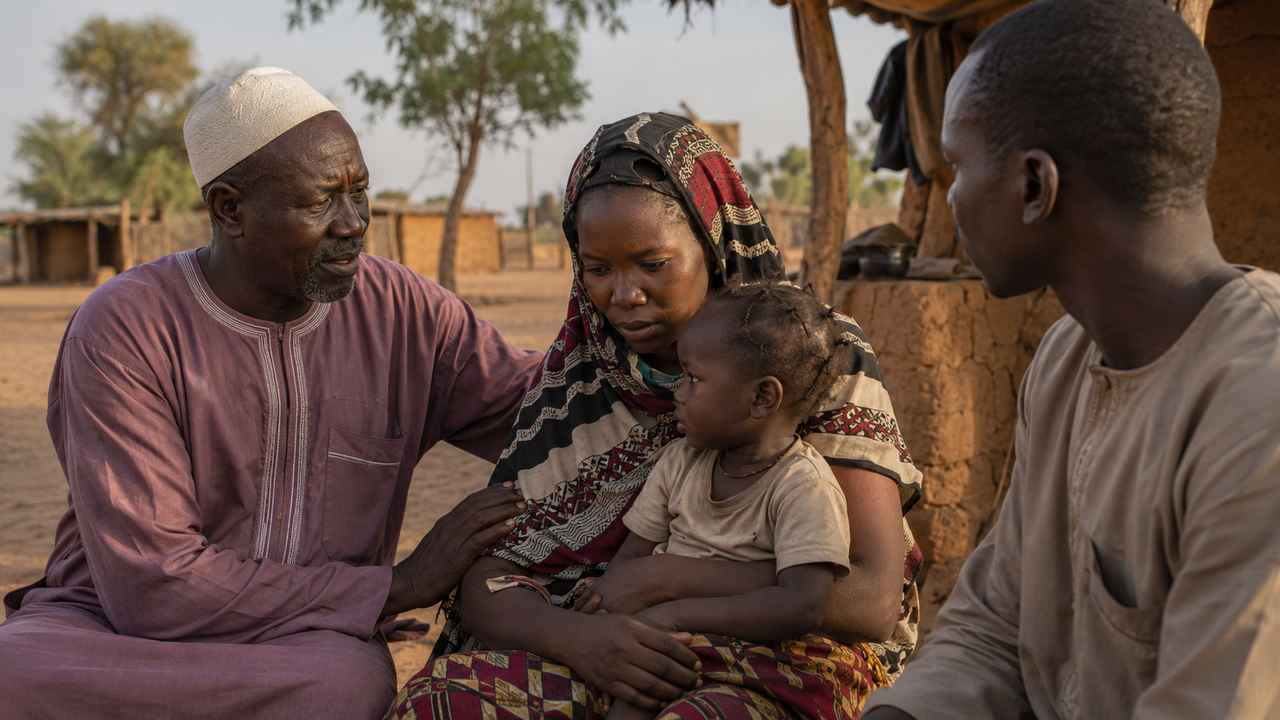
Mali needs prayer for protection, justice, mercy, and faithful Christian witness in a country where armed conflict has deeply affected ordinary life. Jihadist violence, separatist tensions, military operations, disrupted services, and families forced from unsafe areas all shape the setting in which people live and churches seek to remain faithful.
Mali’s Christians are a small minority in a Muslim-majority country. Many believers worship, serve, raise children, and bear witness to Christ in communities where safety, trust, and wise speech matter in daily life. In insecure areas, danger may come not only from direct violence, but also from dangerous roads, intimidation, poverty, and the breakdown of ordinary public life.
This guide is meant to help Christians pray for Mali with compassion and care: for civilians to be protected, for churches to endure, for leaders to act justly, for communities not to be torn apart by suspicion, and for the mercy of Christ to be seen as believers speak of Christ clearly and serve neighbors with practical love.
Prayer Burden at a Glance
Pray for Mali amid armed conflict, jihadist violence, displacement, humanitarian strain, and fear among vulnerable communities. Ask God to protect civilians, strengthen churches, provide for displaced families, restrain revenge and ethnic suspicion, guide leaders toward justice, and make Christ known through humble service and clear testimony to the gospel.
Last verified: June 2026
Why Mali Needs Prayer Now
Mali needs prayer because armed conflict is not only a political or military crisis. It affects homes, roads, schools, markets, churches, and daily decisions.
Families face unsafe roads, threats or intimidation from armed groups, disrupted transport, rising costs, school closures, and uncertainty in communities where suspicion can spread quickly.
Recent attacks in 2026 showed how serious Mali’s instability remains. Reporting described coordinated assaults involving jihadist fighters and Tuareg-led armed groups, with attacks affecting military sites and several towns and cities. Mali’s defense minister, Sadio Camara, was reported killed during the violence. Malian authorities have described the attacks as terrorist violence and have presented new security restrictions as necessary to protect the country and limit armed-group movement.
The government’s security explanation should be considered, but it does not remove the need to pray carefully for civilians. In a conflict setting, ordinary people can suffer from several directions at once. Communities may face jihadist violence, military operations, ethnic suspicion, forced flight from unsafe areas, retaliation, and the slow collapse of ordinary services. Fulani and Tuareg civilians have been reported as especially fearful of collective blame and retaliatory abuse after militant offensives. These reports should be read with care, but they still point to a serious prayer burden: civilians must not be reduced to ethnic labels, suspected loyalties, or the actions of armed groups.
Mali’s churches also need prayer. Their life is not defined only by danger; believers continue to worship, serve, raise children, care for neighbors, and bear witness to Christ. Yet their witness takes place in a country where violence and instability can deepen poverty, displacement, mistrust, and grief.
Mali needs peace, but not a shallow peace that ignores justice. It needs protection for civilians, restraint among armed actors, wise governance, truthful handling of abuses, care for displaced families, and churches strengthened to live faithfully in hardship.
Country Snapshot
Mali’s geography, religious setting, and conflict conditions shape how Christians should pray for the country.
Region
West Africa and the Sahel
Capital
Bamako
Religious context
Muslim-majority, with Christians forming a small minority
Current prayer concerns
Armed conflict, civilian protection, displacement, church endurance, and gospel witness
Regional setting
A large landlocked country bordered by Mauritania, Algeria, Niger, Burkina Faso, Côte d’Ivoire, Guinea, and Senegal
Prayer emphasis
Pray with compassion, careful attention to contested claims, and concern for both justice and mercy
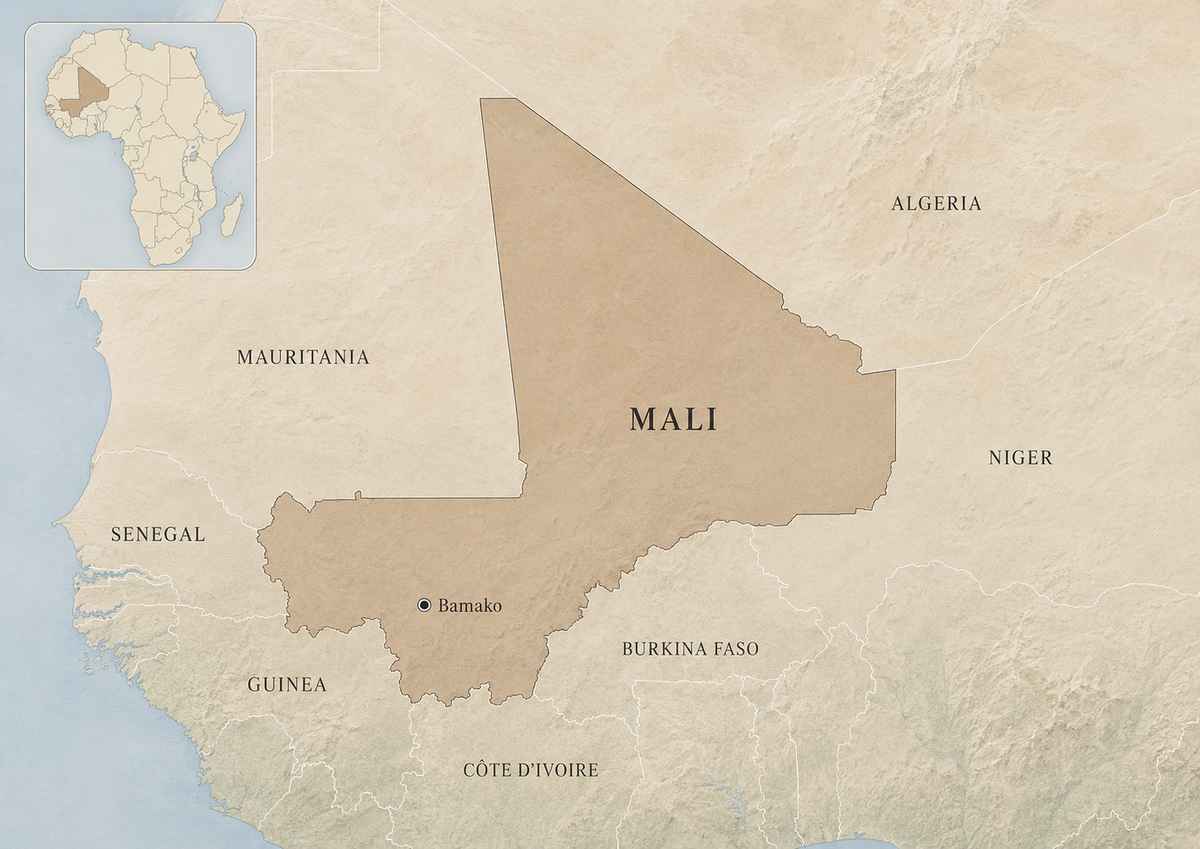
Mali is a large landlocked country in West Africa, stretching from the Sahara and Sahel in the north into more populated southern regions. Its history includes ancient centers of Islamic learning and trade, including Timbuktu, and a long record of ethnic, linguistic, and cultural diversity.
Today, Mali’s public life is heavily shaped by the long-running conflict that began in 2012 and has continued through jihadist violence, separatist tensions, military rule, foreign security partnerships, and severe humanitarian need. The security crisis affects more than soldiers and officials. It affects households, schools, markets, roads, churches, mosques, displaced communities, and refugees across borders.
Mali is Muslim-majority, with Christians forming a small minority. Religious life and community relationships vary across regions. In more stable areas, churches may have more room to worship and serve publicly. In areas affected by jihadist activity, armed-group intimidation, or insecurity, Christian life and public religious freedom can become much more vulnerable.
Mali’s prayer needs cannot be reduced to one category. It needs prayer for security, but also for justice. It needs prayer for the church, but also for Muslim neighbors, displaced families, refugees, widows, orphans, children, pastors, teachers, and local leaders. It needs prayer against violent extremism, but also against ethnic hatred, retaliation, corruption, despair, and fear.
Spiritual and Practical Challenges Affecting Christians and Churches
Mali’s churches face challenges connected both to minority Christian life and to the wider crisis affecting the whole country.
Travel danger and insecure gatherings
Armed groups, dangerous roads, attacks, and military operations can make travel difficult and gathering risky in some places. Church leaders may have to shepherd scattered believers, care for displaced families, and encourage members who are afraid to move openly or speak freely.
Suspicion inside communities
When violence hardens ethnic division, Christians need wisdom to love their neighbors without ignoring real danger. They need courage to resist hatred, grace to avoid spreading rumors, and patience to care for people from groups that others may distrust.
Displacement and weakened church life
When families flee villages or towns, congregations can be weakened, pastors can lose contact with members, and children can grow up without stable discipleship or schooling. Refugee and displaced communities may carry grief, trauma, and practical needs for many years.
Poverty and disrupted services
Fuel shortages, rising transport costs, school closures, and reduced humanitarian aid make ordinary life harder. Churches in such settings may have few resources, yet they are often close to people who need food, shelter, pastoral care, and hope.
Faithful witness without harshness or fear
In a Muslim-majority setting, Christian witness must be humble and patient. Believers need to speak of Christ truthfully, live honorably, serve their neighbors, and show the love of Christ in ways that are visible and credible.
Christian Life and Witness in Mali
Christian life in Mali is often lived quietly and locally, with churches seeking to worship, serve, and bear witness in a difficult setting.
Believers gather for worship, raise children in the faith, support one another, and seek to follow Christ among neighbors who may not share their beliefs. Some churches are in more stable areas and can serve openly. Others are closer to insecurity and must live with greater caution.
Pastors and church leaders need special prayer. They may be called to comfort grieving families, strengthen frightened believers, disciple young people, teach Scripture clearly, and help churches respond to suffering without becoming bitter or withdrawn. They need courage, patience, discernment, and gentleness.
Christian witness in Mali must be more than words alone. In a country burdened by violence and displacement, acts of mercy matter deeply. When churches care for hungry families, welcome displaced believers, help children continue learning, visit the suffering, and pray for all communities, they give a visible testimony to the compassion of Christ.
At the same time, churches must not lose the message of Christ in practical mercy alone. Mali needs Christians who will love their neighbors with action and also hold fast to the gospel: Christ crucified and risen, the only Savior, the Lord who reconciles sinners to God and makes enemies into brothers and sisters.
Pray that Mali’s believers would not be ruled by fear. Pray that they would be rooted in Scripture, faithful in prayer, united in love, and wise in public witness. Pray that their churches would become places where suffering people find truth, mercy, patience, and hope.
Recent Developments
These recent developments help readers pray carefully for Mali’s present needs.
-
April 2026
Coordinated attacks and national shock
Mali suffered a major wave of coordinated attacks reported to involve jihadist fighters and Tuareg-led armed groups. The violence affected several locations, including areas near Bamako and other cities or towns. Mali’s defense minister was reported killed during the attacks, making the violence not only a military setback but also a national shock.
Prayer note: Pray for protection, restraint, wise leadership, and courage for churches seeking to serve amid national fear and uncertainty.
-
2026
Security measures and civilian concern
Mali’s authorities described the attacks as terrorist violence and presented security responses as necessary to protect the country. The government also announced measures such as restrictions on motorcycle movement outside major urban areas and the creation of military-interest zones.
Prayer note: Pray that real security threats would be addressed with justice, truth, and restraint, and that civilians would be protected from unnecessary harm.
-
2026
Reported fear among Fulani and Tuareg communities
Reporting after the April 2026 offensive described fear among Fulani and Tuareg communities, including allegations of disappearances, retaliatory violence, and collective suspicion. These reports should be read with care, but they are serious enough to guide prayer for justice, truth, restraint, and protection for innocent people.
Prayer note: Pray against collective blame, revenge, false accusation, and the mistreatment of civilians because of ethnic identity or suspected loyalties.
-
2025–2026
Fuel shortages, school disruption, and refugee strain
Mali has faced severe disruption to ordinary life through fuel shortages and transport difficulties. Reporting described long queues, rising costs, movement problems, and temporary school and university closures. Across the border in Mauritania, many Malian refugees remain in and around the Mbera camp area, where aid cuts, food shortages, and long-term exile have deepened hardship for displaced families.
Prayer note: Pray for children, displaced families, refugees, teachers, aid workers, and churches serving people whose daily lives have been disrupted by insecurity and need.
These developments should help Christians pray concretely: for protection, repentance, wise leadership, mercy for displaced people, justice where abuses have occurred, and faithful witness by churches living under strain.
Mercy, Justice, and Gospel Witness in a Conflict-Shaped Nation
Mali’s crisis calls Christians to pray not only for violence to end, but also for the wounds violence leaves behind.
Mali’s crisis brings many temptations close to daily life: hatred, revenge, despair, ethnic suspicion, fear of the stranger, and the desire to treat whole communities as enemies. These temptations can appear in roadblocks, rumors, village raids, displacement camps, political speeches, and ordinary conversations among frightened people.
Christians praying for Mali should therefore pray not only for violence to end, but also for the wounds it leaves behind. When people have seen killings, hunger, flight, betrayal, or abuse, they may carry anger and grief for years. Children may grow up knowing checkpoints, camps, and danger more than school, peace, and home.
The church’s witness matters in such a setting. Christians are called to speak truth, love enemies, seek justice, protect the vulnerable, and refuse lies. That does not mean pretending evil is small. It means refusing to let evil decide how the church will obey Christ.
Pray that churches in Mali would be known for truthful speech, practical mercy, patient endurance, and hope in Christ. Pray that believers would neither withdraw into silence nor speak recklessly in dangerous situations. Pray that their lives would show the rule of Christ, where truth, mercy, justice, and peace belong together.
How to Pray
Use these prayer points to bring Mali’s people, churches, leaders, and suffering communities before God.
Pray for the protection of civilians. Pray that God would protect families caught between jihadist violence, armed-group activity, separatist conflict, military operations, and ethnic suspicion. Ask Him to restrain those who target civilians, expose hidden abuses, and preserve the lives of children, women, the elderly, pastors, teachers, and displaced families.
Pray for Christians and churches to remain faithful. Pray for believers in Mali to remain rooted in Christ, faithful to Scripture, and faithful in prayer. Ask God to strengthen churches to worship, disciple, serve, and speak of Christ with humility and courage, especially where poverty, danger, or social pressure makes daily Christian life difficult.
Pray for pastors and church leaders. Pray for pastors, elders, evangelists, women’s ministry leaders, youth workers, and other servants of the church. Ask God to give them wisdom to shepherd frightened people, comfort the grieving, teach clearly, avoid reckless speech, and care for believers scattered by conflict or displacement.
Pray for displaced families and refugees. Pray for Malian refugees in neighboring countries and for families displaced inside Mali. Ask God to provide food, shelter, schooling, medical care, protection from exploitation, and hope for those who long to return home but cannot yet do so safely.
Pray against ethnic hatred and collective blame. Pray that Fulani, Tuareg, Bambara, Songhai, Dogon, Arab, and other communities would not be swept into cycles of suspicion and revenge. Ask God to restrain false accusations, protect innocent people, and raise up leaders who refuse to treat whole communities as guilty because of the actions of armed groups.
Pray for wise and just governance. Pray for Mali’s leaders to pursue security with justice, truth, and restraint. Ask God to give wisdom to those responsible for public order, courage to confront violent groups, and humility to protect civilians and investigate credible allegations of abuse.
Pray for children and young people. Pray for children whose schooling has been disrupted by insecurity, fuel shortages, displacement, or poverty. Ask God to protect them from recruitment, trauma, hunger, despair, and long-term loss, and to provide teachers, safe learning spaces, and faithful adults who will care for them.
Pray for gospel witness marked by truth and mercy. Pray that Christians in Mali would speak of Christ clearly and live in ways that make the gospel visible. Ask God to open doors for patient witness among neighbors, displaced families, wounded communities, and those searching for hope beyond fear and violence.
Give Thanks
Even in a deeply burdened country, Christians can give thanks for God’s mercy, sustaining grace, and faithful servants.
Give thanks that Christ sees Mali’s suffering people: displaced families, frightened children, pastors under strain, threatened communities, and believers who continue to pray and serve when life is difficult.
Give thanks for churches and Christian workers who continue to worship, teach, disciple, and care for others despite insecurity and limited resources.
Give thanks for every act of mercy shown to displaced families, refugees, hungry children, and communities in need.
Give thanks for humanitarian workers, local leaders, teachers, medical staff, and ordinary neighbors who continue serving in difficult conditions.
Give thanks when communities resist collective hatred and refuse to treat entire ethnic groups as enemies.
Give thanks that the gospel is good news not only in peaceful places, but also in countries where grief and uncertainty make daily life hard.
Give thanks that the Lord Jesus Christ is able to keep His people faithful, show His mercy through weak servants, and bring hope where human strength is not enough.
Last Verified / Update Note
This note explains what was reviewed and which developments readers should continue to watch.
Review Status
Reviewed for current prayer use
Last verified: June 2026
What was reviewed
This guide was reviewed against recent reporting on Mali’s armed conflict, the April 2026 attacks, government security measures, fuel and school disruption, refugee conditions in Mauritania, civilian-protection concerns, and available background material on religious life and Christian minority presence in Mali.
Current Prayer Burdens
Mali’s current prayer burdens include protection for civilians, faithful Christian witness, wisdom for church leaders, care for displaced families and refugees, restraint from ethnic retaliation and collective blame, just governance, and practical mercy amid insecurity and humanitarian strain.
Developments to Watch
Readers should continue to watch security conditions after the April 2026 attacks, the effect of motorcycle restrictions and military-interest zones on civilians, fuel and transport disruption, displacement into Mauritania, reported abuses affecting Fulani and Tuareg communities, and any new direct religious-freedom reporting on Christian life in Mali.
Source Note
This guide names official positions as reported by reputable media where direct Malian government pages were not available for the specific claims cited here. Contested claims about civilian abuses, disappearances, territorial control, and responsibility for attacks are not presented as settled fact unless supported by stronger public documentation.
Key Sources Consulted
These sources informed the country context, recent developments, careful handling of contested claims, and prayer concerns in this guide.
Conflict, security, and official-position reporting
Civilian-protection and ethnic-sensitivity concerns
Humanitarian, displacement, and refugee conditions
- Associated Press — reporting on fuel shortages, school closures, and disruption to daily life in Mali.
- The Guardian — reporting from Mbera refugee camp on Malian refugees in Mauritania, aid cuts, and reduced food assistance.
- Le Monde — reporting from Mbera and surrounding areas on Malian refugees, overcrowding, and local strain in Mauritania.
Religious and country-background context
Source Context
These notes explain how to read the sources behind this Mali guide with care.
How to read these sources
- Source mix. This guide uses conflict and security reporting, humanitarian reporting, reputable international reporting, and limited religious-background material. The strongest current sources concern armed conflict, security measures, displacement, and civilian-protection concerns.
- Official-source limits. Direct Malian government or military pages were not available for the specific claims cited here, so this guide names Mali’s official position only where it was reported by reputable outlets.
- Civilian-protection claims. Reports concerning Fulani and Tuareg civilians, disappearances, retaliatory violence, and alleged abuses should be handled cautiously. They are serious enough to guide prayer for protection, justice, and truth, but they should not be overstated beyond the reporting available.
- Religious-demographic limits. Mali is clearly a Muslim-majority country with Christians forming a small minority, but exact Christian-percentage figures vary by source and year. Exact percentages are avoided unless a direct, stable source supports them.
- Humanitarian data limits. Refugee, displacement, food-security, school-disruption, and aid-cut figures can change quickly. Because these figures may change as new reports are released, this guide avoids precise figures unless direct humanitarian or UN-related sources support them.
A Closing Prayer for Mali
Use this prayer to bring Mali’s people, churches, leaders, and suffering communities before the Lord.


