


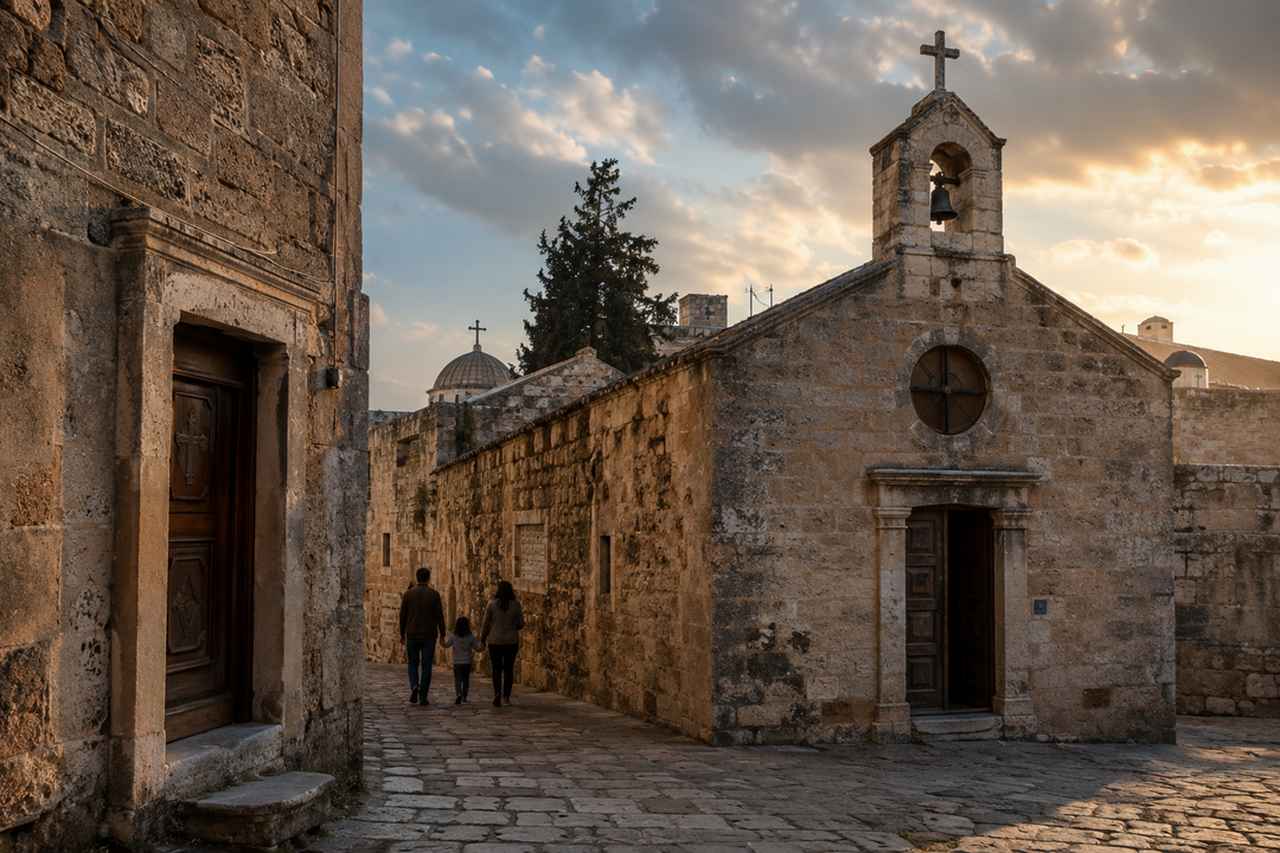
Syria needs prayer after more than a decade of war, mass displacement, economic collapse, and deep suffering. The fall of the Assad government opened a new political chapter, but it has not removed the country’s grief, insecurity, poverty, sectarian fear, or need for just and trustworthy leadership. Christians and other vulnerable communities are watching the transition with hope, caution, and serious concern. Many families still carry the sorrow of war, exile, damaged homes, missing loved ones, and uncertain futures.
For Christians, prayer for Syria should not be shaped only by headlines, fear, or political opinion. It should be shaped by compassion for people who have suffered years of war, concern for vulnerable churches, longing for justice, and confidence that Christ reigns over nations even when earthly powers are unstable. Pray that God would preserve His people, restrain evil, comfort the grieving, rebuild what has been broken, and make Syrian churches faithful witnesses to Christ as the country faces transition, grief, and rebuilding.
Prayer Burden at a Glance
Pray for Syria as it passes through a difficult post-Assad transition after years of war, displacement, poverty, and fear. Pray for just leadership, protection for Christians and other vulnerable communities, comfort for grieving families, safe and dignified conditions for displaced people and returnees, honest reconstruction, and faithful churches that bear witness to Christ with courage, wisdom, and mercy.
Last verified: June 2026
Why Syria Needs Prayer Now
Syria needs prayer because a change in government has not healed the wounds of war. The country is moving through a new political transition, but the path ahead remains uncertain.
Syria’s temporary constitutional framework includes language about rights and equal citizenship, while also keeping Islamic law as a central legal reference. Many Syrians are asking how minorities, churches, women, displaced people, former opposition communities, and other vulnerable groups will actually be protected.
The difference between public promises and actual protection matters. Official commitments should not be dismissed, but they should not be treated as fulfilled simply because they have been made. Christians should pray for those commitments to become real protection, for leaders to govern with justice and restraint, and for communities that have learned to fear one another to be guarded from revenge.
Syria also needs prayer because Christian communities are living with real uncertainty. Christians have long been part of Syria’s history, especially in places such as Damascus, Aleppo, Homs, and other ancient centers of Christian life. Yet years of war, emigration, poverty, and insecurity have weakened many churches and scattered many families. The 2025 attack on Mar Elias Greek Orthodox Church near Damascus deepened fear among Christians and reminded the country that worship itself may still be exposed to violence.
The humanitarian burden remains severe. Millions of Syrians have lived as refugees or internally displaced people. Some families have returned or hope to return, but return is not simple. Homes may be damaged or gone. Work may be scarce. Public services may be weak. Security may differ sharply from one area to another. A family can long for home and still fear what awaits them there.
Syria therefore needs prayer for more than political stability. It needs mercy after trauma, truth after propaganda, justice after cruelty, protection after fear, and spiritual renewal after years in which ordinary people have learned to survive one sorrow after another.
Country Snapshot
Syria’s present situation brings together ancient Christian history, modern war, regional rivalry, and deep human suffering.
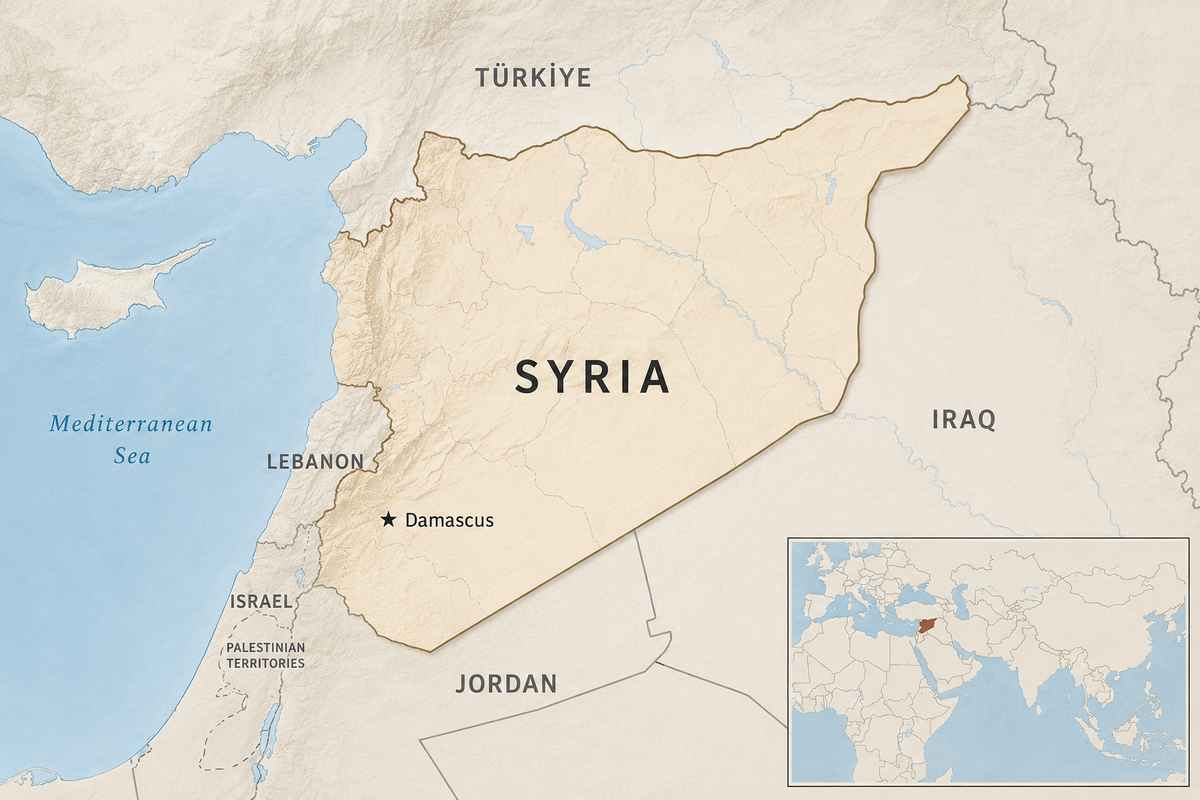
Syria’s churches preserve early Christian witness, historic liturgies, family faith, and long endurance. Many also live with grief: homes emptied by emigration, congregations reduced by fear, pastors serving scattered people, and believers learning how to remain faithful when the future is not clear.
Spiritual and Practical Challenges Affecting Christians and Churches
Syrian Christians face uneven conditions across the country, including insecurity, minority fear, poverty, displacement, and the strain of caring for fearful, grieving, and scattered believers.
Insecurity around worship and church life
The 2025 church attack near Damascus reminded Syrian Christians that even familiar places of worship can feel vulnerable. Churches need wisdom for public gatherings, pastoral care, security, grief, and continuing worship without letting fear rule them.
Uneven conditions across the country
Christian life in Syria is not the same everywhere. Some areas may be more stable or tolerant, while other places face stronger community hostility, extremist activity, local suspicion, or uncertainty around the new authorities. Readers should not assume that all Syrian Christians face identical conditions; prayer should remain attentive to regional differences and local risks.
Fear among minorities
Christians are not the only vulnerable community in Syria. Alawites, Druze, Kurds, Muslims from different political or sectarian backgrounds, and other minorities have also faced fear, suspicion, or violence. Churches need grace to seek the good of their neighbors, not only their own safety.
Family and social danger for converts
Believers from Muslim or Druze backgrounds may face family opposition, social isolation, suspicion, or danger. They may need discreet fellowship, patient teaching, and trusted Christian care as they follow Christ.
Poverty and exhaustion
Years of war have left many families with damaged homes, unstable work, weak services, grief, trauma, and fatigue. Churches may be called to serve others while also facing poverty and loss among their own members.
Leadership under uncertainty
Pastors and church leaders need courage and discernment. They must shepherd people who are afraid, displaced, grieving, tempted to leave the country, or unsure how openly to gather, serve, speak, and identify as Christians in a changing Syria.
Christian Life and Witness in Syria
Christian life in Syria has ancient roots, but many churches are now seeking to remain faithful after years of loss, emigration, poverty, and fear.
Some believers belong to historic Orthodox, Catholic, and other long-established churches. Others are part of smaller Protestant or evangelical communities. Many Christian families carry both deep attachment to Syria and painful memories of war, loss, and displacement.
For some believers, faithfulness may mean staying and serving in a place where the future is uncertain. For others, it may mean rebuilding family life after return from displacement. Some are grieving relatives killed or wounded in violence. Others are caring for elderly parents, raising children amid insecurity, or trying to keep a small congregation alive after years of emigration.
Churches in Syria need more than survival. They need renewed love for Christ, patient teaching from Scripture, unity across traditions where possible, courage to serve neighbors, and wisdom to speak with humility in a tense public setting. They must resist the temptation to become only self-protective communities. At the same time, they need real protection; calls to courage should not ignore real danger.
Syrian believers can serve their neighbors clearly when their lives are marked by mercy, forgiveness, truthfulness, and hope. In a society wounded by revenge and distrust, faithful churches can show that Christ teaches His people to love enemies, care for the suffering, mourn with the grieving, and entrust justice to God.
Recent Developments
These developments are included because they help readers pray for Syria’s leaders, churches, displaced families, and vulnerable communities.
-
Post-Assad transition
Syria entered a new political transition after the fall of Assad
After the fall of Bashar al-Assad, Syria’s interim leadership moved to establish a transitional framework. The new constitutional declaration includes promises of rights and equal citizenship, but concerns remain about concentration of power, the role of Islamic law, minority protection, and whether the transition will include Syria’s full religious, ethnic, and political diversity.
Pray for leaders to govern with justice, restraint, truthfulness, and real protection for vulnerable communities.
-
Transition period
Religious minorities remain cautious
The new authorities have made public promises about protecting rights and minorities. Those promises should be taken seriously, but many religious and ethnic communities remain cautious because Syria’s recent history has left deep fear. Official language must be tested by whether people are actually protected in daily life.
Pray that public promises would become visible protection for Christians and other communities living with fear.
-
June 2025
Christians faced renewed fear after the Mar Elias church bombing
The attack on Mar Elias Greek Orthodox Church near Damascus in June 2025 killed worshipers and wounded many others. Syrian officials attributed the attack to Islamic State. For churches, the bombing was not only a security incident; it brought grief to families, renewed fear about public worship, and led Christian leaders to call for protection.
Pray for comfort for grieving families, healing for the wounded, protection for worshipers, and justice without revenge.
-
Ongoing
Displaced Syrians continue facing difficult return decisions
Many Syrians long to return home, and some have done so. But return is not automatically safe or sustainable. Families may return to damaged neighborhoods, weak services, uncertain security, or limited work. Prayer should ask God to make returns voluntary, safe, dignified, and sustainable.
Pray for refugees, internally displaced people, and returnees to receive safety, shelter, work, documents, and wise help.
-
Long-term recovery
Reconstruction will be long and costly
Syria’s physical damage is immense. Homes, infrastructure, public services, schools, clinics, and economic life need rebuilding. Reconstruction is not only a technical task. It is also a moral task: public money must be handled with honesty, aid must reach the vulnerable, and rebuilding should serve ordinary people rather than powerful networks.
Pray for honest reconstruction, restored services, and help that reaches ordinary Syrians, especially the poor.
Displacement, Return, and the Long Work of Healing
Syria’s suffering cannot be understood only through politics. It must also be seen through families, churches, neighborhoods, and the slow rebuilding of ordinary life.
Many Syrians have buried relatives, fled homes, crossed borders, lived in camps, raised children in exile, searched for missing loved ones, or returned to neighborhoods that no longer feel safe or familiar. Children have grown up with war as their normal memory. Many parents have learned to speak cautiously, travel cautiously, and guard their expectations.
Displacement changes more than an address. It can fracture churches, separate families, interrupt schooling, weaken trust, and make ordinary life feel temporary for years. When refugees return, they may return with joy, fear, debt, grief, and unanswered questions all at once.
This matters for prayer because healing will require more than reopened roads and rebuilt buildings. Syria needs restored trust, honest remembrance of what happened, safe communities, functioning schools, strengthened families, wise churches, and patient mercy for people whose grief may not be visible. Christians should pray for homes to be rebuilt, but also for hearts, relationships, churches, and communities to be healed.
We should not rush to hopeful language that sounds neat and finished. Syria’s wounds are not healed simply because a new political chapter has opened. Pray for the long work of rebuilding homes, neighborhoods, trust, churches, and public life. Pray for repentance where people have done harm, comfort for those who have suffered quietly, and strength for God’s people to serve faithfully for years.
How to Pray
Use these prayer points to pray for Syria with compassion, biblical seriousness, and attention to both public conditions and ordinary Christian faithfulness.
Pray for Syria’s leaders to govern with justice, restraint, truthfulness, and fear of God. Ask the Lord to restrain revenge, corruption, sectarian favoritism, and abuse of power.
Pray that public promises of equal citizenship and protection for rights would become visible realities for Christians, Muslims, Druze, Alawites, Kurds, refugees, returnees, women, children, and other vulnerable communities.
Pray for churches in Damascus, Aleppo, Homs, the northeast, the coast, the south, and other parts of Syria to remain faithful in worship, discipleship, mercy, and witness.
Pray for pastors and church leaders as they shepherd fearful, grieving, scattered, and exhausted people. Ask God to help them teach Scripture clearly, comfort those who mourn, make wise decisions about safety, and keep trusting Christ under strain.
Pray for families who lost loved ones in the Mar Elias church attack and in other violence. Ask God to comfort the bereaved, heal the wounded, protect worshipers, and bring justice without revenge.
Pray for believers from Muslim or Druze backgrounds who may face family rejection, social isolation, or danger. Ask the Lord to protect them, strengthen their trust in Christ, and surround them with wise Christian care.
Pray for refugees, internally displaced people, and returnees. Ask God to provide safe shelter, restored documents, work, food, medical care, schools, protection, and wise decisions about whether and when to return.
Pray for honest reconstruction. Ask God to expose corruption, protect public resources, guide international assistance, and ensure that rebuilding serves ordinary Syrians, especially the poor and those without powerful protectors.
Pray for Syrian churches to show mercy to neighbors across religious and ethnic lines. Ask the Lord to make believers known for truth, humility, courage, forgiveness, and practical love.
Pray that many Syrians would find lasting hope in Christ, who is near to the brokenhearted and whose kingdom cannot be shaken by war, exile, or earthly regimes.
Give Thanks
Thanksgiving for Syria should be honest and careful, giving thanks for God’s preserving mercy without making the country’s suffering sound finished.
Give thanks that Syria’s long years of war have not destroyed Christ’s church. Many believers and church communities have continued worshiping, serving, grieving, and hoping in the Lord.
Give thanks for pastors, priests, church workers, volunteers, and ordinary believers who have cared for displaced families, comforted the grieving, taught children, and helped vulnerable households through years of hardship.
Give thanks for every honest effort to protect civilians, restrain extremist violence, restore public services, and rebuild institutions that serve ordinary Syrians.
Give thanks for humanitarian workers, local churches, community centers, medical workers, and aid partners who continue helping refugees, internally displaced people, and returnees.
Give thanks for Syrian Christians who still desire to live faithfully in their homeland, even after loss, fear, and uncertainty.
Give thanks that the Lord sees Syria’s suffering more clearly than any human report can describe, and that He is able to preserve His people and draw many to Christ.
Last Verified / Update Note
This note helps readers understand when the guide was reviewed and which developments may affect how they use it for prayer.
Review Status
Reviewed for current prayer use
This guide reflects a June 2026 review of Syria’s post-Assad political transition, temporary constitutional framework, religious-freedom concerns, Christian vulnerability, church-security concerns, displacement and return conditions, humanitarian needs, economic strain, and reconstruction challenges.
The main prayer burdens are just and restrained leadership, real protection for Christians and other vulnerable communities, comfort for families grieving violence, faithful churches under uncertainty, safe and dignified conditions for displaced people and returnees, honest reconstruction, and gospel witness marked by courage, humility, mercy, and hope in Christ.
Developments that may especially shape prayer include the conduct of the transitional government, constitutional changes, protection of minorities, security incidents affecting churches and civilians, refugee and returnee conditions, humanitarian access, reconstruction progress, and credible church-life reporting.
Because source access and reporting quality vary across Syria, not every claim should be treated as settled. Official statements, outside assessments, confirmed developments, and prayer concerns are distinguished wherever possible. Population estimates, return figures, security claims, and reconstruction figures should be read with attention to source date, source type, and regional variation.
Help keep this guide accurate and current
If you noticed a possible correction, broken link, or significant country update, please contact the Nations Prayer Directory so we can review it carefully.
Key Sources Consulted
These sources helped shape the guide’s public context, religious-freedom assessment, humanitarian background, and prayer concerns.
Political transition, constitutional framework, and public security
- Associated Press — “Syrian leader signs constitution that puts the country under an Islamist group’s rule for 5 years.” Used for Syria’s temporary constitutional framework, the five-year transition, provisions on rights and equal citizenship, the role of Islamic law, the interim parliament structure, and concerns about minority inclusion.
- Associated Press — “Suicide bomber kills at least 22 in Greek Orthodox church in Syria during Divine Liturgy.” Used for the June 2025 Mar Elias church attack near Damascus, reported casualty figures, Syrian official statements, and the concern that extremist sleeper cells remain a danger.
- Associated Press — “Syrian church marks Christmas and reaffirms faith months after deadly attack.” Used for follow-up context on Mar Elias Church, the congregation’s return to worship, continuing Christian fear, and Christian perseverance after the attack.
Displacement, refugees, returnees, and humanitarian conditions
- UNHCR Operational Data Portal — Syria Regional Refugee Response. Used for registered Syrian refugee data, regional displacement context, return-data cautions, and UNHCR’s emphasis that return should be voluntary, safe, dignified, and sustainable.
- UNHCR Syria — Returnees. Used for returnee context, UNHCR’s explanation that return decisions are individual and affected by conditions for return, and its work with internally displaced people and refugee returnees.
- UNHCR Syria — Internally Displaced People. Used for the distinction between refugees and internally displaced people, and for the continuing scale of internal displacement in Syria.
Christian life, religious freedom, and minority vulnerability
- Open Doors — Syria country profile. Used for Christian vulnerability, regional variation in pressure on Christians, convert pressure, the World Watch List ranking, and concerns after Syria’s post-Assad transition.
- United States Commission on International Religious Freedom — “Religious Freedom and U.S. Policy in Post-Assad Syria.” Used for religious-freedom concerns after the fall of Assad, including threats from multiple actors and concerns affecting minorities.
Economic strain, reconstruction, and public financial management
- World Bank — “Syria’s Post-Conflict Reconstruction Costs Estimated at $216 billion.” Used for the scale of physical damage, reconstruction-cost estimates, and the need for long-term recovery.
- World Bank — “New World Bank Report Highlights Syria’s Economic Challenges and Recovery Prospects for 2025.” Used for economic contraction, poverty, sanctions-related constraints, liquidity challenges, and recovery risks.
- World Bank — “New $20 Million Grant to Enhance Public Financial Management for Syria’s Recovery and Development.” Used for public financial management, transparency, accountability, and the importance of trustworthy systems in Syria’s recovery.
Source Context
How to read the sources behind this guide while Syria remains in political transition, with security concerns, displacement, and religious-freedom questions still changing.
Source Context
- Source mix. This guide uses stable institutional sources, religious-freedom reporting, humanitarian data, economic analysis, and reputable current reporting. These sources help readers pray with current understanding, but they are not meant to serve as an exhaustive academic bibliography.
- Official-source limits. Direct official Syrian government sources are limited. Some official positions are therefore presented through reputable reporting, especially Associated Press coverage that quotes or summarizes Syrian official statements. Official promises should not be treated as fulfilled simply because they have been made.
- Displacement and return data. Displacement and return figures should be read carefully. UNHCR notes that some return figures include only returns it has monitored or verified and may not capture every return. Return to Syria may be hopeful for some families, but it can also involve damaged homes, weak services, uncertain security, missing documents, poverty, or renewed displacement.
- Christian population and regional variation. Christian population estimates and church-life conditions vary by source and region. One exact Christian population figure should not be treated as settled. Syrian Christians should not be assumed to face identical conditions across the country. Christian life in Damascus, Aleppo, the northeast, the coast, the south, and other areas may differ.
- Security reporting. Security claims remain sensitive. Attacks on churches and civilians are included only where they clearly affect prayer for Syria. Security reporting should be read carefully, without sensational conclusions or the assumption that every congregation faces the same immediate danger.
- Reconstruction estimates. Economic and reconstruction figures are broad estimates. The World Bank itself notes uncertainty around reconstruction assessments because of the scale of conflict damage and the difficulty of measuring conditions after years of war.
A Closing Prayer for Syria
Use this prayer to bring Syria’s burdens before the Lord with compassion, hope, and trust in Christ.


