


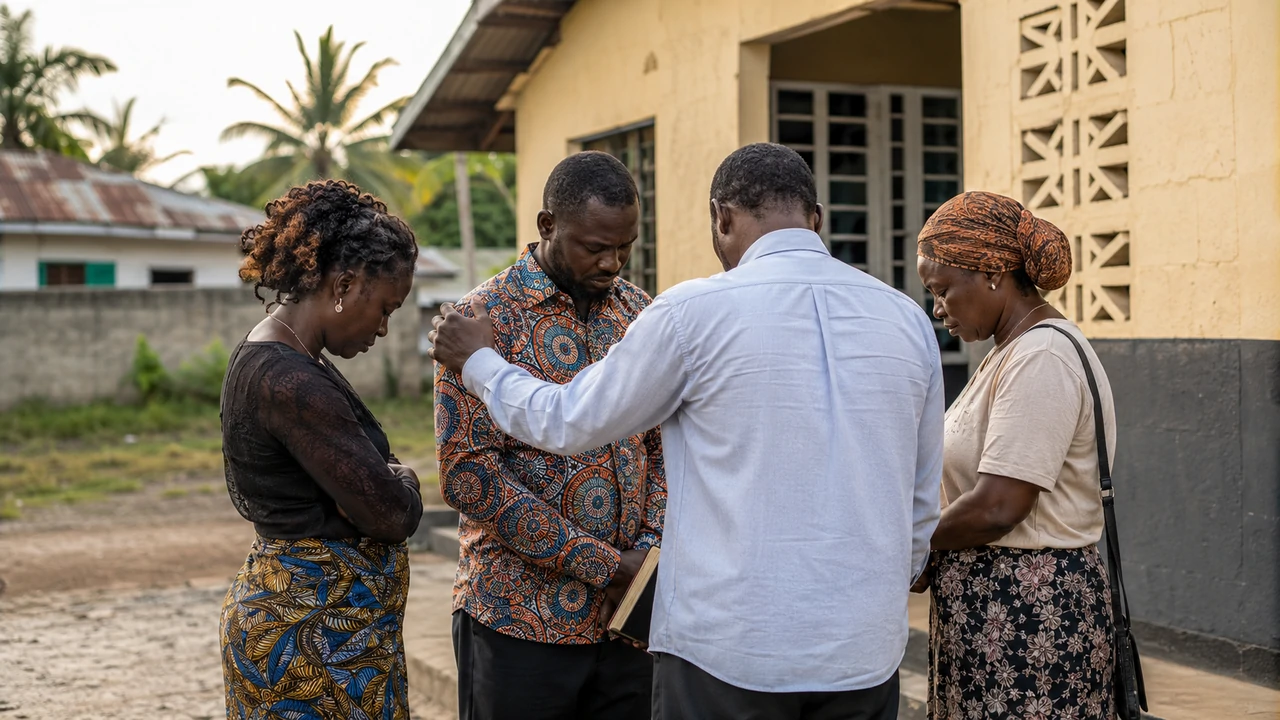
Liberia’s recent history includes deep suffering. Years of civil war left families bereaved, communities divided, institutions weakened, and many crimes unanswered. Since then, the country has gone more than two decades without a return to nationwide war, held several competitive elections, transferred presidential power peacefully, and taken on a growing role in regional and international affairs.
Liberia’s service on the United Nations Security Council during the 2026–2027 term marks a major change from the years when international peacekeepers helped protect the country after the civil wars. This progress gives Christians reason to thank God. It also gives Liberia’s leaders, institutions, churches, and citizens a serious responsibility to protect peace through justice, honesty, restraint, and respect for the law.
Many Liberians identify as Christian, and churches play a visible part in education, healthcare, reconciliation, community service, and national discussion. Yet a Christian label, church membership, baptism, or family tradition does not by itself show that a person has been born again and is trusting Christ. Liberia needs churches that preach the gospel clearly, teach Scripture faithfully, live with integrity, care for people in need, and pursue peace without hiding injustice.
Prayer Burden at a Glance
Pray for Liberia’s peace to be protected through honest government, fair justice, and reconciliation that tells the truth about past crimes. Pray for churches to preach Christ clearly and help people move beyond inherited Christian identity into repentance, faith in Christ, and obedience to Scripture. Remember young people seeking education and dependable work, farmers and families facing hunger, mothers needing safe healthcare, and public officials who need courage to reject corruption and serve the common good.
Last verified: 31 July 2026
Why Liberia Needs Prayer Now
Liberia’s peace is a great mercy, but it still needs to be protected through justice, trustworthy institutions, honest leadership, and churches that preach the gospel clearly and practise justice, mercy, and integrity.
Liberia has preserved a peace that previous generations could not take for granted. Peaceful transfers of presidential authority and the country’s responsibility on the UN Security Council are important signs of recovery. Leaders now need wisdom to protect that peace by strengthening justice, public institutions, education, healthcare, and opportunity.
The end of civil war did not remove every wound. Survivors and communities still carry grief, trauma, displacement, broken relationships, and unanswered questions. Liberia continues to consider how people responsible for atrocities and economic crimes should be held accountable. Victims need to be heard and treated with dignity, while accused people must receive fair trials and protection under the law.
People also lose trust when corruption, criminal networks, poor services, and unequal access to opportunity make institutions appear to serve the powerful. Economic growth may improve national figures while many households still struggle to find dependable work, afford food, reach healthcare, or keep children in school.
Christians should therefore pray that Liberia’s peace will be protected by justice, that economic progress will reach ordinary households, and that leaders will use public authority honestly. Churches also need grace to support victims, speak truth without partisan favouritism, care for vulnerable people, and show through their own conduct what repentance, mercy, justice, and integrity look like.
Country Snapshot
A brief orientation to Liberia’s location, government, people, languages, and religious setting.
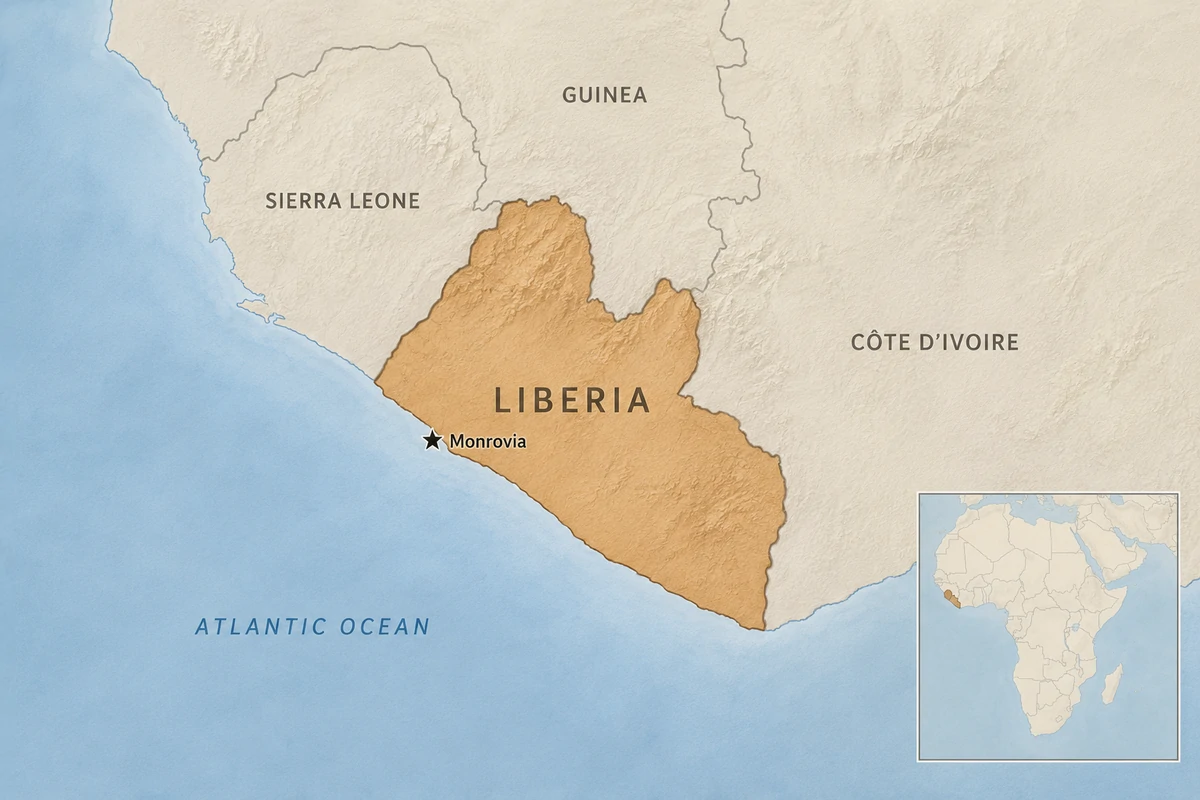
Liberia is a West African republic on the Atlantic coast. It shares borders with Sierra Leone, Guinea, and Côte d’Ivoire. Monrovia is its capital and largest city.
Religious figures describe how people identify themselves; they cannot tell us who has been born again or who is sincerely trusting Christ. Some people who identify as Christian seek to live under the authority of Scripture. Others may regard Christianity mainly as a family, cultural, national, or denominational identity. Some may combine Christian profession with traditional religious beliefs or practices.
Liberia’s long Christian history includes genuine reasons for gratitude where Christ is faithfully preached, Scripture is taught, and neighbours are served, but it does not remove the need for evangelism and discipleship. Pray for people to repent and trust Christ, for believers to grow in obedience, and for churches to test their teaching and practice by God’s Word.
Spiritual and Practical Challenges Affecting Christians and Churches
These challenges affect families, public trust, church ministry, discipleship, care for vulnerable people, and the daily responsibilities of Christians across Liberia.
Justice, reconciliation, and the wounds of war
Liberia’s civil wars ended more than two decades ago, but many people still live with their consequences. Former combatants, survivors, widows, orphans, displaced families, and communities affected by atrocities may carry different memories of the wars and different expectations about justice and reconciliation.
The pursuit of justice should honour victims, establish the truth, protect due process, and resist political interference. Christian forgiveness should never be used to pressure victims into pretending that serious crimes did not occur. Justice should also be carried out lawfully rather than becoming a means of revenge.
Churches can help communities mourn honestly, confess wrongdoing, reject hatred, support victims, and encourage restitution where possible. They can teach that forgiveness does not call evil good and that justice does not require personal vengeance.
Corruption, accountability, and public trust
Corruption directly affects daily life. Money lost through bribery, fraud, or misuse may mean fewer medicines in clinics, fewer books in schools, poorer roads, weaker agricultural support, and fewer services for vulnerable communities.
It can also persuade people that honesty is foolish and that personal connections matter more than law or merit. Public servants who seek to work honestly may face pressure, threats, or isolation.
Churches must apply the same moral standard to political allies and opponents. Christian leaders should practise transparent financial stewardship, reject favouritism, protect people who expose wrongdoing, and refuse to exchange silence for political access or financial support.
Liberia needs police officers, judges, prosecutors, legislators, auditors, customs officials, and civil servants who will tell the truth and fulfil their duties even when integrity carries a personal cost.
Young people, education, and employment
Liberia has a young population, but many young people struggle to obtain good education, practical training, stable employment, and a realistic path toward adult independence.
Weak schools, unaffordable costs, limited vocational opportunities, and too few dependable jobs can leave young adults vulnerable to despair, criminal recruitment, drug use, political manipulation, or dangerous migration.
Churches can help by discipling young people, mentoring them, teaching practical skills, encouraging honest enterprise, and giving them meaningful responsibility. Liberia also needs functioning schools, fair access to work, safe communities, and public policies that help young people gain useful skills, find honest work, and contribute to their communities.
Food insecurity and uncertain household incomes
Many Liberian households depend on farming, informal trade, seasonal work, or uncertain income. Flooding, windstorms, crop pests, plant disease, poor roads, and weak storage can quickly leave families without enough food or income.
Liberia also depends heavily on imported food, especially rice. This leaves households exposed to changes in prices, currency values, and regional or international supply.
Churches and Christian families can share food and support neighbours in need. Lasting improvement will also require better rural roads, reliable storage, fair access to markets, useful agricultural training, farming methods that help communities withstand floods, storms, and changing weather, and long-term support for farmers.
Health, childbirth, water, and sanitation
Liberia’s health system has made important gains but still lacks enough trained workers, medicines, equipment, transport, diagnostic services, and rural facilities.
Pregnancy and childbirth remain dangerous for many women, especially where skilled care, emergency transport, blood supplies, medicines, or referral services are unavailable. Nurses, midwives, doctors, and community health workers may serve under intense pressure with limited resources.
Unsafe water and inadequate sanitation also affect homes, schools, and clinics. Girls may miss school when safe toilets and menstrual-hygiene facilities are unavailable. Children remain exposed to illnesses that clean water, sanitation, vaccination, and basic healthcare could prevent.
Women, girls, and vulnerable children
Women and girls often face poverty, interrupted schooling, unsafe childbirth, domestic labour, exploitation, and sexual or gender-based violence. Some children leave school to work, care for relatives, or help their families survive.
Churches should not conceal or minimize abuse to protect an institution, family, or leader’s reputation. Pastors and Christian families need wisdom to recognize danger, report crimes responsibly, care for survivors, and support lawful action against offenders.
Christian teaching should affirm the dignity of women, men, and children as people made in God’s image. It should also challenge practices that excuse violence, exploitation, coercion, or the misuse of authority.
Organized crime and community safety
Drug trafficking and organized crime can corrupt officials, threaten investigators, exploit weak institutions, and draw young people into destructive networks. They also damage families, neighbourhoods, public safety, and trust in law-enforcement agencies.
Liberia needs honest investigations, effective border controls, protection for witnesses, and cooperation with neighbouring countries. Accused people must receive due process, while officials who misuse public authority should face lawful accountability.
Christian Life and Witness in Liberia
Churches have visible opportunities to serve Liberia, but public influence must be joined to faithful preaching, accountable leadership, practical mercy, and ordinary Christian obedience.
Churches and Christian organizations play a visible part in Liberia’s public and community life. They operate schools and health facilities, care for vulnerable people, support peacebuilding, respond to practical needs, and contribute to national discussion.
Through these ministries, Christians can show mercy, teach children, support families, comfort people who are grieving, and help neighbours from divided communities live together peacefully. Congregations can also provide places where people worship, learn Scripture, receive pastoral care, and seek help during personal or family hardship.
These public roles do not guarantee spiritual faithfulness. A church may have a respected history, prominent leaders, schools, or access to government officials while still needing clearer gospel preaching, more faithful teaching, better pastoral care, and greater financial accountability.
Liberia needs pastors and teachers who proclaim salvation by grace alone through faith in Christ alone. They should call people to repentance and explain how the gospel changes family relationships, leadership, money, work, sexuality, forgiveness, justice, and care for neighbours.
Christian leaders may be invited to public ceremonies, government consultations, peace initiatives, and national debates. They can use these opportunities to speak truth and serve the public good. They should not excuse wrongdoing by favoured politicians, turn congregations into partisan platforms, or remain silent about corruption in exchange for influence.
Churches may also cooperate in responding to hunger, violence, health needs, education, and reconciliation. Such cooperation should respect biblical truth and Christian conscience. Practical service should not require churches to pretend that important doctrinal differences do not matter.
Liberia’s Christian majority also carries a responsibility toward Muslim neighbours and followers of traditional religions. Christians should defend religious freedom, reject contempt and coercion, treat neighbours justly, and speak about Christ with humility and courage. Public Christian influence should never be used to suggest that non-Christians are lesser citizens.
Faithful Christian life in Liberia can be seen when pastors explain Scripture carefully, believers reject bribery, churches protect children, families welcome people in need, leaders admit wrongdoing, congregations support victims rather than hiding abuse, and Christians pursue peace without compromising truth.
Recent Developments
These dated developments help readers pray more specifically for peace, justice, public integrity, food security, healthcare, and responsible national leadership.
-
2026–2027
Liberia serves on the UN Security Council
Liberia began serving as an elected member of the United Nations Security Council in 2026. This is a major responsibility for a country whose own peace was once protected by extensive international assistance. See the United Nations Security Council list of elected members.
Prayer significance: Pray that Liberia’s representatives will remember the nation’s experience of war and recovery and act with wisdom, humility, courage, and concern for civilians affected by conflict.
-
May 2026
Proposed transitional-justice courts move forward
President Boakai renewed the mandate of the office preparing a proposed War and Economic Crimes Court and National Anti-Corruption Court. Draft legislation for the two courts was also submitted to the Legislature. The courts were not yet operational when this guide was reviewed. Key questions about the final laws, safeguards for judicial independence, funding, appointments, procedures, first cases, and timetable remained unanswered. See Executive Order No. 164 and the Executive Mansion statement on the proposed bills.
Prayer significance: Pray for a process that honours victims, protects defendants’ rights, resists political interference, and advances justice without creating new hatred or division.
-
July 2026
Authorities investigate a major cocaine-trafficking operation
Liberian authorities reported the seizure of nearly four metric tonnes of cocaine near Monrovia in July 2026. Authorities later destroyed approximately 4.2 metric tonnes connected with that operation and an earlier airport seizure. Several senior police personnel were charged or investigated over alleged involvement. The legal proceedings were still continuing, so allegations and charges must not be treated as proof of guilt. See Associated Press reporting and the Liberia Drug Enforcement Agency statement on the continuing investigation.
Prayer significance: Pray for investigators and courts to establish the truth, for innocent people to be protected, for corruption within public institutions to be exposed, and for young people and communities to be shielded from trafficking and drug-related harm.
-
June–August 2026
Seasonal food insecurity places households at risk
The Food and Agriculture Organization projected that more than 506,000 people could face severe acute food insecurity during Liberia’s June–August 2026 lean season, including a smaller number facing emergency conditions. This was a time-limited projection rather than a permanent national count. See the FAO country-assistance assessment.
Prayer significance: Pray for families to receive help in time and for farmers to recover from floods, storms, pests, crop disease, and poor harvests without being pushed further into debt or poverty.
-
March 2026
Maternal and newborn health receives renewed attention
Liberia’s Ministry of Health launched a one-year programme to reduce preventable maternal and newborn deaths. Its priorities included skilled attendance at births, improved referral systems, essential medicines, rural health workers, better data, and stronger accountability. See the Ministry of Health programme announcement.
Prayer significance: Pray that these plans will lead to dependable care in rural as well as urban communities and that mothers and babies will be protected when transport, medicines, trained workers, blood supplies, or emergency services are limited.
-
June 2026 projection
Growth is projected, but dependable work remains limited
International Monetary Fund staff projected real economic growth of approximately 5.5 percent for Liberia in 2026, supported especially by mining, manufacturing, and construction. This remained a staff projection rather than a final annual result. See the IMF statement following its June 2026 staff visit.
Prayer significance: Pray that economic progress will produce honest public revenue, better services, responsible use of natural resources, stronger local businesses, and dependable work for ordinary people.
How to Pray
Bring Liberia’s churches, leaders, families, institutions, and vulnerable communities before God with specific and compassionate prayer.
Pray for people to repent and trust Christ. Ask God to bring people beyond inherited or cultural Christian identity into repentance and saving faith in Jesus Christ. Pray that they will love Scripture, gather for faithful worship, and learn to obey Christ in daily life.
Pray for pastors to teach Scripture faithfully. Pray for pastors, elders, teachers, evangelists, and ministry leaders to explain the Bible clearly, proclaim Christ’s finished work, care for their congregations, and resist greed, abuse, manipulation, and partisan compromise.
Pray for truth, justice, forgiveness, and peace. Ask God to bring truth and justice for victims, establish the facts about past crimes, protect due process, restrain political revenge, and help Liberians forgive personal wrongs without concealing injustice.
Pray for honest public servants. Pray for police officers, judges, prosecutors, customs officials, legislators, auditors, and civil servants who seek to work honestly. Ask God to protect them from intimidation and give them courage to refuse bribery and expose wrongdoing.
Pray for the cocaine investigation and the fight against trafficking. Pray that investigators and courts will establish the facts in the July 2026 cocaine case. Ask God to protect innocent people, expose any corruption, ensure that accusations are tested fairly, restrain organized criminal networks, and keep young people from drug-related exploitation.
Pray for children and young people. Pray for good schools, skilled teachers, practical training, wise mentors, dependable employment, and opportunities to serve their communities. Ask God to protect young people from crime, drugs, exploitation, despair, and political manipulation.
Pray for farmers and families facing hunger. Pray for favourable growing conditions, recovery from floods and crop losses, improved roads and storage, fair prices, access to markets, and timely help for households facing food insecurity.
Pray for mothers, babies, and health workers. Ask God to protect women during pregnancy and childbirth, strengthen rural clinics, provide medicines and equipment, support nurses and midwives, and improve emergency transport and referral services.
Pray for clean water, sanitation, and safe schools. Pray that homes, schools, and clinics will gain reliable water, safe toilets, handwashing facilities, and the resources needed to protect children from preventable illness.
Pray for women and children facing violence or exploitation. Ask God to protect people at risk of abuse, give survivors safe places to seek help, and give churches wisdom to respond truthfully and compassionately. Pray that crimes will be reported and addressed rather than hidden.
Pray that Christians will live with honesty and courage. Pray that believers will reject bribery, tell the truth, protect vulnerable people, forgive personal wrongs, pursue lawful justice, and show through daily conduct how the gospel changes the use of authority, money, work, and influence.
Pray for peace among religious communities. Ask God to help Christians treat Muslim neighbours and followers of traditional religions with justice, kindness, and respect while speaking clearly and humbly about Jesus Christ.
Pray for Liberia’s international responsibility. Pray that Liberia’s representatives on the UN Security Council will remember the nation’s experience of conflict and peacebuilding. Ask God to help them support wise efforts toward peace, justice, and civilian protection.
Pray with hope in Christ’s kingdom. Pray that Liberia’s churches will work faithfully without placing their final hope in political leaders, courts, economic growth, or international recognition. Ask that the gospel will bear fruit, that believers will remain steadfast, and that Christians will pray with confidence, “Your kingdom come,” as they wait for Christ to judge with perfect righteousness and make all things new.
Give Thanks
Liberia’s needs are serious, but God has also preserved peace, religious freedom, faithful service, and acts of mercy.
Give thanks for more than two decades without a return to nationwide civil war. Praise God for the preservation of peace through years when Liberia has continued rebuilding public life and community relationships.
Give thanks for peaceful transfers of presidential authority. Liberia has preserved constitutional government and competitive political life without returning to nationwide conflict.
Give thanks for Liberia’s opportunity to contribute to international peace and security. Its UN Security Council membership gives the nation an opportunity to contribute to international decisions about peace, justice, and civilian protection.
Give thanks for pastors and congregations that teach Scripture and serve their communities. Praise God for biblically faithful teaching, care for people in need, support for families, and patient local ministry.
Give thanks for Liberians working for reconciliation, justice, education, healthcare, and peace. Their service strengthens communities and helps protect the common good.
Give thanks for people who continue serving when resources are scarce and honest work can carry personal risk. Remember health workers, teachers, farmers, investigators, public servants, and community leaders who seek to fulfil their responsibilities faithfully.
Give thanks for efforts to improve maternal and newborn care. Praise God for programmes seeking to reach mothers and babies in communities with limited health services.
Give thanks for Christian ministries showing practical mercy. Many provide education, healthcare, mentoring, help for vulnerable people, and support for reconciliation.
Give thanks for public servants who work honestly and refuse bribery. Their integrity protects people, strengthens institutions, and offers an example to others.
Give thanks for every clear sign of God’s grace among Liberia’s people. Praise Him for repentance, faith in Christ, mercy, courage, honesty, reconciliation, and patient obedience wherever these are seen.
Last Verified / Update Note
This section records when the guide was last reviewed and highlights developments that may shape prayer for Liberia.
Review Status
Current as of 31 July 2026
This guide was checked against current information about Liberia’s leadership, peacebuilding progress, transitional-justice plans, public institutions, the July 2026 cocaine investigation, food insecurity, economic conditions, maternal and child health, education, religious identity, religious freedom, and church involvement in reconciliation and public service.
The main concerns for prayer are faithful gospel preaching and discipleship, justice for crimes committed during Liberia’s civil wars, honest public institutions, protection from organized crime and corruption, education and work for young people, food security, safe childbirth, clean water, and care for women and children facing violence or exploitation.
Important developments include progress toward establishing the proposed War and Economic Crimes Court and National Anti-Corruption Court; the investigation, charges, and court proceedings connected with the June and July 2026 cocaine seizures; food security after the June–August 2026 lean season; any new official information about public health; and whether projected economic growth produces dependable work and better services for ordinary households.
This guide uses Liberian government and institutional sources, national and regional reporting, United Nations and international-agency material, church sources, and reputable outside reporting. Official statements are used to explain government actions and positions, but they are not treated as independent proof of disputed claims. Breaking investigations are dated and described cautiously.
Help keep this guide accurate and current
Conditions in Liberia can change. If you know of a significant correction or development that would help Christians pray more accurately, please contact the Nations Prayer Directory.
Key Sources Consulted
Sources that materially informed this Liberia prayer guide, including official Liberian materials, United Nations and international-agency reporting, church sources, and reputable current reporting.
Liberian official and national sources
- Executive Mansion. “Executive Order No. 164 Renewing the Mandate of the Office of the War and Economic Crimes Court for Liberia.” Used for the office’s renewed mandate, reporting requirements, implementation timetable, and the continuing preparatory status of the proposed courts.
- Executive Mansion. “President Boakai Submits Landmark Justice and Anti-Corruption Bills to the Legislature.” Used for the May 2026 submission and stated purpose of the two proposed court bills.
- Liberia Drug Enforcement Agency. June 2026 briefing on the Roberts International Airport cocaine seizure. Used for official law-enforcement context concerning the earlier seizure.
- Liberia Drug Enforcement Agency. July 2026 statement on the continuing joint investigation. Used for the agency’s stated commitment to evidence-based investigation and caution against unsupported accusations.
- Liberia Ministry of Health. “MOH, Partners Rally Behind 365-Day Action Plan to End Maternal, Newborn Deaths.” Used for the March 2026 maternal and newborn health programme.
- Liberia Institute of Statistics and Geo-Information Services and UNFPA Liberia. “2022 Liberia Population and Housing Census Final Results.” Used for population and broad demographic context.
- Liberia Council of Churches. “About Us.” Used for the council’s history, public-service work, peacebuilding role, and stated commitments.
- Liberia Council of Churches. News and reconciliation initiatives. Used for current examples of church involvement in public service and reconciliation.
United Nations and international institutions
- United Nations Security Council. “Countries Elected Members.” Used for Liberia’s 2026–2027 Security Council term.
- United Nations in Liberia. “Liberia’s Peace Story Is Still Being Written.” Used for current peacebuilding priorities and the continuing need for reconciliation, accountability, education, and opportunity.
- Food and Agriculture Organization Global Information and Early Warning System. Countries Requiring External Assistance for Food. Used for Liberia’s June–August 2026 food-insecurity projection.
- International Monetary Fund. “IMF Staff Concludes Staff Visit to Liberia.” Used for the June 2026 staff projection of real economic growth and its sector context.
- World Bank. “Liberia: Unlocking Private Sector Job Creation Through Firm Growth, Expanded Production, and Policy Alignment.” Used for private-sector, informality, firm-growth, and employment context.
- UNICEF Liberia. “Day of the African Child 2026.” Used for water, sanitation, hygiene, and school conditions affecting children.
- U.S. Department of State. “2023 International Religious Freedom Report: Liberia,” hosted by ecoi.net. Used for constitutional religious-freedom context and broad religious-demography cautions.
Current reporting on the July 2026 cocaine investigation
- Associated Press. Reporting on the destruction of approximately 4.2 metric tonnes of cocaine and the continuing investigation involving senior police personnel. Used for the latest dated status and legally cautious description of the investigation.
- Reuters reporting republished by Internazionale. “Liberia seizes $317 million of cocaine bound for Europe, police chief says.” Used for independent reporting on the Duazon seizure.
- The Liberian Investigator reporting republished by allAfrica. Local reporting on the Duazon seizure. Used for national reporting context alongside official statements and international verification.
Source Context
These notes explain how to understand changing information about investigations, proposed institutions, seasonal projections, and public data.
Source Context
- Source mix. This guide uses Liberian official and national sources, United Nations and international institutional material, church sources, regional context, and reputable outside reporting. Official statements explain government actions and positions but are not treated as independent proof of disputed claims.
- Breaking drug investigation. As of 31 July 2026, the cocaine case was still developing. Authorities had destroyed approximately 4.2 metric tonnes of cocaine connected with the Duazon seizure and an earlier airport seizure, while several police personnel had been charged, questioned, suspended, or investigated. Charges and allegations are not treated as proof of guilt, and the guide does not predict the outcome of legal proceedings.
- Proposed courts. Liberia’s government had renewed the mandate of the office preparing the proposed War and Economic Crimes Court and National Anti-Corruption Court and had submitted draft legislation to the Legislature. The courts were not yet described by official sources as fully established and operational.
- Food-security figures. The estimate that more than 506,000 people could face severe acute food insecurity applies specifically to the June–August 2026 lean season. It is a time-limited projection rather than a permanent count of people in crisis.
- Economic figures. The 5.5 percent growth figure is an International Monetary Fund staff projection issued after its June 2026 visit. It is not a final measure of Liberia’s economic performance for the year, and growth alone does not show how much conditions have improved for individual households.
- Public-health reporting. Available public information did not provide a clear nationwide picture of mpox in late July 2026, so this guide does not present mpox as a current nationwide burden.
- Religious identity. Census percentages describe how people identify themselves. They do not establish personal conversion, regeneration, doctrinal faithfulness, or active Christian discipleship. Muslim organizations have also disputed the census estimate of the Muslim share of the population.
A Closing Prayer for Liberia
A concise prayer bringing Liberia’s present needs before the Lord.


