


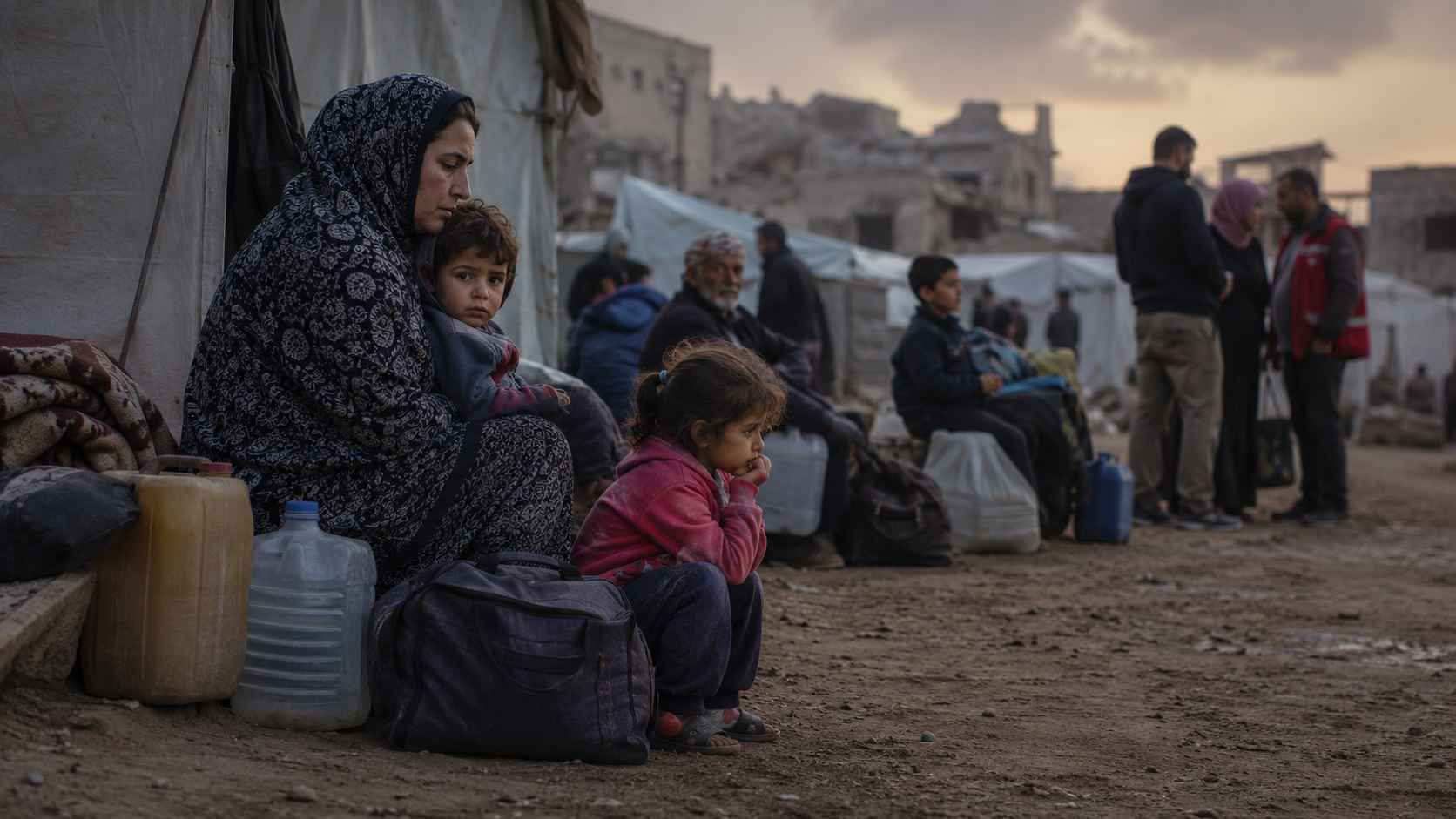
The countries in this list are not included because they briefly dominated headlines or because their suffering is dramatic enough to seize public attention for a moment. They are here because, as of May 2026, they represent some of the clearest and most painful concentrations of humanitarian crisis and severe human suffering in the world. In these places, war, displacement, hunger, collapsed services, fear, disease, and prolonged instability have made ordinary life deeply fragile for millions.
Such a list should be read with sobriety. Human suffering cannot finally be reduced to numbers, and no ranking can fully measure the grief of families driven from home, the exhaustion of communities living under siege, the anguish of parents unable to find food or medicine, or the weariness of those trying to endure one more day under unbearable conditions. Yet careful comparison still has value. It helps us resist vague concern, pay closer attention to the world as it truly is, and pray with greater clarity, compassion, and seriousness.
For Christians, this kind of attention should never become detached observation. Behind every entry are image-bearers of God living through fear, loss, deprivation, upheaval, and uncertainty. Many are ordinary families struggling to survive. Many are churches and believers seeking to remain faithful amid disorder, danger, and grief. The aim is not merely to understand which countries rank highest, but to see more clearly where mercy is urgently needed and to let that clearer sight lead to informed, humble, and compassionate prayer.
List Burden at a Glance
A compact summary of the present prayer burden carried by this ranking.
This May 2026 list is dominated by war-linked displacement, acute hunger or famine risk, damaged health and water systems, humanitarian access constraints, and severe underfunding. Sudan remains the clearest number one. The State of Palestine, the Democratic Republic of the Congo, Yemen, South Sudan, Afghanistan, Haiti, Myanmar, Syria, and Somalia form the strongest current top-ten field when severity, scale, urgency, disruption, and difficulty of relief are weighed together. Globally, the 2026 humanitarian system is operating under severe pressure, with the United Nations Office for the Coordination of Humanitarian Affairs (OCHA) describing hundreds of millions in urgent need and a sharply prioritized response environment.
Last Reviewed / Ranking Date
A public-facing trust cue for the date and purpose of this assessment.
Last Reviewed / Ranking Date: May 20, 2026
Ranking Type: Current prayer-burden ranking, not a permanent judgment of national worth, divine concern, or human dignity.
How to Read This Ranking
A brief note on what this list is—and what it is not.
This is a present humanitarian suffering ranking. It is not a list of countries God cares about more than others, not a ranking of people’s value, and not a claim that suffering outside the top ten is light or unimportant. It is a disciplined comparative judgment about where humanitarian crisis and severe suffering appear most acute, widespread, life-disrupting, and difficult to relieve right now.
Some countries rank high because the absolute number of people in need is enormous. Others rank high because suffering is unusually concentrated, violent, fast-moving, or hard for aid to reach. The back end of the list is especially close. Somalia, Ukraine, Lebanon, Ethiopia, Mali, Burkina Faso, and Nigeria all required serious consideration.
Previous ranking reviewed: APRIL 2026.
Humanitarian Ranking Method Note
How this ranking was prepared and what kind of comparative judgment it represents.
Date basis: May 20, 2026.
This ranking prioritizes recent and credible humanitarian sources: the United Nations Office for the Coordination of Humanitarian Affairs (OCHA), Humanitarian Action, the United Nations High Commissioner for Refugees (UNHCR), the World Food Programme (WFP), the United Nations Children’s Fund (UNICEF), the World Health Organization (WHO), the Integrated Food Security Phase Classification (IPC), UN country teams, and closely related humanitarian reporting. Current-affairs reporting was used only where it helped identify very recent escalation or deterioration.
Humanitarian rankings are not purely numerical. A country with fewer people in need can rank above a larger crisis if the suffering is more concentrated, acute, blocked from relief, or rapidly worsening. Likewise, a large caseload can still rank lower if state capacity, relief access, or immediate severity is comparatively less catastrophic.
Working Definition
The standard used to decide which countries qualify for this humanitarian-crisis ranking.
Humanitarian crisis and severe suffering
For this ranking, a country qualifies if it is currently experiencing humanitarian crisis and severe suffering at meaningful scale through some combination of:
- mass displacement;
- acute food insecurity, famine risk, or severe malnutrition;
- major civilian harm;
- severe disruption of health care, shelter, water, sanitation, education, or protection;
- broad national instability or service collapse;
- humanitarian access constraints;
- prolonged conditions that make ordinary life deeply unstable or unsustainable.
This is not limited to war alone. Conflict is a major driver in many cases, but state collapse, economic breakdown, drought, disease outbreaks, disaster shocks, aid blockages, and protection crises also matter.
Ranking Criteria and Weighting
The criteria used to compare scale, severity, urgency, disruption, and prayer burden.
-
Humanitarian Severity 25% How intense is the present suffering: hunger, death, displacement, civilian harm, disease, service collapse, trauma, and immediate vulnerability?
-
Scale of Affected Population 20% How many people are materially affected or in need of humanitarian assistance?
-
Depth of National Disruption 20% How deeply are public systems, ordinary livelihoods, safety, mobility, health care, food systems, and daily life disrupted?
-
Current Urgency / Escalation 15% Is the crisis worsening now, entering a new acute phase, or showing famine, disease, conflict, or displacement acceleration?
-
Structural Entrenchment / Difficulty of Relief 10% How hard is it to relieve the suffering because of conflict, insecurity, access restrictions, collapsed systems, sanctions, blocked crossings, underfunding, or recurrent shocks?
-
Prayer-and-Ministry Relevance 10% How significantly do the crisis conditions shape church endurance, Christian witness, mercy ministry, local fear, family survival, and focused prayer burden?
Visible Broad Analysis
The serious candidate field considered before the final ranking was set.
The serious candidate field included: Sudan, State of Palestine, Democratic Republic of the Congo, Yemen, South Sudan, Afghanistan, Haiti, Myanmar, Syria, Somalia, Ukraine, Lebanon, Ethiopia, Mali, Burkina Faso, Nigeria, Chad, Central African Republic, and Mozambique.
The final top ten gives heavier weight to countries where several crisis factors converge at once: mass displacement, high acute hunger, active violence, health or water-system breakdown, severe protection risks, and restricted or underfunded relief. The hardest exclusion decisions were Ukraine, Lebanon, Ethiopia, Mali, Burkina Faso, and Nigeria. The International Rescue Committee’s 2026 Emergency Watchlist also underscores the gravity of Sudan, the occupied Palestinian territory, South Sudan, Ethiopia, Haiti, Myanmar, the Democratic Republic of the Congo, Mali, Burkina Faso, and Lebanon as major crisis-risk settings, while the United Nations Population Fund’s 2026 humanitarian appeal concentrates a major portion of its crisis funding burden in Afghanistan, the Democratic Republic of the Congo, the occupied Palestinian territory, Sudan, and Yemen.
Top Ten Countries Facing Humanitarian Crisis and Severe Suffering
Each ranked country entry explains why the country qualifies, why it ranks where it does, and how the burden can be turned into prayer.
Sudan
The clearest current case of nationwide humanitarian collapse.
Sudan remains the world’s largest humanitarian crisis by people in need. OCHA’s 2026 Sudan plan states that 33.7 million people require humanitarian assistance, the highest number globally, while the conflict has created massive displacement, grave protection risks, hunger, and service breakdown.
Sudan ranks first because no other country currently combines such enormous scale, displacement, acute hunger, active warfare, atrocity-level protection risks, severe access constraints, and national-system collapse in the same way. Recent IPC-linked reporting also warns that more than 40 percent of Sudan’s population faces high levels of acute food insecurity, with catastrophic conditions for some populations and worsening lean-season risk.
The crisis is not merely large; it is deeply entrenched. Darfur and Kordofan remain especially severe, protection risks are extreme, millions are displaced internally or across borders, and humanitarian access is dangerous and uneven. OCHA’s April 2026 Sudan material describes intensified hostilities in Darfur and Kordofan and an “unprecedented protection crisis” marked by atrocities and disregard for international humanitarian law.
Sudan’s ordinary civic life has been shattered by war, hunger, displacement, health collapse, and insecurity. Its suffering also spills across the region through refugees and pressure on already fragile neighboring countries.
Pray for God’s mercy on displaced families, hungry children, exhausted caregivers, and communities trapped by violence. Pray for protection from atrocities, open humanitarian access, restraint of evil, courage for local believers, and endurance for churches serving amid grief and danger.
Key current sources used: OCHA Sudan Humanitarian Needs and Response Plan 2026; OCHA Sudan April 2026 update; IPC-linked acute food insecurity reporting; UNHCR Sudan emergency materials.
State of Palestine
Extreme concentrated civilian suffering, especially in Gaza.
The humanitarian situation across the occupied Palestinian territory remains marked by insecurity, repeated displacement, destruction of critical infrastructure, severe movement restrictions, and heavily constrained access to essential services. OCHA’s 15 May 2026 situation report says living conditions in Gaza remain dire, most people remain displaced, and health, water, sanitation, education, and protection services are significantly affected.
The State of Palestine ranks second because the severity density is extraordinary. The absolute population is smaller than Sudan, Yemen, Afghanistan, or the Democratic Republic of the Congo, but the concentration of suffering in Gaza, the repeated displacement, the strain on hospitals, the water and sanitation risks, the continuing attacks, and the limitations on aid access create one of the world’s most acute humanitarian settings.
OCHA reports that Gaza families continue sheltering in overcrowded tents or damaged structures, clean water access remains inconsistent, waste-management systems are impaired, and humanitarian operations are undermined by import restrictions, shortages, damaged roads, movement constraints, and insecurity. WHO estimates more than 43,000 people in Gaza have life-changing injuries, while rehabilitation services remain critically overstretched.
This is a severe protection and survival crisis. Civilians face repeated trauma, displacement, damaged homes, weakened health care, environmental hazards, and uncertain access to aid.
Pray for the protection of civilians, the wounded, the displaced, the grieving, and the hungry. Pray for relief access, healing for traumatized children, wisdom for leaders, restraint of violence, and faithful witness by believers living under fear and exhaustion.
Key current sources used: OCHA occupied Palestinian territory Humanitarian Situation Report, 15 May 2026; OCHA reporting on Gaza and West Bank humanitarian conditions; WHO-linked injury and rehabilitation estimates cited in OCHA reporting.
Democratic Republic of the Congo
A vast, chronic, conflict-driven crisis now compounded by disease risk.
The Democratic Republic of the Congo faces one of the world’s most complex humanitarian crises, driven by armed conflict, massive displacement, acute hunger, recurrent epidemics, weak services, and chronic insecurity. WFP says 26.6 million people are projected to face crisis-level food insecurity or worse by early 2026, while UNHCR reports that 8.2 million people were displaced by September 2025, with displacement projected to reach 9 million by the end of 2026.
The Democratic Republic of the Congo ranks above Yemen and Afghanistan because its hunger burden, displacement scale, recurring armed violence, and disease vulnerability are now converging sharply. The May 2026 Ebola outbreak in conflict-affected eastern DRC adds urgent health pressure to an already severe conflict-and-hunger crisis.
Eastern DRC remains deeply unstable, with violence in North Kivu, South Kivu, Ituri, and surrounding areas driving displacement, protection risks, and loss of livelihoods. OCHA’s 2026 Global Humanitarian Overview article estimates 14.9 million people in need, while noting that the decrease from 2025 reflects a methodological change rather than real improvement.
DRC’s crisis is both immense and entrenched. Conflict, hunger, displacement, disease, and weak public systems keep millions in repeated cycles of flight and deprivation.
Pray for protection from armed groups, mercy for displaced families, containment of disease outbreaks, food for the hungry, and courage for churches serving amid insecurity. Pray that violence would be restrained and that vulnerable communities would receive help before suffering deepens further.
Key current sources used: WFP Democratic Republic of the Congo emergency page; UNHCR DRC emergency page; OCHA DRC Global Humanitarian Overview 2026 article; WHO and Africa CDC-linked Ebola outbreak reporting.
Yemen
A long-running national survival crisis of hunger, health strain, and economic collapse.
Yemen remains one of the world’s largest and most complex humanitarian emergencies. The 2026 Yemen Humanitarian Needs and Response Plan lists 22.3 million people in need, 12 million targeted, and 8.8 million urgently prioritized for assistance.
Yemen ranks fourth because its scale remains enormous and its suffering is highly entrenched, but DRC’s displacement, active conflict dynamics, and disease emergency push DRC slightly higher. Yemen still remains a top-tier global crisis because hunger, health-system fragility, economic stress, and years of war continue to erode ordinary life.
Yemen’s 2026 response plan requests $2.16 billion, but funding remains far below requirements. The crisis is shaped by food insecurity, weak health services, displacement, economic deterioration, damaged water and sanitation systems, and difficulty sustaining relief at scale.
Yemen is a national-scale survival crisis. Even where front-line fighting is less intense than at earlier peaks, the population’s coping capacity has been worn down by years of deprivation.
Pray for hungry families, malnourished children, mothers without adequate health care, and communities whose ordinary means of survival have been exhausted. Pray for peace, relief access, wise leadership, and faithful churches to be strengthened in mercy and hope.
Key current sources used: OCHA Yemen Humanitarian Needs and Response Plan 2026; Humanitarian Action Yemen 2026 plan overview; UN humanitarian reporting on Yemen’s food, health, displacement, and protection needs.
South Sudan
A fragile state facing deep hunger, violence, displacement, and service breakdown.
South Sudan faces severe humanitarian emergencies driven by climate shocks, violence, disease outbreaks, economic stress, displacement, and spillover from the Sudan war. OCHA says over 10 million people, about two-thirds of the population, are projected to require humanitarian assistance in 2026.
South Sudan ranks fifth because the crisis is extraordinarily severe relative to population size. Its hunger burden is among the worst in the world: OCHA, the Food and Agriculture Organization (FAO), WFP, and UNICEF warn that 7.8 million people, or 56 percent of the population, face high levels of acute food insecurity between April and July 2026.
Conflict, mass displacement, climate shocks, economic instability, and Sudan spillover are driving hunger and service collapse. WFP reports over 2.2 million children under five and 1.2 million pregnant and breastfeeding women are acutely malnourished, while recent reporting from South Sudan notes attacks on civilians and health care, access constraints, and escalating violence.
South Sudan’s crisis is a severe fragility emergency. Hunger, violence, disease, displacement, and weak institutions reinforce one another and leave families with few safe options.
Pray for civilians facing hunger, displacement, and fear; for children suffering malnutrition; for protection of hospitals and humanitarian workers; and for churches to remain steadfast in mercy, reconciliation, and gospel hope.
Key current sources used: OCHA South Sudan Humanitarian Needs and Response Plan 2026; OCHA South Sudan Humanitarian Update, 18–30 April 2026; WFP South Sudan emergency page; humanitarian reporting on violence, civilian protection, and access constraints.
Afghanistan
A massive hunger, malnutrition, returnee, and protection crisis.
Afghanistan remains one of the world’s largest humanitarian crises, with 21.9 million people, about 45 percent of the population, projected to need humanitarian assistance in 2026. WFP says 17.4 million people require urgent food assistance and 4.9 million women and children are expected to need treatment for malnutrition.
Afghanistan ranks sixth because its absolute scale is enormous, but the current crisis is less defined by nationwide active warfare than Sudan, DRC, Yemen, and South Sudan. Its suffering is still severe: drought, economic fragility, malnutrition, returnee flows, rights restrictions, and reduced aid combine into a major national emergency.
A major fresh factor is the large-scale return of Afghan nationals from Pakistan and Iran. On 19 May 2026, the UN and nongovernmental organization partners launched a $529 million Response Plan for Afghan Returnees, aiming to support 2.7 million Afghans projected to return from Iran and Pakistan.
Afghanistan’s crisis is systemic. Hunger, drought, natural hazards, fragile services, poverty, large-scale returns, and severe protection constraints—especially for women and girls—are all interacting.
Pray for returnees arriving with little support, families facing hunger, women and girls under severe restrictions, and children threatened by malnutrition. Pray for relief access, protection, wise local service, and endurance for believers living under heavy pressure.
Key current sources used: OCHA Afghanistan Humanitarian Needs and Response Plan 2026; WFP Afghanistan emergency page; UNAMA / UN Afghanistan 2026 Response Plan for Afghan Returnees; UNHCR Afghanistan emergency materials.
Haiti
A rapidly deteriorating crisis of gang violence, hunger, displacement, and state fragility.
Haiti is one of the most acute humanitarian crises in the Western Hemisphere. OCHA says 6.4 million people, more than half the population, need humanitarian assistance, while Haiti’s crisis is marked by insecurity, protection needs, mass displacement, gender-based violence, and a highly constrained operating environment.
Haiti ranks seventh because its absolute population is smaller than Afghanistan, Yemen, or DRC, but its national disruption and current deterioration are severe. Gang violence, displacement, hunger, weakened hospitals, education disruption, and state fragility make ordinary life dangerously unstable.
IPC reports that 5.83 million people, or 52 percent of the analysed population, face high levels of acute food insecurity between March and June 2026. UNICEF reporting notes that at least 755,000 children are displaced and that cholera remains a concern.
Haiti’s crisis is not a narrow security problem; it is a national humanitarian emergency where violence is destroying access to food, schools, hospitals, livelihoods, and safe movement.
Pray for families fleeing gang violence, children recruited or harmed by armed groups, hungry households, overwhelmed hospitals, and churches welcoming the displaced. Pray for protection, justice, wise leadership, repentance from violence, and courageous Christian mercy.
Key current sources used: UN Geneva / OCHA Haiti reporting; IPC Haiti March–June 2026 acute food insecurity projection; UNICEF Haiti 2026 situation reporting; OCHA Haiti Humanitarian Response Plan.
Myanmar
A broad conflict, displacement, earthquake, and economic-collapse crisis.
Myanmar remains one of the world’s most complex humanitarian crises. The 2026 Humanitarian Needs and Response Plan says armed conflict, recurrent disasters, and economic collapse have left 16.2 million people in need of assistance and more than 4 million people displaced, many multiple times.
Myanmar ranks eighth because its scale is large and its suffering is structurally difficult to relieve, but Haiti’s sharper current collapse and Afghanistan’s larger hunger-and-returnee burden push those countries slightly higher. Myanmar remains firmly top-ten because conflict, displacement, disaster impact, underfunding, and protection risks are all severe.
The March 2025 earthquake compounded the effects of armed conflict and economic collapse, while millions remain without adequate shelter, food, or health care. The UN plan prioritizes life-saving and protection assistance for 4.9 million people in the hardest-hit areas, but warns that underfunding in 2025 left millions without aid and exposed families to harmful coping strategies.
Myanmar’s crisis is layered and difficult. Conflict, displacement, destroyed infrastructure, economic collapse, disaster recovery, and aid-access challenges continue to press on civilians.
Pray for displaced families, children deprived of safety and education, women and girls exposed to exploitation, and communities enduring repeated shocks. Pray for relief access, protection from violence, and perseverance for believers serving amid danger and exhaustion.
Key current sources used: Myanmar Humanitarian Needs and Response Plan 2026; UN Myanmar / OCHA humanitarian reporting; Myanmar humanitarian update materials; Myanmar health-cluster reporting.
Syria
A massive post-war and still-unstable humanitarian emergency.
Syria remains a major humanitarian emergency despite dramatic political changes. OCHA says about 70 percent of the population needs humanitarian assistance, while the 2026 Syria plan lists 15.6 million people in need, 8.6 million targeted, and 4.3 million prioritized.
Syria ranks ninth because its humanitarian scale remains enormous, but current acute severity is somewhat lower than the countries above it. Still, the combination of damaged infrastructure, displacement, poverty, food insecurity, climate shocks, sporadic conflict, and large-scale returns keeps Syria in the top ten.
WFP reports 9.1 million people are food insecure, the cost of living has tripled over three years, and maternal and child malnutrition indicators are at emergency thresholds. UNICEF also notes that more than 7 million children need humanitarian assistance and that nearly 40 percent of hospitals and health facilities are partly or completely non-functional.
Syria is not simply in recovery. Families are returning or remaining in areas where homes, schools, hospitals, livelihoods, and public services remain badly damaged.
Pray for displaced families and returnees, children growing up amid trauma and poverty, communities rebuilding amid damaged services, and believers seeking to serve faithfully after years of war. Pray for peace, justice, provision, and wise rebuilding.
Key current sources used: OCHA Syria country page; Humanitarian Action Syria Humanitarian Needs and Response Plan 2026; WFP Syria country and emergency reporting; UNICEF Syria crisis reporting.
Somalia
A fast-worsening drought and hunger crisis with emerging famine risk.
Somalia now enters the top ten because of a rapidly intensifying hunger emergency. On 15 May 2026, OCHA, FAO, UNICEF, and WFP warned that 6 million people, or 31 percent of the population, face critical levels of food insecurity between April and June 2026, with the first famine risk since the 2022 crisis confirmed.
Somalia ranks tenth because its overall 2026 humanitarian plan caseload is smaller than Ukraine’s or Syria’s, but its current hunger trajectory is sharper. Drought, conflict, high food prices, water scarcity, disease risks, funding shortfalls, and displacement now create a severe and time-sensitive humanitarian burden.
Somalia’s 2026 Humanitarian Needs and Response Plan lists 4.8 million people in need, while the May 2026 hunger update shows current food insecurity has surged well beyond that planning figure. UN media reporting says nearly 5 million people have been affected by drought and about 200,000 people were displaced in the first quarter of 2026, more than 60 percent because of drought.
Somalia’s crisis is a warning case: a protracted fragile-state emergency is again moving toward famine-risk conditions while aid resources remain thin.
Pray for rain, food, clean water, and protection for displaced families. Pray for children threatened by severe acute malnutrition, for aid to reach drought-hit communities, and for churches and Christian workers to serve wisely in a context of danger and deep need.
Key current sources used: OCHA / FAO / WFP / UNICEF joint hunger warning, 15 May 2026; Somalia Humanitarian Needs and Response Plan 2026; UN reporting on drought-related displacement and food insecurity.
Near-Miss / Watchlist Countries
Countries that remained close to the final list and should stay in view for prayer and future review.
Ukraine
Ukraine remains a massive war-driven humanitarian crisis, with 10.8 million people needing assistance in 2026 and humanitarian partners prioritizing those near the front line, newly displaced or evacuated people, strike-affected civilians, and severely vulnerable displaced people. It narrowly misses the top ten because Somalia’s current famine-risk trajectory and acute hunger escalation are more urgent at this review point.
Lebanon
Lebanon is a serious near-miss. OCHA reporting in May 2026 describes continued escalation, nearly 2,896 killed, 8,824 injured, renewed displacement orders, attacks on health care, and more than 1 million people still displaced. It could replace Somalia or Syria if conflict-driven displacement and health-system pressure intensify further.
Ethiopia
Ethiopia remains heavily burdened by conflict, displacement, disease outbreaks, drought risks, refugee pressure, and malnutrition. WFP describes alarming food insecurity and malnutrition, with 4.4 million women and young children urgently needing treatment, while UNICEF aims to reach 8.9 million people in 2026. It remains close to the top ten, but current comparative severity placed Somalia, Syria, and Myanmar slightly higher.
Mali
Mali faces a complex crisis driven by conflict, insecurity, climate shocks, disease outbreaks, and access constraints. OCHA says more than 5 million people need aid, and recent reporting points to worsening violence and instability. It remains a serious watchlist country but falls below the top ten on combined scale and acute humanitarian severity.
Burkina Faso
Burkina Faso continues to face the worst humanitarian crisis in its history, with one in four people needing humanitarian assistance. Its 2026 humanitarian plan lists 4.5 million people in need and nearly 2 million internally displaced in recent crisis-response documentation, but it falls just outside this list because the top ten combine even greater scale or sharper current urgency.
Nigeria
Nigeria’s northeast remains deeply affected by conflict, displacement, flooding, disease, poverty, and severe food insecurity. The 2026 Humanitarian Needs and Response Plan lists 5.9 million people in need, and WFP has warned of catastrophic hunger risks if food aid funding runs out. Nigeria remains a major humanitarian watchlist case but not quite top-ten on this specific May 2026 comparative ranking.
Final Summary Judgment
A concise summary of the final comparative judgment behind this ranking.
The clearest top tier is Sudan, State of Palestine, Democratic Republic of the Congo, and Yemen. Sudan stands alone at number one because of its unmatched combination of scale, displacement, hunger, active war, and protection catastrophe. The State of Palestine ranks second because of the density and immediacy of suffering, especially in Gaza. The Democratic Republic of the Congo and Yemen follow because both combine vast need, hunger, displacement, health strain, and deeply entrenched instability.
The middle tier—South Sudan, Afghanistan, Haiti, Myanmar, and Syria—is closely grouped but differentiated by present severity, current escalation, and scale. Somalia enters the list because May 2026 evidence points to a fast-worsening drought and hunger crisis with famine risk. Ukraine and Lebanon are the most difficult exclusions; both remain grave prayer burdens, but they narrowly fall outside the top ten in this current comparative assessment.
How to Pray Through This List
A prayer response shaped by the burdens named in the ranking.
Pray first with humility. These are not abstract “crisis countries,” but nations filled with men, women, children, churches, pastors, widows, displaced families, exhausted health workers, hungry communities, and people who wake each day unsure whether they will have safety, food, medicine, or shelter.
Pray for:
Mercy for the suffering — especially displaced families, hungry children, the wounded, the sick, the elderly, pregnant women, and those trapped in active violence.
Protection of civilians — from bombing, armed groups, exploitation, sexual violence, forced recruitment, disease, and lawlessness.
Open paths for relief — safe access for humanitarian workers, functioning supply lines, sufficient funding, and wise local coordination.
Restraint of evil and just leadership — that violence, corruption, cruelty, and indifference would be restrained.
Faithful churches and believers — that Christians in these countries would be strengthened in Christ, preserved in hope, and made fruitful in mercy, courage, witness, and endurance.
Repentance, peace, and gospel hope — that the Lord would bring not only temporary relief, but deeper mercy, justice, reconciliation, and eternal hope through Christ.
Key Sources Consulted
Descriptive source documentation for review, transparency, and future updating.
- Global / comparative framing: OCHA Global Humanitarian Overview 2026; Humanitarian Action 2026 overview; United Nations Population Fund 2026 Humanitarian Action Overview; International Rescue Committee Emergency Watchlist 2026.
- Sudan: OCHA Sudan Humanitarian Needs and Response Plan 2026; OCHA Sudan April 2026 update; IPC-linked acute food insecurity reporting; UNHCR Sudan emergency materials.
- State of Palestine: OCHA occupied Palestinian territory Humanitarian Situation Report, 15 May 2026; OCHA reporting on Gaza and West Bank humanitarian conditions; WHO-linked injury and rehabilitation estimates cited in OCHA reporting.
- Democratic Republic of the Congo: WFP Democratic Republic of the Congo emergency page; UNHCR DRC emergency page; OCHA DRC Global Humanitarian Overview 2026 article; WHO and Africa CDC-linked Ebola outbreak reporting.
- Yemen: OCHA Yemen Humanitarian Needs and Response Plan 2026; Humanitarian Action Yemen 2026 plan overview; UN humanitarian reporting on Yemen’s food, health, displacement, and protection needs.
- South Sudan: OCHA South Sudan Humanitarian Needs and Response Plan 2026; OCHA South Sudan Humanitarian Update, 18–30 April 2026; WFP South Sudan emergency page; humanitarian reporting on violence, civilian protection, and access constraints.
- Afghanistan: OCHA Afghanistan Humanitarian Needs and Response Plan 2026; WFP Afghanistan emergency page; UNAMA / UN Afghanistan 2026 Response Plan for Afghan Returnees; UNHCR Afghanistan emergency materials.
- Haiti: UN Geneva / OCHA Haiti reporting; IPC Haiti March–June 2026 acute food insecurity projection; UNICEF Haiti 2026 situation reporting; OCHA Haiti Humanitarian Response Plan.
- Myanmar: Myanmar Humanitarian Needs and Response Plan 2026; UN Myanmar / OCHA humanitarian reporting; Myanmar humanitarian update materials; Myanmar health-cluster reporting.
- Syria: OCHA Syria country page; Humanitarian Action Syria Humanitarian Needs and Response Plan 2026; WFP Syria country and emergency reporting; UNICEF Syria crisis reporting.
- Somalia: OCHA / FAO / WFP / UNICEF joint hunger warning, 15 May 2026; Somalia Humanitarian Needs and Response Plan 2026; UN reporting on drought-related displacement and food insecurity.
- Near-miss countries: OCHA / UN Ukraine Humanitarian Needs and Response Plan 2026; OCHA Lebanon May 2026 updates; WFP Ethiopia emergency reporting; UNICEF Ethiopia humanitarian materials; OCHA Mali country reporting; OCHA Burkina Faso country reporting; Humanitarian Action Nigeria Humanitarian Needs and Response Plan 2026.
Continue praying
Continue praying for the nations
Use this list as one doorway into a wider rhythm of prayer for the nations.


