


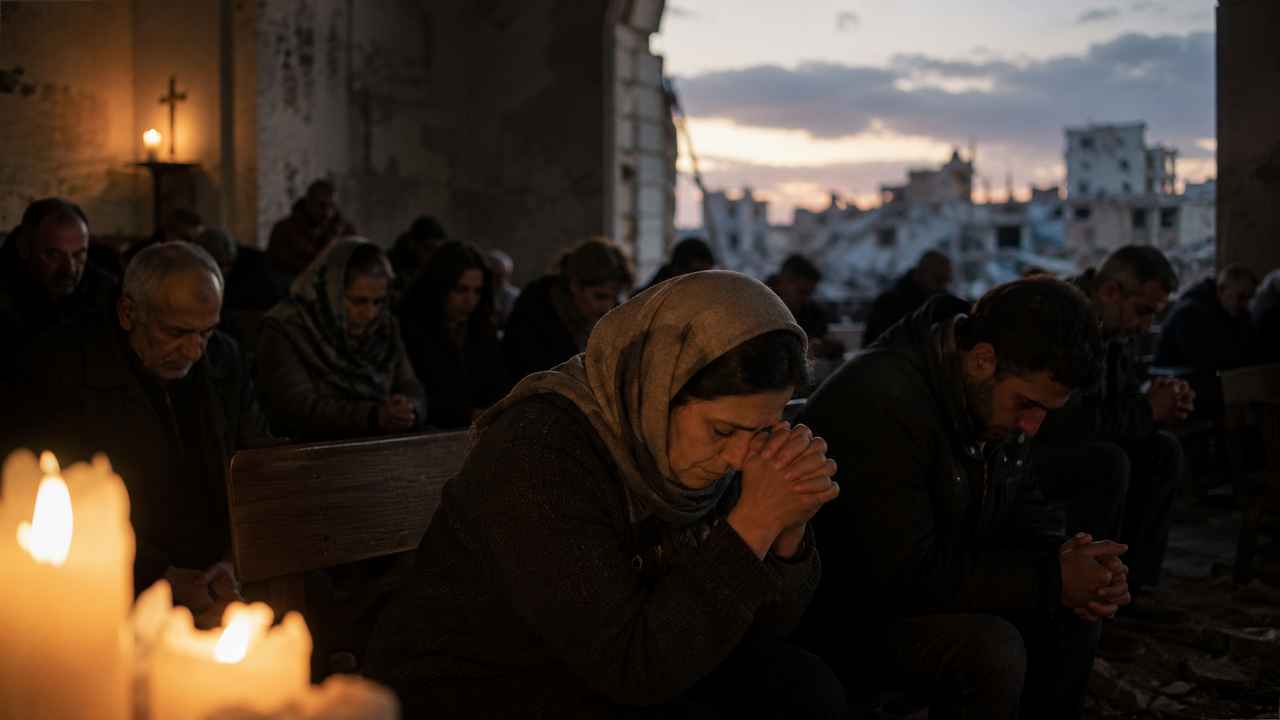
War and major armed conflict do not wound nations in only one way. They tear through homes and hospitals, drive families from familiar places, weaken public trust, strain churches, and leave ordinary life marked by fear, hunger, grief, and uncertainty. Christians who want to pray with understanding need more than a general awareness that war exists. We need to know where violence is deeply disrupting national life, harming civilians, displacing families, and placing churches and communities under urgent pressure.
This ranking is meant to serve that kind of informed prayer. It is not a casual list of countries in the news, and it should not be read as a competition in suffering. It identifies ten countries where active war or major armed conflict is now weighing heavily on ordinary people, so that readers can pray with clearer knowledge, compassion, and seriousness.
List Burden at a Glance
The shared prayer burden behind this war and armed-conflict ranking.
This list gathers countries where war, occupation-related violence, civil war, insurgency, regional spillover, or conflict-scale organized armed violence is deeply disrupting ordinary life. The burden includes more than battlefield activity. It includes displaced families, hunger, fear, damaged hospitals and schools, blocked aid, weakened public life, and churches seeking to remain faithful amid danger and grief.
Last Reviewed / Ranking Date
The date attached to this present conflict-burden ranking.
Ranking assessed: June 4, 2026
How to Read This Ranking
This list is a present prayer-burden ranking, not a ranking of human worth or divine concern.
This is a present conflict-burden ranking, not a ranking of national worth, human dignity, divine concern, or permanent importance. Countries outside the Top Ten may still carry grave suffering and urgent prayer needs. This list simply identifies the countries where active war or major armed conflict appears to be most deeply shaping national life right now.
What Changed Since the Previous Ranking
The May 2026 ranking was used only for movement comparison, not as the controlling current order.
There are no entries, exits, rises, or falls in this June ranking compared with the May 2026 ranking. That should not be read as improvement or stabilization. It means the current evidence does not justify changing the comparative order.
No ranking movement in this update should be treated as a reason for relief by itself. Where evidence shows mercy, restraint, aid access, or de-escalation, that should be noted carefully; but this June comparison did not find enough sustained relief to change the order.
The unchanged order itself is significant. Sudan, the State of Palestine, Ukraine, and DRC remain in the top tier because their combined conflict intensity, civilian harm, displacement, infrastructure damage, and national disruption still outweigh other candidates. Iran and Lebanon remain extremely close because both are tied to the wider regional war, but Iran stays ahead because the conflict is centered on direct Iran-Israel-US hostilities, while Lebanon remains a severe spillover and direct-conflict case. Haiti, Mali, Nigeria, Somalia, and Syria remain serious watchlist countries but do not displace Yemen or Burkina Faso in this conflict-specific ranking.
Previous ranking reviewed: MAY 2026.
Conflict Ranking Method Note
This ranking is based on a broad review of current conflict burdens, recent humanitarian and conflict sources, and a comparison of how deeply armed conflict is disrupting national life.
Date of assessment: June 4, 2026
Scope: Global
Purpose: To identify the ten countries most affected by active war or major armed conflict right now, for review-ready use in the TeachTheTreasures.com Country Prayer Posts workflow.
Countries considered in this review included: Sudan, State of Palestine, Ukraine, Democratic Republic of the Congo, Myanmar, Iran, Lebanon, South Sudan, Burkina Faso, Yemen, Syria, Haiti, Nigeria, Somalia, Mali, Afghanistan, Ethiopia, Central African Republic, Mozambique, Cameroon, Iraq, Libya, Chad, and Colombia were considered.
Sources prioritized: Recent ACAPS country analyses and updates; UN OCHA / humanitarian-response materials; AP and other current major reporting where it clarified active conflict conditions; UNHCR / IOM displacement materials where useful; and human-rights or conflict-monitoring sources where they materially strengthened the comparison.
Previous ranking use: The May 2026 ranking was used only for movement comparison, not as the controlling current order. That preserves the movement-transparency standard and prevents last month’s article from controlling this month’s ranking.
Main uncertainty: The top four remain comparatively strong. Ranks 5–10 are more compressed. Lebanon is especially close to Iran because the latest Israel-Hezbollah fighting has continued despite ceasefire efforts, while Haiti and Mali are close near-misses because both show sharp current armed-violence escalation.
Working Definition
The ranking focuses on active war and major armed conflict as present national burdens.
What qualifies as war or major armed conflict?
For this ranking, a country qualifies if it is currently experiencing one or more of the following at meaningful scale: interstate war, civil war, multi-front armed conflict, large-scale insurgency or counterinsurgency, occupation-related warfare, or widespread organized armed violence that materially disrupts national life and causes major civilian harm.
A country does not qualify merely because it has political unrest, isolated terrorist incidents, ordinary criminal violence, or long-term hardship without a present armed-conflict burden. “Most affected” means the ranking is based on a combined judgment of conflict intensity, humanitarian severity, national disruption, current escalation, and prayer relevance, not on one factor alone.
Ranking Criteria
The full criteria-and-weighting list appears here once so the basis for comparison remains visible.
-
Conflict Intensity 25% How active, widespread, and militarily serious is the armed conflict right now?
-
Humanitarian Severity 25% How severe are displacement, civilian casualties, hunger, infrastructure collapse, medical disruption, and related humanitarian consequences?
-
National-Societal Disruption 20% How deeply is the conflict disrupting public order, daily life, governance, essential services, and the wider stability of the country?
-
Current Urgency / Escalation 20% Has the conflict sharply worsened recently, or is it presently acute enough that focused attention is especially warranted now?
-
Prayer-and-Ministry Relevance 10% Where appropriate, how directly is the conflict shaping church life, Christian witness, public fear, ordinary family life, and the prayer burden faced by believers and ministries in the country?
Top Ten Countries
The final ranking identifies the ten countries most affected by active war or major armed conflict in this June 2026 review.
Sudan
The clearest global conflict case because war has combined mass displacement, hunger, civilian harm, and national breakdown on an unmatched scale.
Sudan is in a large-scale civil war between the Sudanese Armed Forces and the Rapid Support Forces, with severe fighting, attacks on civilians, mass displacement, famine risk, aid obstruction, and shattered public services.
Sudan remains number one because the scale and spread of its conflict-driven suffering are still unmatched. OCHA reports that 33.7 million people require humanitarian assistance in 2026, the highest number globally, while Sudan continues to face massive protection risks, repeated displacement, and severe food insecurity. ACAPS also warns of deteriorating risks between June and December 2026, including displacement, access constraints, and service disruptions.
Sudan remains unchanged at #1. This is not because conditions have stabilized; Sudan remains first because the scale of war-driven national collapse still exceeds every other current case. The May ranking also identified Sudan as the clearest number one.
Recent AP reporting describes continuing civilian attacks, sexual violence, displacement, and war crimes, while Sudanese medical sources have accused the RSF of killing civilians in North Kordofan.
The war has damaged health care, food access, schooling, public trust, family safety, and the basic ability of communities to survive.
Pray for God to restrain the violence between armed forces, protect civilians from attacks and abuse, provide food and shelter for displaced families, sustain churches serving amid scarcity, and bring justice and peace to a country being torn apart by war.
Key current sources used: OCHA Sudan Humanitarian Needs and Response Plan 2026; ACAPS Sudan Risk Analysis 2026; AP reporting from late May / early June 2026 on civilian killings in North Kordofan and sexual violence in Sudan’s war.
State of Palestine
The most concentrated case of civilian devastation, especially in Gaza.
The State of Palestine, especially Gaza, remains under catastrophic conflict conditions involving occupation-related warfare, repeated hostilities, mass displacement, blockade, aid constraints, and severe civilian deprivation.
It ranks second because the density of suffering in Gaza remains extraordinary. ACAPS reports that the entire Gaza Strip population, estimated by ACAPS at about 2.3 million people, needs humanitarian assistance. Almost the entire population has been displaced, and people continue to face severe problems accessing shelter, water, food, health services, and education. ACAPS also reports that the entire population faces Crisis-level food insecurity or worse, including a significant share in Catastrophe-level conditions.
The State of Palestine remains unchanged at #2. The burden remains among the world’s gravest, but Sudan’s broader national-scale displacement, famine risk, and state collapse still keep Sudan above it. The May ranking also placed the State of Palestine second.
Recent OCHA and ACAPS reporting continues to show Gaza’s humanitarian access as severely constrained, with food, health care, shelter, water, and protection needs remaining acute across the population.
Shelter, food access, health care, family safety, education, and ordinary life remain profoundly disrupted.
Pray for mercy for civilians in Gaza and the wider Palestinian territories, for food and medical access to reach those in need, for comfort for grieving families, for protection of the vulnerable, for faithful Christian witness, and for a just peace.
Key current sources used: ACAPS Palestine country analysis; OCHA Gaza Humanitarian Situation Report, 15 May 2026.
Ukraine
A major interstate war still reshaping national life through attacks, displacement, infrastructure damage, and front-line pressure.
Ukraine remains in a full-scale interstate war with Russia, involving front-line fighting, missile and drone attacks, displacement, civilian casualties, infrastructure damage, and broad national strain.
Ukraine remains third because the war is still militarily serious, nationally disruptive, and far-reaching. ACAPS describes the Russia-Ukraine conflict as a full-scale invasion that triggered mass displacement inside Ukraine and abroad, with millions internally displaced and millions more living as refugees.
Ukraine remains unchanged at #3. This does not mean the war has eased; ongoing attacks, displacement, infrastructure strain, and front-line pressure still make Ukraine one of the world’s clearest major war burdens. The current evidence still places Ukraine below Sudan and Gaza, but above the more regionally concentrated conflicts below it. The May ranking also placed Ukraine third.
The war continues to affect energy, housing, health care, front-line communities, families separated by displacement, and civilians under long-term stress.
Ukraine’s state remains more functional than the countries ranked above it, but the war still affects large parts of national life and civilian endurance.
Pray for protection from missile, drone, and front-line attacks; for displaced families and separated households; for churches serving the wounded and bereaved; and for peace with justice after years of war.
Key current sources used: ACAPS Ukraine country analysis; IOM Ukraine Crisis Response Plan 2026.
Democratic Republic of the Congo
Eastern Congo remains one of the world’s gravest conflict-displacement and civilian-protection crises.
DRC qualifies because the east remains affected by M23, ADF, and other armed groups, displacement, civilian attacks, regional instability, and insecurity severe enough to obstruct health and humanitarian response.
DRC remains fourth because eastern Congo combines long-running armed conflict with massive displacement and new risks from conflict-complicated disease response. ACAPS describes DRC as one of the world’s longest-standing humanitarian crises, with insecurity, displacement, food insecurity, disease outbreaks, and climate shocks deepening the crisis.
DRC remains unchanged at #4. It remains below Ukraine because its conflict is more regionally concentrated, but it remains above Myanmar because eastern DRC’s conflict-displacement burden and current health-risk overlay are especially acute. The May ranking also placed DRC fourth.
Recent reporting on eastern DRC describes ADF attacks killing civilians and hindering the Ebola response, while the outbreak is unfolding in areas already strained by displacement, insecurity, weak health services, and cross-border movement.
Communities face repeated displacement, insecurity, sexual violence risks, disrupted livelihoods, blocked aid, and fear of both armed groups and disease.
Pray for protection from armed groups in eastern DRC, justice for victims of abuse, mercy for displaced families, wisdom for health workers responding amid insecurity, and courage for churches serving communities marked by fear and repeated violence.
Key current sources used: ACAPS DRC country analysis; WHO Ebola outbreak — DRC 2026; Guardian reporting from June 2026 on ADF attacks and the Ebola response.
Myanmar
A broad national civil war with severe displacement, political breakdown, and restricted humanitarian access.
Myanmar remains in nationwide conflict following the 2021 military coup, with fighting across multiple regions, mass displacement, political breakdown, economic strain, and serious aid-access constraints.
Myanmar remains fifth because its conflict is national, entrenched, and deeply disruptive, even though the sharpest current escalation signals in June are stronger in DRC, Iran, and Lebanon. The UN’s Myanmar Humanitarian Needs and Response Plan says armed conflict, recurrent disasters, and economic collapse have left 16.2 million people in need and more than 4 million displaced.
Myanmar remains unchanged at #5. This is not a sign of improvement; it reflects the continuing nationwide civil-war burden. It remains below DRC because DRC’s eastern conflict-displacement burden and health-risk overlay are sharper this month, while Myanmar’s national civil-war burden remains severe but not newly reordered. The May ranking also placed Myanmar fifth.
Civilians continue to face insecurity, repeated displacement, damaged livelihoods, restricted movement, and a difficult aid environment.
Churches and Christian communities in several areas face instability, displacement, and uncertainty about safety, worship, and witness.
Pray for civilians displaced by the civil war, for churches and Christian communities under pressure, for believers to endure with courage, for mercy where aid access is blocked, and for an end to violence and military oppression.
Key current sources used: UN Myanmar Humanitarian Needs and Response Plan 2026; ACAPS Myanmar country analysis.
Iran
A sharp direct-conflict case tied to wider Iran-Israel-US hostilities and regional spillover.
Iran qualifies because escalating hostilities involving Iran, Israel, and the United States have caused civilian harm, infrastructure damage, service disruption, and large-scale humanitarian pressure.
Iran remains sixth because the current urgency and regional escalation risk are very high. ACAPS reports that hostilities since late February 2026 have damaged hospitals, schools, water infrastructure, industrial and oil facilities, and essential services.
Iran remains unchanged at #6. It stays above Lebanon because the wider conflict is centered on Iran-Israel-US hostilities, even though Lebanon’s direct suffering is now extremely severe and close behind. The May ranking also placed Iran sixth.
The conflict affects civilian services, health care, movement, public fear, food access, and regional stability.
The conflict adds danger for ordinary Iranians, increases pressure on vulnerable communities, and sharpens the burden for believers seeking quiet faithfulness in a volatile setting.
Pray for restraint in the wider regional conflict, protection for civilians affected by strikes and service disruption, wisdom for rulers, mercy for believers living under pressure, and gospel witness amid fear and uncertainty.
Key current sources used: ACAPS Iran country analysis and 2026 crisis updates.
Lebanon
A severe direct-conflict and spillover case with mass displacement, ceasefire failure, and deep national fragility.
Lebanon qualifies because renewed Israel-Hezbollah fighting and Israeli operations have caused civilian deaths, displacement, infrastructure damage, and severe pressure on a country already strained by economic and political fragility.
Lebanon remains seventh, very close to Iran, because the current conflict burden has intensified sharply. AP reported on June 4 that Hezbollah rejected the latest ceasefire agreement, Israeli strikes killed people in Lebanon, a UN peacekeeper was killed, Israeli forces had made their deepest incursion into Lebanon in more than a quarter century, and more than 1.2 million people had been displaced.
Lebanon remains unchanged at #7, but this is one of the closest calls in the list. Lebanon did not rise above Iran because Iran remains the wider regional-war center, but Lebanon’s ongoing fighting, displacement, and ceasefire fragility make it a high-severity unchanged case. The May ranking also placed Lebanon seventh.
Fighting has continued despite declared ceasefires, with repeated displacement, casualties, damaged towns, and uncertainty about whether the Lebanese state can implement any lasting security arrangement.
Lebanon’s churches and communities face the added burden of war layered on economic collapse, refugee pressure, and deep public uncertainty.
Pray for protection of civilians caught between renewed fighting and displacement, mercy for families who have lost homes or security, wisdom for churches serving amid economic strain and regional tension, and restraint from wider escalation.
Key current sources used: AP June 4, 2026 reporting on Lebanon ceasefire rejection and fighting; ACAPS Lebanon country analysis.
South Sudan
A country where renewed fighting, hunger, displacement, and political fragility are again threatening civilian life.
South Sudan remains affected by armed conflict, political fragility, intercommunal violence, displacement, disease outbreaks, food insecurity, and access constraints.
South Sudan remains eighth because the humanitarian severity is extreme and renewed conflict risk is serious, but the present conflict is less clearly a single nationwide warfront than the countries ranked above it. ACAPS reports that 10 million people are projected to need assistance in 2026, renewed hostilities in Jonglei have displaced more than 280,000 people, and Emergency-level food insecurity is expanding amid fighting and constrained access.
South Sudan remains unchanged at #8. This does not signal relief; South Sudan remains a grave high-severity case, but Lebanon’s direct conflict and Iran’s regional escalation keep them above it. The May ranking also placed South Sudan eighth.
Conflict, hunger, disease outbreaks, displacement, flooding, and Sudan spillover are interacting in ways that keep the country highly fragile.
Communities face repeated displacement, food insecurity, weakened services, cholera risk, and the strain of long-term instability.
Pray for peace where renewed hostilities and intercommunal violence threaten communities, for food and medicine to reach displaced families, for churches to serve as agents of reconciliation, and for mercy amid hunger, disease, and fragile public life.
Key current sources used: ACAPS South Sudan country analysis; OCHA South Sudan Humanitarian Snapshot, January 2026.
Burkina Faso
A severe insurgency and siege crisis with widespread displacement and large areas under armed-group pressure.
Burkina Faso remains in a major insurgency and counterinsurgency environment, with non-state armed groups and military operations driving displacement, civilian harm, siege conditions, and insecurity across large parts of the country.
Burkina Faso ranks ninth because the conflict is central to the country’s crisis. ACAPS reports high levels of violence since 2015 and over two million people internally displaced by 2025, while EU humanitarian reporting describes a security crisis affecting essential services and vulnerable communities.
Burkina Faso remains unchanged at #9. It stays above Yemen on current conflict intensity and armed-group territorial pressure, but below South Sudan because South Sudan’s combined humanitarian severity and renewed displacement are heavier. Its unchanged place reflects severe insurgency and armed-group pressure, but not enough additional escalation to overtake South Sudan’s combined displacement, hunger, and renewed-hostilities burden. The May ranking also placed Burkina Faso ninth.
Violence, displacement, food insecurity, access constraints, and fear continue to shape ordinary life across much of the country.
Churches and communities face insecurity, movement restrictions, loss of livelihoods, and the ongoing strain of living under armed-group pressure.
Pray for protection from armed groups, provision for displaced and besieged communities, courage for believers and churches in insecure regions, restraint of violence, and peace in areas where movement, worship, and daily life are under pressure.
Key current sources used: ACAPS Burkina Faso country analysis; European Civil Protection and Humanitarian Aid Operations reporting on Burkina Faso.
Yemen
A long-running war-driven collapse with unresolved fragmentation, massive humanitarian need, and fragile public life.
Yemen remains a major protracted armed-conflict country, divided among rival authorities and shaped by years of conflict, displacement, food insecurity, damaged services, and fragile political-military conditions.
Yemen keeps the final slot because its humanitarian and national disruption remain deeply conflict-shaped, even though current battlefield intensity is lower than during the war’s peak years. ACAPS reports that the conflict has left 18.6 million of Yemen’s 32 million people needing humanitarian assistance and 4.5 million internally displaced.
Yemen remains unchanged at #10. It narrowly stays ahead of Haiti, Syria, Nigeria, Somalia, and Mali because its present suffering remains deeply tied to unresolved armed conflict, rival authorities, displacement, damaged services, and political-military fragmentation, while the strongest near-miss cases are either more regionally uneven, more mixed with non-conflict drivers, or less conventionally warlike in structure. The May ranking also placed Yemen tenth and described it as a narrow final-slot decision.
Yemen remains marked by food insecurity, displacement, economic fragility, weakened health care, fragmented authority, and severe humanitarian access concerns.
Civilians continue to carry the long burden of war: hunger, illness, displacement, loss of livelihoods, and insecurity.
Pray for mercy after years of war, food and medical access for vulnerable families, protection of civilians under divided authorities, endurance for believers, and a peace that addresses Yemen’s long fragmentation and suffering.
Key current sources used: ACAPS Yemen country analysis; OCHA Yemen Humanitarian Needs and Response Plan 2026.
Near-Miss / Watchlist Countries
Countries that remained serious enough to watch, but fell just outside the final ten after comparison.
Syria — Syria remains one of the world’s largest conflict-shaped humanitarian crises. Recent planning sources continue to describe vast needs, with 2025 humanitarian planning estimating 16.5 million people in need.
Haiti — Haiti is very close to the Top Ten. Gang violence has reached conflict-scale national disruption, and a May 2026 UNFPA flash update reported a new wave of displacement in Cité Soleil. Haiti remains just outside because its armed-violence structure is less conventionally warlike than Yemen, Burkina Faso, Lebanon, or Iran, though it should remain a high-priority watch case.
Nigeria — Nigeria faces severe conflict, banditry, displacement, and enormous food insecurity, including projected Crisis-level food insecurity for tens of millions during the June–August lean season, but the conflict burden remains more regionally uneven than the final Top Ten.
Somalia — Somalia’s crisis remains grave, with conflict, insecurity, drought, evictions, and flooding displacing millions, but the current burden is more mixed between conflict and climate shock than the conflict-central cases above it.
Mali — Mali is a rising watch case after major coordinated attacks in April 2026, but it remains just below Burkina Faso and Yemen in combined humanitarian scale, national disruption, and current conflict burden.
Final Summary Judgment
What most distinguishes this ranking from a general list of troubled countries.
How to Pray Through This List
This ranking is meant to lead readers into sober, informed prayer rather than anxious observation.
-
Pray first for the Lord to restrain evil: for violence to be limited, civilians protected, combatants restrained, and wickedness exposed.
-
Pray for displaced families, hungry communities, wounded bodies, traumatized children, grieving parents, and exhausted churches. Pray that believers in these countries would not lose heart, and that pastors and church leaders would serve with courage, wisdom, and tenderness.
-
Pray also for truth in reporting, justice for victims, wise diplomacy, and peace that is more than a pause in fighting. Ask the Lord to open doors for mercy ministries to reach people who are cut off from help, and to sustain His people in places where war has made ordinary faithfulness costly.
-
To keep praying beyond this list, use the linked country prayer guides above and the Continue Praying pathway below the article to move into the wider prayer calendar and country prayer directory.
Key Sources Consulted
Source groups and reporting streams that materially informed the ranking and prayer-focused comparison.
- ACAPS country analyses and June-accessed updates for Sudan, State of Palestine, Ukraine, Democratic Republic of the Congo, Iran, Lebanon, South Sudan, Burkina Faso, Yemen, Syria, Haiti, Nigeria, Somalia, and Mali.
- UN OCHA and Humanitarian Action materials, including Sudan Humanitarian Needs and Response Plan 2026, Yemen Humanitarian Needs and Response Plan 2026, South Sudan 2026 humanitarian reporting, Gaza / occupied Palestinian territory humanitarian situation reporting, and related humanitarian-response contexts.
- IOM and UN-linked displacement materials, including the IOM Ukraine Crisis Response Plan 2026 and displacement-related reporting where relevant to the ranking.
- WHO and related humanitarian reporting on the 2026 Ebola outbreak affecting conflict-affected areas of eastern Democratic Republic of the Congo.
- AP reporting from late May and early June 2026 on Sudan civilian killings, sexual violence in Sudan’s war, and Lebanon’s ceasefire breakdown and displacement burden.
- UNFPA Haiti Flash Update, 15–27 May 2026, on displacement and escalating gang violence.
- European Civil Protection and Humanitarian Aid Operations reporting on Burkina Faso’s 2026 humanitarian and security situation.
Source Context: This ranking relies on the most recent public humanitarian and conflict sources available at the time of review. Some figures reflect annual 2026 response plans, while fast-moving conflict details rely on late-May and early-June reporting. Older background figures are used only where they clarify the scale of a continuing conflict burden.
Continue praying
Continue praying for the nations
Use this list as one doorway into a wider rhythm of prayer for the nations.


