

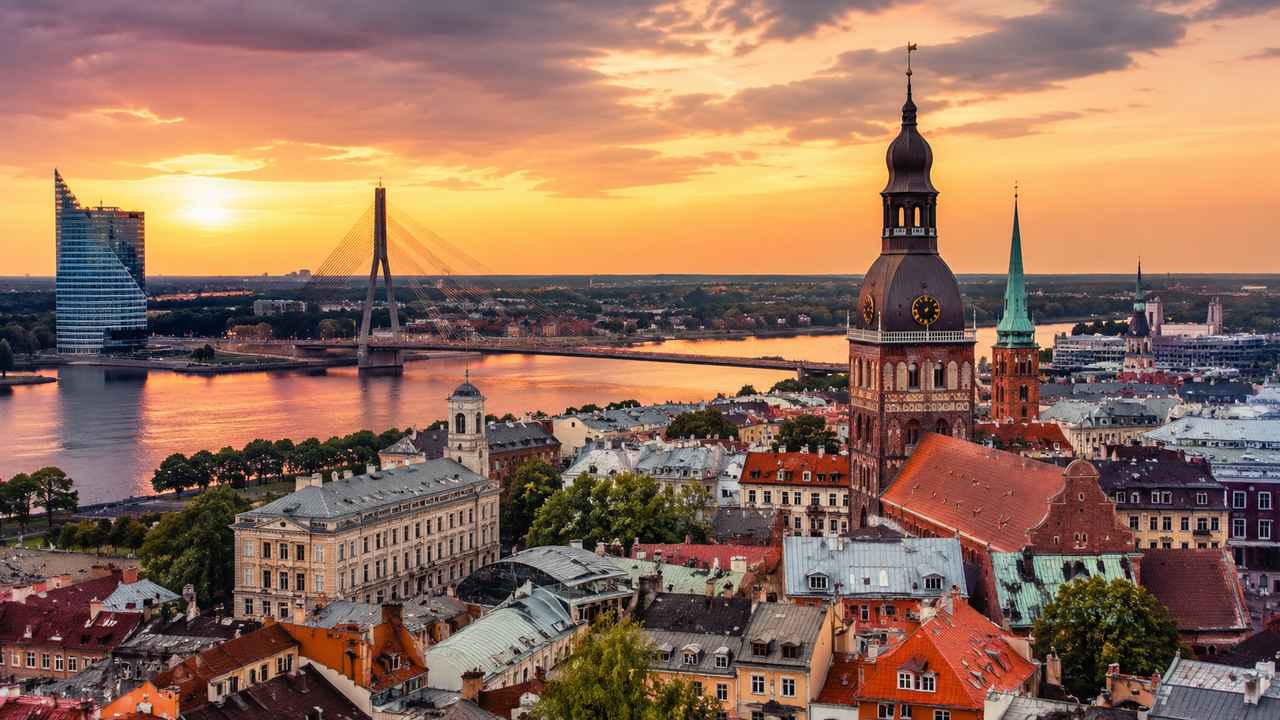
Latvia does not face severe nationwide persecution, but it still needs prayer for living faith, faithful churches, and wisdom amid regional insecurity. Longstanding Christian heritage still marks Latvia’s towns, holidays, family traditions, and public life, yet many people live far from active faith in Christ. At the same time, Russia’s war against Ukraine has brought defence, language, loyalty, border security, drone incidents, and national fear into public discussion and ordinary life. Latvia needs prayer not because it lacks public religious freedom, but because Christian heritage, secular drift, demographic decline, and wartime anxiety all shape the setting in which churches must witness.
Pray for Latvia to know living faith in Christ, not only inherited Christian memory. Pray for pastors and churches to preach the gospel clearly, for believers to resist fear and resentment, for wisdom during political and security strain, and for faithful Christian witness among Latvians, Russian speakers, Ukrainian refugees, the young, the elderly, and the spiritually indifferent.
Last verified: May 2026
Why Latvia Needs Prayer Now
Latvia’s deepest need is not more Christian memory, but living faith in Christ amid secular drift and wartime anxiety.
Latvia needs prayer because its deepest spiritual need cannot be measured only by church buildings, religious identity, or legal freedom. The country has real space for public worship and Christian ministry, and that is a mercy. Yet a nation can keep Christian memory while losing gospel conviction. Latvia’s churches must therefore labor for more than cultural religion. They must call people to repentance, faith, holiness, and hope in Christ.
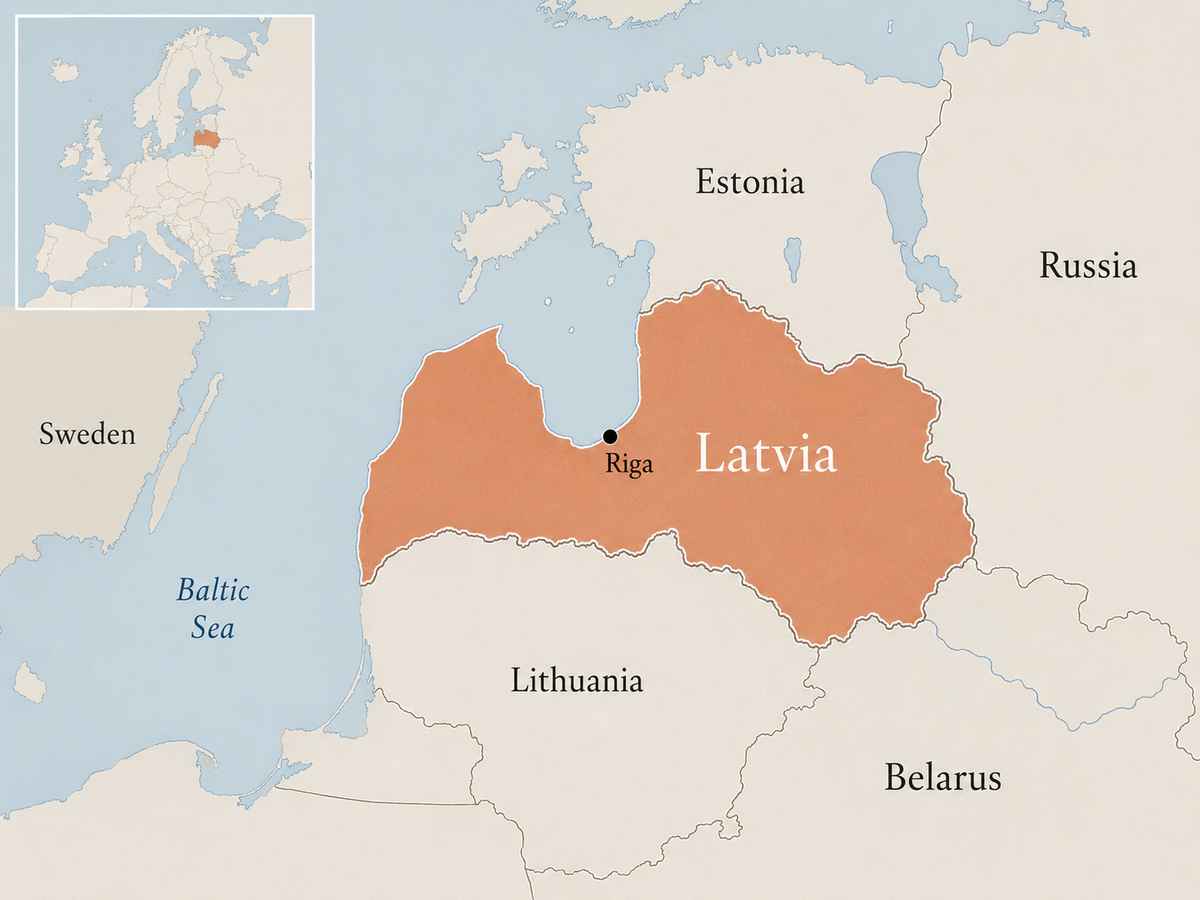
Latvia also lives in a tense neighborhood. It is a Baltic country on the eastern flank of the North Atlantic Treaty Organization (NATO), close to Russia and Belarus, and its leaders describe Russia’s war against Ukraine as a long-term security threat. Latvia is not being described by its government as under direct military attack, but the atmosphere of vigilance is real. Defence spending, allied military presence, drone incidents, and political strain all affect the public atmosphere in which churches worship and serve.
That makes Latvia’s present prayer burden both spiritual and public. Christians should pray for gospel renewal in the churches, for ordinary believers to resist fear, for wise leadership, for peace and justice in the region, and for the nation not to let security anxiety harden into suspicion, bitterness, or despair.
Country Snapshot
A brief orientation to Latvia’s location, people, government, and church context.
Restrictions, Opposition, and other Challenges Facing Christians and Churches
Christians in Latvia are not mainly facing open persecution. Their main challenges include secularization, identity tensions, and ministry in a society deeply alert to regional security concerns.
Secularization alongside Christian heritage
Latvia’s Christian heritage remains visible, but visible heritage is not the same as living discipleship. Churches minister in a society where many people may know Christian language, church holidays, or family traditions without Scripture, repentance, prayer, and gathered worship shaping daily life. The danger is not only hostility to Christianity, but indifference to Christ.
Fear and fatigue from regional insecurity
Latvia’s security environment affects ordinary life. As a NATO member, Latvia’s leaders have spoken openly about deterrence, allied military presence, and the long-term threat posed by Russia’s war against Ukraine. In such an atmosphere, believers need grace to pray soberly without becoming captive to fear.
Language, identity, and church-state tension
Latvia’s population includes Latvian speakers, Russian speakers, and communities shaped by Soviet history, independence, and the present war in Ukraine. Questions surrounding the Latvian Orthodox Church show how church governance can become entangled with national-security concerns. Latvia’s parliament, the Saeima, adopted a law in 2022 affirming the Latvian Orthodox Church’s independence from ecclesiastical authority outside Latvia, while saying the move served national-security interests. That context should be handled carefully: ordinary Orthodox believers should not be treated as political symbols, and prayer should ask God for truth, peace, and spiritual faithfulness.
Demographic decline and social strain
Latvia’s official statistics point to population decline, deaths exceeding births, and negative net migration. These realities affect churches in practical ways: fewer young families, aging congregations, loneliness among the elderly, emigration of gifted workers, and pressure on small communities. Faithfulness in Latvia may often look unspectacular: a pastor preaching to a small congregation, a grandmother praying for unbelieving grandchildren, a young Christian resisting quiet compromise, or a church welcoming refugees and neighbors with patient love.
Christian Life and Witness in Latvia
Christians in Latvia have meaningful public freedom, but they still need endurance, clarity, and love in a spiritually indifferent setting shaped by regional security concerns.
For many Christians in Latvia, daily faith is not lived under the dramatic pressure of underground worship or constant state persecution. Churches can meet publicly. Christian traditions remain part of national memory. Religious communities may organize, teach, worship, and serve.
Yet open doors can still lead into hard ministry. Christians may face the quieter challenge of being surrounded by people who feel that Christianity belongs to the past, to family ceremonies, or to ethnic identity rather than to personal repentance and living faith. The work of witness may require patient conversation more than public confrontation.
In a society strongly affected by regional security concerns, believers also need wisdom in how they speak about Russia, Ukraine, NATO, refugees, Russian speakers, and national loyalty. The church must not become careless with truth, tribal in spirit, or cold toward those who are afraid. Latvian Christians need the Spirit’s help to speak with courage, humility, and love.
Church life in Latvia therefore calls for steady prayer: for faithful preaching, serious discipleship, unity across language and ethnic lines where possible, mercy toward the vulnerable, and a renewed confidence that Christ is Lord over nations, borders, governments, and ordinary households.
Recent Developments
These developments help readers understand what to pray about now without turning the guide into a breaking-news digest.
-
January 2026
Latvia begins its first United Nations Security Council term
Latvia began its first-ever term on the United Nations Security Council on January 1, 2026, after being elected for the 2026–2027 period. The United Nations Security Council is the United Nations body with primary responsibility for international peace and security. Latvia’s stated priorities include defending the rules-based international order, supporting Ukraine, addressing hybrid threats such as cyberattacks and disinformation, and strengthening the role of women in peace and security.
Prayer significance: Pray that Latvia would use this international role with courage, truthfulness, restraint, and concern for the vulnerable.
-
2026
Defence policy remains central to Latvia’s public life
Latvia’s 2026 foreign-policy reporting describes Russia as a long-term threat and emphasizes strengthened security, NATO presence, deterrence, and support for Ukraine. The same reporting describes increased defence spending and allied military presence in Latvia.
Prayer significance: Pray that leaders would act wisely, that defence concerns would not crowd out justice, mercy, and truth, and that churches would hold out hope in Christ while speaking truthfully and serving faithfully in a dangerous region.
-
April 2025 onward
Latvia moves to withdraw from the Ottawa Convention
In April 2025, the Saeima adopted a law for Latvia to withdraw from the Ottawa Convention, the treaty banning anti-personnel mines. Latvian parliamentary reporting framed the decision as a response to the changed regional security environment after Russia’s full-scale invasion of Ukraine.
Prayer significance: Pray for wisdom, restraint, and moral seriousness in every defence decision, especially where security needs and humanitarian concerns meet.
-
May 2026
Drone-related political controversy and prime minister resignation reporting
Associated Press reporting in May 2026 said Prime Minister Evika Siliņa tendered her resignation after coalition strain connected to the government’s handling of drone incidents. The same reporting described Latvia’s president as responsible for consultations on forming a new government.
Prayer significance: Pray for stable and honest leadership, for calm public judgment, and for the churches to model patience and truthfulness during political uncertainty.
-
Ongoing background
Latvian Orthodox Church independence law remains sensitive
The Saeima’s 2022 law affirming the Latvian Orthodox Church’s independence from ecclesiastical authority outside Latvia remains an important background issue for understanding church-state and national-security tensions. The law was presented by Latvian parliamentary figures as protecting the church from outside influence and serving national security.
Prayer significance: Pray that Orthodox believers, other Christians, and state leaders would seek truth, peace, and faithfulness before God without suspicion, coercion, or confusion about church loyalty and national loyalty.
A Church Called to Faithfulness in a Security-Conscious Nation
Latvia’s Christian witness will be strengthened not by public heritage alone, but by ordinary faithfulness under Christ.
Latvia’s Christian future will not be preserved by public heritage alone. It will be served, under God, through ordinary faithfulness: pastors opening Scripture week after week, parents teaching children to pray, believers caring for elderly neighbors, churches welcoming displaced Ukrainians, and Christians refusing to let fear decide how they love.
A country can be alert without becoming hard. A church can care about national security without making national fear its master. Latvia’s believers need grace for that narrow path. They must love their country, pray for their leaders, speak truth about evil, and still remember that the church’s deepest message is not “be safe,” but “be reconciled to God through Jesus Christ.”
That is why Latvia needs Christian prayer now. Not because every concern is severe, but because spiritual drift, fear, and public strain still matter before God.
How to Pray
Pray for gospel renewal, faithful churches, wise leadership, and Christlike courage in a country shaped by secular drift and regional insecurity.
-
Pray for true gospel renewal beyond inherited Christian memory. Ask the Lord to bring many people in Latvia from cultural familiarity with Christianity into repentance, living faith in Christ, love for Scripture, and joyful obedience to God.
-
Pray for faithful churches and pastors. Pray that Lutheran, Catholic, Orthodox, Baptist, evangelical, and other Christian communities would be purified by God’s Word where needed, strengthened in sound doctrine, and marked by humility, holiness, prayer, and love for Christ.
-
Pray for patient discipleship in a changing and aging society. Ask God to sustain pastors, parents, grandparents, youth workers, and small congregations as they teach children, care for the elderly, encourage young adults, and bear witness amid demographic decline, emigration, and spiritual indifference.
-
Pray for believers to resist fear, bitterness, and ethnic suspicion. In a country shaped by Latvian, Russian-speaking, Ukrainian, and other communities, ask the Lord to make His people truthful without being harsh, discerning without becoming suspicious, and courageous without losing love.
-
Pray for wise public leadership during political and security strain. Ask God to give Latvia’s president, parliament, government officials, defence leaders, and local authorities justice, restraint, courage, and humility as they face regional insecurity, drone-related concern, defence-policy decisions, and public anxiety.
-
Pray for Christian mercy toward the displaced and vulnerable. Ask the Lord to strengthen churches as they serve Ukrainian refugees, elderly neighbors, lonely households, anxious families, and those quietly carrying grief from war, migration, or social strain.
-
Pray for Latvia to use its international responsibilities wisely. As Latvia serves on the United Nations Security Council, pray that its voice among the nations would be marked by truth, mercy, concern for the vulnerable, and a sober desire for peace and justice under God.
Give Thanks
Even amid spiritual and public strain, Latvia has real mercies for which Christians can thank God.
-
Give thanks for Latvia’s broad legal freedom for worship and Christian witness. Churches and religious communities are still able to gather, teach, serve, and speak publicly, which is a real mercy and a serious stewardship.
-
Give thanks for the enduring presence of Christian communities. Latvia’s Lutheran, Catholic, Orthodox, Baptist, evangelical, and other churches preserve an important witness in a society where many still carry Christian memory, even when living faith needs renewal.
-
Give thanks for ordinary faithfulness that does not make headlines. Praise God for pastors who keep preaching, believers who keep praying, families who keep teaching children, and congregations that continue serving neighbors in quiet but meaningful ways.
-
Give thanks for compassion shown to people affected by war and displacement. Latvia’s setting has opened doors for practical mercy toward Ukrainians and others affected by regional conflict.
-
Give thanks that regional insecurity is being taken seriously. Latvia’s leaders and citizens are not treating danger lightly. Ask God to join that seriousness with wisdom, moral restraint, humility before Him, and care for human life.
Last Verified / Update Note
This note helps readers understand when the guide was reviewed and which developments may affect future prayer use.
Review Status
Reviewed for current prayer use
This guide reflects a May 2026 review of Latvia’s leadership situation, population data, religious-freedom context, church-state sensitivities, defence policy, United Nations Security Council role, Ottawa Convention withdrawal, and recent drone-related political controversy and resignation reporting.
Developments that may affect future prayer use include Latvia’s government-formation process after May 2026 reports that Prime Minister Evika Siliņa had tendered her resignation, further drone or airspace incidents, shifts in regional security connected to Russia’s war against Ukraine, Latvia’s November 2026 United Nations Security Council presidency, changes affecting the Latvian Orthodox Church or minority religious communities, and newer official population or refugee figures.
Key Sources Consulted
These sources materially informed the article’s leadership, population, religious-freedom, security, church-context, and recent-developments claims.
- President of Latvia — “President of Latvia Edgars Rinkēvičs”. Used for head-of-state verification and presidential timeline.
- Cabinet of Ministers of Latvia — “Evika Siliņa”. Used for official prime minister profile and leadership-status comparison.
- Central Statistical Bureau of Latvia — “Number of Population in Latvia in 2024”. Used for population, demographic decline, births, deaths, net migration, and Ukrainian refugee context.
- Ministry of Foreign Affairs of Latvia — “Latvia at the United Nations Security Council 2026–2027”. Used for Latvia’s Security Council term, priorities, and presidency timing.
- Ministry of Foreign Affairs of Latvia — “Minister of Foreign Affairs: Latvia’s security rests on national investment in defence, close cooperation with NATO allies, EU Member States, and partners worldwide”. Used for 2026 foreign-policy, defence-spending, NATO, allied-presence, Ukraine-support, and security-context claims.
- U.S. Department of State, via ecoi.net — “2022 Report on International Religious Freedom: Latvia”. Used for religious-freedom law, religious composition, traditional religious communities, Latvian Orthodox Church context, and minority-faith background.
- Saeima, Parliament of Latvia — “Saeima affirms independence of Latvian Orthodox Church from any ecclesiastical authority outside Latvia”. Used for the 2022 Latvian Orthodox Church law and official national-security framing.
- Saeima, Parliament of Latvia — “Saeima: Latvia to withdraw from Ottawa Convention”. Used for Latvia’s withdrawal from the anti-personnel mine ban treaty and official parliamentary rationale.
- Associated Press — “Latvian prime minister resigns after controversy over stray Ukrainian drones”. Used for May 2026 reporting on Prime Minister Evika Siliņa’s resignation and the government-transition context.
Source Context
Religious-composition figures: The religious-composition percentages come from Ministry of Justice data cited in the U.S. religious-freedom report and should be read as broad background rather than as current church-attendance data.
Leadership status: Latvia’s leadership situation was time-sensitive during this review. Official Cabinet information identified Evika Siliņa as prime minister, while public reporting in May 2026 described her resignation and a government-formation process.
Security reporting: Defence, NATO, drone, and treaty issues help explain the prayer concerns in this guide; they are not a call to treat every security decision as spiritually simple. The article therefore uses cautious, dated, attributed wording.
A Closing Prayer for Latvia
A concise prayer gathering Latvia’s present burden before the Lord.


