


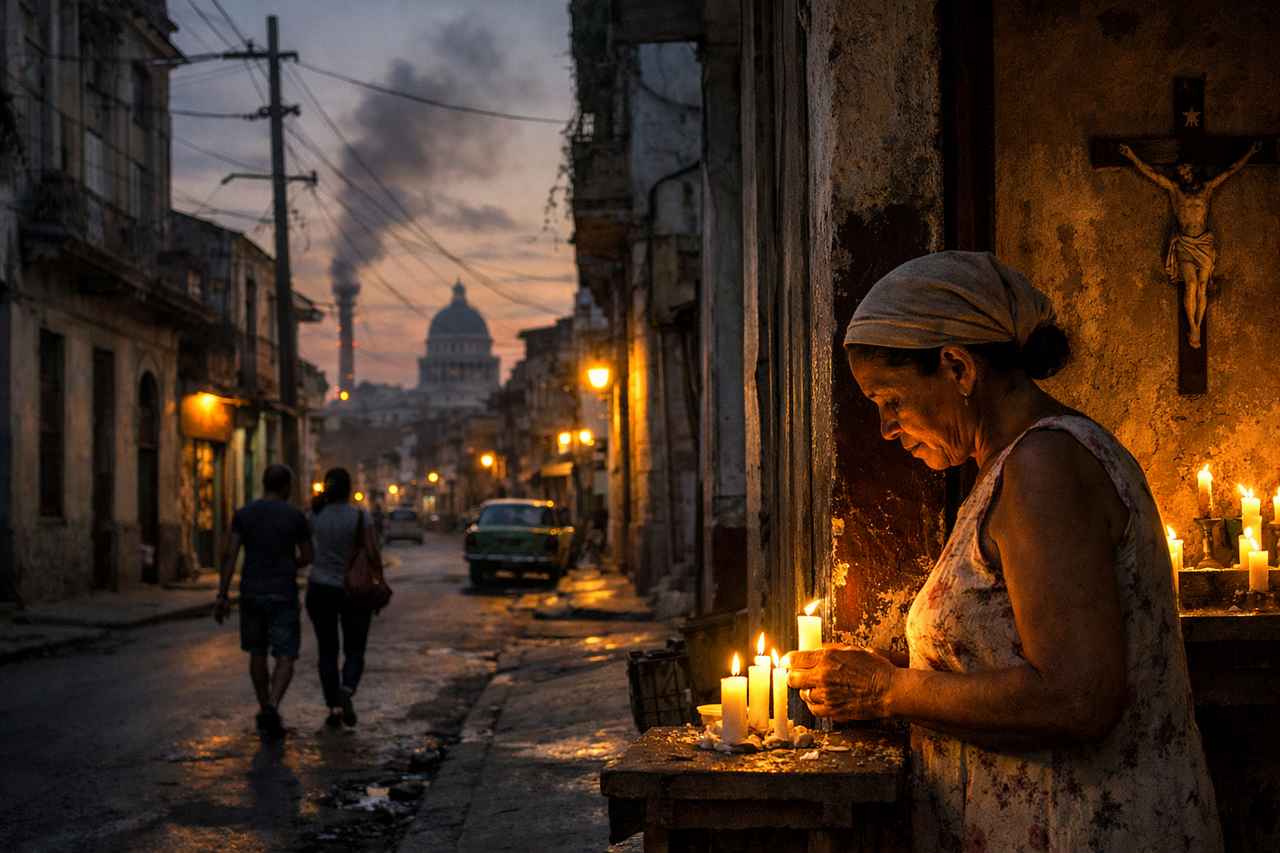
In Cuba, many churches carry the same shortages, blackouts, and daily strain that burden the wider nation, while some believers also live under close official pressure when they speak or serve too openly. That double weight gives this prayer guide its burden. Cuba needs prayer not only because religious freedom remains restricted, but because ordinary Christian faithfulness must now be lived out in a weary and tightly controlled setting.
Why Cuba Needs Prayer Now
Long-standing state pressure now meets deeper national hardship, and both shape how Christians live, worship, and witness.
Cuba needs prayer now because two burdens are pressing at the same time.
One is long-standing. The state continues to regulate religious life closely, pressure leaders who speak critically of the regime, and make life harder for unregistered churches and outspoken believers.
The other burden is painfully current. Cuba’s energy and economic crisis has brought repeated blackouts, shortages of food and medicine, and renewed public tension in 2026.
This matters because the strain is not only political. It is deeply personal. Pastors, parents, elderly believers, prisoners’ families, and ordinary congregations are carrying the weight of the same shortages as everyone else. At the same time, some also live under surveillance, harassment, or punishment when they act or speak with Christian conviction.
All of this should move Christians to pray—not only for relief, but for faithfulness.
Country Snapshot
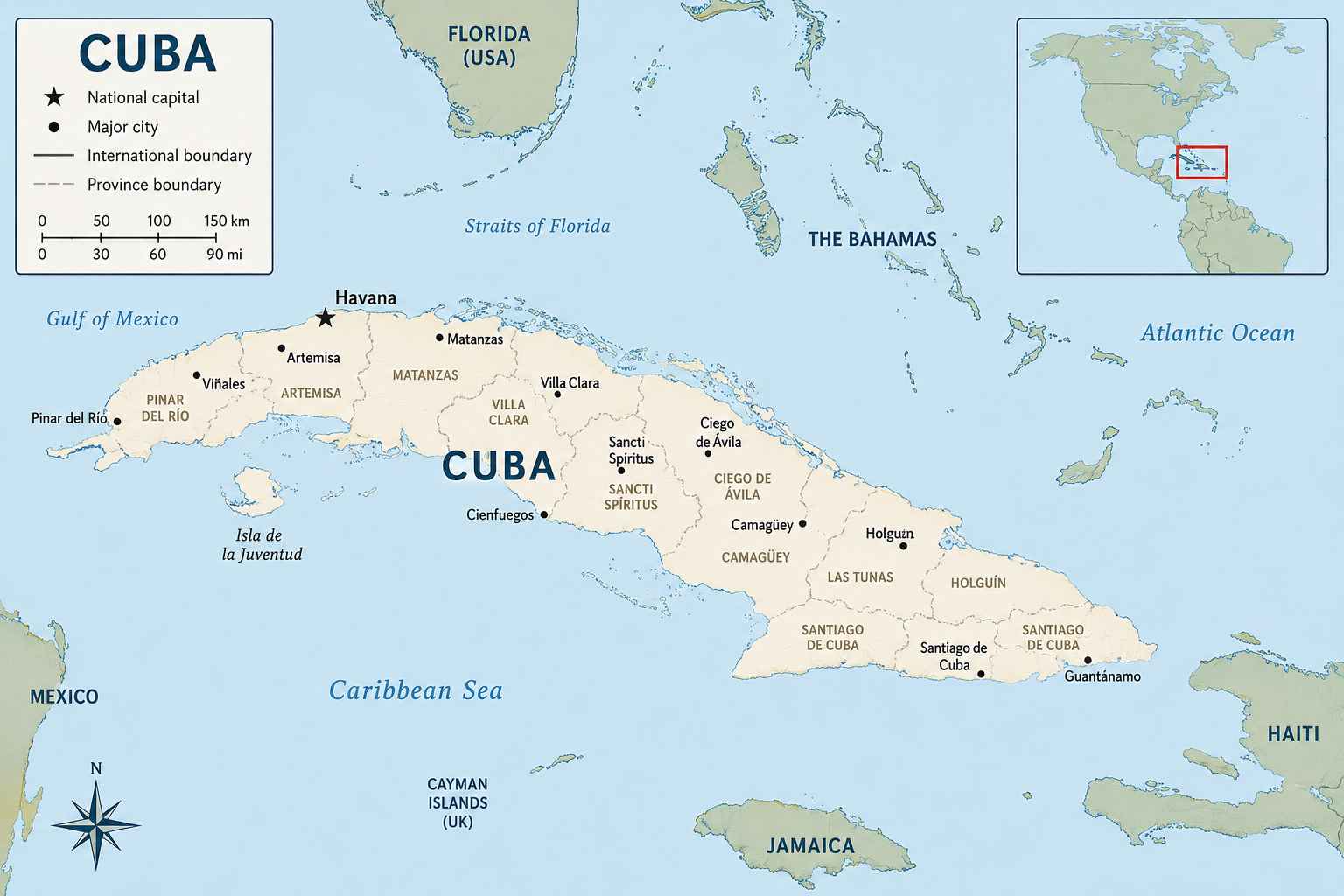
Compact background to help readers place Cuba’s church and national burdens in clearer context.
Cuba’s island setting places it in the heart of the Caribbean, close to Florida, the Bahamas, Mexico’s Yucatán Peninsula, Jamaica, Haiti, and the wider Caribbean region. That geography helps readers understand both Cuba’s regional setting and the national context in which churches worship, serve, and endure.
Main Pressures Facing Christians
The pressure is not always dramatic, but it is concrete and reaches into many parts of church life.
State control through registration and permission systems
One major pressure is the state’s control over religious registration and permission systems. USCIRF says religious organizations must apply through the Ministry of Justice and the Office of Religious Affairs, which can deny or delay registration in arbitrary ways. CSW likewise says all religious groups must be registered to operate legally, while approvals are often handled selectively and politically.
Surveillance and punishment for dissent
Another pressure is surveillance and punishment for dissent. USCIRF says authorities use security bodies and neighborhood structures to persecute religious leaders and worshipers. Open Doors adds that Christians who openly challenge the regime may face arrest, smear campaigns, movement restrictions, violence, or imprisonment.
Pressure to conform ideologically
There is also pressure to conform ideologically. Open Doors says Christians are expected to align with the Communist agenda. CSW says the 2022 criminal code punishes religiously motivated opposition to state-defined civic duties and expands penalties for unauthorized associations and meetings.
The pressure is not always dramatic, but it is real. It touches church gatherings, leadership decisions, public witness, and the ordinary freedom to live openly as a Christian.
What Life Is Like for Christians in Cuba
A pastoral picture of ordinary Christian life under hardship, close oversight, and daily uncertainty.
For many Cuban Christians, faithfulness is lived out in a setting where everyday life is already fragile. Blackouts interrupt routine. Shortages make food and medicine harder to find. Many families live close to the edge.
In that kind of environment, churches do not minister from a place of ease. They minister from within the same burdens their neighbors carry.
Yet the challenge is not only economic. Christian life in Cuba is not simply a matter of private devotion. Open Doors says church activities that benefit local communities are often treated with suspicion, sermons may be monitored, and new churches are routinely denied registration. USCIRF and CSW describe interrogation, arbitrary detention, permit denials, fines, travel restrictions, and pressure on leaders viewed as insufficiently supportive of the government.
For ordinary believers, that can mean careful speech, delayed building repairs, restrictions on gatherings, fear of drawing official attention, and the constant question of how openly to speak about justice, suffering, or political prisoners.
In practice, courage may look quiet. It may look like continuing to worship, discipling younger believers, serving neighbors, and refusing despair in a climate that rewards silence and compliance.
Recent Developments
Time-sensitive developments that materially shape how Christians should pray now.
-
2025
Religious freedom conditions remained poor
USCIRF’s 2026 annual report says religious freedom conditions in Cuba “remained poor” in 2025. It describes ongoing harassment, higher levels of arbitrary detentions and threats than in 2024, continued obstruction of the Ladies in White from attending Sunday Mass, and reprisals against religious leaders and families tied to the legacy of the July 2021 protests.
-
March 2026
Blackouts and public tension deepened the national crisis
At the same time, the wider national crisis has deepened. In March 2026, AP and Reuters reported major blackouts, including an islandwide blackout on March 16, as Cuba’s energy and economic crisis worsened. On March 14, AP reported a protest in Morón linked to energy shortages and lack of access to food. Authorities said five people were arrested.
-
Late March 2026
A Russian oil shipment brought limited short-term relief
At the end of March, a Russian tanker reached Matanzas with 730,000 barrels of oil—the first such delivery in three months. AP reported that Cuba produces only about 40% of the fuel it needs and that the shipment could cover only around nine or ten days of diesel demand.
-
April 3, 2026
The government announced the release of 2,010 prisoners ahead of Holy Week
Then, on April 3, 2026, the Cuban government announced the release of 2,010 prisoners ahead of Holy Week. Human rights groups welcomed the relief this could bring to families, but they also questioned the lack of transparency and whether political prisoners were truly included.
These developments may bring limited short-term relief in some areas, but they do not resolve Cuba’s deeper crisis or the longer pattern of pressure on independent religious life.
How to Pray
Specific prayers rooted in the realities described above.
-
Pray for endurance, daily bread, and practical provision for believers and their neighbors as they live through blackouts, food insecurity, and shortages of medicine.
-
Pray for pastors, priests, and other Christian leaders who are monitored, pressured, or threatened when they refuse to echo the state’s agenda.
-
Pray for unregistered churches and house churches, that they would have wisdom, courage, and favor where possible, and steadfastness where favor is denied.
-
Pray for prisoners, former prisoners, and their families—especially for those jailed or harassed in connection with conscience, protest, or public Christian witness.
-
Pray that the Lord would restrain official harassment, soften hard hearts in authority, and open real space for freedom of religion, peaceful assembly, and honest Christian witness.
-
Pray that Cuban Christians would not lose heart, but would continue to serve, disciple, and speak of Christ with quiet boldness in a weary nation.
Give Thanks
Honest thanksgiving for real signs of God’s preserving mercy.
- Give thanks that the church in Cuba has not disappeared. Open Doors still describes a living Christian witness on the island, and believers continue to serve despite real pressure.
- Give thanks for acts of faithfulness by religious leaders and communities who continue to worship, speak, and care for others under scrutiny.
- Give thanks for every genuine mercy in this hard season, including family reunions from recent prisoner releases and the continued support Cuban believers receive through prayer, literature, and Christian partnership.
Last Verified
A compact update note for future review and publication maintenance.
- Last updated
- April 6, 2026.
- Next review due
- July 2026, or sooner if there is a major change in the energy crisis, unrest, prisoner releases, or religious-freedom conditions.
Key Sources Consulted
Descriptive source documentation for reader trust, later review, and editorial transparency.
- USCIRF, 2026 Annual Report: Cuba.
- U.S. Department of State, 2023 International Religious Freedom Report: Cuba.
- Open Doors, Cuba country profile and World Watch List 2026 materials.
- Christian Solidarity Worldwide, General Briefing: Cuba (May 29, 2025).
- Associated Press reporting from March-April 2026 on Cuba’s blackouts, daily hardship, Morón protest and arrests, Russian oil shipment, and prisoner releases.
- Reuters, “Mass blackout cuts power across most of Cuba” / Reuters March 2026 blackout reporting.
- World Bank Data, Data for World, Cuba and Population, total – Cuba.
- Presidency and Government of the Republic of Cuba, Presidency of the Republic of Cuba and related March 2026 official pages.
A Closing Prayer for Cuba
Gathering this prayer guide into one focused prayer before God.


