


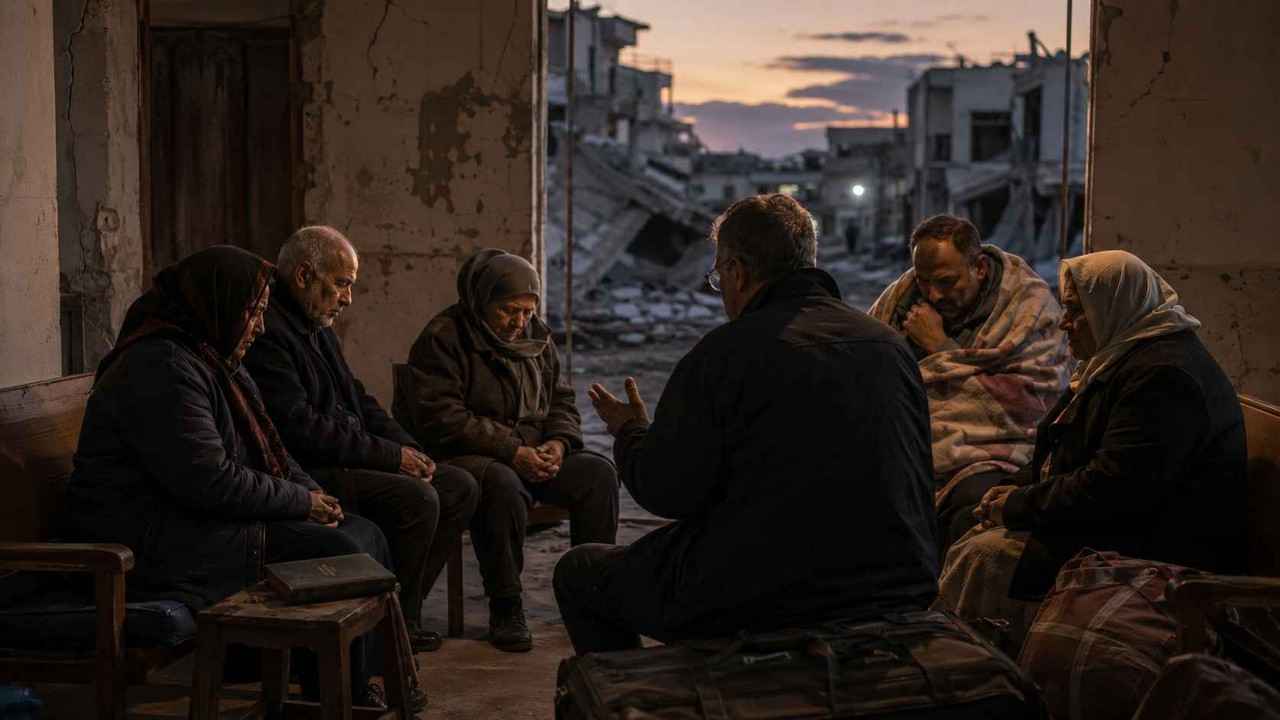
War and major armed conflict do not wound nations in only one way. They tear through homes and hospitals, empty towns and churches, deepen fear, drive families from familiar places, and leave ordinary life strained by grief, uncertainty, and disruption. For Christians who want to pray with understanding rather than vague concern, it is not enough simply to know that war exists. We need to ask where its burden is now most severe, most destabilizing, and most urgent.
This ranked list is meant to serve that kind of informed prayer. It is not a casual roundup of countries in the news, nor a dramatic catalogue of suffering for its own sake. It is a disciplined attempt to identify the ten countries most affected by active war or major armed conflict right now, so that readers can engage these realities with sobriety, compassion, and clearer intercession. The countries that follow are not all suffering in identical ways, but each bears a present burden grave enough to call for careful attention, heartfelt prayer, and humble dependence on the God who rules over nations and does not overlook the afflicted.
This Top Ten prayer ranking was reviewed in MAY 2026. It has now been superseded by the JUNE 2026 ranking. Use this page for prayer-trend comparison, movement transparency, and historical context, not as the current ranking.
Conflict Ranking Method
This list uses a comparative conflict-ranking method rather than a simple headline survey.
Date of assessment: May 17, 2026
Scope: Global
Purpose: Identify the ten countries most affected by active war or major armed conflict right now, for review-ready use in the TeachTheTreasures.com Country Prayer Posts workflow.
Visible broad sweep conducted: The assessment considered major current conflict and conflict-driven crisis candidates, including Sudan, the State of Palestine, Ukraine, the Democratic Republic of the Congo, Myanmar, Iran, Lebanon, South Sudan, Burkina Faso, Yemen, Syria, Haiti, Nigeria, Somalia, Mali, Afghanistan, Ethiopia, Iraq, Cameroon, Central African Republic, Chad, Mozambique, Colombia, and Libya.
Sources prioritized: Recent ACAPS crisis analyses and updates, AP and Reuters-style current reporting where available, UN-linked humanitarian reporting, IPC / food-security reporting as reflected in humanitarian updates, and major conflict or human-rights reporting where it clarified current armed-conflict conditions.
Main uncertainty: Ranks 1–4 are comparatively strong. Ranks 5–10 are more compressed, especially Myanmar vs. Iran / Lebanon, and Burkina Faso vs. Yemen / Syria / Haiti / Nigeria. Iran and Lebanon rise sharply in this assessment because the current Middle East escalation has moved from background risk into direct conflict burden. Sudan remains the clearest number one.
Working Definition
The ranking focuses on active war and major armed conflict as present national burdens, not merely long-term instability.
What qualifies as war or major armed conflict?
For this ranking, a country qualifies if it is currently experiencing one or more of the following at meaningful scale: interstate war, civil war, multi-front armed conflict, large-scale insurgency or counterinsurgency, occupation-related warfare, or widespread organized armed violence that materially disrupts national life and causes major civilian harm.
A country does not qualify merely because it has political unrest, isolated terrorist incidents, ordinary criminal violence, or long-term hardship without a present armed-conflict burden.
Most affected means the ranking is not based on battlefield activity alone, but on the combined weight of violence, displacement, civilian harm, hunger, infrastructure damage, national disruption, access constraints, escalation, and prayer relevance.
Ranking Criteria
Each country was weighed across five criteria so that the list would be comparative, transparent, and prayer-useful.
-
Conflict Intensity 25% How active, widespread, and militarily serious is the armed conflict right now?
-
Humanitarian Severity 25% How severe are displacement, civilian casualties, hunger, medical disruption, infrastructure damage, and related humanitarian consequences?
-
National-Societal Disruption 20% How deeply is the conflict disrupting public order, governance, daily life, essential services, and national stability?
-
Current Urgency / Escalation 20% Has the conflict worsened recently, expanded geographically, or reached a current phase that especially requires attention now?
-
Prayer-and-Ministry Relevance 10% Where appropriate, how directly is the conflict shaping church life, Christian witness, fear, family life, endurance, mercy ministry, and the present prayer burden?
Top Ten Countries Most Affected by Active War or Major Armed Conflict
The countries below are ranked by the combined weight of current conflict intensity, humanitarian severity, national disruption, escalation, and prayer relevance.
Sudan
The clearest overall case because of the unmatched combined scale of war, displacement, hunger, and national collapse.
Sudan is in a large-scale civil war between the Sudanese Armed Forces and the Rapid Support Forces, with severe fighting, mass displacement, hunger, infrastructure collapse, and continued attacks affecting civilians and humanitarian access.
Sudan remains the clearest number one because no other current conflict combines such massive displacement, food insecurity, national fragmentation, access constraints, and ongoing armed violence at this scale. ACAPS reports that more than 30 million people need humanitarian or protection assistance, with conflict as the main driver and severe food insecurity including famine conditions in parts of the country.
Sudan’s war has now entered its fourth year and continues to deepen. Recent AP reporting notes that more than 40% of Sudan’s population is facing high acute food insecurity, while roughly 13 million people have been displaced and more than 30 million need aid. Drone warfare and attacks on civilian areas have also become a major feature of the conflict, worsening the danger for markets, hospitals, schools, and displaced civilians.
Sudan’s health system, food supply, civilian protection environment, and state capacity have all been badly damaged. The conflict is no longer just a military contest; it is reshaping the survival conditions of the country.
Sudan calls for urgent prayer for protection of civilians, restraint of evil, provision for the hungry and displaced, endurance for believers, and mercy for churches seeking to serve amid fear, scarcity, and grief.
Key current sources used: ACAPS Sudan crisis analysis and May 2026 food-security update; AP reporting from May 2026 on Sudan food insecurity and drone warfare.
State of Palestine
A concentrated case of catastrophic civilian suffering, especially in Gaza.
The State of Palestine, especially Gaza, remains under catastrophic conflict conditions involving occupation-related warfare, repeated strikes, displacement, humanitarian access constraints, infrastructure collapse, and severe civilian deprivation.
It ranks second because the density and concentration of civilian suffering in Gaza remain among the most extreme in the world. I place it below Sudan only because Sudan’s displacement and national-scale collapse are broader in absolute scale, while Gaza’s devastation is more geographically concentrated but extraordinarily severe.
ACAPS reports that all 2.1 million people in Gaza need humanitarian assistance, that almost the entire population has been displaced at least once, and that the population continues to face severe shortages of food, water, shelter, health care, and education. Recent ACAPS updates also point to sharply constrained flour supplies and reduced bread production, with large numbers still projected in crisis-level food insecurity.
Gaza’s civilian systems have been profoundly disrupted: shelter, health care, food access, water, education, and ordinary family life remain under crushing strain.
This burden calls for prayer for mercy, protection of civilians, care for the wounded and hungry, comfort for grieving families, faithful witness by the church, and a just and durable peace.
Key current sources used: ACAPS Palestine crisis analysis and May 2026 Gaza updates.
Ukraine
A major interstate war with continuing front-line fighting, civilian attacks, displacement, and national strain.
Ukraine remains the site of a major interstate war, with entrenched front-line fighting, Russian missile and drone attacks, civilian casualties, mass displacement, and infrastructure damage.
Ukraine ranks third because the war remains militarily intense, nationally disruptive, and strategically significant. It ranks below Sudan and Gaza because Ukraine’s state capacity and national systems, though heavily strained, remain more intact than the most catastrophic conflict environments above it.
ACAPS reports that 12.7 million people need humanitarian assistance, with millions internally displaced or living as refugees. Recent updates point to intensified Russian pressure around key eastern areas, civilian evacuations, and heavy strikes on energy infrastructure, including major disruptions to power, heat, water, and civilian life.
The war continues to affect housing, energy, hospitals, schools, mental health, displacement, and daily life across much of the country, not only in front-line areas.
Ukraine remains a major prayer burden for civilian protection, endurance under bombardment, care for the displaced, mercy for the bereaved, and faithfulness among churches serving amid long war.
Key current sources used: ACAPS Ukraine crisis analysis and April 2026 operational updates.
Democratic Republic of the Congo
A sharply intensified eastern conflict with massive displacement and grave civilian-protection concerns.
The Democratic Republic of the Congo remains affected by major armed conflict, especially in the east, where M23 and other armed groups have driven violence, displacement, civilian abuses, and regional destabilization.
DRC ranks fourth because eastern Congo’s conflict burden is extraordinarily severe and has recently intensified. It ranks below Ukraine because the most acute fighting is more regionally concentrated, but the humanitarian and civilian-protection burden is among the heaviest in the world.
Recent AP reporting notes that M23 escalated sharply in January 2026, seizing Goma and then Bukavu, while the broader conflict involves more than 100 armed groups and has displaced at least 7 million people. Reporting tied to Human Rights Watch also describes serious abuses, including executions, disappearances, and sexual violence in areas affected by M23 and Rwandan-backed operations.
Eastern DRC faces massive displacement, fear, disrupted aid access, destroyed livelihoods, and deep insecurity. The conflict also has wider regional implications because of Rwanda’s alleged involvement and the strategic importance of the east.
DRC calls for prayer for protection from armed groups, comfort for displaced families, justice for victims of abuse, courage for churches, and mercy for communities living through repeated cycles of violence.
Key current sources used: AP reporting from 2026 on M23, displacement, and Amnesty findings; El País / Human Rights Watch reporting on abuses in eastern DRC.
Myanmar
A broad national civil war with entrenched violence, displacement, and deep disruption of public life.
Myanmar remains in nationwide civil war after the 2021 military coup, with widespread armed conflict, systemic violence, political breakdown, mass displacement, and severe access constraints.
Myanmar ranks fifth because the conflict is broad, national, entrenched, and deeply disruptive. It ranks below DRC because current reporting shows eastern DRC’s crisis as more sharply escalated in early 2026, but Myanmar’s nationwide conflict burden remains one of the gravest in the world.
ACAPS reports that 19.9 million people need humanitarian assistance, around 3.5 million are internally displaced, and the country remains one of the most constrained humanitarian access environments globally. The conflict continues to combine armed violence, political collapse, economic strain, protection risks, and displacement across multiple regions.
Myanmar’s civil war has fractured public order, damaged livelihoods, restricted aid delivery, and left many civilians exposed to violence, displacement, and insecurity.
Prayer is needed for believers and churches enduring fear, displacement, ethnic conflict, military pressure, and uncertainty, and for faithful witness amid the breakdown of ordinary public life.
Key current sources used: ACAPS Myanmar crisis analysis, last updated April 2026.
Iran
A sharply escalated direct-conflict case involving Iran, Israel, and the United States.
Iran now qualifies as a major active conflict country because of escalating hostilities involving Iran, Israel, and the United States since late February 2026, including airstrikes, retaliatory attacks, civilian casualties, internal displacement, and disruption of services.
Iran ranks sixth because its current urgency and escalation score is extremely high. It does not yet outrank Myanmar or DRC because the humanitarian crisis is less structurally entrenched over years, but its sharp current escalation makes it one of the most serious active-conflict countries right now.
ACAPS reports that since the late-February escalation, airstrikes and retaliatory attacks have caused civilian casualties, damaged hospitals, schools, water infrastructure, and energy-related facilities, and driven large-scale internal displacement. ACAPS also reports estimates of 600,000 to 1 million households—around 3.2 million people—temporarily fleeing to other provinces following the escalation.
The conflict is affecting civilian services, health care, movement, food access, infrastructure, and public fear. Its regional implications also make it unusually volatile.
Iran calls for prayer for restraint, mercy for civilians, protection of believers, wisdom for rulers, peace in the region, and faithful Christian witness amid fear and uncertainty.
Key current sources used: ACAPS Iran crisis analysis and March–May 2026 updates; AP reporting from May 2026 on the fragility of the Iran ceasefire environment.
Lebanon
A fragile country under severe conflict spillover, displacement, and renewed Israel-Hezbollah hostilities.
Lebanon qualifies because renewed Israel-Hezbollah hostilities and Israeli strikes have produced large-scale displacement, casualties, infrastructure damage, and severe national strain.
Lebanon ranks seventh because its current conflict burden has intensified sharply and now directly affects national life. It ranks just below Iran because Lebanon is more exposed to spillover and direct strikes than to full nationwide interstate war, but the humanitarian and displacement burden is severe.
ACAPS reports that Lebanon faces large humanitarian needs amid conflict, displacement, and socioeconomic crisis. April 2026 updates describe intensified strikes, hospitals under severe strain, damaged transport routes, aid constraints, and displacement reaching about 1.2 million people. Recent Guardian reporting also describes continuing Israeli strikes and forced evacuations in southern Lebanon despite ceasefire efforts.
Lebanon’s conflict burden intersects with long-running economic crisis, political fragility, refugee pressure, damaged infrastructure, and fear among civilians in affected regions.
Lebanon calls for prayer for peace, protection of civilians, endurance for churches, mercy for displaced families, and wisdom for believers seeking to serve in a fragile and polarized setting.
Key current sources used: ACAPS Lebanon crisis analysis and April 2026 updates; Guardian reporting from May 2026 on Lebanon conflict escalation and ceasefire fragility.
South Sudan
A fragile conflict-affected nation facing renewed hostilities, hunger, displacement, and blocked humanitarian access.
South Sudan remains affected by renewed armed conflict, intercommunal and political violence, mass displacement, hunger, blocked humanitarian access, and fragile national stability.
South Sudan ranks eighth because the humanitarian severity is extreme and the current conflict risk is rising. It ranks below Lebanon because the present escalation is less clearly a single high-intensity national warfront, but the combined burden of violence, hunger, displacement, and fragile governance remains severe.
ACAPS projects that 10 million people will need humanitarian assistance in 2026 and reports renewed hostilities in Jonglei that displaced more than 280,000 people since December 2025. April 2026 updates also describe fighting around Akobo, service disruption, humanitarian withdrawal, looting, and the risk of wider conflict.
Conflict is worsening an already fragile humanitarian environment marked by food insecurity, cholera risk, limited health care, and large-scale displacement.
South Sudan calls for prayer for peace, protection of children and displaced families, strengthened churches, reconciliation, and endurance under repeated cycles of violence and deprivation.
Key current sources used: ACAPS South Sudan crisis analysis and April 2026 updates; Guardian reporting from May 2026 on displacement and attacks on health facilities.
Burkina Faso
A severe insurgency and siege crisis where armed groups control or contest large areas.
Burkina Faso remains in a major insurgency and counterinsurgency environment, with armed groups controlling or contesting large areas, mass displacement, siege conditions, food insecurity, and civilian exposure to violence.
Burkina Faso ranks ninth because the conflict itself is central to the national crisis: armed groups reportedly control around 40% of the territory, and hundreds of thousands are isolated in besieged towns. It ranks above Yemen in current-conflict intensity, though Yemen’s humanitarian scale remains larger.
ACAPS reports that around 2 million people are internally displaced, non-state armed groups control roughly 40% of the country, and about 800,000 people are isolated in besieged towns. The conflict has now entered its ninth year, with continuing violence, protection risks, disrupted markets, and constrained humanitarian access.
Burkina Faso’s conflict is reshaping mobility, governance, food access, security, and daily life across large parts of the country.
Prayer is needed for protection from armed groups, endurance for churches and families, provision for the displaced and besieged, and restraint of violence.
Key current sources used: ACAPS Burkina Faso crisis analysis and April 2026 updates.
Yemen
A protracted conflict-driven collapse with vast humanitarian need and unresolved political-military fragmentation.
Yemen remains a major protracted armed-conflict country, with fragmented control, unresolved war dynamics, displacement, damaged services, food insecurity, and renewed political-military instability.
Yemen ranks tenth because its humanitarian crisis and national disruption remain enormous, even though current battlefield intensity is lower than during earlier phases of the war. It narrowly holds the final slot over Syria, Haiti, Nigeria, Somalia, and Mali because the present suffering is still heavily conflict-shaped and the country remains politically and militarily fragmented.
ACAPS reports that 18.6 million people need humanitarian assistance and 4.5 million are internally displaced. Although large-scale fighting has not resumed at the level seen before the expired truce, Yemen remains divided among rival authorities, and recent developments—including southern advances and aid-flight disruption—keep the conflict environment unstable.
Years of war continue to shape hunger, health-system weakness, displacement, economic breakdown, humanitarian access, and political fragmentation.
Yemen calls for prayer for mercy after years of suffering, preservation of civilians, faithful endurance among believers, peace, and access for relief to those most in need.
Key current sources used: ACAPS Yemen crisis analysis and 2026 updates.
Near-Miss / Watchlist Countries
These countries remain serious conflict or conflict-shaped prayer burdens, even though they did not make the final ten in this current ranking.
Syria — Syria remains one of the world’s largest conflict-shaped humanitarian crises, with 16.5 million people needing aid and millions displaced, but present direct-conflict intensity is less acute than the final top-ten cases.
Haiti — Haiti’s gang violence has reached conflict-scale national disruption in and around Port-au-Prince, but I placed it just outside the top ten because its armed-violence structure is less conventionally warlike than Burkina Faso, Yemen, Lebanon, or Iran.
Nigeria — Nigeria remains a serious armed-conflict and insecurity case, especially in the northeast and northwest, but its burden is more regionally uneven than the countries placed above it.
Somalia — Somalia’s conflict with Al-Shabaab and interclan violence remains severe, but its current humanitarian crisis is more mixed with drought and climate shock than the more conflict-central cases in the final ten.
Mali — Mali’s conflict environment remains volatile, with recent coordinated attacks and access disruptions, but it falls slightly below Burkina Faso and Yemen in the combined weighting of humanitarian scale, national disruption, and current conflict burden.
Final Summary Judgment
The final ranking reflects the combined burden of conflict, displacement, humanitarian collapse, and urgent prayer need.
How to Pray Through This List
This list should not end in anxious observation, but in humble, informed intercession before the God who rules over nations.
-
Pray for God to restrain evil and protect civilians.
Ask the Lord to limit violence, preserve the vulnerable, expose wickedness, and bring justice where armed groups, rulers, or combatants harm the innocent.
-
Pray for displaced families and communities under siege.
Intercede for those without secure shelter, food, medicine, clean water, or safe passage, especially families separated by war and people cut off from help.
-
Pray for churches and believers under pressure.
Ask God to strengthen pastors, congregations, converts, and isolated Christians to remain faithful in worship, witness, mercy, courage, holiness, and hope.
-
Pray for wise rulers, truthful reporting, and just peace.
Ask the Lord to give leaders restraint and wisdom, to frustrate deception and propaganda, and to open paths toward peace that protect life and honor justice.
-
Pray with grief and hope together.
Let the weight of these countries lead to lament, but not despair. Christ reigns over the nations, and no war-torn place is hidden from His sight.
Key Sources Consulted
These source groups materially informed the ranking, country reasoning, and comparative conflict assessment.
- ACAPS. Sudan, State of Palestine, Ukraine, Myanmar, Iran, Lebanon, South Sudan, Burkina Faso, Yemen, Syria, Haiti, Nigeria, Somalia, and Mali crisis analyses and country updates, April–May 2026.
- Associated Press. Reporting from 2026 on Sudan food insecurity and drone warfare; eastern Democratic Republic of the Congo, M23 escalation, displacement, and civilian abuses; and Iran ceasefire fragility.
- Human Rights Watch / El País reporting and related human-rights coverage on abuses in eastern Democratic Republic of the Congo.
- Guardian reporting from May 2026 on conflict escalation and ceasefire fragility in Lebanon, and displacement and attacks on health facilities in South Sudan.
- UN-linked humanitarian and food-security reporting reflected in current humanitarian updates, including displacement, humanitarian-access, health-system, and acute food-insecurity indicators.
Continue praying
Continue praying for the nations
Use this list as one doorway into a wider rhythm of prayer for the nations.


