

Papua New Guinea is home to more than ten million people. Its mountains, islands, forests and limited transport links leave many communities far from hospitals, schools, courts, markets and other basic services. Pray for violence and revenge to end, for churches to proclaim Christ faithfully, for vulnerable people to be protected, and for those who identify as Christian but do not know Christ to repent, trust in Him and obey God’s Word.
Prayer Burden at a Glance
Pray for killing and revenge to end, for women and children to be protected, and for people threatened by sorcery accusations to find safety and justice. Pray for churches to preach Christ faithfully, oppose violence and superstition, care for people who suffer and help divided communities pursue peace. Pray also for wisdom in decisions about Bougainville, honesty in government and the use of national resources, and deeper repentance and faith among a people who widely identify with Christianity.
Last verified: 8 August 2026
Why Papua New Guinea Needs Prayer Now
Papua New Guinea needs prayer for peace, protection of vulnerable people, faithful churches, wise national decisions, and for people not to rely on public Christian identity but to repent and trust in Christ.
Some of Papua New Guinea’s most serious needs affect ordinary families directly. Fighting between communities in parts of the Highlands has killed people, forced families from their homes and kept cycles of revenge alive. Women and children face serious violence, and accusations of sorcery have sometimes led to torture, displacement and death.
There are also reasons for hope. Churches, community leaders, peace workers and public institutions are helping people settle disputes, protect vulnerable families and remove illegal firearms from communities. Health workers have carried out large vaccination campaigns, while churches and faith-based organisations continue to serve in education, health, family care and peacebuilding.
Papua New Guinea also faces important national decisions. Bougainville’s political future remains unresolved and is moving through a constitutional parliamentary process. The country is preparing for national elections in 2027 and trying to turn economic growth and natural-resource wealth into better jobs, services and opportunities for ordinary families.
In 2025, Papua New Guinea amended its Constitution to identify the country explicitly as Christian and to recognise the Bible as a national symbol. But calling a nation Christian cannot make its people Christians. Church membership, baptism, family tradition or public religious language cannot reconcile sinners to God. Pray that people would hear the gospel clearly, repent of sin, trust in Jesus Christ and grow in obedience to God’s Word.
Country Snapshot
A brief orientation to Papua New Guinea’s population, geography, economy, Christian identity and current national developments.
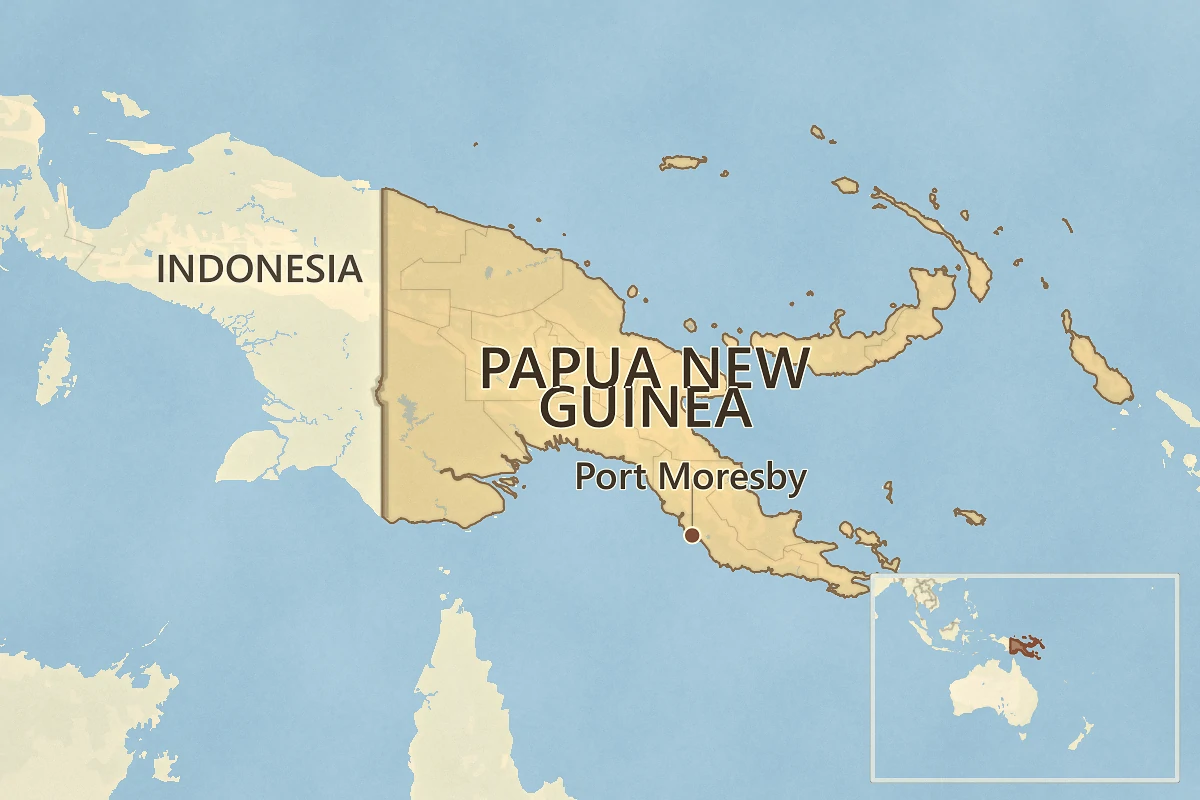
Papua New Guinea’s 2024 census recorded a population of 10,185,363. Geography has a powerful effect on daily life. Many communities are remote, and difficult travel can make health care, education, justice and government services hard to reach.
The economy grew strongly in 2025, helped especially by gold and liquefied natural gas production. Yet economic growth has not brought secure work and better services to everyone. Pray that the country’s natural wealth would produce lasting benefits for ordinary families, including better jobs, roads, schools, health services and opportunities for young people.
Christianity is highly visible in national life. In 2025, Parliament amended the Constitution to identify Papua New Guinea explicitly as a Christian country and to recognise the Bible as a national symbol. The government says constitutional protections for freedom of conscience and religion remain in place. Some church leaders and United Nations human-rights experts have raised concerns about how the amendment could affect religious freedom and the relationship between church and state.
The amendment does not mean that religious freedom has disappeared, and it does not tell us who has truly trusted in Christ. It does, however, place a serious responsibility on churches and people who identify as Christian to show by their teaching and conduct what faithfulness to Christ actually means.
Spiritual and Practical Challenges Affecting Christians and Churches
Churches need to disciple believers faithfully as they respond to intercommunal violence, protect vulnerable people, serve remote communities and call for honest stewardship of the country’s resources.
Christian identity without personal faith
Christian language, churches and religious institutions are familiar across much of Papua New Guinea. This gives churches many opportunities to speak about Christ, but because Christian language and institutions are familiar, some people may assume that identifying as Christian is enough without repentance and faith in Christ. No one is reconciled to God through nationality, baptism, church membership, ceremony or family tradition. Salvation is God’s gift of grace, received through faith in Jesus Christ because of His finished work. Pray for pastors to explain this plainly and faithfully, and for people who identify as Christian but do not know Christ to hear the gospel and believe.
Intercommunal violence, firearms and revenge
Parts of the Highlands continue to experience serious fighting between communities. Local disputes can grow into armed conflict, force families from their homes and lead to further attacks in revenge. Illegal firearms make these conflicts more deadly, while limited access to reliable justice can increase mistrust. The government’s 2026 firearms amnesty and buy-back programme has led to some voluntary weapon surrenders, but removing weapons alone cannot settle grievances or change people’s desire for revenge.
Sorcery accusations and violence against vulnerable people
Accusations of sorcery remain dangerous in parts of Papua New Guinea. People who are accused can be threatened, tortured, driven from their communities or killed, and women are among those particularly at risk. Women and children also face other forms of violence and abuse. Churches should reject superstition and mob violence, teach biblical truth, protect people in danger and care for survivors without treating whole cultures or communities with contempt.
Health care and the challenge of distance
Distance makes ordinary health care difficult for many families. Some people must travel far for treatment, maternity care, vaccination and other essential services. Papua New Guinea has made progress in child health, but maternal and newborn care remains difficult in many places. A polio outbreak confirmed in 2025 led to large vaccination campaigns; by the April 2026 public-health update, no new cases had been reported since October 2025, although vaccination and surveillance were still continuing.
Natural wealth and the lives of ordinary families
Papua New Guinea has major mineral and energy resources. These can provide jobs, government revenue and investment, but many families still live with limited economic opportunity and weak public services. Pray that public officials and business leaders would act honestly, that corruption and exploitation would be restrained, and that dignified work and better services would reach communities that have seen little improvement in daily life.
Christian Life and Witness in Papua New Guinea
Churches are deeply present in community life, creating opportunities to proclaim Christ, show mercy, work for peace and serve people across clan and political divisions.
Churches and faith-based organisations play an important role in Papua New Guinea. They are involved in education, health care, family support, peacebuilding and care for people affected by violence. In some conflict-affected areas, Christian organisations are also helping communities mediate disputes and rebuild relationships.
Thank God for every place where Christ is faithfully preached, Scripture is taught, believers are discipled and people in need are served with mercy. At the same time, a Christian name by itself does not show that an institution teaches the gospel faithfully or that every person within it has been converted.
Papua New Guinea’s strong Christian identity makes the conduct of churches especially important. Christian language can exist alongside revenge, corruption, abuse, fear and superstition. Churches therefore need to examine themselves continually under God’s Word.
Pray for pastors who will preach Christ clearly and refuse to excuse violence, abuse, corruption or superstition. Pray for Christian families marked by faithfulness and sacrificial love. Pray for believers who protect vulnerable people, refuse revenge and serve neighbours across clan, language and political divisions.
Papua New Guinea’s great diversity also gives Christians an opportunity to show that allegiance to Christ must take priority over clan or political loyalty. Christians from different church backgrounds may sometimes work together to protect children, care for suffering families or help communities pursue peace without pretending that important doctrinal differences do not matter.
Above all, pray that people throughout Papua New Guinea would hear the gospel clearly and that those who profess Christ would increasingly show the fruit of faith in holiness, mercy, truthfulness and love.
Recent Developments
Several current developments affect prayer for peace, public leadership, vulnerable families, health and Papua New Guinea’s regional relationships.
-
August 2026
Bougainville’s political future
Bougainville’s future remains one of Papua New Guinea’s most important unresolved national questions. Bougainville’s government has called for a path toward independence, while the national government says Parliament has constitutional responsibility for making the final determination following the referendum. As of August 2026, Parliament has not yet made that final decision.
Prayer significance: Pray for leaders on every side to act with wisdom, patience and honesty, for inflammatory speech not to reopen wounds from past conflict, and for peace to be preserved as decisions are made.
-
2026
Firearm surrender and peacebuilding
The 2026 firearms amnesty has encouraged some people in the Highlands to surrender weapons. Peacebuilding programmes are also supporting mediation, access to justice and local efforts to prevent further violence.
Prayer significance: Thank God for every weapon surrendered and every dispute settled without bloodshed. Pray that communities would not replace surrendered weapons or return to fighting, and that mediators, churches and public institutions would address grievances fairly and help communities settle disputes without renewed violence.
-
April-July 2026
Polio, children’s wellbeing and climate pressures
Large vaccination campaigns have responded to Papua New Guinea’s recent polio outbreak. An April 2026 public-health update reported no new cases since October 2025, although continued vaccination and surveillance were still needed. In July 2026, Parliament made its Special Parliamentary Committee on Child and Youth Wellbeing permanent. Papua New Guinea is also preparing for possible effects of the developing 2026 El Niño.
Prayer significance: Pray for children to be protected from violence and abuse, for continued progress against polio, for wise preparation for drought and water shortages, for food production to be protected and for timely help wherever conditions become severe.
-
8 July 2026
A new defence relationship with Australia
The Pukpuk Mutual Defence Treaty between Papua New Guinea and Australia entered into force in July 2026. Papua New Guinea’s government says the agreement will strengthen national defence while protecting the country’s sovereignty. Some political voices within Papua New Guinea have raised concerns about whether the treaty could limit the country’s freedom of action as competition among larger powers increases in the region.
Prayer significance: Pray for leaders to act wisely, protect Papua New Guinea’s sovereignty and seek peaceful regional relationships, and for defence decisions to protect ordinary people rather than draw the country into unnecessary conflict.
How to Pray for Papua New Guinea
Pray for salvation, faithful churches, peace, protection of vulnerable people, wise leadership, stronger services and hope in Christ and His kingdom.
-
Pray for people to repent and trust in Christ. Pray that people would not rely on national Christian identity, family tradition, church membership or religious ceremonies for their standing before God. Ask God to bring many to repentance and faith in Jesus Christ and to ground believers deeply in Scripture.
-
Pray for pastors and churches to be faithful to God’s Word. Pray for clear Bible teaching, patient discipleship and courage to confront violence, abuse, superstition, corruption and spiritual complacency. Pray that churches would be known for holiness, mercy and truth.
-
Pray for an end to intercommunal fighting. Pray for killings and revenge attacks to stop, for civilians to be protected and for illegal firearms to be surrendered. Ask God to strengthen honest mediation and justice so that grievances can be settled without more bloodshed.
-
Pray for women, children and people accused of sorcery. Pray for people in danger to find safety and for survivors of violence to receive care and justice. Ask God to give families, churches, police and community leaders courage to protect the vulnerable and confront abuse.
-
Pray for wise and honest leadership. Pray for wisdom as Parliament considers Bougainville’s future and as the country prepares for the 2027 national election. Pray for honest administration, peaceful political participation and leaders who resist corruption, intimidation and personal ambition.
-
Pray for health workers and remote communities. Pray for better maternal and newborn care, continued protection from polio and stronger health services in difficult-to-reach areas. Remember the doctors, nurses and community health workers serving far from major centres.
-
Pray for the country’s natural wealth to benefit its people. Pray for honest use of mining and energy revenues, dignified employment and better roads, schools and health services. Ask God to provide opportunities for young people and families in communities that have benefited least from economic growth.
-
Pray for communities facing drought and other climate hazards. Pray for sufficient water, protected crops and wise preparation as El Niño conditions develop. Ask God to provide help quickly when drought, floods or other disasters threaten families.
-
Pray for Christians to be peacemakers. Pray for believers who tell the truth, refuse revenge, protect the vulnerable and love neighbours across clan and political divisions. Ask God to bring many to repentance and faith throughout Papua New Guinea and to help His people live faithfully as they pray, “Your kingdom come.”
Give Thanks
Give thanks for faithful gospel ministry, peacebuilding, care for vulnerable people, the polio vaccination response and greater public attention to children’s wellbeing, while continuing to pray for deeper faithfulness and lasting change.
-
Thank God for every place where Christ is faithfully preached. Give thanks where Scripture is taught, believers are discipled and people in need are served.
-
Thank God for Christians, churches and community workers helping families affected by violence. Give thanks for those working for peace and protection.
-
Thank God for people who have surrendered illegal firearms. Give thanks for communities choosing dialogue instead of retaliation.
-
Thank God for the large vaccination response to polio. Give thanks for the absence of new reported cases between October 2025 and the April 2026 public-health update.
-
Thank God for increased attention in Parliament to the wellbeing and protection of children. Pray that this leads to practical improvements in their lives.
-
Thank God for Papua New Guinea’s natural resources and recent economic growth. Pray that these gifts will be used honestly and increasingly benefit ordinary families.
-
Thank God for believers who refuse violence, care for vulnerable people and speak the truth. Give thanks for lives that show following Christ means more than carrying a Christian name.
Last Verified / Update Note
This note helps readers understand when the guide was reviewed, what was checked and which developments may change how readers should pray.
Review Status
Reviewed for current prayer use
Papua New Guinea’s official 2024 population figures; the country’s 2025 constitutional declaration of Christian identity; current religious-freedom concerns and government assurances; intercommunal violence and peacebuilding in the Highlands; sorcery accusation-related violence; protection of women and children; the 2025-2026 polio response; current climate and El Niño concerns; recent economic growth and employment challenges; preparation for the 2027 national election; the Pukpuk Mutual Defence Treaty with Australia; and the continuing parliamentary process concerning Bougainville’s political future.
Clear gospel proclamation beyond inherited or national Christian identity; faithful churches and pastors; an end to intercommunal violence and revenge; protection for women, children and people threatened by sorcery accusations; wise and peaceful handling of Bougainville’s future; honest government and election preparation; better health and public services for remote communities; and responsible use of the country’s natural wealth.
Parliament’s consideration of the Bougainville referendum outcome when it next meets; the continuing firearms-amnesty and disarmament process; any new official update on the polio outbreak; the effects of developing El Niño conditions on water, crops and food security; preparations for the 2027 national election; and any material change in how Papua New Guinea’s constitutional Christian identity affects freedom of religion or church-state relations.
Government, parliamentary, Bougainville, church, national-media and international institutional sources do not always interpret events in the same way. This guide distinguishes official positions from outside assessments and does not treat either as proof simply because it has been published. Precise current religious-affiliation figures are not used because the latest accessible census material does not provide a sufficiently clear current religious breakdown. Violence, abuse and sorcery accusation-related violence also vary greatly by province and community, so regional evidence is not presented as though every part of Papua New Guinea experiences the same conditions.
Help keep this guide accurate and current
If you noticed a possible correction, broken link, or significant country update, please contact the Nations Prayer Directory so we can review it carefully.
Key Sources Consulted
Selected public sources on population, national policy, Bougainville, violence and peacebuilding, health, climate, economic conditions, church activity and regional-security developments.
Government, Parliament and national data
- Papua New Guinea National Statistical Office — 2024 National Population Census final figures
- Department of Prime Minister and National Executive Council — constitutional declaration of Papua New Guinea as a Christian country
- Department of Prime Minister and National Executive Council — 2027 national-election preparation
Bougainville
- National Parliament of Papua New Guinea — parliamentary sitting information and Bougainville process
- Department of Prime Minister and National Executive Council — constitutional pathway for Bougainville
- Autonomous Bougainville Government — Bougainville’s stated pathway and political position
- NBC PNG — Bougainville parliamentary process and competing views
Violence, peacebuilding and protection
- United Nations Development Programme — United Nations Highlands Joint Programme Phase 2
- United Nations Development Programme — Securing Conditions for Sustained Peace in the Highlands
- United Nations in Papua New Guinea — action against sorcery accusation-related violence
- The National — national firearms amnesty and buy-back programme
- UNICEF Papua New Guinea — child protection and parliamentary action for children
Health and climate
- UNICEF Papua New Guinea — polio response
- UNICEF Papua New Guinea — maternal, newborn and child health
- UNICEF Papua New Guinea — Children’s Climate Risk Report 2026
- Department of Prime Minister and National Executive Council — El Niño preparedness
Economy and livelihoods
Christian life and religious freedom
- Papua New Guinea Council of Churches
- UNICEF and the Papua New Guinea Council of Churches — church involvement in child nutrition, protection and health
- Catholic Bishops Conference of Papua New Guinea and Solomon Islands — church concerns about the constitutional Christian-country amendment
- United Nations human-rights Special Procedures — concerns about possible religious-freedom effects of the constitutional amendment
Defence and regional relations
Source Context
How to read the sources behind this guide when political outcomes remain unsettled, religious identity needs careful interpretation, and conditions vary significantly across provinces and communities.
Source Context
- Bougainville. The political outcome remains unsettled. The National Government says Parliament has constitutional responsibility for the referendum outcome, while Bougainville’s government is advocating a defined pathway toward independence. Parliament’s next sitting is scheduled for 25 August 2026. The guide therefore describes the present process and does not predict the parliamentary decision or treat a proposed 2030 independence date as settled fact.
- Christian-country amendment. Papua New Guinea’s government says the 2025 amendment preserves freedom of conscience and religion. Catholic bishops in Papua New Guinea and UN human-rights experts have raised concerns about possible effects on religious freedom. The guide keeps these positions distinct and does not claim that religious liberty has already been abolished.
- Religious identity. The guide does not use a precise current percentage for the Christian population. The guide treats public identification with Christianity as a social and constitutional fact, not as evidence that every person who identifies as Christian has been regenerated or believes the biblical gospel.
- Church information. Church and faith-based sources describe work in peacebuilding, health, family care and community service. They do not by themselves establish doctrinal faithfulness, conversion, church growth or the spiritual condition of participants.
- Violence and sorcery accusations. Most of the current evidence cited here about intercommunal and sorcery accusation-related violence comes from the Highlands. The guide therefore does not assume that every province experiences the same level or form of this violence.
- Polio. An April 2026 vaccination update supports continued vigilance against polio but does not show that the outbreak has either been fully eradicated or is presently worsening.
- Climate and El Niño. Climate exposure is well documented, and the government has ordered preparation for possible prolonged dry conditions. The full effects of the developing El Niño are not yet clear, so the guide does not describe Papua New Guinea as already experiencing a nationwide El Niño food emergency.
- Economic figures. The official census population and the World Bank’s 2025 growth estimate come from different institutions and serve different purposes. The population figure is taken from Papua New Guinea’s National Statistical Office; the growth and jobs assessment comes from the World Bank’s 2026 economic update.
- Pukpuk Treaty. The treaty’s entry into force is confirmed. Papua New Guinea and Australian government sources emphasise sovereignty and regional security, while Papua New Guinea opposition voices have raised concerns about longer-term implications. The guide presents those differing views without endorsing either political position.
A Closing Prayer for Papua New Guinea
A prayer bringing Papua New Guinea’s present needs before the Lord.


