

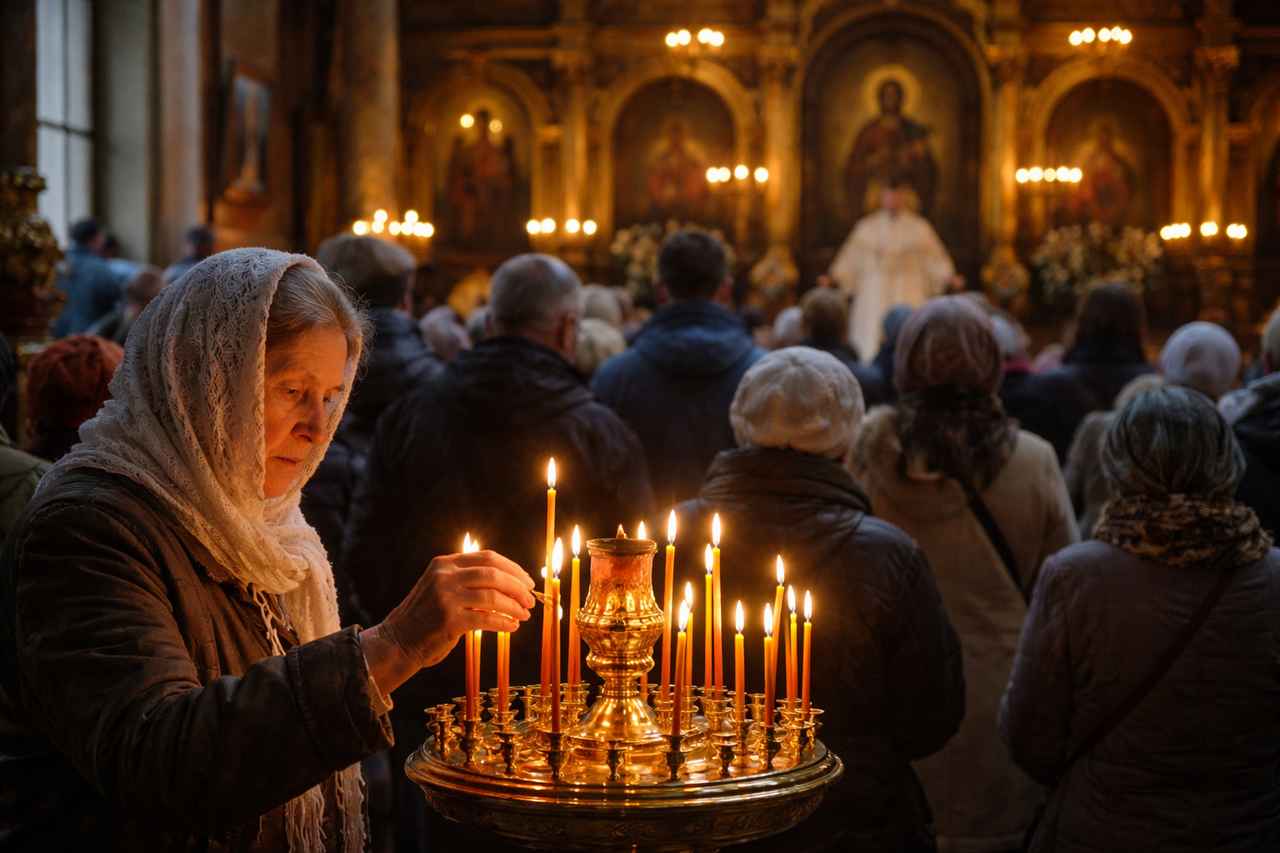
Russia calls for informed Christian prayer because its present burdens are grave and tangled. It is a nation with a deep Christian memory, a large public church presence, and millions who still identify with the faith. Yet it is also marked today by war, tightening repression, and growing pressure on dissenting voices and minority religious communities. Christians should pray for Russia with sobriety, compassion, and truth: for repentance where power has hardened the heart, for courage where fear has narrowed speech, and for God’s mercy toward all who suffer under the weight of war and tightening state control.
Why Russia Needs Prayer Now
Russia’s present prayer burden is shaped by war, tightening repression, and the cost of faithful witness under growing state control.
As of April 2026, Russia remains one of the chief military actors in the war against Ukraine, and that war still shapes the country’s moral and spiritual climate. A Kremlin-declared Orthodox Easter ceasefire quickly faltered, with both Russia and Ukraine accusing each other of repeated violations, while strikes and drone attacks continued to keep both front-line areas and Russian border regions under strain. At the same time, repression inside Russia has continued to deepen. Authorities have expanded mobile internet shutdowns and broader digital restrictions, presenting them as temporary security measures linked to Ukrainian drone threats.
This burden is not only political. It affects conscience, speech, church witness, and the daily atmosphere in which believers must live. On April 9, 2026, Russia’s Supreme Court designated Memorial, the Nobel Prize-winning rights movement, as “extremist,” a step widely understood as part of the broader wartime crackdown on dissent and independent civil society. That does not tell the whole story of Russia, but it does show the direction of public life: tighter control, narrower room for criticism, and greater cost for those who speak in ways the state regards as disloyal.
Country Snapshot
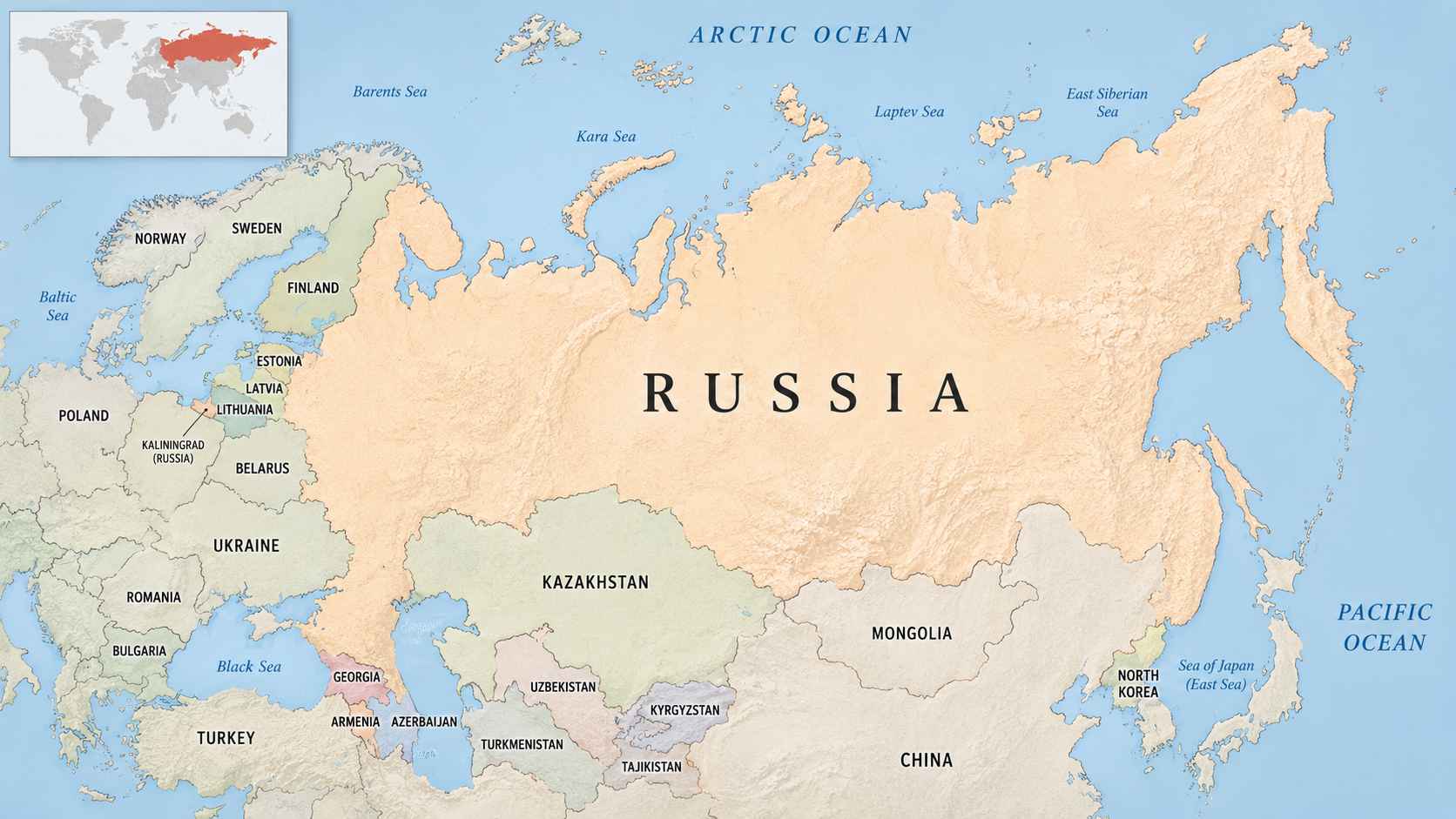
A compact overview of Russia’s setting, population, government context, religious landscape, and church life.
Russia stretches across Eastern Europe and northern Asia and had a population of 143,533,851 in 2024, according to World Bank data. The current president of Russia is Vladimir Putin. Orthodoxy remains the dominant religious identity in the country, and Pew Research has described Russia as having the world’s largest Orthodox Christian population, with more than 100 million Orthodox Christians. Pew also notes a substantial unaffiliated population, while the country is home to a significant Muslim minority. The latest publicly accessible U.S. State Department religious-freedom excerpt also notes that Russian law recognizes Christianity, Islam, Judaism, and Buddhism as the country’s “traditional” religions and gives special recognition to the role of the Russian Orthodox Church.
Main Pressures Facing Christians
Christian communities in Russia face uneven pressures, shaped by church status, state favor, war, law, and public suspicion.
Privileged Public Orthodoxy
Christians in Russia do not all face the same pressures. The Russian Orthodox Church retains a privileged public place in national life, and Kremlin Easter messaging in April 2026 openly praised the church and other
Pressure on Minority Communities
For minority Christians and other nonfavored religious communities, the pressure is often more direct. The latest publicly accessible State Department excerpt reports that authorities continued enforcing laws against “missionary activity” and “undesirable” religious activity, and that religious minorities continued to face raids, fines, detentions, imprisonment, and restrictions under anti-extremism and anti-missionary provisions.
Blasphemy and Speech Restrictions
USCIRF has also warned that Russia has intensified blasphemy enforcement, using vague laws against allegedly offensive expression toward religion. This matters because it shows a broader pattern: religious language is not simply protected as a matter of conscience; it can also be regulated, punished, or used as part of the state’s moral and political order.
What Life Is Like for Christians in Russia
For many believers, ordinary faithfulness requires wisdom, restraint, courage, and careful discernment.
For many believers inside Russia, ordinary faithfulness requires caution. Church life may remain visible, especially in historically rooted or officially registered settings, but the wider social atmosphere is increasingly shaped by war, suspicion, and state pressure. Pastors and Christians who speak about the war, conscience, or public truth may face real consequences. Release International reported in 2025 on the imprisonment of a Russian pastor who criticized the war, while other believers and religious communities have faced legal and administrative pressure in different forms.
The burden is often heavier in Crimea, which Russia annexed in 2014 and claims as its own, and in the parts of Donetsk, Luhansk, Zaporizhzhia, and Kherson regions that Russia controls and claims to have annexed from Ukraine. Reports from Russian-run areas describe pressure on Ukrainian identity, education, speech, civic loyalty, and religious life. These territories should not be treated with vague shorthand. Some areas are under Russian control, Russia claims annexation, Ukraine and many other governments reject those claims, and ordinary people there live under the strain of contested rule, war damage, and fear.
Recent Developments
Recent developments highlight a narrowing public space, a deepening communications crackdown, and the continuing burden of war.
April 9, 2026 — Memorial designated “extremist”
One major recent development was the April 9, 2026 Supreme Court ruling against Memorial. Although Memorial is not a church body, the ruling matters for Christian prayer because it signals a still harsher environment for civil society, conscience, historical truth-telling, and public criticism. Christians should not confuse every civil-society case with church persecution, but neither should they ignore the atmosphere that such rulings create.
April 14, 2026 — Communications restrictions continue
Another major development is the communications crackdown. Reuters reported on April 14, 2026 that the Kremlin said mobile internet shutdowns affecting millions were temporary and tied to security threats from Ukrainian drones. At the same time, reporting described tightened blocking of messaging services and circumvention tools. This matters because believers, journalists, lawyers, families, and churches all rely on communication channels, especially when public life becomes more fearful and controlled.
April 2026 — War remains the largest current burden
The war itself remains the largest current burden. The brief Orthodox Easter ceasefire showed, at most, how fragile even small pauses have become. Reporting on April 12 said both sides accused each other of repeated violations, while an Easter-weekend prisoner exchange still offered a narrow mercy amid ongoing conflict. Christians should pray for every life spared, while also pleading for a just peace and for repentance from falsehood, cruelty, revenge, and hardened national pride on every side.
How to Pray
Pray with sobriety, compassion, moral clarity, and hope in the sovereign mercy of God.
- Pray that the Lord would restrain evil, humble rulers, and bring a just peace, ending the war against Ukraine and the cycle of fear, retaliation, and death that continues to wound both Ukrainians and Russians.
- Pray for Christians in Russia whose consciences are strained by the war, that they would have wisdom to speak truthfully, courage to remain faithful, and grace not to surrender either to fear or to bitter hatred.
- Pray for minority Christian communities, including Baptists and Jehovah’s Witnesses, and for other religious minorities facing anti-extremism, anti-missionary, or blasphemy-related pressure, that the Lord would preserve them, strengthen them, and protect them from unjust treatment.
- Pray for believers in Crimea and in the parts of Donetsk, Luhansk, Zaporizhzhia, and Kherson regions that Russia controls and claims to have annexed from Ukraine, that God would protect pastors, congregations, families, and children living under contested authority and wartime fear.
- Pray for repentance, truthfulness, and moral clarity within the churches of Russia, especially where public Christianity has become entangled with state power, so that Christ — not national myth, fear, or political loyalty — would be honored as Lord.
- Pray that the Lord would strengthen every pastor, journalist, lawyer, and ordinary citizen who still labors for truth, mercy, and justice in Russia, even as the cost of dissent rises.
Give Thanks
Give thanks for every sign of preserving mercy, faithful worship, and courage under pressure.
- Give thanks that Christianity remains publicly visible in Russia, and that major Christian observances such as Orthodox Easter are still openly marked across the country.
- Give thanks for believers who continue to worship and gather even under legal pressure, including Baptist communities that kept meeting after their buildings were sealed.
- Give thanks for every small mercy that preserves life and opens a narrow crack in the darkness of war, including the recent Easter-weekend prisoner exchange.
Last Verified
This article should be reviewed again if major military, legal, or religious-freedom developments occur.
Last updated: April 15, 2026
Next review due: May 2026, or sooner if major military or legal developments occur.
Key Sources Consulted
The following sources materially informed this prayer brief.
- Associated Press, April 12, 2026, on Russian and Ukrainian accusations of Easter ceasefire violations and the prisoner exchange.
- Associated Press, April 9, 2026, on the Russian Supreme Court’s designation of Memorial as “extremist.”
- Reuters, April 14, 2026, on Kremlin statements that internet restrictions are temporary security measures and on tightened blocking of messaging services and circumvention tools.
- President of Russia (Kremlin), official president page, accessed April 2026.
- President of Russia (Kremlin), “Greetings on Orthodox Easter,” April 12, 2026.
- World Bank Data, Russian Federation country data page, population total for 2024.
- Pew Research Center, Religious Belief and National Belonging in Central and Eastern Europe, May 10, 2017.
- U.S. Department of State, International Religious Freedom Reports custom excerpt for Russia, archived public page accessed April 2026.
- USCIRF, Russia Country Update, June 30, 2025.
- USCIRF, Prosecuting Blasphemy in Russia, April 14, 2025.
- USCIRF, Russia country page and publication index, accessed April 2026.
- Baptist Standard, “Russian Baptists continue to meet after building sealed,” August 26, 2025.
- Release International, “Prayer Alert: Russian pastor imprisoned for criticising war,” September 25, 2025.
- Associated Press, February 20, 2026, on conditions in Russian-run parts of Ukraine.