


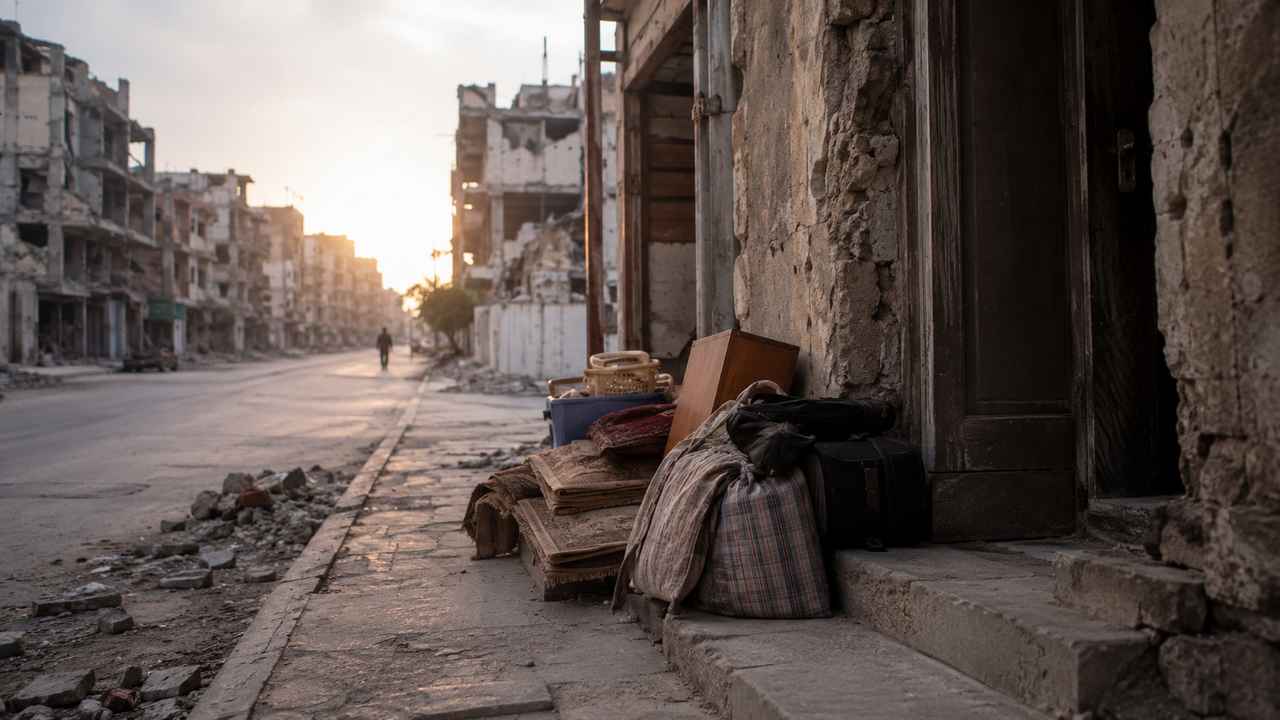
To pray faithfully for the nations, we must resist two temptations at once: vague generality on the one hand, and headline-driven reaction on the other. Active war and major armed conflict demand something better from us. They call for patient attention to where suffering is most acute, where national life is being most deeply broken, and where fear, displacement, destruction, and instability are pressing most heavily on the people of a country.
This article is offered in that spirit. The list that follows is not meant to flatten complex realities into a simple scorecard, but to help make the present burden clearer for thoughtful Christian readers. These ten countries stand out not merely because they are troubled, but because war or major armed conflict is now reshaping everyday life there with exceptional force. To read such a list rightly is not simply to observe it, but to let it deepen compassion, sharpen discernment, and move us toward more serious and informed prayer.
Conflict Ranking Method
A comparative ranking using weighted criteria rather than headline visibility alone.
We did a critical analysis first, then a comparative ranking using five weighted criteria rather than headline visibility alone. We prioritized very recent humanitarian and conflict reporting from UN agencies, ACAPS, ICRC, WHO, UNHCR, WFP, Reuters, AP, and selected human-rights/conflict-monitoring sources. The strongest final candidates were Sudan, the State of Palestine, Ukraine, the Democratic Republic of the Congo, Myanmar, Yemen, Haiti, South Sudan, Syria, Burkina Faso, and Somalia; the hardest borderline calls were Haiti vs. South Sudan for the lower-middle tier, and Burkina Faso vs. Somalia for the final slot.
This Top Ten prayer ranking was reviewed in APRIL 2026. It has now been superseded by the MAY 2026 ranking. Use this page for prayer-trend comparison, movement transparency, and historical context, not as the current ranking.
Working Definition
What qualifies a country for this active war or major armed conflict ranking.
Active War or Major Armed Conflict
For this ranking, a country qualified if it is currently experiencing interstate war, civil war, multi-front armed conflict, large-scale insurgency or counterinsurgency, occupation-related warfare, or organized armed violence severe enough to disrupt national life and cause major civilian harm.
We did not include countries facing only political unrest, isolated attacks, or ordinary criminal violence unless the violence had clearly reached conflict-scale national disruption. This matters especially for borderline cases such as Haiti, which we included because gang warfare now affects national governance, displacement, food security, and everyday life at a scale well beyond routine criminality.
Ranking Criteria
The weighted factors used to compare countries and shape the final order.
-
Conflict Intensity 25% How active, widespread, and militarily serious the armed conflict is right now.
-
Humanitarian Severity 25% How severe the displacement, civilian harm, hunger, infrastructure collapse, medical disruption, and related humanitarian consequences are.
-
National-Societal Disruption 20% How deeply the conflict is disrupting public order, daily life, governance, essential services, and wider national stability.
-
Current Urgency / Escalation 20% Whether the conflict has sharply worsened recently or is presently acute enough to warrant focused attention now.
-
Prayer-and-Ministry Relevance 10% How materially the conflict is shaping church life, Christian witness, public fear, ordinary family life, suffering, endurance, mercy ministry, or the need for focused prayer.
Top Ten Countries Most Affected by Active War or Major Armed Conflict
Each country entry explains the burden, the ranking judgment, and how Christians can pray.
Sudan
A full-scale civil war with nationwide humanitarian collapse, mass displacement, and sustained multi-front warfare.
Sudan remains a full-scale civil war with nationwide humanitarian collapse, mass displacement, repeated attacks on civilians and health systems, and ongoing fighting across Darfur, Kordofan, and other regions.
No other current conflict combines this level of displacement, hunger, health-system destruction, and sustained multi-front warfare more clearly right now. UN agencies describe it as the world’s largest humanitarian and displacement crisis, with roughly 34 million people needing aid and about 14 million displaced.
The war has entered its fourth year without a credible resolution, while famine conditions, disease outbreaks, attacks on medical services, and civilian killings continue. ACAPS rates Sudan among the world’s most severe crises, and recent reporting still shows deadly aerial attacks and severe civilian exposure.
State capacity, health care, food access, and civilian protection have all been shattered at national scale.
Church life, family survival, local ministry, and ordinary witness are being shaped by war, hunger, fear, and displacement at extreme levels.
Key current sources used: UN Geneva/UN relief briefings from April 2026; WHO Sudan update from April 2026; ACAPS Sudan analysis updated March 2026; AP and Reuters reporting from April 2026.
State of Palestine
The Gaza war remains one of the starkest cases of active conflict combined with catastrophic civilian deprivation.
The Gaza war remains one of the world’s starkest cases of active conflict combined with catastrophic civilian deprivation.
Gaza’s concentration of displacement, food insecurity, damaged health infrastructure, and near-total aid dependence puts it in the very top tier globally, even though the geographic footprint is smaller than Sudan’s. ACAPS reports that all Gazans need aid and all face at least crisis-level food insecurity, with a large share facing catastrophe-level conditions.
Living conditions remain dire, repeated strikes continue, health delivery is deeply impaired, and access to water, food, shelter, and medicine remains badly constrained. Even limited aid improvements, such as the April sea delivery, underscore how abnormal and constricted humanitarian access still is.
Civilian life in Gaza has been devastated, with repeated displacement, severe shortages, and prolonged systems collapse.
The conflict is profoundly shaping family life, fear, grief, church and Christian community conditions, and the wider burden of prayer for peace, mercy, restraint, and preservation.
Key current sources used: ACAPS Palestine crisis analysis from April 2026; OCHA occupied Palestinian territory situation reports from April 2026; UN Geneva reporting on WHO aid delivery from April 2026.
Ukraine
A major interstate war with ongoing strikes, entrenched front-line fighting, and severe civilian and infrastructure impacts.
Ukraine remains a major interstate war with ongoing nationwide missile and drone strikes, entrenched front-line fighting, and severe civilian and infrastructure impacts.
Ukraine’s humanitarian burden is still enormous, but it ranks below Sudan and Gaza because overall state functionality is more intact and civilian deprivation is less universally catastrophic. Even so, 12.7 million people need humanitarian assistance, millions remain displaced, and large-scale attacks continued through March and April 2026.
Russia’s war continues to produce large civilian exposure, destruction of homes and energy systems, and repeated mass drone and missile assaults far from the front. The conflict remains highly active, nationally disruptive, and far from settled.
The war still affects energy, housing, mental health, displacement, and essential services across much of the country.
The burden for churches and families includes endurance under bombardment, care for the displaced, grief, trauma, and faithful witness under prolonged war conditions.
Key current sources used: ACAPS Ukraine analysis from April 2026; UNHCR Ukraine emergency and operational updates; Reuters reporting from April 2026.
Democratic Republic of Congo
Eastern DRC remains an extraordinarily severe conflict zone with mass displacement, food insecurity, and repeated civilian harm.
Eastern DRC remains a major armed-conflict zone, especially with M23 offensives, mass displacement, food insecurity, and repeated civilian harm.
It sits just behind Ukraine because the conflict is less nationally uniform, but the eastern crisis is extraordinarily severe and has recently intensified through the capture of major cities and renewed destabilization. Humanitarian need and displacement remain among the highest in the world.
M23’s capture of Goma and Bukavu in early 2026 sharply worsened the crisis, with further abuses, emptied camps, and deep insecurity in the east. Food insecurity and displacement remain massive, and the country’s conflict burden is now both acute and regionally destabilizing.
Millions are displaced or food insecure, and eastern Congo’s conflict continues to fracture daily life, local governance, and civilian protection.
Churches and Christian communities are ministering amid fear, displacement, violence, and profound material need.
Key current sources used: Human Rights Watch 2026 DRC reporting; ACAPS DRC analysis from April 2026; WFP and UNICEF 2026 DRC humanitarian materials.
Myanmar
A nationwide civil war marked by fragmented authority, displacement, and continuing deterioration in civilian security.
Myanmar remains in nationwide civil war, with armed conflict across multiple regions, very large displacement, and continuing deterioration in civilian security.
It ranks above Yemen and the lower tier because the conflict is broad, active, and deeply embedded in national political breakdown. Nearly 20 million people need assistance, and displacement inside and beyond Myanmar has continued to grow.
Myanmar’s conflict is not a localized emergency but a multi-theater national crisis. The combination of armed confrontation, fragmented authority, displacement, and failed political settlement keeps it in the global top tier.
Public order, access, protection, and normal life remain badly fractured across large parts of the country.
Christian communities in several regions are living amid war exposure, instability, and severe uncertainty about safety, ministry, and daily survival.
Key current sources used: ACAPS Myanmar crisis analysis from April 2026; UN Geneva reporting from January 2026; AP reporting from April 2026.
Yemen
One of the world’s worst long-running conflict-driven humanitarian emergencies, with renewed escalation risks and crippled systems.
Yemen remains one of the world’s worst long-running conflict-driven humanitarian emergencies, with renewed escalation risks and crippled systems.
It ranks below Myanmar because current battlefield intensity is lower than in the top five, but its humanitarian severity remains immense. WHO and OCHA reporting show that tens of millions still require assistance or protection, and health-system functionality remains badly impaired.
Yemen’s crisis is now defined by a brutal mix of protracted conflict damage, fragile services, health-system weakness, and renewed regional escalation risks. ACAPS still scores the crisis among the most severe globally.
The country’s war legacy still drives hunger, disease risk, medical collapse, and profound dependency on humanitarian support.
The burden includes perseverance for believers, mercy for civilians, and prayer for peace, restraint, and durable relief after years of destruction.
Key current sources used: ACAPS Yemen analysis updated March 2026; OCHA 2026 Yemen planning material; WHO Yemen updates from February–March 2026; Human Rights Watch 2026 Yemen reporting.
Haiti
Organized armed violence now materially disrupts national life, displacement, food access, and governance.
Haiti qualifies because organized armed violence has gone well beyond ordinary criminality and now materially disrupts national life, displacement, food access, and governance.
It ranks above South Sudan, Syria, and Burkina Faso because the present deterioration is unusually acute, especially in displacement and hunger, even though it is not a conventional civil war. The violence now controls or shapes major parts of Port-au-Prince and drives one of the hemisphere’s fastest-worsening crises.
Haiti’s crisis now combines armed territorial control, population displacement, widespread food insecurity, and institutional breakdown. UN reporting in April 2026 described it as one of the most severe and rapidly deteriorating crises in the western hemisphere.
Millions need aid, millions face hunger, and displacement has surged sharply.
Churches, ministries, and families are operating amid insecurity, fear, hunger, and weakened public order.
Key current sources used: UN Geneva briefings from April 2026; Reuters reporting from March 2026; AP reporting from April 2026.
South Sudan
Large-scale armed violence, displacement, political fragility, climate shocks, and severe humanitarian strain continue to reinforce one another.
South Sudan remains affected by large-scale armed violence, displacement, and severe humanitarian fragility.
It is very close to Haiti. I rank it slightly lower because the present crisis is a mixture of conflict, political fragility, climate shocks, and deprivation rather than one sharply dominant national war front, though the conflict burden is still grave.
Recent violence displaced hundreds of thousands, aid delivery has been obstructed, and the country is under extreme humanitarian strain. ACAPS rates South Sudan among the world’s most severe crises, and recent rights reporting points to both conflict and major civilian vulnerability.
Public insecurity, displacement, hunger, and weak state capacity continue to reinforce one another.
Churches and communities face instability, fear, repeated movement, and the weariness of long-term crisis.
Key current sources used: ACAPS South Sudan analysis from March 2026; UN Geneva reporting from February 2026; Human Rights Watch reporting from April 2026.
Syria
A major conflict-affected country with enormous ongoing humanitarian need, millions still displaced, and renewed clashes and spillover risks.
Syria remains a major conflict-affected country with huge ongoing humanitarian need, millions still displaced, and renewed clashes and spillover risks.
Syria’s current humanitarian burden is still enormous, but it ranks below Haiti and South Sudan because the present conflict intensity is lower than during its peak years and lower than the conflicts ranked above it. Still, millions remain displaced and dependent, and the crisis is far from resolved.
Syria’s war legacy continues to shape daily life through displacement, damaged services, insecurity, and fragile returns. Fresh clashes and regional spillover risks in 2026 show that the conflict environment remains active rather than merely historical.
Need remains extraordinarily high, and millions still live in unstable or inadequate conditions.
The burden includes endurance for long-suffering communities, wise ministry amid instability, and prayer for peace, rebuilding, and faithful witness.
Key current sources used: ACAPS Syria analysis from April 2026; UNHCR Syria update published April 2026; Security Council Report from April 2026.
Burkina Faso
One of the world’s most severe conflict-driven displacement and siege crises, with major territorial insecurity and repeated civilian harm.
Burkina Faso remains one of the world’s most severe conflict-driven displacement and siege crises, with major territorial insecurity and repeated civilian harm.
It takes the final slot over Somalia because the armed-conflict dimension is more clearly central to the country’s current humanitarian burden, including large-scale displacement, extensive territory affected by armed groups, and prolonged siege conditions. The margin over Somalia is real but narrow.
Armed groups continue to control or contest large areas, towns remain isolated, and civilians face attacks, siege-like conditions, and restricted access to aid. The conflict is reshaping daily life and state reach in a large share of the country.
Millions need assistance, displacement remains very high, and conflict still drives severe access constraints.
Christian communities and other civilians face fear, interruption of ordinary worship and life, and prolonged instability in many areas.
Key current sources used: ACAPS Burkina Faso analysis from April 2026; humanitarian overview materials for 2026; Human Rights Watch 2026 reporting.
Near-Miss / Watchlist Countries
Countries that remained serious enough to watch, but fell just outside the final ten after comparison.
Somalia — Very severe and still conflict-affected, but I left it just outside the top ten because a larger share of its present humanitarian deterioration is mixed with drought, disease, and chronic fragility rather than the same degree of acute conflict escalation seen in Burkina Faso or Haiti.
Lebanon — The March 2026 escalation and displacement were serious, but the overall national conflict burden remains below the top-ten threshold once compared against Gaza, Sudan, Ukraine, Yemen, and the lower-tier conflict states above.
Nigeria — Conflict and mass-casualty violence remain major, especially in the northeast and Middle Belt, but the country’s overall burden is more regionally uneven than the final ten.
Mali — Still highly unstable and conflict-affected, but on current comparative evidence it sits below Burkina Faso and Somalia in present overall humanitarian and national-disruption impact.
Final Summary Judgment
What most distinguishes this ranking from a general list of troubled countries.
How to Pray Through This List
Use this ranking as a guide for informed, compassionate, and Christ-centered intercession.
-
Pray for believers and churches in these countries to endure with faith, courage, holiness, and hope as war, fear, displacement, hunger, grief, and instability press upon ordinary life.
-
Pray for civilians suffering under bombardment, armed territorial control, siege-like conditions, mass displacement, food insecurity, damaged health systems, and weakened public order.
-
Pray for pastors, church leaders, Christian families, and local ministries serving amid trauma, exhaustion, material need, and uncertainty, asking the Lord to preserve faithful witness and wise mercy.
-
Pray that God would restrain evil, bring peace where war has shattered daily life, grant wisdom and justice to rulers and decision-makers, and provide durable relief for communities that have suffered for years.
-
Pray that this list would not produce despair or headline-driven reaction, but steady remembrance, deeper compassion, and more faithful intercession for the nations before the Lord.
Key Sources Consulted
Descriptive source documentation for review, transparency, and future updating.
- UN Geneva / UN relief briefings from April 2026.
- WHO Sudan update from April 2026.
- ACAPS Sudan analysis updated March 2026.
- AP and Reuters reporting on Sudan from April 2026.
- ACAPS Palestine crisis analysis from April 2026.
- OCHA occupied Palestinian territory situation reports from April 2026.
- UN Geneva reporting on WHO aid delivery from April 2026.
- ACAPS Ukraine analysis from April 2026.
- UNHCR Ukraine emergency and operational updates.
- Reuters reporting on Ukraine from April 2026.
- Human Rights Watch 2026 Democratic Republic of the Congo reporting.
- ACAPS Democratic Republic of the Congo analysis from April 2026.
- WFP and UNICEF 2026 Democratic Republic of the Congo humanitarian materials.
- ACAPS Myanmar crisis analysis from April 2026.
- UN Geneva reporting on Myanmar from January 2026.
- AP reporting on Myanmar from April 2026.
- ACAPS Yemen analysis updated March 2026.
- OCHA 2026 Yemen planning material.
- WHO Yemen updates from February–March 2026.
- Human Rights Watch 2026 Yemen reporting.
- UN Geneva briefings on Haiti from April 2026.
- Reuters reporting on Haiti from March 2026.
- AP reporting on Haiti from April 2026.
- ACAPS South Sudan analysis from March 2026.
- UN Geneva reporting on South Sudan from February 2026.
- Human Rights Watch reporting on South Sudan from April 2026.
- ACAPS Syria analysis from April 2026.
- UNHCR Syria update published April 2026.
- Security Council Report on Syria from April 2026.
- ACAPS Burkina Faso analysis from April 2026.
- Humanitarian overview materials for Burkina Faso for 2026.
- Human Rights Watch 2026 Burkina Faso reporting.
Continue praying
Continue praying for the nations
Use this list as one doorway into a wider rhythm of prayer for the nations.


