

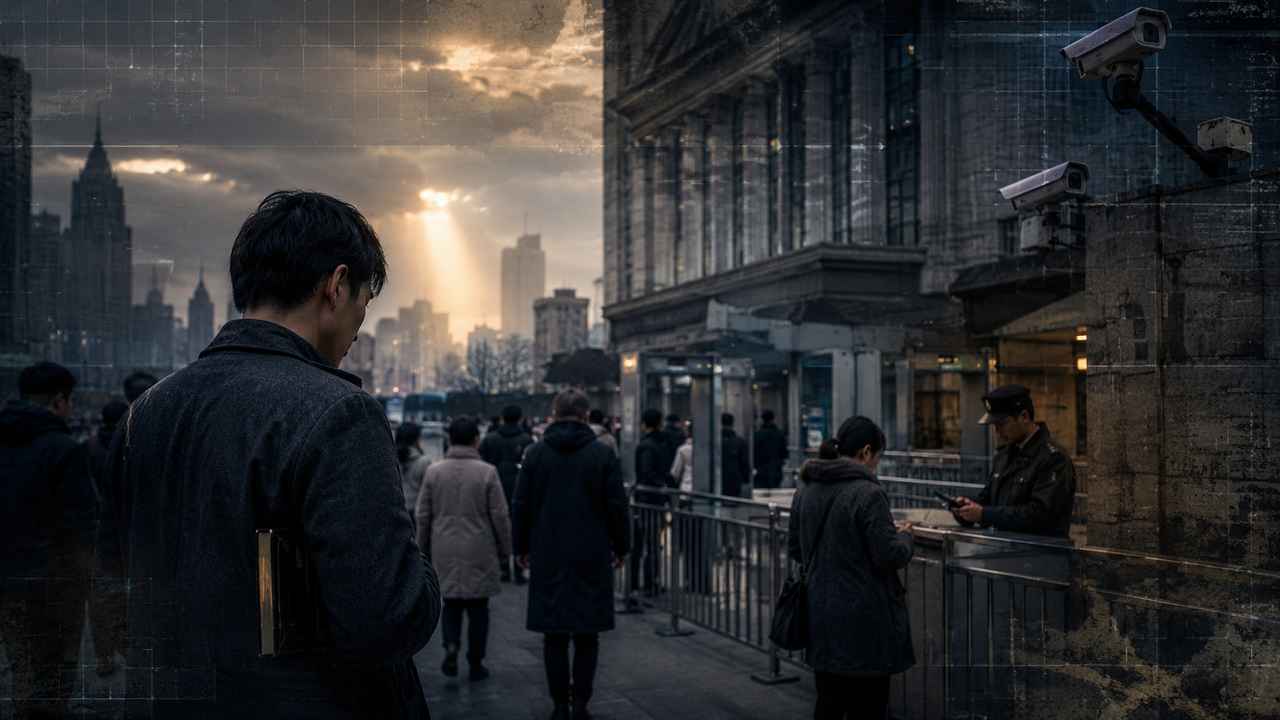
This July 2026 prayer watchlist helps Christians pray for countries where state power is restricting conscience, worship, truthful speech, civil society, public reporting, lawful movement, and ordinary civic life.
The list is not meant to stir fear, outrage, or political contempt. It is meant to guide informed intercession for prisoners, families, churches, journalists, lawyers, minorities, civil-society workers, rulers, officials, and ordinary citizens living under severe restriction.
This July 2026 ranking focuses on countries where state power is restricting public life through surveillance, censorship, detention, forced registration, movement controls, religious-control measures, media pressure, national-security prosecutions, NGO restrictions, or threats of punishment. It helps Christians pray for people, churches, families, journalists, lawyers, civil-society workers, minorities, prisoners, and ordinary citizens who may face punishment for speaking truthfully, worshiping openly, organizing lawfully, reporting honestly, or following conscience.
This is a present prayer-burden ranking, not a ranking of national worth, human dignity, divine concern, or permanent status. A country outside the Top Ten may still carry grave suffering and urgent prayer needs. A country that falls in rank has not necessarily improved; it may simply have been overtaken by greater deterioration elsewhere. Likewise, an unchanged rank does not mean conditions are unchanged or acceptable. This is also not a Christian-persecution-only list. It focuses on countries where state restrictions, coercive controls, surveillance, legal pressure, civil-society limits, religious-control measures, media pressure, movement restrictions, and crackdowns are deeply constraining ordinary public life.
What Changed Since the Previous Ranking
How this July 2026 ranking compares with the May 2026 ranking.
Compared with the May 2026 ranking, this July ranking keeps the same Top Ten order. The May ranking order was North Korea, Eritrea, Afghanistan, Turkmenistan, China, Iran, Myanmar, Nicaragua, Russia, Belarus, with Cuba, Venezuela, Tajikistan, Vietnam, Saudi Arabia, and Burkina Faso listed as near-miss / watchlist countries.
The main July change is not a change in order, but a closer comparison between China and Iran. Iran’s current crackdown remains especially acute, with executions, national-security prosecutions, protest-related cases, and wartime internal-control claims making Iran the closest challenger to China in this ranking. But China remains narrowly above Iran because its state-control system is broader, more technologically integrated, more institutionally embedded, and more extensive across a much larger population. Iran is more acute in the present moment; China is broader and more structurally entrenched.
Belarus remains at #10 despite limited prisoner-release signals because current reporting still shows continuing journalist prosecution, extremist charges, and a large political-prisoner population. The recent pardons give a careful reason for thanksgiving, but they do not yet show structural opening. Cuba remains the strongest near-miss, Venezuela remains serious, and Burkina Faso is rising quickly, but Belarus still shows a more firmly embedded pattern of political imprisonment, journalist prosecution, extremist-label enforcement, and authoritarian control that has remained in place since the 2020 crackdown.
Ranking Method
How this State Pressure and Crackdown ranking was assessed.
This July 2026 ranking identifies countries where state restrictions, coercive controls, and crackdowns are presently most severe. It is not a list of “worst governments,” not a democracy index, not a Christian-persecution-only ranking, and not a headline roundup. It is a comparative prayer-burden ranking focused on where state power is most severely and broadly restricting religious practice, conscience, speech, reporting, civil society, movement, legal safety, and ordinary civic participation.
The ranking uses the weighted framework listed separately in the Ranking Criteria section. Where materially relevant, it considers official state explanations alongside outside criticism, confirmed facts, contested claims, and the final prayer-centered assessment. A government’s stated reason is part of the review, but it does not by itself settle whether the restriction is just, proportionate, or prayer-significant.
This July review draws on a wider range of sources. Human Rights Watch country reporting remains important, but the ranking does not rest on HRW alone. The review also draws from Freedom House’s country assessments for political-rights and civil-liberties comparison, USCIRF material for religious-freedom and church-impact evidence, Reporters Without Borders material for press-freedom and information-control concerns, and current reporting from Associated Press, The Guardian, Le Monde, and other reputable sources where recent prosecutions, arrests, releases, executions, detentions, or crackdowns help explain how the countries are compared.
This wider range of sources helps distinguish long-term structural control from sharper current escalation. For example, China remains above Iran because its party-state restrictions are broader, more technologically integrated, and more deeply embedded across national life, while Iran remains very close because its present crackdown is more acutely escalatory and lethal. Belarus remains narrowly inside the Top Ten because current reporting still shows journalist prosecution and a large political-prisoner population, even though limited prisoner releases give a careful reason for thanksgiving.
Working Definition
What this ranking means by state restrictions, coercive controls, and crackdowns.
State restrictions, coercive controls, and crackdowns
For this ranking, state restrictions, coercive controls, and crackdowns means broad state action that materially restricts public life, conscience, worship, speech, association, media, dissent, civil society, education, movement, legal defense, or ordinary civic participation.
This may include arrests, detention, raids, enforced disappearances, intimidation, forced exile, citizenship stripping, surveillance, internet shutdowns, censorship, punitive registration systems, administrative closures, politicized courts, national-security laws, anti-extremism laws, religious-control laws, NGO restrictions, media pressure, movement bans, travel restrictions, or threats that make lawful public life difficult to practice.
A country does not qualify merely because it is authoritarian, controversial, poor, unstable, or frequently criticized. It qualifies when state power is actively and substantially restricting people’s ability to speak, worship, gather, organize, report, dissent, teach, serve, or live openly according to conscience.
Ranking Criteria
The factors used to compare countries and shape the final order.
-
Severity of State Restriction 25% Considers arrests, detention, raids, closures, censorship, surveillance, forced registration, punitive legal restrictions, administrative coercion, state intimidation, and criminalization of dissent, religious witness, reporting, or lawful organization.
-
Breadth Across National Life 20% Considers restrictions affecting churches, religious minorities, speech, protest, association, media, education, legal defense, family life, civil society, and everyday public fear.
-
Structural and Institutional Entrenchment 20% Considers how deeply restrictions are embedded in law, policy, policing, courts, administrative structures, ruling-party practice, or security systems.
-
Current Urgency or Escalation 15% Considers whether the crackdown has worsened recently or whether the country is presently in a sharper phase of coercion or restriction.
-
Reach and National Impact 10% Considers whether the restriction is localized or materially shaping national life across regions, sectors, and social groups.
-
Prayer-and-Ministry Relevance 10% Considers whether state restriction materially shapes church endurance, Christian witness, conscience, public worship, access to Scripture, mercy ministry, public fear, or faithfulness under pressure.
Countries Considered in This Review
A brief note on the wider field considered before the final Top Ten and watchlist.
Countries considered in this review included North Korea, Eritrea, Afghanistan, Turkmenistan, China, Iran, Myanmar, Nicaragua, Russia, Belarus, Cuba, Venezuela, Tajikistan, Vietnam, Saudi Arabia, Burkina Faso, Egypt, Syria, Uzbekistan, Ethiopia, and several other state-restriction cases.
The countries with the broadest and most deeply entrenched restrictions remain North Korea, Eritrea, Afghanistan, and Turkmenistan because the restrictions in those countries are closed, embedded in state institutions, and reach deeply into ordinary daily life. China and Iran require the closest comparison: China’s restrictions are broader and more institutionally integrated, while Iran’s crackdown is more acutely escalatory in the present moment. Myanmar, Nicaragua, Russia, and Belarus remain in the Top Ten because their coercive systems continue to restrict public life through courts, security bodies, military rule, constitutional control, extremist labels, political imprisonment, church restriction, media suppression, or war-linked legal repression.
The most serious near-miss countries are Cuba, Venezuela, Tajikistan, Vietnam, and Burkina Faso. Cuba remains the strongest near-miss because of political-prisoner concerns and serious state restrictions on religious communities, worship, and independent religious activity, but announced releases and uncertainty around the prisoner-release picture make the current assessment mixed. Burkina Faso is rising quickly because of civil-society dissolution, media restrictions, and journalist-detention allegations, but the crackdown is still less firmly embedded in law, courts, administration, and security practice than the countries that remain in the Top Ten.
Top Ten Countries
Each country entry explains the burden, why it appears in this ranking, and how Christians can pray.
North Korea
Near-total state control over worship, speech, movement, information, family life, and civic existence.
North Korea remains the clearest case of near-total state restriction and coercive control. Human-rights, civil-liberties, religious-freedom, and press-freedom sources all point to a system where the state severely restricts expression, movement, religious practice, independent information, and ordinary public life.
North Korea ranks first because state restriction is not limited to dissidents, protests, media, or religion. It reaches information, work, movement, border crossing, food access, punishment, social classification, and worship.
Unchanged at #1. Compared with the May 2026 ranking, no other country in the field showed a more totalizing state-control environment. This is unchanged rank, not unchanged suffering.
Direct official-state transparency is extremely limited. Where official framing is visible, loyalty, ideological purity, anti-foreign influence, national security, and defense of the socialist system appear to be used to justify broad control. Independent reporting assesses the same system as severe repression, surveillance, censorship, forced labor, religious punishment, and information control.
Totalitarian control, information isolation, forced labor, border restriction, prison camps, political fear, severe punishment for unauthorized information, and extreme danger for open Christian worship.
Closed-state control through surveillance, censorship, forced labor, movement restriction, ideological policing, collective punishment, and criminalization of unauthorized information.
Ordinary people live with little lawful space for dissent, independent information, free movement, or open worship. Hidden believers, prisoners, border-crossers, and families linked to suspected disloyalty remain especially vulnerable.
Pray for hidden believers, prisoners, families under surveillance, and those denied truthful information. Ask God to preserve His church in secrecy, restrain cruelty, and open doors for truth, mercy, and gospel hope.
Key current sources used: Human Rights Watch, World Report 2026: North Korea; Freedom House, Freedom in the World 2026: North Korea; USCIRF, North Korea country page; Reporters Without Borders, North Korea country page.
Eritrea
Militarized state control, indefinite national service, arbitrary detention, religious restriction, and forced flight.
Eritrea remains one of the world’s harshest coercive state systems. The evidence base points to closed civic space, indefinite national service, religious imprisonment, absence of independent media, arbitrary detention, and severe restrictions on public life.
Eritrea ranks second because repression is deeply institutionalized and national in scope. Its system combines indefinite service, arbitrary detention, enforced disappearance, religious control, and near-total absence of independent civic space.
Unchanged at #2. Compared with the May 2026 ranking, no credible July evidence found in this review supports lowering Eritrea out of the highest tier.
Eritrea’s official rationale has long leaned on national security, sovereignty, and unresolved regional threats. Access to official information is limited, so this ranking treats the government’s limited public cooperation with independent monitors as part of the context rather than as evidence of relief.
Indefinite national service, forced labor, arbitrary detention, enforced disappearance, closed civic space, religious imprisonment, media control, and exile pressure.
Militarized coercion through forced service, detention without due process, religious-control measures, banned independent media, and intimidation of critics and diaspora communities.
Families are fractured by forced service and exile; independent civic life is nearly absent; churches outside recognized structures face detention and fear; prisoners and disappeared detainees remain hidden from public accountability.
Pray for prisoners, conscripts, families separated by exile, and believers worshiping under restriction. Ask God to sustain His people, comfort prisoners and families, restrain abuse, expose hidden suffering, and bring truthful accountability where fear has become normal.
Key current sources used: Freedom House, Freedom in the World 2026: Eritrea; USCIRF, Eritrea country page; Reporters Without Borders, Eritrea country page; Human Rights Watch, World Report 2026: Eritrea.
Afghanistan
Taliban rule restricting women and girls, media freedom, public life, conscience, and minority communities.
Afghanistan remains near the top because Taliban rule is both structurally severe and actively enforced. The evidence base points to rule by decree, severe restrictions on women and girls, religious and minority constraints, media collapse, movement limits, and public enforcement through morality structures.
Afghanistan ranks third because Taliban restrictions are not merely written rules; they are enforced through vice-and-virtue structures, public punishments, checkpoints, media controls, arbitrary detention, and social exclusion.
Unchanged at #3. Afghanistan remains above Turkmenistan because its repression is both entrenched and visibly active across gender, media, minority life, morality enforcement, public movement, and religious control.
Taliban authorities present many restrictions as enforcement of Islamic law, morality, and public virtue. Independent rights reporting assesses those measures as severe restrictions on women and girls, media freedom, civil society, minorities, and critics.
Gender-based exclusion, morality-law enforcement, media suppression, arbitrary detention, public punishments, checkpoint culture, and hidden Christian vulnerability.
Morality-state coercion through vice-and-virtue enforcement, gender restrictions, media controls, public punishments, checkpoints, detention, and religious/minority restrictions.
Women and girls face systematic exclusion; journalists, critics, and activists operate under threat; minority communities face restriction; Christian life is tiny, hidden, and extremely vulnerable.
Pray for Afghan women and girls, hidden believers, journalists, detained critics, ethnic and religious minorities, and families living under coercive morality rule. Ask God to preserve hope, protect the vulnerable, and strengthen the church in secrecy and courage.
Key current sources used: Freedom House, Freedom in the World 2026: Afghanistan; USCIRF, Afghanistan country page; Reporters Without Borders, Afghanistan country page; Human Rights Watch, World Report 2026: Afghanistan.
Turkmenistan
Closed-state repression through movement controls, censorship, religious restriction, and fear.
Turkmenistan remains one of the world’s most closed authoritarian states. Civil-liberties, religious-freedom, press-freedom, and human-rights sources point to severe restrictions on expression, association, religion, peaceful assembly, independent media, internet access, movement, and critics.
Turkmenistan remains fourth because its restrictions are broad, institutional, and national. It does not show the same current escalation profile as Iran, but its ordinary civic life is more comprehensively restricted than most countries below it.
Unchanged at #4. Turkmenistan remains below Afghanistan because Afghanistan’s gender, media, and morality restrictions are more visibly active in daily enforcement, but it remains above China and Iran because its civic space is more completely closed.
Turkmen authorities often present travel controls, administrative denials, and security-linked actions through bureaucratic or state-security explanations. Direct official-source transparency is limited, so this ranking treats that limitation as part of the source context.
Movement bans, internet control, religious restriction, political imprisonment, enforced disappearances, exile pressure, and fear of state punishment.
Closed-state control through travel bans, internet censorship, blocked independent media, religious registration controls, political imprisonment, enforced disappearance, and pressure on critics abroad.
Citizens and believers have little lawful space for independent worship, dissent, travel, association, or reporting. Families of critics may be pressured, and exiles face danger if returned.
Pray for believers and ordinary citizens living under severe control. Ask God to sustain quiet faithfulness, protect families targeted by the state, and open doors for truth, worship, and mercy.
Key current sources used: Freedom House, Freedom in the World 2026: Turkmenistan; USCIRF, Turkmenistan country page; Reporters Without Borders, Turkmenistan country page; Human Rights Watch, World Report 2026: Turkmenistan.
China
Broad, technologically integrated party-state control across speech, religion, surveillance, ethnic minorities, Hong Kong, and transnational pressure.
China remains one of the world’s broadest and most technologically sophisticated state-restriction systems. The evidence base points to party-state control over governance, media, online speech, religion, universities, civil society, ethnic-minority regions, Hong Kong, and critics inside and outside the country.
China ranks fifth because its state-control system is extraordinarily broad, durable, and technologically integrated. Iran’s current escalation is sharper, but China’s breadth, institutional entrenchment, and national reach remain greater under the canonical criteria.
Unchanged at #5. Iran presses closely because its current crackdown is acute and deadly, but China remains above Iran because its restriction reaches more sectors across a larger population and is deeply embedded in the state’s legal, technological, and party structures.
Chinese authorities frame many restrictions in terms of national security, separatism, social stability, anti-extremism, ethnic unity, and lawful religious management. Independent human-rights, religious-freedom, and press-freedom sources assess these legal and administrative systems as tools that deny basic freedoms, suppress critics, control religion, and impose forced assimilation.
Surveillance, censorship, house-church restrictions, Xinjiang imprisonment, Tibet assimilation, Hong Kong national-security prosecutions, activist imprisonment, and transnational pressure.
Party-state control through censorship, surveillance, national-security law, religious regulation, forced assimilation, politicized courts, and extraterritorial pressure.
Churches, Uyghurs, Tibetans, Hong Kong dissidents, lawyers, journalists, students, families of activists, and ordinary citizens face restrictions from a state that treats independent conviction as a political risk.
Ask God to help believers worship and disciple faithfully under surveillance, strengthen families and minorities facing state pressure, and protect journalists and lawyers who risk punishment for truthful reporting and legal defense.
Key current sources used: Freedom House, Freedom in the World 2026: China; USCIRF, China country page; Reporters Without Borders, China country page; Human Rights Watch, World Report 2026: China.
Iran
An acute security-state crackdown marked by executions, protest repression, national-security prosecutions, minority pressure, and wartime internal control.
Iran remains one of the most acute crackdown states in July 2026. Civil-liberties, religious-freedom, human-rights, and current reporting sources point to executions, mass arbitrary arrests, persecution of women and minorities, repression of real or perceived dissidents, national-security prosecutions, disputed confessions, and wartime internal-control claims.
Iran ranks sixth, just below China, because its current crackdown is highly severe and escalatory but not as broad, technologically integrated, or structurally extensive as China’s system. It remains the closest country to moving upward.
Unchanged at #6. This is not a sign of relief. Iran remains near China because its current crackdown is especially sharp; however, China still outranks it under the canonical weighting because breadth, entrenchment, and national reach carry significant weight.
Iranian authorities frame many prosecutions through national security, espionage, hostile-state collaboration, public-order offenses, and serious religious or legal charges such as moharebeh. Rights groups and current reporting challenge the fairness of procedures and the reliability of confessions in many cases.
Executions, mass arrests, national-security prosecutions, protest repression, minority targeting, information control, internet shutdowns, and pressure on families and detainees.
Security-state coercion through executions, Revolutionary Court prosecutions, espionage and national-security charges, protest repression, compulsory-religious enforcement, minority restrictions, and intimidation of families.
Prisoners, protesters, grieving families, ethnic and religious minorities, women, journalists, and underground believers face a climate of punishment and fear. Christian and other religious-minority communities face restriction within a broader security-state environment.
Pray for prisoners, grieving families, persecuted minorities, underground Christians, and those facing execution, national-security charges, or espionage accusations used to punish dissent or religious activity. Ask God to restrain bloodshed, expose injustice, comfort the terrified, and sustain faithful witness.
Key current sources used: Freedom House, Freedom in the World 2026: Iran; USCIRF, Iran country page; Human Rights Watch, World Report 2026: Iran; The Guardian, “Iran conducting near-daily prisoner executions in secrecy, say rights groups”; Le Monde, “Iran intensifies internal crackdown as US and Israel wage war on regime”.
Myanmar
Military rule, collapsed rule of law, politicized courts, surveillance, election repression, aid obstruction, and anti-dissent violence.
Myanmar remains one of the world’s harshest active state-crackdown environments. Civil-liberties, religious-freedom, human-rights, and press-freedom sources point to military rule, political detention, digital repression, violence against civilians, attacks affecting religious communities, and severe restrictions on civic life.
Myanmar ranks seventh because its repression is severe but intertwined with civil war and incomplete territorial control. The junta’s control is brutal where it operates, but it does not exercise the same closed nationwide reach as North Korea, Eritrea, Turkmenistan, China, or Iran.
Unchanged at #7. Myanmar remains below Iran and China but above Nicaragua, Russia, and Belarus because the junta combines military rule, armed conflict, political detention, election manipulation, digital repression, and violence against civilians.
The junta frames many actions through election security, counterterrorism, sovereignty, cybersecurity, and public-order claims. Independent rights reporting assesses the same system as a post-coup assault on civil and political life, rule of law, and civilian protection.
Military courts, arbitrary detention, torture, election repression, cybersecurity controls, aid obstruction, surveillance, forced recruitment, and collective punishment.
Military-state repression through closed courts, martial-law systems, counterterrorism charges, election-criminalization laws, digital surveillance, aid obstruction, and detention of critics and families.
Churches, humanitarian workers, lawyers, journalists, ethnic minorities, activists, displaced families, and ordinary civilians face overlapping danger from war and military coercion.
Ask God to protect civilians, strengthen churches under military pressure, sustain those serving displaced families, and keep truthful witness alive where violence and state coercion have made daily life fearful and unstable.
Key current sources used: Freedom House, Freedom in the World 2026: Myanmar; USCIRF, Burma country page; Human Rights Watch, World Report 2026: Myanmar; Reporters Without Borders, Myanmar country page.
Nicaragua
Consolidated state control over politics, churches, civil society, nationality, media, universities, and exile.
Nicaragua remains one of the clearest Western Hemisphere examples of structural state crackdown. Civil-liberties, religious-freedom, human-rights, and current reporting sources point to constitutional consolidation, church restrictions, arbitrary arrest, prosecution, enforced disappearance, forced exile, citizenship revocation, asset confiscation, NGO closures, and media repression.
Nicaragua ranks eighth because its state restriction is unusually comprehensive across politics, civil society, media, universities, nationality, church life, and exile. The death in custody of Indigenous leader Brooklyn Rivera adds current concern about detention conditions and official accountability.
Unchanged at #8. Nicaragua remains below Myanmar because Myanmar’s military repression is more violent and war-linked, but above Russia and Belarus because Nicaragua’s constitutional consolidation, church restrictions, NGO closures, citizenship stripping, and exile pressure remain unusually comprehensive.
Nicaragua’s government reported that Brooklyn Rivera died from a bacterial infection after COVID-related deterioration. Associated Press reporting says OHCHR called for an impartial investigation and raised concerns about detention conditions, medical access, and the long failure to disclose his whereabouts.
Church repression, NGO closures, loss of citizenship, exile pressure, media control, political imprisonment, Indigenous leadership pressure, and one ruling family’s expanding control of state institutions.
Executive-party consolidation through constitutional overhaul, surveillance, cancellation of organizations’ legal status, church-property pressure, forced exile, loss of citizenship, and intimidation.
Pastors, churches, religious communities, Indigenous leaders, civil-society workers, students, journalists, families of exiles, and independent voices face direct restriction from a state that treats independent organization as a threat.
Pray for pastors, churches, Indigenous communities, exiles, families, and those deprived of citizenship or property. Ask God to strengthen His people in truth, protect public worship, and restrain the misuse of state power against His church and the vulnerable.
Key current sources used: Freedom House, Freedom in the World 2026: Nicaragua; USCIRF, Nicaragua country page; Human Rights Watch, World Report 2026: Nicaragua; Associated Press, “The UN calls on Nicaragua to investigate Indigenous leader Brooklyn Rivera’s death in custody”.
Russia
War-hardened authoritarianism targeting dissent, civil society, independent media, rights groups, religious minorities, and anti-war speech.
Russia remains a major state-restriction country because its war has hardened repression against critics, journalists, NGOs, rights defenders, anti-war voices, religious communities outside state preference, and organizations labeled “foreign agents,” “undesirable,” or “extremist.”
Russia ranks ninth because its repression is severe, national, legally expansive, and linked to war. Current reporting on Russia’s criminalization of Memorial-related activities is a strong example of the state’s widening restriction on civil society.
Unchanged at #9. Russia remains above Belarus because its legal machinery is broader, more internationally consequential, and more tightly tied to war, civil society, media, and anti-war speech.
Russian authorities frame many prosecutions through national security, anti-extremism, foreign influence, military disinformation, and protection of traditional values. Independent rights reporting assesses these tools as mechanisms for silencing dissent, anti-war speech, independent journalism, religious minorities, and civil society.
Foreign-agent restrictions, undesirable-organization prosecutions, extremist labels, anti-war censorship, political imprisonment, media restrictions, and pressure on rights groups.
Legal repression through foreign-agent laws, undesirable or extremist designations, anti-war speech prosecutions, blocked media, in-absentia prosecution tools, and censorship justified through state-security language.
Dissidents, journalists, lawyers, rights defenders, churches or ministries that continue public witness, mercy work, or humanitarian service outside state-approved narratives, families of political prisoners, LGBT people, and anti-war voices face shrinking room for truthful speech and conscience.
Pray for prisoners, independent believers, journalists, lawyers, rights defenders, and families living under war-linked legal repression. Ask God to keep truthful witness alive, give courage to those facing prosecution, bring repentance to those misusing law and propaganda, and restrain further punishment of conscience.
Key current sources used: Freedom House, Freedom in the World 2026: Russia; USCIRF, Russia country page; Human Rights Watch, World Report 2026: Russia; Associated Press, “Russian court criminalizes the activities of the Nobel Prize-winning rights group Memorial”.
Belarus
Entrenched post-2020 repression with political imprisonment, journalist prosecutions, extremist labels, exile pressure, and religious-registration controls.
Belarus remains a severe crackdown state. Civil-liberties, human-rights, and current reporting sources point to politically motivated repression, fabricated “extremism” charges, political prisoners, journalist prosecution, and continued targeting of dissent.
Belarus stays in the Top Ten because repression remains systemic even after selective releases. Current reporting shows continued journalist prosecution and a large political-prisoner population, which keeps Belarus narrowly inside the final ten.
Unchanged at #10. Belarus remains just inside the Top Ten because July evidence still shows continuing prosecution of journalists and a large political-prisoner population. It remains below Russia because Russia’s war-linked legal repression, foreign-agent, undesirable-organization, extremist-label machinery, and international civil-society pressure are broader.
Belarusian prosecutions are framed through charges such as discrediting the state and forming extremist organizations. Rights groups and journalist organizations assess such charges as tools used to punish critical reporting and political dissent. Recent pardons of political prisoners provide a limited reason for thanksgiving, but the remaining prisoner numbers and new prosecutions show that relief is not yet structural.
Political imprisonment, extremist-label prosecutions, journalist imprisonment, religious-registration pressure, forced exile, incommunicado detention, and fear around public dissent.
Authoritarian entrenchment since the 2020 crackdown through extremist labels, political-prisoner pressure, journalist prosecutions, incommunicado detention, religious-registration pressure, exile harassment, and criminalization of association.
Families of prisoners, journalists, clergy, churches, opposition supporters, former prisoners, and civil-society workers remain under pressure, even where selective prisoner releases occur.
Pray for political prisoners, journalists, released prisoners still under pressure, churches navigating registration demands, and families living with fear. Give thanks for every prisoner released, while asking God for deeper justice, truth, and lasting freedom.
Key current sources used: Freedom House, Freedom in the World 2026: Belarus; Human Rights Watch, World Report 2026: Belarus; Associated Press, “Belarus convicts a journalist and sentences him to 3.5 years in prison”; Associated Press, “Belarus’ authoritarian leader pardons 28 political prisoners to ease ties with the West”.
Near-Miss / Watchlist Countries
Countries that remained serious enough to watch, but fell just outside the final ten after comparison.
Cuba — Cuba is now the strongest near-miss. Human Rights Watch documents repression of dissent and public criticism, USCIRF documents serious state restrictions on religious communities, and Associated Press reported announced prisoner releases. Cuba remains outside the Top Ten because the current assessment is mixed, while Belarus still shows current evidence of journalist prosecution and a large remaining political-prisoner population.
Venezuela — Venezuela remains a serious contender because Freedom House and Human Rights Watch document repression, arbitrary detention, enforced disappearances, torture allegations, civil-society restrictions, and restrictions on expression. It remains outside the Top Ten because the countries that remain in the Top Ten show a stronger combination of structural entrenchment, current prosecution pressure, national reach, or closed-state control under the criteria used for this ranking.
Tajikistan — Tajikistan remains a close watchlist case. Freedom House, USCIRF, and Human Rights Watch point to serious restrictions involving dissent, religion or belief, journalists, and political life. It remains outside the Top Ten because its present restrictions, though severe, appear narrower in breadth and global reach than Belarus, Russia, Nicaragua, and Myanmar.
Vietnam — Vietnam remains a serious state-restriction country. Freedom House, USCIRF, and Human Rights Watch document restrictions on expression, association, assembly, movement, religion, independent groups, and political opposition. It remains outside the Top Ten because the current evidence does not yet show restriction as broad nationwide or as sharply escalated as the countries in the Top Ten.
Burkina Faso — Burkina Faso shows the greatest deterioration among the watchlist countries. Freedom House documents deterioration under military rule, Human Rights Watch reported intensified civil-society restrictions, and Associated Press reported journalist-detention allegations and official conscription claims. It remains outside the Top Ten because the crackdown is worsening quickly but is not yet as firmly embedded in law, courts, administration, and security practice as in Belarus or Russia.
Final Summary Judgment
What most distinguishes this ranking from a general list of troubled countries.
How to Pray Through This List
Use this ranking as a pathway into specific, compassionate prayer.
-
Pray first for those directly affected by coercive state control: prisoners, families of detainees, journalists, lawyers, pastors, hidden believers, dissidents, women and girls under morality enforcement, ethnic and religious minorities, and ordinary citizens who face detention, surveillance, prosecution, censorship, or movement controls.
-
Pray for churches and believers under restriction: that they would be wise, courageous, patient, faithful in worship, and ready for mercy, truth, and witness.
-
Pray for rulers, judges, police, prison authorities, party officials, intelligence officers, and security bodies: that God would restrain cruelty, expose falsehood, turn hearts toward justice, and prevent states from treating conscience, worship, and truth as enemies.
-
Pray for Scripture, truthful reporting, pastoral care, legal help, family support, and practical mercy to reach people cut off by censorship, surveillance, detention, movement controls, or fear.
After praying through the list, continue with the linked country prayer guides and the site’s prayer calendar so this article becomes a starting point for continued intercession rather than a single reading.
Key Sources Consulted
Selected sources used to support the July 2026 ranking and country comparisons.
Broad civil-liberties and political-rights comparison
- Freedom House, Freedom in the World 2026: North Korea; Eritrea; Afghanistan; Turkmenistan; China; Iran; Myanmar; Nicaragua; Russia; Belarus; Cuba; Venezuela; Tajikistan; Vietnam; and Burkina Faso, consulted for comparative political-rights and civil-liberties context.
Religious-freedom and church-impact evidence
- USCIRF country pages for North Korea, Eritrea, Afghanistan, Turkmenistan, China, Iran, Burma / Myanmar, Nicaragua, Russia, Cuba, Tajikistan, and Vietnam, consulted for religious-freedom restrictions, state control of religious communities, imprisonment or punishment of religious believers, and church-impact concerns.
Press-freedom, censorship, and information-control evidence
- Reporters Without Borders country pages for North Korea, Eritrea, Afghanistan, Turkmenistan, China, Iran, Myanmar, and Russia, consulted for media freedom, journalist safety, censorship, information control, and state restrictions on independent reporting.
Human-rights country documentation
- Human Rights Watch, World Report 2026 country chapters for North Korea, Eritrea, Afghanistan, Turkmenistan, China, Iran, Myanmar, Nicaragua, Russia, Belarus, Cuba, Venezuela, Tajikistan, and Vietnam, consulted for documented restrictions on expression, association, religion, assembly, movement, courts, detention, political imprisonment, civil society, and state repression.
Current country-specific reporting
- The Guardian, “Iran conducting near-daily prisoner executions in secrecy, say rights groups”, consulted for Iran’s execution surge, prisoner-treatment concerns, family pressure, and internet-blackout context.
- Le Monde, “Iran intensifies internal crackdown as US and Israel wage war on regime”, consulted for Iran’s intensified internal crackdown, accelerated trials, executions, security-related charges, and disputed confessions.
- Associated Press, “Belarus convicts a journalist and sentences him to 3.5 years in prison”, consulted for continuing journalist prosecution and extremist-charge context in Belarus.
- Associated Press, “Belarus’ authoritarian leader pardons 28 political prisoners to ease ties with the West”, consulted for Belarus prisoner-release signals and the continued political-prisoner context.
- Associated Press, “The UN calls on Nicaragua to investigate Indigenous leader Brooklyn Rivera’s death in custody”, consulted for Nicaragua’s Brooklyn Rivera case, detention-condition concerns, and official explanation.
- Associated Press, “Russian court criminalizes the activities of the Nobel Prize-winning rights group Memorial”, consulted for Russia’s continuing legal pressure on civil society.
- Associated Press, “Cuba will release 51 people from prison in an unexpected move”, consulted for Cuba’s prisoner-release context.
- Human Rights Watch, “Burkina Faso: Crackdown on Civil Society”, and Associated Press, “Burkina Faso junta secretly detained journalist and others, advocacy group says”, consulted for Burkina Faso’s civil-society restrictions and journalist-detention allegations.
Source Context
How to understand the different kinds of sources behind this ranking.
This ranking draws on several kinds of sources: broad civil-liberties and political-rights assessments, religious-freedom reporting, press-freedom monitoring, human-rights documentation, and current reporting on arrests, prosecutions, releases, executions, detentions, media restrictions, or crackdowns. These sources do not all measure the same thing. Some help compare long-term civic restriction; others help identify current escalation or specific recent cases.
Several countries in this list allow little independent access, restrict reporting, or punish unauthorized information. For that reason, source limitations are part of the assessment. The ranking should be read as a careful prayer-centered assessment based on the best available public evidence, not as a claim of mathematical precision.
Continue praying
Continue praying for the nations
Use this list as one doorway into a wider rhythm of prayer for the nations.


