


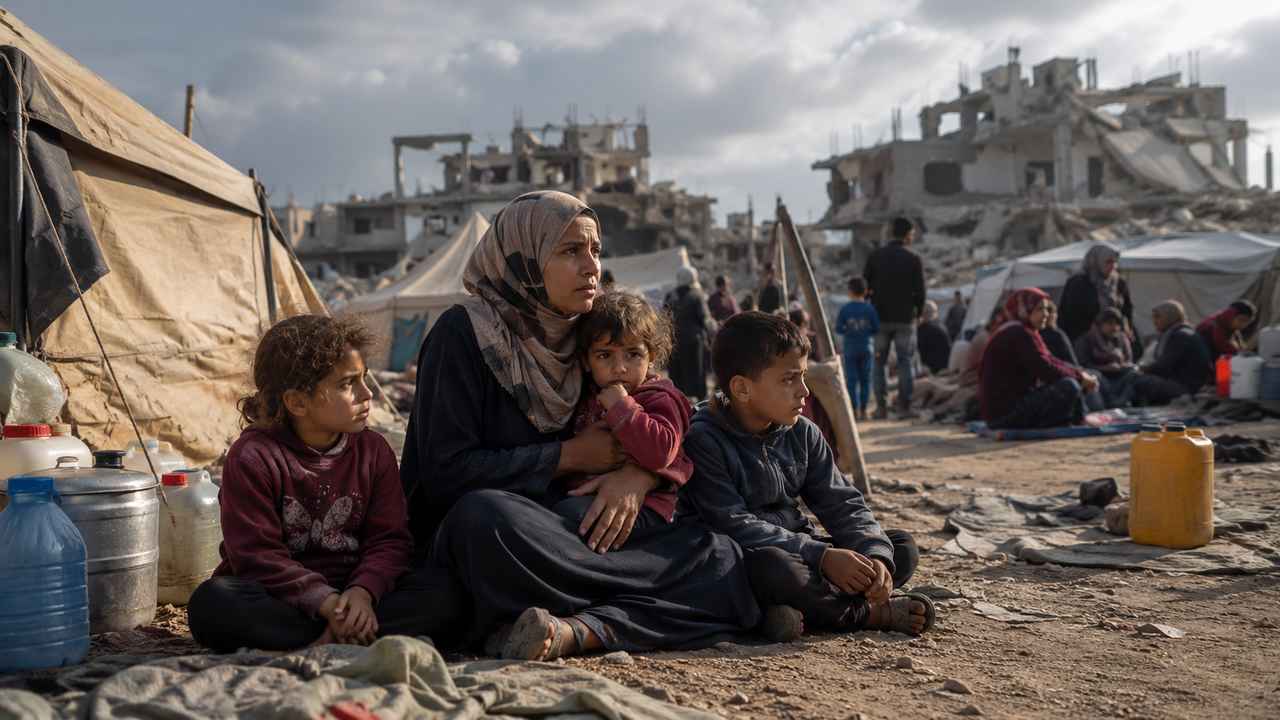
The countries in this list are not gathered because they are most visible in headlines, nor because one form of suffering can be easily compared with another. They are here because, as of July 2026, they represent some of the world’s gravest concentrations of humanitarian crisis and severe human suffering. In these countries, displacement, acute hunger, damaged health systems, insecurity, economic collapse, disease risk, sudden disasters, and blocked or underfunded relief have made daily life precarious for millions.
This ranking is therefore a disciplined prayer-burden list, not a cold severity scoreboard. Human suffering cannot finally be measured by a table, and no ranking can capture the grief of a family uprooted from home, a mother unable to find food for her children, an elderly person left without medicine, or a church trying to serve neighbors amid fear and exhaustion. But careful comparison can help readers pray with clearer attention rather than vague concern.
For Christians, the aim is not detached observation. Behind every entry are image-bearers of God, communities under strain, local churches seeking to remain faithful, and humanitarian workers serving under conditions that are often dangerous, restricted, or deeply underfunded. This list is meant to help readers see where mercy is urgently needed and then carry those burdens before the Lord with humility, compassion, and perseverance.
The July 2026 humanitarian ranking is dominated by war-driven displacement, acute hunger, child malnutrition, damaged health care, unsafe water, strained sanitation, disease threats, sudden disasters, aid-access constraints, and severe funding shortfalls. Sudan remains first because no other country in this review combines displacement, hunger, malnutrition, active war, collapsed services, and difficulty of relief at the same level. The State of Palestine, the Democratic Republic of the Congo, Yemen, South Sudan, Afghanistan, Haiti, Somalia, Myanmar, and Venezuela make up the current Top Ten when severity, scale, current urgency, national disruption, and difficulty of relief are weighed together.
This is a present humanitarian suffering ranking. It is not a claim that people in one country matter more than people in another, and it is not a claim that suffering outside the Top Ten is minor. It is a comparative judgment about where humanitarian crisis and severe suffering appear most acute, widespread, life-disrupting, and difficult to relieve right now.
What Changed Since the May 2026 Ranking
A brief explanation of how the July 2026 ranking compares with the May 2026 ranking.
Because no June 2026 humanitarian suffering ranking was published, this July update is compared with the May 2026 ranking.
- Sudan remains #1. Its unmatched combination of war, displacement, acute hunger, malnutrition, aid-access difficulty, and collapsed services keeps it clearly first.
- The State of Palestine remains #2. Gaza’s suffering remains unusually concentrated, with widespread displacement, limited food-security improvements that remain fragile, damaged health care, strained public services, water and sanitation strain, and life-changing injuries.
- DRC remains #3. The Democratic Republic of the Congo continues to combine enormous hunger and displacement with armed violence, overlapping health emergencies, and Ebola-response strain in the east.
- Yemen remains #4. Yemen’s long-running hunger, displacement, disease risks, economic deterioration, and limits on relief access keep it in the top tier.
- South Sudan rises from #9 to #5. The reason is the severity of the 2026 lean-season hunger burden, including catastrophic hunger in several counties, acute malnutrition, Sudan-war spillover, and worsening conflict and access risks.
- Afghanistan and Haiti remain at #6 and #7. Afghanistan’s scale remains immense; Haiti’s burden remains smaller in absolute population but extremely acute because armed-group violence, hunger, displacement, and fragile services reinforce one another.
- Somalia enters the Top Ten at #8. It enters because hunger is worsening and aid cuts may leave many people without emergency assistance.
- Myanmar moves from #8 to #9. This is not because Myanmar’s crisis has become minor, but because Somalia’s hunger risk and Venezuela’s sudden earthquake emergency now carry more immediate comparative urgency in this review.
- Venezuela enters at #10. The late-June earthquakes created an acute disaster emergency on top of already fragile health and public-service conditions.
- Syria and Ukraine move to near-miss status. Both remain grave humanitarian concerns, but the evidence reviewed for July placed them below countries facing more immediate hunger escalation, disaster impact, aid-access difficulty, or public-service breakdown.
Ranking Method
How this prayer-burden ranking was prepared and what kind of judgment it represents.
Ranking date: July 1, 2026.
This ranking prioritizes current humanitarian sources, especially WFP, OCHA, UNHCR, UNICEF, WHO, IPC-linked reporting, UN food-security warnings, and reputable current reporting where it helps identify very recent escalation or disaster impact. Current-affairs reporting is used carefully and only when it materially affects the present assessment of humanitarian need, especially where fast-moving disaster information is not yet fully consolidated in public UN situation pages.
This is not a single-metric ranking. A country may rank above a larger caseload if the present suffering is more concentrated, urgent, difficult to relieve, or rapidly deteriorating. Conversely, a country with a very large humanitarian caseload may rank lower if another crisis has a sharper current trajectory or more immediate life-threatening disruption.
Working Definition
The humanitarian burden this ranking is weighing.
Humanitarian crisis and severe suffering
For this ranking, a country qualifies if it is currently experiencing humanitarian crisis and severe suffering at meaningful scale through some combination of mass displacement, acute food insecurity, famine risk, severe malnutrition, major civilian harm, damaged health care, lack of shelter, unsafe water, weak sanitation, education disruption, protection risks, broad national instability, humanitarian access constraints, disease burden, sudden disaster, or prolonged conditions that make daily life deeply unstable or unsustainable.
This is not limited to war alone. Conflict is a major driver in many cases, but state collapse, economic breakdown, drought, disease outbreaks, sudden disasters, aid restrictions, and protection crises also matter.
Ranking Criteria
The factors used to compare countries and shape the final order.
-
Humanitarian Severity 25% Measures the intensity of present suffering, including hunger, death, displacement, civilian harm, disease, service collapse, trauma, and immediate vulnerability.
-
Scale of Affected Population 20% Considers how many people are materially affected or in need of humanitarian assistance.
-
Depth of National Disruption 20% Considers how deeply public systems, livelihoods, safety, mobility, health care, food systems, and daily life are disrupted.
-
Current Urgency / Escalation 15% Considers whether the crisis is worsening now, entering a new acute phase, or showing famine, disease, conflict, disaster, or displacement acceleration.
-
Difficulty of Relief 10% Considers how hard it is to relieve suffering because of conflict, insecurity, access restrictions, collapsed systems, blocked crossings, underfunding, or repeated shocks.
-
Prayer-and-Ministry Relevance 10% Considers whether the country’s present burden materially shapes church endurance, Christian witness, mercy ministry, local fear, family survival, or the need for focused prayer.
Countries Considered in This Review
Countries that were seriously weighed before the final Top Ten was set.
The countries seriously considered for July 2026 included: Sudan, State of Palestine, Democratic Republic of the Congo, Yemen, South Sudan, Afghanistan, Haiti, Somalia, Myanmar, Venezuela, Syria, Ukraine, Ethiopia, Lebanon, Mali, Burkina Faso, Nigeria, Chad, Central African Republic, and Mozambique.
The most difficult comparisons come near the final positions in the list. Somalia moved into the Top Ten because hunger is worsening and funding cuts may sharply reduce emergency assistance. Venezuela entered because a sudden earthquake disaster created severe acute humanitarian needs in a country where hospitals, public services, water systems, and local response capacity were already under strain. Syria and Ukraine remain grave near-misses, but Syria’s prolonged and deeply entrenched crisis and Ukraine’s comparatively stronger functioning state systems placed them just below Venezuela’s acute disaster burden in this July assessment.
Top Ten Countries
Each country entry explains the burden, the ranking judgment, and how Christians can pray.
Sudan
The clearest current case of nationwide humanitarian collapse.
Sudan remains the world’s clearest humanitarian catastrophe in this July 2026 ranking. WFP reports more than 19 million people facing acute hunger, 825,000 children under five expected to suffer severe acute malnutrition in 2026, and multiple areas at risk of famine. UNHCR reports nearly 13 million people forced to flee their homes, including more than 10 million internally displaced by the fighting.
Sudan ranks first because no other country currently combines displacement, hunger, malnutrition, active war, protection risk, infrastructure collapse, and difficulty of relief at this scale. The crisis is both immense and hard to relieve; civilians face hunger, disease outbreaks, bombings, attacks, sexual violence, collapsed services, and limited access to basic support.
Sudan remains #1 because its unmatched combination of war, displacement, hunger, malnutrition, aid-access difficulty, and collapsed services keeps it clearly first.
WFP says almost 19.5 million people face crisis levels of hunger or worse, with some already in catastrophic conditions, and that WFP urgently needs major funding to continue operations. UNHCR adds that vital infrastructure has collapsed in parts of the country, safe water, health care, and shelter are severely limited, and some areas where aid agencies have struggled to secure access have confirmed famine conditions.
Sudan’s suffering is both national and regional. Its war has shattered daily life inside the country and pushed millions into neighboring countries that are often fragile themselves.
Pray for God’s mercy on displaced families, hungry children, grieving communities, exhausted caregivers, and those trapped by violence. Pray for protection from atrocities, open humanitarian access, food and medicine to reach the most vulnerable, and endurance for churches and believers serving amid fear and loss.
Sources for this entry: WFP Sudan emergency page; UNHCR Sudan emergency appeal; humanitarian food-security and displacement reporting on famine risk, access constraints, severe child malnutrition, and cross-border displacement.
State of Palestine
Extreme concentrated civilian suffering, especially in Gaza.
The State of Palestine remains near the top because Gaza’s humanitarian crisis is extraordinarily concentrated. WFP reports that 1.6 million people are facing high levels of acute food insecurity and that more than 100,000 children, along with 37,000 pregnant and breastfeeding women, are projected to suffer acute malnutrition. OCHA’s May 2026 situation report describes dire living conditions, widespread displacement, damaged health care and public services, serious movement restrictions, and severe constraints on humanitarian operations.
Its total population is smaller than Sudan, DRC, Yemen, or Afghanistan, but the density of suffering is exceptionally high. Repeated displacement, shelter in tents or damaged structures, water and sanitation strain, health-system overload, life-changing injuries, limited food-security improvements that remain fragile, and restrictions that hamper aid make this one of the world’s most acute humanitarian settings.
The State of Palestine remains #2 because Gaza’s suffering remains unusually concentrated, with widespread displacement, limited food-security improvements that remain fragile, damaged health care, strained public services, water and sanitation strain, and life-changing injuries.
OCHA reports that many displaced families still shelter in overcrowded tents or damaged structures, clean water remains inconsistent, waste management is impaired, and humanitarian operations are undermined by restrictions, shortages, damaged infrastructure, movement constraints, and insecurity. OCHA also cites WHO’s estimate that more than 43,000 people in Gaza have life-changing injuries, with rehabilitation services critically overstretched.
This is a severe civilian protection and survival crisis. Families face displacement, hunger risk, damaged homes, unsafe water, medical shortages, trauma, and uncertain aid access.
Pray for civilians, the wounded, the hungry, the displaced, and grieving families. Pray for relief access, healing for traumatized children, wisdom for leaders, restraint of violence, and faithful witness by believers living under fear, exhaustion, and sorrow.
Sources for this entry: WFP Palestine emergency page; OCHA occupied Palestinian territory Humanitarian Situation Report, 15 May 2026; WHO-linked injury and rehabilitation estimates cited by OCHA; IPC-linked food-security reporting.
Democratic Republic of the Congo
A vast conflict, hunger, displacement, and disease-risk crisis.
The Democratic Republic of the Congo remains one of the world’s largest and most complex humanitarian emergencies. WFP reports 26.5 million people facing acute food insecurity, 7.8 million internally displaced people, and emergency-level hunger surging in conflict-hit eastern provinces. The crisis is driven by conflict, displacement, hunger, weak services, cholera, malaria, Mpox, flooding, landslides, and escalating violence in the east.
DRC remains third because its humanitarian crisis combines enormous scale with deep structural difficulty. Eastern DRC’s conflict-driven displacement and food insecurity are now compounded by disease risk, including the need to contain Ebola in conflict-affected areas where insecurity makes health work harder. WFP states that it is working with the Government of DRC, WHO, and partners to support a coordinated Ebola response.
DRC remains #3 because it continues to combine enormous hunger and displacement with armed violence, overlapping health emergencies, and Ebola-response strain in the east.
The hunger crisis is especially severe in North Kivu, South Kivu, Ituri, and Tanganyika, where WFP says 3.6 million people are expected to face emergency levels of food insecurity. WFP also notes that nearly half of children under five—about 3.2 million children—are stunted due to chronic malnutrition, while overlapping health emergencies and access constraints make relief more difficult.
DRC’s crisis is vast, chronic, and repeatedly renewed by violence, displacement, hunger, epidemics, and weak public systems. Many families endure repeated cycles of flight and deprivation.
Pray for protection from armed violence, mercy for displaced families, food for the hungry, containment of disease outbreaks, and courage for churches serving in insecure areas. Pray that violence would be restrained and that aid would reach vulnerable communities before suffering deepens.
Sources for this entry: WFP Democratic Republic of the Congo emergency page; WFP / WHO-linked Ebola-response material; current humanitarian reporting on eastern DRC conflict, hunger, displacement, and disease risk.
Yemen
A long-running national survival crisis of hunger, weak services, displacement, and constrained relief.
Yemen remains one of the world’s largest humanitarian emergencies. WFP reports that 19.5 million people need humanitarian assistance, 17.1 million people are food insecure, and 4.8 million people are internally displaced.
Yemen ranks fourth because its humanitarian suffering is both large and deeply entrenched. It does not currently show the same displacement acceleration as Sudan or DRC, but the country’s hunger burden, weak health services, economic deterioration, disease risk, displacement, and access constraints keep it in the top tier.
Yemen remains #4 because its long-running hunger, displacement, disease, economic, and access burdens keep it in the top tier.
WFP describes more than a decade of conflict as having created one of the world’s most severe humanitarian crises. It says conflict, economic downturns, recurring disease, and displacement continue to drive food insecurity, and that food assistance has helped keep famine at bay but remains dependent on continued support.
Yemen remains a country where years of deprivation have left many families with few resources to manage daily life. Hunger, disease, displacement, and fragile services continue to shape daily life.
Pray for hungry families, malnourished children, mothers without adequate health care, and communities whose resources have been exhausted by years of crisis. Pray for peace, safe relief access, wise leadership, and churches and believers to serve with faith, mercy, and endurance.
Sources for this entry: WFP Yemen emergency page; OCHA Yemen humanitarian material; humanitarian updates on food insecurity, displacement, disease, funding needs, and access constraints.
South Sudan
A fragile state facing deep hunger, violence, displacement, and health-system strain.
South Sudan remains one of the world’s most severe hunger and fragility crises. WFP reports that 7.8 million people face high levels of hunger during the 2026 lean season, more than 2.2 million children under five are acutely malnourished, and 1.2 million pregnant and breastfeeding women are acutely malnourished.
South Sudan rises to fifth because the crisis is extraordinarily severe relative to population size. Hunger, violence, displacement, climate shocks, economic instability, disease risk, and spillover from Sudan all converge in a country where government services, health care, and local response systems are already severely strained.
South Sudan rises from #9 to #5 because of the severity of the 2026 lean-season hunger burden, including catastrophic hunger in several counties, acute malnutrition, Sudan-war spillover, and worsening conflict and access risks.
WFP reports that several counties are already experiencing catastrophic levels of hunger and that conflict in Jonglei could force many people to flee in search of safety and food. More than one million people have also fled to South Sudan since the Sudan war began, only to encounter severe hunger and fragile services.
South Sudan’s crisis is especially severe because hunger, violence, disease, weak institutions, and displacement reinforce one another. Families often have few safe options.
Pray for civilians facing hunger, displacement, and fear; for children suffering malnutrition; for protection of hospitals and humanitarian workers; and for churches to remain steadfast in mercy, reconciliation, and gospel hope.
Sources for this entry: WFP South Sudan emergency page; IPC-linked South Sudan hunger reporting cited by WFP; OCHA / humanitarian updates on South Sudan; reporting on violence, displacement, Sudan-war spillover, attacks on health care, and access constraints.
Afghanistan
A massive crisis involving hunger, malnutrition, returning families, drought, and protection risks.
Afghanistan remains one of the world’s largest humanitarian crises. WFP reports that 17.4 million people require urgent food assistance, 4.9 million women and children are expected to need treatment for malnutrition, and WFP urgently needs major funding for operations.
Afghanistan ranks sixth because its scale is enormous, though its current crisis is less defined by nationwide active front-line warfare than Sudan, DRC, Yemen, or South Sudan. Its suffering is driven by drought, economic distress, forced returns, earthquake shocks, shrinking aid, border insecurity, hunger, malnutrition, and severe protection constraints.
Afghanistan remains at #6 because its humanitarian scale remains immense, even though its current crisis is less defined by nationwide active warfare than several countries ranked above it.
WFP says Afghanistan faces converging pressures, including hostilities along the Pakistan-Afghanistan border, persistent drought, economic distress, forced returns, earthquake shocks, and shrinking aid. It also says funding limitations mean WFP can reach only a fraction of those in need, including far fewer children, pregnant women, and breastfeeding women requiring nutrition support.
Afghanistan’s crisis is broad and systemic. Hunger, poverty, returns, sudden disasters, weak services, and restrictions affecting women and girls all shape the prayer burden.
Pray for hungry families, returning Afghans with little support, women and girls under severe constraints, children threatened by malnutrition, and believers living with fear, restriction, and costly faithfulness. Pray for relief access, protection, wise local service, and endurance in Christ.
Sources for this entry: WFP Afghanistan emergency page; UNHCR Afghanistan emergency material; UN Afghanistan / UNAMA returnee response material; humanitarian updates on border displacement, drought, malnutrition, forced returns, earthquake impacts, and aid cuts.
Haiti
A rapidly deteriorating crisis of armed-group violence, hunger, displacement, and state fragility.
Haiti remains one of the most acute humanitarian crises in the Western Hemisphere. WFP reports 5.8 million people facing acute hunger, more than half the population, with 1.8 million at emergency levels of hunger. It also reports that conflict has displaced more than 1.4 million people and placed about 300,000 people in overcrowded and unhygienic temporary shelters in the capital.
Haiti ranks seventh because its total population is smaller than several countries above it, but the concentration of hunger, displacement, armed-group violence, public insecurity, fragile services, and access difficulty is severe. IPC-linked reporting also points to more than 5.83 million Haitians projected to face acute hunger from March to June 2026.
Haiti remains at #7 because armed-group violence, hunger, displacement, and fragile services continue to reinforce one another, keeping its burden extremely acute despite a smaller total population than several countries above it.
WFP describes armed-group violence, political upheaval, economic crisis, extreme-weather vulnerability, and underfunding as major drivers of hunger. It also states that humanitarian organizations face access challenges in areas controlled by armed groups and that Haiti is the world’s most underfunded crisis.
Haiti’s crisis is not merely a security crisis. Violence is destroying access to food, schools, hospitals, livelihoods, and safe movement.
Pray for families fleeing violence, hungry households, displaced children, overwhelmed hospitals, and churches welcoming the vulnerable. Pray for protection, justice, wise leadership, repentance from violence, and courageous Christian mercy.
Sources for this entry: WFP Haiti emergency page; IPC Haiti acute food insecurity reporting; OCHA and UNICEF humanitarian updates on displacement, child vulnerability, armed-group violence, and access constraints.
Somalia
A fast-worsening hunger, drought, and funding-cut crisis.
Somalia enters the Top Ten because hunger is worsening. WFP reports 6.5 million people facing crisis levels of hunger or worse, including 2 million at emergency levels, and projects that 1.84 million children will suffer acute malnutrition in 2026.
Somalia ranks eighth because current urgency has sharpened. The overall number of people identified for assistance may be smaller than in some other crises, but drought, conflict, high food prices, water scarcity, disease risk, displacement, and funding shortfalls now create a severe and time-sensitive burden.
Somalia enters the Top Ten after being a near-miss in the May 2026 ranking because worsening hunger, repeated failed rainy seasons, child malnutrition projections, and possible aid cuts have sharpened the urgency.
WFP reports three failed rainy seasons, the lowest seasonal crop harvest in 30 years, widespread drought conditions, and funding so constrained that WFP can reach only one in ten people in need. It warns that emergency assistance will halt by July without urgent funding.
Somalia shows how quickly a long-running emergency can worsen when drought returns and aid funding falls. Many families face deepening hunger while assistance reaches only a small share of those in need.
Pray for rain, food, clean water, protection for displaced families, and timely aid for children threatened by severe malnutrition. Pray for churches and Christian workers to serve wisely and safely in a context of danger and deep need.
Sources for this entry: WFP Somalia emergency page; FAO / WFP hunger hot-spot warning reported by AP; OCHA and UN updates on drought, displacement, food insecurity, failed rains, malnutrition projections, and funding shortfalls.
Myanmar
A broad conflict, displacement, earthquake, hunger, and economic-collapse crisis.
Myanmar remains one of Asia’s most complex humanitarian crises. WFP reports that 12.4 million people face acute hunger, 4 million people are expected to be displaced by the end of 2026, and more than 16 million people need assistance. It also describes conflict, economic downturn, poverty, climate shocks, the March 2025 earthquake, and aid cuts as major drivers of need.
Myanmar ranks ninth, moving down only because Somalia’s hunger risk and Venezuela’s sudden earthquake emergency carry more immediate comparative urgency in this July 2026 review. Myanmar remains firmly in the Top Ten because the crisis is large, layered, and difficult to relieve.
Myanmar moves from #8 to #9, not because Myanmar’s crisis has become minor, but because Somalia’s hunger risk and Venezuela’s sudden earthquake emergency now carry more immediate comparative urgency in this review.
WFP says 1 million people face emergency levels of hunger and 400,000 young children and mothers are suffering from acute malnutrition. It also says funding cuts mean WFP can target only 1.5 million of the 12.4 million people facing acute hunger in 2026.
Myanmar’s crisis is shaped by repeated displacement, damaged livelihoods, conflict, earthquake recovery, economic collapse, underfunding, and severe access constraints.
Pray for displaced families, children deprived of safety and education, women and girls exposed to exploitation, and communities enduring repeated shocks. Pray for relief access, protection from violence, and perseverance for believers serving amid danger and exhaustion.
Sources for this entry: WFP Myanmar emergency page; UN Myanmar and OCHA humanitarian updates on conflict, displacement, earthquake recovery, acute hunger, underfunding, and protection risks.
Venezuela
A sudden earthquake disaster layered onto fragile hospitals and public services.
Venezuela enters the Top Ten because two late-June earthquakes created a severe acute disaster emergency on top of already fragile health and public-service conditions. AP reports that WHO said 38 hospitals were damaged or compromised and that several facilities were no longer operating after assessment, while displaced people in hard-hit areas faced food shortages and disease risks.
Venezuela ranks tenth because the acute severity is high, but public humanitarian figures are still developing and the full scale of the response is not yet as clearly established as in longer-running crises above it.
Venezuela enters at #10 because the late-June earthquakes created an acute disaster emergency involving damaged hospitals, displacement, public-health risk, and large-scale relief needs. Its placement is cautious because public humanitarian figures are still developing.
AP, Guardian, and Le Monde reporting cite UN and humanitarian actors describing major needs: IOM-linked estimates indicate that up to 6.76 million people could be affected and need shelter, water, sanitation, health care, and essential relief items; AP reporting also cites WHO, UNHCR, Red Cross, and UNICEF-linked concerns about damaged hospitals, displacement, disease risks, and large numbers of children needing assistance.
Venezuela’s burden is immediate and disaster-driven: traumatic injuries, damaged hospitals, unsafe shelter, water and sanitation risks, food shortages in hard-hit areas, missing people, and exhausted rescue and relief systems.
Pray for those injured, bereaved, missing, newly homeless, or trapped in damaged communities. Pray for hospitals, rescue workers, churches, local volunteers, and international relief teams. Pray for clean water, shelter, protection from disease, clear and honest reporting of needs, and mercy for families facing sudden loss.
Sources for this entry: AP reporting citing WHO-linked hospital impacts, UNHCR displacement comments, and Red Cross / UNICEF response concerns; Guardian reporting citing IOM-linked affected-population estimates; Le Monde reporting citing OCHA-linked damage descriptions and urgent international relief needs after the June 2026 earthquakes.
Near-Miss / Watchlist Countries
Countries that remained serious enough to watch, but fell just outside the final ten after comparison.
Syria — Syria remains a grave near-miss because food insecurity, displacement, returnee vulnerability, damaged communities, and protection needs remain severe, though Venezuela’s sudden earthquake emergency and Somalia’s worsening hunger placed Syria just below the July Top Ten.
Ukraine — Ukraine remains a major war-driven humanitarian crisis, but the ranked countries above combine sharper hunger, weaker public services, more severe relief-access barriers, sudden disaster impact, or more severe national disruption.
Ethiopia — Ethiopia remains heavily burdened by food insecurity, malnutrition, displacement, insecurity, drought risks, high prices, and refugee pressures, but did not outrank the ranked Top Ten countries in this review.
Lebanon — Lebanon remains a serious watchlist country because earlier 2026 escalation displaced large numbers of people and strained an already fragile country, but the July evidence reviewed here did not justify placing Lebanon above the ranked Top Ten.
Mali, Burkina Faso, and Nigeria — These countries remain serious humanitarian and conflict-linked watchlist countries because of violence, displacement, food insecurity, access constraints, and protection risks, but remained below the ranked Top Ten countries.
Chad, Central African Republic, and Mozambique — These countries remain important humanitarian watchlist countries, especially because of displacement, conflict spillover, hunger, and weak public systems, but the present evidence reviewed here places them below the ranked Top Ten countries.
Final Summary Judgment
What most distinguishes this ranking from a general list of troubled countries.
How to Pray Through This List
Use this ranking as a guide for informed, compassionate, and Christ-centered intercession.
Pray first with humility. These are not abstract “crisis countries,” but nations filled with men, women, children, churches, pastors, widows, displaced families, exhausted health workers, hungry communities, and people who wake each day unsure whether they will have safety, food, medicine, or shelter.
-
Mercy for the suffering — especially displaced families, hungry children, the wounded, the sick, the elderly, pregnant women, and those trapped in active violence or disaster.
-
Protection of civilians — from bombing, armed groups, exploitation, sexual violence, forced recruitment, disease, lawlessness, and the secondary harms of displacement.
-
Open paths for relief — safe access for humanitarian workers, functioning supply lines, sufficient funding, and wise local coordination.
-
Restraint of evil and just leadership — that violence, corruption, cruelty, indifference, and exploitation would be restrained.
-
Faithful churches and believers — that Christians in these countries would be strengthened in Christ, preserved in hope, able to serve suffering neighbors with mercy, willing to speak of Christ with courage, and helped to endure.
-
Repentance, peace, and gospel hope — that the Lord would bring not only temporary relief, but deeper mercy, justice, reconciliation, and eternal hope through Christ.
Key Sources Consulted
Sources that informed this ranking and help readers understand the evidence behind it.
- Global / comparative humanitarian framing: FAO / WFP acute hunger hot-spot warning reported by AP; WFP emergency pages for Sudan, State of Palestine, DRC, Yemen, South Sudan, Afghanistan, Haiti, Somalia, Myanmar, Syria, Ukraine, and Ethiopia; OCHA situation reporting where available; UNHCR emergency and displacement materials; IPC-linked hunger reporting where applicable.
- Sudan: WFP Sudan emergency page; UNHCR Sudan emergency appeal; humanitarian food-security and displacement reporting on famine risk, access constraints, severe child malnutrition, and cross-border displacement.
- State of Palestine: WFP Palestine emergency page; OCHA occupied Palestinian territory Humanitarian Situation Report, 15 May 2026; WHO-linked injury and rehabilitation estimates cited by OCHA; IPC-linked food-security reporting cited by WFP.
- Democratic Republic of the Congo: WFP Democratic Republic of the Congo emergency page; WFP and WHO-linked Ebola-response material; humanitarian updates on eastern DRC conflict, displacement, hunger, disease risk, and access constraints.
- Yemen: WFP Yemen emergency page; OCHA Yemen humanitarian material; humanitarian updates on food insecurity, displacement, disease, funding needs, and access constraints.
- South Sudan: WFP South Sudan emergency page; IPC-linked South Sudan hunger reporting cited by WFP; OCHA / humanitarian updates on South Sudan; reporting on violence, displacement, Sudan-war spillover, attacks on health care, and access constraints.
- Afghanistan: WFP Afghanistan emergency page; UNHCR Afghanistan emergency material; UN Afghanistan / UNAMA returnee response material; humanitarian updates on border displacement, drought, malnutrition, forced returns, earthquake impacts, and aid cuts.
- Haiti: WFP Haiti emergency page; IPC Haiti acute food insecurity reporting; OCHA and UNICEF humanitarian updates on displacement, child vulnerability, armed-group violence, and access constraints.
- Somalia: WFP Somalia emergency page; FAO / WFP hunger hot-spot warning reported by AP; OCHA and UN updates on drought, displacement, food insecurity, failed rains, malnutrition projections, and funding shortfalls.
- Myanmar: WFP Myanmar emergency page; UN Myanmar and OCHA humanitarian updates on conflict, displacement, earthquake recovery, acute hunger, underfunding, and protection risks.
- Venezuela: AP reporting citing WHO-linked hospital impacts, UNHCR displacement comments, and Red Cross / UNICEF response concerns; Guardian reporting citing IOM-linked affected-population estimates; Le Monde reporting citing OCHA-linked damage descriptions and urgent international relief needs after the June 2026 earthquakes.
- Near-miss countries: WFP Syria reporting; UNHCR Syria emergency appeal; WFP Ukraine emergency material; UNHCR Ukraine emergency material; WFP Ethiopia emergency page; AP / Guardian reporting on Lebanon displacement and conflict escalation; FAO / WFP hot-spot reporting for Nigeria and other hunger-risk settings.
Continue praying
Continue praying for the nations
Use this list as one doorway into a wider rhythm of prayer for the nations.