

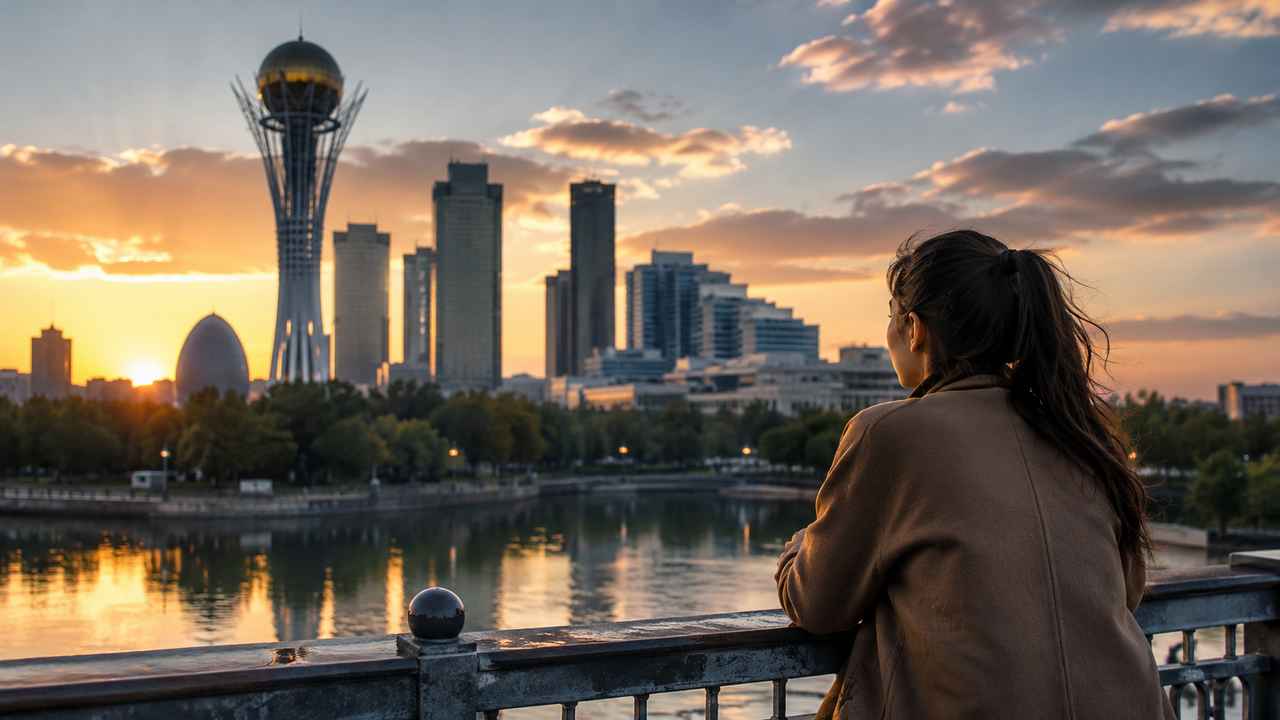
Across Kazakhstan’s wide steppe and growing cities, Christian life often unfolds inside two very different realities at once. Many registered churches worship openly, and historic Christian communities remain visible. Yet smaller Protestant congregations, unregistered fellowships, and Kazakh believers who have left Islam for Christ may live with quiet pressure from family, community, and the state. Kazakhstan therefore needs prayer that is neither alarmist nor careless—prayer that recognizes real legal space where it exists, but also sees the cost borne by believers whose faith may be treated as foreign, disloyal, or dangerous.
Why Kazakhstan Needs Prayer Now
Kazakhstan’s prayer burden is shaped by legal restriction, family pressure, state scrutiny, and the need for faithful Christian witness.
Kazakhstan needs prayer now because the country’s religious-freedom burden is not centered mainly on open war or mass violence, but on a more bureaucratic and relational kind of pressure. The state officially presents Kazakhstan as secular and constitutionally committed to freedom of conscience, and many registered religious communities do function legally. At the same time, religious activity remains closely regulated, especially when it involves unregistered worship, evangelism, missionary activity, religious literature, or groups viewed as “nontraditional.” Kazakhstan’s own electronic-government guidance says missionary activity requires registration, religious materials used for missionary work require a positive religious-expert review, and missionary activity without registration is prohibited. (egov.kz)
For Christians, this creates a narrow path. A registered church may gather with less interference, while a small fellowship without enough members to register may be pushed into legal vulnerability. A Russian Orthodox congregation may have social and historical recognition, while a Kazakh convert from Islam may be seen by relatives or neighbors as betraying family, ethnicity, and culture. Open Doors, a Christian ministry that monitors pressure on Christians worldwide through its annual World Watch List, ranked Kazakhstan 45th in its 2026 list and reported severe pressure on indigenous Christian converts from Muslim backgrounds, especially from family, community, and state systems. (opendoors.org.au)
The wider national context also matters. In March 2026, Kazakhstan approved a new constitution by national referendum. Associated Press reported that the constitutional changes merge the two chambers of parliament into one, restore the office of vice president, give the president expanded appointment powers, and create a presidentially appointed People’s Council with powers to initiate legislation and referendums. (apnews.com) That political development is not a church raid, a persecution case, or a direct religious-liberty ruling. But it does matter for prayer, because laws, courts, registration systems, public-order language, and state-security priorities all shape how much room believers have to worship, teach, gather, evangelize, and serve.
Country Snapshot
Compact background that helps readers pray with clearer understanding.
As of May 2026, Kazakhstan is a presidential republic led by President Kassym-Jomart Tokayev. The official website of the President of the Republic of Kazakhstan identifies Tokayev as president, and the official government website identifies Olzhas Bektenov as prime minister, appointed on February 6, 2024. (akorda.kz)
Kazakhstan’s official religion page says the country is a secular state and reports that, in the 2021 national census, 69.31% of the population identified with Islam and 17.19% with Christianity, including Orthodoxy, Catholicism, and Protestantism. (gov.kz) Kazakhstan’s official religion page also reports 3,924 registered religious associations across 18 confessions as of the first quarter of 2023. (gov.kz)
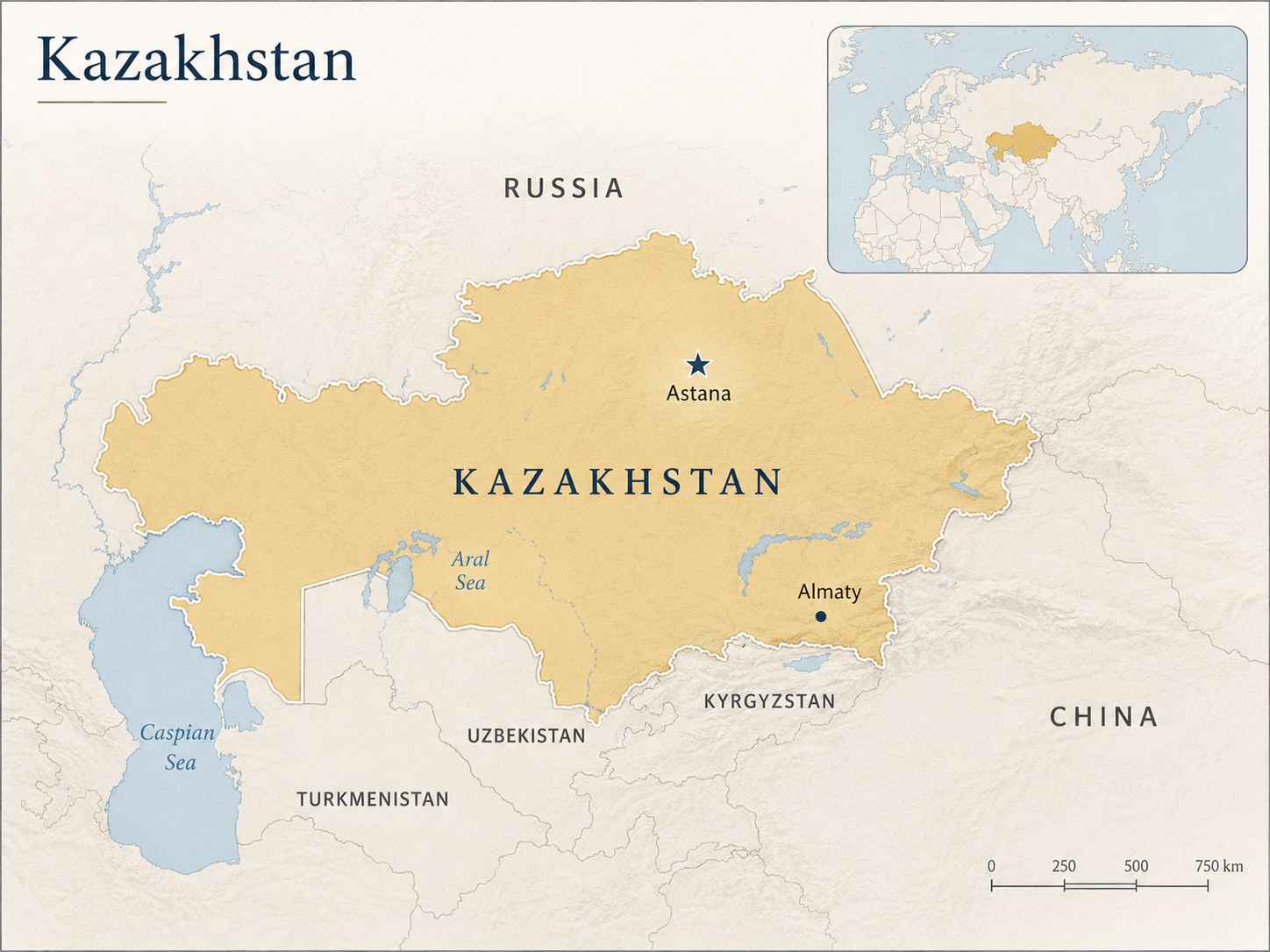
Kazakhstan is the largest country in Central Asia by land area, lying between Russia, China, Kyrgyzstan, Uzbekistan, Turkmenistan, and the Caspian Sea. That geography matters because Kazakhstan stands at the crossroads of several pressures: post-Soviet state management, Islamic identity, Russian cultural and church influence, Chinese proximity, regional security concerns, and a government that seeks stability in a religiously diverse society.
The country is not simply “closed” to Christianity. That would be too crude. Historic and registered churches can exist, worship, and in many cases conduct ordinary church life. Yet the legal and social environment is still restrictive, especially for believers who do not fit the state’s preferred religious categories or who are active in evangelism. The United States Commission on International Religious Freedom, an independent U.S. federal commission often shortened to USCIRF, says religious freedom conditions in Kazakhstan are poor and that authorities use the 2011 religion law and the 2005 extremism law to penalize peaceful religious activities. (uscirf.gov)
Main Pressures Facing Christians
Describe the actual pressures believers face rather than relying on broad labels.
Registration pressure and legal vulnerability
Kazakhstan’s religious system strongly favors recognized, registered religious activity. This creates a heavy burden for small congregations, especially those that do not meet membership thresholds or are viewed as “nontraditional.” USCIRF’s 2026 Kazakhstan material says officials continue to enforce vague and burdensome religious and extremism laws against peaceful religious activity. (uscirf.gov)
This is especially difficult for small Protestant congregations and independent fellowships. A church may want to obey the law and register, yet lack enough recognized members to do so. But if it meets quietly without registration, it may be accused of illegal religious activity. That kind of pressure does not always look dramatic from the outside, but it can make ordinary church life feel uncertain: Where can we meet? Who may teach? Can we invite a neighbor? Can we distribute Scripture? Will this gathering be reported?
Restrictions on missionary activity and religious literature
Kazakhstan’s electronic-government page defines missionary activity as spreading religious beliefs for the purpose of conversion and says citizens, foreigners, and stateless persons may carry out missionary activity only after registration. It also says missionary materials of religious content may not be used without a positive religious-expert review, and that missionary activity without registration is prohibited. (egov.kz)
That official language should be heard carefully. A government has a legitimate duty to restrain violence, coercion, fraud, and genuine abuse. But where ordinary Christian witness, Bible distribution, pastoral conversation, or invitations to worship are treated through the same suspicion-laden category as dangerous recruitment, gospel work becomes precarious. Christians need wisdom to act lawfully where possible, courage to remain faithful where obedience to Christ becomes costly, and discernment not to confuse unnecessary provocation with true faithfulness.
Pressure on converts from Islam
The deepest pressure may fall on ethnic Kazakh believers and others from Muslim-background families who confess Christ. Open Doors reports that conversion from Islam to Christianity may be viewed as betrayal of family and Kazakh culture, especially in rural areas, and that converts may face pressure or sometimes violence from family and community. (opendoors.org.au)
This pressure is not merely legal. It enters kitchens, family conversations, marriages, funerals, schools, and workplaces. A convert may fear losing family trust. A young believer may feel torn between honoring parents and obeying Christ. A woman who follows Christ may face verbal abuse, isolation, or pressure toward marriage expectations she cannot accept in conscience. A man who leads or hosts a small fellowship may face interrogation, fines, job pressure, or surveillance. These burdens call for prayer that is concrete, tender, and steadfast.
Suspicion toward “nontraditional” Christians
Kazakhstan’s public religious order gives more room to some historic communities than to smaller evangelistic groups. Open Doors reports that Russian Orthodox churches tend to experience fewer difficulties from the government, while Baptist, Evangelical, and Pentecostal congregations may experience raids, threats, arrests, and fines, especially when they are active in evangelism. (opendoors.org.au)
This distinction matters pastorally. The problem is not simply that every Christian community in Kazakhstan experiences the same pressure in the same way. The pressure is layered. Some Christians worship with relative stability; others live under a much sharper cost because of ethnicity, conversion background, church size, legal status, or evangelistic activity.
Family, children, and community pressure
Christian children and families can also carry the burden of social suspicion. Open Doors reports pressure on converts from family and community, with stronger pressure outside urban areas. (opendoors.org.au) Whether every local setting is identical or not, this kind of atmosphere can teach children early that their family’s faith is strange, suspect, or shameful.
This calls for gentle, sustained prayer. Children in Christian homes need courage that is not loud or proud, but steady. Parents need wisdom not to provoke needless conflict, yet not to hide Christ as though He were something shameful. Churches need to disciple families for ordinary endurance: how to speak truthfully, how to answer relatives respectfully, how to endure pressure, and how to keep the home spiritually warm when outside life feels cold.
What Life Is Like for Christians in Kazakhstan
A pastoral picture of ordinary Christian life under Kazakhstan’s conditions.
For many Christians in Kazakhstan, life may look outwardly normal. They work, study, raise children, attend services, visit relatives, and live in cities and villages where religion is woven into ethnicity, history, and social expectations. Some believers attend recognized churches and may experience far less interference than Christians in more severely violent contexts.
Yet the hidden cost can still be real. A believer may think carefully before sharing a Bible verse online. A pastor may weigh whether a meeting place is legally safe. A small congregation may wonder whether it is large enough to register, yet too visible to remain unnoticed. A young convert may keep Christian books out of sight, not because he is ashamed of Christ, but because discovery could bring conflict, threats, or family pressure.
For converts, the pressure is especially intimate. In some settings, to become Christian may be heard not simply as a change of faith, but as a rejection of family, people, and inheritance. That is a heavy burden. A believer may have to learn how to honor father and mother while also refusing to deny the Lord. A young woman may face pressure to marry within expected religious or cultural boundaries. A man may be accused of abandoning his roots. In such moments, the call to follow Christ is not abstract. It comes with names, faces, meals, tears, and consequences.
Church leaders also need discernment. They must shepherd people without unnecessary recklessness. They must teach Scripture clearly, train believers quietly, handle converts carefully, and avoid both cowardice and provocation. They need the Lord to make them wise as serpents and innocent as doves, not as a slogan, but as daily pastoral skill.
And yet Kazakhstan is not without mercy. There are churches. There are registered Christian associations. There are believers who continue to gather, teach, pray, and serve. There are public claims of freedom of conscience, even if those claims are inconsistently honored. There are openings for careful witness, family discipleship, Bible teaching, and long obedience. The church in Kazakhstan needs prayer not only to survive pressure, but to remain pure, patient, courageous, and full of love.
Recent Developments
Time-sensitive developments that materially shape how Christians should pray now.
-
2026
USCIRF’s 2026 Special Watch List recommendation
In its 2026 Annual Report material, USCIRF recommended Kazakhstan for the U.S. Special Watch List, a U.S. religious-freedom category for countries where serious religious-freedom violations are reported but which are not placed in the most severe “Country of Particular Concern” category. USCIRF’s Kazakhstan page says authorities penalize peaceful religious activity through vague and burdensome provisions of the 2011 religion law and the 2005 extremism law. (ecoi.net)
This does not mean every religious-freedom burden in Kazakhstan is Christian-specific. USCIRF says Muslims who deviate from the state’s preferred interpretation of Islam are particularly affected. (uscirf.gov) But the same legal and security framework also affects Christians, particularly smaller or unregistered communities.
-
November 2025
Missionary registration rules remain a major concern
Kazakhstan’s official electronic-government guidance says missionary activity requires registration, that missionary registration may be denied after a negative religious-expert review or where officials judge the activity to threaten constitutional order, public order, rights and freedoms, health, or morals, and that unregistered missionary activity is prohibited. (egov.kz)
These rules matter for Christian prayer because evangelism, Bible distribution, and ordinary teaching can be treated as regulated activity. Christians should pray for lawful space to speak of Christ with clarity and peace, and for officials to distinguish genuine wrongdoing from ordinary worship, conscience, and Christian witness.
-
March 2026
New constitutional transition
Kazakhstan’s March 2026 constitutional referendum is a major national development. Associated Press reported that more than 87% of voters supported the new constitution, with turnout above 73%, and that the changes merge parliament’s two chambers, restore the office of vice president, and create a presidentially appointed People’s Council with power to initiate legislation and referendums. (apnews.com)
This development should be handled with restraint in a prayer post. It is not itself a direct church raid or religious-law case. Yet constitutional change can shape the future legal environment in which religious associations, civil society, conscience rights, and courts operate. Pray that any implementing laws or regulations would protect genuine freedom of conscience rather than tighten control over peaceful worship and witness.
-
2026
Open Doors’ 2026 World Watch List
Open Doors ranked Kazakhstan 45th on its 2026 World Watch List, with high pressure reported especially in church life and private, family, and community life. Its 2026 dossier says Russian Orthodox churches experience fewer government problems, while indigenous Christian converts from Muslim backgrounds face severe pressure from state, family, and community. (opendoors.org.au)
Open Doors’ 2026 dossier should be read as a dated assessment, not as a claim that every detail remains unchanged after its reporting period. Still, it provides a sober and useful picture of the pressures Christians have faced in Kazakhstan and helps churches pray with greater understanding.
How to Pray
Specific prayers rooted in the realities described above.
-
Pray for converts from Islam to be preserved in faith, love, and courage.
Ask the Lord to strengthen Kazakh believers and others who may be viewed by relatives or neighbors as betraying family, culture, or religious inheritance by following Christ. Pray that they would honor their families where they can, refuse to deny Christ where they must, and find steady comfort in the finished work of the Savior who has made them members of His household.
-
Pray for small churches and fellowships without official registration.
Some Christian groups face pressure because Kazakhstan’s religious-registration system requires official approval for many forms of public religious activity. Pray that believers would be protected from unjust fines, raids, intimidation, or fear, and that officials would distinguish peaceful worship and Christian witness from any genuine public danger.
-
Pray for pastors, elders, and ministry leaders to shepherd wisely under pressure.
Ask God to give church leaders courage without recklessness, prudence without cowardice, and deep faithfulness to Scripture. Pray that they would preach Christ clearly, disciple converts patiently, care for fearful families, and teach believers how to suffer, speak, gather, and serve with holiness and love.
-
Pray for freedom to teach Scripture and share the gospel.
Kazakhstan’s rules on missionary activity and religious materials can make evangelism, Bible distribution, and teaching more difficult. Pray that God would open lawful and peaceful doors for His Word, preserve access to sound Christian teaching, and make the gospel fruitful in homes, churches, villages, cities, and private conversations.
-
Pray for Christian families and children.
Ask the Lord to strengthen parents who are raising children in a setting where evangelical faith may be misunderstood or treated with suspicion. Pray for children to be protected from shame, fear, and confusion, and for Christian homes to be marked by prayer, repentance, warmth, courage, and the steady teaching of God’s Word.
-
Pray for rulers, judges, police, and local officials.
Pray that God would grant them justice, restraint, truthfulness, and wisdom. Ask Him to restrain the misuse of security, public-order, or anti-extremism language against peaceful believers, while also enabling the state to deal rightly with real wrongdoing, violence, coercion, or abuse.
-
Pray for the church in Kazakhstan to be holy, united, and fruitful.
Ask God to keep believers from bitterness, fear of man, careless provocation, and spiritual compromise. Pray that churches would be known for sound doctrine, patient endurance, neighbor love, mercy, prayer, and faithful witness to Christ in both public and private life.
Give Thanks
Honest thanksgiving for real signs of God’s preserving mercy and common grace.
- Give thanks that Christ has preserved His church in Kazakhstan. The Christian presence in Kazakhstan has not disappeared. Registered churches, smaller fellowships, pastors, families, and individual believers continue to worship, teach, pray, and bear witness. This endurance is a mercy of God, not merely a sign of human resilience.
- Give thanks for the measure of legal space that still exists. Although the registration system remains restrictive for some communities, Kazakhstan still has recognized Christian associations and places where believers can gather openly. Give thanks for every lawful opening that allows worship, discipleship, pastoral care, and public Christian presence to continue.
- Give thanks for faithful believers who follow Christ quietly and costly. Praise God for converts, church leaders, parents, and ordinary Christians who continue in faith even when obedience brings family tension, social suspicion, or official scrutiny. Their perseverance is a witness to the grace of God and the worth of Christ.
- Give thanks for common grace and civic restraint where they are real. Kazakhstan is not to be described only by its restrictions. Give thanks for social order, family strength, public stability, legal openings, and any officials who act with fairness, restraint, or conscience. Pray that these mercies would be deepened and directed toward greater justice and freedom.
- Give thanks that hidden pressures are being brought into the light. Reliable documentation of religious-pressure concerns helps churches pray more wisely and helps vulnerable believers know they are not forgotten. Give thanks for every truthful report, careful advocate, and ministry partner God uses to stir prayer, encourage the church, and restrain injustice.
Last Verified
Keep this section compact, clear, and easy to update.
- Last updated
- May 11, 2026
- Next review due
- July 2026, or sooner if Kazakhstan’s new constitution enters into force with implementing laws affecting religious associations, registration, missionary activity, religious literature, freedom of conscience, or public religious expression.
Key Sources Consulted
Descriptive source documentation for later review, updating, and editorial transparency.
- United States Commission on International Religious Freedom, 2026 Annual Report: Kazakhstan, including USCIRF’s recommendation that Kazakhstan be placed on the U.S. Special Watch List. (ecoi.net)
- United States Commission on International Religious Freedom, Kazakhstan country page, summarizing current religious-freedom concerns, including enforcement of the 2011 religion law and the 2005 extremism law. (uscirf.gov)
- Open Doors International / World Watch Research, World Watch List 2026: Kazakhstan Country Dossier, describing pressure on converts, unregistered groups, and nontraditional Protestant communities. (opendoors.org.au)
- Electronic Government of the Republic of Kazakhstan, Missionary activities, last updated November 19, 2025, describing missionary registration and religious-material review requirements. (egov.kz)
- Government of Kazakhstan official religion information page, Religion, giving secular-state language, 2021 census religious demographics, and registered religious-association data. (gov.kz)
- World Bank / World Bank Development Indicators, Kazakhstan population data for 2024, reporting a population of 20,592,571. (tradingeconomics.com)
- Official website of the President of the Republic of Kazakhstan, Kassym-Jomart K. Tokayev, used to verify the current president’s official profile. (akorda.kz)
- Official Information Source of the Prime Minister of the Republic of Kazakhstan, Prime Minister Olzhas Bektenov, used to verify the current prime minister’s official profile. (primeminister.kz)
- Associated Press, Kazakhstan’s new constitution cementing president’s grip on power approved in a referendum, March 2026, used for the constitutional-referendum development. (apnews.com)