


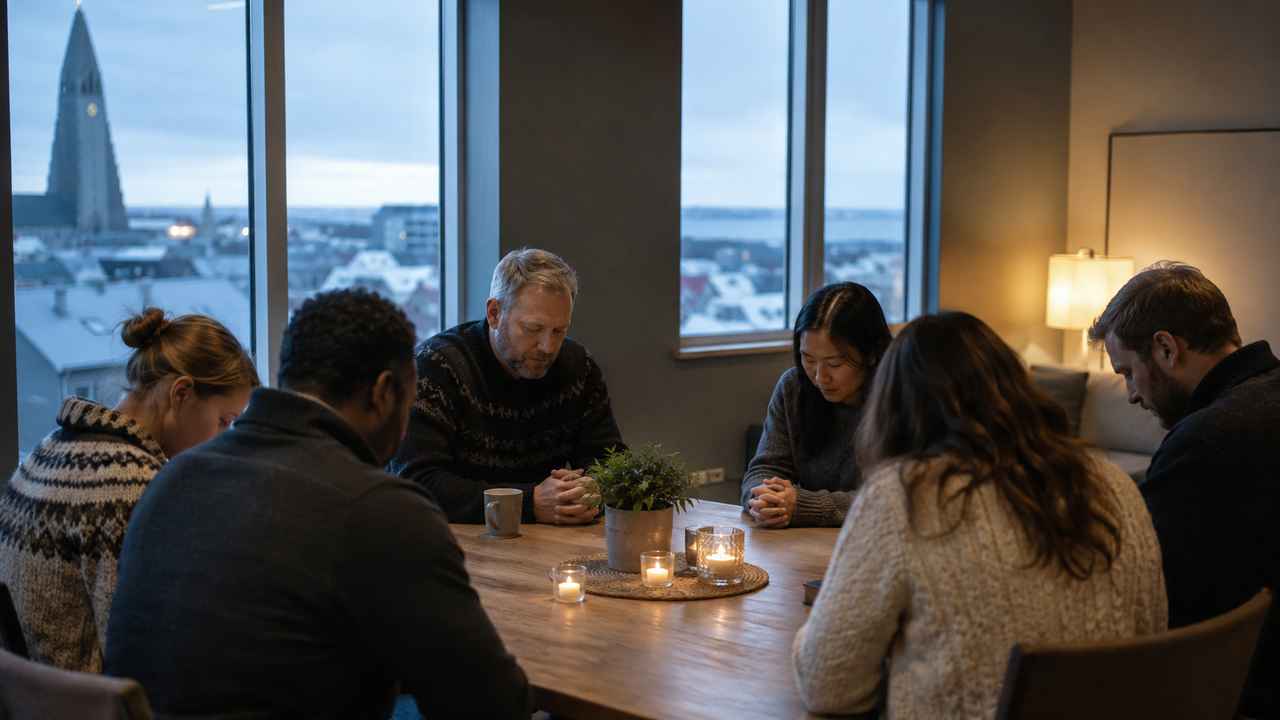
Iceland can still look Christian from a distance. Its landscape is dotted with churches, its public history is shaped by Lutheran memory, and its national life still carries traces of a Christian past. Yet beneath that familiar surface, many Icelanders now live in a culture where inherited religion is fading, spiritual indifference feels ordinary, and Christian identity can easily become cultural memory rather than living faith.
This is not a country where Christians normally face violent persecution or severe legal restriction. It is a country where the burden is often quieter: churches must bear faithful witness in a prosperous, highly educated, religiously open, and increasingly secular society. Prayer for Iceland should therefore be sober, hopeful, and specific — not alarmist, but not careless either.
Pray for gospel renewal beneath Iceland’s Christian memory, for pastors and churches to remain faithful in a secularizing culture, and for believers to bear humble, clear, and loving witness to Christ amid social stability, spiritual indifference, and quiet national change.
Last verified: May 19, 2026.
Why Iceland Needs Prayer Now
Iceland’s prayer burden is not severe persecution, but quiet distance from the gospel in a society where Christian memory remains visible while living faith often recedes.
Iceland needs prayer because its greatest spiritual need is not open persecution but quiet distance from the gospel. Many people retain some formal connection to Christianity, especially through the Church of Iceland, the Evangelical Lutheran church that holds a historic and constitutionally recognized place in national life. Yet formal affiliation has declined sharply over recent decades, and a growing share of the population identifies outside traditional Christian categories. Current religious-affiliation summaries derived from Statistics Iceland data list the Church of Iceland at about 56.3% of the population in 2026, while broader Christian affiliation remains a majority but continues to show long-term decline.
This creates a particular kind of prayer burden. The church is not mainly asking for courage under prison walls, but for spiritual renewal where the gospel may be familiar enough to be ignored. Believers need grace to speak of Christ with humility and clarity in a society that may respect religious freedom while often treating religion as private, optional, or outdated.
At the same time, Iceland’s small population and close social networks can make faithful Christian witness deeply personal. In a small nation, reputations travel quickly, family ties are strong, and church life can feel visible. Faithfulness may not cost believers their legal rights, but it can still require courage, patience, and costly integrity.
Iceland also carries present national burdens that shape prayer. The country has faced political change after the 2024 parliamentary election, public concern over housing and economic pressures, debate over immigration and national direction, and repeated volcanic disruption around Grindavík and the Reykjanes Peninsula. These are not merely political or geological facts; they are settings in which churches must love neighbors, comfort the anxious, serve affected families, and point beyond human security to the God who is refuge and strength.
Country Snapshot
Iceland is a small North Atlantic nation with deep Christian history, broad legal freedom, and a rapidly changing religious landscape.
Low persecution pressure, but significant need for gospel renewal, faithful discipleship, pastoral endurance, and clear Christian witness.
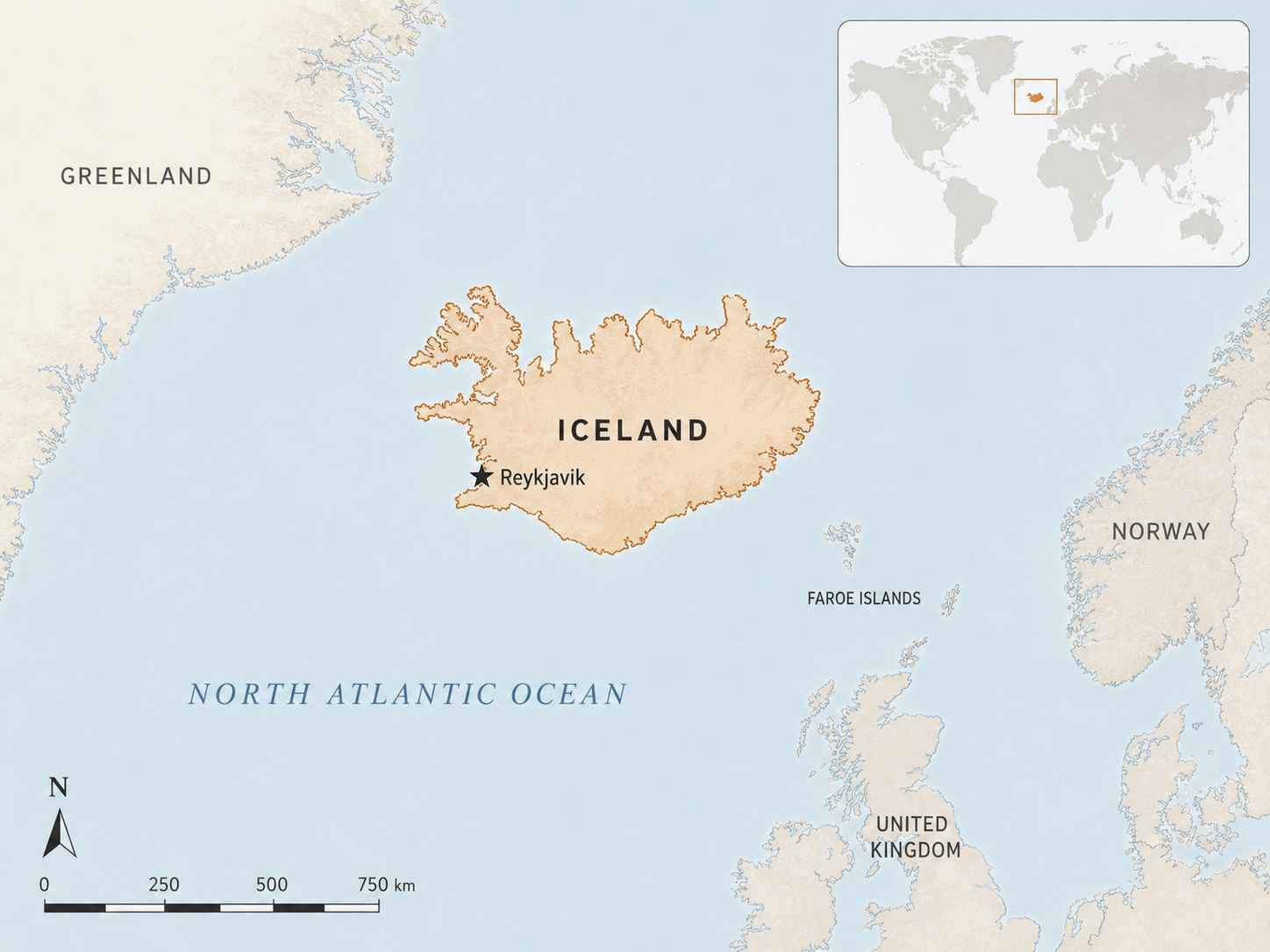
Iceland is a small island nation in the North Atlantic, known for its dramatic volcanic landscape, strong social systems, high educational levels, and distinctive national identity. Its population is concentrated heavily around Reykjavík and the southwest, while many smaller communities remain geographically isolated.
The country’s constitutional framework protects religious freedom while also giving the Evangelical Lutheran Church a special state-church status. Article 62 of Iceland’s constitution states that the Evangelical Lutheran Church is the State Church and is supported and protected by the state; Articles 63 and 64 protect the right to form religious associations, practice religion, and avoid civil-rights loss because of religion.
As of 2026, available religious-affiliation summaries based on Statistics Iceland data show that Christians still form a majority on paper, but the share attached to the Church of Iceland has fallen significantly over time. The same data also show growth in unaffiliated, unspecified, humanist, pagan, and other religious or life-stance categories.
That religious transition matters for prayer. Iceland is not simply “post-Christian” in a flat sense; it is a country where Christian memory, secular confidence, new spiritual interests, immigrant communities, and ordinary indifference exist side by side.
Main Pressures Facing Christians
The main pressures facing Christians in Iceland are often subtle: cultural distance from the gospel, nominal faith, slow ministry labor, and the need for wise witness in a confident secular society.
Quiet secularization beneath Christian memory
One of the main pressures facing Christians in Iceland is the quiet movement from inherited Christianity toward practical secularism. Many Icelanders may still know Christian language, church buildings, or national religious customs, but the claims of Christ can feel distant from daily life.
This can make evangelism difficult in a subtle way. People may not be hostile to Christianity; they may simply assume they already know what it is, or that it belongs to childhood ceremonies, national heritage, or private preference rather than repentance, faith, worship, and discipleship.
Nominal faith and shallow church attachment
The decline in Church of Iceland affiliation does not mean that every remaining member is spiritually indifferent. There are faithful believers, pastors, and congregations within Iceland’s Christian landscape. Still, the gap between formal Christian identity and active faith is a serious prayer concern.
Churches need renewal in preaching, catechesis, discipleship, prayer, and pastoral care. They need courage to call people not merely to religious belonging, but to faith in Christ, repentance from sin, and life under the authority of Scripture.
Small gospel-preaching communities
Smaller evangelical, free Lutheran, Pentecostal, Baptist, and other gospel-preaching communities often serve in a setting where their numbers are modest and their work may feel slow. In such a small population, the church’s witness can be relationally close but also easily wearying.
Pastors and ministry workers need perseverance. Families need strength to raise children in the faith when public life does not reinforce Christian conviction. Churches need unity without compromise, warmth without doctrinal thinness, and patient hope when visible fruit comes slowly.
Moral and cultural confidence without gospel clarity
Iceland is often admired for high levels of social trust, civic order, public safety, education, and broad civil freedoms. These are real signs of common grace and should not be dismissed. Yet a society can enjoy many public goods while still being spiritually needy.
For Christians, one pressure is learning to speak truth in a culture that may already consider itself humane, enlightened, and morally serious without seeing its need for Christ. The church must avoid both harsh cultural denunciation and timid silence. It must bear witness to the holiness, mercy, judgment, and grace of God with both humility and courage.
Immigration, language, and church hospitality
Iceland’s population has become more diverse through immigration, including from Poland and other countries. This has helped shape the growth of some Christian communities, including the Roman Catholic population. Current religious-affiliation data lists the Catholic Church as one of the larger non-Lutheran Christian bodies in Iceland.
This diversity brings opportunity and strain. Churches may need wisdom to serve people across language, culture, class, and migration experience. Immigrant believers may need fellowship, pastoral care, and integration into local church life without losing the comfort of worship and discipleship in familiar languages.
Natural disruption and fragile security
The repeated volcanic activity around Grindavík and the Reykjanes Peninsula has reminded Icelanders that even a stable and prosperous country remains vulnerable. Eruptions and seismic activity have forced evacuations, disrupted local life, and kept communities under repeated uncertainty.
Christians in Iceland have an opportunity to show neighbor love in such settings — not by offering easy answers, but by embodying steady compassion, practical help, and confidence in the God who rules over creation.
What Life Is Like for Christians in Iceland
Most Christians in Iceland live with legal freedom and social peace, but faithful discipleship may still feel lonely in a culture where religion is often treated as private, optional, or outdated.
For most Christians in Iceland, everyday life is legally free and socially peaceful. Churches can gather, worship, teach, publish, serve, and evangelize without the kinds of restrictions faced by believers in many other countries. That freedom is a gift and should be received with thanksgiving.
Yet Christian life in Iceland may also feel spiritually lonely. In a secularizing culture, faithful believers may find that their convictions are not violently opposed but quietly misunderstood. A student, parent, pastor, or worker may face the pressure to keep faith private, soften biblical teaching, or treat doctrine as less important than social belonging.
The challenge is often not whether the church is allowed to speak, but whether it will speak clearly, lovingly, and faithfully. Icelandic Christians need grace to avoid two opposite errors: retreating into a small defensive subculture, or blending into the surrounding culture until the offense and beauty of the gospel disappear.
There is also a discipleship burden for children and young people. In a society where religious participation is declining and spiritual identity is often fluid, young believers need more than inherited labels. They need Scripture, prayer, sound doctrine, credible Christian examples, and churches that show the Christian life as both true and beautiful.
Pastors need prayer as well. Ministry in a low-persecution, low-churchgoing context can be draining. It may involve many small conversations, slow trust-building, patient teaching, and long seasons where visible growth is limited. The Lord sees such labor. The church in Iceland needs shepherds who do not lose heart.
Recent Developments
Iceland’s recent developments do not point to persecution crisis, but they do sharpen prayer for gospel clarity, public wisdom, and compassionate neighbor love.
-
2026
Declining formal Christian affiliation
The most important religious development for this prayer guide is the continued decline in formal Christian affiliation, especially in the Church of Iceland. Current 2026 religious-affiliation summaries based on Statistics Iceland data show the Church of Iceland at about 56.3% of the population, while broader Christianity is listed at about 67%. This remains a majority, but the long-term direction is clearly downward from the much higher levels recorded in earlier decades.
This should not be framed as a simple disaster. Some decline in nominal affiliation may reveal more honestly where people actually stand. But it does sharpen the need for churches to preach Christ plainly, disciple carefully, and pray for true conversion rather than mere institutional continuity.
-
November 30, 2024
Political transition after the parliamentary election
Iceland held a parliamentary election on November 30, 2024, after disagreements over immigration, energy policy, and the economy helped force an early vote. The Social Democratic Alliance became the largest party, winning 15 seats in the 63-seat Althingi, Iceland’s national parliament.
Kristrún Frostadóttir later became prime minister and led a new coalition government. Reporting on the new government emphasized priorities such as healthcare, housing, economic reform, sustainable tourism, inflation, and the housing crisis.
For prayer, this calls for wisdom for rulers, honesty in public life, protection for the vulnerable, and humility in national debates. Christians should pray not as partisans, but as those who know that every government is accountable to God and every society needs justice, truth, mercy, and restraint.
-
2024–2026
Economic, housing, and social pressures
The 2024 election took place amid public concern over immigration, energy policy, and the economy, while later reporting on the new government highlighted inflation, housing pressures, healthcare, economic reform, and tourism as live national concerns.
These pressures affect ordinary families, workers, migrants, young adults, and communities seeking stability. Churches should be alert to the pastoral effects of these burdens. Economic pressure can expose fear, selfishness, resentment, or despair. It can also open doors for mercy, generosity, hospitality, and practical love.
-
Recent years
Volcanic disruption in the Reykjanes Peninsula
The volcanic activity affecting the Reykjanes Peninsula, especially around Grindavík and the Blue Lagoon area, remains one of Iceland’s most visible recent burdens. Eruptions and seismic activity have forced evacuations, disrupted local life, and kept communities under repeated uncertainty.
This is not the whole story of Iceland, and it should not dominate the prayer guide. But it is a real burden for affected residents, families, business owners, emergency responders, and local churches. It gives believers an opportunity to pray and serve with compassion.
-
2026
Possible renewed European Union accession talks
In 2026, Iceland’s government proposed a referendum on whether to restart European Union accession talks. AP reported that the government sought an August 29, 2026 vote, amid geopolitical uncertainty, economic pressures, and renewed debate over Iceland’s relationship with Europe.
This issue should be handled carefully. Christians need not turn the prayer guide into a political argument. But they can pray that Iceland’s leaders and citizens would act with truthfulness, humility, wisdom, and concern for the common good as they consider questions of sovereignty, identity, economy, security, and international alignment.
How to Pray
Pray for Iceland with gratitude for its freedom, sobriety about its spiritual need, and confidence that Christ builds His church even in quiet and secularizing places.
-
Pray for true gospel renewal beneath Iceland’s Christian memory. Ask the Lord to awaken many Icelanders who know Christianity mainly as heritage, ceremony, public history, or family custom. Pray that the gospel of Jesus Christ would be heard not as a relic from the past, but as the living Word of God calling sinners to repentance, faith, forgiveness, and new life.
-
Pray for faithful preaching, shepherding, and discipleship in Icelandic churches. Pray for pastors, elders, teachers, and ministry workers to remain faithful to Scripture, clear about Christ, and patient in long obedience. Ask God to strengthen churches in sound doctrine, prayer, holiness, pastoral care, and love, especially where visible fruit may seem slow.
-
Pray for the Church of Iceland and other Christian congregations. The Church of Iceland is the Evangelical Lutheran church that holds a historic and constitutionally recognized place in national life. Pray that every congregation bearing the name of Christ would not rest in institutional memory, but would be renewed in biblical faith, humble repentance, gospel clarity, and living devotion to the Lord.
-
Pray for young people and families in a secularizing society. Ask God to give Christian parents grace to teach the faith with patience, conviction, and joy. Pray that children, students, and young adults would not inherit only religious customs, but would personally know Christ, love Scripture, resist spiritual indifference, and stand firm with humility.
-
Pray for wise and loving witness in a culture that may feel spiritually comfortable without Christ. Pray that believers would speak truth without harshness and show compassion without compromise. Ask the Lord to help Icelandic Christians avoid both fearful silence and proud denunciation, bearing witness instead with courage, gentleness, integrity, and hope.
-
Pray for immigrant believers and multicultural church life. Pray for Christians from other nations who live, work, study, and worship in Iceland. Ask God to help them find faithful fellowship, sound teaching, and pastoral care, and pray that Icelandic churches would welcome newcomers wisely across language, culture, and background.
-
Pray for Iceland’s leaders, public life, and communities affected by disruption. Pray for President Halla Tómasdóttir, Prime Minister Kristrún Frostadóttir, members of the Althingi — Iceland’s national parliament — and local officials. Ask God to give them wisdom, justice, humility, restraint, and concern for the vulnerable as they address housing, economic pressures, immigration, energy policy, questions about Iceland’s future direction, and the needs of communities affected by volcanic disruption near Grindavík and the Reykjanes Peninsula.
Give Thanks
Thanksgiving for Iceland should be truthful and restrained, recognizing both God’s common grace in national life and His preserving grace among churches and believers.
- Give thanks for the broad freedom Icelanders enjoy to worship, gather, teach, publish, serve, and bear witness to Christ. This freedom is a mercy, and it should not be taken for granted.
- Give thanks for faithful pastors, churches, families, and individual believers who continue to follow Christ in Iceland, even where Christian witness may feel quiet, small, or slow.
- Give thanks for the good gifts of common grace visible in Iceland’s public life: civic order, concern for safety, education, social trust, care for affected communities, and many ordinary acts of neighborly responsibility.
- Give thanks for immigrant Christian communities and for the ways God can use migration to strengthen, diversify, and refresh the witness of the church in Iceland.
- Give thanks that Iceland’s spiritual need is not hidden from God. The Lord is able to work in prosperous places as well as poor ones, in quiet secular societies as well as crisis zones, and in small churches as well as large movements.
Last Verified / Update Note
This note helps readers understand which parts of the prayer guide are most time-sensitive.
Last verified: May 19, 2026.
This prayer guide should be reviewed again if there is a major religious-freedom development, a significant shift in Iceland’s church or religious-affiliation data, a new national election or major government change, a major volcanic emergency affecting populated areas, or a substantial change in the country’s European Union accession process.
Key Sources Consulted
These sources materially informed the current version of this prayer guide.
- Government of Iceland — “Constitution of the Republic of Iceland.” Used for Iceland’s constitutional religious framework, including Article 62 on the Evangelical Lutheran Church as the State Church and Articles 63–64 on religious association, religious practice, and civil rights regardless of religion. Read source.
- Statistics Iceland — “Population by Religious and Life Stance Organizations, 1998–2026.” Used for religious-affiliation trends, including the 2026 Church of Iceland share and broader Christian-affiliation context, as reflected in current public summaries of the Statistics Iceland table. Read summary.
- AP News — “Social democrats gain and incumbents are punished in Iceland’s election.” December 1, 2024. Used for the 2024 parliamentary election result, the Social Democratic Alliance’s seat total, and the political context involving immigration, energy policy, and the economy. Read source.
- The Guardian — “‘A welfare state with a budget on the right side of zero’: Iceland’s youngest-ever prime minister has a plan for a new kind of governance.” January 12, 2025. Used for background on Prime Minister Kristrún Frostadóttir’s government and policy priorities, including healthcare, housing, economic reform, tourism, inflation, and the housing crisis. Read source.
- AP News — “Iceland volcano eruption forces evacuation of town and iconic geothermal spa.” Used for recent volcanic-disruption context involving Grindavík, the Reykjanes Peninsula, evacuations, seismic activity, and the Blue Lagoon area. Read source.
- The Guardian — “Icelandic town and Blue Lagoon spa evacuated after volcanic eruption.” April 1, 2025. Used as additional reporting on Reykjanes volcanic activity, evacuation pressures, and local disruption around Grindavík. Read source.
- AP News — “Iceland seeks vote in August on whether to restart EU membership talks.” March 2026. Used for the proposed 2026 referendum on restarting European Union accession talks and the political context behind renewed EU debate. Read source.
- AP News — “Iceland elects businesswoman Halla Tomasdottir as president.” June 2024. Used for the 2024 presidential transition and confirmation of Halla Tómasdóttir’s election before taking office. Read source.
A Closing Prayer for Iceland
This prayer gathers the article’s burden into one final intercession for Iceland, its churches, its leaders, and its people.
Continue Praying
Keep praying for Iceland and for the spread of the gospel among the nations.
Continue praying through the nations with the full prayer calendar, or return to the country prayer directory to find more country prayer guides.


