

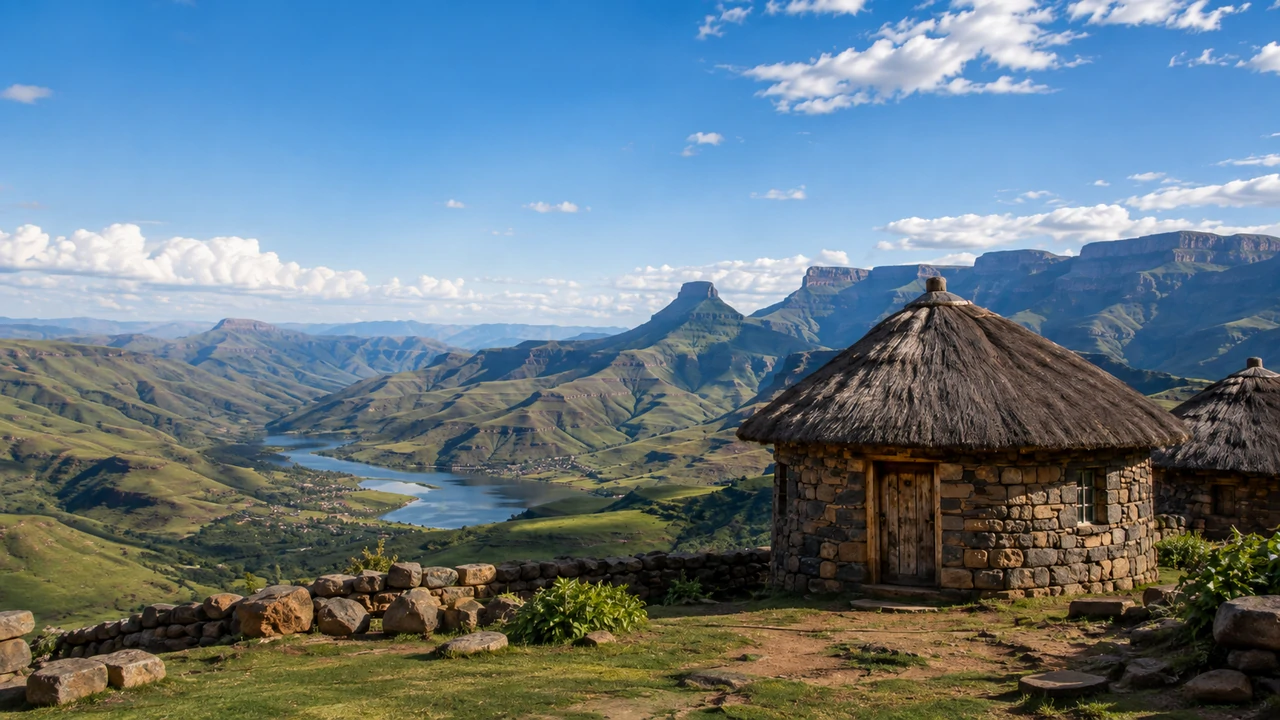
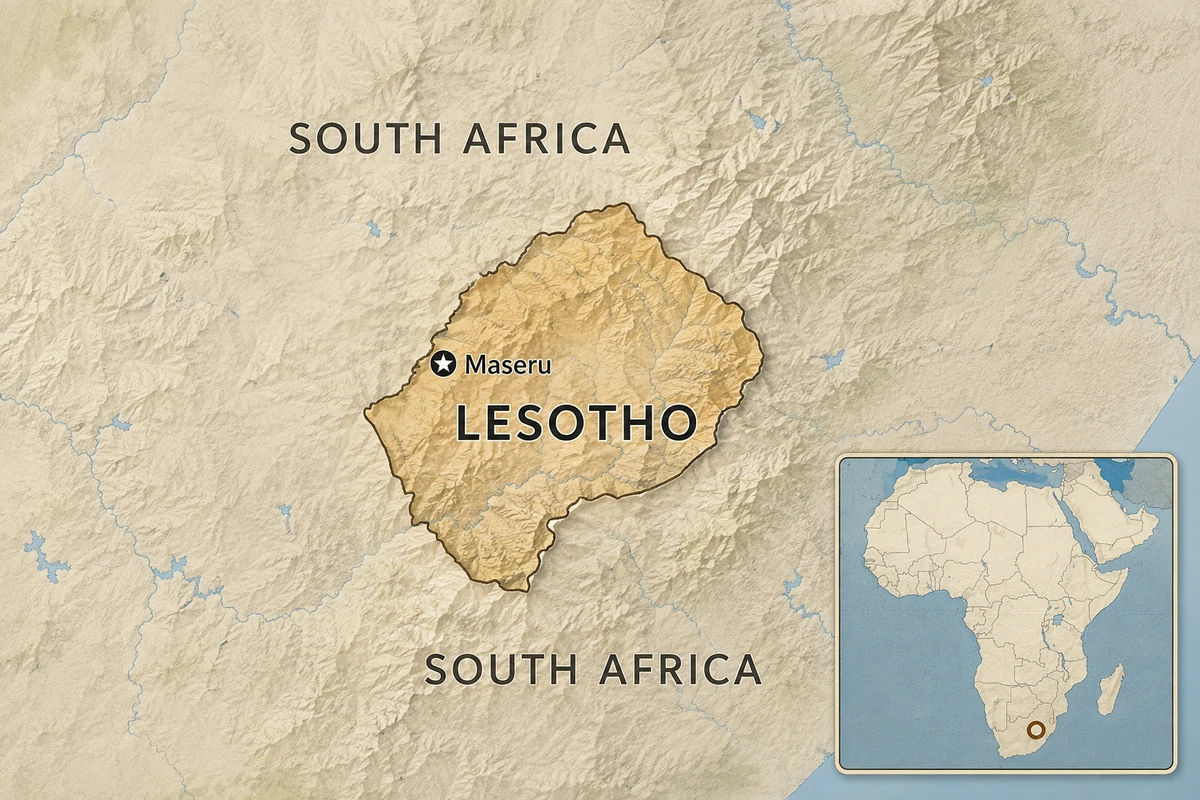
Lesotho is widely known as the Mountain Kingdom. Completely surrounded by South Africa, it is a small, mountainous country where churches have shaped education, healthcare, community life, and national identity for generations. Christian institutions continue to serve people in places where government services and economic opportunities are limited.
The schools, clinics, hospitals, and other forms of service associated with this heritage are real mercies, but they do not remove the need for repentance, saving faith in Christ, and faithful discipleship. Lesotho needs churches that preach Scripture clearly, pastors and believers who live with integrity, and young people who understand that following Christ concerns every part of life. The country also needs prayer for households affected by unemployment, food insecurity, HIV and tuberculosis, violence, unequal opportunity, and the difficulty of reaching healthcare, schools, and public services in remote communities.
Prayer Burden at a Glance
Pray that churches in Lesotho will preach Christ faithfully and help people move from inherited Christian identity to repentance, saving faith, and daily obedience. Ask God to sustain families facing unemployment, hunger, and illness; protect women and children from violence; strengthen healthcare and education; and give national leaders wisdom, justice, and integrity.
Last verified: August 3, 2026
Why Lesotho Needs Prayer Now
Lesotho’s Christian heritage has shaped much of the country’s public life, yet the nation still needs repentance, faithful discipleship, compassionate service, dignified work, safe and stable family life, and trustworthy leadership.
Lesotho’s Christian heritage has shaped much of the country’s public and community life. Churches do more than gather people for worship. Christian organisations operate schools, hospitals, clinics, nursing colleges, and community programmes. The Christian Health Association of Lesotho reports that its network provides more than 40 percent of healthcare services in the country through eight hospitals, 71 health centres, and four nursing colleges. Many of these facilities serve remote and difficult-to-reach communities. The Christian Council of Lesotho also works in peacebuilding, civic education, health, human rights, food security, and social development.
This service deserves gratitude. It also raises an important spiritual question: does the nation’s visible Christian identity consistently produce biblical preaching, personal repentance, holy living, care for vulnerable people, and trustworthy leadership?
Pray that churches will exercise their public influence faithfully under Christ rather than relying on tradition or institutional standing. They need pastors who preach the gospel clearly, members who practise what they confess, and Christian institutions that serve people honestly and compassionately.
Lesotho also faces serious economic and social burdens. The Lesotho Bureau of Statistics reports an unemployment rate of 30.1 percent from the 2024 Labour Force Survey. Poverty and unequal access to opportunity remain widespread, especially in rural areas where healthcare, education, water, transport, and employment may be difficult to obtain. The World Bank expects economic growth to remain modest, while important industries such as textiles and diamonds face continuing uncertainty.
Food insecurity, HIV, tuberculosis, and violence against women and girls place further strain on families. These burdens affect whether children receive adequate food, whether young adults can find work, whether patients obtain treatment, whether women are safe, and whether churches can respond wisely to the needs around them.
Lesotho therefore needs prayer that joins concern for salvation with practical mercy. Christians should pray for God to save sinners, strengthen churches, protect vulnerable people, guide leaders, sustain health workers and teachers, and open paths towards honest work and stable family life.
Country Snapshot
A brief orientation to Lesotho’s location, people, government, and church context.
Lesotho is an enclave completely surrounded by South Africa. Much of the country is mountainous. Its elevation, cold winters, rugged terrain, and scattered rural settlements make travel, agriculture, and the delivery of public services difficult.
Water is one of Lesotho’s most important natural resources. The Lesotho Highlands Water Project transfers water to South Africa and generates electricity and public revenue for Lesotho. Phase II remains under construction. The project can bring national benefits, but it also requires transparent management and fair treatment of communities affected by construction, land loss, or relocation.
The Constitution of Lesotho protects freedom of conscience and religion, including the freedom to worship, teach, practise, and observe religion publicly or privately. The principal concern for prayer is not state persecution but the need for personal faith in Christ, faithful discipleship, and churches that remain true to Scripture.
Spiritual and Practical Challenges Affecting Christians and Churches
Churches in Lesotho minister in a country where Christian identity may be inherited without personal faith in Christ. They also serve people facing unemployment, hunger, HIV and tuberculosis, unequal access to education, violence, and distrust of public institutions.
Christian identity and the need for personal faith in Christ
Christian language and church affiliation are common in Lesotho. Yet baptism, church membership, family tradition, and national identity cannot replace repentance and faith in Christ. Churches need to proclaim clearly that salvation is by God’s grace through Christ and that Christian discipleship includes worship, obedience, love of neighbour, sexual faithfulness, honesty, generosity, and perseverance. Pray for pastors to teach the whole counsel of Scripture with courage, humility, patience, and compassion.
Poverty, unemployment, and insecure work
Unemployment remains extremely high, especially among young people. Limited private-sector growth leaves many families dependent on insecure employment, remittances, public-sector work, or subsistence agriculture. The textile industry has provided many formal jobs, particularly for women, but it remains vulnerable to changes in international trade and demand. Churches need wisdom to support unemployed people, teach the dignity of honest work, encourage practical skills, and defend workers from exploitation.
Hunger, malnutrition, and vulnerable rural livelihoods
The World Food Programme reports that approximately 631,000 people are food insecure and that many households cannot afford a nutritious diet. Child stunting remains a serious concern. Rural families are especially vulnerable because many depend on rain-fed agriculture, livestock, and soils damaged by erosion. Drought, irregular rainfall, poor harvests, and high food prices can quickly deepen hardship.
HIV, tuberculosis, and access to healthcare
Lesotho has made important progress in responding to HIV. Most people living with HIV know their status, many receive treatment, and a high proportion of those receiving treatment have achieved viral suppression. Nevertheless, HIV remains a major national burden, and tuberculosis continues to cause serious illness. Churches can help by rejecting stigma, encouraging testing and treatment, supporting affected families, and teaching sexual faithfulness, compassion, and responsibility.
Education and the future of young people
Lesotho has achieved high primary-school enrolment, but many children do not continue successfully through secondary education. Early childhood education remains limited, and children with disabilities face serious barriers. Adolescent pregnancy and child marriage can also interrupt girls’ education. Because churches have long played a major role in education, they have an opportunity to provide strong teaching, protect children carefully, teach Christian truth honestly, and support pupils at risk of leaving school.
Violence against women and children
Figures from the 2023–2024 Lesotho Demographic and Health Survey, reported by UNFPA, indicate that 44.1 percent of women aged 15–49 had experienced physical or sexual violence since the age of 15. Churches must not conceal abuse, protect offenders, or pressure victims to return to unsafe situations. They should become places where abuse is confronted truthfully, survivors are treated with dignity, children are protected, and offenders are called to repentance and lawful accountability.
Governance, justice, and public trust
Lesotho has experienced repeated political instability and changes of coalition government. National reforms are intended to make public institutions more accountable, protect constitutional government, and rebuild public trust. Pray that political leaders will seek the good of the country rather than personal or party advantage, and that church leaders will speak about public affairs with wisdom, truthfulness, and independence.
Christian Life and Witness in Lesotho
Churches have substantial opportunities to serve communities, teach Scripture, care for vulnerable people, and show how faith in Christ should guide conduct at home, at work, in relationships, and in public life.
Churches are present throughout Lesotho’s public and community life. Christian networks educate children, train nurses, operate hospitals and clinics, support vulnerable households, and take part in peacebuilding and civic education.
This service is especially important in rural communities where distance, poverty, and difficult terrain limit access to government services. Pastors and church members may find themselves helping families facing hunger, school costs, illness, unemployment, bereavement, domestic violence, and separation caused by labour migration.
Churches also retain a substantial role in education. Government education information describes school management as remaining largely in the hands of the main missions and reports that church bodies operate a large proportion of secondary schools. This gives churches an important responsibility to provide sound education, safeguard children carefully, serve the public honestly, and teach Christian truth faithfully.
Some congregations serve with limited financial resources. Some pastors and lay leaders have had little opportunity for strong theological training. They need faithful biblical teaching, trustworthy pastoral oversight, and encouragement to resist false teaching, financial manipulation, sexual misconduct, and control by political interests.
Young believers also need churches that help them obey Christ in decisions about work, relationships, money, sexuality, honesty, family responsibility, and public life.
Pray that churches will cooperate in works of mercy and peace where truth and conscience permit, without weakening biblical doctrine. Ask God to raise mature leaders who can serve alongside other Christians without treating doctrinal differences as unimportant.
Recent Developments
Trade uncertainty, electoral reform, and new projects in energy, water, sanitation, and food security give Christians specific reasons to pray for workers, families, vulnerable communities, and public leaders in Lesotho.
-
August 3, 2026
Textile trade benefits remain current, but the position beyond 2026 is unsettled
As of August 3, 2026, Lesotho remained eligible for benefits under the African Growth and Opportunity Act and qualified for textile and apparel benefits. The current United States extension runs through December 31, 2026. The position beyond that date remains unsettled, creating uncertainty for factories, workers, and households that depend on textile employment.
Prayer significance: Pray for workers and their families, for honest employers, and for leaders to develop a broader economy that is less vulnerable to changing external trade decisions.
-
May 27, 2026
Electricity-access project approved
The World Bank approved a $50 million credit for the ASCENT–Lesotho energy project. The project is intended to extend reliable electricity to nearly 147,000 residents and businesses, including people in rural and highland communities. These figures describe planned beneficiaries; they do not represent completed electricity connections as of August 3, 2026.
Prayer significance: Pray that the work will be completed honestly, safely, and fairly, and that poorer and more remote communities will benefit.
-
July 3, 2026
Additional financing proposed for water and sanitation
An African Development Bank appraisal described additional financing for water and sanitation work in Butha-Buthe and surrounding settlements. The project aims to improve water access for 126,380 people and sanitation services for 69,500 people. These figures are project targets rather than completed results.
Prayer significance: Pray that safe water and sanitation will reach the intended communities, reduce disease, and remain properly maintained.
-
2026
Electoral amendments remain under consideration
The National Assembly published a National Assembly Electoral Amendment Bill and related explanatory material. Parliamentary documents show that electoral changes were under consideration in 2026, but not that the proposals had been fully enacted or implemented.
Prayer significance: Pray that any electoral changes will strengthen lawful government, credible elections, peaceful political competition, and public confidence rather than serve narrow political interests.
-
February 2026
Food and nutrition resilience programme launched
A four-year food and nutrition resilience programme was launched to support vulnerable southern communities through climate-resilient farming, water systems, land restoration, and nutrition assistance.
Prayer significance: Pray that the programme will be implemented honestly, reach people in genuine need, and help households become less vulnerable to drought and failed harvests.
Christian Heritage and Living Faith in Practice
The schools, hospitals, clinics, and other services provided through Christian institutions bring practical help to many people. They serve Lesotho most faithfully when their care is competent and compassionate, their leadership is honest, and their Christian teaching directs people clearly to Christ.
Lesotho shows how deeply church-related institutions are woven into national life. A child may attend a church-operated school or receive treatment in a church hospital. These institutions provide valuable education, healthcare, and practical care, especially where other services are limited.
Yet institutions cannot repent, believe, or obey on behalf of individuals. Christian heritage serves people well when it helps them hear the gospel, trust Christ, worship faithfully, work honestly, act with moral courage, and love their neighbours.
Pray that church schools will educate children truthfully and protect them carefully. Pray that church hospitals and clinics will treat patients with competence and compassion. Pray that Christian leaders who speak about public affairs will remain free from party control and personal ambition.
Social service must not replace gospel proclamation, and gospel proclamation must not be separated from practical love. Lesotho needs churches that preach salvation through Christ while feeding hungry people, caring for the sick, protecting children, confronting abuse, and serving poor communities.
Above all, pray that people throughout Lesotho will hear and believe the good news that sinners are reconciled to God by grace through faith in Jesus Christ.
How to Pray
Pray for saving faith, faithful churches, safety for families, dignified work, reliable healthcare and education, and honest government in Lesotho.
Pray for repentance and saving faith. Ask God to bring many people beyond inherited Christian identity to personal trust in Christ, sincere repentance, and lifelong discipleship.
Pray for faithful pastors and churches. Pray for biblical understanding, moral courage, humility, accountability, and freedom from greed, false teaching, sexual misconduct, and political control.
Pray for children and young people. Ask God to provide safe schools, effective learning, protection from abuse and early marriage, and realistic paths into training, work, and responsible adulthood.
Pray for dignified work and economic opportunity. Pray for the preservation of good employment, growth in responsible local businesses, productive agriculture, fair treatment of workers, and wise economic leadership.
Pray for families facing hunger. Ask God to provide sufficient rain, productive land, affordable food, and compassionate assistance that reaches isolated and vulnerable households.
Pray for people affected by HIV and tuberculosis. Pray for early diagnosis, uninterrupted treatment, sufficient health workers, freedom from stigma, and compassionate support for patients and families.
Pray for women and children facing violence. Ask God to expose abuse, protect people in danger, ensure that offenders are held lawfully accountable, and make churches safe places for truth, protection, and care.
Pray for government and public institutions. Pray for honest leadership, impartial justice, peaceful reform, responsible public spending, and decisions that serve poor and rural communities.
Pray for church-run schools and healthcare facilities. Ask God to provide trained workers, adequate resources, ethical leadership, careful safeguarding, and a clear Christian witness through competent and compassionate service.
Pray for water, electricity, and other major projects. Pray that affected communities will be heard and treated fairly, public funds will be used honestly, and the benefits will reach ordinary households.
Give Thanks
Lesotho’s burdens are serious, but Christians can give thanks for freedom of worship, people serving their neighbours, institutions providing education and healthcare, and progress in HIV treatment.
Give thanks for constitutional protection of worship and religious practice. The law protects freedom of conscience and religion, including worship, teaching, practice, and observance.
Give thanks for Christian hospitals, clinics, schools, nursing colleges, and community ministries. These institutions continue to serve many people, including families in remote communities.
Give thanks for progress in HIV diagnosis, treatment, and viral suppression. Praise God for patients, health workers, caregivers, and programmes that have helped many people receive and remain in treatment.
Give thanks for people who continue serving despite shortages and economic hardship. Praise God for health workers, teachers, farmers, caregivers, church members, and community leaders who continue their work despite limited resources and economic hardship.
Give thanks for new financing and planned work intended to improve electricity, water, sanitation, and climate-resilient agriculture. Pray that these projects will be managed honestly and reach the communities they are meant to serve.
Give thanks for people working for peace, justice, and constitutional government. Praise God for those seeking accountable institutions and protection for vulnerable people.
Give thanks for congregations where Christ is preached faithfully. Praise God for believers who serve their neighbours with humility, generosity, courage, and love.
Last Verified / Update Note
This note tells readers when the guide was last verified, what areas were reviewed, and which developments Christians may need to keep praying about in the months ahead.
Review Status
Reviewed for current prayer use
National leadership; constitutional religious protections; Christian healthcare and church involvement in education; unemployment and economic outlook; food insecurity; HIV and tuberculosis; educational access and learning; violence against women and girls; electoral-reform materials; current trade status; and electricity, water, sanitation, and food-resilience projects.
Repentance and saving faith in Christ; faithful pastors and churches; unemployment and insecure work; food insecurity and malnutrition; HIV and tuberculosis; violence against women and children; educational access and learning; rural healthcare and public services; and honest, peaceful government.
The parliamentary progress and legal status of electoral amendments; trade arrangements after December 31, 2026; conditions in the textile industry; new food-security assessments; health-programme financing; implementation of electricity, water, and sanitation projects; and compensation and livelihood outcomes for communities affected by the Lesotho Highlands Water Project.
Population, religious-composition, and humanitarian figures come from sources using different years and methods. Lesotho’s 2026 census results had not been published as of August 3, 2026. Recent nationwide evidence about church attendance and personal Christian practice is limited; Christian affiliation therefore should not be treated as evidence of conversion, and older denominational percentages should not be read as exact current measurements.
Help keep this guide accurate and current
If you noticed a possible correction, broken link, or significant country update, please contact the Nations Prayer Directory so we can review it carefully.
Key Sources Consulted
The following national institutions, church-service organisations, African regional bodies, and international agencies provide the main factual background for this Lesotho prayer guide.
Government, Parliament, and national institutions
- Government of Lesotho. “Office of the King.” Used to verify King Letsie III as head of state.
- Government of Lesotho. Used for current government and administration context.
- Lesotho Bureau of Statistics. Used for the 2024 Labour Force Survey unemployment figure, census context, and national statistical background.
- Government of Lesotho. “Constitution of Lesotho.” Used for constitutional protection of freedom of conscience and religion.
- National Assembly of Lesotho. “Bills.” Used to verify publication of the National Assembly Electoral Amendment Bill, 2026.
- National Assembly of Lesotho. “Statement of Objects and Reasons: National Assembly Electoral Amendment Bill, 2026.” Used for the official parliamentary explanation of the proposal.
- Ministry of Education and Training. “Secondary Education.” Used for the continuing role of church proprietors in secondary education.
- Lesotho Highlands Development Authority. “Phase II.” Used for the purpose and current construction of Phase II, official compensation commitments, and resettlement and livelihood-restoration responsibilities.
- Lesotho News Agency. “GBV Centre Now Operational in Lesotho.” Used for the May 2026 report that the national gender-based-violence centre was operational and providing survivor support.
Church and Christian-service institutions
- Christian Health Association of Lesotho. “About Us.” Used for its network of eight hospitals, 71 health centres, four nursing colleges, and reported share of national healthcare provision.
- Christian Council of Lesotho. “Programmes.” Used for the Council’s stated work in governance, human rights, civic education, conflict management, food security, climate justice, health, and support for vulnerable people.
These organisations’ own publications describe their stated work. They do not independently establish the quality or theological faithfulness of every programme, member church, or ecumenical initiative.
International and regional sources
- World Bank. “Lesotho Country Overview.” Used for economic outlook, poverty and inequality, rural-service gaps, governance and implementation constraints, sector weakness, and trade uncertainty.
- World Food Programme. “Lesotho.” Used for current food-insecurity, nutritious-diet, rural-poverty, and child-stunting figures.
- World Health Organization. “Lesotho Country Profile.” Used for HIV prevalence, diagnosis, treatment and viral-suppression figures, and tuberculosis incidence, detection, and treatment outcomes.
- UNICEF Lesotho. “Education.” Used for primary enrolment, secondary transition, early learning, disability inclusion, school quality, and child-marriage concerns.
- UNFPA Lesotho. “Rights, Justice, Action: Lesotho Celebrates Women Leading Change.” Used for current gender-based-violence figures from the 2023–2024 Demographic and Health Survey and for the national policy context.
- World Bank. “World Bank Group Helps Lesotho to Expand Energy Access and Economic Opportunity for Nearly 147,000 People.” Used for the May 2026 electricity-project approval, financing, intended beneficiaries, and urban-rural access gap.
- African Development Bank. “Lesotho Lowlands Water Development and Sanitation Project Phase III — Additional Financing.” Used for project objectives and intended water and sanitation beneficiaries.
- United Nations in Lesotho. “Building Resilience for Inclusive Food and Nutrition Security.” Used for the four-year food, nutrition, land-restoration, water, and climate-resilience programme launched in February 2026.
- Office of the United States Trade Representative. “Lesotho.” Used to verify Lesotho’s current eligibility under the African Growth and Opportunity Act and its textile and apparel qualification.
- The White House. “To Implement Certain Provisions in the Consolidated Appropriations Act, 2026, and for Other Purposes.” Used to verify that the current trade and apparel provisions run through December 31, 2026.
Source Context
How to read the sources behind this guide in a setting where census results, trade arrangements, humanitarian estimates, and project outcomes may change.
Source Context
- Christian identity. Available sources consistently describe Lesotho as predominantly Christian, but the most frequently repeated denominational percentages come from older surveys. Christian affiliation, baptism, membership, and inherited identity should therefore be understood as sociological descriptions, not as evidence of regeneration.
- Church institutions. The Christian Health Association and Christian Council sources describe their own membership, programmes, and service. These are appropriate sources for what the organisations say they do, but they do not independently prove the quality or theological faithfulness of every institution or member body.
- Religious freedom. The Constitution clearly protects freedom of conscience and religion. As of August 3, 2026, recent independent reporting did not provide a complete picture of how those protections operated in practice.
- Population. The Bureau of Statistics still displays the 2016 census total, while a new census was conducted in 2026. Until final results are published, precise current population totals remain provisional.
- Food and health figures. World Food Programme and World Health Organization figures reflect their latest publicly available country pages and reporting periods. These figures cover specific reporting periods and may change as new data is published.
- Gender-based violence. Different sources use different measures and reporting periods. The 44.1 percent figure cited here comes from the 2023–2024 Demographic and Health Survey as reported by UNFPA; it should not be combined directly with broader, less comparable lifetime estimates.
- Electoral reform. Parliamentary sources establish that proposed amendments were published and considered. They do not, by themselves, establish that every proposal was enacted, commenced, or successfully implemented.
- Infrastructure projects. World Bank, African Development Bank, United Nations, and Lesotho Highlands Development Authority sources describe financing, project objectives, planned beneficiaries, official safeguards, and progress. These figures describe intended benefits and official commitments, not completed outcomes.
- Lesotho Highlands Water Project. The Lesotho Highlands Development Authority is the authoritative source for the project’s official mandate, progress, and compensation framework. Because it is also the implementing authority, its statements about consultation, compensation, relocation, and livelihood restoration describe official commitments rather than an independent evaluation of every affected household’s experience.
- Trade. Lesotho was eligible for current trade benefits as of August 3, 2026, but the extension ends on December 31, 2026. Arrangements after that date remained unsettled.
- Source mix. The sources include Lesotho government, parliamentary, statistical, church, and national reporting, together with African regional and international institutions. The guide’s main claims do not rely primarily on foreign news reporting.
A Closing Prayer for Lesotho
A concise prayer for Lesotho’s churches, families, vulnerable people, public leaders, and for many to come to saving faith in Christ.


