


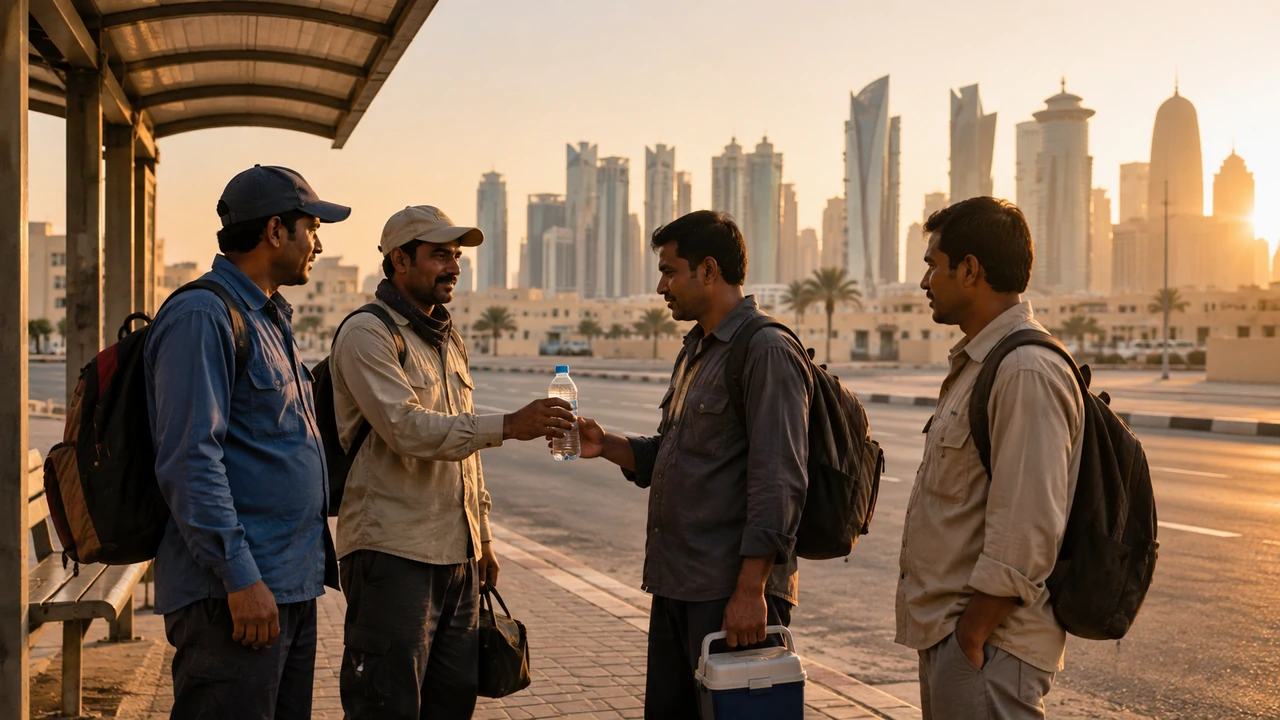
Qatar is a small country with considerable regional and global influence. Its natural-gas wealth, international connections and diplomatic relationships give it an important place in the Gulf and beyond. Its population includes a large international workforce drawn from Asia, Africa, the Middle East and many other regions.
Islam is the state religion. Recognised Christian communities may gather in approved places, especially within Doha’s Religious Complex, where congregations worship in many languages. Public evangelism and some forms of religious activity are restricted. Christians therefore need wisdom to speak about Christ faithfully without ignoring legal limits or placing other believers in danger.
Prayer Burden at a Glance
Pray for people throughout Qatar to turn to Christ in repentance and faith. Pray for churches to teach Scripture faithfully, disciple people whose time in the country may be brief, and help believers speak about their faith with courage and wisdom. Remember migrant workers whose wages, housing, residency and family stability may depend heavily on their employers, and pray for justice, protection, wise leadership and peace.
Last verified: 5 August 2026
Why Qatar Needs Prayer Now
Qatar needs prayer for people to hear the gospel, churches to serve many nationalities faithfully, migrant workers to receive justice, leaders to govern wisely, and residents to be protected amid regional conflict.
Qatar is governed by Amir Sheikh Tamim bin Hamad Al Thani. Sheikh Mohammed bin Abdulrahman bin Jassim Al Thani serves as Prime Minister and Minister of Foreign Affairs. Qatar has often helped to host negotiations between governments and armed groups. It has also been drawn directly into the conflicts it has tried to mediate. Military strikes reached Doha and important Qatari infrastructure during 2025 and 2026, placing citizens, expatriates, migrant workers and emergency personnel at risk.
Qatar should not be viewed only through wealth, government policy or regional conflict. It is home to citizens and expatriates, families and single workers, senior professionals and people facing serious financial strain or uncertainty about their work. Churches serve congregations whose members may change frequently as contracts end, visas change and people return to their home countries.
Pray that Qataris and expatriates would hear the gospel clearly and trust in Jesus Christ. Remember churches serving people from many nations, workers facing injustice or loneliness, families living apart because of employment, and leaders carrying responsibility during a dangerous period for the region.
Country Snapshot
A brief orientation to Qatar’s government, people, economy, religious setting and church context.
International workers form a major part of Qatar’s society and economy, while liquefied natural gas remains central to national income and international influence. Population figures change as workers arrive, contracts end and families relocate, so exact totals should be read as estimates.
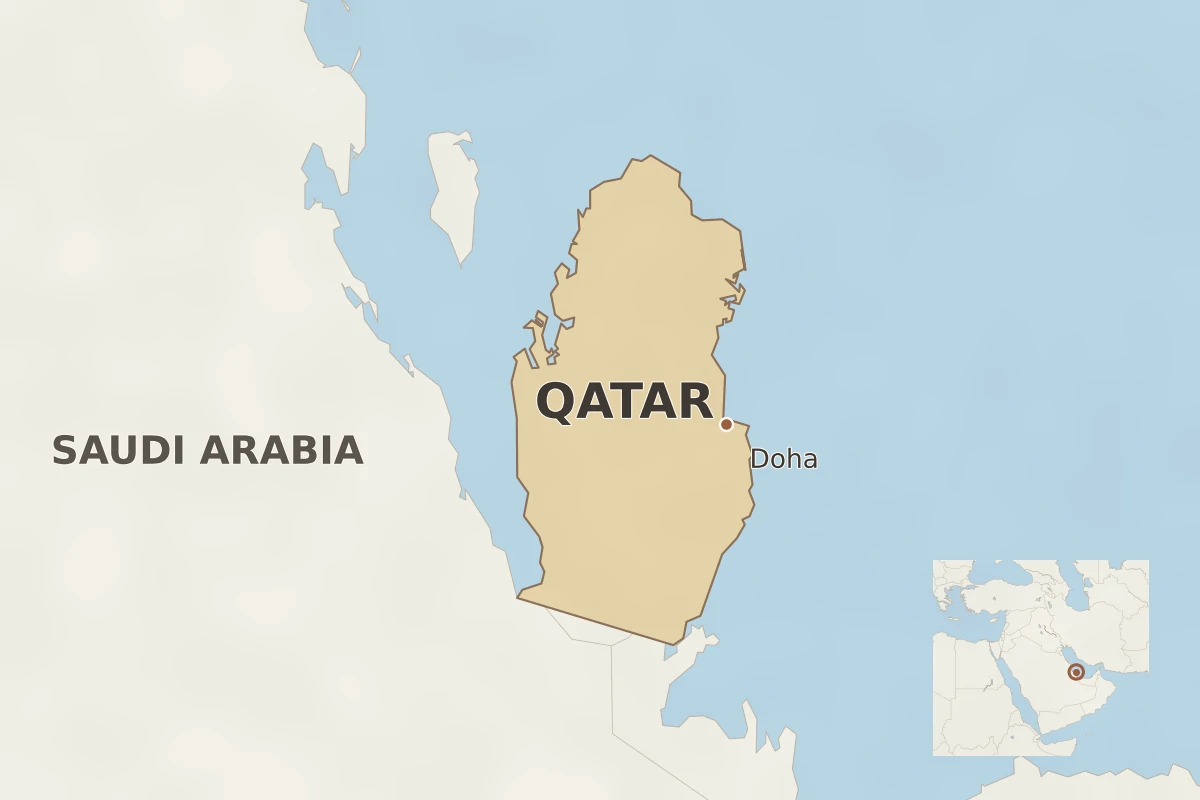
Islam is the state religion, and Sharia is a principal source of legislation. The Constitution permits religious worship within limits set by law and public-order requirements. Recognised Christian communities gather publicly, especially at the Religious Complex in Doha.
Public church information shows that many recognised congregations serve expatriate communities from a wide range of countries, traditions and language groups. A Christian label, baptism, church attendance or denominational identity does not by itself show that someone has been born again or is trusting in Christ. Pray for the gospel to be preached clearly, for people to rest in Christ alone, and for churches to submit continually to God’s Word.
Spiritual and Practical Challenges Affecting Christians and Churches
Churches in Qatar serve under legal restrictions, disciple people who may leave with little notice, minister across differences of language and social position, care for vulnerable migrant workers, address theological differences, and respond to fear and grief caused by regional conflict.
Worship is permitted, but sharing the Christian faith is restricted
Recognised churches can gather for worship, prayer, teaching, fellowship and pastoral care. Many believers attend established congregations openly and hear the Bible taught in a language they understand.
However, Qatari law restricts activities that may be understood as promoting another religion, challenging Islam or organising religious work without approval. The boundaries between permitted church activity, private religious conversation and prohibited evangelism may not always be easy for an ordinary believer to judge.
Christians need courage without recklessness and wisdom without fear. Pray that they would respect lawful authority where conscience permits, speak truthfully about Christ when opportunities arise, and never use manipulation or unnecessary provocation.
Churches disciple people who may leave with little notice
Many Christians live in Qatar because of their employment. A worker may join a congregation, begin receiving biblical teaching and then leave when a contract ends, an employer changes or residency permission expires.
Churches cannot assume that every member will remain for many years. They need clear preaching, patient discipleship, strong fellowship and trained leaders who can help believers continue following Christ wherever they go.
This movement of people also creates a valuable opportunity. Someone who learns Scripture and grows in faith in a church in Doha may later serve Christ in India, Nepal, the Philippines, Kenya, Uganda, Nigeria, Egypt, Lebanon or another country. Pray that even a short time in Qatar would lead to lasting growth in faith, knowledge of Scripture and Christian character.
Language, nationality and social position can separate believers
Christians in Qatar worship in many languages and come from very different cultures, occupations and church backgrounds. This diversity can show the grace of Christ in bringing people from many nations together. It can also divide congregations by language, nationality, income or social position.
A well-paid professional and a low-paid laborer may have very different levels of financial and employment security even when they worship in the same city. Churches need grace to welcome people sincerely and to care for members without favouring those who have money, education or influence.
Pray for qualified leaders from many language groups. Pray that churches would not be divided by status or nationality, and that their unity would rest on the truth of the gospel.
Many migrant workers face serious problems that others may not see
Qatar has introduced reforms concerning worker mobility, wages, representation and occupational safety. Its cooperation with the International Labour Organization is continuing through 2028, with a focus on making those protections work more reliably.
Even so, some workers may still face recruitment debt, delayed wages, unsafe conditions, heavy dependence on employers, separation from family or fear that making a complaint could threaten their employment and residency.
Such pressures can lead to loneliness, anxiety, exhaustion and spiritual weakness. They may remain largely unseen in a country publicly associated with wealth and development.
Pray for honest recruitment, fair employers, timely wages, safe workplaces and effective access to justice. Remember workers who feel trapped, overlooked or far from those they love. Pray that churches would recognise their needs and offer friendship, prayer and practical help.
Churches need clear biblical teaching
Congregations in Qatar come from many church traditions. Their presence alone does not show what each congregation teaches or how faithfully it is governed. Churches need pastors who explain Scripture carefully, proclaim salvation by grace alone through faith alone in Christ alone, and lead with humility and accountability.
Pray that people would not depend on religious identity, ceremonies or church membership for assurance of salvation. Pray for genuine repentance, faith, holiness and love, and for every professing Christian community to bring its teaching and practice under God’s Word.
Regional conflict has brought fear, grief and practical needs
Attacks on Doha and on energy and industrial facilities brought regional warfare closer to daily life during 2025 and 2026. Workers were killed or injured, families faced uncertainty over travel and employment, and churches had to care for people from several affected nationalities.
Church leaders may need to comfort grieving families, correct harmful rumours, help people whose income has been disrupted and encourage believers who are afraid.
Pray that churches would correct false rumours, comfort frightened people and meet practical needs with mercy. Remember people working near energy, water, transport and industrial facilities, together with medical workers and emergency personnel.
Christian Life and Witness in Qatar
Recognised churches serve a large, multilingual and frequently changing Christian community, while believers need wisdom to live openly and speak about Christ within legal limits.
Christian worship in Qatar is more visible and organised than many people outside the country may realise. Recognised congregations gather within the Religious Complex in Doha and in other approved settings. Churches serve worshippers from many countries through preaching, prayer, fellowship, children’s teaching and pastoral care.
This gives real reason for thanksgiving. Believers far from home can find Christian friendship and hear Scripture taught. Workers facing loneliness or hardship may find people willing to pray with them, share meals, offer practical help and remind them of God’s promises.
The presence of many congregations does not guarantee that the gospel is always preached clearly. Pray for every church where Christ is faithfully proclaimed and Scripture is carefully taught. Pray that confused teaching would be corrected, abuse would be exposed, vulnerable people would be protected and church leaders would serve with humility and accountability.
Because people often move in and out of Qatar, Christian discipleship there can influence churches in many other nations. Those who grow in faith in Doha may later return home or move elsewhere with a stronger knowledge of Scripture and greater readiness to serve.
Christians also need wisdom in personal conversations about faith. Public evangelism is restricted, and careless actions can endanger individuals or congregations. Yet believers can live honestly, care for people in need, answer sincere questions and explain their hope when suitable opportunities arise. Pray that Christians would neither hide their faith through fear nor speak without wisdom.
Recent Developments
Direct attacks, negotiations without a lasting settlement, a major industrial accident, national mourning, religious-freedom concerns and continuing labor reform all affect how Christians can pray for Qatar now.
-
9 September 2025
Israeli strikes reached Doha
Israel carried out strikes in Doha targeting members of Hamas’s political leadership while Qatar was serving as a mediator. The United Nations Security Council condemned the strikes and reaffirmed Qatar’s sovereignty and territorial integrity.
Prayer significance: Pray for the protection of civilians and residents, restraint by regional powers, and wisdom and integrity in efforts to mediate conflict.
-
August–October 2025
A court case raised concerns about freedom of conscience
Baha’i community leader Remy Rowhani was convicted over social-media activity connected with his religious community. International religious-freedom organisations criticised the case, and an appeals court overturned the conviction in October 2025.
Prayer significance: Pray for fair courts, just application of laws concerning religion and speech, and protection for people who act peacefully according to conscience, without confusing religious freedom with theological agreement.
-
March–July 2026
Missile and drone attacks affected Qatar
Iranian missiles and drones struck Qatar and other Gulf countries. Qatari authorities reported attacks on military and civilian locations, including facilities in Mesaieed and Ras Laffan. The attacks caused damage and disruption and placed residents and workers at risk.
Prayer significance: Pray for protection, truthful public information, wise emergency response and restraint among governments and armed forces.
-
June 2026
Workers were killed and injured in the Barzan facility explosion
An explosion occurred at the Barzan gas facility while workers were trying to restart operations. Qatari officials said that the explosion was an accident rather than sabotage. Workers from Qatar and several Asian and African countries were among those killed or injured.
Prayer significance: Pray for grieving families, injured workers, safer industrial operations and faithful care from churches and communities.
-
12 July 2026
Qatar mourned the death of the Father Amir
The Amiri Diwan announced the death of Sheikh Hamad bin Khalifa Al Thani, Qatar’s former ruler and Father Amir, at the age of 74. Qatar observed four days of public mourning. His death did not change Qatar’s current leadership.
Prayer significance: Remember the Amir, the ruling family and all who mourned, and pray that Qatar’s leaders would exercise authority with wisdom, humility and concern for the good of those who live and work in the country.
-
As of 5 August 2026
Negotiations continued without a secure settlement
Qatar continued to support diplomatic efforts involving Iran, the United States, Pakistan and other regional actors. Discussions included military operations, sanctions, nuclear questions and navigation through the Strait of Hormuz. No lasting settlement had been secured.
Prayer significance: Pray for honest negotiation, protection of civilians, restraint instead of retaliation, and agreements that serve justice and peace.
-
2024–2028 programme
Labor reform still needs consistent enforcement
Qatar’s cooperation programme with the International Labour Organization seeks to improve protections involving wages, worker mobility, representation and occupational safety. The reforms give reason for thanksgiving, but recruitment debt, unpaid wages, unsafe work and other abuses have not ended.
Prayer significance: Pray that legal protections would be enforced consistently and that officials, inspectors and employers would act honestly.
How to Pray
Pray for salvation, faithful churches, justice for workers, wise government, protection and peace in Qatar.
For people to hear and believe the gospel. Pray that Qataris and expatriates would hear the good news of Jesus Christ clearly and come to repentance and faith rather than relying on moral effort, inherited religion, church attendance or ceremonies for salvation.
For faithful churches and lasting discipleship. Pray for pastors to teach Scripture carefully and for churches to remain humble, holy and courageous. Remember congregations serving many languages and nationalities, and pray that believers would remain faithful when they leave Qatar.
For wisdom and courage in personal witness. Pray that Christians would speak about Christ with grace, honesty and good judgment. Ask the Lord to keep them from both careless provocation and fearful silence.
For migrant workers and separated families. Remember workers facing debt, unpaid wages, dangerous work, loneliness or dependence on an unjust employer. Pray for fair treatment, safe conditions, access to justice and comfort for families living apart.
For Qatar’s rulers and public officials. Pray for Amir Sheikh Tamim bin Hamad Al Thani, the Prime Minister, ministers, judges and other officials. Remember the ruling family following the death of the Father Amir. Ask God to give those in authority wisdom, humility and restraint.
For protection and peace. Pray for citizens, expatriates, workers, children, medical staff and emergency personnel. Ask God to restrain further attacks, prevent industrial accidents and protect those working near important infrastructure.
For honest mediation. Pray that Qatar’s diplomatic relationships would be used to reduce violence, protect civilians and encourage just agreements. Ask God to expose deception and give negotiators courage to speak truth.
For freedom of conscience and fair courts. Pray that laws concerning religion, speech and public order would be applied justly. Ask God to protect people from unjust punishment for peaceful religious practice or expression, and to help Christians defend human dignity without compromising biblical truth.
For churches to care for people in need. Pray that congregations would notice workers who are lonely, injured, grieving, underpaid or afraid. Ask God to make Christian fellowship a place of sincere friendship, wise counsel and practical mercy.
For hope in Christ’s kingdom. Pray that believers would remain steadfast, holy and watchful. Ask God to make the gospel fruitful among the many nations represented in Qatar and to teach His people to pray with confidence, “Your kingdom come.”
Give Thanks
Give thanks for present freedoms, faithful ministry, practical mercy and every act that protects life and serves peace.
Thank God that recognised Christian communities can gather publicly. Believers can worship, pray, receive biblical teaching and share fellowship in approved settings.
Thank God for churches where Christ is faithfully proclaimed. Give thanks for congregations helping believers grow in genuine faith and obedience.
Thank God for Christians who serve people far from home. Remember pastors and church members who welcome newcomers, care for struggling workers and minister across languages and nationalities.
Thank God for discipleship that can bless other nations. People who grow in faith and knowledge of Scripture in Qatar may later strengthen churches and communities elsewhere.
Thank God for reforms intended to protect workers. Give thanks for efforts to improve wages, worker mobility, representation and safety, while praying for honest and consistent enforcement.
Thank God for every action that has protected life. Give thanks for negotiations, acts of restraint, medical responses and emergency efforts during a dangerous period for Qatar and the wider region.
Last Verified / Update Note
This section records when the guide was last reviewed, the concerns that most need prayer now, and the developments that could change how readers pray for Qatar.
Review Status
Reviewed for current prayer use
Qatar’s current leadership; population and economic context; constitutional and penal provisions affecting religion; recognised Christian worship; migrant-worker reforms and continuing implementation concerns; the September 2025 Israeli strike in Doha; Iranian missile and drone attacks during 2026; the Ras Laffan gas-facility explosion; the death of the Father Amir; the Remy Rowhani court case; and continuing regional negotiations.
Clear gospel proclamation; faithful and accountable churches; wise Christian witness; care for multilingual and frequently changing congregations; justice and protection for migrant workers; comfort for grieving families; wise government; protection from further attacks and industrial harm; fair treatment under laws concerning religion and speech; and honest regional mediation.
Further attacks on Qatar or neighbouring Gulf states; whether agreements involving Iran, the United States and the Strait of Hormuz are implemented or break down; recovery work and safety measures at Ras Laffan; changes in migrant-worker protection and enforcement; significant new religious-freedom cases or legal changes; and any change in Qatar’s senior leadership or mediation role.
This guide uses direct Qatari government and legal sources, United Nations and international institutional material, local church information, national and regional reporting, and independent religious-freedom and human-rights assessments. Official statements are used to represent Qatar’s position but are not treated as independent proof of disputed claims.
Help keep this guide accurate and current
If you notice a possible correction, a broken link, or a significant change in Qatar, please contact the Nations Prayer Directory so we can review it carefully.
Key Sources Consulted
Official, institutional, church and independent sources used to understand Qatar’s laws, church setting, labor conditions and recent regional developments.
Qatar government, law and official positions
- International Media Office. “Government of Qatar.” Used for current government structure and the Prime Minister.
- Al Meezan. “Permanent Constitution, Article 1.” Used for the state religion and the place of Sharia in legislation.
- Al Meezan. “Permanent Constitution, Article 50.” Used for constitutional wording concerning the practice of religious rites.
- Al Meezan. “Penal Code, Article 256.” Used for offences concerning religion and religious sites.
- Al Meezan. “Penal Code, Article 257.” Used for restrictions concerning organisations or activities that promote another religion.
- Qatar Ministry of Foreign Affairs. “Freedom of religion or belief for non-Muslims.” Used for Qatar’s stated position concerning non-Muslim worship and the Religious Complex.
- Qatar Ministry of Foreign Affairs. “Israeli attack on Doha.” Used for Qatar’s official description and condemnation of the September 2025 strike.
- Qatar Ministry of Defence. “Official statement on the 2 March 2026 attack.” Used for the official account of drones striking facilities in Mesaieed and Ras Laffan.
- Qatar Ministry of Defence. “Official statement on 5 March 2026 missile and drone attacks.” Used for the official account of ballistic-missile and drone interceptions.
- Qatar Ministry of Foreign Affairs. “Iranian attacks and Ras Laffan.” Used for Qatar’s official position on attacks against its territory and energy infrastructure.
- Qatar Ministry of Foreign Affairs. “July 2026 attacks reported to the United Nations.” Used for Qatar’s official account of July attacks, injuries and legal position.
- Qatar Ministry of Foreign Affairs. “US–Iran Memorandum of Understanding.” Used for Qatar’s position on negotiations, cessation of hostilities and navigation through the Strait of Hormuz.
- Amiri Diwan. “Statement on the death of the Father Amir.” Used for the official announcement dated 12 July 2026.
Population, economy and labor
- World Bank. “Qatar country data.” Used for population and economic indicators.
- International Monetary Fund. “2026 Article IV mission to Qatar.” Used for economic conditions, LNG expansion and identified risks.
- International Labour Organization. “ILO and Qatar sign new four-year programme.” Used for labor mobility, wages, worker representation and occupational safety.
- Qatar Ministry of Labour. “Minister’s message and ministry responsibilities.” Used for Qatar’s official labor-policy and enforcement position.
- Human Rights Watch. “World Report 2026: Qatar.” Used for independent assessment of migrant-worker conditions and reform implementation.
Christian worship and church life
- Anglican Centre in Qatar. Used for worship spaces, ministries and the Centre’s role among Protestant, evangelical and Anglican communities.
- Anglican Centre. “Hosted congregations.” Used for the congregational traditions and languages represented at the Centre.
- Church of the Epiphany. “Anglican Centre.” Used for church-provided information about the multinational worshipping community and facilities.
Regional conflict and independent verification
- United Nations Security Council. “Press statement on the September 2025 Doha strikes.” Used for the international response and recognition of Qatar’s mediation role.
- United Nations Security Council. “Resolution 2817 (2026).” Used for the international response to Iranian attacks against Qatar and other regional states.
- United Nations Department of Political and Peacebuilding Affairs. “Call for maximum restraint.” Used for independent institutional assessment of the fragility of the regional ceasefire and negotiations.
- QatarEnergy. “Operational incident at Ras Laffan.” Used for the initial official statement concerning the Barzan facility explosion and fire.
- The Peninsula Qatar. “QatarEnergy confirms casualties in Ras Laffan incident.” Used for national reporting of the casualty announcement and accident assessment.
- Associated Press. “Ras Laffan explosion and casualties.” Used for independent reporting on the accident, casualties and operational context.
- Associated Press. “Current Strait of Hormuz negotiations.” Used for reporting that negotiations continued without a final settlement as of 5 August 2026.
Religious freedom and freedom of conscience
- U.S. Commission on International Religious Freedom. “Sentencing of Baha’i leader Remy Rowhani.” Used for independent religious-freedom criticism of the August 2025 conviction.
- Associated Press. “Qatar’s stated position and the Rowhani conviction.” Used for court reporting, Qatar’s official response and outside criticism.
- Associated Press. “Rowhani conviction overturned.” Used for reporting on the October 2025 appeal outcome.
Source Context
How to understand the sources behind this guide when population figures change with migration, accounts of religious freedom differ, and regional security can change quickly.
Source Context
- Population figures. Qatar’s population changes with employment and migration, and published estimates vary by source and date. The guide therefore uses approximately three million rather than presenting one figure as permanently exact.
- Christian-community figures. Public church websites describe a large and multilingual worshipping community, but their attendance figures are self-reported. They do not provide a complete Christian census or show what every congregation teaches or whether every worshipper personally trusts in Christ.
- Religious freedom. Qatar’s Constitution and official statements describe legal protection for religious worship. The Penal Code and outside assessments also identify restrictions affecting religious promotion, organisation, speech and minority communities. The guide presents these together rather than treating either the official or critical account as complete by itself.
- Labor conditions. The International Labour Organization documents substantial reforms and an active programme to strengthen implementation. Human Rights Watch reports that employer control, wage problems and other abuses continue. The guide acknowledges reform without claiming that worker exploitation has ended.
- Regional conflict. Regional security and negotiations can change quickly. As of 5 August 2026, negotiations concerning the United States, Iran and the Strait of Hormuz were continuing, but no lasting settlement had been secured. The guide avoids predicting future attacks, ceasefires, shipping arrangements or recovery dates.
- Official and independent perspectives. Official Qatari sources establish government positions, laws and announced events. United Nations documents, regional reporting and independent organisations are used for verification, criticism and wider context. An official statement is not treated as independent proof merely because it is official.
- Local-source limits. Accessible national reporting is often based on government or state-institution statements. Independent local reporting on sensitive political, religious and labor matters is more limited, so the guide also uses regional and international sources.
- Private Christian activity. Available public sources do not reliably establish the number of Qatari converts, private fellowships or believers meeting outside recognised structures. The guide does not publish names, locations or unsupported claims about such communities.
A Closing Prayer for Qatar
Bring Qatar’s people, churches, workers, leaders and need for peace before the Lord.


