

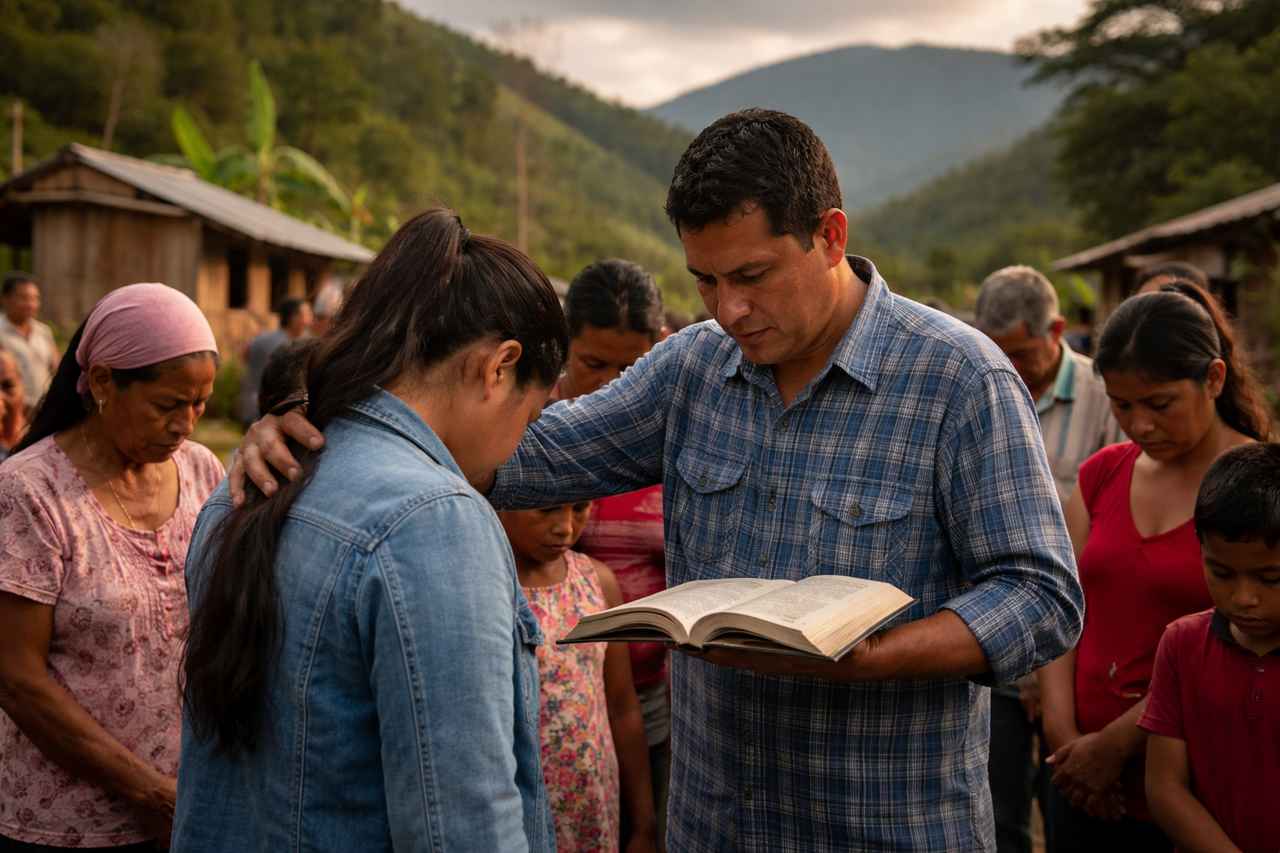
Colombia is a nation with a deep Christian heritage, yet many believers now live in places where daily life is marked by fear, displacement, and the steady pressure of armed violence. In some regions, Christians are not facing one single national policy aimed against them. Instead, they are living under the strain of criminal control, forced recruitment, fractured communities, and the danger that comes when pastors and churches try to protect the vulnerable. Even so, the church continues to serve, to comfort, and to call the country toward peace. That is why Colombia calls for informed, patient, and hopeful prayer now.
Why This Country Needs Prayer Now
Colombia needs prayer now because violence has deepened again in ways that reach into ordinary life. Human Rights Watch says 2025 brought one of the worst humanitarian tolls in a decade, with armed groups expanding their control, displacement rising sharply, and the run-up to the 2026 elections marked by serious violence. In Catatumbo, near the Venezuelan border, the conflict has been especially severe. The Norwegian Refugee Council reported in January 2026 that about 100,000 people had been displaced there over the previous year, while communities continued to live under threats, killings, and pressure from armed actors.
This burden is not outside the life of the church. It falls right across it. Believers worship in the same towns, raise children in the same anxious conditions, and often try to hold communities together when fear is growing. In several areas, pastors and church workers become especially vulnerable because they help young people resist recruitment, care for the displaced, or speak against the influence of criminal groups. Open Doors says that in Colombia such work can lead to threats, extortion, and even murder.
Colombia is also passing through an election season that needs prayer. AP reported that Colombians voted for a new Congress and chose presidential candidates in March 2026 amid heightened concerns about political violence, especially in rural zones where illegal armed groups are active. In such a moment, Christians have reason to pray not only for safety, but for truth, restraint, justice, and a public life less ruled by fear.
Country Snapshot
Colombia is a presidential republic in the northwest of South America. The World Bank lists its population at more than 52 million. As of April 2026, its president is Gustavo Francisco Petro Urrego. Christianity remains the majority faith in the country, though the pressures facing believers differ sharply from one region to another.
Open Doors ranks Colombia 47 on its 2026 World Watch List. That ranking does not mean the whole country is uniformly hostile to Christian faith. It does mean there are enough serious and recurring pressures on believers that the country deserves sustained prayer, especially where violence, local criminal control, and social hostility make faithful witness more costly.
Main Pressures Facing Christians
One of the main pressures facing Christians in Colombia is the power that armed groups and criminal networks exercise in many regions. Where such groups seek control over a community, the local church can be seen as an obstacle, especially if pastors help former gang members start again, warn children against recruitment, or organize practical mercy for families in distress. The pressure is not always loud, but it is real. It can take the form of threats, extortion, intimidation, and violent retaliation.
Another pressure comes from the wider humanitarian strain caused by the long-running conflict. Human Rights Watch describes a landscape in which several armed actors continue to fight for territory and profit from drug trafficking and other illegal economies. For ordinary Christians, that can mean confinement, sudden displacement, interrupted schooling, fear of recruitment, and the painful sense that daily life is never fully secure.
There is also pressure on some believers from Indigenous communities. Open Doors notes that Christians in such settings may be accused of betraying local traditions and can face threats, discrimination, legal complaints, or imprisonment. So the burden in Colombia is not only a matter of spectacular violence. In many places it also includes quieter forms of rejection and social pressure that wear believers down over time.
What Life Is Like for Christians in Colombia
For many Christians in Colombia, life depends greatly on where they live. In some places, church life can continue with relative openness. Congregations can gather, discipleship can grow, and public witness can be more visible. But in conflict-affected regions, believers often live with a much more fragile rhythm. They weigh where they travel, how openly they speak, how to protect their children, and what risks come with ordinary ministry.
For pastors, faithfulness often means carrying burdens well beyond preaching. They comfort grieving families, visit the displaced, try to shield the young, and help communities resist the pull of fear and criminal control. In those settings, Christian service can itself become costly. Open Doors notes that church leaders are particularly vulnerable when their work threatens the influence of gangs and cartels.
The burden on children is especially painful. UNICEF reported in February 2026 that child recruitment and use by armed groups in Colombia had risen by 300 percent over five years, with one child being recruited or used every 20 hours on average in the UN-verified figures covering 2024. That means many Christian families are not only praying for general peace. They are praying for their sons and daughters, for schools, for safe streets, and for the preserving mercy of God in places where childhood itself is under pressure.
Yet the story is not only one of darkness. There are still visible signs of grace. Church leaders continue to call the country toward reconciliation and peace. Colombia’s bishops, for example, appealed in February 2026 for dialogue, responsible participation in democratic life, and renewed commitment to reconciliation. Such moments do not erase the country’s pain, but they do remind us that the Lord has not left Himself without witnesses.
Recent Developments
Recent developments have sharpened Colombia’s prayer burden. Human Rights Watch says that violence in 2025 led to one of the country’s worst humanitarian tolls in years. Armed groups continued to expand their presence, and mass displacement rose dramatically. In Catatumbo, the situation became especially grave. NRC reported that one year after the conflict there escalated sharply, families were still living in fear of forced recruitment, explosive devices, targeted killings, and repeated threats.
Children remain at particular risk. UNICEF’s February 2026 release warned that escalating violence, poverty, weak services, and limited educational access have all contributed to the surge in child recruitment. This is not a side issue. It is one of the clearest signs that the conflict is cutting deeply into the future of communities.
Christians have also faced direct violence. Open Doors says that many church leaders in Colombia face ongoing threats because of the way they serve their communities. In this setting, the church’s vulnerability is tied not only to belief in the abstract, but to the practical cost of faithful presence in places under pressure.
At the same time, Colombia has not stopped searching for peace, however fragile that search remains. AP reported in February 2026 that the government resumed talks with the Gulf Clan after a suspension, and that the Catholic Church helped facilitate the meeting that allowed the talks to restart. The Colombian government considers the group a criminal organization, while the group presents itself as an armed insurgency with political aims. What can be said with confidence is that these talks show Colombia is still wrestling toward some form of peace, and that prayer is needed for justice, truth, restraint, and wisdom rather than shallow optimism.
How to Pray
- Pray that the Lord would protect pastors, evangelists, and ordinary believers serving in areas where armed groups intimidate communities, recruit the young, and punish those who resist their influence. Ask God to give His people courage, wisdom, and steadfast love as they continue to bear witness to Christ under pressure.
- Pray for children and teenagers in conflict-affected regions, especially where recruitment, fear, and disrupted schooling have become part of daily life. Ask the Lord to preserve the vulnerable, strengthen families, and raise up churches, teachers, and community leaders who can shield the young from exploitation.
- Pray for displaced families, especially in places such as Catatumbo, that God would provide safety, shelter, food, schooling, and faithful pastoral care. Ask Him to keep many from despair, bitterness, and spiritual weariness, and to sustain believers who are serving the uprooted and grieving.
- Pray for church leaders to shepherd wisely in a hard season. Ask the Lord to keep them holy, courageous, and full of compassion, so that their ministries are marked not by fear or mere survival, but by faithful preaching, patient discipleship, and practical mercy.
- Pray for Colombia’s public life during this election season, that the Lord would restrain violence, expose lies, humble the proud, and grant wisdom to those in authority. Ask Him to give the country more truth, more justice, and a deeper regard for the dignity of human life.
- Pray for Indigenous-background believers and other vulnerable converts who may face rejection or pressure because they follow Christ. Ask God to preserve them in faith, give them endurance, and help local churches receive and strengthen them with tenderness and biblical faithfulness.
- Pray that the Lord would grant Colombia a more just and durable peace. Ask Him to restrain evil, frustrate the work of those who profit from fear and bloodshed, and open the way for communities to live with greater safety, truth, and freedom for faithful Christian service.
Give Thanks
- Give thanks that the Lord has preserved a living Christian witness in Colombia, and that many churches continue to worship, serve, and endure even where the pressures are heavy. This is not a small mercy, but a sign of God’s sustaining grace.
- Give thanks for visible acts of Christian mercy, including church-led care for suffering families and public calls for peace, reconciliation, and responsible civic life. These are meaningful signs of common grace and faithful witness in a troubled setting.
- Give thanks that Colombia is not without morally significant good. Even amid violence and fear, there are still efforts toward dialogue, relief, community care, and the protection of the vulnerable. Such mercies should not be exaggerated, but they should be recognized with sober gratitude.
- Give thanks that the Lord continues to raise up believers who do not withdraw into silence, but serve their neighbors, comfort the distressed, and point others to Christ in hard places.
Last Verified
Last updated: April 17, 2026.
This post should be reviewed again soon after the May 31, 2026 presidential election, after any major escalation in conflict-affected regions such as Catatumbo, or after any significant shift in peace talks or attacks affecting churches and community leaders.
Key Sources Consulted
- Human Rights Watch, World Report 2026: Colombia.
- Open Doors, Colombia country profile / 2026 World Watch List materials.
- Norwegian Refugee Council, Catatumbo, Colombia: 100,000 displaced after a year of brutal conflict.
- UNICEF, Child recruitment and use by armed groups in Colombia quadruples over five years.
- AP, reporting on Colombia’s March 2026 congressional vote and presidential primaries.
- AP, reporting on resumed talks with the Gulf Clan.
- Vatican News, Colombia’s bishops appeal for peace and reconciliation.
- World Bank, Colombia country data.
- Presidency of Colombia, official presidential profile.
- CIA World Factbook archive, religion background for Colombia.