

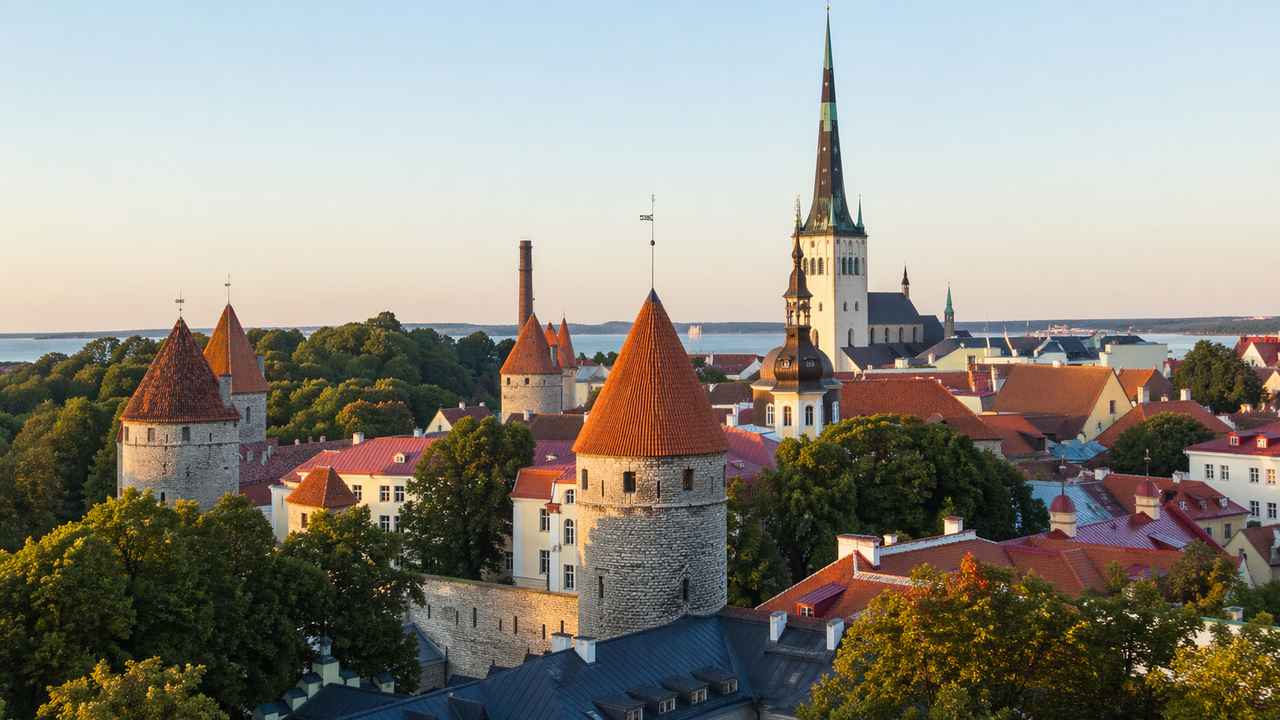
Estonia is often seen as orderly, modern, and secure. Yet Christians who pray for this Baltic nation should look beneath that calm surface. Estonia is a deeply secular society. It also lives under the long shadow of Russia’s war against Ukraine and the wider insecurity that war has brought to the Baltic region. At the same time, the country is navigating sensitive questions about church freedom, public morality, and national security. These realities do not make Estonia a land of dramatic persecution, but they do make it a nation that needs clear-eyed, gospel-shaped prayer now.
Why This Country Needs Prayer Now
Estonia needs prayer because spiritual emptiness can be as serious as open hostility. Statistics Estonia’s 2021 census reporting found that only 29% of people aged 15 and over identified with any religion, while 58% said they had no religious affiliation. Orthodox Christianity remained the largest affiliation at 16%, followed by Lutheranism at 8%. In such a setting, the challenge for many churches is not always direct repression, but widespread indifference to the gospel.
Estonia also needs prayer because the national atmosphere is shaped by real security pressure. In March 2025, the government decided that defence spending should rise to at least 5% of GDP from 2026 onward because of the threat posed by Russia. Since then, Estonia and its Baltic partners have continued to stress regional security, protection of critical infrastructure, and the risks connected to Russia’s sanctions-evasion “shadow fleet” — older, often poorly documented vessels used to move Russian oil despite Western restrictions.
Country Snapshot
Estonia is a Baltic state in northern Europe with a population of 1,362,954 as of 1 January 2026. Among people aged 15 and above, the largest religious affiliation is Orthodox Christianity at 16%, followed by Lutheranism at 8%, while 58% report no religious affiliation. As of April 2026, Alar Karis serves as president and Kristen Michal serves as prime minister.
Estonia’s constitution protects freedom of religion and belief and does not establish a state church. The legal framework therefore remains broadly protective, even as public life becomes more secular and the social space for Christian conviction often feels narrower. Recent human-rights review material still describes Estonia’s overall religious-freedom situation as good, while also noting tensions over state neutrality and the treatment of church bodies with Russian links.
Main Pressures Facing Christians
The pressures facing Christians in Estonia are more subtle than in places where churches endure raids, arrests, or imprisonment.
The first pressure is deep secular distance from the church. Many believers serve in a society where Christian conviction is often viewed as marginal, private, or outdated, especially among younger generations. The challenge is not always hostility, but indifference.
The second pressure is moral tension within a rapidly liberal public culture. Estonia’s government announced in 2023 that marriage equality would take effect from 2024. Churches retain doctrinal autonomy, but these developments bring sharper questions about how Christian belief relates to public life, law, education, and cultural expectations.
The third pressure is geopolitical strain, especially around the Estonian Christian Orthodox Church, the renamed church body formerly known as the Estonian Orthodox Church of the Moscow Patriarchate. The Moscow Patriarchate is the central leadership structure of the Russian Orthodox Church. In this setting, Christians can be drawn into disputes involving national loyalty, foreign influence, constitutional freedom, and the proper limits of state power.
What Life Is Like for Christians in Estonia
Christians in Estonia generally worship freely, gather openly, and benefit from meaningful legal protections. Yet legal freedom does not remove spiritual difficulty.
For many pastors, churches, and Christian families, ministry takes place in a spiritually cool environment where indifference may be a greater obstacle than outright persecution. Evangelism can be slow. Churches may feel small, aging, or socially peripheral. Believers may find that the gospel is not fiercely opposed so much as quietly ignored.
At the same time, Orthodox congregations connected to the Moscow Patriarchate now live within a particularly sensitive public debate. Estonian officials have argued that foreign religious influence can become a security issue. Critics and constitutional watchdogs, however, have warned that the state must not respond so broadly that it violates freedom of religion or freedom of association. That combination creates a difficult environment, especially in communities where Russian ties are intensely scrutinized. For some believers, this means living and worshiping under a cloud of suspicion not entirely of their own making.
Recent Developments
Estonia’s wider national setting has remained tense. In March 2025, the government decided that defence spending should rise to at least 5% of GDP from 2026, explicitly citing the danger posed by Russian aggression. Baltic security cooperation has remained active in 2026, including fresh coordination on defence and the protection of critical infrastructure. Christians therefore pray for Estonia not as an isolated or insulated nation, but as a country living close to a real frontier of European insecurity.
Church-state tensions have also remained prominent. In April 2025, the Riigikogu, Estonia’s parliament, adopted amendments to the Churches and Congregations Act. President Karis refused to promulgate the bill, and parliament revised it in June 2025 by narrowing some of its wording and extending the transition period. In September 2025, the Riigikogu adopted the act again after the president had refused it twice. The state’s stated aim has been to prevent hostile foreign influence under the cover of religious freedom; critics have warned that unclear wording could still threaten state neutrality and religious liberty. In April 2026, Estonia’s Internal Security Service said that the renamed Estonian Christian Orthodox Church still remained effectively run from Moscow. These developments call for prayerful discernment, not caricature. Security concerns are real, and constitutional concerns about religious liberty are real as well. Estonia needs wisdom that is principled, sober, and just.
The country is also facing quieter but weighty internal pressures. Statistics Estonia reported in March 2026 that GDP grew by 0.6% in 2025 after two weaker years. Yet the population still fell by 7,041 over the same period, and births remained below 10,000 for only the second time in the country’s history. Even in a relatively stable country, demographic weakness, economic strain, and social weariness can slowly erode confidence, weaken family life, and reduce long-term ministry strength.
How to Pray
- Pray that the Lord would grant repentance and faith in Jesus Christ across Estonia, especially in a society where many people live at a great distance from the church and from any serious profession of Christian belief.
- Pray for pastors, elders, and ordinary believers to remain steadfast in the ordinary means of grace — faithful preaching, prayer, discipleship, and loving witness — even when gospel work seems slow or socially marginal.
- Pray that Christians in Estonia would speak the truth with humility and courage as they navigate a strongly secular public culture and growing pressure around marriage, morality, and the place of Christian conviction in public life.
- Pray for wisdom, justice, and restraint for Estonia’s leaders as they respond to real security threats from Russia. Ask God to preserve the country from fear, pride, rashness, and injustice, and to give rulers sober judgment for the good of their people.
- Pray for believers affected by the dispute surrounding the Moscow Patriarchate and its Estonian-linked church bodies. Ask the Lord to protect freedom of conscience, expose falsehood, restrain manipulation, and keep ordinary worshipers from being crushed by pressures they did not create.
- Pray for younger generations, families, and students in Estonia, that the Lord would raise up new disciples, strengthen Christian homes and congregations, and cause the gospel to bear lasting fruit in a nation facing demographic weakness and spiritual indifference.
Give Thanks
- Give thanks that Christians in Estonia still benefit from real legal protection for freedom of religion and can generally worship openly and gather without the kinds of restrictions seen in more hostile settings.
- Give thanks for every faithful congregation — Lutheran, Orthodox, Baptist, evangelical, and others — that continues to worship, teach Scripture, disciple believers, and bear witness to Christ in a deeply secular society.
- Give thanks for signs of constitutional seriousness and public restraint in Estonia, including the fact that questions of security, law, and religious freedom are being publicly tested rather than simply ignored.
- Give thanks for the Lord’s common grace in preserving public order, civic responsibility, and room for Christian faithfulness even amid regional tension and moral uncertainty.
Last updated: April 20, 2026.
Key Sources Consulted
- Statistics Estonia, “Population census. The proportion of people with a religious affiliation remains stable, Orthodox Christianity is still the most widespread” (2 November 2022).
- Statistics Estonia, “Estonia’s population decreased by 7,041 according to preliminary data” (14 January 2026).
- Statistics Estonia, “Estonia’s economy fared better in 2025 than in the two preceding years” (2 March 2026).
- Government of Estonia, “Estonia to raise its defence budget to at least five per cent of its GDP from next year” (18 March 2025).
- Government of Estonia, “Marriage equality to be enacted in Estonia” (20 June 2023).
- Government of Estonia page showing Prime Minister Kristen Michal in office, accessed through April 2026 government materials.
- Office of the President of Estonia materials confirming Alar Karis as president in April 2026.
- Estonian Human Rights Centre, “Freedom of religion” review materials for Estonia.
- Riigikogu press materials on the Churches and Congregations Act (9 April 2025; 18 June 2025; 17 September 2025).
- ERR News, “ISS: Estonian Christian Orthodox Church still run from Moscow” (April 2026).
- ERR News on Estonia’s shadow-fleet enforcement and Baltic maritime surveillance cooperation.