


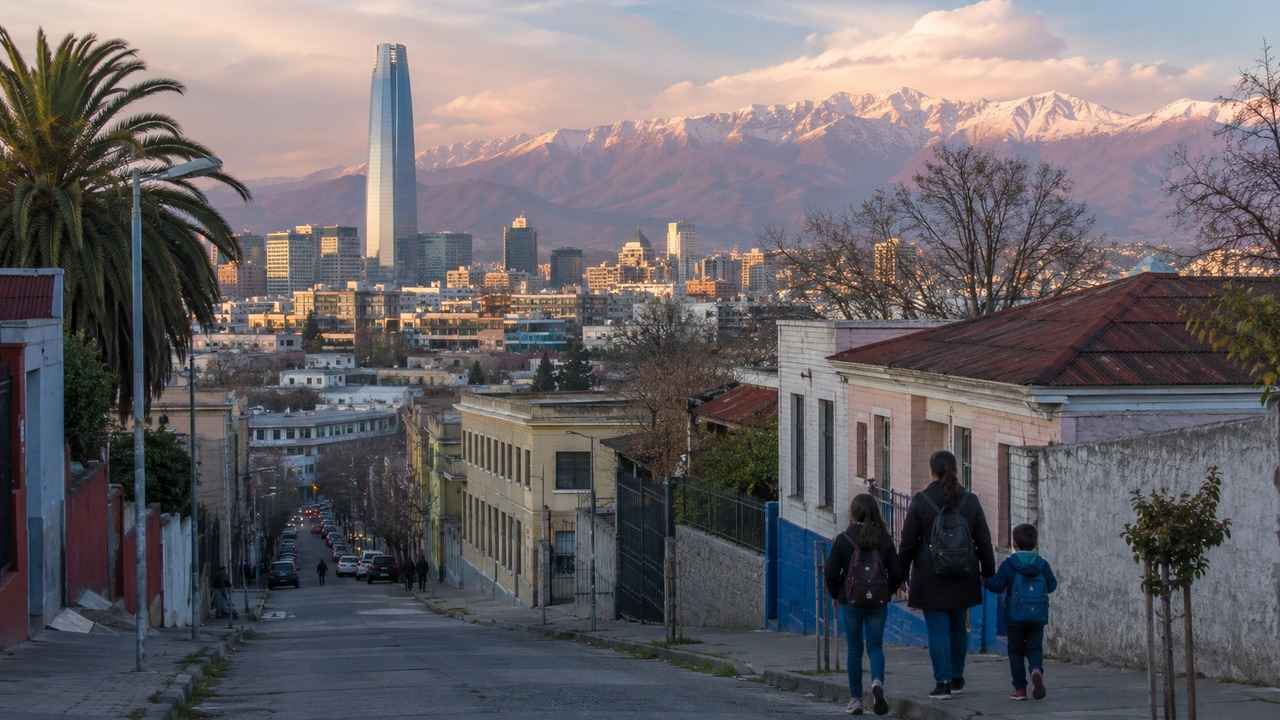
Chile needs prayer while public life and religious life are both changing. The country still gives churches real freedom to worship, organize, serve, and speak, and Christianity remains visible in many parts of national life. Yet many Chileans now have little active connection to Christian faith, and trust in religious institutions has been weakened by scandal, secularization, and disappointment. At the same time, Chile is navigating a new government under President José Antonio Kast, concern over crime and migration, school-safety fears, economic pressure, and recovery after deadly wildfires. Christians in Chile need grace to remain rooted in Christ, faithful to Scripture, humble in public witness, and clear in love for their neighbors.
Prayer Burden at a Glance
Pray for churches in Chile to preach Christ clearly, disciple believers patiently, and bear witness through honesty, humility, repentance, protection of the vulnerable, and love of neighbor in a more secular and skeptical society. Pray for public life to be marked by justice, restraint, truth, and mercy as the country faces political transition, migration debates, school-safety concerns, economic strain, and wildfire recovery. Pray that believers would place their hope not in politics or cultural approval, but in God’s providence, Christ’s kingdom, and faithful obedience to Scripture.
Last verified: June 2026
Why Chile Needs Prayer Now
Chile needs prayer because political change, secularization, damaged trust in religious institutions, wildfire recovery, school-safety fears, migration concerns, and economic strain are affecting daily life and Christian witness.
José Antonio Kast took office as president on March 11, 2026, after an election shaped by concern over crime, migration, and economic stagnation. His government has emphasized security, border control, employment, economic reform, and conservative social questions. These issues are not only matters for politicians. They affect families, churches, migrants, children, workers, public servants, and the daily setting in which Christians must speak and serve.
Chile also needs prayer because its religious life has changed significantly. Pew Research Center’s January 2026 reporting found that 46% of Chilean adults identify as Catholic, 19% as Protestant, and 33% as religiously unaffiliated. The gospel has not disappeared from Chile, and the church is not without freedom or witness. But many churches now serve in a society where Christian identity is less assumed, active discipleship is less publicly expected, and younger generations may be more distant from regular worship, repentance, and open faith in Christ.
The church’s public credibility is another serious burden. The long Catholic abuse crisis has damaged trust in religious institutions, and many Chileans now hear Christian claims in light of institutional failure, hypocrisy, or disappointment. This should not be used to condemn every church or believer. It does mean Christians in Chile need to show honesty, humility, repentance where repentance is needed, protection of the vulnerable, and patient faithfulness that points beyond cultural religion to living faith in Christ.
Chile’s prayer needs are also practical and immediate. The January 2026 wildfires killed at least 20 people in later reporting, injured many more, damaged homes, and left communities needing long recovery. School violence and threats have raised fear among families, teachers, and students. Migration enforcement and investigations involving Haitian children have raised serious questions about truth, child protection, justice, human dignity, and public trust. Economic pressure continues to weigh on households and workers.
For these reasons, Christians should pray for Chile with sober hope. The country has real religious freedom, visible Christian history, active churches, and serious spiritual and social strain. The Lord’s people in Chile need grace to serve wisely in a changing nation and to hold out Christ with courage, humility, and love.
Country Snapshot
A brief overview of Chile’s setting, population, religious landscape, and legal space for church life.
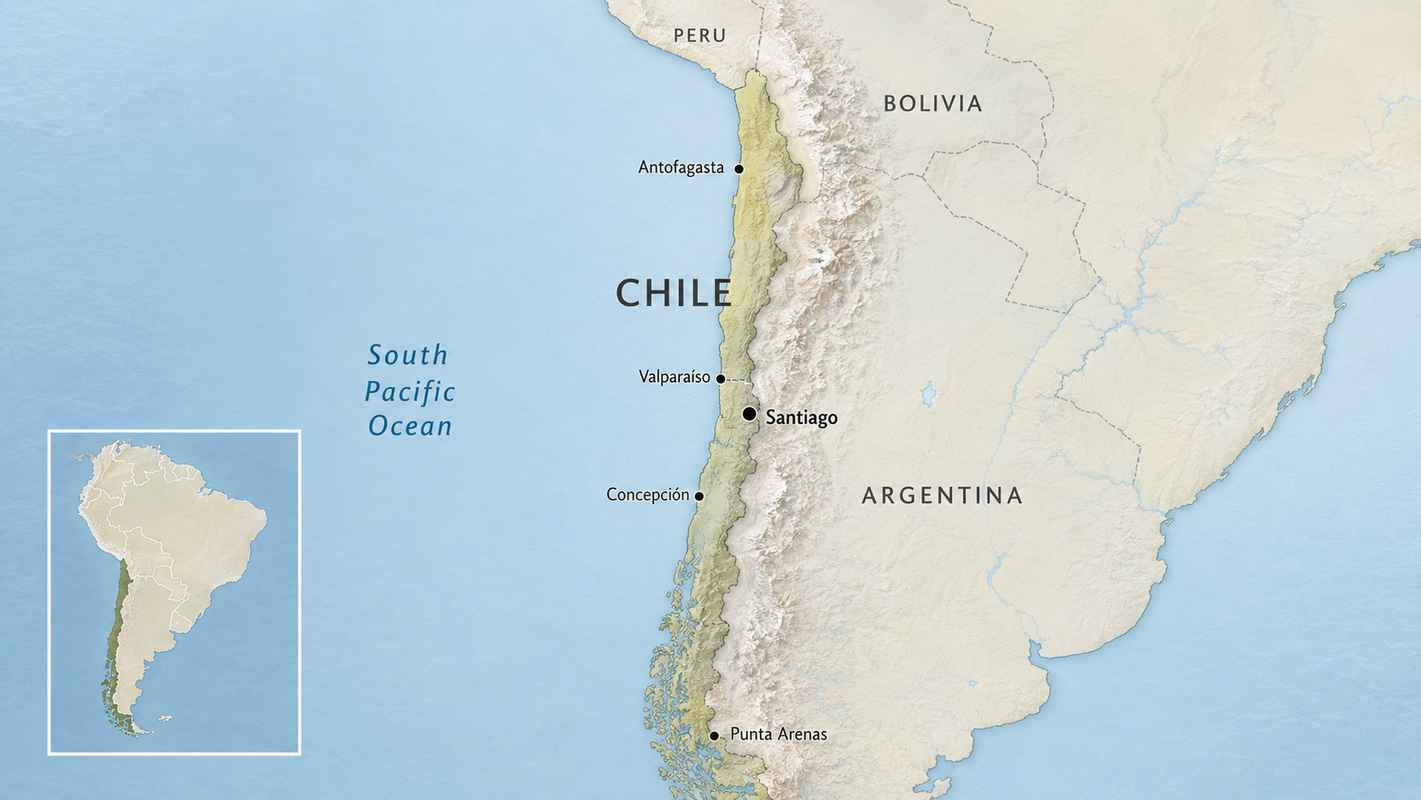
Chile is a long, narrow country along the Pacific coast of South America, bordered by Peru, Bolivia, and Argentina, with the Andes running along much of its eastern side. It is often viewed as one of Latin America’s more stable and institutionally developed countries, yet recent years have revealed frustration over security, migration, inequality, economic strain, and public trust.
Population figures vary because different sources measure different things. The World Bank’s latest country data gives Chile’s 2024 population estimate as about 19.76 million, while Chile’s National Statistics Institute, known in Spanish as the Instituto Nacional de Estadísticas, reported a lower counted population in the 2024 census. Taken together, these sources support a careful estimate of roughly 18.5 to 19.8 million people, depending on whether a census count or international estimate is used.
Chile gives meaningful legal room for religious life. The Office of Religious Affairs, known in Spanish as the Oficina Nacional de Asuntos Religiosos, works with religious communities and promotes the exercise of religious freedom. Chile’s Law 19.638, commonly known as the Law of Worship, provides the main legal framework for the recognition and public activity of churches and religious organizations.
The country remains shaped by Christianity, especially Catholic history and a visible Protestant and evangelical presence. Yet Chile is no longer a society where active Christian belief and practice can be assumed. Pew Research Center’s 2026 reporting points to a large religiously unaffiliated share of the adult population and major movement away from Catholic identity over time. Churches therefore minister in a country where Christian symbols and public Christian history remain visible, while personal faith, regular worship, and public trust in religious institutions are often weakened or contested.
Spiritual and Practical Challenges Affecting Christians and Churches
Key realities affecting Christian witness, church life, public trust, mercy, and prayer in Chile.
Secularization
Many Chileans still recognize Christian language, traditions, holidays, and institutions, but a growing share of the population identifies with no religion. Churches must therefore avoid assuming that inherited Christian memory equals saving faith. They need to preach repentance and faith in Christ clearly, teach Scripture patiently, and help people understand the gospel as more than family tradition, moral identity, or political culture.
Damaged public trust
The Catholic abuse crisis and wider institutional failures have made many people suspicious of religious authority. This affects more than one denomination, because public mistrust often spreads across Christian communities more broadly. Churches in Chile need leaders whose conduct is honest, humble, accountable, and visibly submitted to Christ. They also need courage to confess sin where needed, protect the vulnerable, and show that Christian ministry exists to serve Christ and neighbor, not to preserve reputation or power.
Political and moral polarization
President Kast’s openly religious identity and conservative moral views have renewed attention to the place of religion in public life. Some Chileans welcome this; others fear that women’s rights, abortion policy, or rights for lesbian, gay, bisexual, transgender, and queer people could be affected. Because some concerns are still possible outcomes rather than enacted policy changes, Christians should speak and pray with care, truthfulness, and restraint. Churches in Chile should pray and act carefully in this setting, refusing both political idolatry and fearful retreat. Christian witness must be governed by Scripture, truth, humility, love of neighbor, and confidence in Christ rather than by party loyalty or cultural anger.
Public insecurity and fear
Concerns about crime, organized violence, school safety, and social trust affect families and neighborhoods. Recent violent incidents and school threats have made safety a real concern for parents, teachers, students, and officials. Churches have an opportunity to care for anxious families, teach the value of human life, support wise discipline and mercy, and pray for the restraint of evil.
Migration and human dignity
Chile’s government has pursued tougher migration enforcement, including deportation measures and border-control efforts. At the same time, investigations involving Haitian minors who entered through family-reunification processes have raised serious child-protection concerns. Later reporting indicated that many children in one reviewed sample had been located with family or authorized adults, were in school, and were registered in the health system. That later reporting means Christians should be careful not to repeat alarming claims as settled fact. The need for prayer remains serious: children must be protected, migrants must be treated with dignity, wrongdoing must be investigated honestly, and public debate must not turn vulnerable people into political symbols.
Disaster recovery and economic strain
The January 2026 wildfires caused deaths, injuries, displacement, and damage to homes and communities. Economic concerns, including weaker growth projections and inflation pressure, add strain for households already facing uncertainty. Churches are called to show practical mercy, strengthen families under pressure, and help believers live with patience, generosity, and hope.
Christian Life and Witness in Chile
How believers and churches can live faithfully in a free but changing society.
Christians in Chile generally have freedom to gather, worship, teach, organize, publish, and serve publicly. This is a genuine mercy. Churches can preach the gospel, disciple believers, train leaders, care for the poor, support families, and speak into public life. That freedom should not be taken for granted, especially when many believers elsewhere face severe restrictions on worship and witness.
At the same time, Christian life in Chile increasingly requires faithfulness without broad cultural support. Believers may worship freely, but many do so in a society where active discipleship is less common and Christian claims may be met with skepticism. Some people associate Christianity with tradition but not repentance. Others associate churches with scandal, political conflict, or institutional failure. Faithful Christians must therefore bear witness not only through words, but through truthful lives, patient service, repentance, generosity, protection of the vulnerable, and love for those who disagree with them.
Pastors and church leaders carry an important burden. They must preach Christ without reducing Christianity to political identity, cultural nostalgia, or moral respectability. They must teach Scripture clearly in a society where biblical authority is often questioned. They must also shepherd believers through public fear, economic pressure, family strain, and moral confusion without feeding anger or despair.
Christian witness in Chile should also be visibly merciful. In communities affected by fire, poverty, migration, violence, or school anxiety, churches have opportunities to serve in ordinary but meaningful ways: visiting the grieving, helping families rebuild, supporting teachers and children, caring for migrants, strengthening marriages and homes, and praying with people who feel forgotten. Such service does not replace the gospel, but it adorns the gospel when done in the name of Christ and in submission to His Word.
The church in Chile needs to be both clear and gentle. It must not hide the truth of Christ to gain cultural approval. It must not speak the truth harshly to win political battles. Its calling is deeper and more lasting: to worship God faithfully, proclaim Christ crucified and risen, make disciples, love neighbors, and show a hope that does not depend on secular progress or political power.
Recent Developments
Recent events that help readers pray for Chile with clearer understanding.
-
January 2026
Deadly wildfires and recovery needs
Major wildfires in central and southern Chile caused loss of life, widespread evacuations, injuries, and severe damage to homes and communities. Earlier reports gave lower death tolls, while later Associated Press reporting put the toll at 20 or more.
Prayer significance: Pray for grieving families, communities still rebuilding, local authorities, churches, neighbors, and relief workers serving those who lost loved ones, homes, or stability.
-
March 11, 2026
José Antonio Kast became president
José Antonio Kast became president of Chile. His government entered office emphasizing public security, migration control, employment, economic reform, and national reconstruction. The shift has brought hope to some Chileans and deep concern to others.
Prayer significance: Pray that public life would be marked by truth, justice, restraint, mercy, and wise care for the vulnerable, rather than by fear, bitterness, or political pride.
-
March–June 2026
School-safety concerns
School safety became a visible national concern after violent incidents, threats, and government action on school-security measures. These incidents have increased fear for families, teachers, students, and local communities, and they show the need for wisdom, discipline, protection, and mercy.
Prayer significance: Pray for protection, wise discipline, mental-health care, family stability, school trust, and the restraint of evil.
-
April–June 2026
Migration enforcement and child-protection concerns
Migration remained one of the country’s most sensitive public issues. The government carried out early deportation measures and pursued border-control policies. At the same time, investigations involving Haitian minors raised serious questions about child protection, documentation, family reunification, and political responsibility.
Prayer significance: Pray that every child would be protected, every false claim corrected, every crime investigated, and every migrant treated with dignity.
-
2026
Economic strain and reform debate
Chile’s economic debate in 2026 has included proposed reforms, concern over employment, public finances, inflation, and slower growth projections. For ordinary households, these issues can mean anxiety over work, prices, housing, debt, education, and the future.
Prayer significance: Pray for families and workers under pressure, and for leaders to pursue honest stewardship and wise care for the common good.
How to Pray
Use these prayer points to intercede for Chile with truth, compassion, and hope in Christ.
-
Pray for churches to preach Christ clearly. Ask the Lord to bring people who have inherited Christian identity, public morality, or cultural Christianity to repentance, faith in Christ, regular worship, and active discipleship.
-
Pray for faithful pastors and church leaders. Ask the Lord to help pastors, elders, and ministry leaders serve with holiness, humility, courage, and accountability, and to protect churches from hypocrisy, abuse, pride, and fear of man.
-
Pray for believers to witness with conviction and gentleness. Ask God to help Christians speak truth without harshness, love neighbors without compromise, and trust Christ more than cultural approval or political power.
-
Pray for Chile’s public leaders. Pray for President José Antonio Kast, his ministers, legislators, judges, police, local officials, and public servants to act with wisdom, justice, restraint, truthfulness, and mercy in decisions about security, migration, schools, economic reform, and disaster recovery.
-
Pray for families, teachers, and students affected by fear. Ask God to protect children, strengthen parents, guide educators, restrain evil, and help communities rebuild trust and peace after violence and school threats.
-
Pray for migrants and vulnerable children. Ask the Lord to expose wrongdoing, protect every child, comfort anxious families, and keep public discussion from treating migrants as political symbols rather than people made in the image of God.
-
Pray for communities recovering from the 2026 wildfires. Ask God to provide shelter, rebuilding, work, emotional strength, and faithful help through churches, neighbors, local authorities, and relief workers.
-
Pray for Chileans facing economic pressure. Ask the Lord to provide daily bread, wise leadership, honest work, generous churches, and hope that rests in Him for those facing unemployment anxiety, inflation, or uncertainty about the future.
Give Thanks
Give thanks for the mercies God has preserved in Chile, even amid strain and change.
-
Give thanks for meaningful legal space for worship and ministry. Chile still provides room for churches and Christian ministries to worship, organize, teach, serve, and speak publicly.
-
Give thanks for faithful believers and congregations. Many continue to proclaim Christ, disciple families, care for the vulnerable, and serve their communities in a changing and often skeptical society.
-
Give thanks for mercy shown through public service and neighborly help. Disaster response, firefighting, medical care, school protection, child-protection investigations, and local help are mercies that should not be overlooked.
-
Give thanks that gospel witness continues in Chile. The Lord has not left Chile without faithful churches, freedom for ministry, and opportunities for Christian love to be seen in daily life.
-
Give thanks that Christ’s kingdom rests on God’s sovereign mercy. It does not depend on political power, cultural memory, or public approval, but on the Lord who preserves His church and gathers His people through the gospel.
Last Verified / Update Note
This note helps readers understand when the guide was reviewed and which developments may affect future prayer.
Review Status
Reviewed for current prayer guidance
This guide reflects a June 22, 2026 review of Chile’s political transition, religious-freedom framework, religious-composition data, population figures, wildfire recovery, school-safety concerns, migration enforcement, reporting about Haitian minors, economic strain, and the prayer points and thanksgiving items connected to those realities.
Chile’s main prayer concerns include faithful Christian witness in a more secular and skeptical society, churches that preach Christ clearly and disciple patiently, public wisdom amid political and social strain, care for families and schools affected by fear, mercy and justice in migration and child-protection concerns, ongoing wildfire recovery, and hope in Christ amid economic pressure.
Future prayer use may be affected by major changes in Chile’s migration policy, the Haitian-minors investigation, school-security measures, wildfire recovery needs, economic conditions, religion-related public policy, or legal developments affecting churches and religious organizations.
Religious-composition figures, population estimates, migration reporting, child-protection claims, wildfire recovery figures, and economic projections come from different source types and may change over time. For that reason, this review summarizes the main prayer concerns without overstating exact levels of religious practice, migration enforcement, institutional trust, recovery progress, or future economic conditions.
Help keep this guide accurate and current
If you noticed a possible correction, broken link, or significant country update, please contact the Nations Prayer Directory so we can review it carefully.
Key Sources Consulted
The public sources that materially shaped this Chile prayer guide.
Official and baseline sources
- World Bank Data — Chile country page. Used for international baseline country data, including population estimate, life expectancy, economic indicators, unemployment, inflation, and related development data.
- Instituto Nacional de Estadísticas — Censo de Población y Vivienda. Used for Chile’s official 2024 census count and national population context.
- Oficina Nacional de Asuntos Religiosos — ¿Qué es la ONAR?. Used for Chile’s official religious-affairs framework and the government’s description of religious freedom, interreligious dialogue, and the role of the Office of Religious Affairs.
- Biblioteca del Congreso Nacional de Chile — Ley 19.638. Used for Chile’s legal framework on religious freedom, worship, and the juridical constitution of churches and religious organizations.
- Servicio Nacional de Migraciones — Migraciones Chile. Used for official migration-institution context, migration-policy structure, public-service lanes, and official migration-related materials.
Religious landscape and public religion
- Pew Research Center — “Catholicism Has Declined in Latin America Over the Past Decade”. Used for adult religious-affiliation data, Catholic decline, Protestant share, religiously unaffiliated share, and religious switching in Chile.
- Pew Research Center — “Many Latin Americans – especially Protestants – see a role for religion in national leadership, identity and laws”. Used for Chilean views on religion in national leadership, national identity, and law.
- Associated Press — “Chile’s new President José Antonio Kast brings openly religious views to a changing country”. Used for reporting on President José Antonio Kast’s religious profile, public religion, secularization, and concerns raised by rights advocates.
- Associated Press — “In Chile, justice eludes victims of Catholic clergy sex abuse years after the crisis exploded”. Used for background on the Catholic abuse crisis and its effect on public trust in religious institutions.
Recent developments and public-life context
- Associated Press — “Kast takes office as Chile marks its sharpest shift to the right since dictatorship”. Used for the March 2026 presidential transition and the public-security and migration emphasis of the new administration.
- Associated Press — “Chilean court extends detention of suspect accused of starting wildfire that killed 20”. Used for later January 2026 wildfire reporting, including deaths, injuries, destroyed homes, and ongoing disaster impact.
- Associated Press — “Chile’s president vows tougher school security following recent stabbing and firearms incidents”. Used for school-safety concerns, the Calama school stabbing, and the government’s school-security response.
- El País — “El Gobierno de Kast busca dar un golpe de efecto ante la migración irregular con el despegue de un primer vuelo de expulsados”. Used for reporting on early migration-enforcement measures, the first deportation flight, border-control efforts, and the government’s migration priorities.
- El País — “El ministro de Defensa de Kast sobre los menores haitianos: ‘No hay ningún antecedente de que estos niños están desaparecidos o perdidos’”. Used for the contested child-protection investigation involving Haitian minors, official caution against treating the children as proven missing, and the developing nature of the case.
- El País — “PDI de Chile encuentra a 52 de 64 niños haitianos que estaban inubicables”. Used for later reporting that many children in one reviewed sample had been located with family members or authorized adults, were in school, and were registered in the health system.
- El País — “Kast presenta su megarreforma y la envía al Congreso”. Used for the government’s April 2026 reform package, employment emphasis, corporate-tax proposal, and economic-policy debate.
- El País — “El Banco Central de Chile recorta su proyección de crecimiento para 2026 y prevé una expansión inferior al 2%”. Used for current economic-strain context, including reduced 2026 growth projections and inflation expectations.
Source Context
How readers should understand the sources behind this guide.
Source Context
- Religious-composition data. Religious-composition figures for Chile vary by source, year, question wording, and whether the data comes from a survey or a census. Pew Research Center’s 2026 reporting is most useful here for adult religious-affiliation trends because it directly compares Catholic, Protestant, and religiously unaffiliated adults and explains religious switching over time. Census and survey figures should not be treated as interchangeable.
- Population figures. Population figures vary depending on the measure used. The World Bank provides an international population estimate, while Chile’s National Statistics Institute reports the number of people counted in the 2024 census. For that reason, no single population figure is presented as though it settles every statistical question.
- Wildfire reporting. Wildfire figures changed as the January 2026 emergency developed. Earlier reporting gave lower death counts, while later Associated Press reporting placed the toll at 20 or more and described serious injury, housing loss, and community disruption. The older lower figures are not used here; the fires are treated primarily as a continuing recovery need that calls for prayer and mercy.
- Migration and child-protection reporting. Reporting on Haitian minors and migration enforcement is sensitive and still developing. Early claims are not treated here as settled fact. The issue is presented as a serious child-protection, documentation, migration, and public-trust concern while recognizing that later reporting indicated many children in one reviewed sample had already been located.
- Contested public issues. Some current issues, including migration enforcement, school-security measures, and child-protection investigations, involve contested government action and public criticism. These issues are best read with careful distinctions between official or institutional framing, reputable reporting, contested claims, and prayer concerns. The purpose is not to settle every policy dispute, but to help Christians pray truthfully, compassionately, and wisely.
- Overall prayer context. Chile is not presently presented as a country where Christians face heavy persecution. Its prayer need is better understood as a combination of real religious freedom, visible Christian history, active churches, growing secularization, damaged public trust, social anxiety, economic strain, and important opportunities for faithful Christian witness.
A Closing Prayer for Chile
A concise prayer gathering Chile’s present burden before the Lord.