


Lithuania has a long Christian history, broad religious freedom, and a population in which many people still identify with a Christian tradition. Yet religious identity does not tell us whether people understand the gospel, trust in Christ, worship regularly, or live as His disciples.
Churches can gather, teach, evangelise, publish Christian material, train leaders, and serve their neighbours openly. These freedoms are a gift. But churches cannot assume that familiarity with Christian words, ceremonies, or buildings means that the gospel has been understood.
Some congregations are becoming smaller, particularly in ageing or declining communities. Younger generations are also growing up in a society where Christian belief is no longer taken for granted.
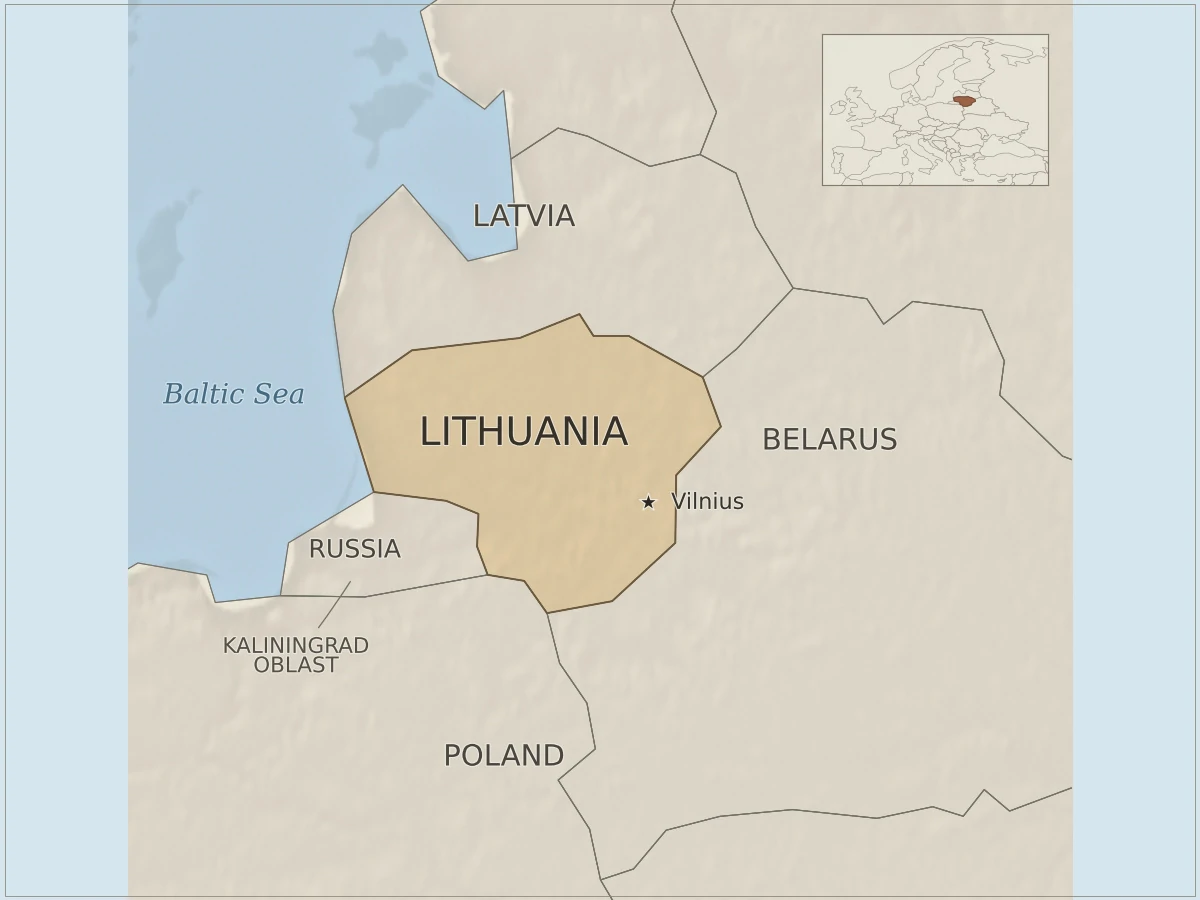
Lithuania’s location beside Belarus and close to the war in Ukraine affects daily life as well. Border and airspace incidents, disinformation, military exercises, nuclear concerns, and the needs of Ukrainian refugees all give Christians specific reasons to pray.
Pray that many people in Lithuania would hear the gospel clearly, repent of sin, and trust in Christ. Pray for churches to submit continually to God’s Word and for believers to serve their neighbours with courage, patience, mercy, and hope.
Prayer Burden at a Glance
- Pray that people who identify as Christian would hear the gospel clearly and come to repentance and saving faith in Jesus Christ.
- Pray that pastors, teachers, parents, and congregations would remain rooted in Scripture and help younger generations follow Christ.
- Pray that people facing loneliness, addiction, mental illness, or suicidal thoughts would receive compassionate and effective help.
- Pray that Ukrainian refugees and Lithuania’s ethnic and language minorities would be treated fairly and welcomed as neighbours.
- Pray that the country’s leaders would act truthfully and responsibly as Lithuania faces political change, disinformation, military tension, and nuclear danger.
Last verified: 3 August 2026
Why Lithuania Needs Prayer Now
Lithuania enjoys broad freedom for Christian worship and witness, yet many people need to move beyond inherited religious identity to repentance, personal faith in Christ, and faithful discipleship.
Lithuania does not face widespread state persecution of Christians. People generally have the freedom to worship, teach, evangelise, establish ministries, publish Christian materials, and take part in public life. These freedoms are genuine reasons for thanksgiving. Lithuania’s legal framework protects religious practice while distinguishing among traditional, state-recognised, and other registered religious communities.
The greater spiritual concern is that Christian identity may remain outward without leading to repentance and faith. Lithuania’s Christian history can still be seen in church buildings, religious affiliation, public ceremonies, and national memory.
The State Data Agency’s 2021 census-related statistical survey estimated that 80.2% of residents associated themselves with a religious community. It placed Roman Catholic affiliation at 74.2% and Orthodox affiliation at 3.8%. These figures describe affiliation, not conversion, church attendance, biblical understanding, or saving faith.
Some people may value Christianity mainly as part of family tradition or national history. Others are increasingly secular or nonreligious. Churches must therefore explain the gospel plainly rather than assume that familiar Christian language is understood.
Pray that people would not depend on nationality, baptism, confirmation, sacramental participation, church membership, moral behaviour, or family tradition to make them right with God. Pray that they would understand that sinners are saved by grace alone, through faith alone, in Christ alone.
Churches also serve communities changed by population decline, low birth rates, ageing, and migration. Lithuania’s provisional population was approximately 2.886 million at the beginning of July 2026, around 2,000 fewer than at the beginning of the year. The crude birth rate fell to 6.1 births per 1,000 residents in 2025.
Some congregations have fewer young families, while pastors and clergy may care for several churches or members spread across a wide area. Pastors and church leaders in these settings need sound biblical training, perseverance, and practical wisdom.
Lithuania’s location beside Belarus and close to the war in Ukraine also affects how people think about security. Russia’s invasion, military exercises, cyber activity, disinformation, and occasional border or airspace alerts have made the possibility of further escalation difficult to ignore.
Pray for leaders to prepare responsibly, communicate truthfully, and protect the population without feeding panic or hatred. Pray that Christians would resist rumours and propaganda, care for vulnerable people, pray for their enemies, and remember that their final security rests in Christ rather than in military strength.
Country Snapshot
A brief orientation to Lithuania’s people, government, religious setting, and present prayer concerns.
Ethnic Lithuanians form a large majority of the population, alongside longstanding Polish, Russian, Belarusian, Jewish, and other communities. The arrival of Ukrainians since Russia invaded Ukraine has increased the need for language support, stable housing, work, schooling, health care, friendship, and pastoral care that responds patiently to trauma, loss, and displacement.
As of 3 August 2026, President Gitanas Nausėda was Lithuania’s head of state. Lithuania’s twenty-first government was sworn in on 14 July 2026 under Prime Minister Mindaugas Sinkevičius.
As of 5 March 2026, 53,379 Ukrainians held temporary protection in Lithuania. The Migration Department reported that this was more than 10,000 above the corresponding figure a year earlier.
Spiritual and Practical Challenges Affecting Christians and Churches
Lithuania’s churches serve in a country where many people inherit a Christian identity without necessarily trusting in Christ, some congregations are shrinking, the population is ageing, mental-health needs remain serious, and war nearby has increased public fear.
From inherited Christianity to personal faith in Christ
Many people in Lithuania are familiar with churches, Christian ceremonies, and religious language. Familiarity, however, is not the same as conversion. People need to understand the holiness of God, the seriousness of sin, the finished work of Christ, and the call to repent and believe. Churches must teach these truths clearly and patiently rather than assume that participation in a religious tradition is evidence of new life in Christ.
Pray that people would look beyond ceremony and cultural identity to the Lord Jesus Christ. Pray that all teaching and practice would be tested by Scripture and that those who profess Christianity would grow in faith, obedience, holiness, and love.
Serving smaller congregations and training future church leaders
Reports of smaller congregations, fewer seminary students, and clergy serving several parishes show that some churches have fewer future leaders, heavier pastoral workloads, and limited resources for discipleship and care. Population decline can also leave towns and rural communities with fewer young families and fewer leaders available to disciple and care for people.
These reports do not describe every church or denomination. They do show a need for well-trained workers who are prepared to serve patiently, including in places where congregations are small and visible results may come slowly.
Pray for pastors and church leaders to teach Scripture accurately, care for people attentively, resist discouragement, and remain obedient to Christ. Pray for seminaries and other training programmes to prepare leaders who serve the Church humbly rather than seeking status or influence.
Children, families, and an ageing population
Low birth rates, an ageing population, and the lasting effects of emigration continue to affect Lithuanian families, schools, villages, and churches.
Young people need congregations where they can ask honest questions, learn the Bible carefully, and see mature Christians whose lives agree with what they profess. Christian parents need to teach and model the faith at home rather than depend only on ceremonies, schools, or church institutions.
Pray for marriages to be strengthened, children to be protected, parents to disciple their families, and older people to receive companionship and practical care. Pray for believers who remain in smaller or declining communities to continue serving without giving way to isolation or discouragement.
Mental health, loneliness, and suicide
Mental-health needs remain serious. The OECD’s latest comparable profile reports a suicide rate of 18 deaths per 100,000 people in Lithuania, compared with an OECD average of roughly 11. Such statistics are published after a delay and do not describe every present local circumstance, but they show that suicide remains a serious concern.
Churches should not speak as though mental illness is simply a failure of faith. A person may need prayer and friendship, but also medical treatment, psychological care, protection during a crisis, or help with addiction.
Pray for health services that people can reach when they need them and for professionals who have the support required to care well for others. Pray that families and churches would listen with compassion, would not shame or condemn those who suffer, and would recognise when specialist help is needed.
War nearby, disinformation, and public fear
Lithuania’s government regards Russia’s war against Ukraine and hostile activity linked to Belarus as direct threats to national security. Cyberattacks, propaganda, balloon incursions, suspected drone activity, and military exercises have increased public concern.
Some incidents are confirmed, while responsibility and intention remain disputed in other cases. Christians need discernment so that necessary vigilance does not turn into panic, rumour, hatred, or suspicion toward entire ethnic or language communities.
Pray for believers who serve in government, the armed forces, emergency services, journalism, schools, and local communities. Ask God to help them speak truthfully, act calmly, protect others, and refuse both carelessness and fear.
Christian Life and Witness in Lithuania
Christians can worship and serve openly, but churches still need clear gospel preaching, sound doctrine, patient discipleship, and compassionate care across Lithuania’s different communities.
Christians in Lithuania can generally meet openly and practise their faith without fear of state punishment. Roman Catholic, Orthodox, Lutheran, Reformed, and other historic communities remain publicly visible. Smaller Baptist, Pentecostal, evangelical, and independent congregations also worship, teach, evangelise, publish, and train leaders.
These names describe Lithuania’s religious landscape. They do not tell us whether every institution teaches the gospel faithfully or whether every person associated with them has been converted.
Give thanks for every congregation where Christ is clearly proclaimed, Scripture is carefully taught, and people are called to repentance, faith, holiness, worship, mercy, and obedience. Pray that every church and professing Christian community would examine its teaching and practice under God’s Word.
Smaller congregations may have few workers or limited finances. Their service can include children’s ministry, theological education, publishing, missions, and care for vulnerable neighbours. The Lithuanian Baptist Union publicly lists nine member congregations, while LCC International University offers evangelical theological education. These sources describe their own work and do not, by themselves, establish their national influence or spiritual health.
Pray that leaders would measure their work by obedience to Christ rather than by congregation size, public recognition, or political influence.
Lithuanian-, Polish-, Russian-, Belarusian-, Ukrainian-, and English-speaking believers may worship in different congregations or receive ministry through different organisations. Pray that Christians would treat one another honestly and charitably and cooperate where Scripture and conscience permit, without pretending that serious doctrinal differences are unimportant.
Ukrainian refugees have also created continuing opportunities for hospitality. Churches and Christian ministries may offer food, temporary accommodation, language lessons, children’s activities, friendship, trauma-aware care, prayer, and pastoral care.
Pray that those offering help would listen patiently, keep their promises, and treat refugees as neighbours made in the image of God. Pray that any gospel witness would be honest and compassionate, never manipulative or coercive.
Recent Developments
Government change, border and airspace incidents, military reinforcement, refugee needs, population decline, reports of changing church participation, and nuclear concerns give Christians specific reasons to pray for Lithuania now.
-
14 July 2026
Lithuania’s twenty-first government was sworn in
Prime Minister Mindaugas Sinkevičius and the new government took office after the previous government resigned on 23 June and the governing coalition broke apart. The coalition’s collapse followed several serious disagreements, including conflict over a proposed military training area and controversy surrounding inflammatory and antisemitic remarks associated with the Nemunas Dawn party and its former leader. Antisemitism was an important part of the controversy, but it was not the coalition’s only dispute and was not representative of Lithuania’s population.
Prayer significance: Pray that the new government would serve honestly, competently, and justly, and that political parties would reject antisemitism, other forms of hatred, and attempts to gain support by inflaming prejudice.
-
Late 2025–2026
Balloon incidents repeatedly disrupted air travel
Balloons entering from Belarus repeatedly disrupted Lithuanian air travel. Lithuanian authorities described the incidents as deliberate hybrid attacks. Belarus disputed the accusation and made counterclaims against Lithuania.
Prayer significance: Pray for accurate information, clear public communication, proportionate responses, and protection from accident or deliberate escalation.
-
20 May 2026
A suspected drone prompted an air alert
Lithuanian authorities issued an air alert after radar tracked a suspected drone crossing the border and moving through Lithuanian airspace. The alert included Vilnius and several border regions. The object was not recovered, and its precise origin and final location remained uncertain.
Prayer significance: Pray for careful investigation, truthful reporting, public calm, and protection from miscalculation.
-
June 2026
Germany’s brigade conducted its first large-scale exercise in Lithuania
Germany’s permanently stationed armoured brigade took part in its first large-scale exercise in Lithuania. NATO describes the brigade’s presence as part of its defensive posture on the alliance’s eastern flank.
Prayer significance: Pray for discipline among military personnel, sound judgment among commanders and political leaders, safety for nearby communities, and restraint that helps preserve peace.
-
5 March 2026
More than 53,000 Ukrainian refugees remained under temporary protection
Lithuania continued to support Ukraine while 53,379 Ukrainian war refugees held temporary protection in the country. For many families, displacement has lasted far longer than expected, with continuing needs for housing, employment, schooling, health care, language learning, trauma support, friendship, and acceptance.
Prayer significance: Pray that refugees would be treated with patience and dignity and that Lithuanian communities would resist resentment, exploitation, and weariness in doing good.
-
July 2026
Population declined slightly, while reports described smaller congregations
Lithuania’s population was provisionally estimated at about 2.886 million at the beginning of July 2026, slightly lower than at the beginning of the year. Birth rates remained low. Reports from parts of the country also described smaller congregations, clergy serving several parishes, and fewer people preparing for formal church ministry. This pattern does not describe every congregation.
Prayer significance: Pray that churches would disciple younger believers, care for older people, serve smaller communities, and use their workers and resources wisely rather than responding with resignation.
-
May 2026
Regional nuclear exercises and Astravets concerns continued
Belarus and Russia began joint exercises involving the delivery of nuclear weapons and preparations for their possible use. Russia and Belarus state that Russian tactical nuclear weapons have been deployed in Belarus and that Moscow retains control over them. The available sources did not provide independent technical verification of the physical deployment.
Lithuania also continued to raise concerns about the safety, transparency, and emergency preparedness of the Belarusian nuclear power plant at Astravets, around 40 kilometres from Vilnius. These are Lithuania’s official concerns rather than a universally agreed assessment. The International Atomic Energy Agency records two operating nuclear reactors in Belarus.
Prayer significance: Pray for restraint among leaders, responsible oversight, truthful communication, the non-use of nuclear weapons, safe operation of nuclear facilities, and protection of civilians.
How to Pray for Lithuania
Pray for saving faith in Christ, faithful churches, compassionate care, honest government, regional peace, and steadfast Christian hope.
Pray for repentance and saving faith. Pray that people would look beyond inherited religion, cultural identity, and confidence in ceremonies and would repent of sin and trust in Jesus Christ.
Pray for churches and their leaders. Ask God to help pastors, teachers, theological students, and congregations submit to Scripture, proclaim the gospel clearly, reject teaching and practices that contradict God’s Word, and serve without pride.
Pray for children, families, and older people. Pray for strong marriages, protected children, parents who teach the faith at home, young people who follow Christ, and older people who receive companionship and care.
Pray for people facing despair. Bring before God those living with depression, addiction, loneliness, trauma, or suicidal thoughts. Pray for timely help through caring friends, churches, medical workers, counsellors, and other trained professionals.
Pray for refugees and minority communities. Pray for safety, housing, work, education, health care, friendship, pastoral care, and opportunities to hear the gospel clearly for Ukrainians and other migrants. Pray that Polish, Russian, Belarusian, Jewish, and other communities would be treated fairly.
Pray for honest and responsible government. Pray for President Gitanas Nausėda, Prime Minister Mindaugas Sinkevičius, parliamentarians, ministers, judges, and local officials to act truthfully, justly, and competently. Pray that antisemitism, corruption, hatred, and political manipulation would be rejected.
Pray for peace and truth in public life. Ask God to protect Lithuania from aggression, cyberattacks, disinformation, border incidents, and military miscalculation. Pray that people would remain alert without becoming ruled by fear or hostility.
Pray for restraint concerning nuclear danger. Pray that nuclear weapons would not be used, that leaders would act with restraint, that civilians would be protected, and that nuclear facilities would be operated and supervised safely and openly.
Pray for hope grounded in Christ. Pray that believers would not place their final confidence in political alliances, military power, religious tradition, or prosperity. Ask God to make them holy, courageous, and active in love as they wait for Christ’s appearing and pray, “Your kingdom come.”
Give Thanks
Lithuania’s needs are serious, but there are also clear reasons to thank God for religious freedom, faithful gospel ministry, care for neighbours in need, and peace.
Give thanks for religious freedom. People can worship, teach, evangelise, publish Christian material, and establish ministries openly.
Give thanks for faithful gospel ministry. Praise God for congregations where Christ is proclaimed clearly and Scripture is taught carefully.
Give thanks for quiet Christian service. Thank God for pastors, teachers, Christian workers, and ordinary believers who serve without seeking public recognition.
Give thanks for theological training. Praise God for opportunities to study Scripture and prepare future church leaders.
Give thanks for practical care. Thank God for people offering food, housing, friendship, language help, and other support to Ukrainians and neighbours in need.
Give thanks for peaceful constitutional government. Lithuania has continued to transfer political authority through constitutional means.
Give thanks for those caring for people in distress. Thank God for health workers, counsellors, families, churches, and others working to prevent suicide and provide mental-health care.
Give thanks for present peace. Lithuania remains at peace despite the war and military tension nearby.
Last Verified / Update Note
This note explains when the guide was reviewed, what shaped its prayer focus, and which developments may affect prayer for Lithuania in the future.
Review Status
Reviewed for current prayer use
This guide reflects a review of Lithuania’s national leadership; population and birth data; religious affiliation and freedom; reports of smaller congregations, fewer seminary students, and heavier pastoral workloads; mental-health indicators; the number and needs of Ukrainian refugees; the July 2026 government transition; border and airspace incidents; German and NATO military reinforcement; and regional nuclear concerns. Sources included Lithuanian government and statistical bodies, Lithuanian national reporting, NATO, the OECD, the International Atomic Energy Agency, independent international reporting, and selected church and theological-education sources.
The central prayer needs are repentance and saving faith beyond inherited Christian identity; churches that continually test their teaching and practice by Scripture; support for pastors and smaller congregations; discipleship of younger generations; care for people facing despair; hospitality toward refugees and minority communities; honest government; truthful public communication; regional peace; restraint over nuclear weapons; and the safe operation and oversight of nuclear facilities.
Developments to watch include changes in national leadership, serious military or border incidents, developments in the war in Ukraine that directly affect Lithuania, major changes in refugee policy or numbers, new religious-freedom or recognition disputes, significant developments concerning nuclear weapons or the Astravets plant, and new nationwide evidence about church participation or religious practice.
The July 2026 population figure is provisional, and the Ukrainian refugee total is dated 5 March 2026. Religious-affiliation figures describe self-identification rather than conversion or church attendance. Lithuanian security and Astravets statements are identified as official Lithuanian positions, while Belarusian disagreement and the limits of independent nuclear verification are also noted.
Help keep this guide accurate and current
If you noticed a possible correction, broken link, or significant country update, please contact the Nations Prayer Directory so we can review it carefully.
Key Sources Consulted
Sources that materially informed this Lithuania prayer guide, including official government records, national statistics, church-life reporting, health data, security reporting, and nuclear-safety information.
Government, population, religion, and migration
- Government of the Republic of Lithuania. “The 21st Government of the Republic of Lithuania was sworn in.” Used for the 14 July 2026 swearing-in and confirmation that Mindaugas Sinkevičius was serving as prime minister.
- Ministry of Foreign Affairs of Lithuania. “Government, politics.” Used for the official overview of Lithuania’s political system and presidency.
- State Data Agency. “Official Statistics Portal: Population indicator S3r0156.” Used for the provisional July 2026 population and recent birth-rate information.
- State Data Agency. “Nationality, native language and religion.” Used for the 2021 religious-affiliation figures, ethnic information, and survey methodology.
- Migration Department of Lithuania. “In Lithuania, the number of Ukrainian war refugees has increased by 10 thousand, a trend of sedentism is observed.” Used for the refugee total dated 5 March 2026.
- Ministry of Justice of Lithuania. “Regulation of religious communities and associations.” Used for Lithuania’s religious-registration and recognition framework.
Church life and social conditions
- Lithuanian National Radio and Television. “Amid religious decline, priests in Lithuania serve multiple parishes to make a living.” Used for reporting on smaller congregations, pastoral workloads, and seminary enrolment.
- OECD. “Health at a Glance 2025: Lithuania.” Used for comparative health and suicide indicators.
- Lithuanian Baptist Union. “Congregations.” Used to identify the union’s member congregations; this is a denominational self-description.
- LCC International University. “BA Theology.” Used for its evangelical theology programme and stated educational aims.
Government transition and regional security
- Lithuanian National Radio and Television. “What’s happening with the Lithuanian government? – explainer.” Used for national reporting on the coalition rupture, military-training-area dispute, and antisemitic-rhetoric controversy.
- Associated Press. “Belarus weather balloons force repeated closures of Lithuania’s main airport.” Used for airport disruptions, Lithuania’s hybrid-attack assessment, and Belarus’s stated response and counterclaims.
- Lithuanian National Radio and Television. “Air alert in Vilnius lifted following drone sighting in border regions.” Used for the 20 May 2026 suspected-drone alert and its unresolved details.
- NATO. “Germany’s tank brigade participates in its first exercise in Lithuania.” Used for the brigade’s first major exercise and NATO’s stated defensive purpose.
Nuclear weapons and nuclear safety
- Associated Press. “Belarus launches joint drills with Russia to practise nuclear weapons use.” Used for the May 2026 exercises and Russian and Belarusian statements concerning Russian-controlled nuclear weapons in Belarus.
- International Atomic Energy Agency. “Country Nuclear Power Profiles: Belarus.” Used for the record of two operating nuclear reactors in Belarus.
- Ministry of Foreign Affairs of Lithuania. “Vice-Minister Valys at the IAEA Board of Governors expressed support for Ukraine, highlighted the problems of the Astravets NPP.” Used for Lithuania’s official concerns about Astravets.
Source Context
How to read the religious, demographic, security, church-life, refugee, mental-health, and nuclear sources behind this guide.
Source Context
- Religious affiliation. The religious-composition figures come from Lithuania’s 2021 census-related statistical survey. They estimate how people identify themselves. They do not show church attendance, conversion, biblical understanding, or saving faith.
- Church participation. Current representative nationwide data on church attendance, conversion, Bible reading, and discipleship were not available in the sources used for this guide. Reports of smaller congregations, fewer seminary students, and clergy serving several parishes describe parts of Lithuania and should not be treated as a picture of every church or denomination.
- Leadership and population. The leadership information in this guide reflects the national offices held on 3 August 2026. The July 2026 population figure was provisional and may later be revised.
- Refugees. The Ukrainian refugee figure is dated 5 March 2026. The number of refugees and their legal status can change.
- Government controversy. The collapse of the previous coalition involved more than one dispute. Antisemitic rhetoric was a serious part of the controversy, but it was neither the only cause nor representative of Lithuania’s population.
- Security claims. Lithuania describes some balloon and border incidents as deliberate hybrid pressure from Belarus and Russia. Belarus disputes some of these claims and has made counterclaims. Some incidents are confirmed, but motives, responsibility, and state direction remain disputed in other cases.
- Drone incident. Lithuanian radar tracked a suspected drone crossing the border on 20 May 2026, but the object was not recovered. Its origin, type, and final location remained uncertain.
- Military sources. NATO’s description of its deployments as defensive states the alliance’s official purpose; it does not independently establish that every risk of escalation has been removed.
- Nuclear weapons. Russia and Belarus state that Russian tactical nuclear weapons have been deployed in Belarus. These claims come from Russian and Belarusian officials; the IAEA or another technical inspection body has not independently verified the physical deployment.
- Astravets. The International Atomic Energy Agency provides information about Belarus’s two operating reactors. Lithuania’s concerns about the Astravets plant are important official positions, but they remain Lithuania’s assessment rather than a universally agreed conclusion.
- Mental health. International health and suicide statistics are normally published after a delay. They remain useful for understanding the scale of the concern but should be read with their stated data year.
- Church sources. Denominational and ministry websites can confirm their own congregations, beliefs, programmes, and stated work. They cannot by themselves establish their national influence, spiritual health, or the faith of individual participants.
A Closing Prayer for Lithuania
A prayer for Lithuania’s spiritual needs, churches, vulnerable people, leaders, and peace.


